
The Storyline
Real families. Real discoveries. Real stories.
Marguerite Gaulin: A Fille à Marier of the Perche
Marguerite Gaulin was baptized on 14 May 1627 in the parish of Saint-Martin-du-Vieux-Bellême, in the rolling country of the Perche west of Paris. Twenty-seven years later she crossed an ocean as a fille à marier, married Jean Crête in the manor house of Sieur Robert Giffard at Beauport, and spent the next forty-nine years raising ten children at the heart of the Giffard-Juchereau seigneurial circle. This documentary biography traces her life through twelve primary sources, three royal censuses, and the baptism register acts of every child she bore.
Part of the Storyline Genealogy series: Filles du Roi & Filles à Marier — The Women Who Built New France
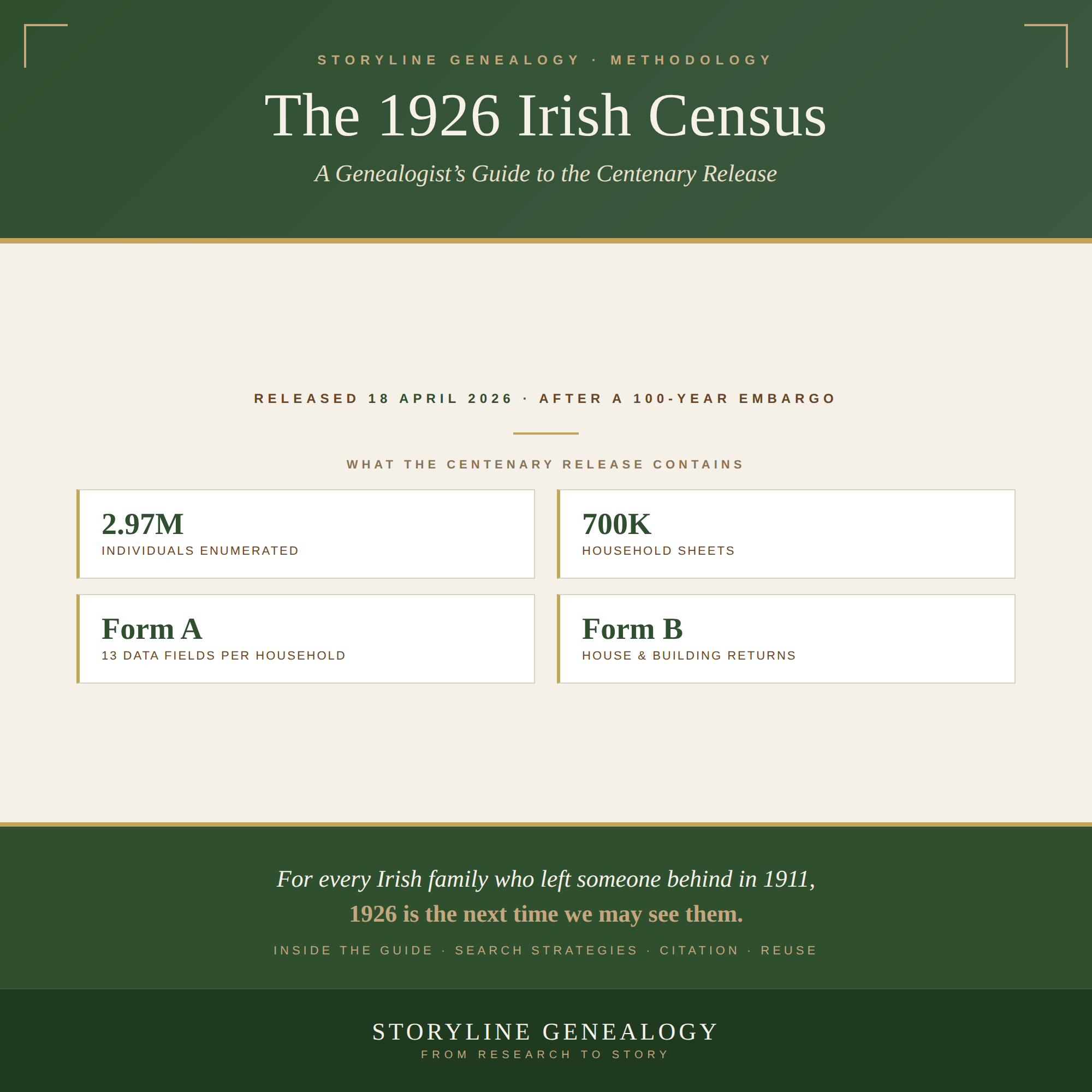
The 1926 Irish Census: A Genealogist's Guide
For one hundred years, the first census of the Irish Free State sat sealed in archival boxes. On 18 April 2026, the National Archives of Ireland released the entire collection to the public — nearly three million individuals, restored to the documentary record on the same calendar date their forms were filled in. This is a practical guide for genealogists working the new resource: what the census contains, how to search it effectively, the known data limitations and forthcoming improvements, and the citation conventions to use when sharing what you find.
Part of the Storyline Genealogy Series: A Storyline Genealogy Research Guide
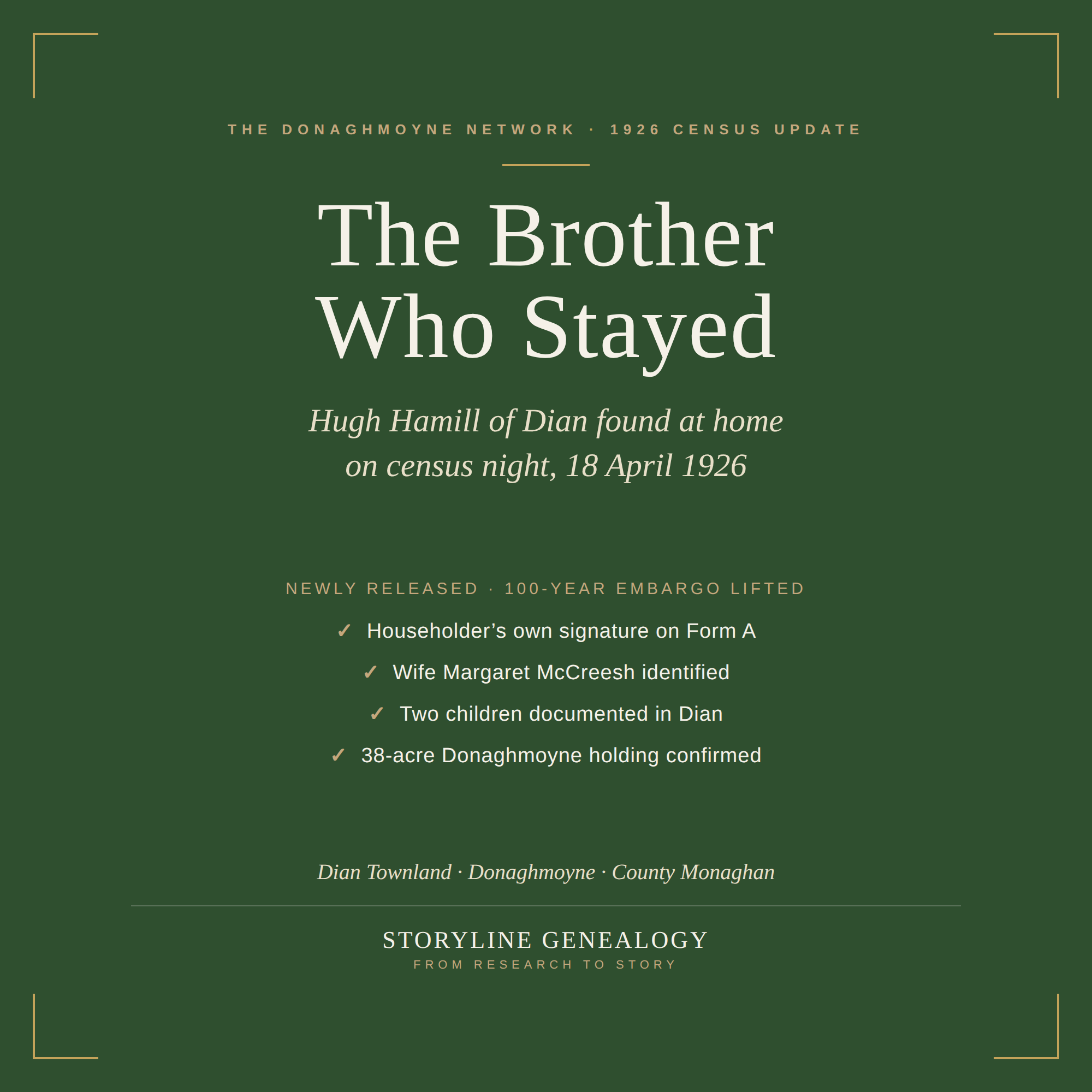
Hugh Hamill of Dian, 1926 — The Brother Who Stayed
For more than a century, Hugh Hamill existed in the family memory only as the brother who stayed — the one who did not emigrate, the one who held the Donaghmoyne land. On 18 April 2026, exactly one hundred years after the enumeration of his Dian household, the first Census of the Irish Free State was released — and Hugh stepped back into the documentary record. With his wife Margaret McCreesh of Culloville, two Irish-speaking children, and his own signature on Form A, the brother who stayed has come fully into view.
Part of the Storyline Genealogy series: From Research to Story
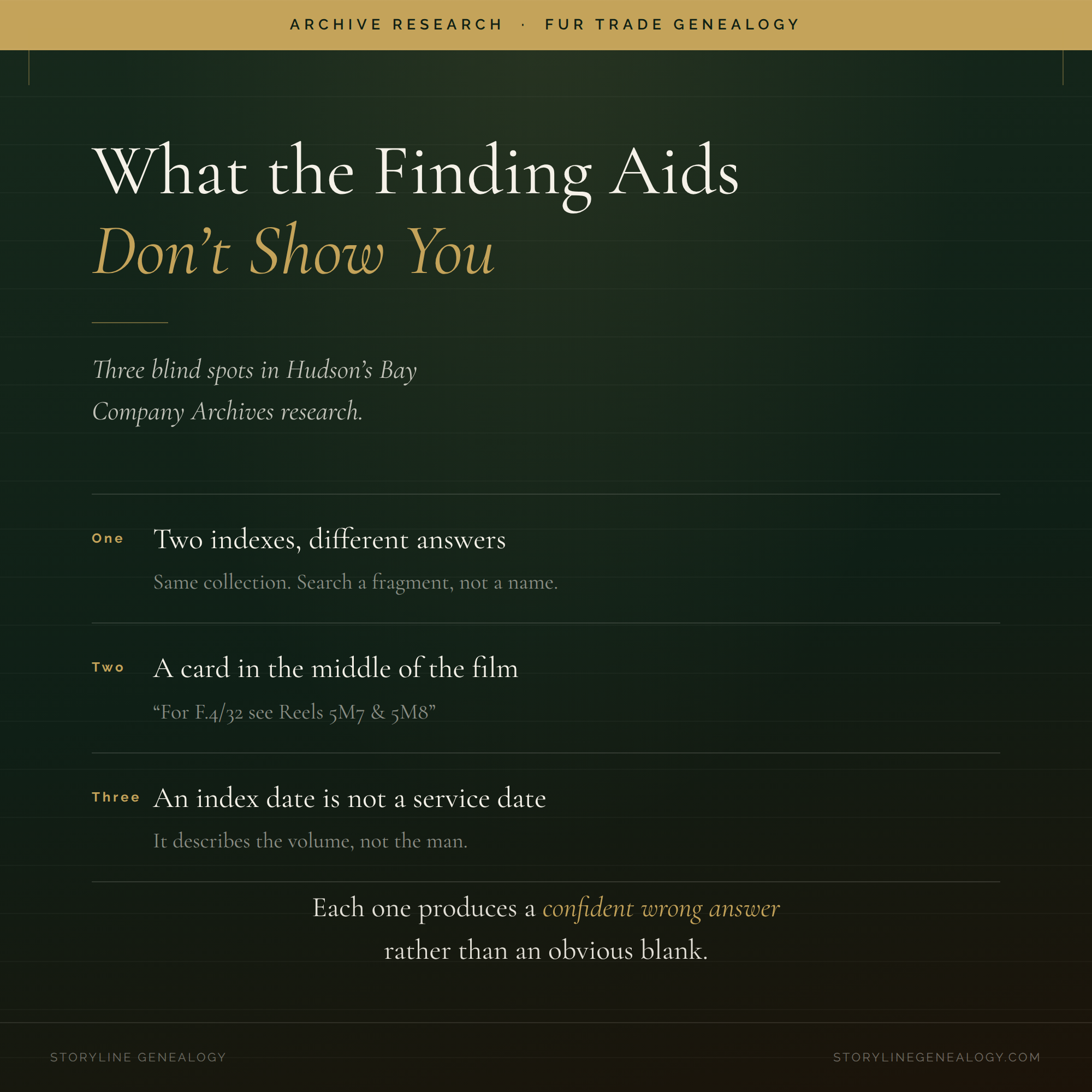
What the Finding Aids Don’t Show You
Two indexes cover the same Hudson's Bay Company Archives collection and return different answers. A microfilm reel catalogued as holding a run of account books quietly redirects one of them to two other reels. And an index entry, however precise, cannot tell you which of several men who shared a name you actually found. None is a flaw in the archive. Each will cost you a conclusion.
Part of the Storyline Genealogy series : A Research Methodology Guide

Newsletter : The Website Has Grown With the Research
Since November, the research has expanded—and the website with it. Six new specialized collections, three research libraries, and more. A tour of what's new at Storyline Genealogy.
Storyline Genealogy: From Research to Story
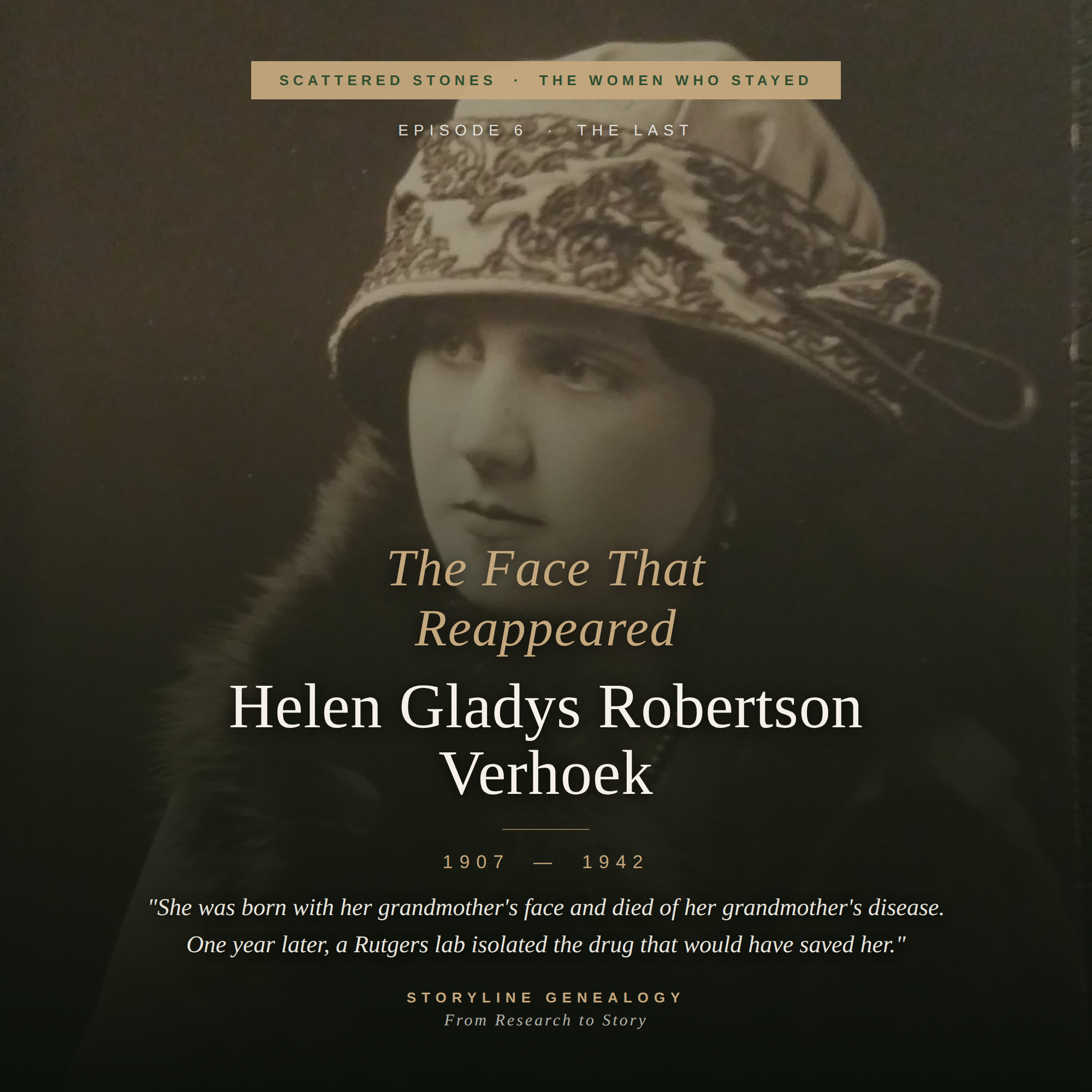
Helen Gladys Robertson Verhoek: The Last TB Death
She was born in 1907 with the face of a grandmother she never met. She died in 1942 of the disease that had killed that grandmother fifty-eight years earlier. Between those two dates, she was orphaned at sixteen, buried an infant daughter at twenty-three, and raised two children into a childhood she would not live to see finish. Her mother, grandmother, and great-grandfather had all died of the same thing. Helen Gladys Robertson Verhoek was the fifth generation to carry tuberculosis and the last to die of it. Streptomycin was isolated at Rutgers one year too late.
Part of the Storyline Genealogy Series: Documentary Biographies From Research to Story
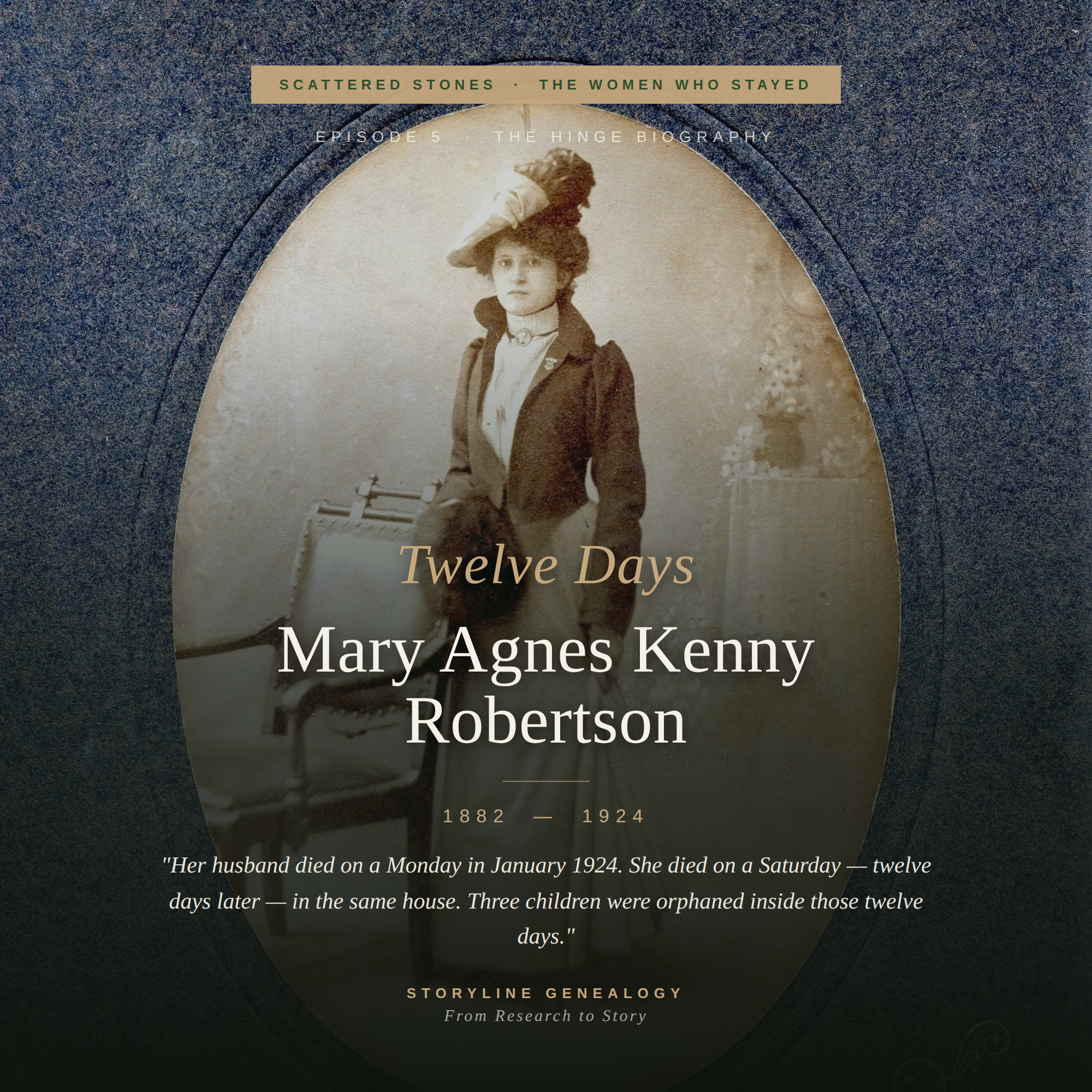
Mary Agnes Kenny Robertson: Twelve Days
Her husband died on a Monday in January 1924. She died the following Saturday — twelve days later — in the same house, of the pulmonary tuberculosis that had killed her mother in 1884 and her grandfather in 1870, and would kill her daughter Helen in 1942. Mary Agnes Kenny Robertson was orphaned at five and raised by an aunt who never married. She gave her three children the stability she herself never had, and it collapsed inside twelve days. The hinge biography of Scattered Stones — where the Kenny line meets the Robertson line and the whole family turns.
Part of the Storyline Genealogy Series: Documentary Biographies From Research to Story
Eliza Kenny: The Other Grandmother
Widowed in 1854 with two small sons, Eliza Kenny never remarried. She ran a Brooklyn grocery on Walworth Street alone for thirteen years and raised her sons alone for thirty-three. Her maiden name is lost to the record. Her birthplace in Ireland is unknown. And yet four words in an 1879 Brooklyn directory — "Kenny Elizabeth, wid. Richard" — rebuilt her entire family tree. A biography of presence and absence, of what survives in the record and what does not.
Part of the Storyline Genealogy Series: Documentary Biographies From Research to Story
Ann Lynch McKenna: The Woman Who Bought the Ground
On New Year's Day 1871, a poor Irish widow walked into Holy Cross Cemetery in Brooklyn and bought a family plot — not a single grave — for the husband she had just lost to tuberculosis. Ann Lynch McKenna had no way of knowing her single act of foresight would hold seven family members across seventy-nine years, or that her great-great-granddaughter would pay the final perpetual care check one hundred and twenty years later. The root of a Brooklyn Irish family.
Part of the Storyline Genealogy Series: Documentary Biographies From Research to Story
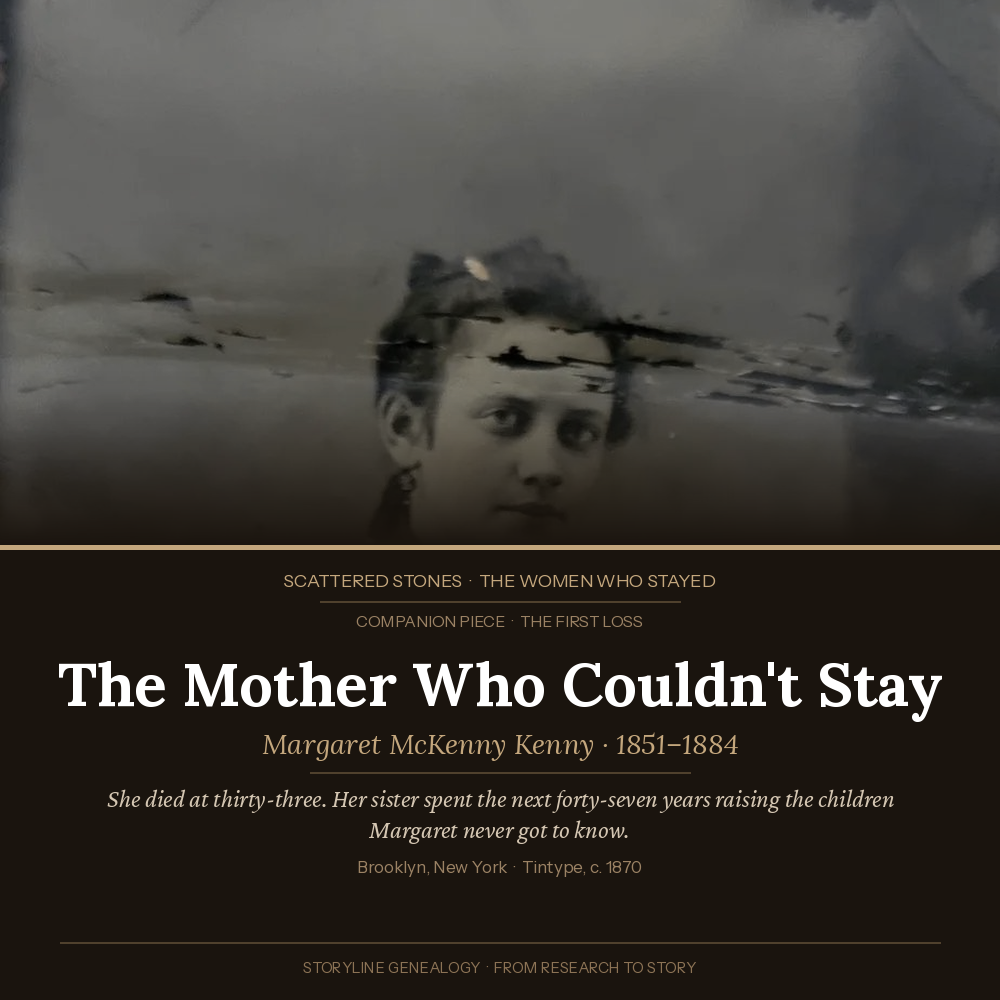
The Mother Who Couldn’t Stay: Margaret Mary McKenny
She was thirty-three years old when tuberculosis took her. She left behind two daughters, an infant who died seven weeks later, and a sister who spent the next forty-seven years raising the children Margaret never got to know. This series is named for the women who stayed. Margaret is the reason they had to.
Part of the Storyline Genealogy Series: Documentary Biographies From Research to Story
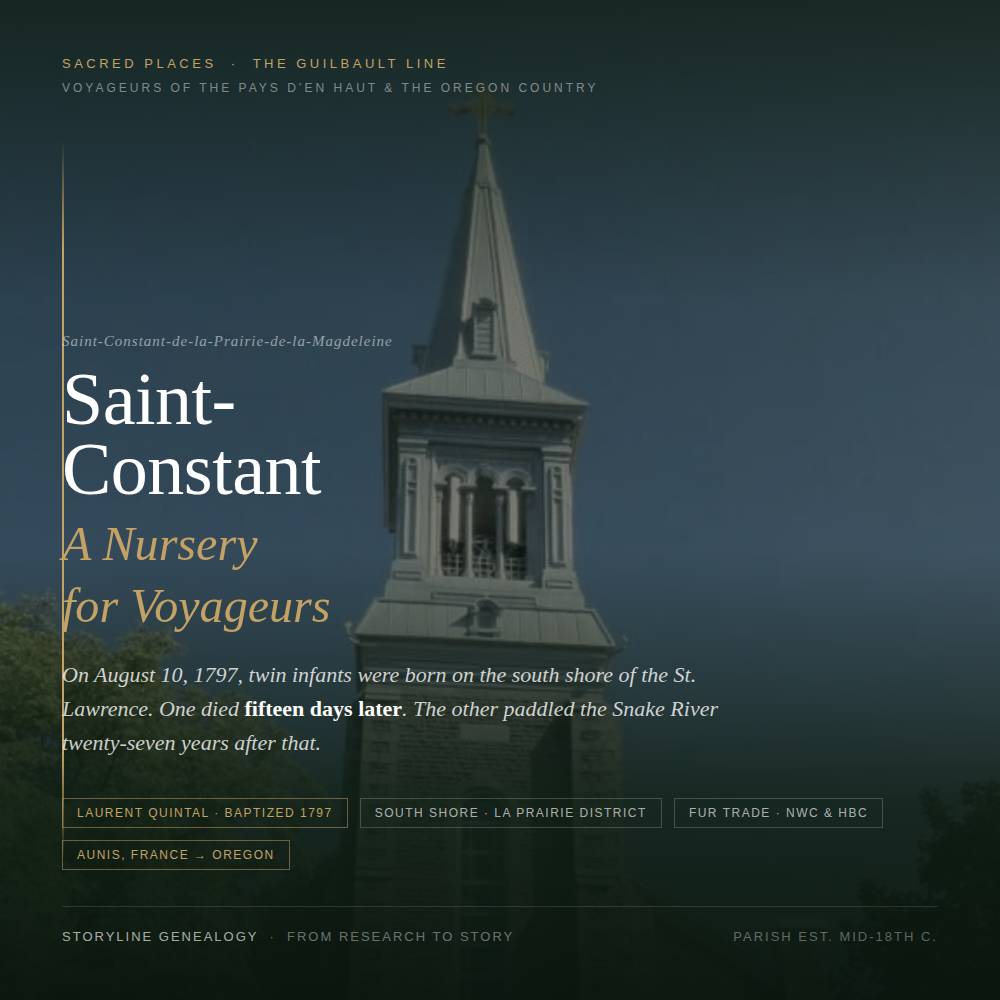
Saint-Constant-de-la-Prairie-de-la-Magdeleine
On August 11, 1797, the curé of Saint-Constant baptized two infants in a shared act — twins Laurent and Marie Suzanne Quintal, born the day before to François Quintal, fermier, and Marie Hébert. Marie Suzanne died fifteen days later. Laurent survived, grew to manhood in the La Prairie district of the south shore, and at nineteen made his mark on a North West Company contract departing Lachine for the pays d'en haut. He would not return to Saint-Constant for the rest of his life. The parish that recorded his birth was a nursery for voyageurs — and the baptism register that preserves his name is the first document in a chain that runs from Québec to the Snake River to an Oregon farm.
Part of the Storyline Genealogy series : Sacred Places
Laurent Quintal: The Free Man of the Prairies
He was born a twin on the south shore of Québec in 1797 — the fifteenth of seventeen children of a farmer who could not sign his own name. At nineteen he pressed an X to a North West Company contract and departed Lachine for the pays d'en haut. He would spend twenty years in the interior, paddle the Snake River under Alexander Ross, earn the notation Free in an HBC ledger, and die binding wheat in an Oregon field in 1860. His life is documented across four archive collections on two continents — and the primary sources correct two widely circulating errors that have corrupted this family's genealogical record for years.
Part of the Storyline Genealogy series: The Guilbault Line: Voyageurs of the Pays d'en Haut — and the Oregon Country
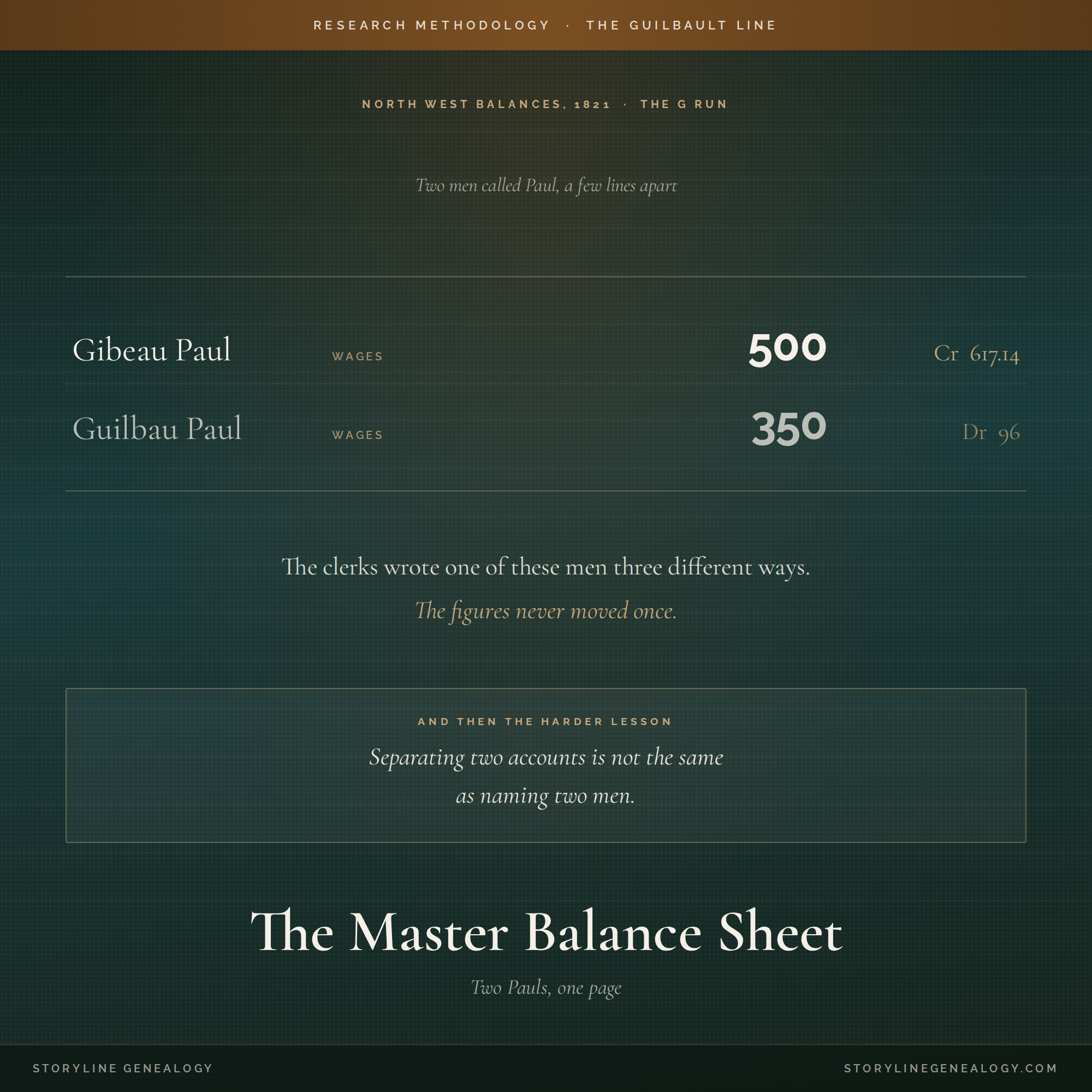
The Master Balance Sheet: Two Pauls, One Page
Two men called Paul appear in the North West Company's 1821 settlement register, in the same department, in the same season. The clerks spelled one of them three different ways, so the spelling could tell them apart from nothing. The figures could, and did — a wage of 500 against a wage of 350, holding still across every volume. What took another year to see is that separating two accounts is only half the work, and the easier half. Neither figure says who either man was.
Part of the Storyline Genealogy series: The Guilbault Line: Voyageurs of the Pays d'en Haut — and the Oregon Country
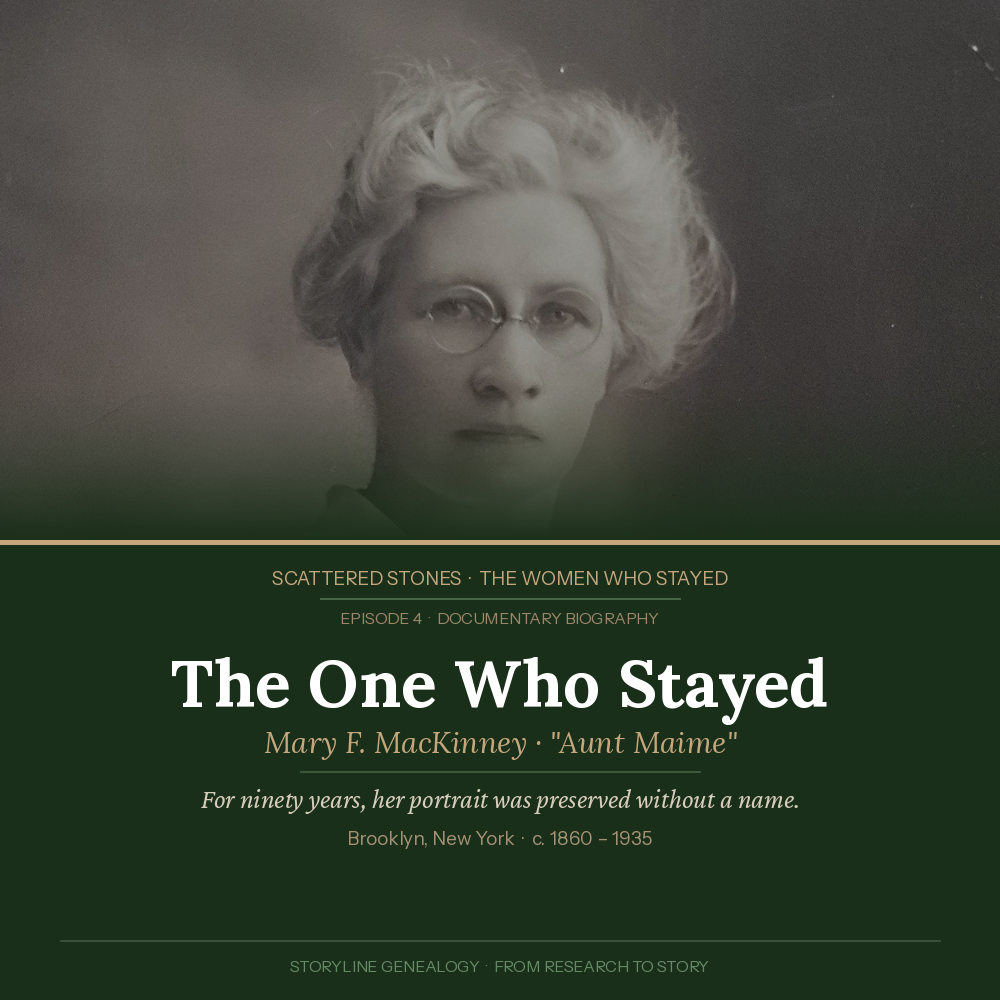
Mary F. MacKinney: The One Who Stayed
For ninety years, her portrait was preserved without a name. When it was finally identified in October 2025, it revealed the story of a woman who went from placing desperate newspaper ads for housework to running her own Brooklyn boarding house — all while raising two orphaned girls who had nowhere else to go in November 1888.
Part of the Storyline Genealogy Series: Documentary Biographies From Research to Story
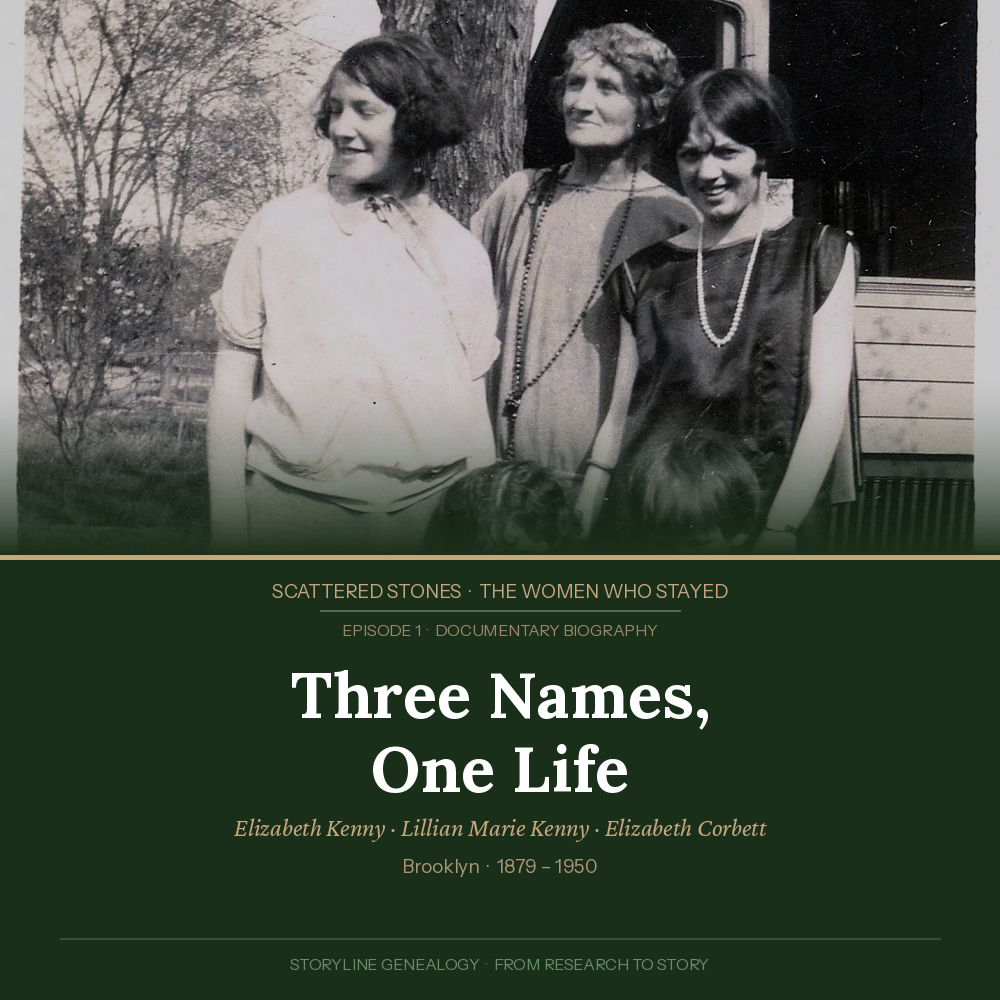
Elizabeth Kenny Corbett: Three Names, One Life — Episode 1
She used three names across her lifetime, served twelve days in the U.S. Navy before the Armistice ended the war she'd enlisted for, and raised her sister's children after the twelve-day catastrophe of January 1924. Proving all three names belonged to the same woman required a decade of research — and one government card that put both names on a single line.
Part of the Storyline Genealogy series: Documentary Biographies From Research to Story
George “Gyorgy” Petras
In 1909, an eighteen-year-old Slovak named George Petras boarded a ship in Bremen and crossed the Atlantic. Immigration officials spelled his name four different ways. He settled on Thomas Street in Newark, married, raised seven children, worked the docks at Port Newark, and waited thirty-five years to make his citizenship official. This documentary biography traces his journey through the primary sources that survived him.
Part of the Storyline Genealogy series: Documentary Biographies From Research to Story
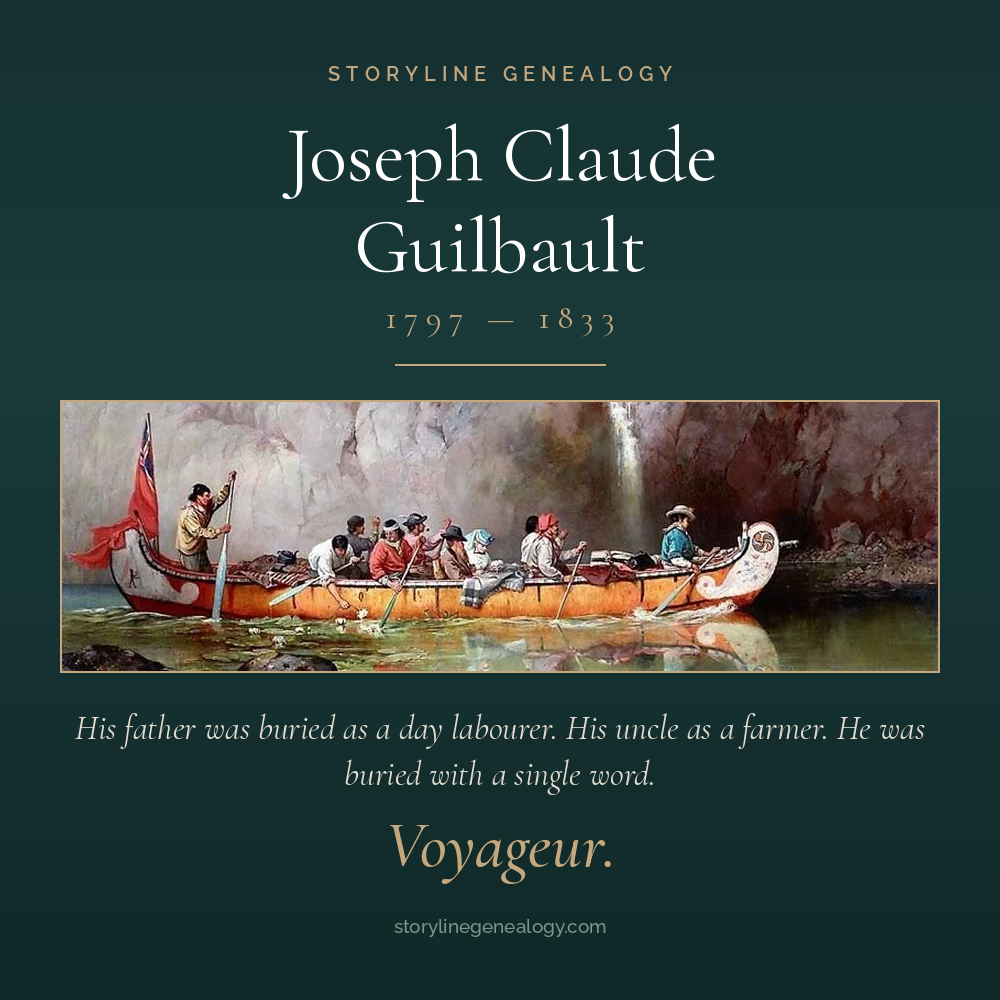
Born in the Pays d’en Haut
Joseph Claude Guilbault was born in June 1797 somewhere in the pays d'en haut, to a French-Canadian voyageur and an Anishinaabe mother from Lake Superior. He was baptized at sixteen months, named once more at four, and then disappears from the Quebec record for thirty-one years. When a man of his name was buried at Oka in 1833, the priest wrote one word for his occupation — and the Grand Chief of the Algonquins stood at the grave.
Part of the Storyline Genealogy series: The Guilbault Line: Voyageurs of the Pays d'en Haut
Two Contracts, One Missing Folio
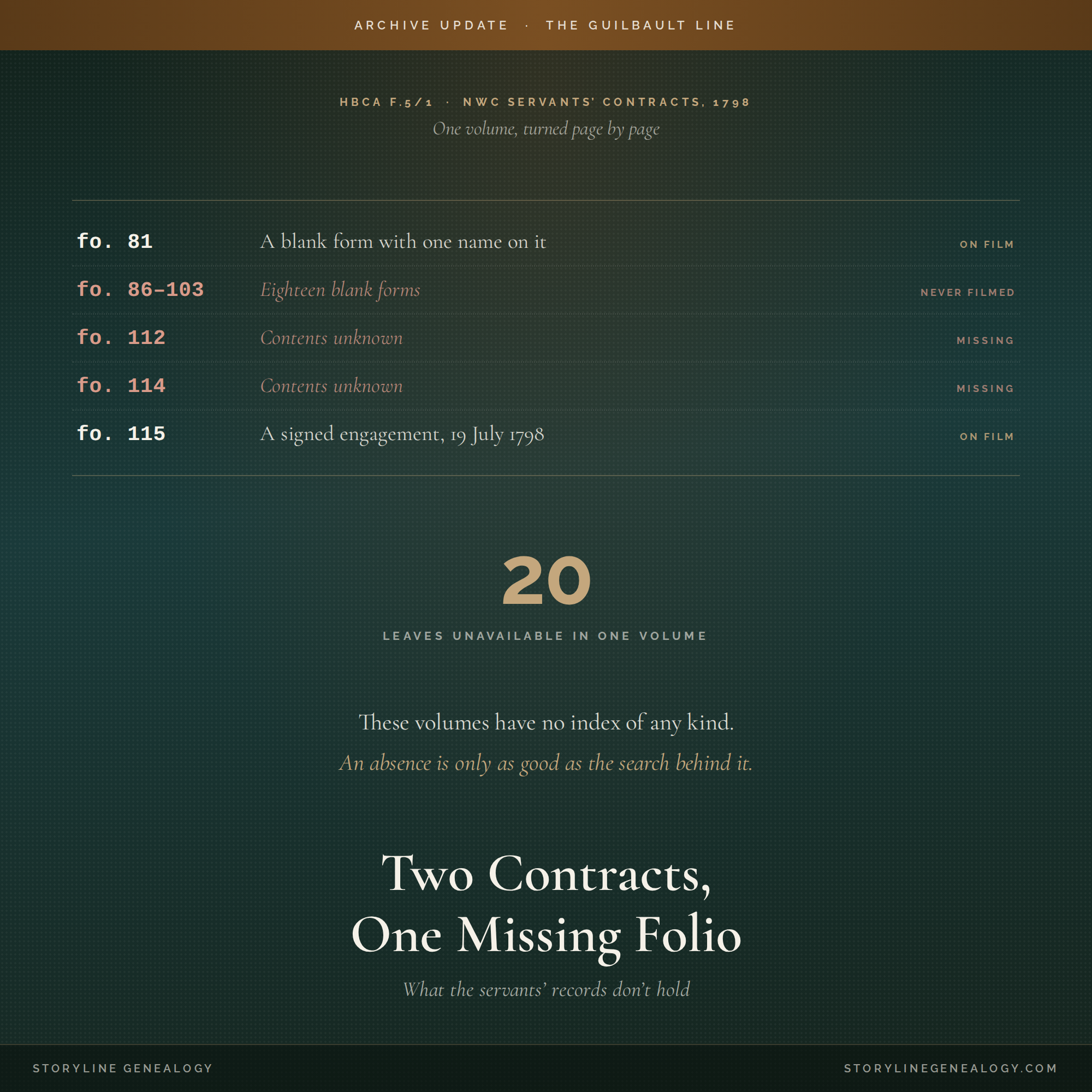
The North West Company's servants' contracts are the most informative documents in the fur-trade archive and almost unusable: the volumes carry no name index of any kind, so finding a man means turning every page. Do that, and you start noticing what isn't there. In one volume alone, two folios are lost and eighteen more were never filmed — twenty leaves unavailable, any of which could hold an engagement. One man in this family has two signed contracts and no identity. Another has five years of wages and nothing signed anywhere.
Part of the Storyline Genealogy series: From Research to Story
From Death Rapids to Saint Paul Mission: Hilaire Guilbault
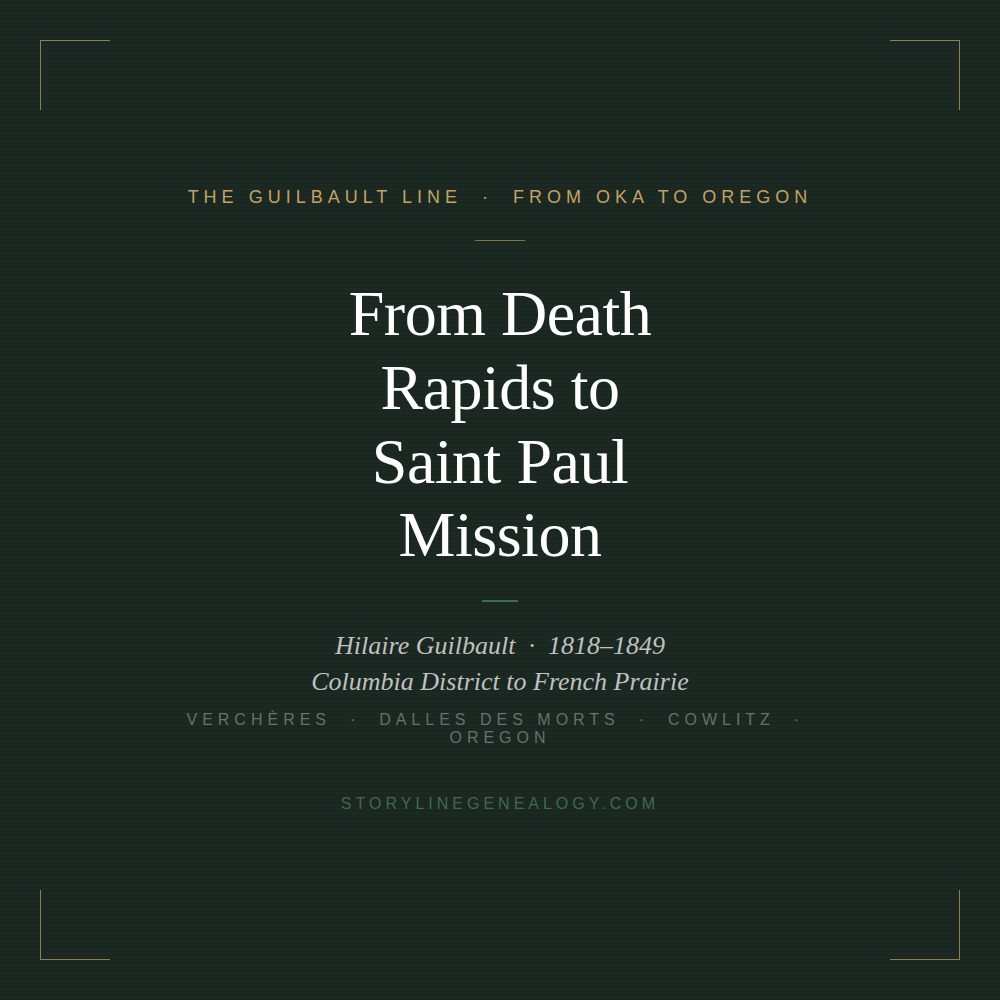
In September 1838, Hilaire Guilbault of Verchères, Québec, survived the worst disaster on the Columbia River brigades — the bateau capsizing at Les Dalles des Morts that killed twelve people, including the wife of Governor Sir George Simpson. He did not go home. Four years later he gave sworn testimony before James Douglas at Cowlitz Farm. Six months after that he stood godfather at Saint Paul Mission. Three documents tell the arc of a life built from the wreckage of a river crossing.
Part of the Storyline Genealogy series: The Guilbault Line: Voyageurs of the Pays d'en Haut — and the Oregon Country
French Prairie: The Western Terminus
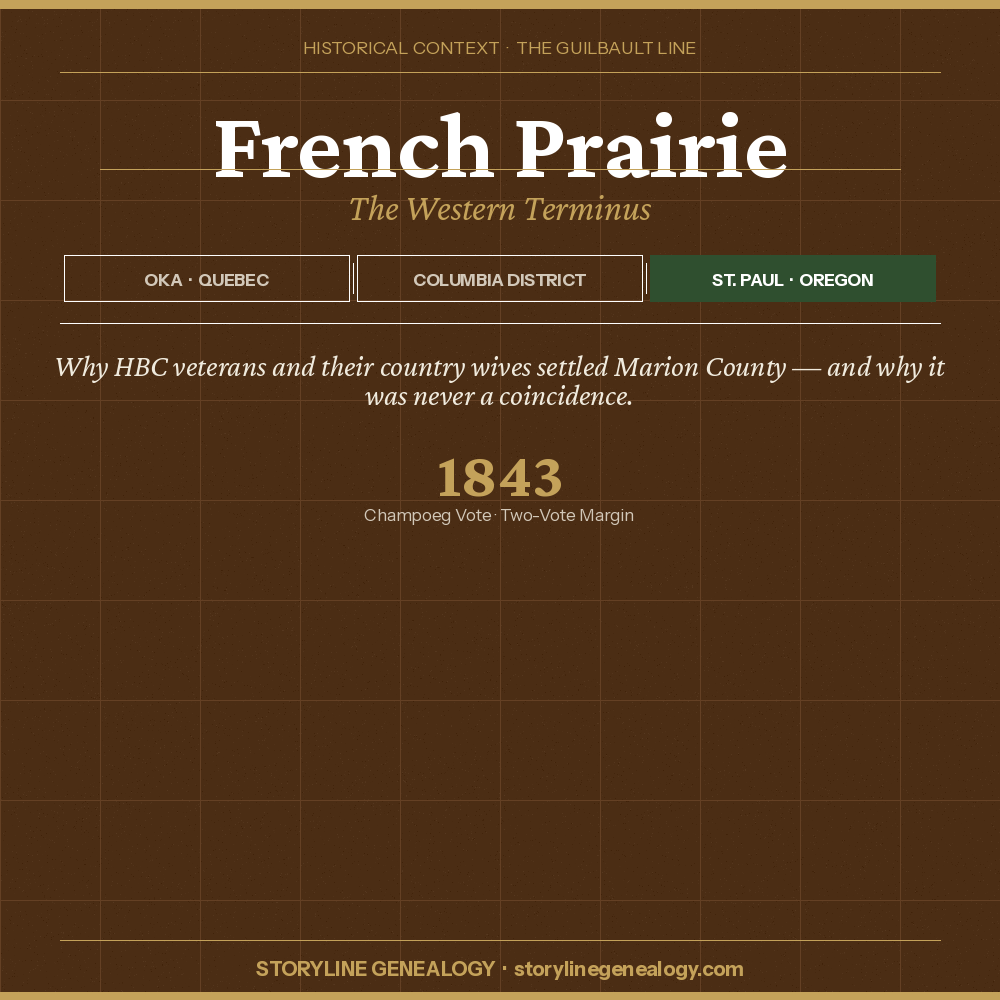
French Prairie was not a coincidence. It was the predictable endpoint of a network that began at Oka, ran through Fort Walla Walla and New Caledonia, and ended at St. Paul, Marion County — where the same families who had lived beside each other at the Lake of Two Mountains reconstituted themselves three thousand miles west. This post documents why the HBC pipeline sent those families west, why they landed where they did, and what the three-country archive gap between Quebec and Oregon means for anyone trying to trace them.
Part of the Storyline Genealogy series: The Guilbault Line: Voyageurs of the Pays d'en Haut — and the Oregon Country