
The Storyline
Real families. Real discoveries. Real stories.
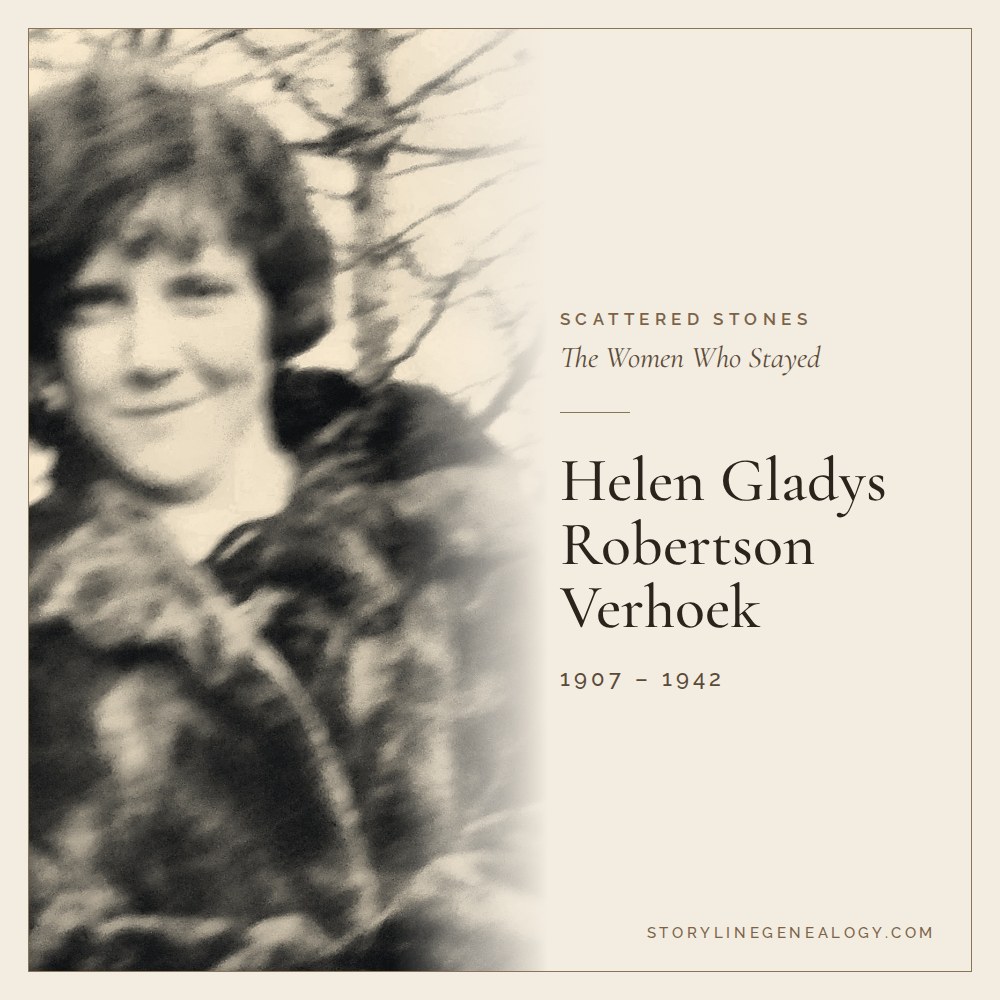
Helen Gladys Robertson Verhoek
She was born in 1907 with the face of a grandmother she never met. She died in 1942 of the disease that had killed that grandmother fifty-eight years earlier. Between those two dates, she was orphaned at sixteen, buried an infant daughter at twenty-three, and raised two children into a childhood she would not live to see finish. Her mother, grandmother, and great-grandfather had all died of the same thing. Helen Gladys Robertson Verhoek was the fifth generation to carry tuberculosis and the last to die of it. Streptomycin was isolated at Rutgers one year too late.
Part of the Storyline Genealogy Series: Documentary Biographies From Research to Story
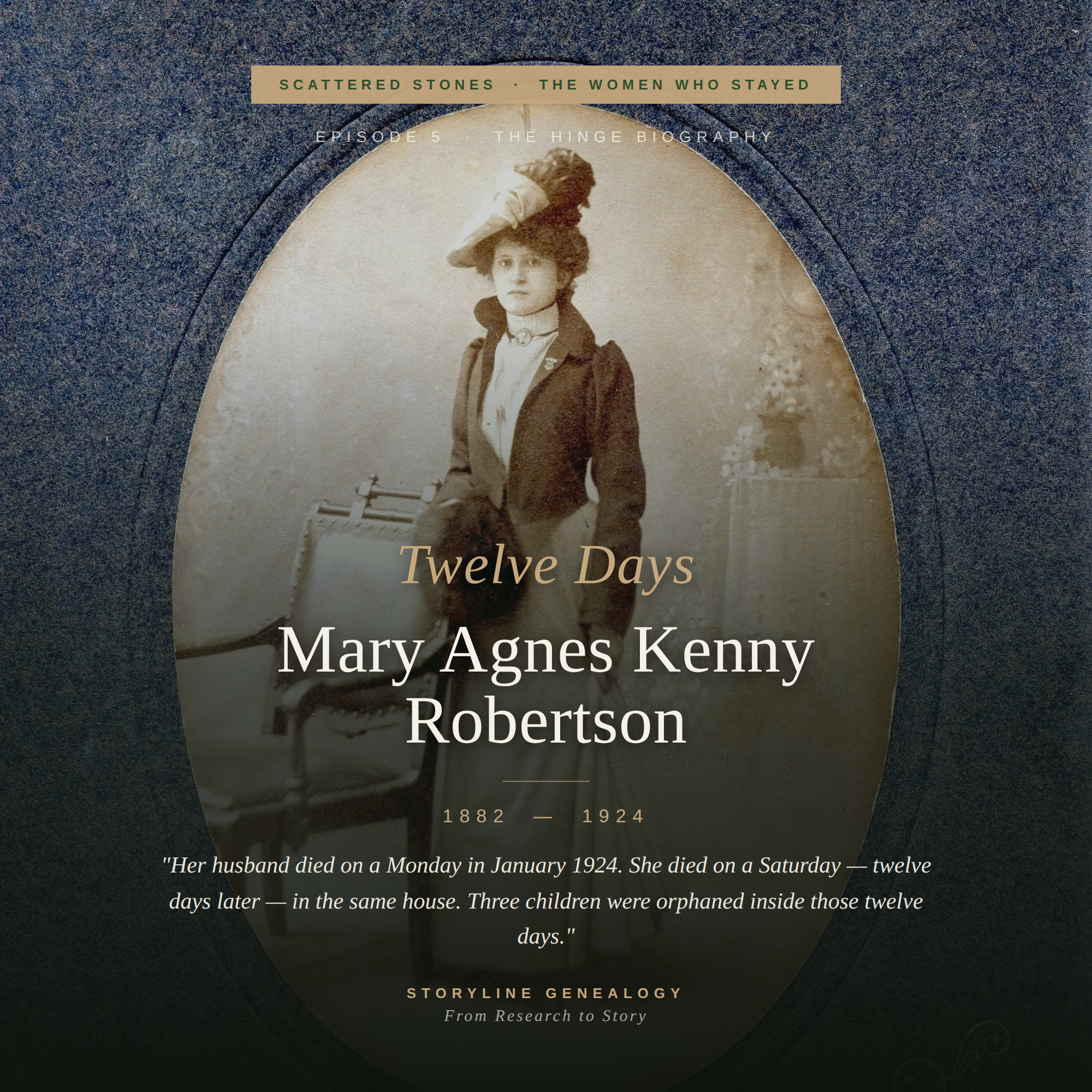
Mary Agnes Kenny Robertson
Her husband died on a Monday in January 1924. She died the following Saturday — twelve days later — in the same house, of the pulmonary tuberculosis that had killed her mother in 1884 and her grandfather in 1870, and would kill her daughter Helen in 1942. Mary Agnes Kenny Robertson was orphaned at five and raised by an aunt who never married. She gave her three children the stability she herself never had, and it collapsed inside twelve days. The hinge biography of Scattered Stones — where the Kenny line meets the Robertson line and the whole family turns.
Part of the Storyline Genealogy Series: Documentary Biographies From Research to Story
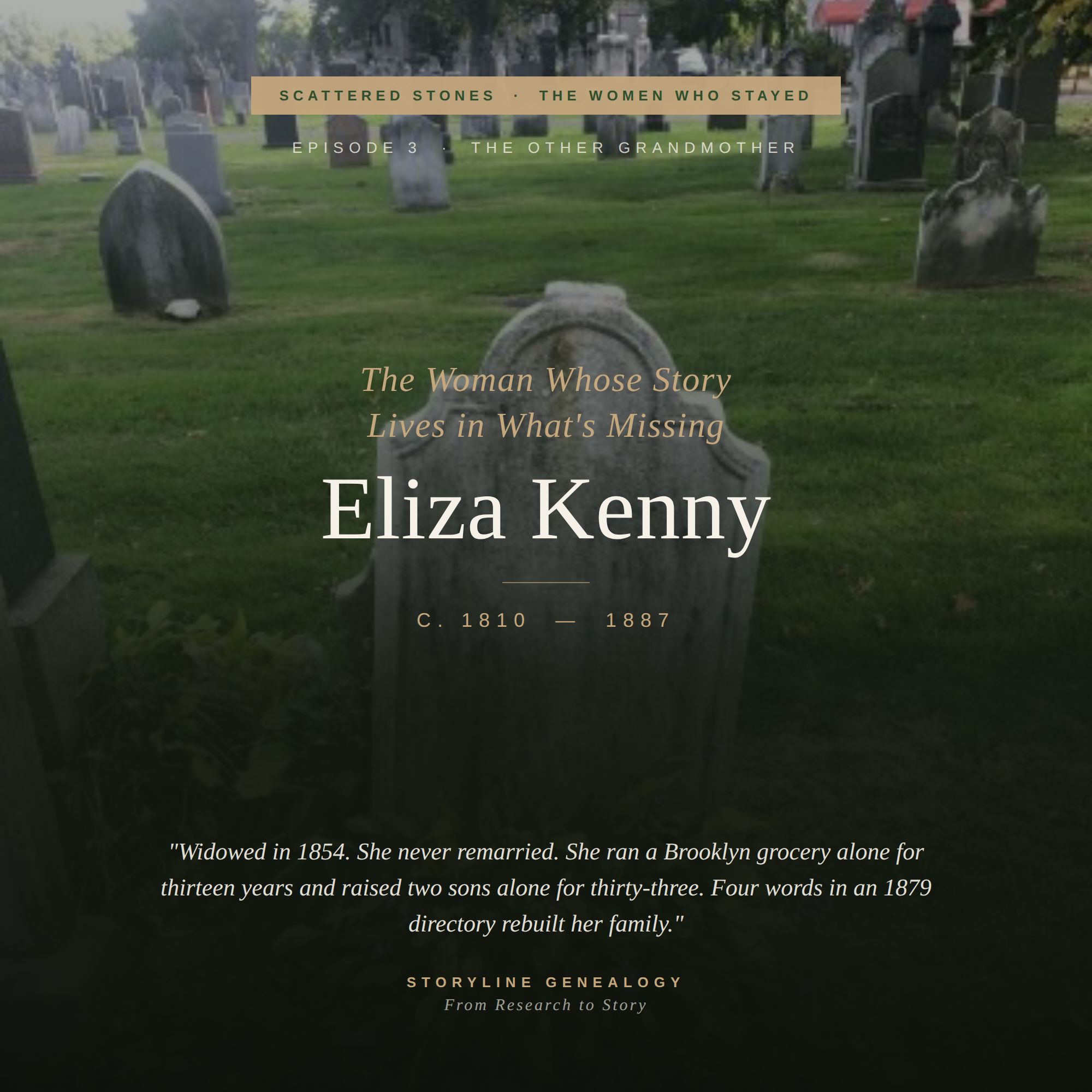
Eliza Kenny: The Other Grandmother
Widowed in 1854 with two small sons, Eliza Kenny never remarried. She ran a Brooklyn grocery on Walworth Street alone for thirteen years and raised her sons alone for thirty-three. Her maiden name is lost to the record. Her birthplace in Ireland is unknown. And yet four words in an 1879 Brooklyn directory — "Kenny Elizabeth, wid. Richard" — rebuilt her entire family tree. A biography of presence and absence, of what survives in the record and what does not.
Part of the Storyline Genealogy Series: Documentary Biographies From Research to Story
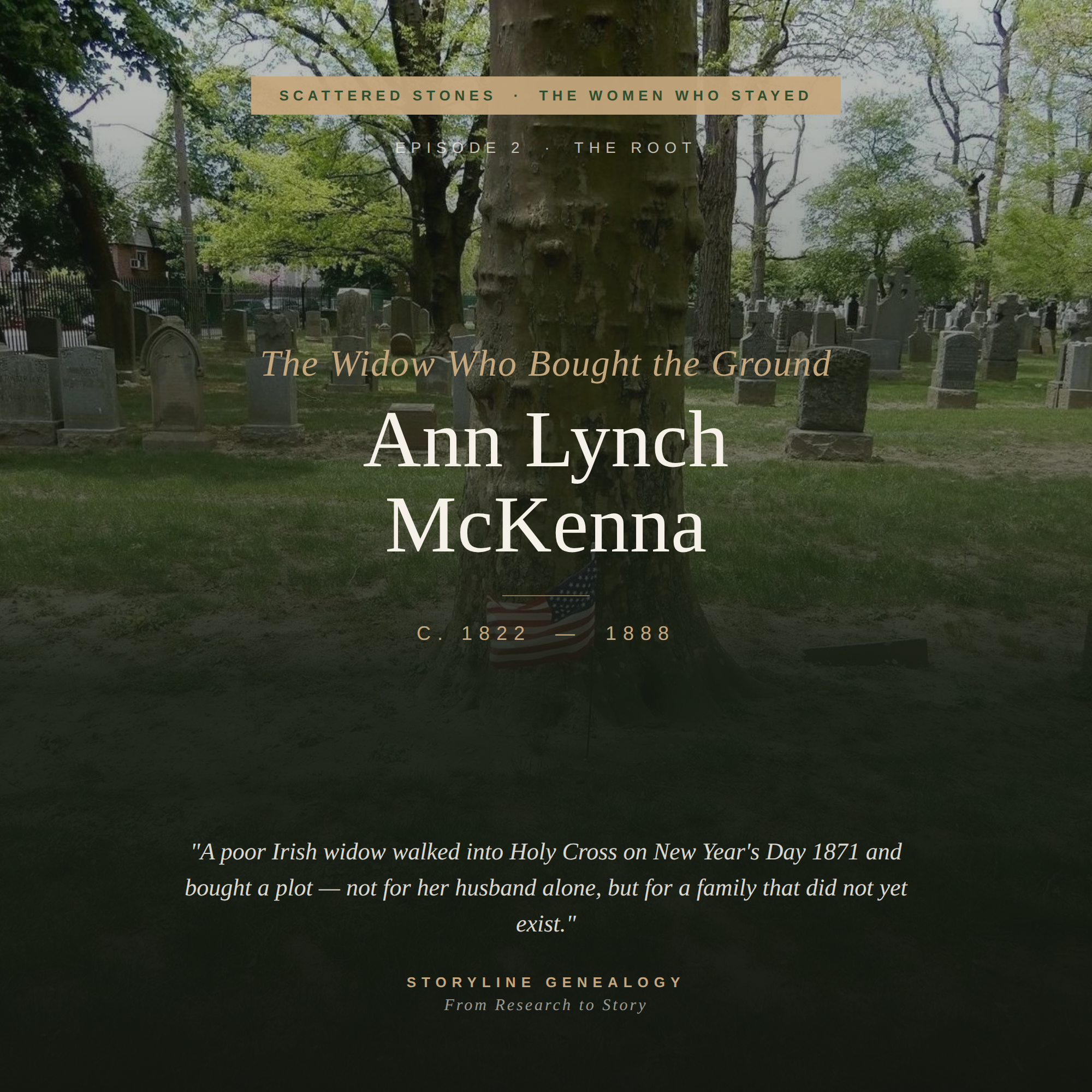
Ann Lynch McKenna
On New Year's Day 1871, a poor Irish widow walked into Holy Cross Cemetery in Brooklyn and bought a family plot — not a single grave — for the husband she had just lost to tuberculosis. Ann Lynch McKenna had no way of knowing her single act of foresight would hold seven family members across seventy-nine years, or that her great-great-granddaughter would pay the final perpetual care check one hundred and twenty years later. The root of a Brooklyn Irish family.
Part of the Storyline Genealogy Series: Documentary Biographies From Research to Story
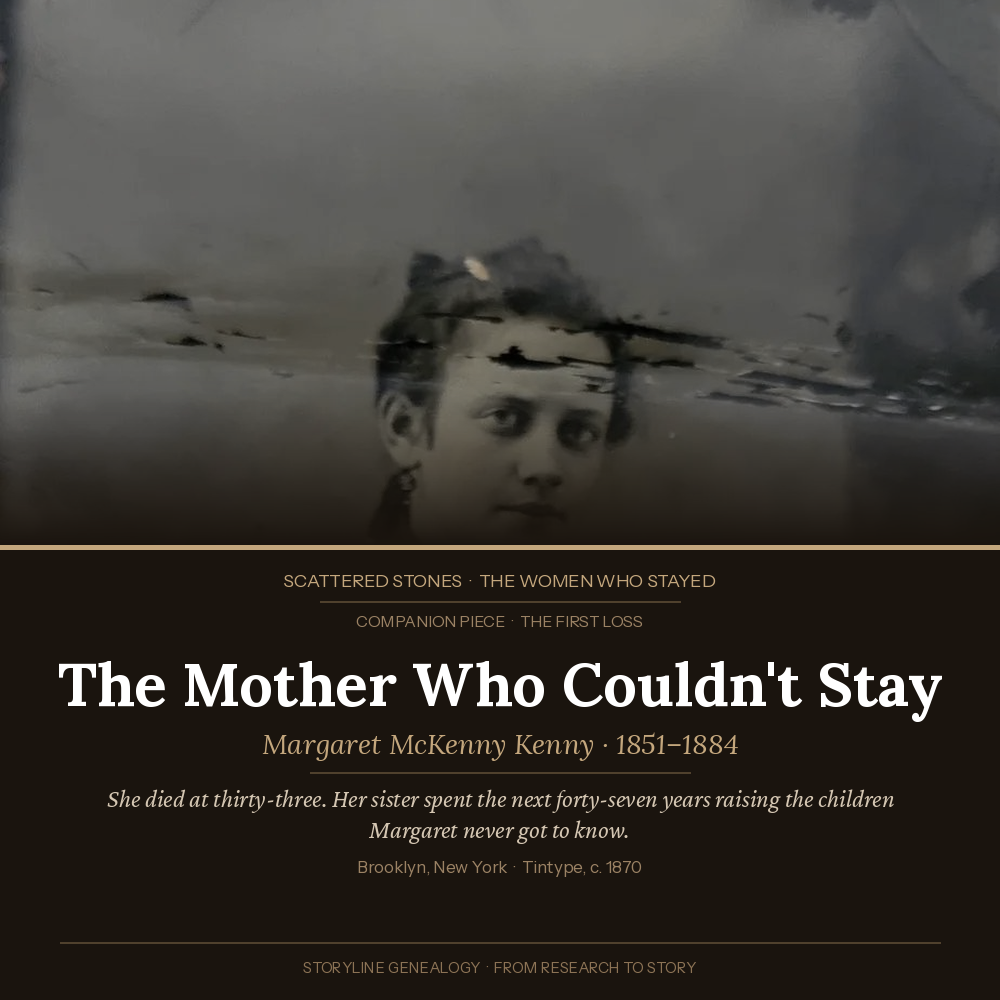
Margaret Mary McKenny
She was thirty-three years old when tuberculosis took her. She left behind two daughters, an infant who died seven weeks later, and a sister who spent the next forty-seven years raising the children Margaret never got to know. This series is named for the women who stayed. Margaret is the reason they had to.
Part of the Storyline Genealogy Series: Documentary Biographies From Research to Story
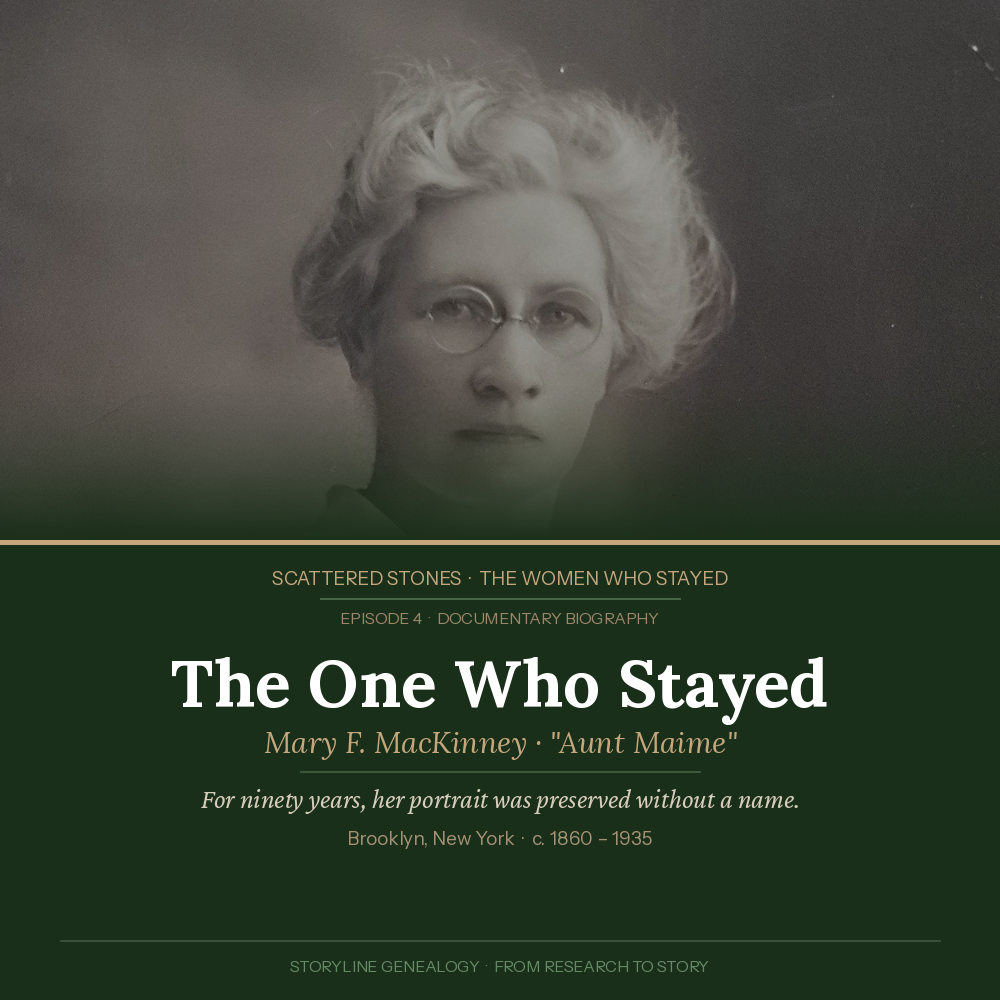
Mary F. MacKinney
For ninety years, her portrait was preserved without a name. When it was finally identified in October 2025, it revealed the story of a woman who went from placing desperate newspaper ads for housework to running her own Brooklyn boarding house — all while raising two orphaned girls who had nowhere else to go in November 1888.
Part of the Storyline Genealogy Series: Documentary Biographies From Research to Story
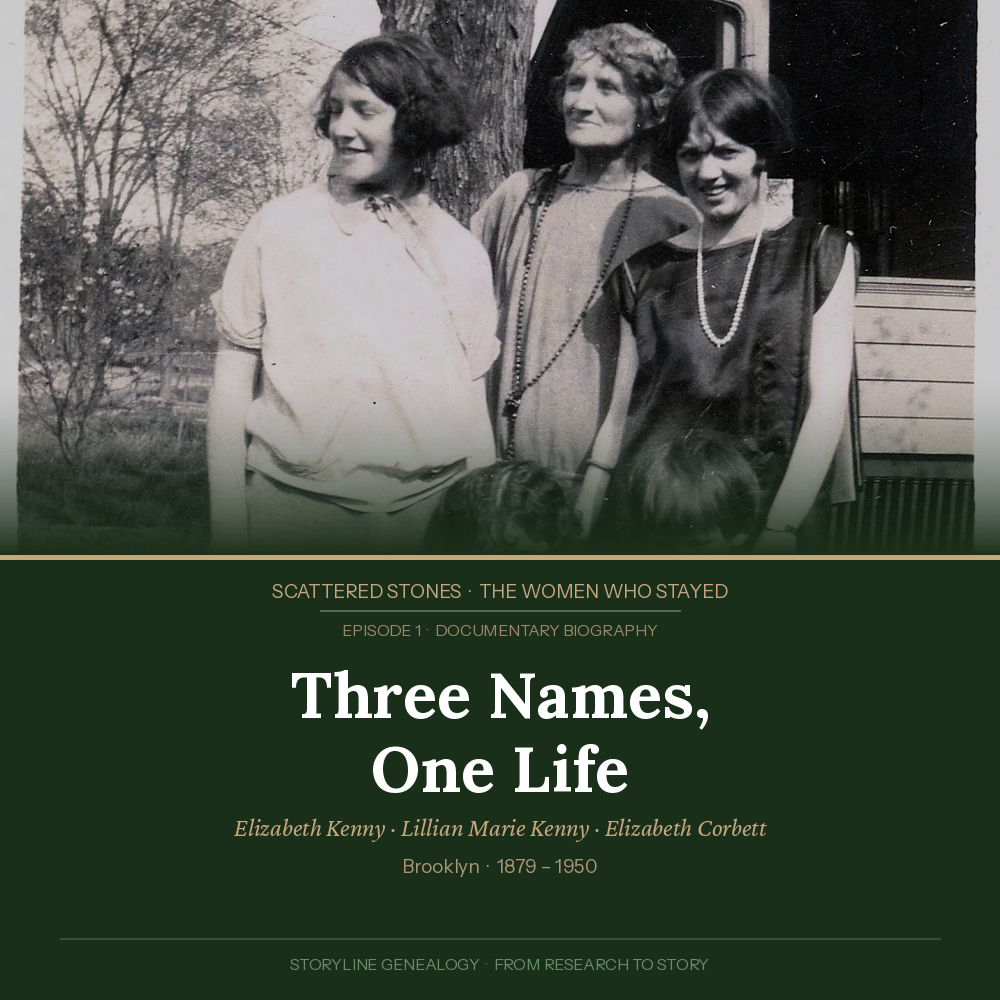
Elizabeth Kenny Corbett
She used three names across her lifetime, served twelve days in the U.S. Navy before the Armistice ended the war she'd enlisted for, and raised her sister's children after the twelve-day catastrophe of January 1924. Proving all three names belonged to the same woman required a decade of research — and one government card that put both names on a single line.
Part of the Storyline Genealogy series: Documentary Biographies From Research to Story
Irish Genealogy Challenges
Irish genealogy is widely considered among the most challenging in the world—and for good reason. Census records destroyed, parish registers that start too late, dozens of people with the same name in one parish, and DNA complicated by endogamy. After seven years researching my Hamall family from County Monaghan, I've encountered every obstacle the records can throw at a researcher. Here's what you're up against—and what you can do about it.
Part of the Storyline Genealogy series: From Research to Story
Occupational Tracking: When Name Searches Fail
You've searched every census. You've scoured city directories. You've analyzed DNA matches until your eyes crossed. But when your ancestor has one of the most common surnames in a city of 800,000 people—John Smith, Mary Jones, James Kelly—traditional name-based genealogy hits a wall.
For seven years, I searched for John Kenny among dozens of Brooklyn mat makers with virtually identical names. Traditional genealogy methods couldn't distinguish between them. But occupational tracking methodology could—and did. Learn how to use career progression as a unique identifier when name searches fail. This technique helped me solve a research problem that had stymied family historians for generations.
Part of the Storyline Genealogy Methodology Series: Because your ancestor's career tells a story when their name cannot.

The Tintype in the Box: Photo Mystery
How I identified a nameless 1870s tintype using photo dating, fashion analysis, and family records—and discovered the tragic story of Margaret Mary McKenny.
When photographs outlive memory, detective work brings our ancestors back.
Part of the Storyline Genealogy Series- Uncovering the Stories Behind the Names and Images
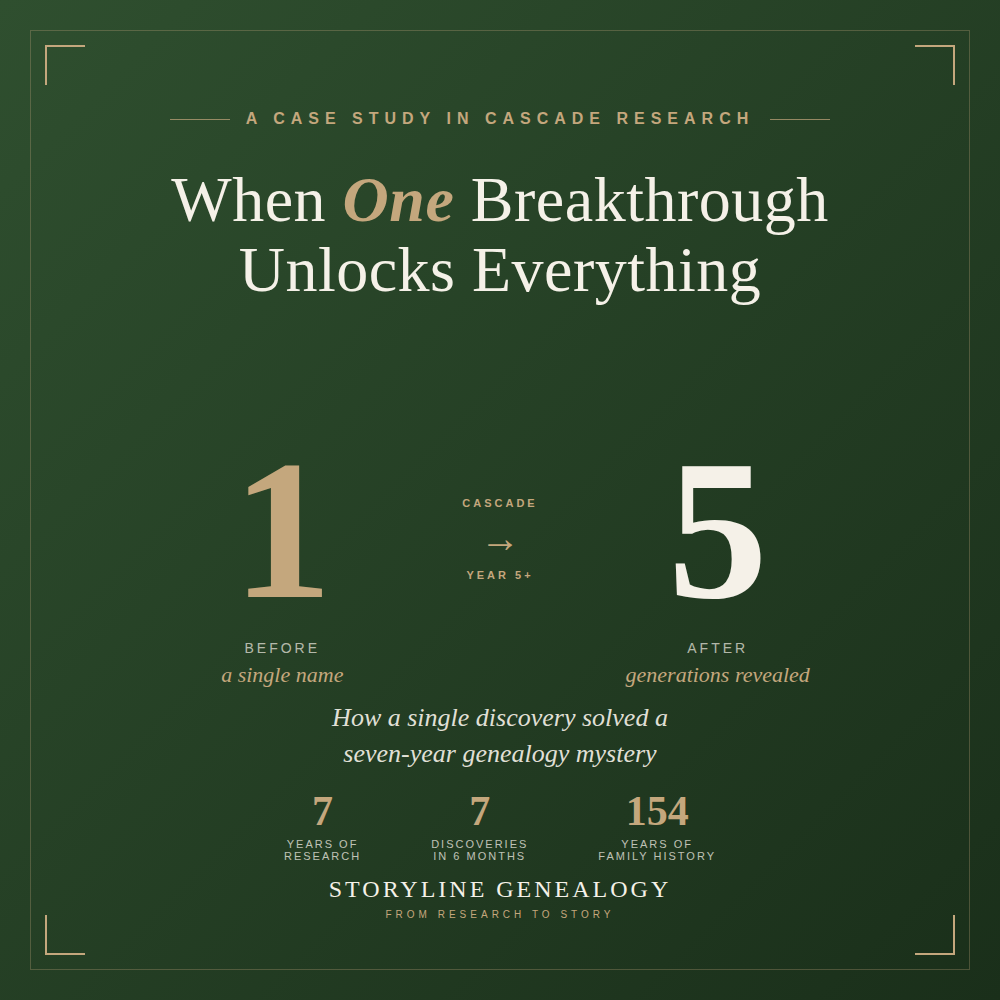
When One Breakthrough Unlocks Everything
The breakthrough came in Year 5. After seven years of searching for John Kenny among dozens of other John Kennys in Brooklyn, the answer appeared when we stopped asking "Which John Kenny?" and started asking "What made THIS John Kenny unique?" That single shift—from name-based searching to occupational tracking—unlocked seven major discoveries in six months and revealed five generations spanning 154 years.
Part of the Storyline Genealogy series: When traditional research methods fail, innovative approaches unlock the impossible cases that define professional genealogy.
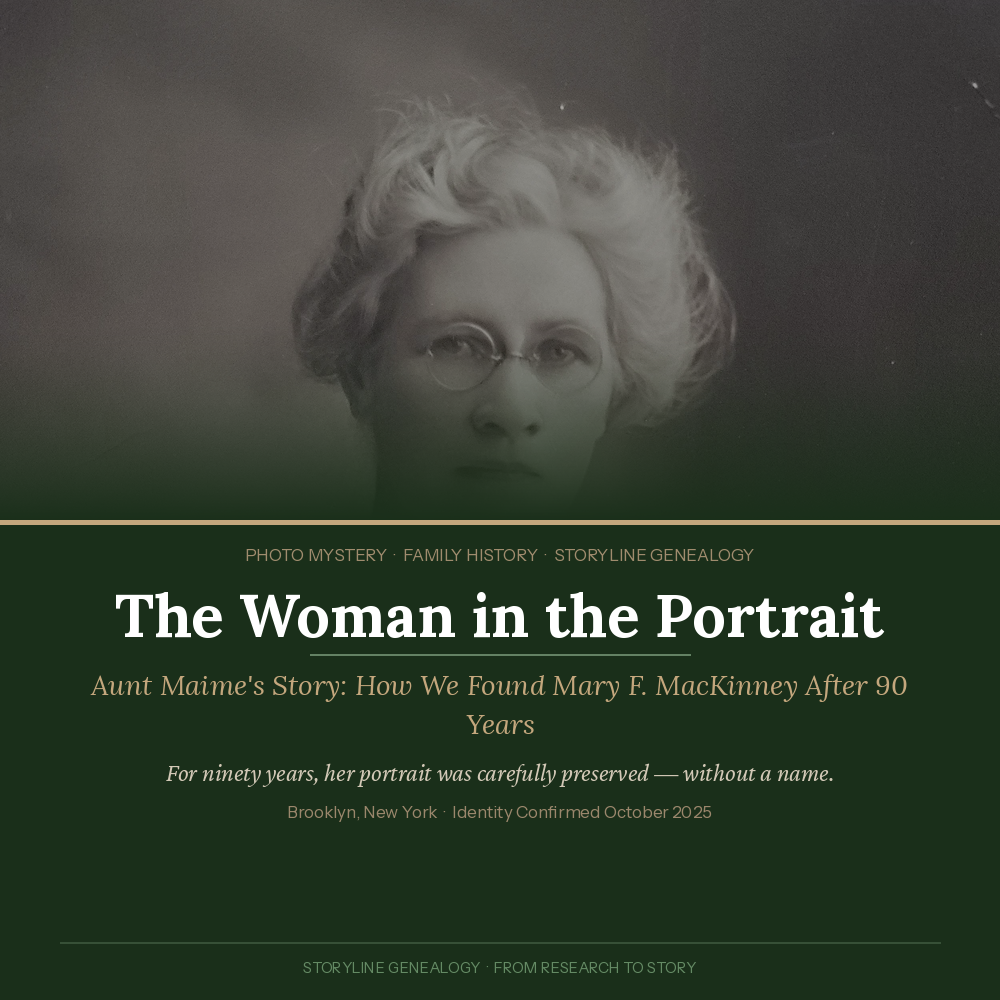
The Woman in the Portrait: Aunt Maime’s Story
For 90 years, her portrait was preserved but unlabeled. Through death certificates, census records, and a 7-year search, we finally discovered Aunt Maime's extraordinary story of sacrifice and survival.
Part of the Storyline Genealogy Series- Uncovering the Stories Behind the Names
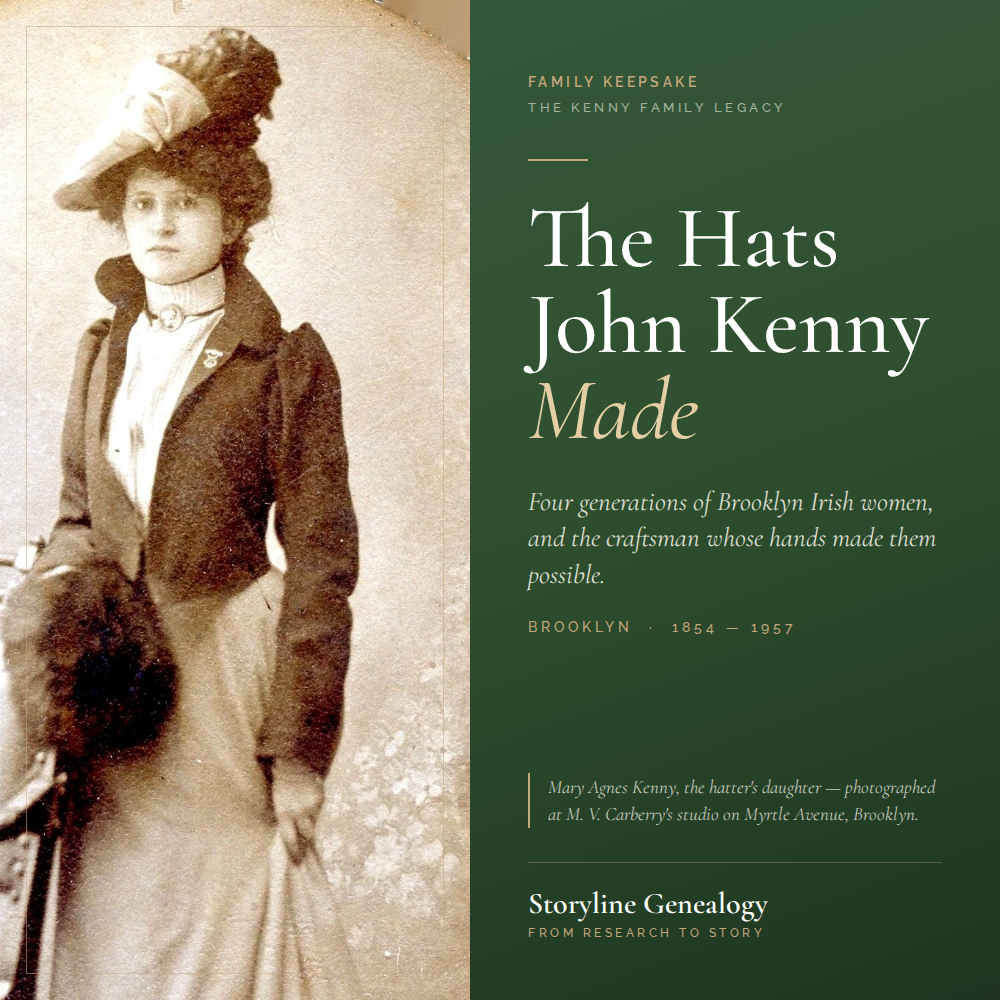
Four Generations in Hats: A Brooklyn Story of Resilience
After seven years of research into Brooklyn's mat maker John Kenny, one discovery changed everything: the hats weren't just about his craft—they were about survival. From 1888 to 1957, four generations of Kenny women wore elaborate hats in family photographs. Each hat told a story: Mary Agnes Kenny, circa 1900, twelve years after her father's death. Lillian and Helen as toddlers in luxury millinery. Lillian's timeless taupe hat at her daughter's 1957 wedding—so stylish it would turn heads 61 years later. But the real story wasn't the hats themselves. It was the network of devoted women—Aunt Maime, Aunt Lillian, grandmother Ann—who kept the family together through impossible tragedy. John Kenny's craftsmanship created more than fashion. It created a legacy that four generations of women would carry forward with dignity, resilience, and style.
Part of the Storyline Genealogy series: When one craftsman's legacy becomes four generations of resilience—the stories objects can tell.
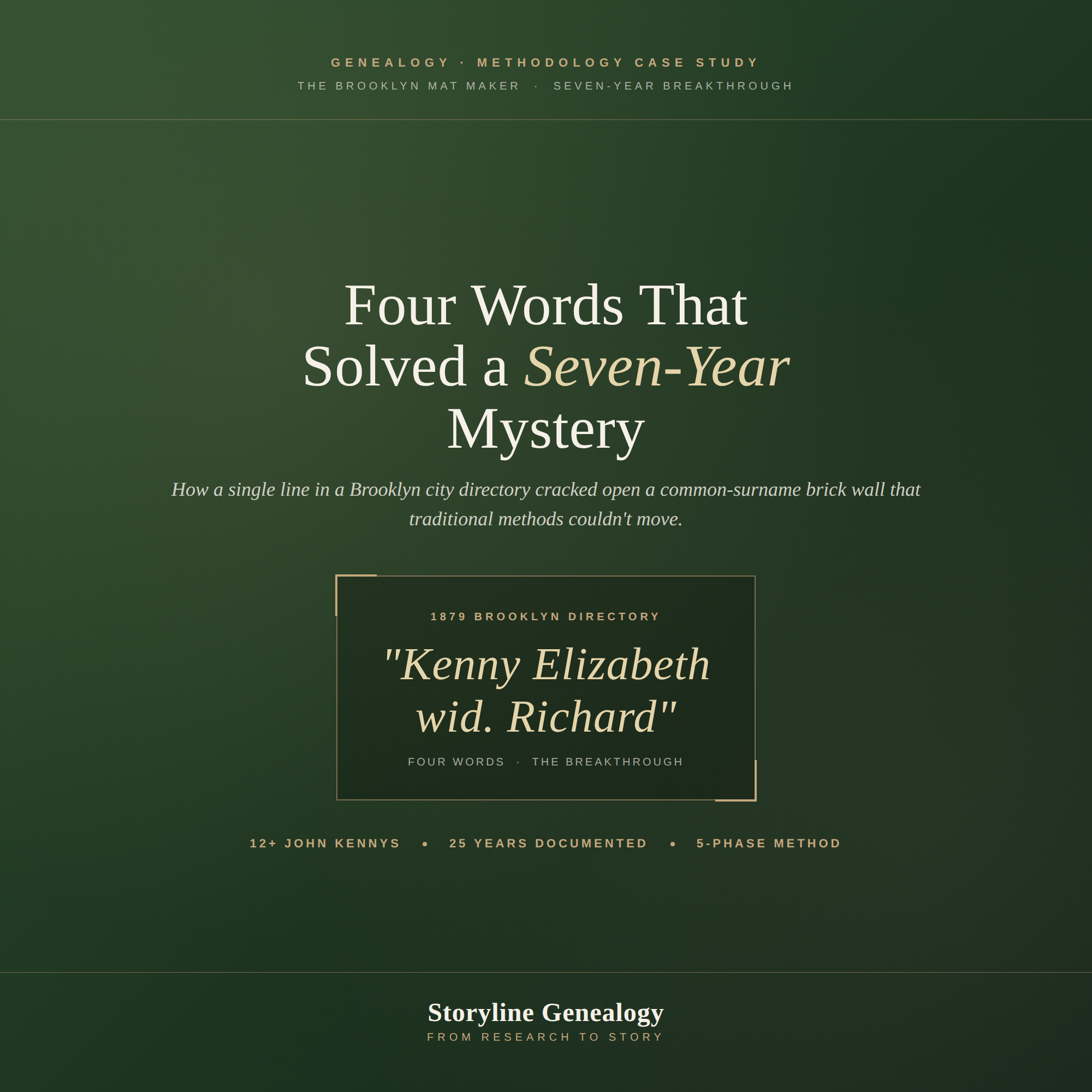
Four Words That Solved a Mystery
After seven years of failed research attempts with dozens of John Kennys in Brooklyn records, a single city directory entry changed everything. Discover how 'Kenny, Elizabeth, wid. Richard' unlocked an impossible genealogical puzzle and revealed an innovative research methodology.
Part of the Storyline Genealogy series: When traditional research methods fail, innovative approaches unlock the impossible cases that define professional genealogy.