
The Storyline
Real families. Real discoveries. Real stories.
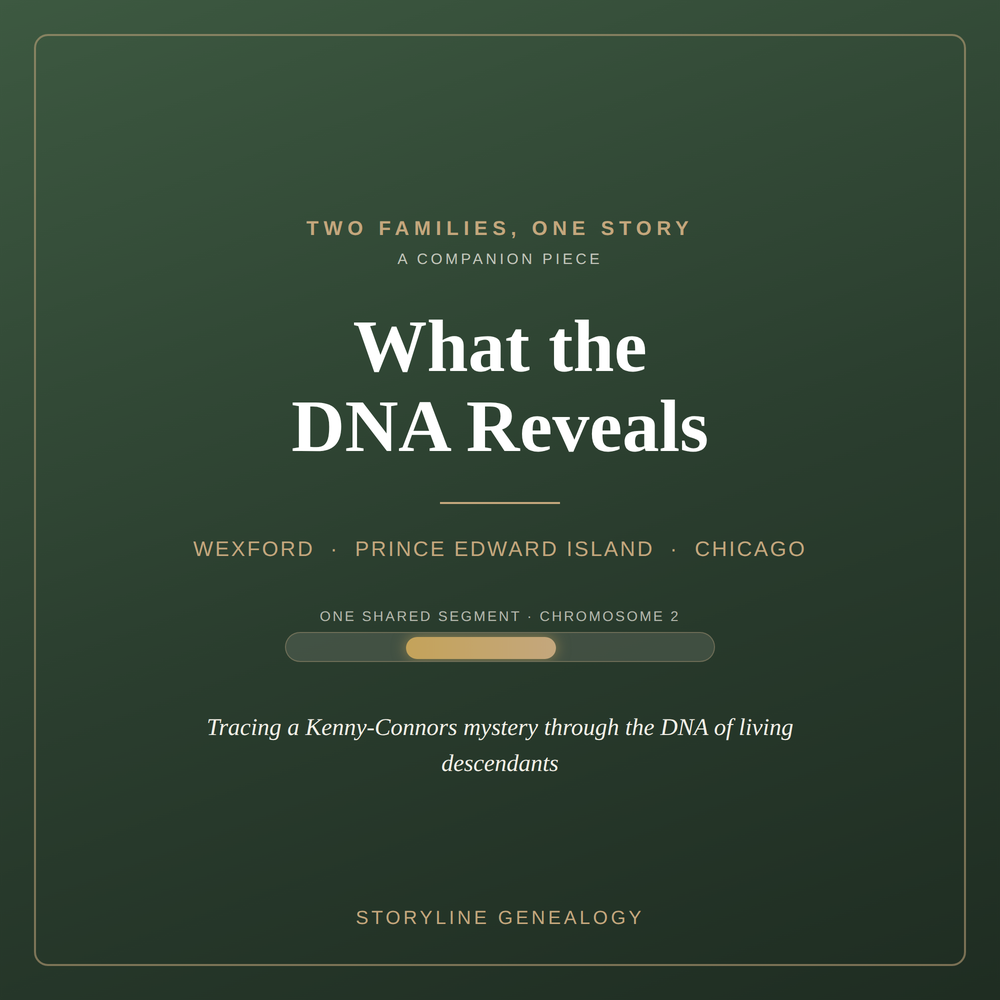
Two Families, One Story: What the DNA Reveals
Three Kenny-Connors marriages bound two families across two continents—but were they always one family? This companion piece turns from parish records to the DNA of living descendants, confirming a shared Connors ancestry from County Wexford to Prince Edward Island and narrowing a century-old question to a single missing generation.
Part of the Storyline Genealogy series: DNA Analysis From Research to Story
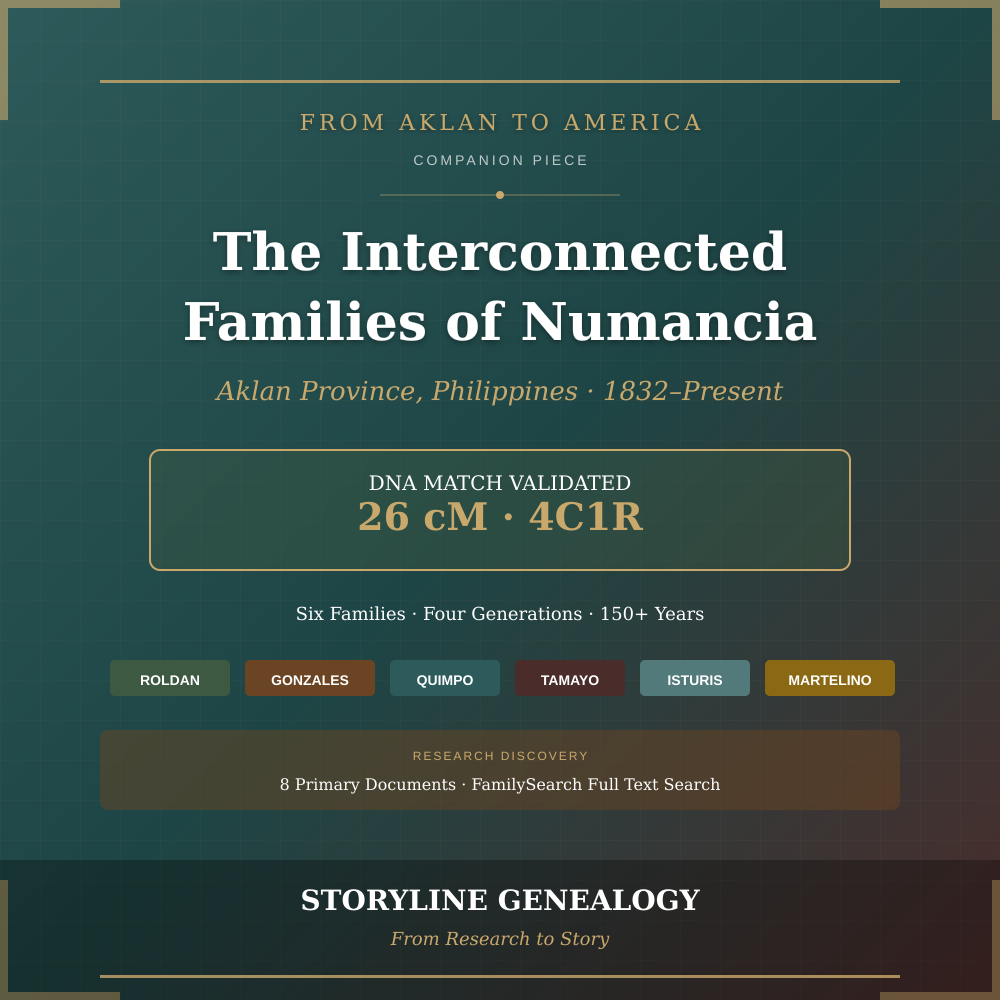
The Interconnected Families of Numancia
A distant cousin DNA match led to common ancestors through the Martelino line, launching an investigation that revealed six interconnected families in Numancia, Aklan Province. Using FamilySearch Full Text Search—a 2024 technology breakthrough that reads actual document text—eight primary documents spanning 35 years (1927–1962) documented the Roldan, Gonzales, Quimpo, Tamayo, Isturis, and Martelino families. The June 1927 Pacto de Retro sale provided the first proof that Fortunato Roldan was married to Margarita Isturis—a discovery that unlocked generations of family connections. This companion piece demonstrates professional Philippine genealogy research methodology.
Part of the Storyline Genealogy series: Documentary Biographies From Research to Story
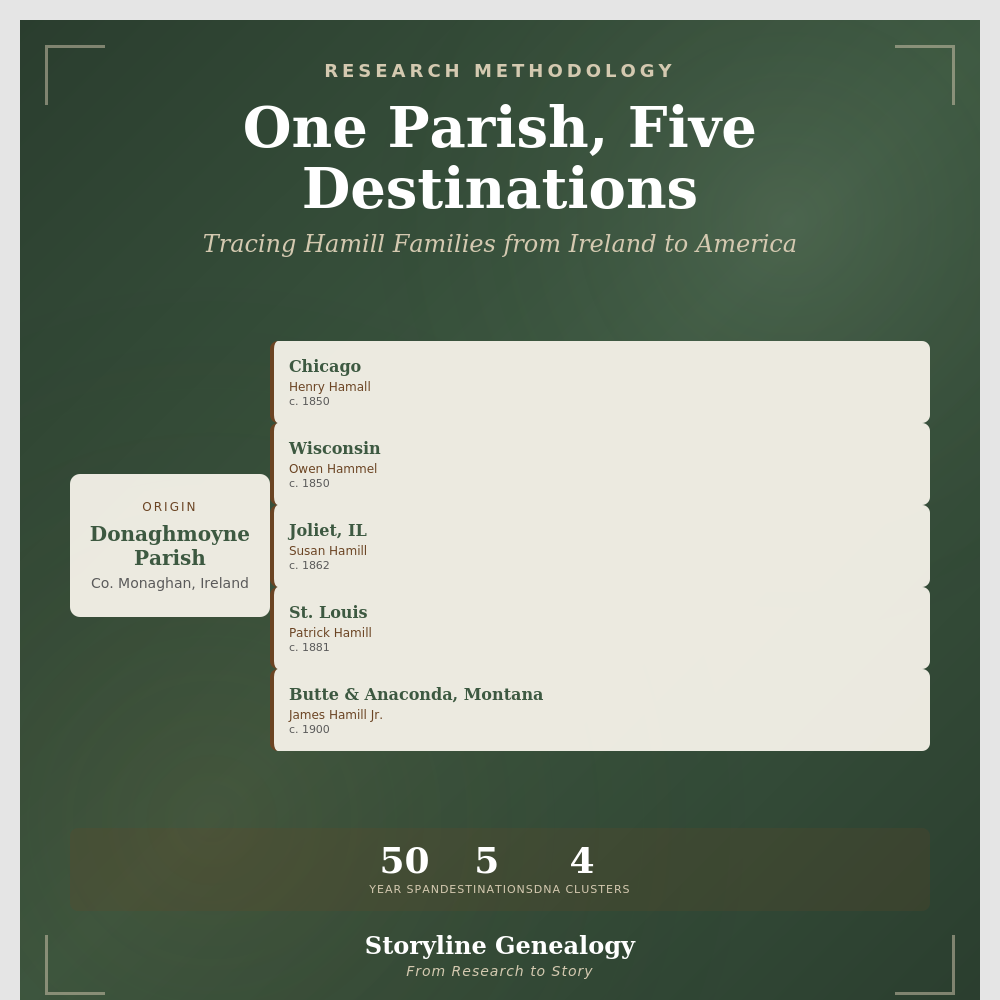
One Parish, Five Destinations
DNA doesn't lie, but it doesn't always explain itself either. As I've worked to untangle the Hamill families of Donaghmoyne parish in County Monaghan, I keep encountering the same puzzle: distinct clusters of DNA matches pointing to relatives scattered across five American destinations—Chicago, Wisconsin, Joliet, St. Louis, and Montana. These matches trace back to ancestors who were married in the same small Irish parish between 1841 and 1858. The geographic spread raises a fundamental research question: How do we prove that families who emigrated decades apart were actually connected back in Ireland?
Part of the Storyline Genealogy series: From Research to Story
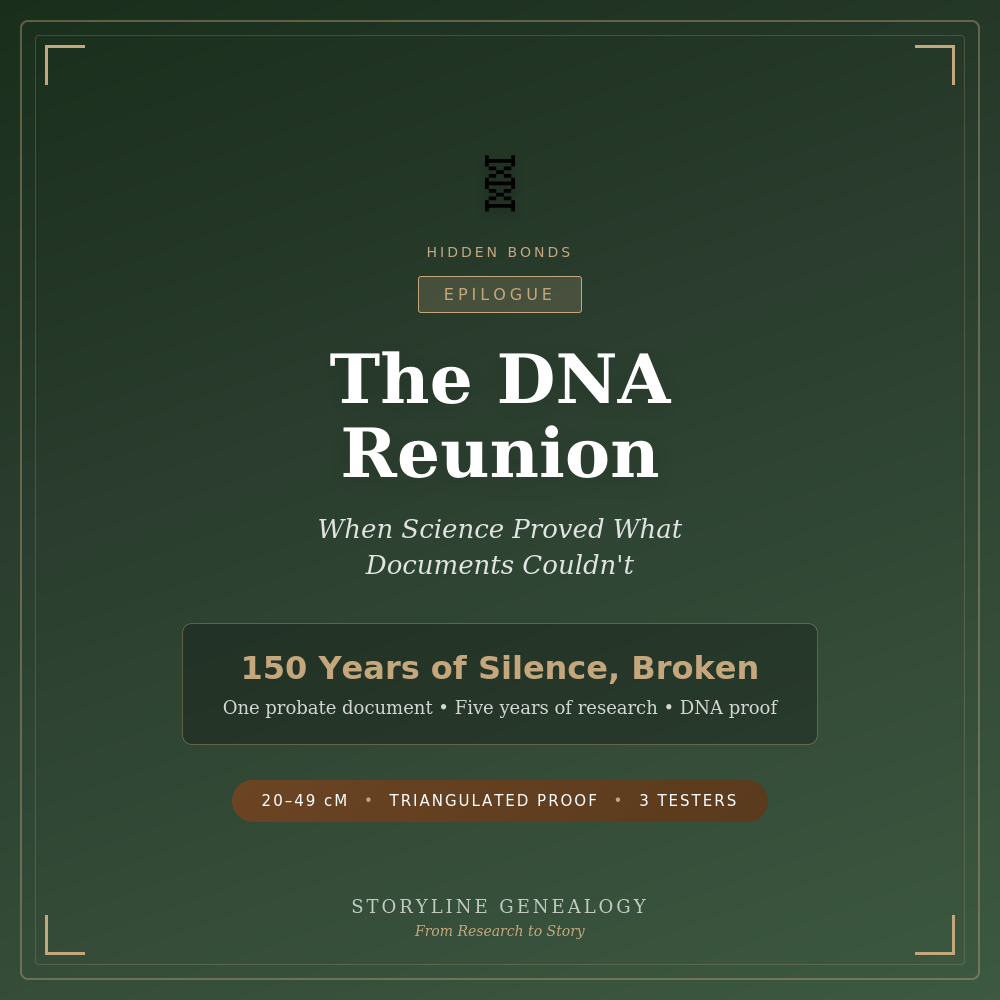
Hidden Bonds Epilogue: The DNA Reunion
When Terrence O'Brien died in 1874, a single line in the probate document mentioned "Uncle Patrick O'Brien in Newport, Kentucky." For 150 years, that reference stood alone—no other evidence connected the New York and Kentucky families. Then DNA testing proved what documents couldn't.
Part of the Storyline Genealogy series: Documentary Biographies From Research to Story
Hidden Bonds Prologue: The Blood of Kings
They were descended from the High King who united Ireland. For three centuries, the Penal Laws tried to erase them. Then DNA proved what history couldn't destroy—a thousand years of royal blood connecting two Famine refugees to Brian Boru himself.
Part of the Storyline Genealogy series: Documentary Biographies From Research to Story
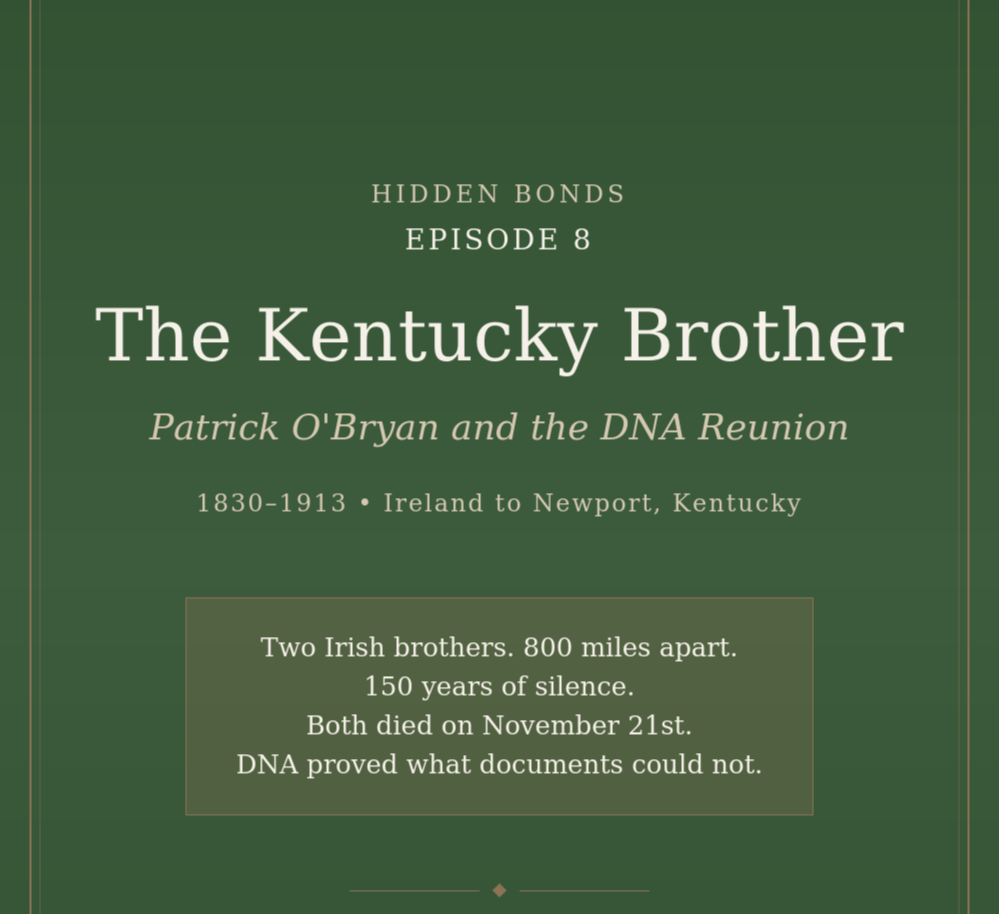
Hidden Bonds: The Kentucky Brother
For 150 years, a single line in a probate document was the only evidence that Terrence O'Brien had a brother: "Uncle Patrick O'Brien in Newport, Kentucky." Traditional genealogy hit dead ends. The surname was spelled differently. The families lived 800 miles apart. Then descendants of both lines took DNA tests—and science proved what documents could not. Even more remarkable: both brothers died on November 21st, exactly 39 years apart.
Part of the Storyline Genealogy series: Documentary Biographies From Research to Story
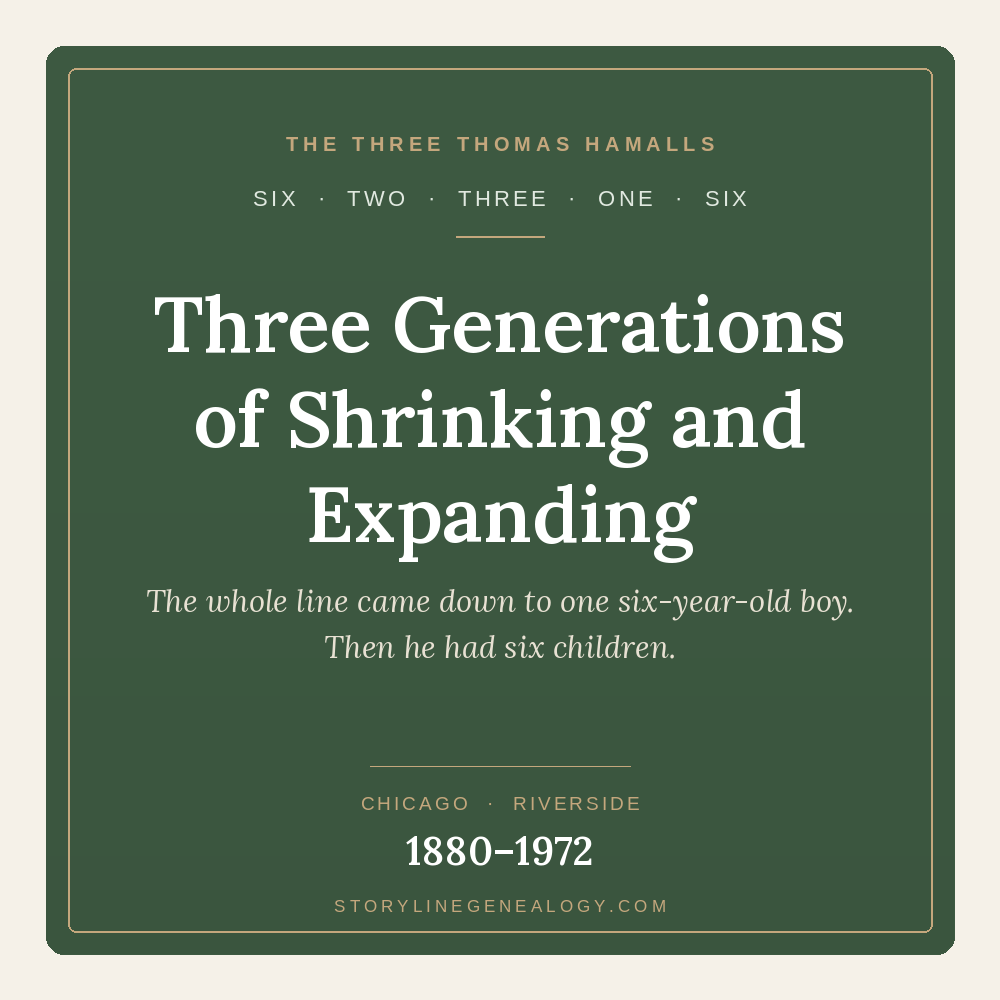
Three Generations of Shrinking and Expanding
Kate Hamall bore six children in Chicago and buried four of them across 1892 and 1893. Two generations later her great-grandson Thomas Kenny was the only person alive carrying that line forward — one boy of six, in a household that had just come apart. His cousins Edward and Emmett Holland both lived to eighty-nine and had no children, so that branch ended quietly in the 1990s with nobody left to tell. Then in 1957 Thomas Kenny married Barbara Ann O'Brien, and they had six children: the number Kate started with, eighty years on.
Part of the Storyline Genealogy Series: From Research to Story