
The Storyline
Real families. Real discoveries. Real stories.
Marie Lorgueil: The Documented Legacy
From her 1634 baptism in Bordeaux to her 1700 burial in Montreal, we've assembled 40+ documents tracing Marie Lorgueil's complete life. This is not typical—this is extraordinary. Most 17th-century women exist only in fragments. Marie's complete documentary arc reveals strategic intelligence, colonial resilience, and women's agency across 66 years and an ocean. Episode 4 concludes the series synthesizing what this remarkable documentation achievement means for family historians.
Part of the Storyline Genealogy series: Documentary Biographies
Marie Lorgueil: The Widowhood Years
In 1690, after 36 years of marriage, Toussaint Hunault died, leaving Marie a widow at age 56. Through legal documents from 1691 and the framework of the Custom of Paris, we examine how Marie navigated widowhood with agency and competence. She wasn't a helpless dependent—she was a legally capable woman who participated in estate settlements, protected her dower rights, and maintained dignity. Episode 3 of Marie Lorgueil's complete documented life (1634-1700).
Part of the Storyline Genealogy series: Documentary Biographies

Marie Lorgueil: Building a Family on the Frontier
In 21 years, Marie Lorgueil bore 10 children and raised 8 to adulthood—an extraordinary 80% survival rate in an era when half of all children died young. The 1666 census captures a perfect snapshot: all six children living, ages matching baptism records exactly. Through systematic analysis of baptism records, birth spacing, and documentary gaps, we reconstruct Marie's achievement as a frontier mother. Episode 2 of Marie Lorgueil's complete documented life (1634-1700).
Part of the Storyline Genealogy series: Documentary Biographies
Marie Lorgueil: The Girl Who Lied About Her Age
In 1654, Marie d'Orgueil crossed the Atlantic to New France and strategically misrepresented her age by four years. This wasn't desperation—it was calculated intelligence. Through baptism records, marriage documents, and census data, we resolve conflicting evidence and discover a family pattern: her daughter would employ the exact same strategy 22 years later. Episode 1 of Marie Lorgueil's complete documented life (1634-1700).
Part of the Storyline Genealogy series: Documentary Biographies
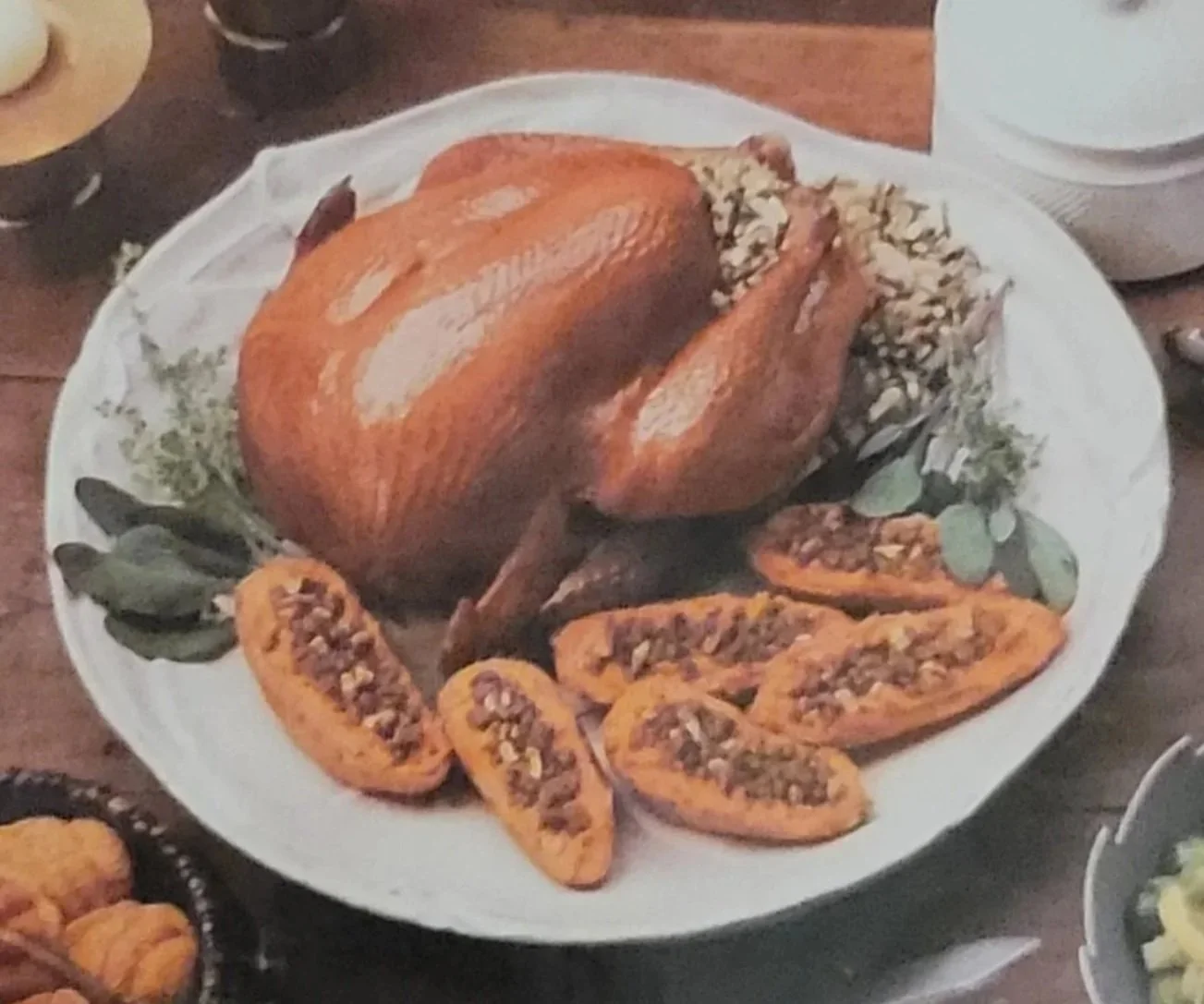
Thanksgiving Treasures from the Recipe Box
Every family has them—those yellowed recipe clippings tucked into cookbooks, handwritten cards passed down through generations. This Thanksgiving, I'm sharing favorites from my own collection, from the wild rice stuffing that's been on our table since 1986 to memories of Grandmother O'Brien's mashed turnips.
Part of the Storyline Genealogy series: From Research to Story
Finding the Filles du Roi in Colonial Records
The Filles du Roi left no personal diaries, but their lives are documented across colonial New France's archives. From marriage contracts to baptismal records, here's where to find the paper trail of the King's Daughters—and what those records can and cannot tell us.
Part of the Storyline Genealogy series: From marriage contracts to baptismal records—the documentary trail of the King's Daughters.
Occupational Tracking: When Name Searches Fail
You've searched every census. You've scoured city directories. You've analyzed DNA matches until your eyes crossed. But when your ancestor has one of the most common surnames in a city of 800,000 people—John Smith, Mary Jones, James Kelly—traditional name-based genealogy hits a wall.
For seven years, I searched for John Kenny among dozens of Brooklyn mat makers with virtually identical names. Traditional genealogy methods couldn't distinguish between them. But occupational tracking methodology could—and did. Learn how to use career progression as a unique identifier when name searches fail. This technique helped me solve a research problem that had stymied family historians for generations.
Part of the Storyline Genealogy Methodology Series: Because your ancestor's career tells a story when their name cannot.
Hidden Bonds: The Kentucky Brother
For 150 years, a single line in a probate document was the only evidence that Terrence O'Brien had a brother: "Uncle Patrick O'Brien in Newport, Kentucky." Traditional genealogy hit dead ends. The surname was spelled differently. The families lived 800 miles apart. Then descendants of both lines took DNA tests—and science proved what documents could not. Even more remarkable: both brothers died on November 21st, exactly 39 years apart.
Part of the Storyline Genealogy series: Documentary Biographies From Research to Story
Hidden Bonds: The Irish Boy Who Built an Empire
DNA has proven what history forgot: Terrence O'Brien, who arrived in America as a famine refugee before his eighteenth birthday, carried the genetic signature of Brian Boru, High King of Ireland. The Catholic branch of the Royal House of Thomond—thought to have died out centuries ago—survived in the bloodline of a stable hand who built himself into a hotel empire in Jamaica, Queens. This is the origin story of a hidden prince.
Part of the Storyline Genealogy series: Documentary Biographies From Research to Story
Hidden Bonds: Orphan, Scale Maker, and Father of Ten
Miles Murtha Lawrence O'Brien lost both parents before he turned two. In 1874, four O'Brien children were scattered to different relatives — the three older children to their mother's family, the Higginses; baby Miles to his mother's family, the Bedells. They had no shared maternal relatives to hold them together. Against all odds, Miles and his half-brother James Henry reconnected as adults. James became a U.S. Congressman and founded a scale company in Brooklyn. Miles became his scale maker. Two marriages. Ten children. And the DNA that would reunite the family 150 years later.
Part of the Storyline Genealogy series: Documentary Biographies
From Research to Story

Hidden Bonds: The Carpenter Who Built with Double Vision
Miles Murtha O'Brien fell from a scaffold in an elevator shaft. The family believes it was during construction of the Chrysler Building—the timing fits, and the story has been passed down for nearly a century. He survived with only bruises—and permanent double vision. He never worked on a crew again. Instead, he spent the next fifty years as a solo carpenter, building medical offices, renovating kitchens, and raising six children with his wife Lillian. This is the story of a man who lost his mother at two, fell from a scaffold at twenty-five, and kept working until the end.
Part of the Storyline Genealogy series: Documentary Biographies From Research to Story
Hidden Bonds: Orphan, Engineer, and Congressman
James Henry O'Brien lost his mother at four and his father at fourteen. The four O'Brien children were scattered to different relatives — James sent to another state, his baby half-brother Miles placed with grandparents. They had no shared maternal family to hold them together. Against all odds, James built himself into a U.S. Congressman. He founded the J.H. O'Brien Scale & Supply Company, a Brooklyn institution that lasted over 60 years. And he found his half-brother Miles, hiring him at the family business. When James remarried in 1902, Miles stood beside him as witness. The bond between them would shape both families for generations.
Part of the Storyline Genealogy series: Documentary Biographies
From Research to Story
Hidden Bonds: Sisters, Widows, and Companions
Mary Ann O'Brien Smith and Elizabeth O'Brien Foley were sisters who weathered widowhood together. After losing their husbands, they shared a Brooklyn home for over two decades. But the most remarkable twist came in 1937, when Mary Ann's son Thomas—a New York Fire Captain—married Rose Higgins, the daughter of Thomas J. Higgins, who had served as executor of their brother Terrence O'Brien's estate. Two families already bound by legal trust became bound by blood. Today, three surnames—Higgins, Smith, and O'Brien—are inscribed on a single gravestone in Queens.
Part of the Storyline Genealogy series: Documentary Biographies From Research to Story
Hidden Bonds: Four Orphans and a Hidden Fortune
When Terrence O'Brien died on November 21, 1874, his four children were scattered to relatives across three states. James Henry, age 14, was sent to his uncle Patrick in Newport, Kentucky. Mary Ann and Elizabeth stayed in Jamaica with their maternal uncle Thomas Higgins. Baby Miles, just 18 months old, went to his great aunt Mrs. Madden. The probate listed the estate at just $400. Years later, $11,000 in government bonds was discovered hidden in the kitchen wall of the hotel Terrence had once owned — a fortune that could have kept the family together. The bonds hidden in the wall may have been lost. But the bonds between the siblings endured.
Part of the Storyline Genealogy series: Documentary Biographies From Research to Story
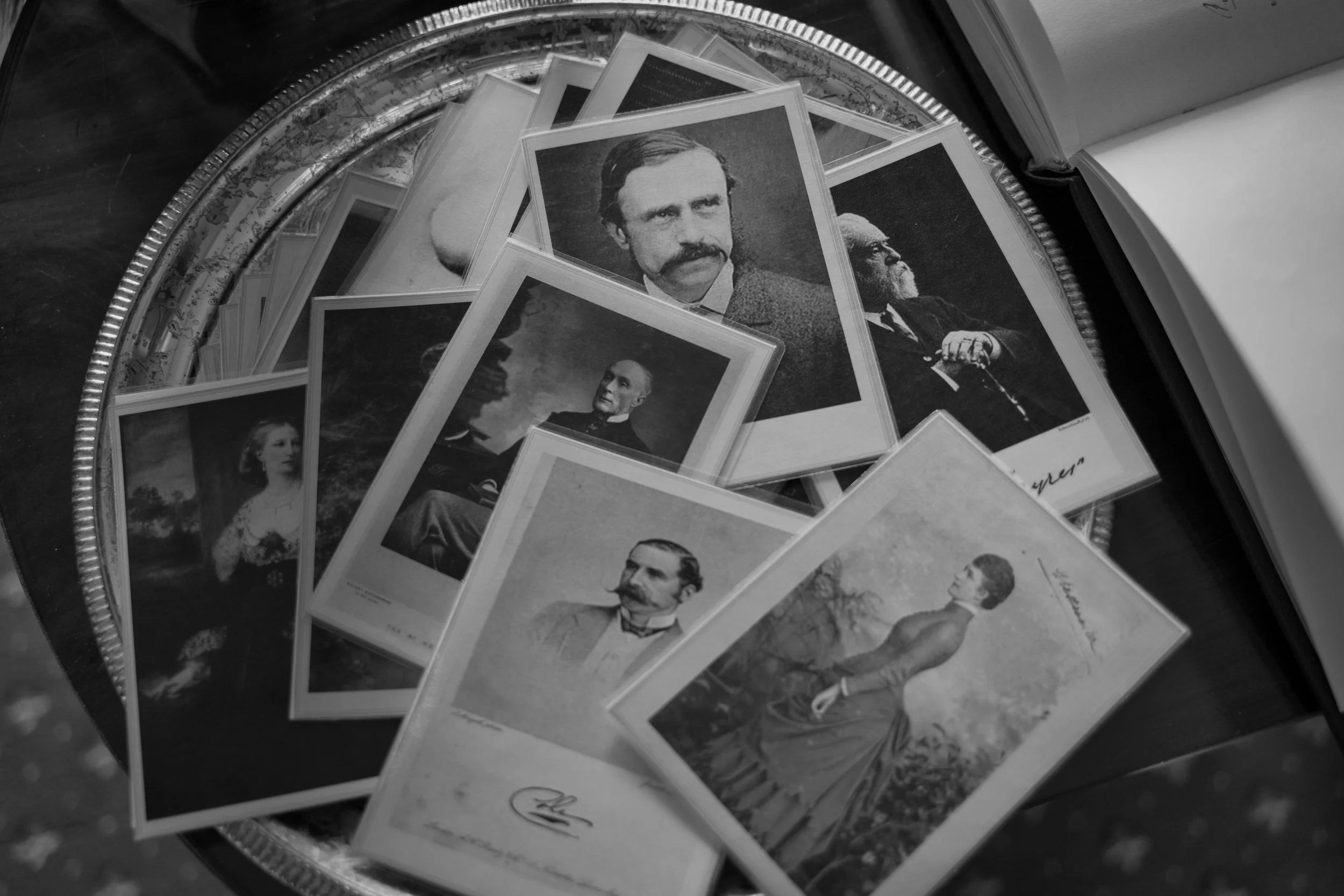
Why Your Family Tree Matters More Than Ever: Finding Ourselves in Our Ancestors
Why does your family tree matter? Because understanding where you came from helps you understand who you are. Your ancestors survived incredible hardships—and their strength lives in you. This piece explores how genealogy connects us to our past, reveals that we're all family, and reminds us that every single one of us descends from immigrants. It's time to honor their stories before they're lost forever.
Part of the Storyline Genealogy Series: Because every family story deserves to be told
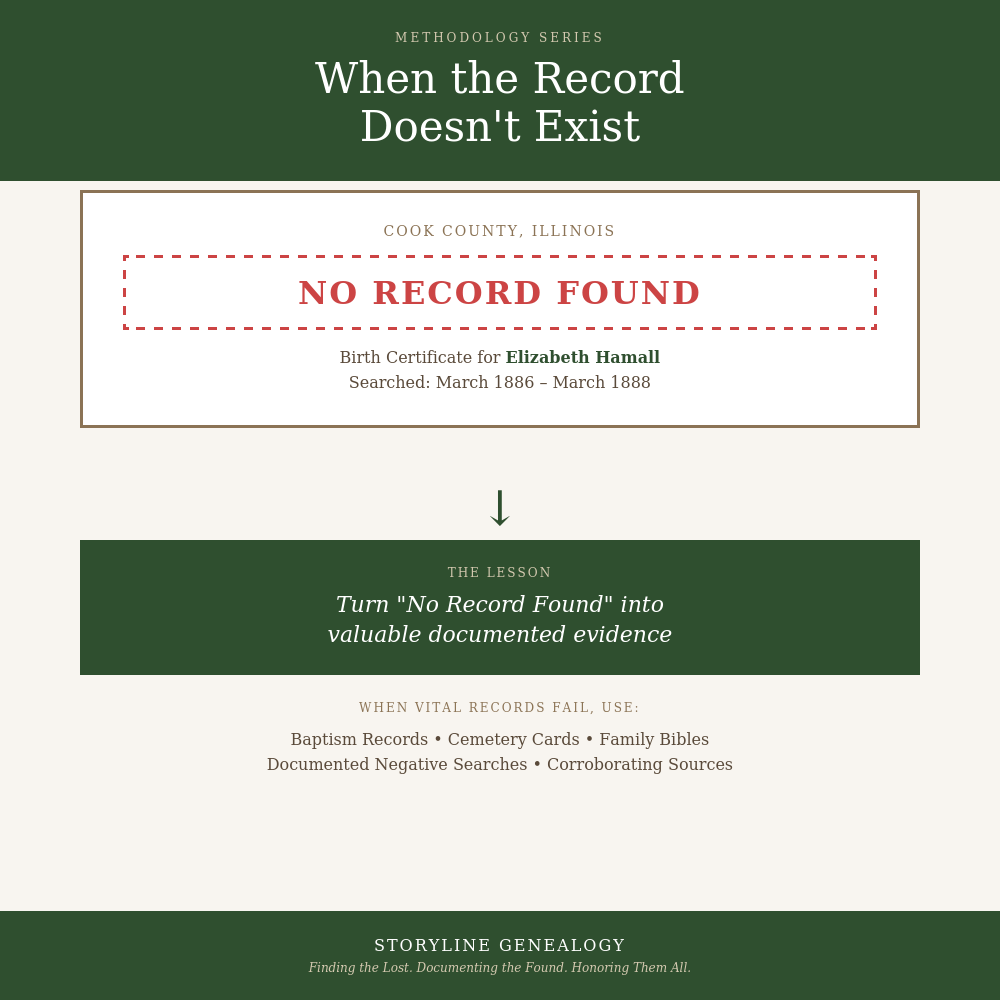
When the Record Doesn’t Exist: A Lesson in Documenting Negative Evidence
Learn how to turn "No Record Found" into valuable evidence. This case study follows Elizabeth Hamall's missing 1887 Chicago birth certificate, showing how baptism records, cemetery cards, and documented negative searches tell a complete story when vital records don't exist. A professional genealogy methodology lesson.
Part of the Storyline Genealogy Series: Finding the Lost. Documenting the Found. Honoring Them All.
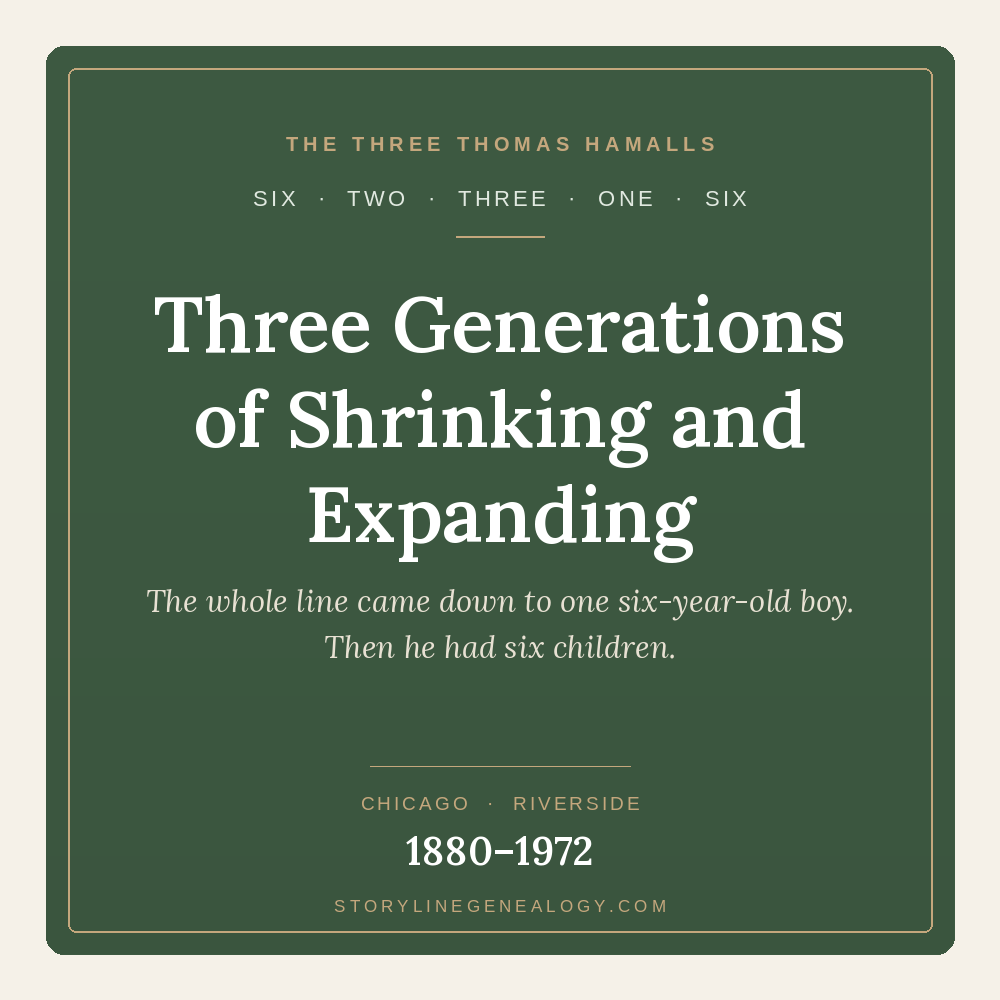
Three Generations of Shrinking and Expanding
Kate Hamall bore six children in Chicago and buried four of them across 1892 and 1893. Two generations later her great-grandson Thomas Kenny was the only person alive carrying that line forward — one boy of six, in a household that had just come apart. His cousins Edward and Emmett Holland both lived to eighty-nine and had no children, so that branch ended quietly in the 1990s with nobody left to tell. Then in 1957 Thomas Kenny married Barbara Ann O'Brien, and they had six children: the number Kate started with, eighty years on.
Part of the Storyline Genealogy Series: From Research to Story
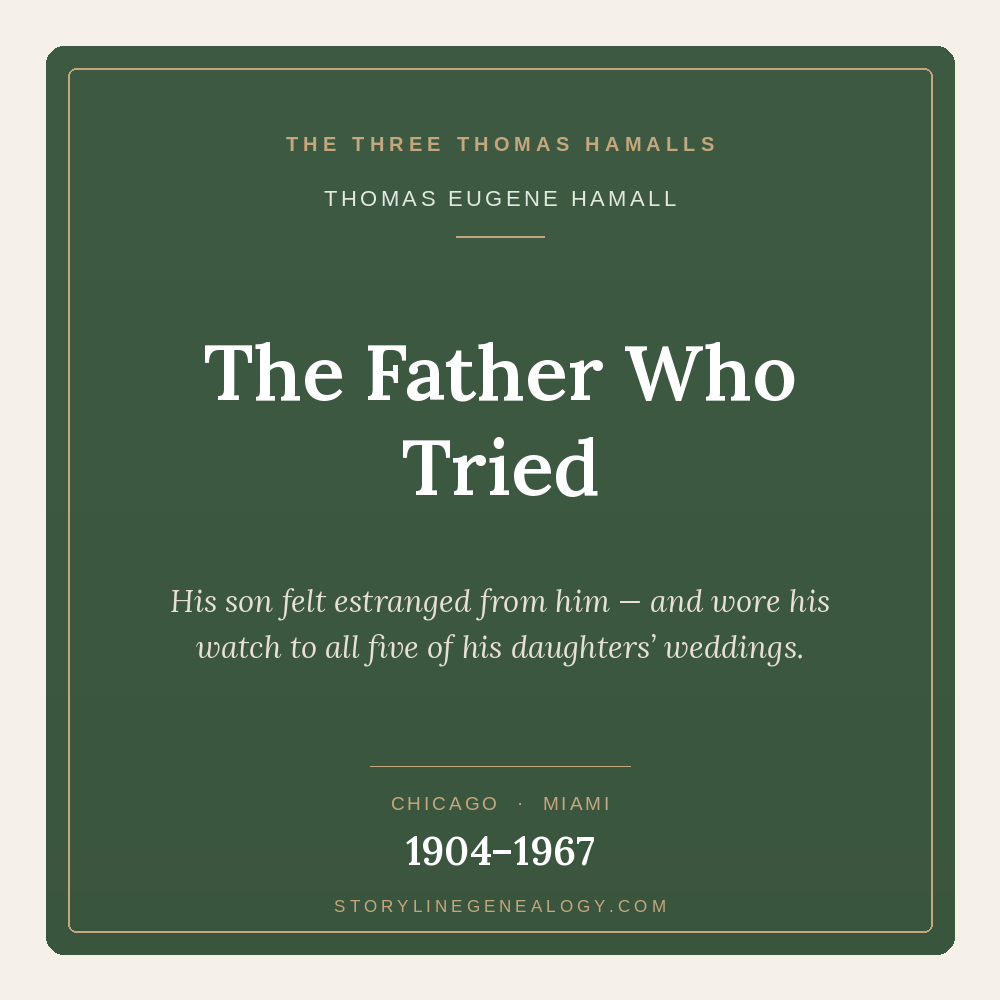
The Father Who Tried
His bank closed fifteen weeks after the wedding and took his career with it; he was forty-nine before he found the work he would be known for. Three contacts with his son are documented across twenty years — a trip to Washington in 1947, a letter to a young woman he had never met, and a thousand-mile journey to be in the wedding photographs on his own birthday. His son said in later life that he felt estranged from him, and kept his watch, and wore it to all five of his daughters' weddings. This page sets those beside each other without deciding between them.
Part of the Storyline Genealogy Case Studies Series: From Research to Story
Mothers and Sons: A Working-Class Family Pattern
Kate kept house with Thomas Henry from 1911 until she died in 1919. Emma was with Thomas Eugene, on and off, for the best part of twenty years. Margaret joined Thomas Kenny's household for the last stretch of her life. Read through a modern lens the repetition looks like a family trait; read through the household accounts it looks like arithmetic — no pensions, no Social Security until 1935, and women earning half a man's wage for the same work. Margaret is the proof of it: she followed the family north, took an apartment of her own in New Jersey, and was still keeping books at sixty. She moved in only when she could no longer pay for a front door of her own.
Part of the Storyline Genealogy Case Studies Series: From Research to Story
The Mystery Man: Photo Analysis
In a 1947 photograph, two men sit together at the US Capitol—one is Thomas Eugene Hamall, age 42. The other remained unidentified for 75 years. Through forensic photo analysis, family tree reconstruction, and a 1968 high school yearbook, we found the man the evidence points to—and uncovered a poignant story about family connections maintained across three fractured generations.
Part of the Storyline Genealogy series: From Research to Story