
Thanksgiving Treasures from the Recipe Box
Every family has them—those yellowed recipe clippings tucked into cookbooks, handwritten cards passed down through generations, and printouts from websites that no longer exist. These kitchen treasures tell stories beyond the ingredients. They remind us of holiday tables long past, of grandmothers teaching daughters, of traditions worth preserving.
This Thanksgiving, I pulled out a few favorites from my own collection to share. Some have been with our family for decades; others are newer additions that have earned their place in the rotation. All of them carry memories.
Brown and Wild Rice Stuffing: A Tradition Born in 1986
Some recipes mark moments in our lives. This one marked the beginning of my own Thanksgiving tradition.
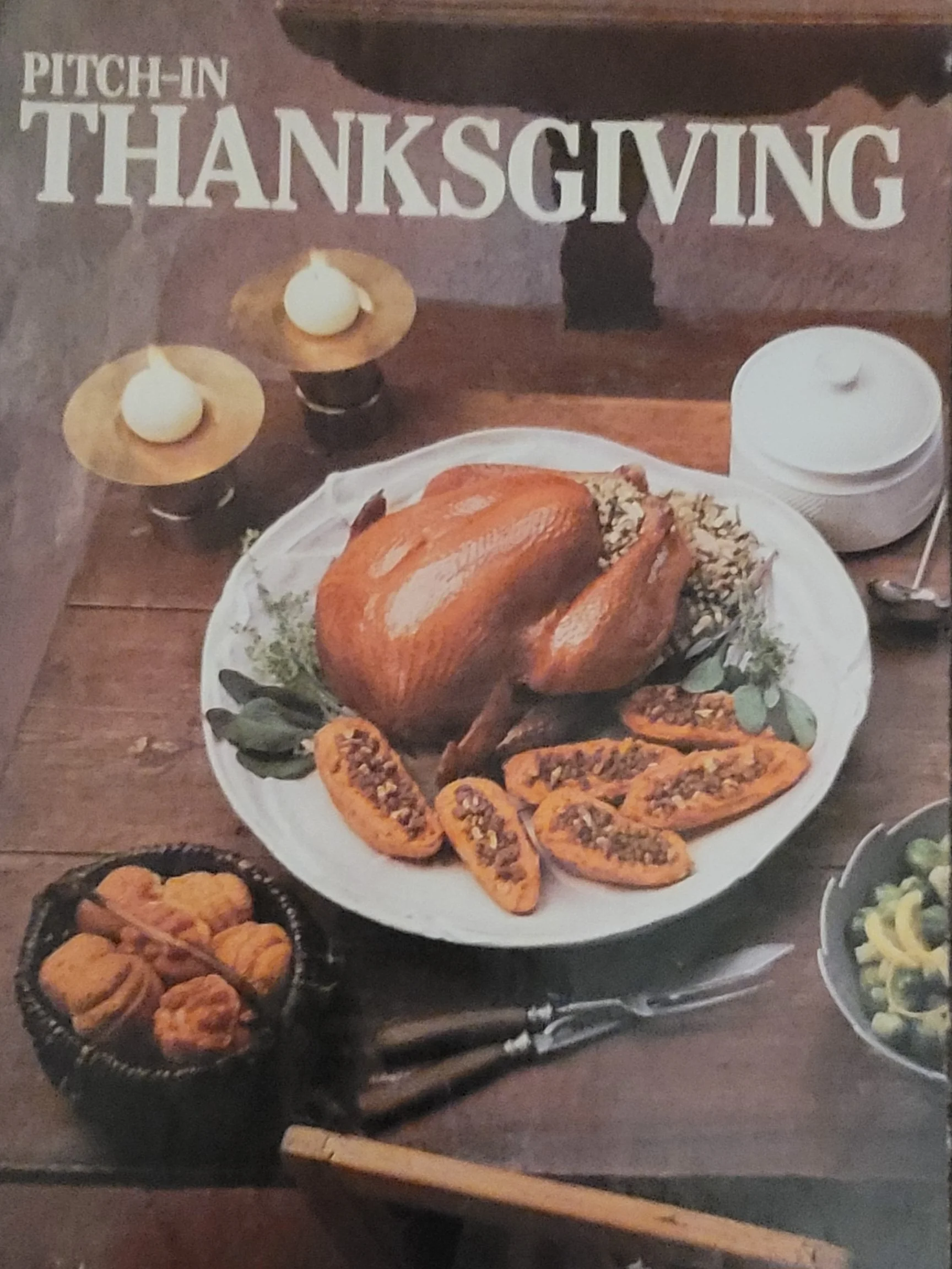
It was October 1986, just five months after I was married. I found this recipe in a magazine—the image on the cover showed a beautiful "Pitch-In Thanksgiving" spread with a golden turkey surrounded by twice-baked sweet potatoes. My husband really loved rice, and this stuffing with both brown and wild rice sounded perfect.
That November, we hosted our first Thanksgiving in our small house in Stone Mountain, Georgia. I served dinner on the kitchen and dining furniture from my childhood—pieces I had spent months refinishing in our garage. The wild rice stuffing was a real hit. It became a favorite for my father and most of the family, and over the years, other families have adopted this recipe for their own tables.
My mother always made bread stuffing—Pepperidge Farm with eggs, celery, and onions sautéed together. It was delicious, and it was hers. But the wild rice stuffing became mine. It's been on our Thanksgiving table every year since 1986. Truly a tradition.
Ingredients
2½ cups water
1 cup brown rice
3½ cups chicken or vegetable broth
1 cup wild rice
¼ cup (½ stick) butter
1 cup each: finely chopped carrots, celery, and onion
½ pound sliced mushrooms
Salt, pepper, sage, thyme, and marjoram to taste
1 jar (3 oz) pine nuts
Instructions
Cook the brown rice in water for 35 minutes until liquid is absorbed. Separately, cook wild rice in broth for 45-55 minutes. While the rice cooks, sauté the vegetables in butter until soft and golden, then season with herbs and pine nuts. Combine with both rices and toss until evenly moist. Makes enough stuffing for a 12-14 pound turkey.
Make ahead: Prepare the stuffing a day before and refrigerate, or freeze for up to one month. Thaw in refrigerator the day before stuffing the turkey.
Ginger Cranberry Sauce: Another 1986 Tradition
This recipe came from Sheila Lukins' "Simply Delicious" column, and like the wild rice stuffing, it became part of my Thanksgiving in 1986. I had always grown up with Ocean Spray from the can—that jellied cylinder that held the shape of its container when you slid it onto the plate. It was fine. It was what we knew.
But this recipe changed everything. Fresh cranberries, orange zest, fresh ginger—it's bright and zesty in a way canned cranberry sauce simply can't match. And here's the thing: it's easier than I ever imagined. Once I tried making it from scratch, there was no going back to canned. Why would you?
Watch the clock, though: cooking longer than 10 minutes makes it too thick.
Ingredients
1 pound fresh cranberries (about 4 cups), picked over and rinsed
2 cups sugar
½ cup water
Zest of 1 orange, finely grated
½ cup fresh orange juice
2 tablespoons finely minced fresh ginger
Instructions
Combine all ingredients in a saucepan. Cook over medium heat, stirring occasionally, until the cranberries pop—about 10 minutes. Skim any foam, let cool, and refrigerate. Keeps covered up to 2 months; freezes beautifully. Serves 12.
Twice-Baked Sweet Potatoes
This recipe came from that same 1986 magazine, and you can see them in the cover photo arranged around the turkey—those beautiful orange boats with their streusel topping. The original recipe calls for a walnut streusel, but over the years I've simplified it. I twice-bake them and mash the flesh with orange juice. Perfect every time.
Ingredients
6 medium-sized sweet potatoes (4 to 4½ pounds)
½ cup (1 stick) butter, softened, divided
¼ cup orange juice
Instructions
Preheat oven to 425°F. Wash and scrub potatoes but do not peel. Place directly on oven rack and bake 1 hour or until tender. Cut potatoes in half lengthwise and carefully scoop out the flesh into a large bowl, keeping the shells intact. Place shells in a shallow baking dish.
Heat orange juice with butter until butter melts. Mash the potato flesh and beat in the hot juice mixture until fluffy. Spoon filling back into the shells. Return to oven and bake 20 minutes longer, or until hot. Makes 12 servings.
Note: The original recipe includes a streusel topping with brown sugar, cinnamon, ginger, mace, and walnuts. If you'd like that extra touch of sweetness, sprinkle the topping over the filled shells before the second bake.
Simple Buttered Carrot Rounds
Some dishes don't need a formal recipe—they're simply the way it's always been done. In our family, carrots are sliced into rounds. I don't know why we've always done it this way, but we have. The circles cook evenly and look pretty on the plate, and there's something comforting about preparing vegetables the same way your family always has.
Peel your carrots, slice them into even rounds, and steam or simmer until tender. Toss with butter, salt, and pepper. That's it. A family staple.
The Pies: Pumpkin and Apple
Pumpkin pie has always been a family favorite—always has been, for some of us. Then that Crunchy Caramel Apple Pie came along, courtesy of Emeril Lagasse's 2001 contest winner, and now we have both. It's not a competition; there's room on the table for tradition and for delicious newcomers.
Russian Crust: From an Ohio Farmhouse Kitchen
From 1971 to 1975, we lived on a farm in Ohio—a hundred-year-old farmhouse with an apple orchard on the property. We were only there for four years, but so many memories came from that place. It's where I first learned to make pies, using apples from our own trees.
A guest introduced us to something called "Russian Crust"—a cream cheese pie crust that's incredibly pliable and easy to roll without cracking. I made apple pies with that crust using fruit from our orchard. I don't often make pie crust from scratch these days, but when I did, this was often my choice for pumpkin pie too. It's a treasured memory, and one I've introduced my children to over the years.
Ingredients
2½ cups all-purpose flour
1 teaspoon salt
14 tablespoons (1¾ sticks) cold unsalted butter, cut into ½-inch cubes
4 oz cold full-fat cream cheese, cut into 1-inch cubes
2½ tablespoons cold water (or more if needed)
Optional: 2 tablespoons sugar for sweet pies
Instructions
Combine the flour, salt (and sugar, if using) in a large bowl or food processor. Add the cold butter and cream cheese and cut into the flour until the mixture resembles coarse meal with a few pea-sized pieces remaining.
Drizzle in the cold water one tablespoon at a time, mixing lightly until the dough just begins to form small clumps and comes together when pinched. Avoid overmixing, which can make the crust tough.
Turn the dough out onto a work surface and gently bring it together. Divide into two disks, flatten slightly, wrap each in plastic, and chill for at least two hours (or up to two days) before rolling. Chilling is crucial for flakiness.
When ready to use, roll out on a lightly floured surface. The cream cheese makes the dough wonderfully pliable and easy to handle.
Crunchy Caramel Apple Pie
This recipe won Emeril Lagasse's Apple Pie Contest back in 2001, submitted by Marsha Brooks. I printed it from ABC News in 2005, and the pages are now spotted with age and cooking splashes—the mark of a recipe well-loved.
For the Filling
1 pastry crust for a deep-dish 9-inch pie
½ cup sugar
3 tablespoons all-purpose flour
1 teaspoon ground cinnamon
⅛ teaspoon salt
6 cups thinly-sliced peeled apples (golden delicious and fuji work beautifully)
½ cup chopped pecans
¼ cup caramel topping
For the Crumb Topping
1 cup packed brown sugar
½ cup all-purpose flour
½ cup quick-cooking rolled oats
½ cup butter
Instructions
Make the crumb topping first: stir together the brown sugar, flour, and oats, then cut in the butter until the mixture resembles coarse crumbs. Set aside.
In a large bowl, combine the sugar, flour, cinnamon, and salt. Add the apple slices and toss gently until coated. Transfer to your pie shell and sprinkle the crumb topping over the apples.
Place the pie on a cookie sheet to catch drips. Cover the edges with foil and bake at 375°F for 25 minutes. Remove the foil and continue baking another 25-30 minutes. Once out of the oven, sprinkle with chopped pecans and drizzle with caramel. Cool on a wire rack and serve warm or at room temperature.
Memories from Grandma O'Brien's Table
Not every dish on our Thanksgiving table comes with a written recipe. Some are simply memories—flavors that connect us to people we've lost.
What I remember from childhood was turnips—or maybe they were rutabagas. They were always served mashed, and they were a favorite of mine. My Grandmother O'Brien made them, and my Aunt Lillian would often bring them too. For years after I moved to Georgia, I would look for them at the store and cook them because my father enjoyed them as well. I haven't cooked them in years now, but the memory remains.
Another memory from Grandmother O'Brien's table was mincemeat pie. I think my Aunt Lillian would often provide that as well. It's one of those traditional desserts that seems to have faded from most Thanksgiving tables, but the taste memory stays with you—that rich, spiced filling with its hint of fruit and brandy.
These aren't recipes I can share. They're simply the tastes of Thanksgivings past, carried forward in memory.
The Stories Behind the Recipes
What I love most about these recipe clippings isn't just the food they produce—it's the stories they hold. That wild rice stuffing and ginger cranberry sauce have been on our table since our first Thanksgiving as newlyweds in 1986—the year I stopped using canned cranberry sauce and never looked back. The sweet potato recipe came from the same magazine, its cover image now faded but still showing that beautiful spread I aspired to recreate. The apple pie pages are spotted and stained from twenty years of use. And that Russian Crust came from a guest who probably never knew what a lasting gift she'd given us.
In genealogy, we spend so much time with vital records—births, marriages, deaths—that we can forget the everyday documents that make ancestors feel real. Recipe cards in a grandmother's handwriting. A newspaper clipping saved because someone thought it looked delicious. The way carrots were always cut into rounds, for reasons no one quite remembers. These small artifacts and traditions connect us to the daily lives our ancestors lived, to the tables they gathered around, to the customs they hoped would continue.
This Thanksgiving, as you pull out your own family recipes, think about the stories attached to them. Who first made this dish? Whose handwriting is on that card? What holiday memories does this recipe evoke? And what traditions—even the simple ones, like how you slice your carrots—have you carried forward without quite knowing why?
Happy Thanksgiving from Storyline Genealogy. May your table be full and your stories be shared.
— Mary
Want more? Subscribe below to get new posts delivered to your inbox.
Want to Know When New Stories Are Published?
Subscribe to receive updates on new family history research—no spam, just meaningful stories when there's something worth sharing.
SUBSCRIBE TO OUR NEWSLETTER