
Scattered Stones
The Series
Six Lives · One Family · Four GenerationsThis is not a conventional genealogy. It is a reckoning with what tuberculosis did to one Brooklyn family across seventy-two years — and with the women who survived it, adapted to it, and kept the next generation alive when it took everyone else. A note on family name spelling: the records render the family name as McKenna, McKenney, McKenny, and MacKinney across different documents and generations. This is record variance, not family inconsistency. The hub page uses the form that appears most frequently in the source record for each individual; the biographies document each variant where it appears.
The family buried its first tuberculosis death on January 1, 1871: George McKenney, age 42, at Holy Cross Cemetery, Brooklyn, Lett Row L, Plot 336. His widow Ann Lynch McKenna purchased the family plot that morning — not a single grave, a plot large enough to hold the family that did not yet exist — and interred George in it the same day. He was the plot’s first occupant. Over the next seven decades, that plot received Margaret McKenny Kenny (1884), infant Margaret Kenny (1884), Ann Lynch McKenna herself (1888), Mary F. MacKinney (1935), John Corbett (1949), and Elizabeth Kenny Corbett (1950). Seven family members across seventy-nine years, all resting with George. John Kenny, who died of pulmonary phthisis in 1888, was buried at Holy Cross with his mother Eliza Kenny (1887) and the Kenny natal family in a section separate from the McKenna plot. Tuberculosis killed five members of this family across four consecutive generations — from George McKenney in 1870 to his great-granddaughter Helen Robertson Verhoek in 1942, seventy-two years later and one year before streptomycin changed everything.
Running parallel to the disease thread is a second one: the pattern of women who stepped in when the disease took parents. Ann Lynch MacKinney raised her daughters after George died. Mary F. MacKinney raised her nieces after John Kenny died in 1888. Elizabeth Kenny Corbett was appointed by the Essex County Surrogate’s Court as administrator of Mary Agnes Robertson’s estate in 1924, formally holding legal responsibility for her sister’s children until eighteen-year-old Lillian Robertson could assume the trustee-and-guardian role Mary Agnes had designed for her, at age twenty-one, on July 9, 1926. Each generation’s loss produced the next generation’s guardian. In Elizabeth’s case, the pattern was not only family tradition but court appointment. The women who stayed were the ones who survived.
Each biography in this series stands alone — a complete documented life, with primary sources, evidence citations, and the narrative arc from birth to burial. Together they form a single continuous story. The tuberculosis thread that defines the series runs from 1870 to 1942 — seventy-two years. The family's documentary arc, from Ann Lynch McKenna's arrival in Brooklyn to Elizabeth Kenny Corbett's death, runs from approximately 1822 to 1950.
The Tuberculosis Thread
Five deaths from the same disease across seventy-two years: George McKenna (1870), Margaret Kenny (1884), John Kenny — pulmonary phthisis (1888), Mary Agnes Robertson (1924), Helen Robertson Verhoek (1942). The women in this series are largely the ones who didn't die of it — or who died of something else, or who died of it last.
The Generational Care Pattern
Ann raises Margaret and Mary after George dies. Mary F. MacKinney raises Elizabeth and Mary Agnes after both parents die. Elizabeth Corbett is appointed by the Essex County Surrogate’s Court as administrator of Mary Agnes’s estate in 1924, formally responsible for the Robertson children until Lillian assumed the trustee role at twenty-one. The court appointment made in 1924 what Mary MacKinney had done informally in 1888. Each loss produced a keeper. None of these women chose the role. All of them stepped into it — two of them into court-recorded legal responsibility.
Ireland → Brooklyn → New Jersey
Ann Lynch and George McKenna arrive from Ireland in the 1840s, settling in Brooklyn's Ward 7. The family roots in Brooklyn for two generations. The Robertson family bridges Brooklyn and North Caldwell, New Jersey. Elizabeth Corbett dies back in Brooklyn, in the borough where she was born. The arc is complete — from the Ward 7 tenements of 1860 to Holy Cross Cemetery, 1950.
Five death certificates obtained. The barrier that stood for four years — the New Jersey Department of Health’s missing 1930–1948 index and the commercial channel’s grandchild-eligibility restriction — was closed on September 22, 2026, when the New Jersey State Archives released Helen’s 1942 certificate. The same disease in the same family across 72 years.
Mary F. MacKinney, Elizabeth Kenny Corbett, Eliza Kenny, and Ann Lynch McKenna each outlived it.
The five tuberculosis decedents rest in three cemeteries across two states — Holy Cross Brooklyn (George McKenney and Margaret McKenny Kenny together in the McKenna family plot at Lett Row L, Plot 336; John Kenny separately in the Kenny family section with his mother Eliza), Immaculate Conception Cemetery, Upper Montclair, N.J. (Mary Agnes Robertson), and Gate of Heaven Cemetery, East Hanover, N.J. (Helen Robertson Verhoek). The full comparative reading of the cause-of-death field across all five records is the subject of the case study below.
The Women Who Stayed
Each biography stands alone as a complete documentary life. Together they form one continuous story.
 Episode 1
Live
Episode 1
Live
Three Names, One Life
She enlisted in the U.S. Navy at thirty-nine and told them she was thirty. She served twelve days before the Armistice. She raised her sister's children after the twelve-day catastrophe of January 1924. Proving her three names belonged to the same woman required a decade of research and one government card that put both names on a single line.
Read Her Story →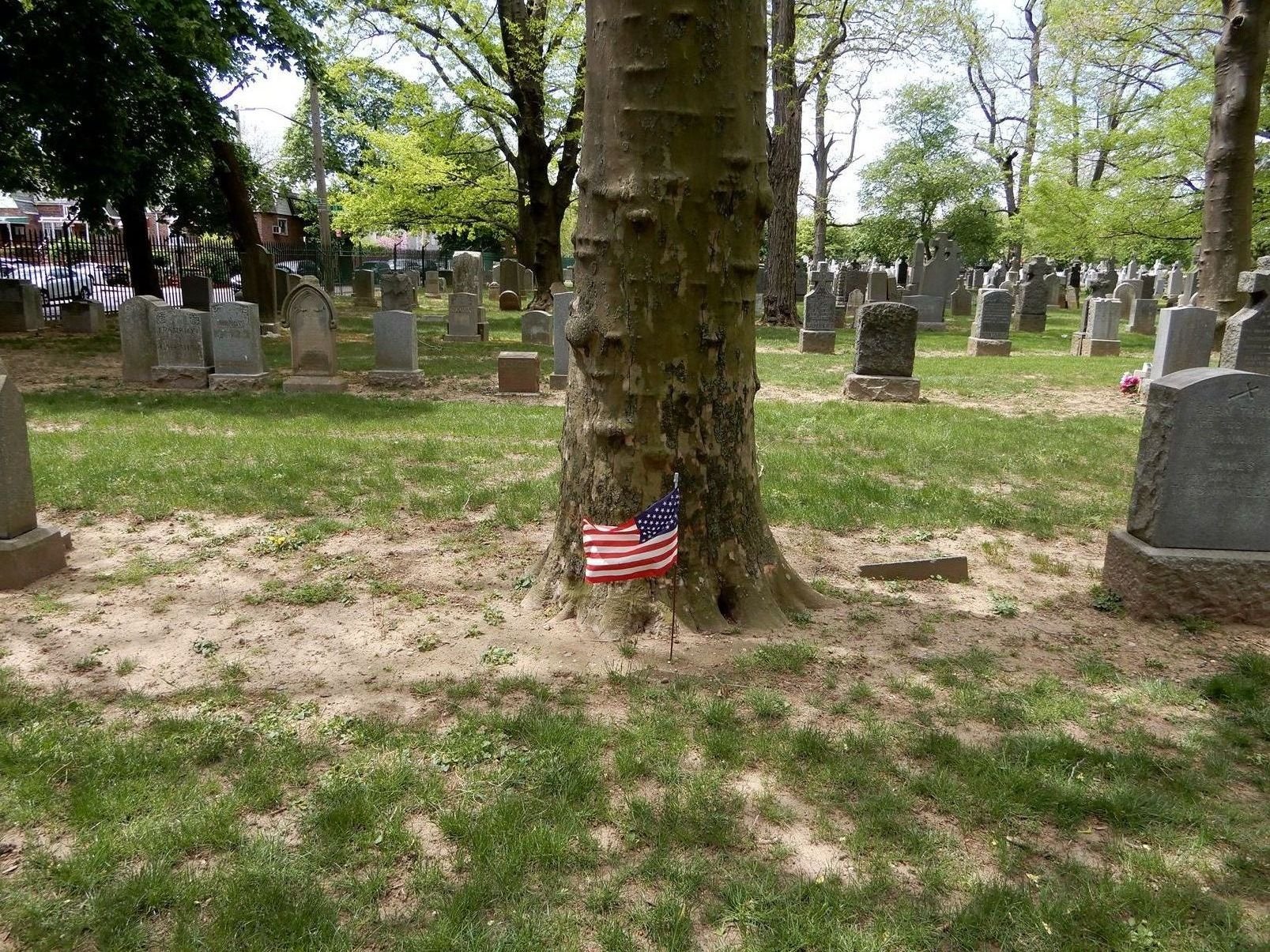 Episode 2
Published
Episode 2
Published
The Root
On New Year’s Day 1871, a poor Irish widow walked into Holy Cross Cemetery and bought a family plot — not a single grave — the morning she buried her husband. She interred George in it that same day, the first of seven. She raised her younger daughter alone for seventeen years, buried her older daughter Margaret in the same plot in 1884, and died on May 10, 1888, at 847 Kent Avenue with Mary at her side. Seven family members across seventy-nine years rest in the ground Ann bought that January morning — George first, Elizabeth Corbett last. One hundred and twenty years later, her great-great-granddaughter paid the final perpetual care check.
Read Her Story → Episode 3
Published
Episode 3
Published
The Other Grandmother
Widowed in 1854 with two small sons, she never remarried. She ran a Brooklyn grocery on Walworth Street alone for thirteen years and raised her sons alone for thirty-three. Her maiden name is lost to the record. Her birthplace in Ireland is unknown. Four words in an 1879 Brooklyn directory — "Kenny Elizabeth, wid. Richard" — rebuilt her entire family tree.
Read Her Story →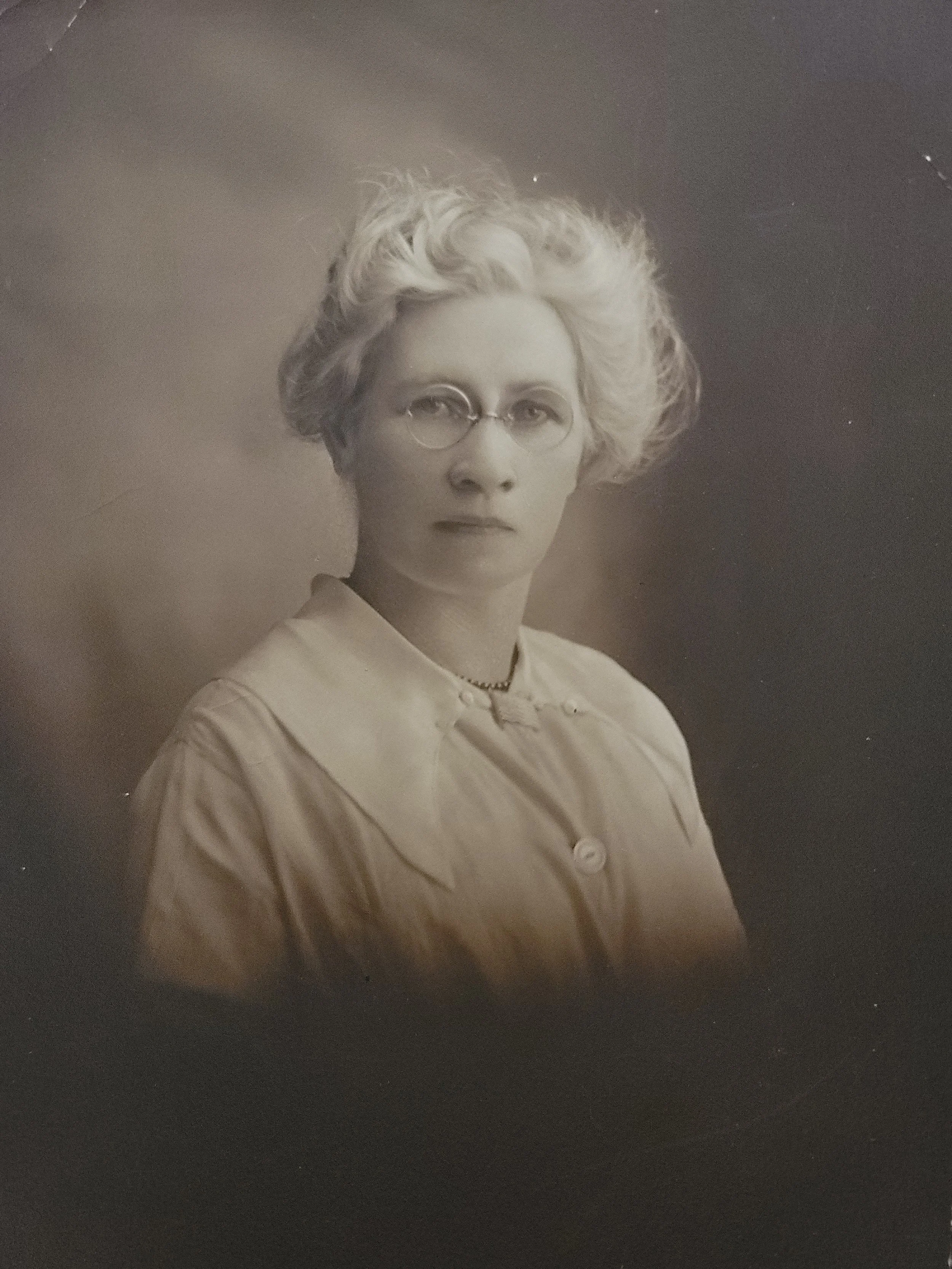 Episode 4
Live
Episode 4
Live
The One Who Stayed
For ninety years her portrait was carefully preserved without a name. When her identity was confirmed in October 2025, her story proved extraordinary: from placing desperate newspaper ads for housework in 1887 to factory forewoman to boarding house owner — all while raising two orphaned nieces who had nowhere else to go after November 1888. She never married. She gave forty-seven years.
Read Her Story →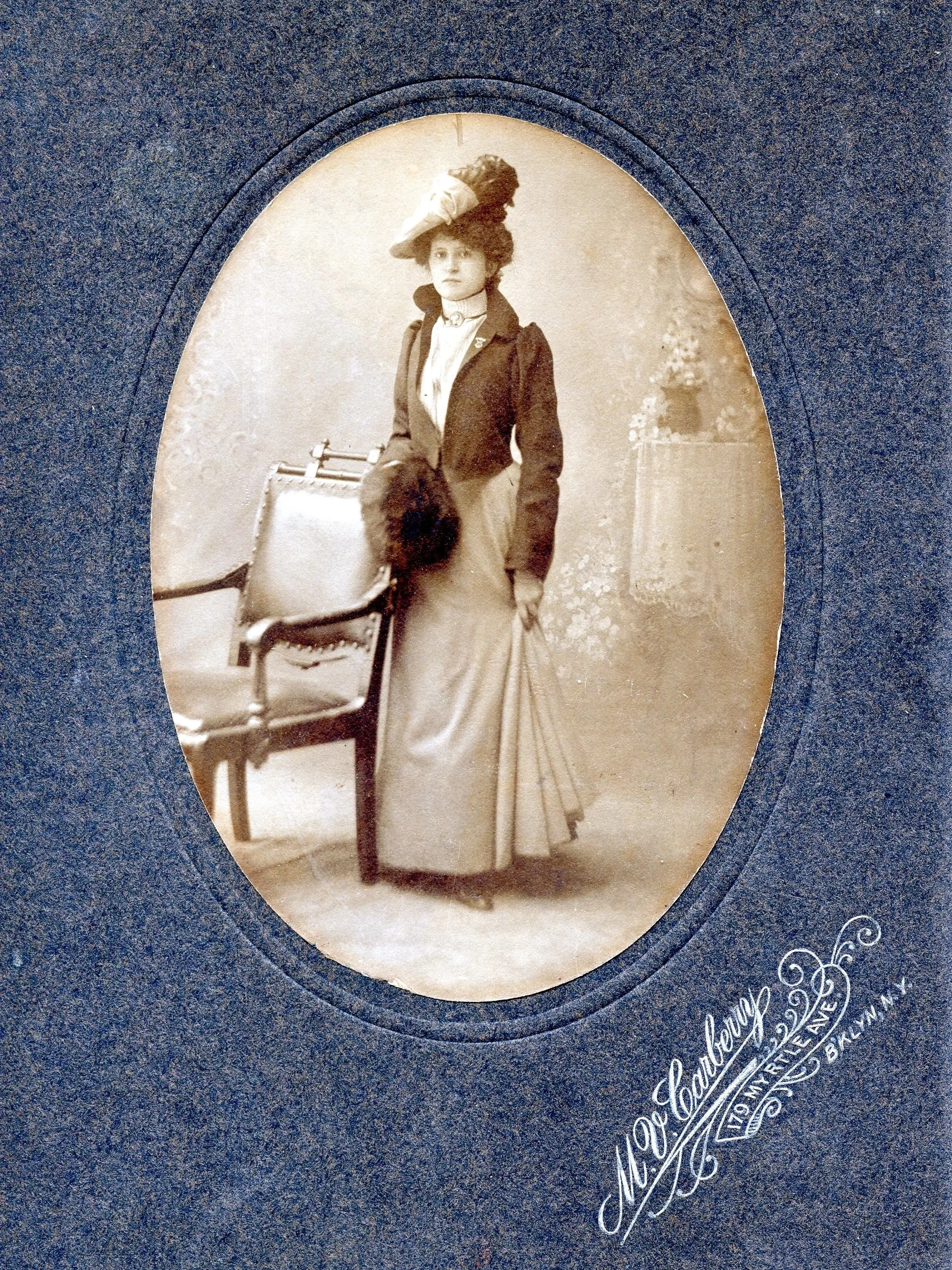 Episode 5
Published
Episode 5
Published
Twelve Days
Her husband died on a Monday in January 1924. She died the following Saturday — twelve days later — in the same house. Three children were orphaned inside those twelve days. The pulmonary tuberculosis that killed her had killed her mother in 1884 and her grandfather in 1870, and would kill her daughter Helen in 1942. The hinge biography where the Kenny line meets the Robertson line.
Read Her Story → Episode 6
Published
Episode 6
Published
The Last
She was born in 1907 with the face of a grandmother she never met — Margaret McKenny, dead of consumption in 1884. She was orphaned at sixteen in the twelve-day catastrophe of January 1924. She buried her infant daughter Janet in 1931 at twenty-three. She died of Advanced Pulmonary T.B. on July 21, 1942, at thirty-four — the fourth generation to carry the disease and the last to die of it. Her death certificate, unreachable through commercial channels for four years, was released by the New Jersey State Archives on September 22, 2026, and confirmed what family tradition had held: cause tuberculosis, duration ten years — Helen had lived with the disease since 1932, the entire decade of her children’s early lives. Streptomycin was isolated at Rutgers one year after her death.
Read Her Story →The Medical Record Beneath the Biographies
Every life in this series was shaped by one disease. This is the cross-generational documentary analysis — five death certificates read in parallel, one records barrier closed in September 2026 — that runs beneath the six biographies.
Five Deaths, One Family, Seventy-Two Years
One disease, named five different ways as medical language shifted around it. Five certificates now obtained: the barrier that stood for four years was closed in September 2026 when the New Jersey State Archives released Helen’s 1942 certificate. Three cemeteries across two states. A comparative reading of the cause-of-death field across four generations — and the documentation of how a targeted state-archives paper request closed a records barrier the commercial channels could not.
The Mother Who Couldn't Stay (1851–1884)
Margaret McKenny Kenny is the reason this series exists. Her death of tuberculosis at thirty-three left two daughters and a three-month-old infant — the infant died seven weeks later. Every biography in The Women Who Stayed is a response to what happened at 39 Nostrand Avenue on May 24, 1884. Her tintype portrait, preserved without a name for 150 years, was identified in 2025. She is documented here as a companion piece rather than a numbered episode: the series is named for the women who stayed, and Margaret is precisely the woman who couldn't.
Read Her Story →The Son Who Searched (c. 1886–1924)
Joseph Robertson Sr. — Mary Agnes's husband — is fully documented as Episode 7 of the companion series Scattered Stones: The Robertson Family of Blairgowrie. He traveled to Georgia searching for his missing father David, who vanished in the swamps in 1910. He never found answers. His marriage to Mary Agnes Kenny united two immigrant families traced independently. His death on January 14, 1924 — twelve days before Mary Agnes — set the clock that orphaned their three children.
Read Episode 7 →Joseph Jay Robertson Jr. (c. 1920 – 1991)
The youngest child of Joseph and Mary Agnes — the boy in the sailor suit in the 1923 photograph at 12 Elm Road, four years old when both parents died within twelve days of each other. He grew up under his sister Lillian's care, served in the U.S. Navy in World War II, and wrote home across the years of the war. Those letters were preserved by his sister Lillian Robertson O'Brien. His daughter Judy Robertson Apicella became an essential collaborator in the family research. He is the only child of Mary Agnes without a documentary biography of his own — that page is in preparation.
In PreparationThree Names, One Life — The Elizabeth Kenny Corbett Case Study
The BCG-standard identity proof for Elizabeth Kenny, Lillian Marie Kenny, and Elizabeth Corbett. Twelve record sets, the birth date reconciliation, the informant error analysis, and the VA Master Index Card that settles the question. The methodology page documents every source in Evidence Explained format.
View Case Study →