
Saint-Paul-de-Joliette : Where the Story Begins
Saint-Paul, Lanaudière, Québec
Saint-Paul-de-Joliette
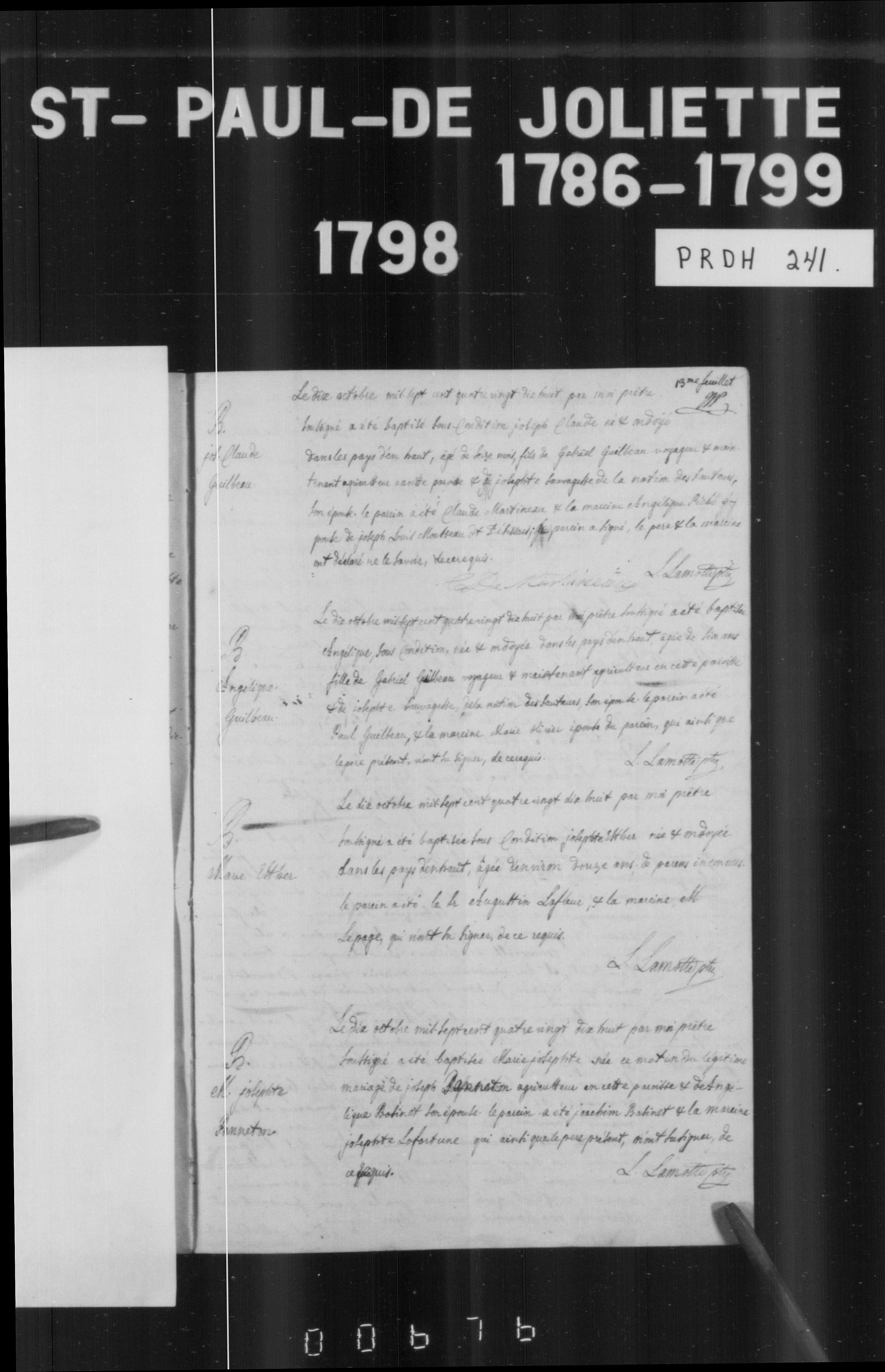
On October 10, 1798, a voyageur named Gabriel Guilbault brought three children to this stone church in the Lanaudière countryside. They had been born and "ondoyé" (emergency baptized) in the pays d'en haut—the upper country of the fur trade. Their mother was identified as "Josephte Sauvagesse de la nation des Sauteux"—the first documented reference to her Indigenous identity. The story of Marie Josephte Abitakijikokwe begins here.
The Guilbault Family at Saint-Paul — October 10, 1798
Sponsors: Louis Rivet & Louise Dabreuil, wife of Noble Chevalier
Sponsors: Claude Martineau & Angélique Riché
Sponsors: Paul Guilbeau & Marie Thérèse, wife of the godfather
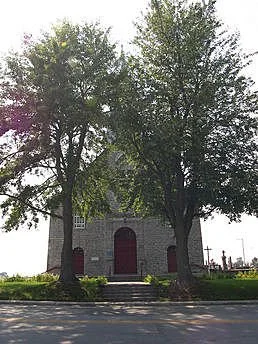
Église Saint-Paul today, framed by flowering trees. This stone church, built in 1803-1804, replaced an earlier structure and still stands as a designated heritage building. The design follows the model created by Father Pierre Conefroy for the Church of the Holy Family in Boucherville.
The three children who stood before the baptismal font on that October day in 1798 had journeyed from another world. Gabriel, the eldest at eight years old, had been born somewhere in the vast territory the French called the pays d'en haut—the upper country stretching from the Great Lakes to the western prairies. His sister Angélique and baby brother Joseph Claude had been born there too, all of them "ondoyé" (emergency baptized) by their father or another layman when no priest was available.
Now their father, Gabriel Guilbault, was transitioning from voyageur to farmer—"voyageur et maintenant agriculteur en cette paroisse," as the priest carefully recorded. He had brought his family out of the fur trade country to settle in the Lanaudière region. And he had brought his children to be properly baptized in a Catholic church, their emergency baptisms validated, their souls secured.
The First Reference to Her Nation
In each of the three baptism records, the priest identified the mother as:
This is the earliest documented reference to Marie Josephte's Indigenous identity. "Sauteux" (also spelled Saulteaux) refers to the Ojibwe people of the Lake Superior region—the same nation Father Leclerc would later record at Oka when he wrote her full name: Abitakijikokwe de la Nation Sauteuse sur le lac Supérieur.
The Pays d'en Haut: Where the Children Were Born
The pays d'en haut—literally "the upper country"—was the vast territory of the Canadian fur trade, stretching from the Great Lakes westward to the prairies and northward to Hudson Bay. This was the world of voyageurs and coureurs des bois, of canoe brigades and trading posts, of Indigenous nations whose knowledge and labor made the trade possible.
"À la façon du pays" — Marriage in the Fur Trade Country
In the pays d'en haut, European and Indigenous people formed families according to "the custom of the country"—à la façon du pays. These marriages, recognized by Indigenous communities and the fur trade society, were not sanctioned by the Catholic Church. Children born of these unions were considered illegitimate under Church law until their parents married before a priest.
Gabriel Guilbault and Josephte had been together since at least 1790, when their eldest son Gabriel was born. For eight years they lived as husband and wife in the fur trade country, having at least three children (and likely a fourth, a daughter named Marie Josette who may have died young). When Gabriel decided to leave the trade and settle in the St. Lawrence Valley, one of his first acts was to bring his children to be baptized—the first step toward legitimizing his family in the eyes of the Church.
Gabriel Guilbault had family connections in the Lanaudière region. The godparents at the 1798 baptisms—the Rivets, Martineaus, and Richés—were likely relatives or close family friends. Paul Guilbeau, who sponsored Angélique's baptism, was probably Gabriel's brother or uncle. When a voyageur left the fur trade, he typically returned to the parish of his birth or his family's settlement. Saint-Paul-de-Joliette was home.
Saint-Paul-de-Lavaltrie: A Parish on the Frontier
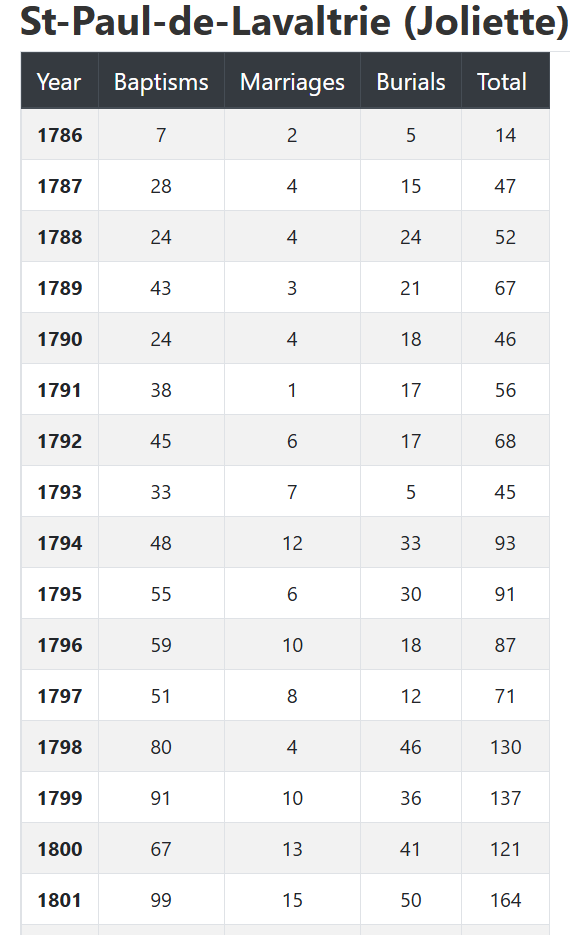
The parish of Saint-Paul was established in 1786, its registers opening in September of that year. Named for the seigneury of Lavaltrie—which honored Séraphin Margane, Sieur de La Valtrie—the parish served a growing agricultural community in the fertile lowlands north of the St. Lawrence River.
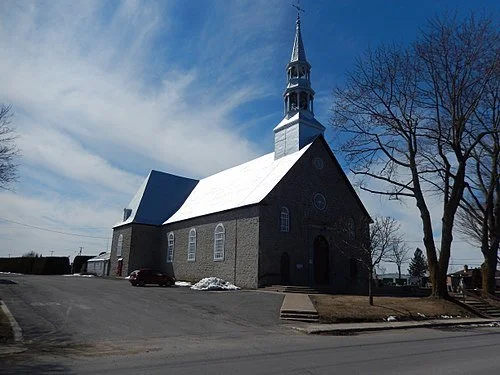
Église Saint-Paul, built 1803-1804, is one of the finest examples of Quebec's traditional church architecture. The façade is nearly identical to the Church of the Holy Family in Boucherville, both designed by Father Pierre Conefroy.
The area had been served by mission priests from as early as 1732, but it was not until 1786 that a dedicated parish was established. The first resident priest arrived in 1827. In 1798, when Gabriel brought his children for baptism, the parish was served by Father Lamotte, who carefully recorded each child's origins in the pays d'en haut.
The current church was built in 1803-1804 according to a design by Father Pierre Conefroy (1752-1816), the same model used for the Church of the Holy Family in Boucherville. The interior was renovated around 1880 by architect Victor Bourgeau. The church was designated a heritage building in 1973 and has been protected since 1975. It features a Casavant organ (opus 196, 1904) that remains functional today.
Timeline: Saint-Paul-de-Joliette
October 10, 1798: Three Children, One Story
Father Lamotte recorded the three baptisms on the same day, each entry following the same pattern: the child's name, that they had been born and ondoyé (emergency baptized) in the pays d'en haut, their age, the names of their parents, and the names of the godparents. In each record, he identified Gabriel Guilbault as "voyageur" or "voyageur et maintenant agriculteur"—marking the family's transition from the fur trade to settled life.
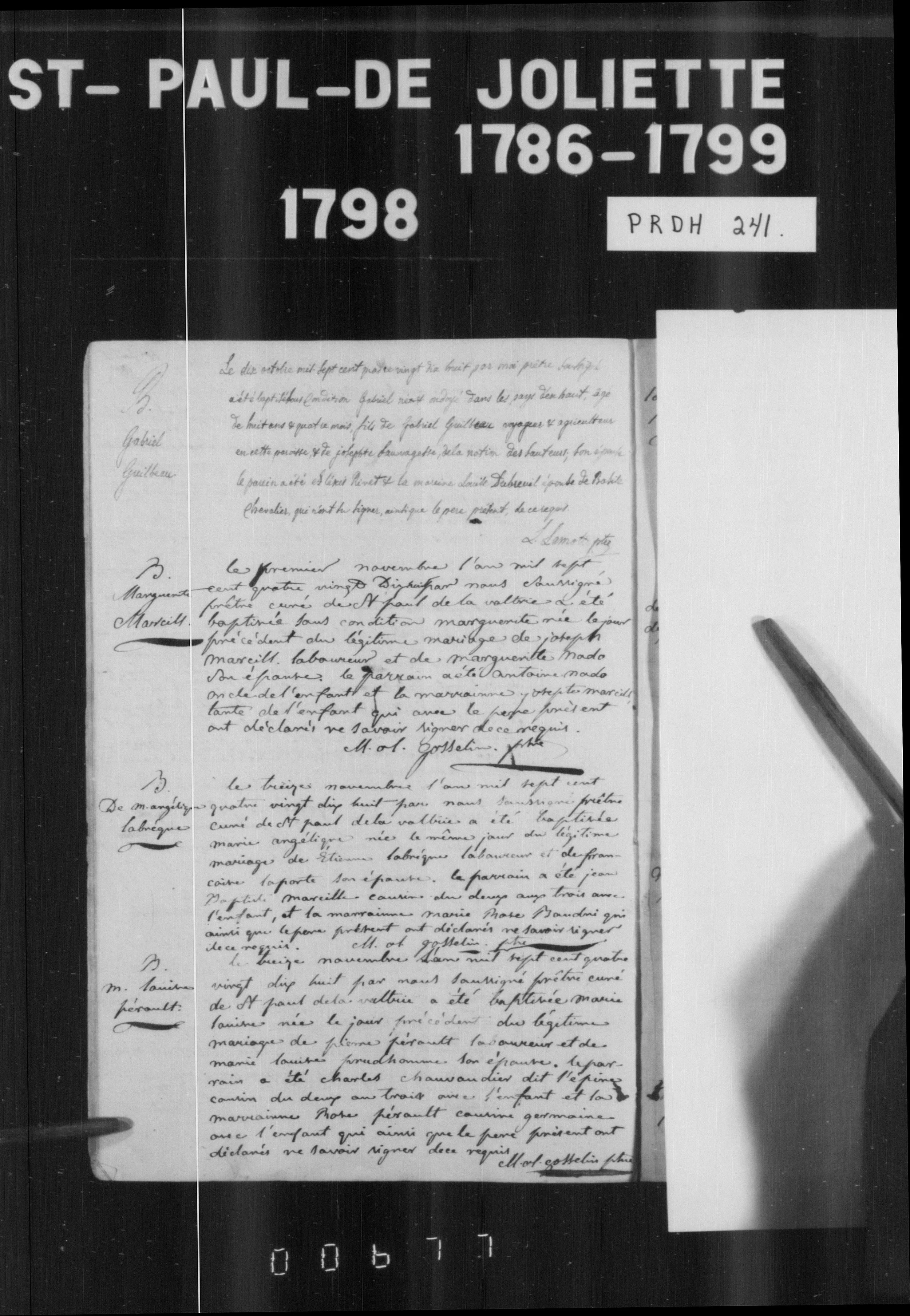
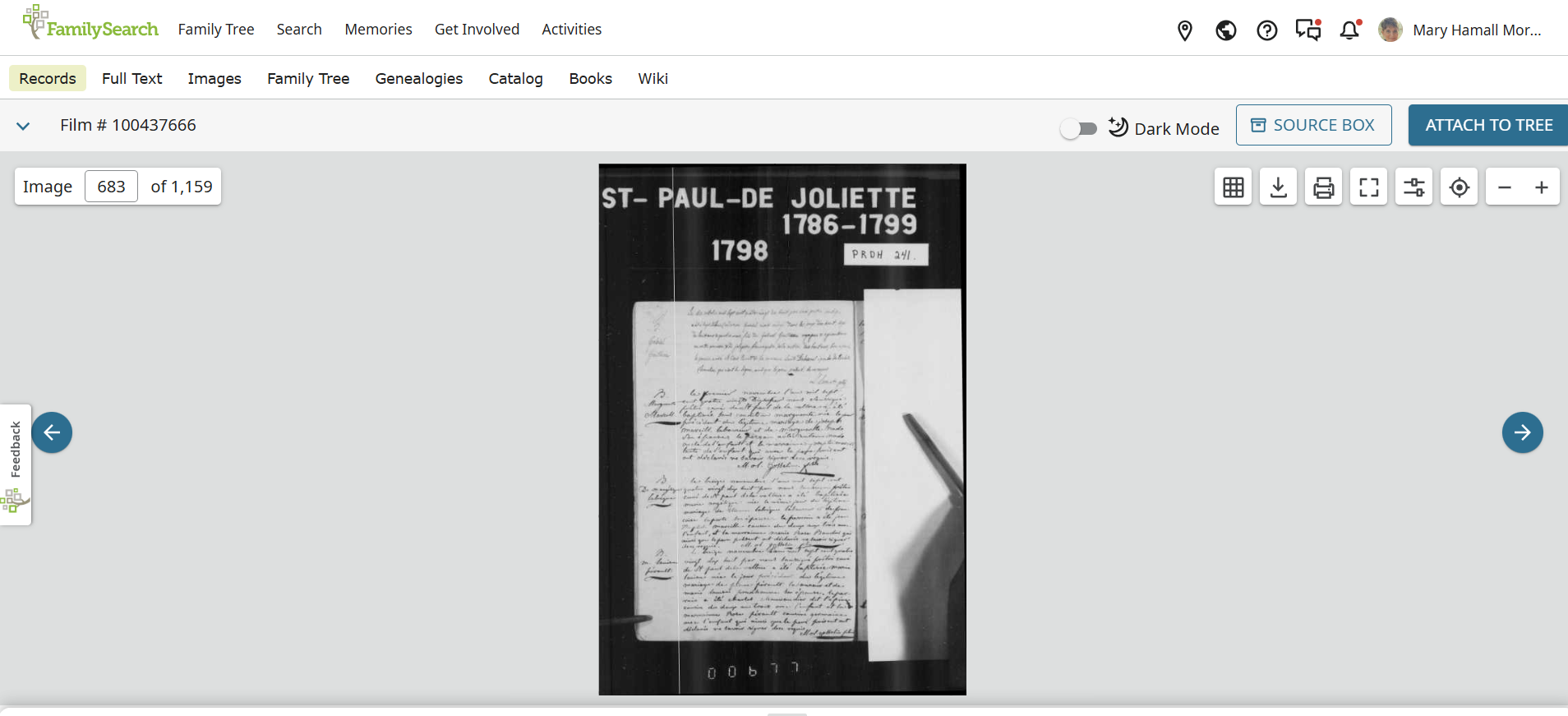
Parish register page from Saint-Paul-de-Joliette, 1798, showing the baptism entry for Gabriel Guilbault (fils). The marginal notation reads "B. Gabriel Guilteau."
Gabriel Guilbault (fils)
Child: Gabriel, né et ondoyé dans les pays d'en haut (born and emergency baptized in the upper country)
Age: Eight years and four months
Father: Gabriel Guilteau, voyageur et agriculteur en cette paroisse
Mother: Josephte Sauvagesse, de la nation des Sauteux, son épouse
Godparents: Louis Rivet & Louise Dabreuil, épouse de Noble Chevalier
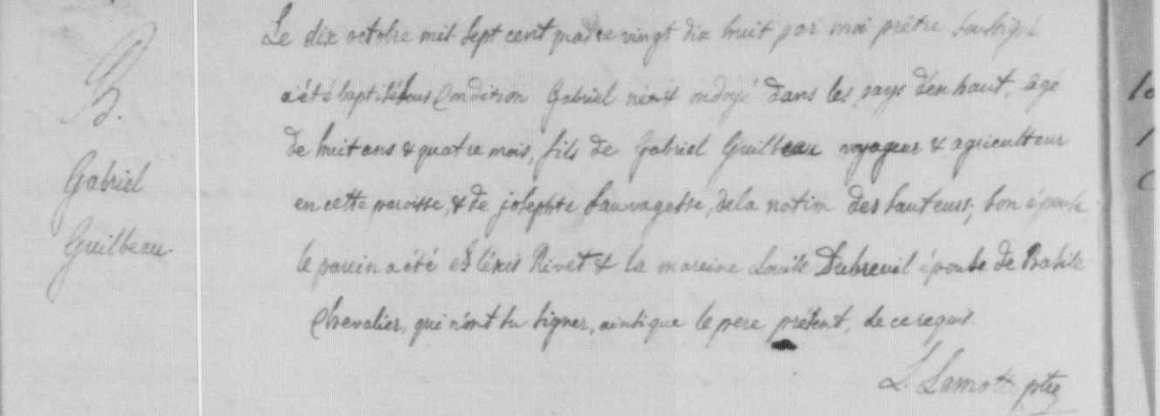
Detail from Gabriel's baptism: "fils de Gabriel Guilteau voyageur et agriculteur en cette paroisse, et de Josephte Sauvagesse, de la nation des Sauteux, son épouse."
Joseph Claude Guilbault
Child: Joseph Claude, né et ondoyé dans les pays d'en haut
Age: Eleven months
Father: Gabriel Guilbeau, voyageur et maintenant agriculteur en cette paroisse
Mother: Josephte Sauvagesse de la nation des Sauteux, son épouse
Godparents: Claude Martineau & Angélique Riché

Detail from Joseph Claude's baptism: "fils de Gabriel Guilbeau voyageur et maintenant agriculteur en cette paroisse et de Josephte Sauvagesse de la nation des Sauteux."
Angélique Guilbault
Child: Angélique, née et ondoyée dans les pays d'en haut
Age: Approximately six years
Father: Gabriel Guilbeau, voyageur et maintenant agriculteur en cette paroisse
Mother: Josephte Sauvagesse, de la nation des Sauteux, son épouse
Godparents: Paul Guilbeau & Marie Thérèse, épouse du parrain
The Church Today
Église Saint-Paul stands today much as it did when Gabriel Guilbault brought his family here over two centuries ago. The stone walls, the traditional Quebec church design, the cemetery where generations of parishioners rest—all connect the present to that October day in 1798 when three children from the pays d'en haut received their formal baptisms.
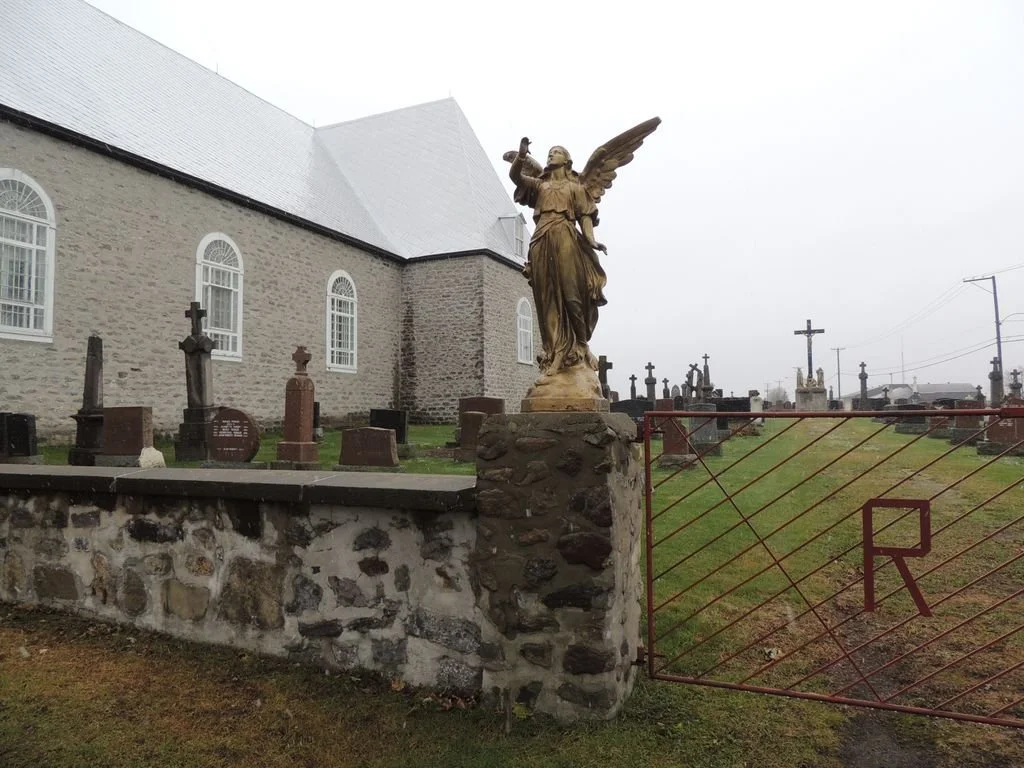
The cemetery at Saint-Paul, with its golden angel guarding the gate. The parish has served the community since 1786, and generations of families—perhaps including descendants of the Guilbaults—rest in this peaceful ground.
Visiting the Site
Address: 8 rue Brassard, Saint-Paul, QC J0K 3E0
Heritage Status: Designated heritage building (1973), protected since 1975
Features: Stone church built 1803-1804 to Father Conefroy's design; interior by Victor Bourgeau (c. 1880); Casavant organ opus 196 (1904)
Location: 4 miles from the city of Joliette, in the heart of Lanaudière
Document Gallery
✦ Free Download: Five Signs of Indigenous Ancestry in Quebec Parish Records
Learn the phrases, naming patterns, and record clues that reveal Indigenous ancestors hidden in Quebec parish records—the same methodology that identified Marie Josephte Abitakijikokwe. Includes FamilySearch Full Text Search strategies.
Get Your Free GuideEvery Family Has a Story Worth Telling
Whether you're just beginning your research or ready to transform years of work into a narrative your family will treasure, I'd love to help.
LET'S TALK ABOUT YOUR FAMILY