
Parish Churches of County Monaghan
The Hamills of Donaghmoyne
Four marriages. Four DNA connections. One parish name that appears on every record: Donaghmoyne. But which church did our Hamills actually attend? This comprehensive guide explores the overlapping parishes, the surviving records, and the cemetery evidence that helps us trace a family scattered across two continents—back to a handful of townlands in the drumlins of south Monaghan.
The parish of Donaghmoyne—Domhnach Maighean, "Church of the Plain"—encompasses 112 townlands in the southeastern corner of County Monaghan. For genealogists, these townlands represent both a blessing and a challenge: the records exist, but they don't always tell us exactly where our ancestors worshipped. This guide documents our research into the Hamill families of Donaghmoyne, the churches they may have attended, and the methodology used to determine the most likely locations for key family events.
The Records Challenge
Researchers frequently encounter gaps or quality issues in 19th-century Irish records. For Donaghmoyne, several factors complicate our search:
- Parish boundary overlaps: The civil parish of Donaghmoyne overlapped with multiple Catholic parishes, including Inniskeen. Records may appear under either name.
- Microfilm quality: The NLI's marriage records for Inniskeen (1839-1850) consist of only 9 images—many of which are poor quality or blank.
- Transcription limitations: The RootsIreland transcriptions note "Exact date not given. Priest's name not given." No chapel is specified.
- No original images available: For many key records, we have only transcriptions—the original register pages cannot be examined.
Key insight: The RootsIreland transcriptions label these marriages as "Donaghmoyne" parish, yet the only NLI microfilm covering the 1840s for this area is filed under Inniskeen (Microfilm 05575/02, marriages 1839-1850). This strongly suggests the transcriptions were made from the Inniskeen registers, with "Donaghmoyne" referring to the civil parish rather than the Catholic parish where the record was actually filed. This supports our conclusion that St. Mary's Inniskeen was likely the church where these marriages took place.
The Four DNA-Connected Marriages
Each of these marriages appears in the Donaghmoyne parish registers with confirmed DNA connections
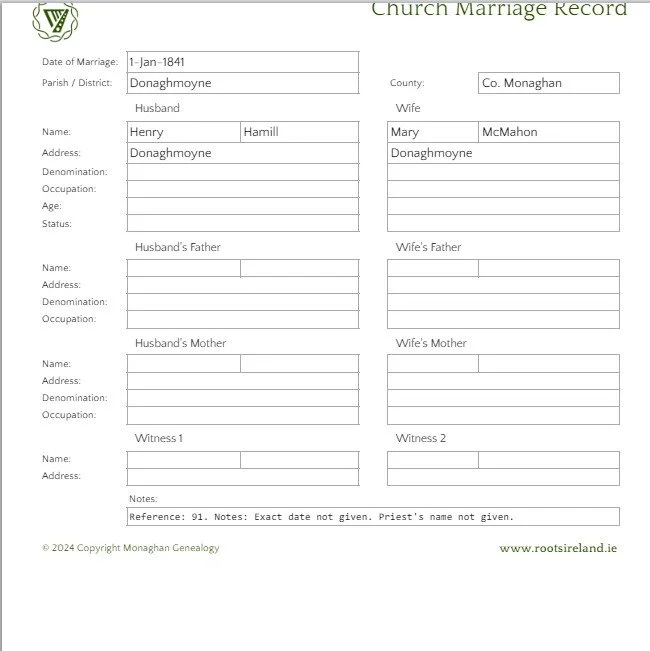
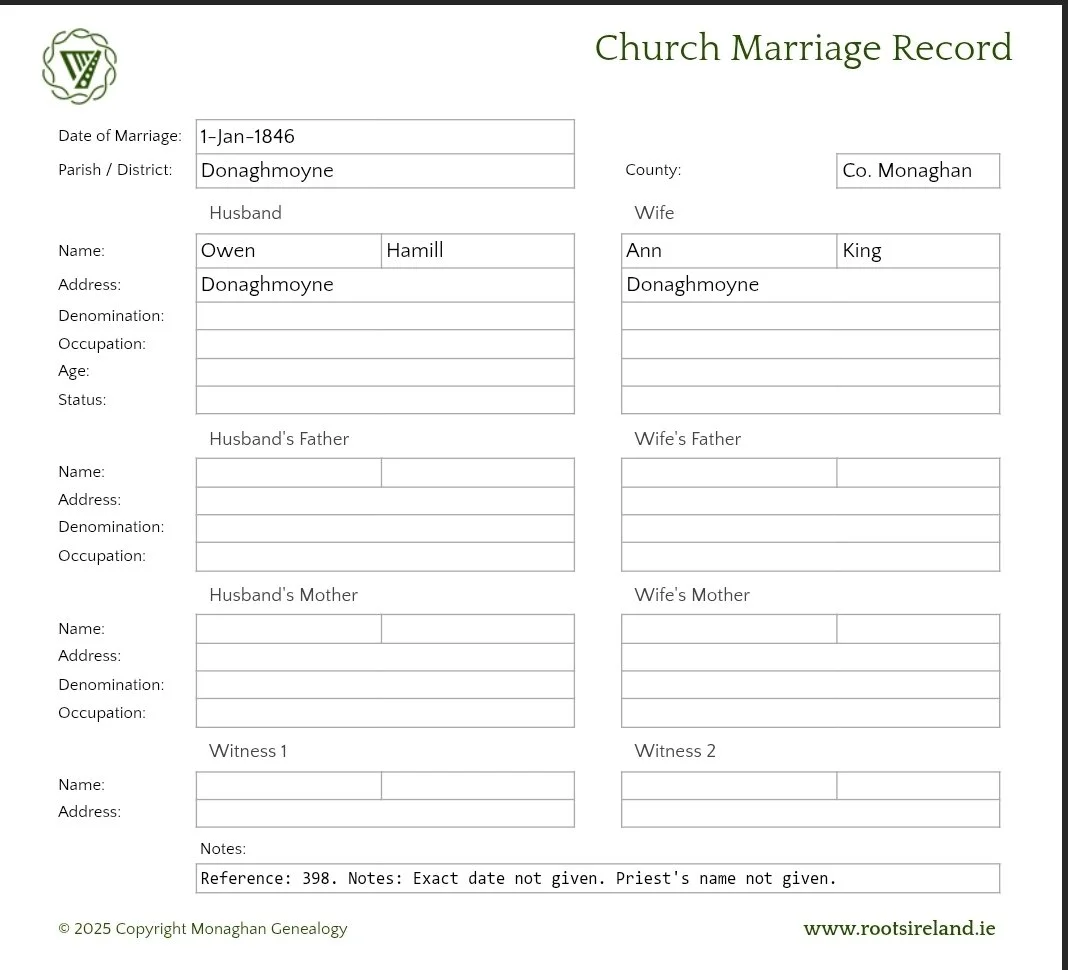
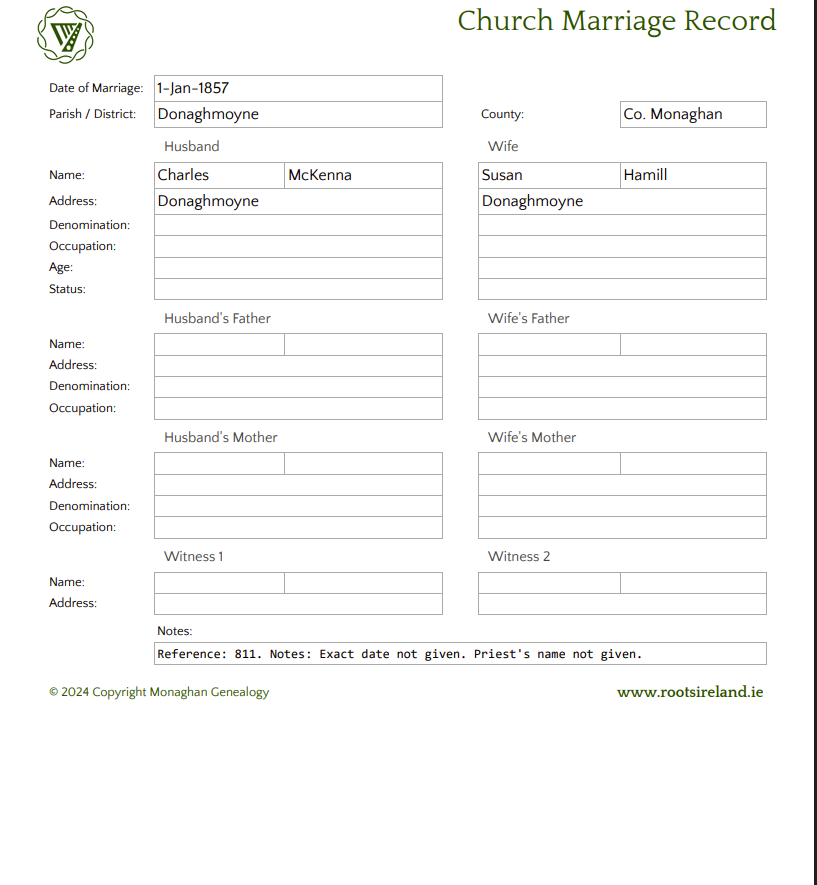
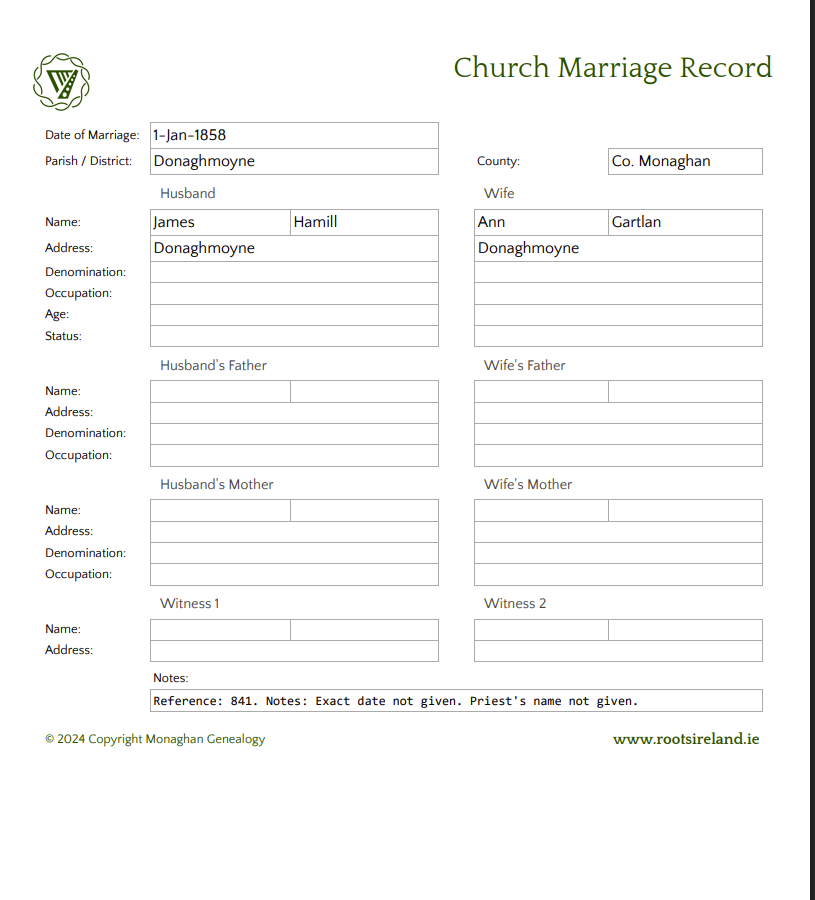
All four transcriptions show "1-Jan" as the marriage date. This is almost certainly a transcription convention rather than four actual New Year's Day weddings. When the original register didn't specify an exact date, transcribers often defaulted to the first day of the year. The notes on each record confirm: "Exact date not given."
Understanding the Parish Boundaries
Civil parishes, Catholic parishes, and townlands don't always align
Irish genealogists must navigate a complex web of overlapping jurisdictions. The civil parish of Donaghmoyne—used for land records, censuses, and government administration—did not perfectly match the Catholic parish boundaries used for baptisms, marriages, and burials.
St. Mary's, Lisdoonan (built 1812) — Part of Donaghmoyne Catholic Parish. Located within the civil parish boundaries.
St. Mary's, Inniskeen (built 1820) — Part of Inniskeen Catholic Parish. A separate parish that also served some townlands in the Donaghmoyne civil parish area.
Both churches served overlapping populations. The 1841 marriage record for Henry Hamill and Mary McMahon was found in the Inniskeen registers—even though it's indexed under "Donaghmoyne" in transcription databases.
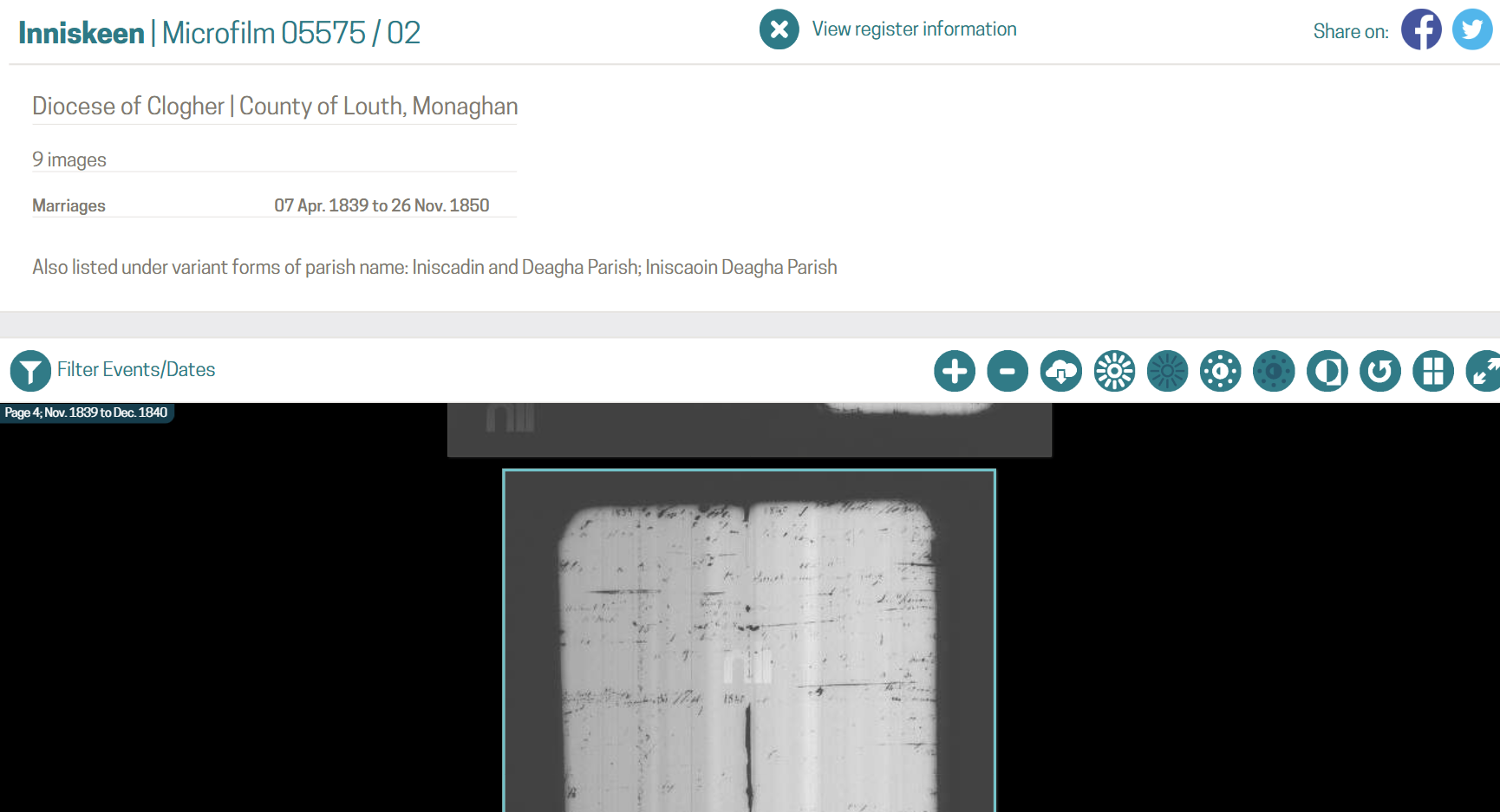
The National Library of Ireland's microfilm for Inniskeen marriages (1839-1850) shows only 9 images available—many of poor quality. This is all that survives of the original register pages for this crucial period.
The Churches of Donaghmoyne Parish
Historic and current churches serving the Donaghmoyne area
Today, the Donaghmoyne Catholic Parish operates three churches: St. Lastra's in Donaghmoyne village (built 1980), St. Mary's in Lisdoonan (built 1812), and St. Patrick's in Broomfield (built 1900). But in the 1840s-1850s, when our Hamill marriages took place, the landscape was different.
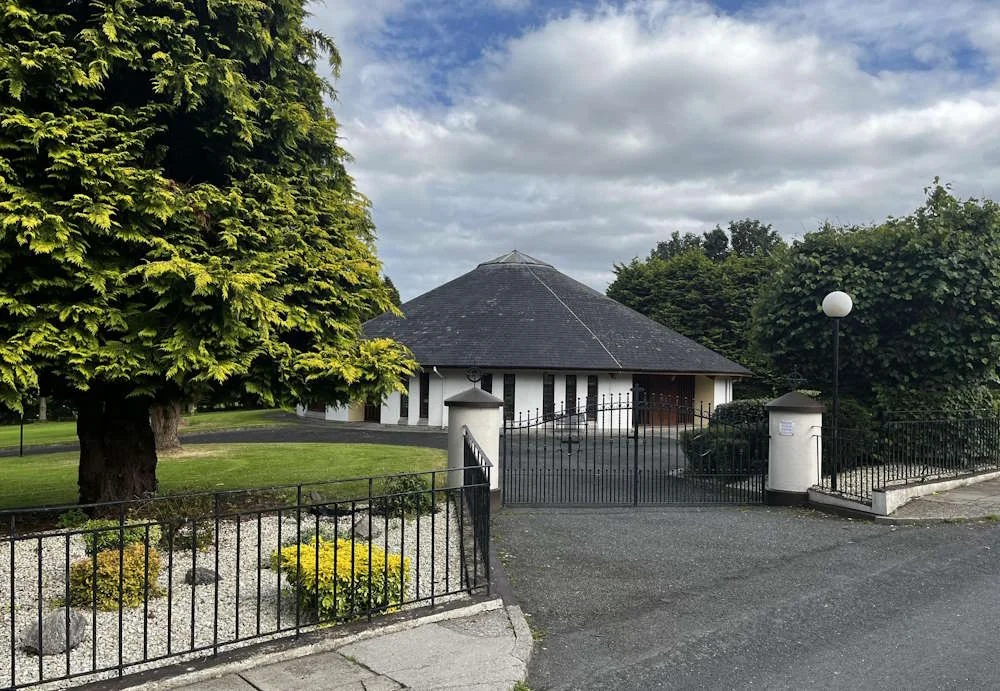
One of the oldest Catholic churches in the Diocese of Clogher. Built just three years after Catholic Emancipation began to ease restrictions on Catholic worship. Likely served residents of nearby townlands including parts of Dian.
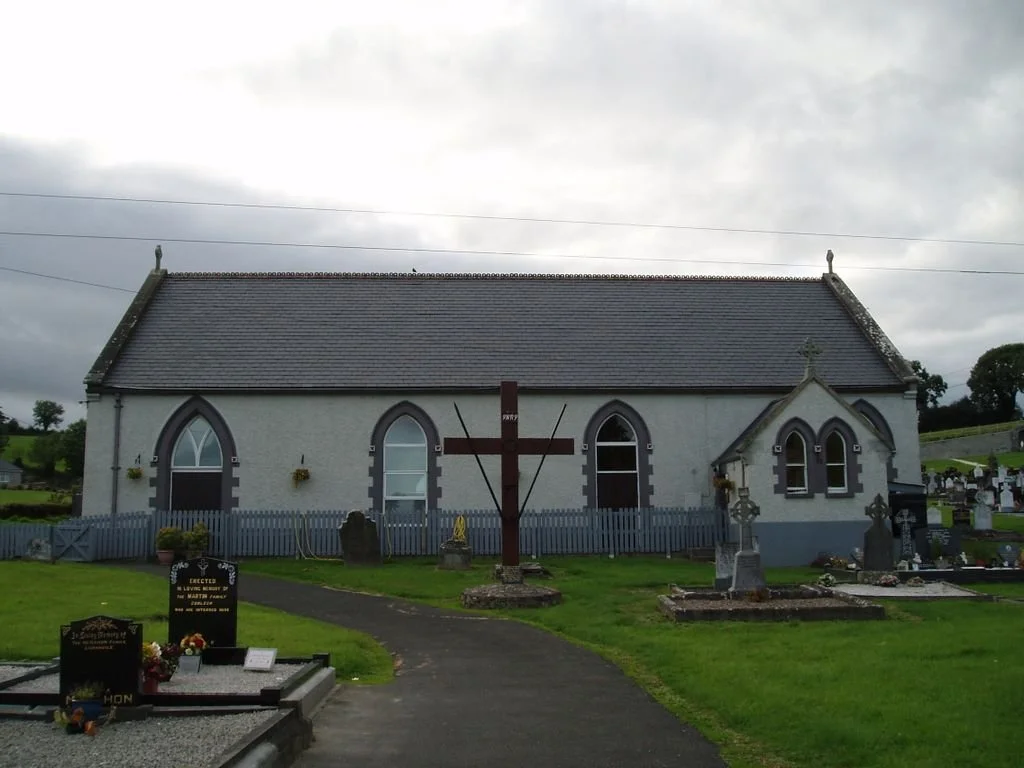
The former parish church in Donaghmoyne village. Served the community for over 150 years before being replaced by a new St. Lastra's Church in 1981. Now used as a community centre.

Part of the neighboring Inniskeen Parish, but served some residents of the Donaghmoyne civil parish. The 1841 Henry/Mary marriage was found in the Inniskeen registers. Now the Patrick Kavanagh Centre.
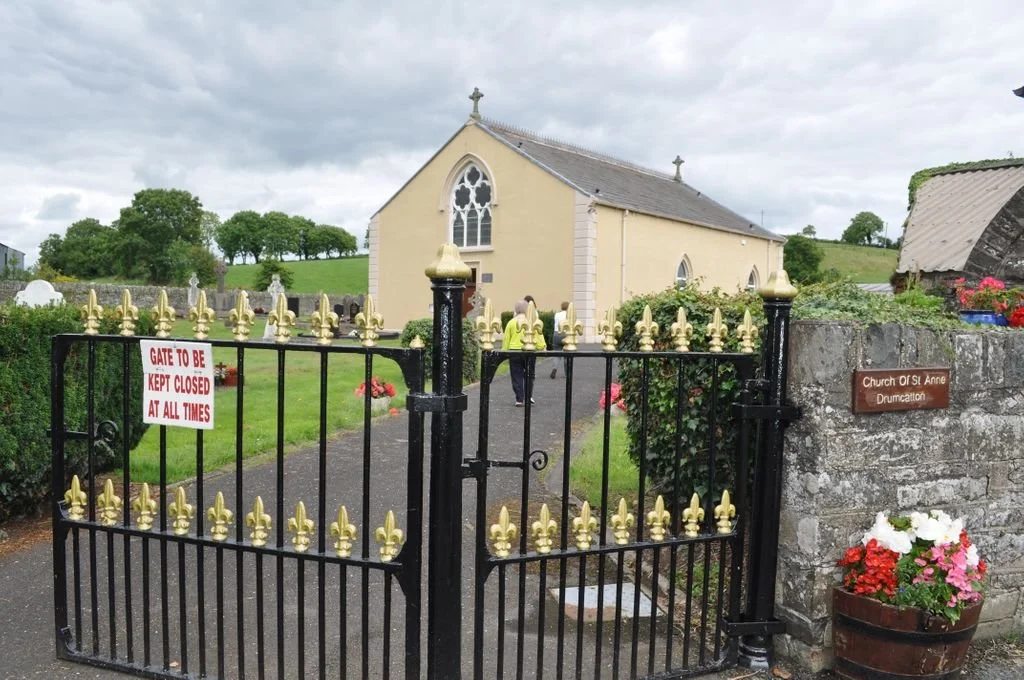
The first post-Penal chapel in the area, built on a former Mass site. Part of Inniskeen Parish but close to Donaghmoyne civil parish boundaries. Renovated by the Drumcatton 2000 Committee as a rural museum.
Cemetery Evidence Summary
James Hamill of Dian: The Anchor
The one Hamill with a documented location, a surviving headstone, and a plot of land
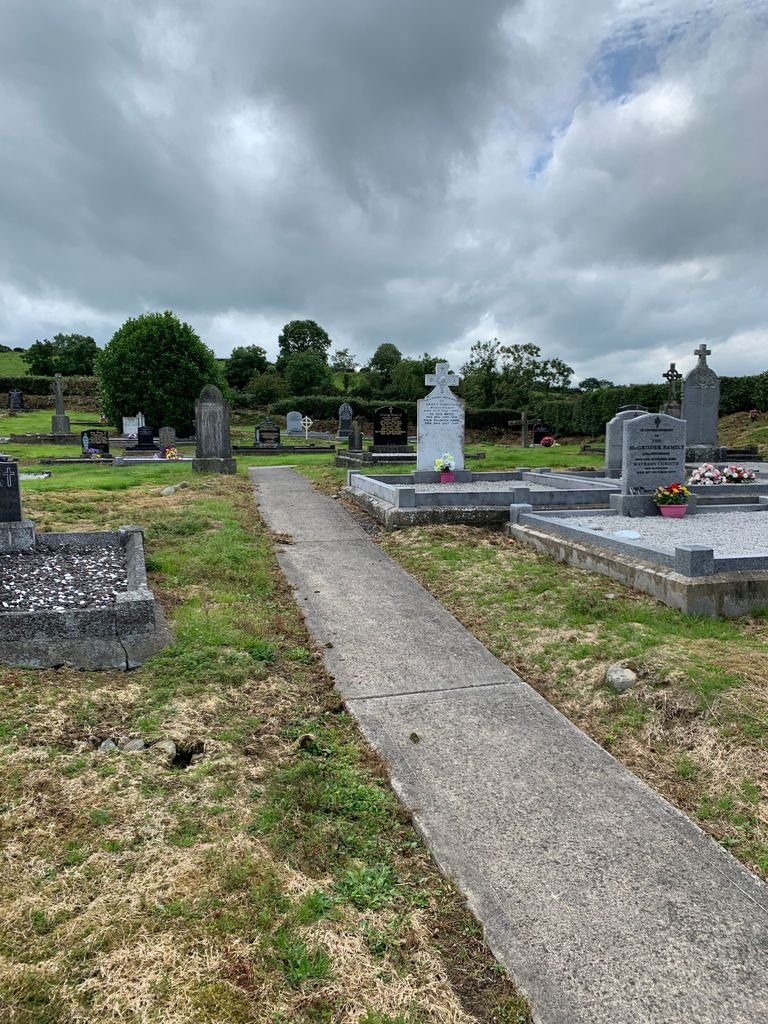
Of all the Hamills documented in the Donaghmoyne area, James Hamill provides the strongest physical evidence. His 1858 marriage to Ann Gartlan is confirmed in the parish registers. The 1861 Griffith's Valuation places him in the townland of Dian. And his headstone still stands in Old Broomfield Cemetery—with an inscription that confirms key details.
The James Hamill Headstone
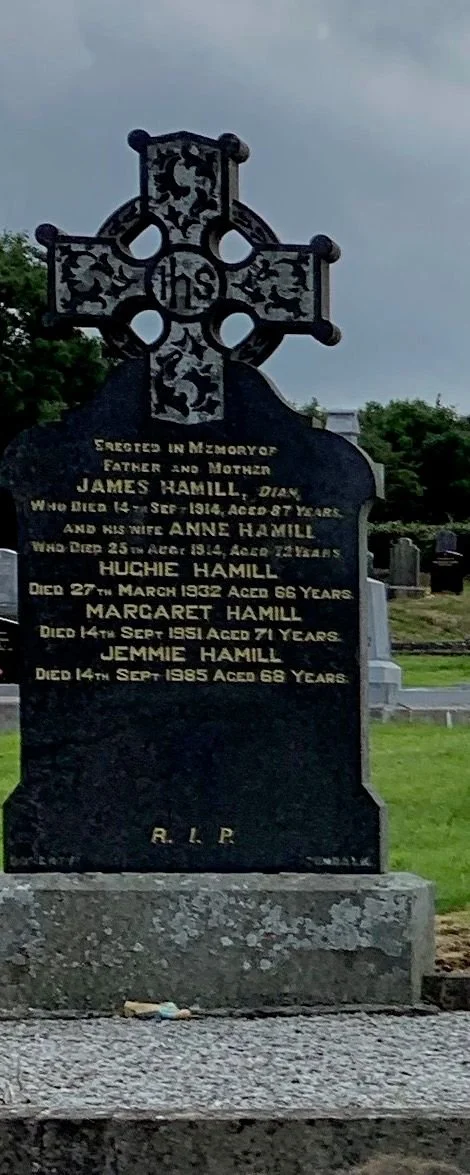
Inscription
Erected in Memory of Father and Mother
JAMES HAMILL, DIAN
Who died 14th Sep 1914, aged 87 years.
And his wife ANNE HAMILL
Who died 25th Aug 1914, aged 72 years.
HUGHIE HAMILL died 27th March 1932 aged 66 years.
MARGARET HAMILL died 14th Sept 1951 aged 71 years.
JEMMIE HAMILL died 14th Sept 1985 aged 68 years.
R.I.P.
Analysis: James died 1914 aged 87 = born c. 1827. Anne (Gartlan from the 1858 marriage) died 1914 aged 72 = born c. 1842. The headstone explicitly identifies James with the townland of Dian—matching the 1861 Griffith's Valuation. This is one of the few Hamills whose location in Ireland can be documented to a specific plot of land.
1861 Griffith's Valuation: The Hamill Network
The Griffith's Valuation (1847-1864) documents who held land in Ireland. Remarkably, seven Hamills appear across three neighboring townlands in Donaghmoyne parish—all within walking distance of each other in the drumlins of south Monaghan.
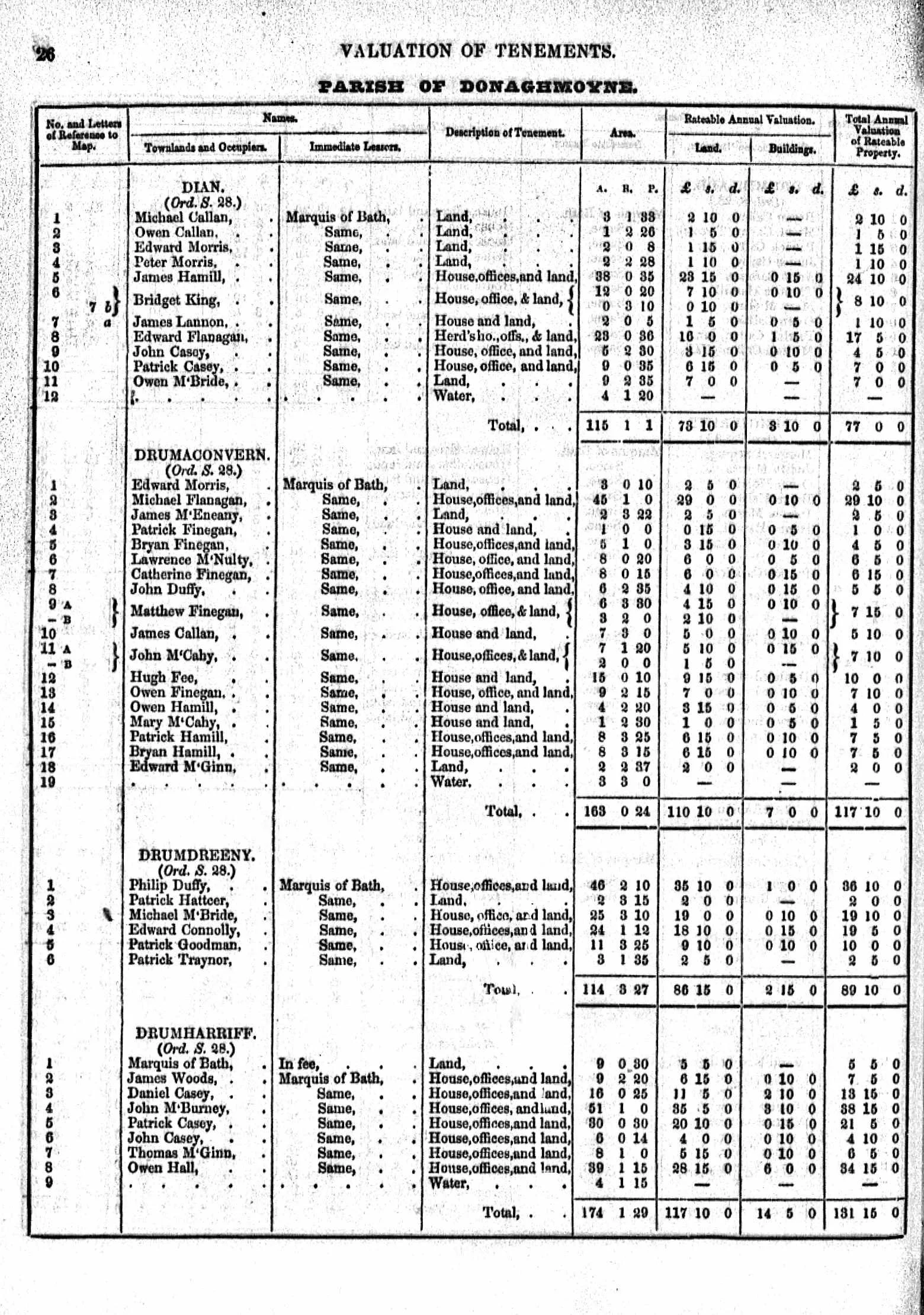
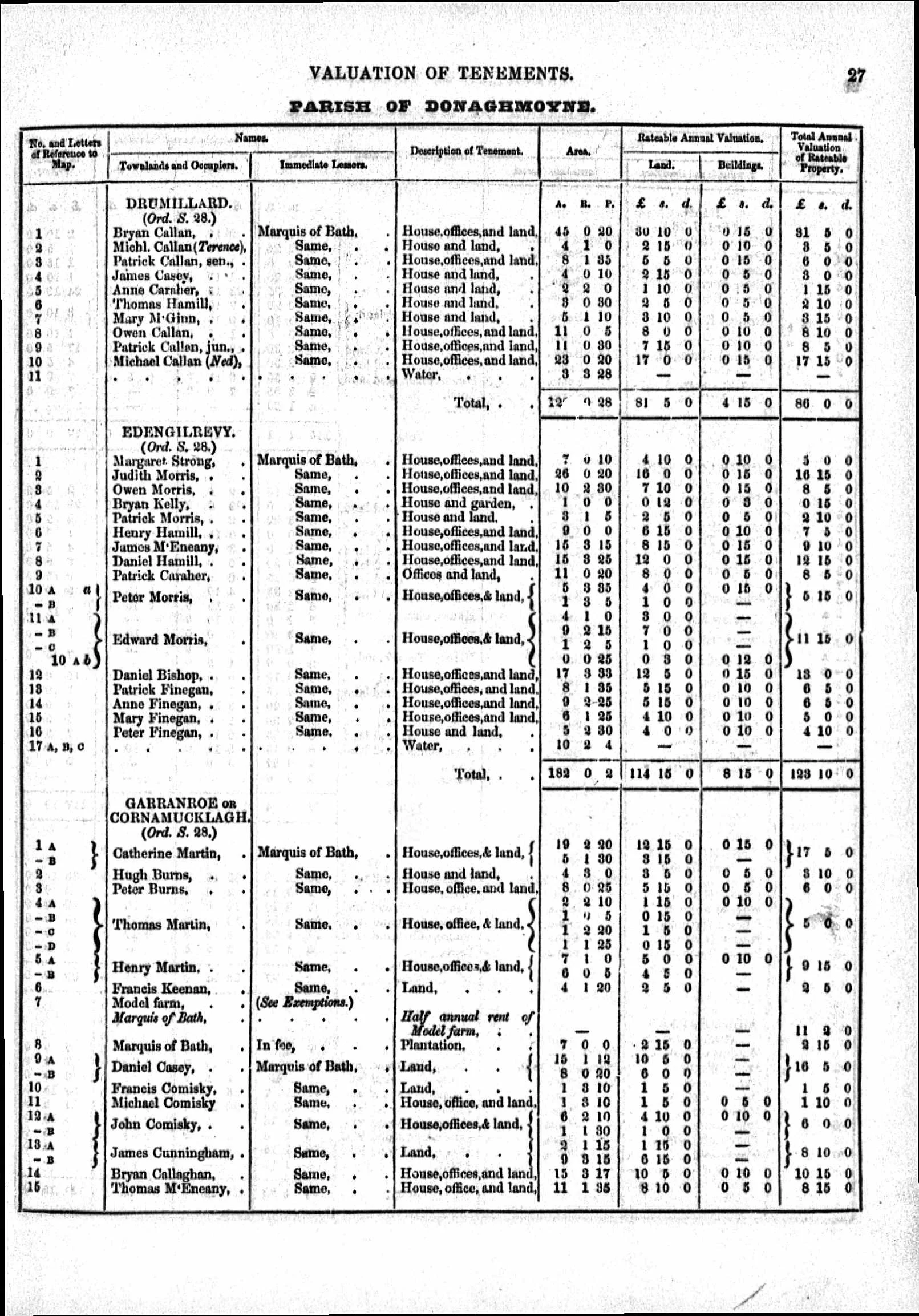
Hamills Found in the Valuation — Three Neighboring Townlands
- DIAN: James Hamill — "House, offices, and land" valued at £23 15s. Confirmed by headstone at Old Broomfield Cemetery.
- DRUMACONVERN: Owen Hamill — "House and land" valued at £4 0s
- DRUMACONVERN: Patrick Hamill — "House, offices, and land" valued at £6 15s
- DRUMACONVERN: Bryan Hamill — "House, offices, and land" valued at £6 15s
- EDENGILREVY: Henry Hamill — "House, offices, and land" valued at £6 15s
- EDENGILREVY: Daniel Hamill — "House, offices, and land" valued at £12 0s
Geographic Note: These three townlands share borders. Edengilrevy (Éadan Giolla Riabhaigh) lies directly adjacent to both Dian and Drumaconvern, with Taplagh (location of Old Broomfield Cemetery) to the west. This clustering suggests an extended Hamill family network in this small corner of Donaghmoyne parish.
The Henry Hamill documented in Edengilrevy presents an intriguing question. If "our" Henry Hamill (who married Mary McMahon in 1841) died in Montreal in 1854, this could be a different Henry—perhaps a brother or cousin who stayed in Ireland. Alternatively, if the Griffith's Valuation data for this area was collected before 1854, it could be the same man.
Edengilrevy sits in the civil parish of Donaghmoyne, Barony of Farney. Some sources suggest residents of this townland may have attended Killanny parish to the south. However, the NLI microfilm for Killanny shows:
• Baptisms: 1857-1880 (84 images)
• Marriages: 1862-1882 (21 images)
Neither covers our critical period of the 1840s-1850s. This is a dead end for now.
Without surviving records from Killanny for this period, and with 44 Hamills buried at St. Mary's Inniskeen versus none documented at other local cemeteries, the Inniskeen connection remains the strongest available evidence for tracing Hamill family church attendance—even for those living in Edengilrevy.
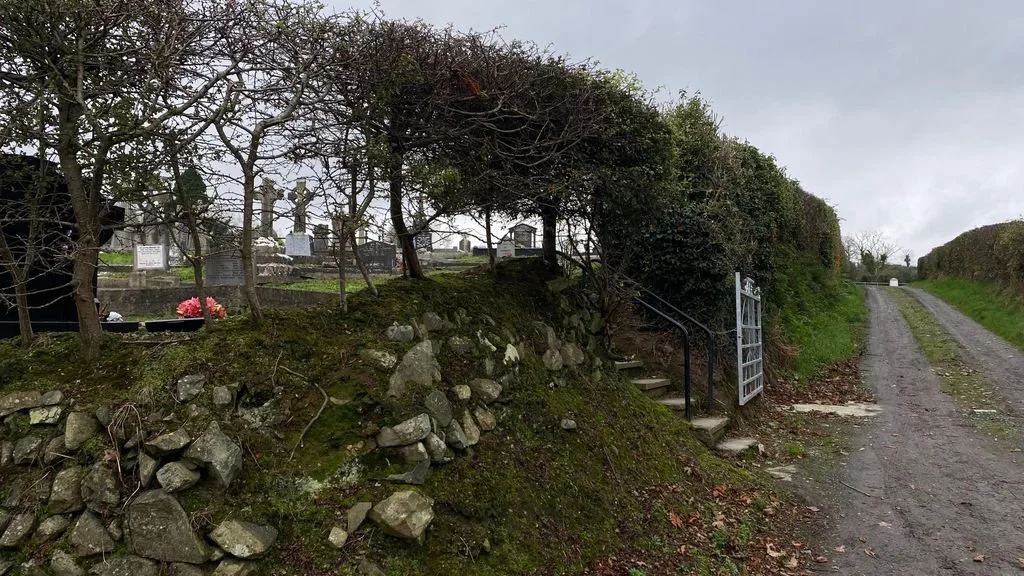
While Henry Hamill and Mary McMahon are the direct ancestors in the Owen Hamall case study, they emigrated to Montreal during the Famine—leaving less documentation in Ireland. James Hamill of Dian, however, stayed. We have:
• An actual location (Dian townland)
• A land record (1861 Griffith's Valuation)
• A surviving headstone with dates
• His wife's name confirmed (Anne/Ann Gartlan)
• DNA connections to modern descendants
Even though the DNA matches to James's line are not as strong as to Henry's, Owen's, or Susan's, James provides an anchor point in Ireland that can help us understand the broader Hamill network.
Donaghmoyne Parish Today
The churches continue to serve the community
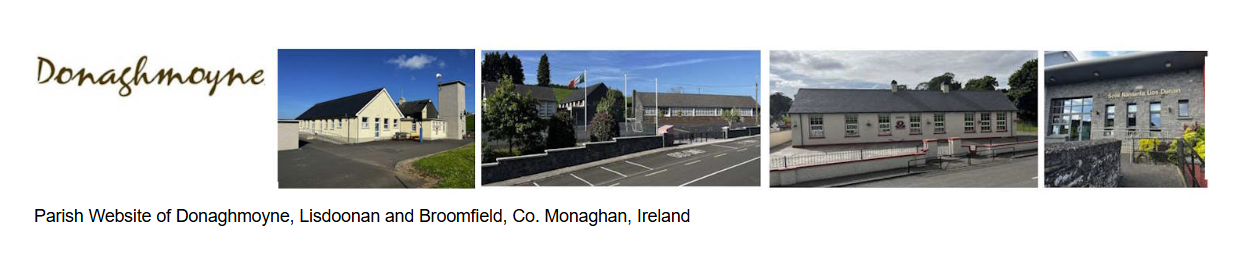
The modern Donaghmoyne Parish website serves three communities: St. Lastra's (Donaghmoyne), St. Mary's (Lisdoonan), and St. Patrick's (Broomfield).
The Donaghmoyne Parish today encompasses three churches, each with weekend Mass as listed in the parish bulletin. The parish website (donaghmoyne.com) provides current schedules and contact information for researchers hoping to visit.
Parish Priest: Fr. Michael Daly, P.P.
Phone: 042-9743617
Email: donaghmoyne@clogherparishes.ie
Parish Radio: St. Patrick's Broomfield: 102.4FM • St. Lastra's Donaghmoyne: 87.5FM • St. Mary's Lisdoonan: 107FM
Note: Masses are live streamed from each church. Cemetery research may require advance contact with the parish office.
Our Research Methodology
Document the Records
Gather all available transcriptions, noting limitations. The four marriages all appear in "Donaghmoyne" registers with DNA connections confirmed.
Survey the Cemeteries
Use Find A Grave and other databases to identify Hamill burials. The concentration of 44 Hamills at St. Mary's Inniskeen versus 6 at Broomfield suggests different family branches attended different churches.
Cross-Reference Land Records
The 1861 Griffith's Valuation places specific Hamills in specific townlands, helping determine which church they likely attended based on geography.
Current Conclusions
Based on cemetery evidence and the location of the 1841 marriage record in the Inniskeen registers, St. Mary's, Inniskeen appears to be the most likely church for Henry Hamill and Mary McMahon's 1841 wedding. However, James Hamill of Dian—who married in 1858 and is buried at Broomfield—may have attended a different church within the Donaghmoyne Parish proper. The relationship between these Hamill branches remains under investigation.
Document Gallery
Five couples married in Donaghmoyne parish between 1841 and 1858. Their descendants scattered across five American destinations over fifty years of emigration. DNA evidence now connects them all.
Building on The Owen Hamall Mystery, this new case study will prove the connections between Henry Hamall's family and four other couples from Donaghmoyne—revealing an interconnected network of Hamill families who emigrated across fifty years, from famine survival to copper mining opportunity.
The framework is in place. The research continues.
Are You Connected to the Donaghmoyne Network?
If you descend from any Hamill, Hamall, Hammel, McCanna, Gartlan, or McMahon family with roots in County Monaghan — particularly Donaghmoyne parish — your DNA and family records could help establish how these four families connect. Whether your ancestors settled in Chicago, Wisconsin, Illinois, Missouri, Montana, or elsewhere, I’d welcome the collaboration.
Get in Touch About This ResearchResearch collaboration is informal, peer-to-peer, and reciprocal — no fee, no obligation, just shared work on shared ancestry.
Every Family Has a Story Worth Telling
Whether you're just beginning your research or ready to transform years of work into a narrative your family will treasure, I'd love to hear your story.
BEGIN YOUR RESEARCH INQUIRY