
St. Mary’s Church, Inniskeen
Inniskeen, County Monaghan, Ireland
St. Mary's Church, Inniskeen
On January 1, 1841, Henry Hamill and Mary McMahon were married somewhere in the parishes of Inniskeen or Donaghmoyne. The presence of 44 Hamill burials in St. Mary's graveyard suggests this was their family's church—though the marriage record itself doesn't specify which chapel. Today St. Mary's stands as a literary shrine to poet Patrick Kavanagh, but its graveyard still holds generations of Hamills who never left this land.
The Hamill Family at St. Mary's, Inniskeen
Henry would die just thirteen years later in Montreal, a Famine emigrant. Mary would outlive him by twenty years.
The earliest dated burial: John Hamill (1816–1838), who died before Henry's marriage—confirming an established family connection to this church.

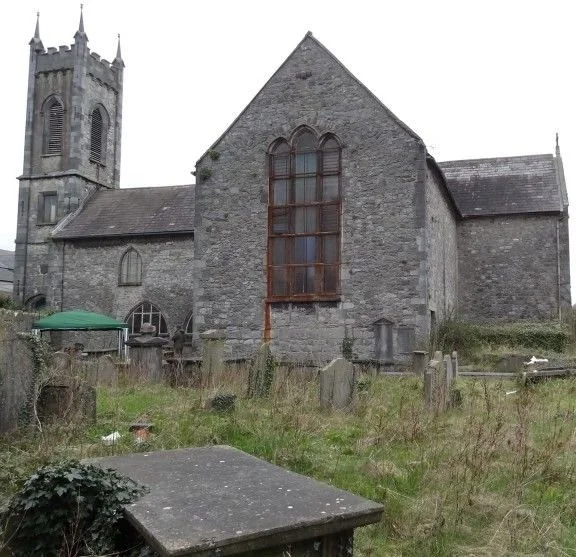
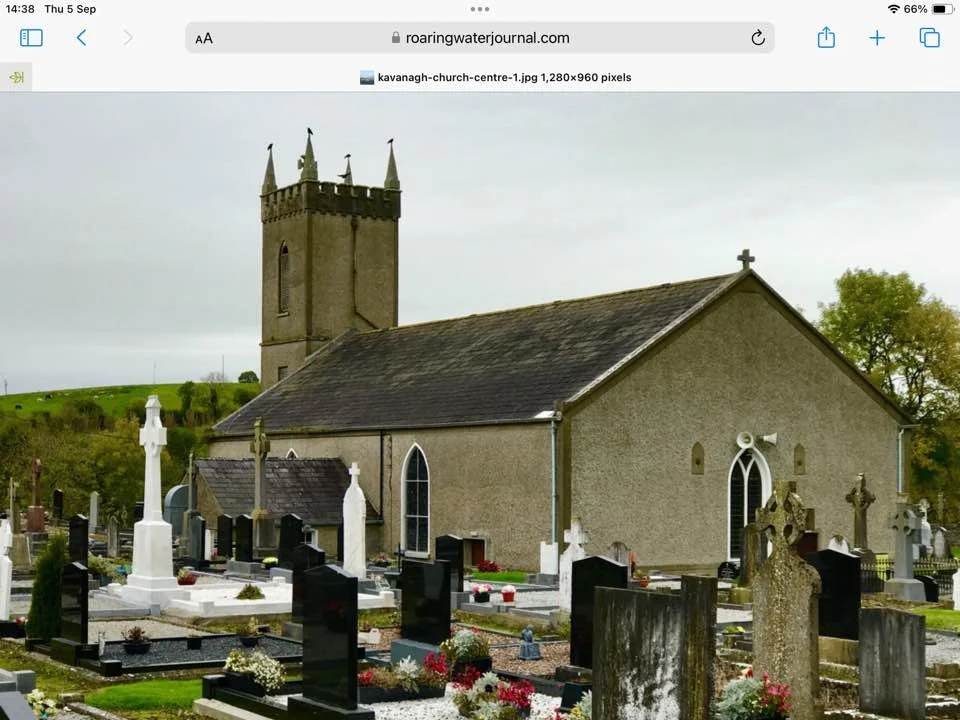
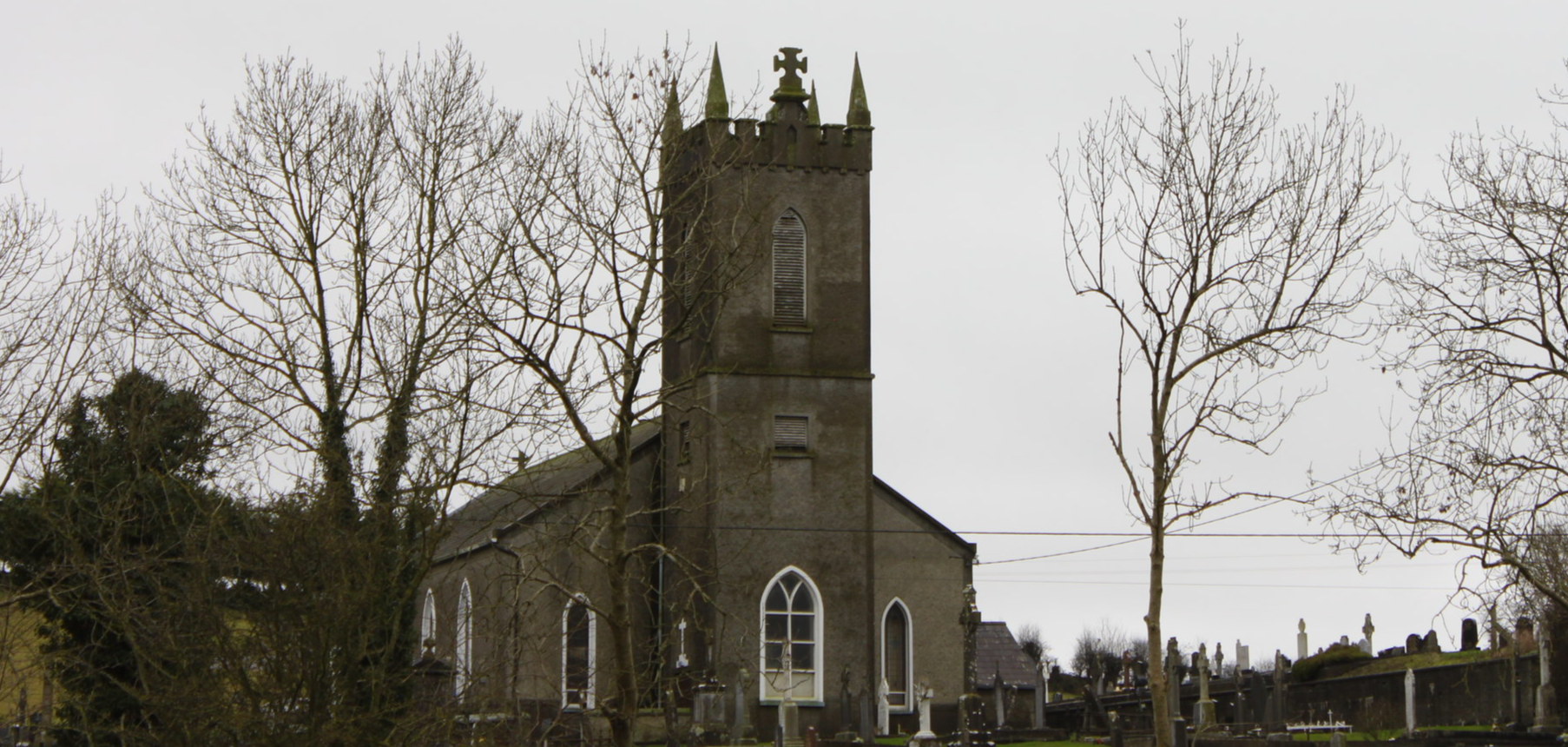
St. Mary's Church, Inniskeen, as it appears today—now the Patrick Kavanagh Centre. The stone tower with its crenellated parapet dates from the church's construction in 1820. Celtic crosses in the graveyard mark generations of parishioners, including the poet Patrick Kavanagh himself.
The parish registers of Inniskeen begin in 1841—the same year Henry Hamill and Mary McMahon were married. This timing is no coincidence. Catholic parish record-keeping in Ireland became more systematic in the decades following Catholic Emancipation in 1829. For genealogists researching Irish Catholic families, 1841 often marks the boundary between documented history and oral tradition.
This article focuses on St. Mary's Church, Inniskeen—the most likely location for Henry and Mary's 1841 wedding based on cemetery evidence. For the complete picture of all four DNA-connected Hamill marriages, the parish boundary complexities, and the Griffith's Valuation evidence showing seven Hamills across three neighboring townlands, see The Hamills of Donaghmoyne.
The marriage record is precious regardless of which chapel hosted it: the names match exactly those given by Owen Hamall in Montreal records—"deceased Henry Hammell" and "Mary McMahon"—confirming the family's County Monaghan origins. Just four years after the marriage, the Great Famine would begin—and within a decade, Henry and Mary would be among the millions who fled Ireland for North America.
The Foundation Record
The 1841 marriage of Henry Hamill and Mary McMahon is documented in the Inniskeen parish registers—though the record doesn't specify which of the parish's chapels hosted the ceremony. The presence of 44 Hamill burials in St. Mary's graveyard, combined with the family's documented presence in nearby townlands, makes this the most likely location.
This record anchors the family to County Monaghan—and explains why Owen Hamall, born in Ireland around 1847, would later name his parents as "Henry Hammell" and "Mary McMahon" in Montreal records.
Inniskeen: The Pleasant Island
Inniskeen—Inis Caoin in Irish, meaning "the pleasant or quiet island"—takes its name from an early monastic settlement founded by St. Daig. Situated between two divides of the River Fane, the site was a natural retreat for monks seeking solitude. The round tower ruins that still stand in the village are all that remain of that ancient monastery.
Inniskeen lies in the southeastern corner of County Monaghan, extending from the hills of Donaghmoyne and South Armagh into the lowlands of County Louth. The landscape is defined by drumlins—small, rounded hills left by retreating glaciers—that create a patchwork of small farms separated by hedgerows. The townlands of Dian, Drumaconvern, and Edengilrevy, where Hamills are documented in the 1861 Griffith's Valuation, lie within this parish's sphere.
The parish boundaries in rural Ireland were complex. Civil parishes like Donaghmoyne often overlapped with Catholic parishes like Inniskeen. The townland of Dian, where a James Hamill is documented in the 1861 Griffith's Valuation, sits near the boundary between these two parishes—which is why Hamill records appear in both Donaghmoyne and Inniskeen registers.
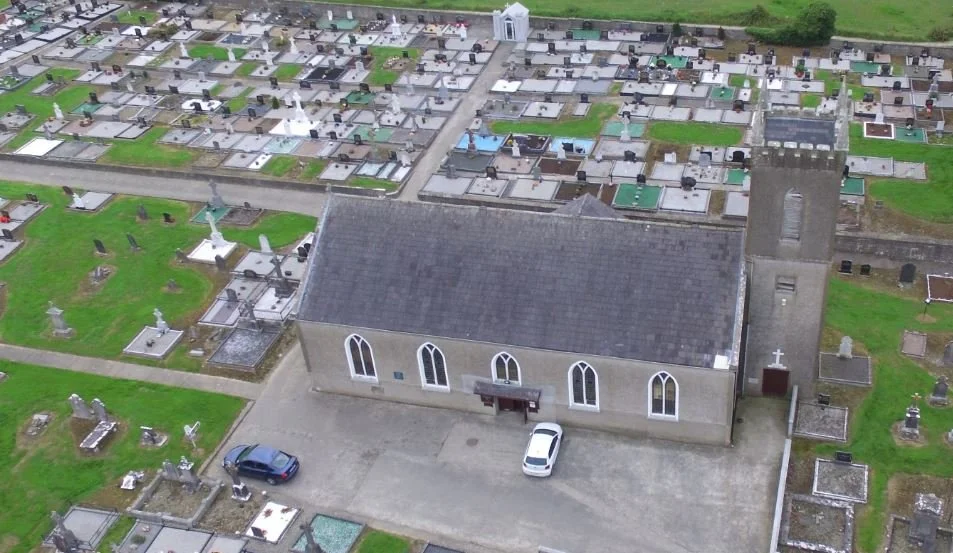
Aerial view of St. Mary's Church and its extensive cemetery. The church's unusual orientation—altar to the west rather than the traditional east—and its entrance from the side rather than the gable end reflect the constraints of post-Penal era church building.
St. Mary's Church: From Mass House to Literary Shrine
St. Mary's Church was built in 1820 on the site of an earlier thatched chapel. Its construction came just nine years before Catholic Emancipation—a period when Catholics could worship openly but still faced restrictions on church architecture. The building reflects these constraints: a simple rectangular form, modest in scale, with none of the grandeur that would characterize later Victorian-era Catholic churches.
St. Mary's displays an unusual arrangement: the altar positioned on the long western wall rather than the traditional eastern end, with the entrance from the east. This orientation, common in pre-Emancipation Irish churches, may reflect the need to build quickly on available land without the luxury of proper east-west alignment. The interior features exposed timber braced tie-beam roof structures and a timber gallery—practical elements that speak to the modest means of the congregation.
For over 150 years, St. Mary's served the Catholic community of Inniskeen. Generations were baptized at its font, married before its altar, and buried in its graveyard. Among them was a boy named Patrick Kavanagh, born in nearby Mucker in 1904, who would grow up to become one of Ireland's most celebrated poets.
A Poet's Church
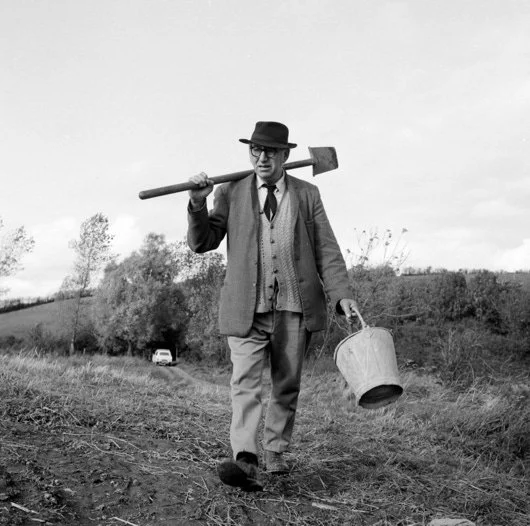
Patrick Kavanagh was baptized in St. Mary's, served as an altar boy here in his youth, and immortalized the church in both his poetry and prose. In his novel Tarry Flynn, he described the building with characteristic honesty:
Yet for all its shabbiness, Kavanagh found in this humble church the spiritual foundation that would shape his life's work. His poetry returns again and again to the themes of rural faith, the sacred hidden in the ordinary, and the tension between the soul's longing and the body's labor.
When Kavanagh died in Dublin in 1967, his body was brought home to Inniskeen and buried in St. Mary's graveyard—the same ground where Hamills had been laid to rest for generations.
"To be a poet and not know the trade,
To be a lover and repel all women;
Twin ironies by which great saints are made,
The agonising pincer-Loss of Heaven."
The Patrick Kavanagh Centre Today
In 1974, St. Mary's was deconsecrated when a new parish church—Mary, Mother of Mercy—was built at Ednamo. Rather than let the historic building fall into ruin, the community transformed it into a cultural resource. The Patrick Kavanagh Centre opened in 1988, dedicated to preserving the poet's legacy and the rural Irish world he documented.
The Centre houses an exhibition on Kavanagh's life and work, including manuscripts, photographs, and personal effects. The original church interior has been preserved, including the beautiful Earley stained glass windows—a reminder that even this "barn-like" church had its moments of beauty.
Outside, the graveyard rewards careful exploration. Patrick Kavanagh's grave lies beneath a simple headstone inscribed with lines from his poem "Lines Written on a Seat on the Grand Canal." And among the older graves, Celtic crosses mark the resting places of families who farmed this land for centuries—including the Hamills.
The Centre also serves as a starting point for the Kavanagh Trail—a walking and cycling route that connects sites associated with the poet's life: his birthplace at Mucker, Kednaminsha National School where he was educated, and "Billy Brennan's Barn" immortalized in his poetry. For genealogists, the trail offers a chance to walk the same roads their ancestors knew—through the drumlins and hedgerows of south Monaghan.
The trail covers approximately 10 kilometers and can be walked or cycled. Key stops include:
Mucker: Kavanagh's birthplace, where a commemorative plaque marks the site of the family home.
Kednaminsha National School: Where Kavanagh received his education—and later immortalized in "A Christmas Childhood."
Shancoduff: The stony grey soil of Kavanagh's poem, overlooking the drumlins that defined his landscape.
Rocksavage: Site of "Billy Brennan's Barn" from the poem "Inniskeen Road: July Evening."
Round Tower: The ancient monastic remains in Inniskeen village, visible from the Kavanagh Centre.
Visiting the Patrick Kavanagh Centre
Address: Patrick Kavanagh Centre, Inniskeen, County Monaghan, A81 PX98, Ireland
Website: patrickkavanaghcountry.com
Phone: +353 42 937 8560
Hours: Check website for current opening times (typically 11am–4:30pm, closed Mondays)
Admission: Adults €5 • Seniors/Students €4 • Children €3 • Family €12
Features: Exhibition on Patrick Kavanagh's life and work • Original church interior with Earley stained glass windows • Graveyard containing Kavanagh's grave and generations of local families including Hamills
Nearby: The Raglan Road Tea Rooms offer refreshments • Round tower ruins in Inniskeen village • Kavanagh Trail walking/cycling route
Getting There: Inniskeen is approximately 90 minutes from Dublin, 45 minutes from Dundalk. The village is accessible by car via the N2/M1. Limited public transport—check Bus Éireann for connections from Dundalk or Carrickmacross.
Timeline: St. Mary's Church, Inniskeen
January 1, 1841: A New Year's Marriage
The marriage of Henry Hamill and Mary McMahon on New Year's Day 1841 was recorded in the Inniskeen parish registers—documents that survive today in the National Library of Ireland and are available through their digitized Catholic Parish Registers collection.
Henry Hamill & Mary McMahon
Parish: Inniskeen (records also indexed under Donaghmoyne civil parish)
Date: January 1, 1841
Groom: Henry Hamill
Bride: Mary McMahon
Chapel: Not specified in record
The Other Parish Churches
In 1841, a family in this area might attend any of several chapels depending on geography, family tradition, or personal preference. Understanding these options helps explain why we can't be certain which church hosted the Hamill-McMahon wedding:
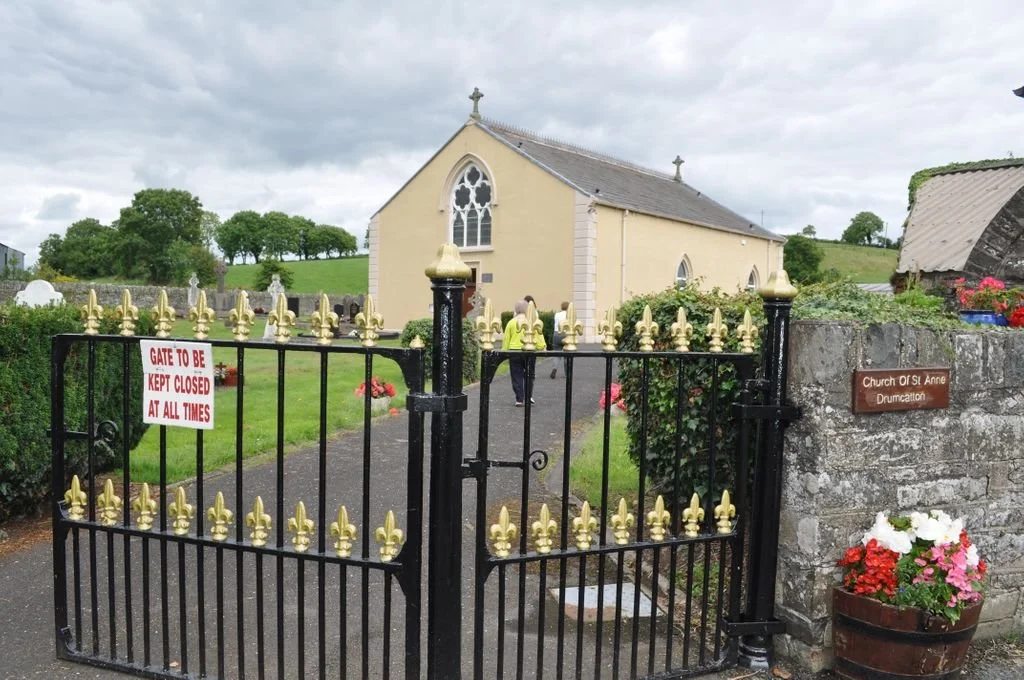
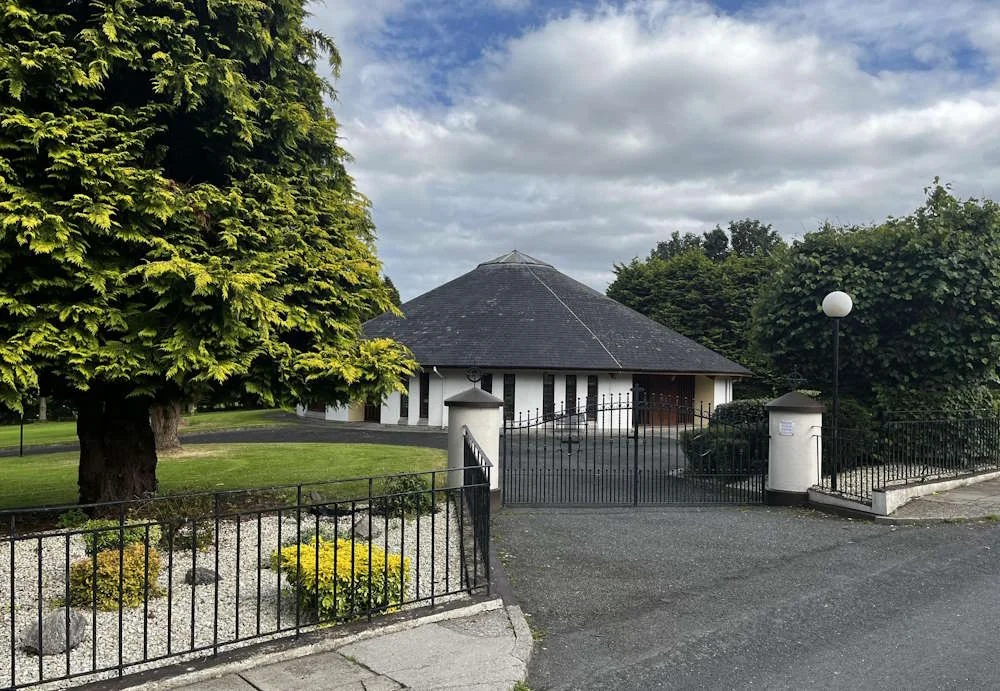
In 1974, both St. Mary's and St. Anne's were closed when a new parish church—Mary, Mother of Mercy—was built at Ednamo. The decision to deconsecrate these historic buildings allowed them to be preserved for other purposes: St. Mary's became the Patrick Kavanagh Centre in 1988, while St. Anne's was restored by the Drumcatton 2000 Committee as a rural museum.
Image Gallery
Are You Connected to the Donaghmoyne Network?
If you descend from any Hamill, Hamall, Hammel, McCanna, Gartlan, or McMahon family with roots in County Monaghan — particularly Donaghmoyne parish — your DNA and family records could help establish how these four families connect. Whether your ancestors settled in Chicago, Wisconsin, Illinois, Missouri, Montana, or elsewhere, I’d welcome the collaboration.
Get in Touch About This ResearchResearch collaboration is informal, peer-to-peer, and reciprocal — no fee, no obligation, just shared work on shared ancestry.
Every Family Has a Story Worth Telling
Whether you're just beginning your research or ready to transform years of work into a narrative your family will treasure, I'd love to help.
LET'S TALK ABOUT YOUR FAMILY