
Numancia, Aklan: A Portrait of Place
Numancia, Aklan
A town of rice fields and rain trees, lechon and piña cloth, ancient river-lore and a parish at its heart. Before the Morales and Tamayo families crossed an ocean, this small, hill-less town in the Western Visayas was simply home—the place every record in this series ultimately points back to.
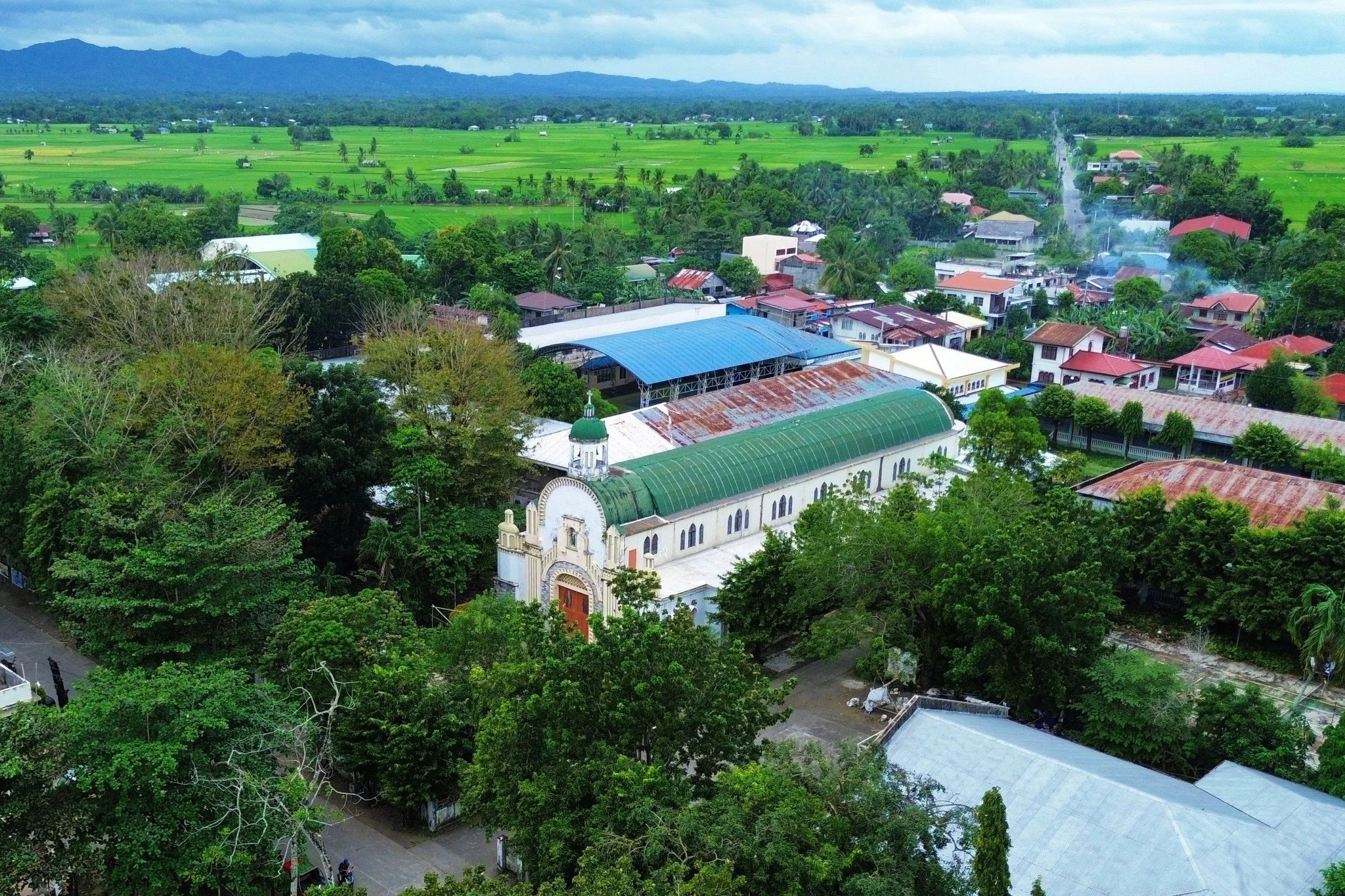
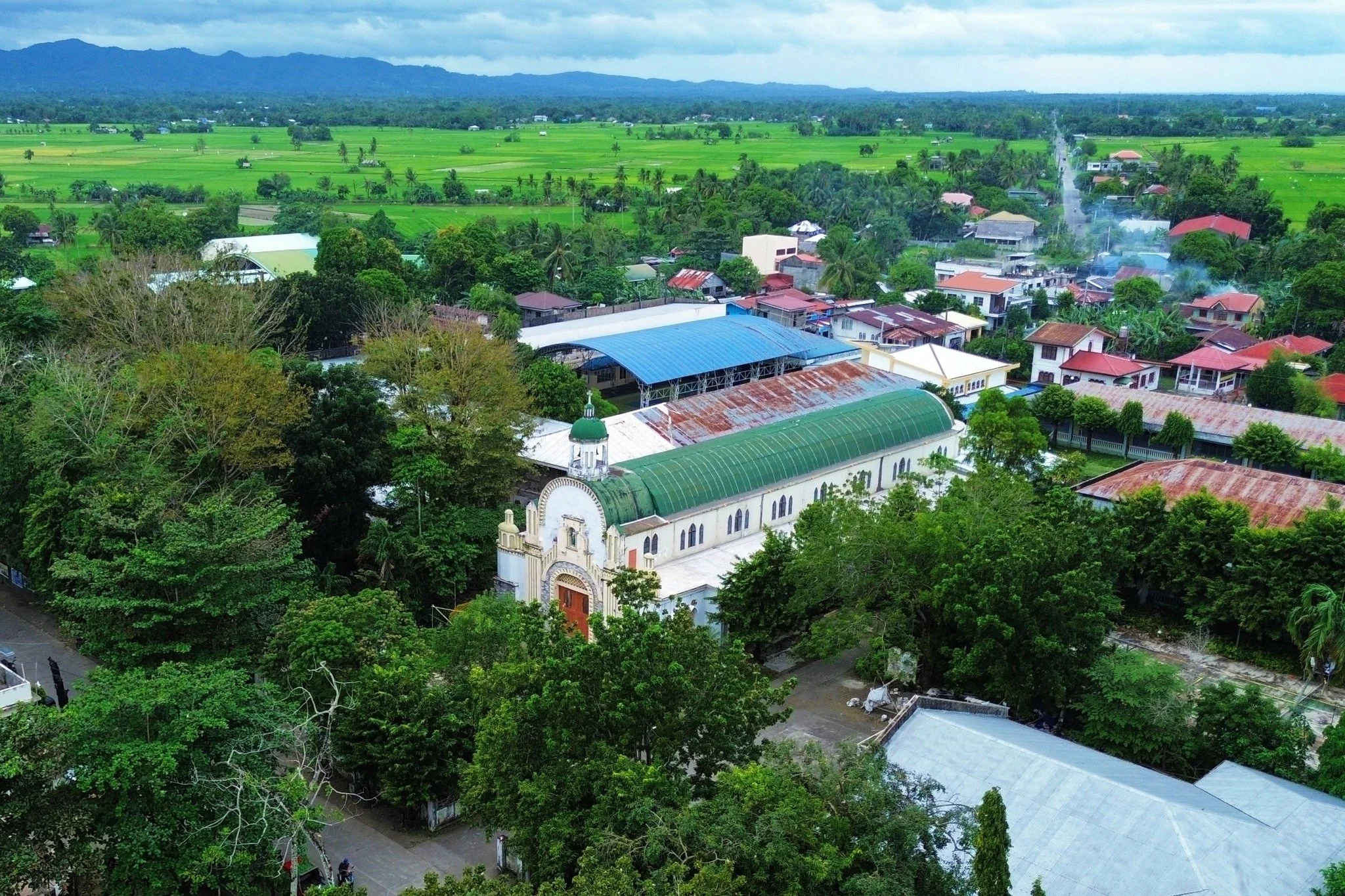
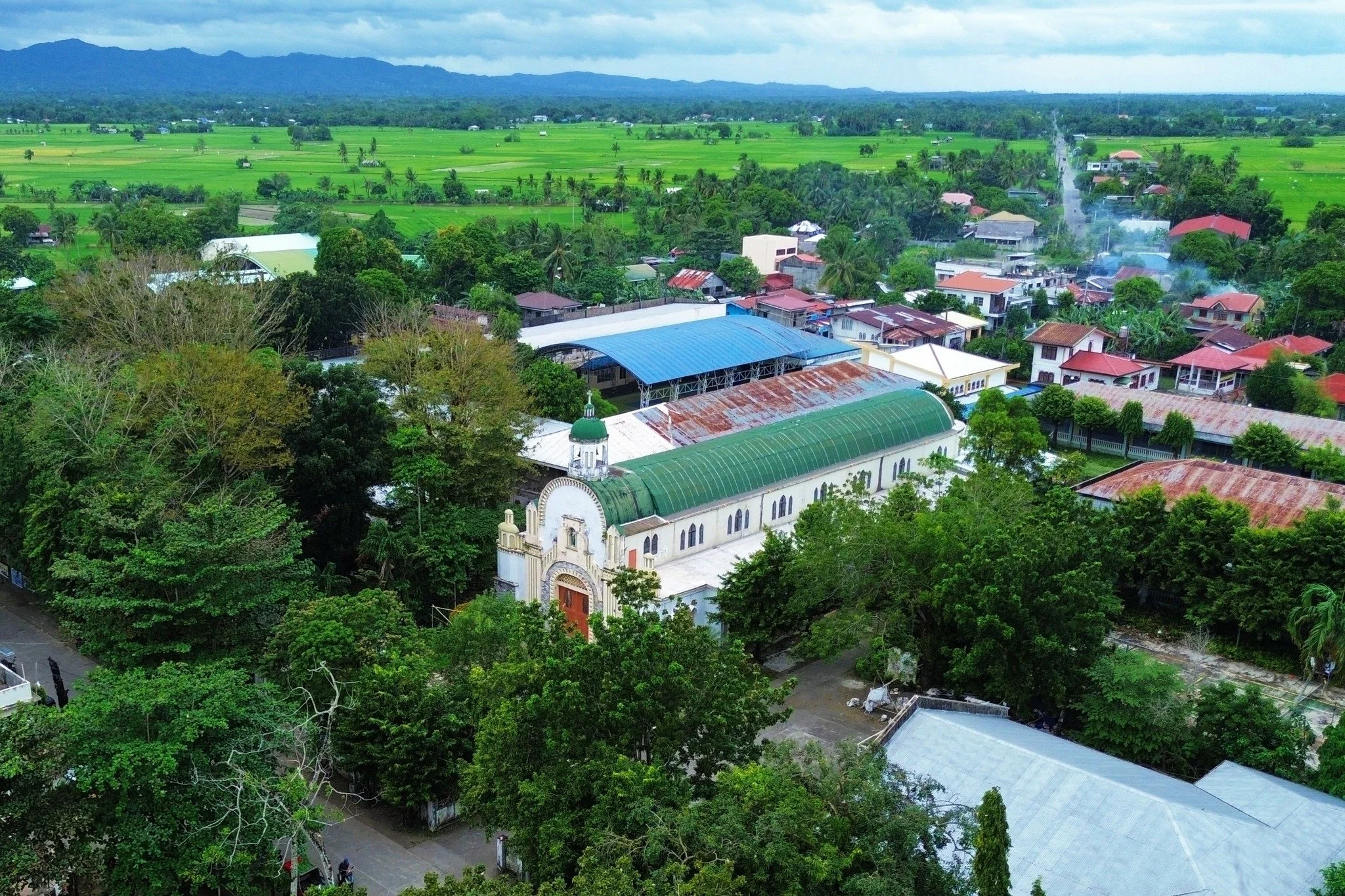
Numancia from the air: the green-roofed parish church set among trees, ringed by the rice fields that define a town with no hills of its own. Beyond lie the lowland paddies of Aklan, and on the far horizon, the mountains of neighboring towns.
Every family history begins in a place. For the Morales and Tamayo families, that place is Numancia—a fourth-class municipality in the province of Aklan, in the Western Visayas, pressed up against the provincial capital of Kalibo and surrounded on every side by rice. It is here that Mamerto Morales kept his notarial office, here that Jose Tamayo married Corazon Roldan in 1931, and here that the children who would carry the family to Manila and on to America were born. To understand where the family came from is, first, to understand this town.
Numancia is an easy town to pass through and a hard one to forget. Travelers bound for Boracay barely notice it as they speed down the highway from Kalibo's airport; locals know to stop in its barangays for the lechon that has made it, by proud reputation, the “Lechon Capital of Aklan.” But beneath the everyday rhythm lies a deep and layered past—one that reaches back, by local tradition, to the very founding of Panay itself.
Why Numancia Matters to This Family
A Town Without Hills
Numancia holds a small distinction that locals like to point out: it is said to be the only town in Aklan with no highlands or hills at all—a wholly lowland municipality, flat and fertile, laid out across roughly twenty-nine square kilometers and home to more than thirty-five thousand people in seventeen barangays. That flatness is the town's character. Where other Aklan towns climb into uplands, Numancia spreads out: rice paddies, coconut groves, and coastal flats running down to the sea.
Life here divides, gently, between town and country. A compact urban core—the barangays of Poblacion, Bulwang, and the two Laguinbanua districts—holds the markets, the tricycles, the civic buildings, and the church. The remaining barangays are farming country, where the day still turns on inland fields and coastal fishing. Because Kalibo and its airport, hospitals, and commerce sit just next door, Numancia offers the quiet of provincial life without its isolation; and because Boracay lies at the province's tip, the town has long served as a transit corridor, its people commuting out to work in tourism and hospitality and returning home to the rice.
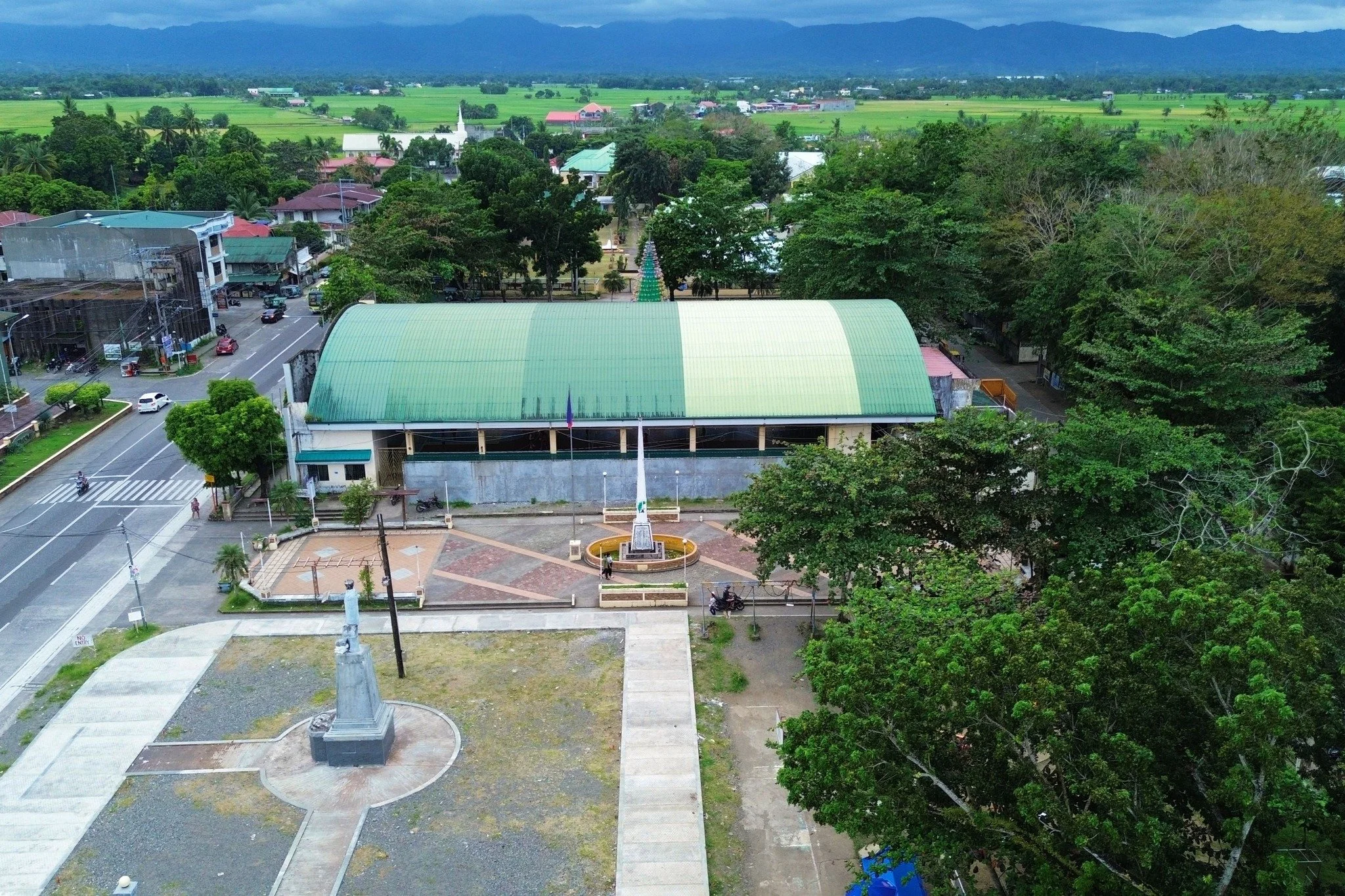
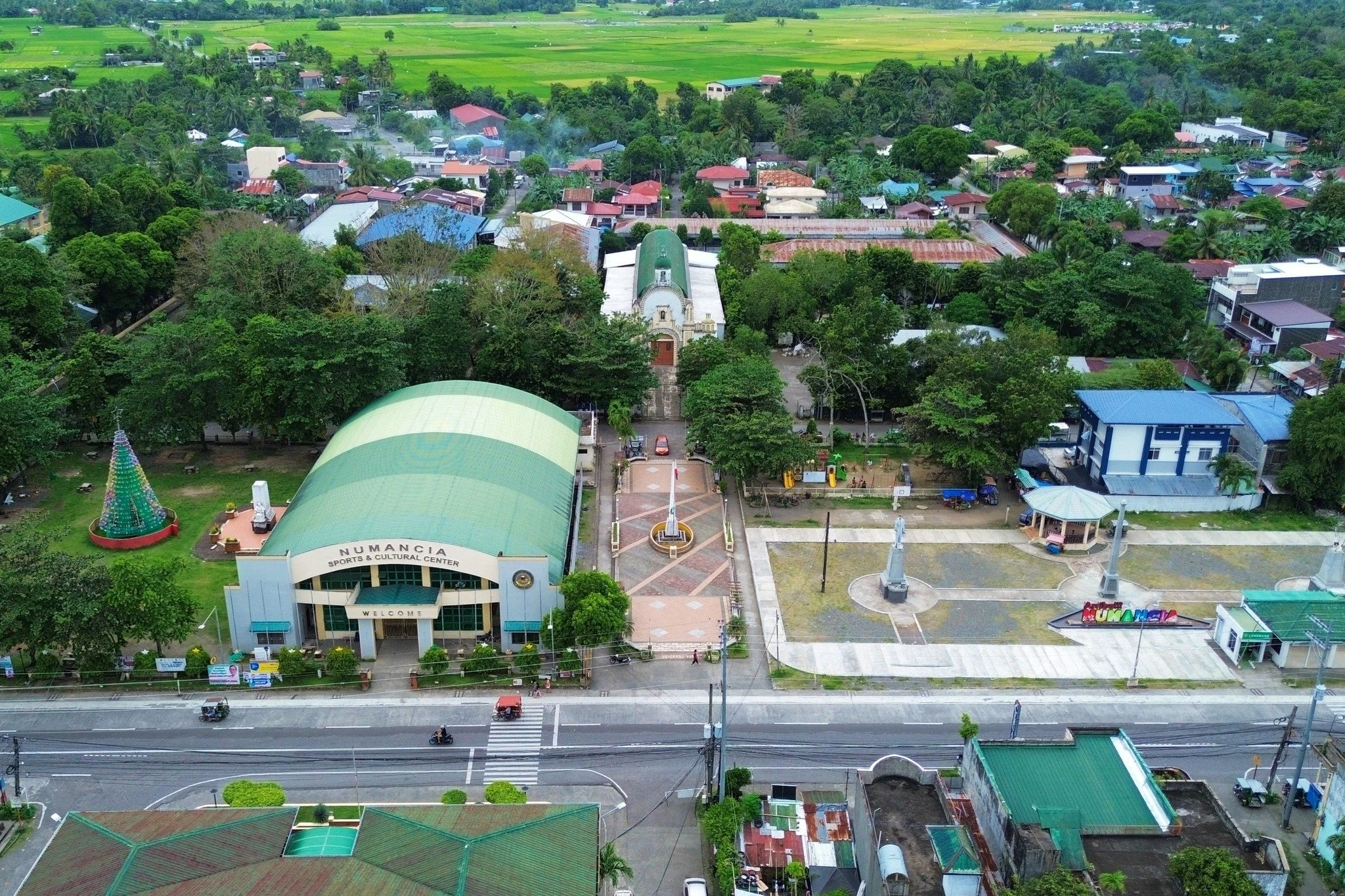
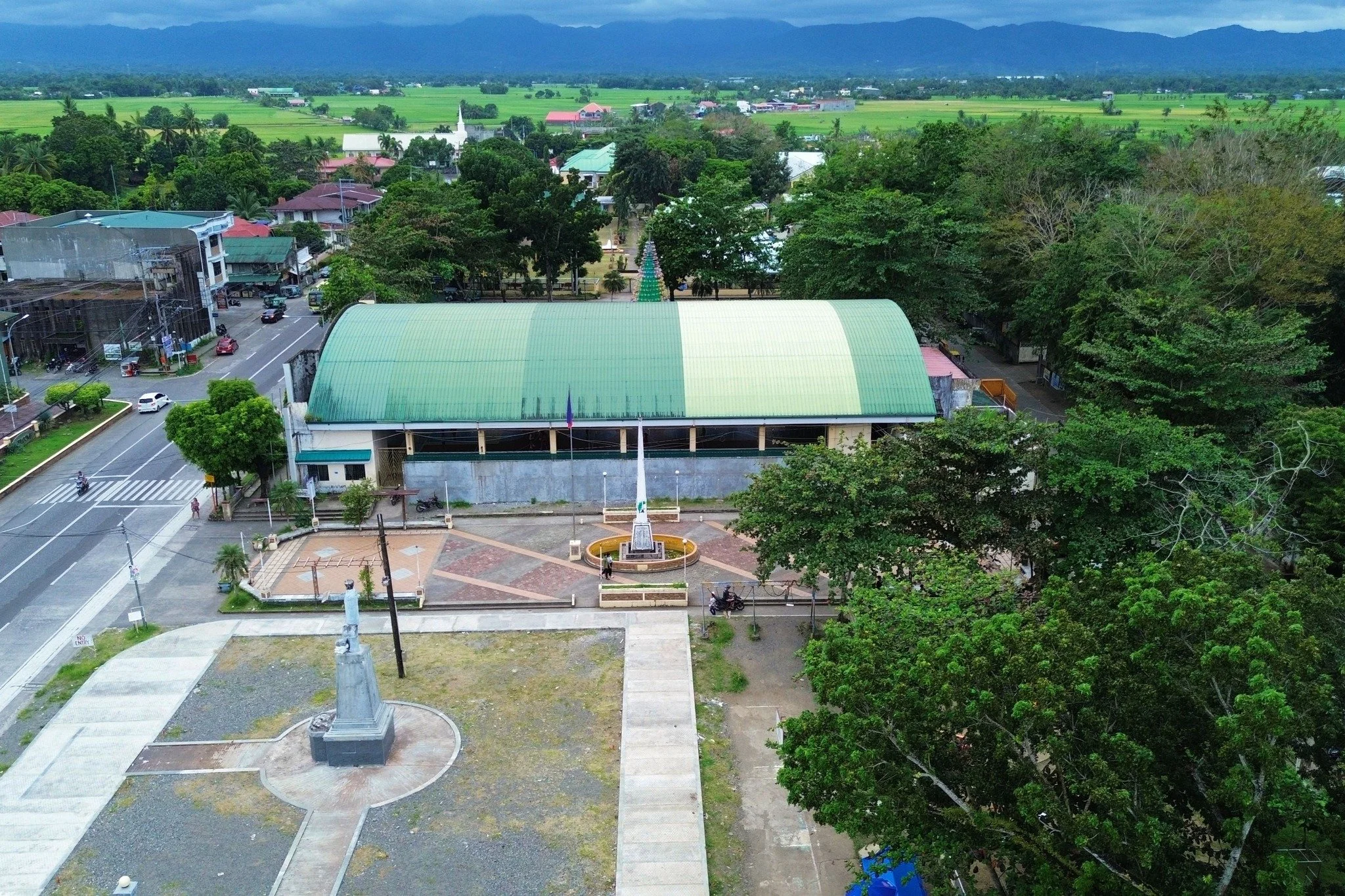
The civic heart of the town, with the highway running past the plaza and rice fields opening behind it. Numancia's flatness is its signature—the mountains in the distance belong to its neighbors.
Numancia at a Glance
Majanos and the Bornean Datus
Long before it bore a Spanish name, the town was known as Majanos—a name said to describe its flat terrain. According to the local traditions of Panay, its roots run back to the thirteenth century and the legendary Madja-as Confederacy, founded by Malay settlers from Borneo. In the most beloved version of the story, ten datus fleeing a tyrannical ruler purchased the lowlands of Panay from the island's Aeta chief, Marikudo, in the famous Barter of Panay, and established their settlements across the island.
Folklore places the seat of one of those leaders, Datu Bangkaya, at Majanos—the ancient ground of present-day Numancia. These accounts belong to oral tradition and legend rather than to the documentary record, and they are best held as such: not proven history, but the deep story a community tells about itself. What is tangible is the landscape that carries the memory.
Local lore holds that the Madjanos River—today a quiet creek marking the boundary between old districts of the town—was once a wide, navigable channel where the sailboat fleets of Datu Bangkaya are said to have anchored. Over centuries, floods and silt are said to have narrowed it to the modest waterway seen now. True history or cherished legend, the shrunken river serves as a daily reminder of how old this ground is believed to be.
In the Spanish colonial era the town was renamed Numancia, and its colonial footprint took shape—including an order, in 1848, to build a Roman Catholic cemetery and chapel outside the town proper.
Faith at the Center of Town
If the rice fields are Numancia's body, its parish is the heart. The town's life turns on the church calendar, centered on the Parish of St. Joseph the Worker—founded in 1874 and dedicated, fittingly, to the carpenter-saint who is patron of laborers. Just adjacent to the town plaza, the church draws devout pilgrims during the Lenten Visita Iglesia and gathers the whole town for the annual feast, when street-food stalls, basketball tournaments, and home-cooked feasts of lechon spill across the barangays.
For the Morales and Tamayo families, this parish is not a backdrop but the documentary spine of their story. It was here that Jose Tamayo and Corazon Roldan were married in 1931, and here that the children of both households were baptized—events recovered, after the war destroyed the town's registers, only through the parish's sworn certifications.
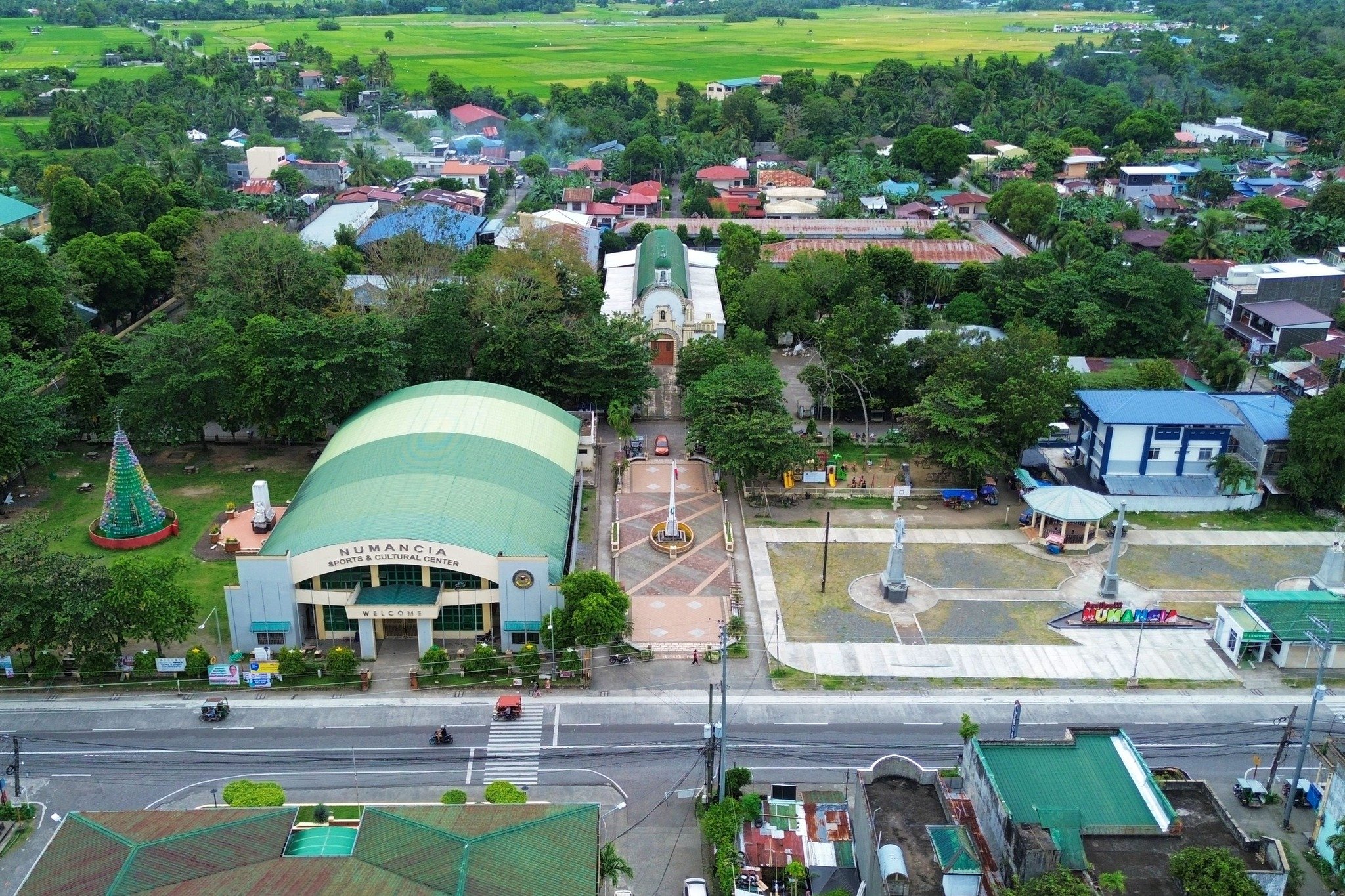
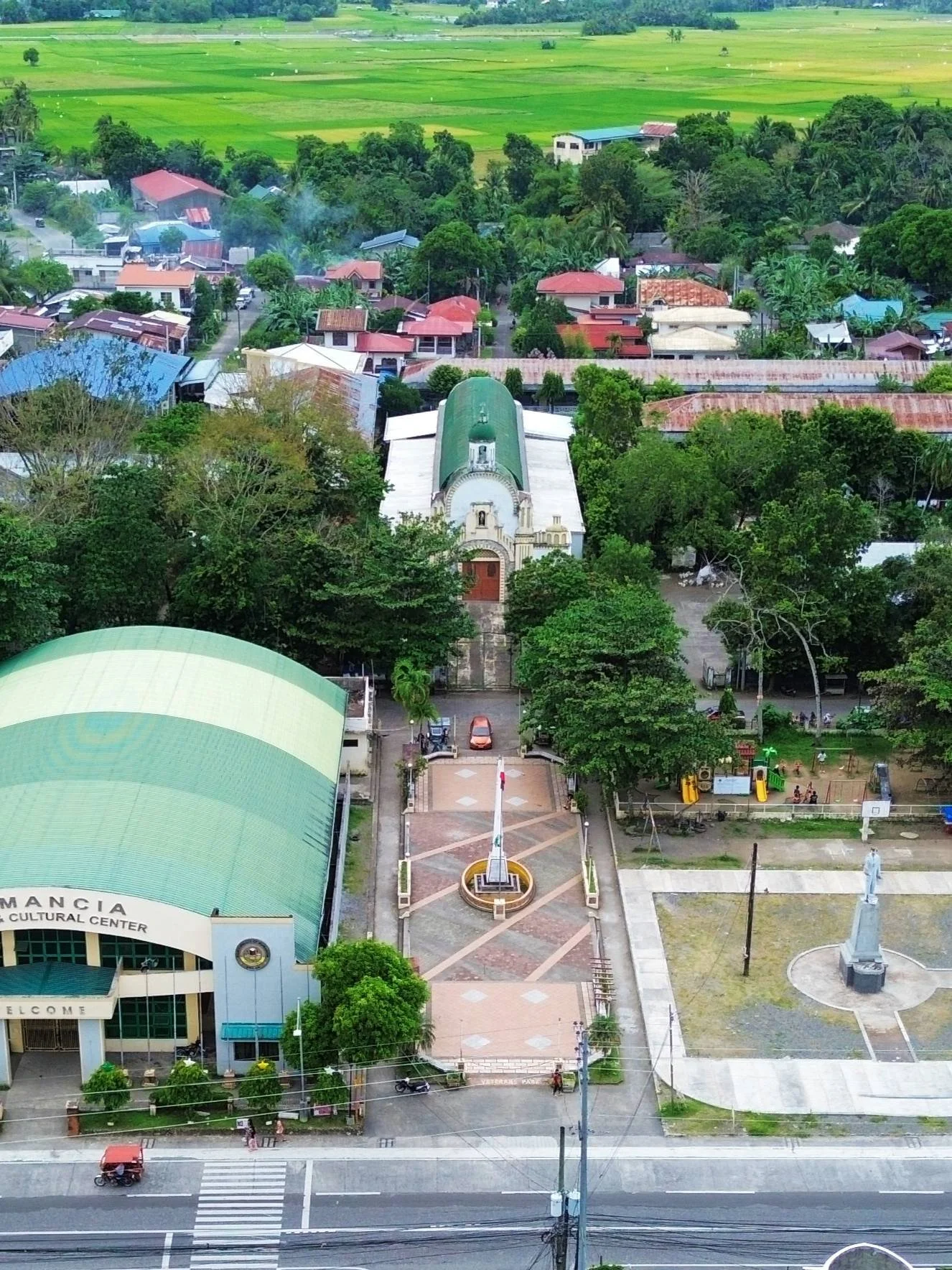
The town's ceremonial spine from above: the plaza, the civic and cultural center, and the parish church aligned along a single walk—the arrangement of a town built around its faith and its public life.
The Parish of the Family
The Parish of St. Joseph the Worker is the subject of its own Sacred Places article in this series—the church the family's records ultimately led us to. Read it here: St. Joseph the Worker Parish, Numancia.
The Leafy Sentinels of Albasan
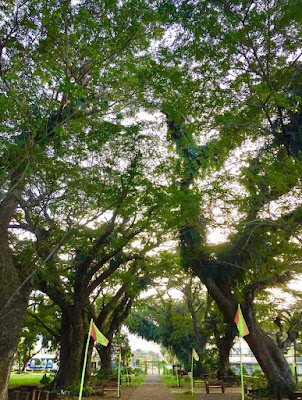
A few minutes' ride from Poblacion, in the barangay of Albasan, stands one of the most beloved sights in all of Aklan: a double row of towering acacia trees—“rain trees”—flanking the main walk of Albasan Elementary School. For well over a century they have stood like sentinels, the tallest reaching some seventy feet, their trunks so vast that it takes several people with arms outstretched to encircle one. A 2011 feature in the Philippine Daily Inquirer christened them the leafy sentinels of Albasan, and the name stuck.
The trees were planted, by the school's own account, by a young teacher named Felex Abello together with his pupils, who carried acacia seedlings home from the neighboring town of Lezo after the schoolhouse was built. Just when is a small mystery in itself: the school's historical account gives 1892, while the son of one of those pupils placed the planting nearer 1907, when the country's first Gabaldon-type schools were rising. Either way, the trees predate living memory—old enough that the generations of this story would have known their shade.
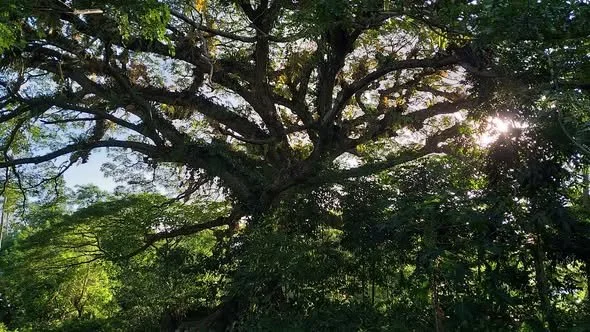
The century-old acacia trees of Albasan—a rare surviving cluster. Of seventeen said to have been planted, roughly fourteen still stand, the rest lost to storms including Typhoon Frank in 2008. Generations of Numancia children have played and gathered in their shade.
The trees endured partly through care and partly through fear. Their wood is hard and valuable, yet no one cut them—in part, it is said, because Albasan abounds with stories of spirits dwelling in the branches, chief among them the kapre, the towering, cigar-smoking tree-giant of Philippine folklore. Villagers swear they have mistaken him, in the dusk, for one of the trunks. The tales did not frighten the community so much as bind it to the trees: guardians and guarded, living peacefully together for more than a hundred years.
Lechon, Piña, and the Pasalubong Highway
Numancia's reputation travels on its food. Across the province it is known as the home of the best lechon—the whole roasted pig at the center of every Aklanon celebration—and its barangay of Bulwang has built a small economy on the appetite of passing travelers, who stop along the highway for lechon manok and pork liempo to carry home as pasalubong, the gifts a Filipino is expected to bring back from any journey. The roasting fires of Numancia feed not just the town but the steady stream of commuters between Kalibo and the boats to Boracay.
Beyond the kitchen, the town shares in the wider craft heritage of Aklan, including the province's renowned handwoven piña—the fine, translucent cloth spun from pineapple-leaf fiber—and in the cultural orbit of the world-famous Ati-Atihan, celebrated just minutes away in Kalibo. It is an economy of small things done well: fields and fishponds, roasting pits and looms, a town getting by on skill, soil, and proximity.
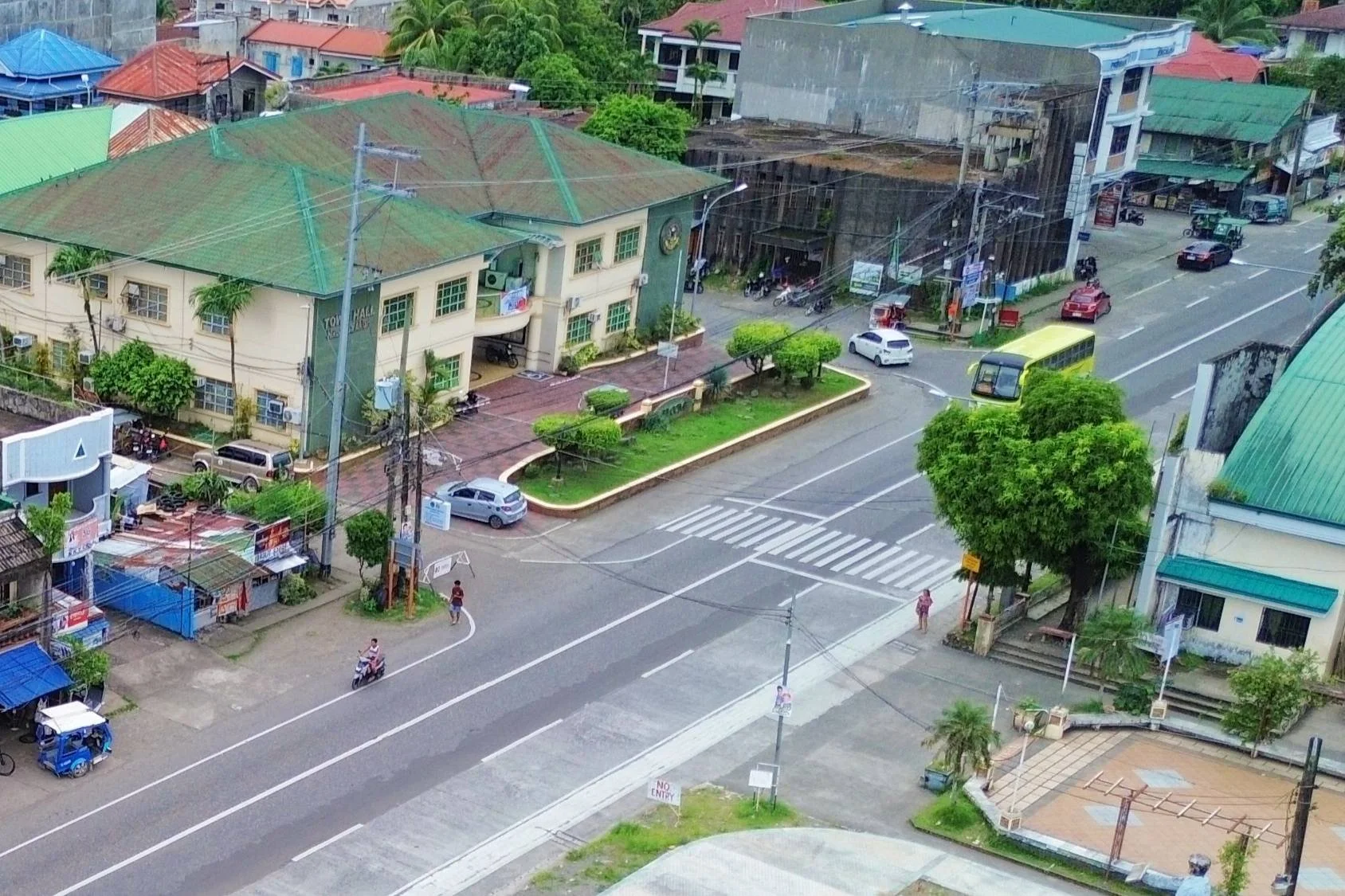
The working town at street level: the municipal hall, small shops, and the tricycles that move people and goods through Numancia—the everyday commerce of a community that lives close to the highway between Kalibo and the sea.
The Town the Family Left—and Carried With Them
For all its endurance, Numancia could not hold everyone. The same town that produced notaries and farmers also produced doctors, and by the 1950s the brightest of its children were leaving—for medical training in Manila, and then for new lives across the Pacific. Dr. Romulo G. Morales and Dr. Hally R. Tamayo, born a year apart in this small town and emerging from the same vanished parish registry, were among them. The flatland town of rice and rain trees became, for their descendants, a place remembered rather than lived in.
And yet it remained the anchor. When the war burned Numancia's records in 1944, it was to this town's parish and municipal offices that the family returned, decades later, for the sworn certificates that would let them prove who they were and cross an ocean. Every document in this series—every marriage reconstructed, every birth re-attested, every name recovered—leads back to these streets, this church, these fields. Numancia is where the story of From Aklan to America begins, and the ground it never quite leaves behind.
Numancia in Pictures
Questions about your own research? Begin a research inquiry.
