
Cathedral of St. John the Baptist
Kalibo, Aklan, Philippines
Cathedral of St. John the Baptist
The oldest edifice of worship in Aklan province—a church that survived Moro pirate raids, a devastating fire, World War II, and a 7.1 earthquake to stand as the spiritual heart of the Ati-Atihan Festival and the ancestral parish of the Morales and Tamayo families of Numancia.
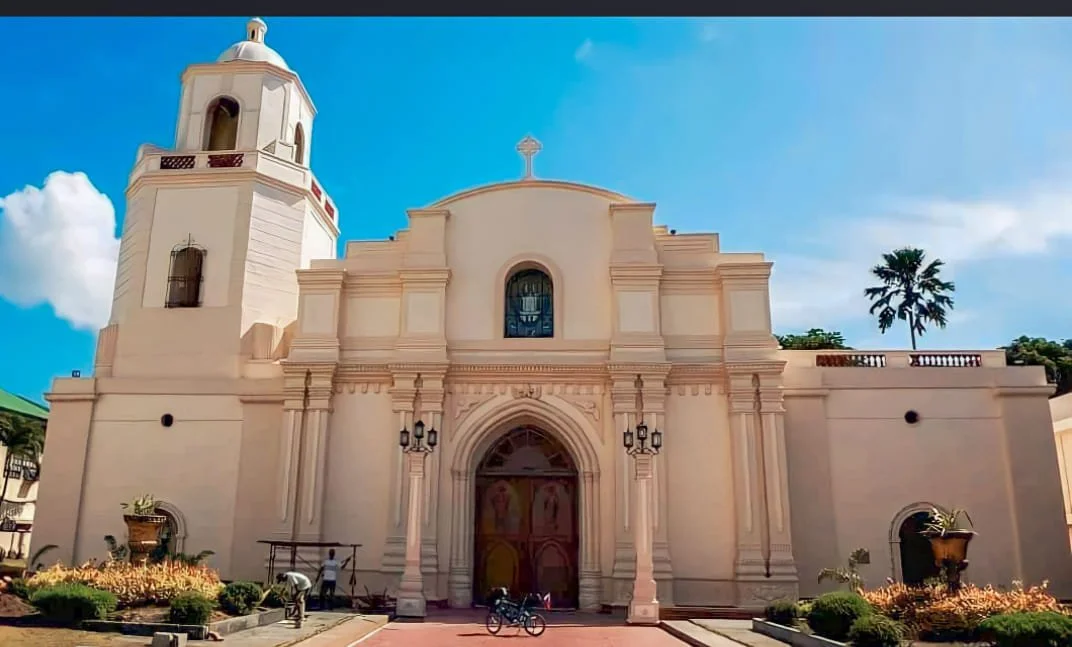
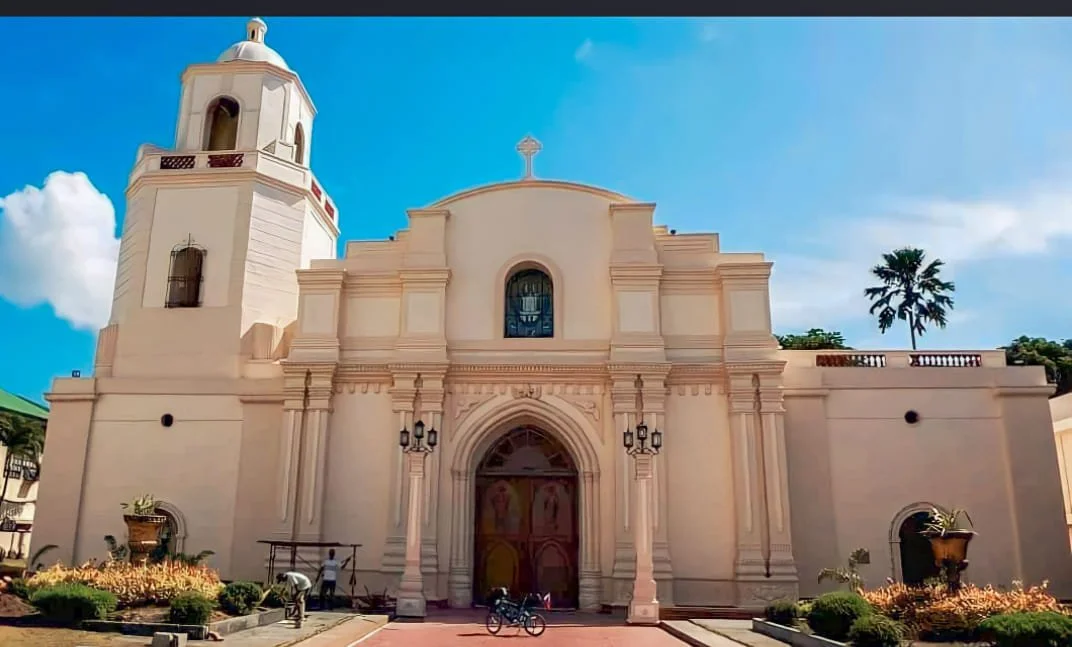
The Cathedral of St. John the Baptist as it appears today—its cream-colored façade and distinctive bell tower a landmark in downtown Kalibo. The modern restoration, designed by National Artist Leandro V. Locsin, preserves the essence of the historic church while reflecting the resilience of a community that rebuilt after fire, war, and earthquake.
In the coastal town of Numancia, Aklan, two families—the Morales and the Tamayo—raised their children within the spiritual orbit of the oldest church in the province. For generations, the Cathedral of St. John the Baptist in nearby Kalibo served as their cathedral, the place where births were blessed, marriages solemnized, and the dead commended to God. Before Dr. Romulo G. Morales and Hally R. Tamayo brought their first surviving child to Our Lady of Lourdes in Quezon City for that Christmas Day baptism in 1959, their own lives had been shaped by this ancient parish.
The cathedral's story begins in 1581, when Augustinian missionaries first established a presence in Kalibo. But the church that stands today on G.M. Reyes Street—across from the Kalibo Plaza, beside the Aklan River—has been destroyed and rebuilt multiple times. Its survival mirrors the tenacity of the Aklanon people, and understanding its history illuminates the world the Morales and Tamayo families knew before their journey to Manila and, eventually, to America.
The Morales & Tamayo Families of Numancia
Augustinian Origins (1581–1680)
The Augustinians arrived in the Philippines in 1565, the first religious order to establish permanent missions in the archipelago. By 1581, they had founded an ecclesiastical mission in Kalibo, part of their broader evangelization of the Visayan islands. The friars introduced not only Christianity but also Western-style education, new agricultural practices, and the beginnings of civil administration.
For nearly a century, the mission at Kalibo operated as a dependent station. Then, in 1680, the settlement was elevated to a full parish, with St. John the Baptist chosen as its patron saint—a common practice among Augustinians dedicating major missions to significant biblical figures. The choice would prove fitting: just as John the Baptist prepared the way for Christ in the wilderness, this frontier parish would prepare generations of Aklanons for lives of faith.
The first church building was not located in present-day Kalibo but in Barrio Laguinbanwa, part of what is now the municipality of Numancia—approximately two kilometers from the current cathedral site. This coastal location made the settlement vulnerable to the Moro raids that plagued the Visayan islands throughout the Spanish colonial period.
The Moro pirates—Muslim seafarers from Mindanao and Sulu—conducted regular raids along the coasts of the Visayas, capturing Christians for the slave trade and burning settlements. For the residents of Laguinbanwa, including the ancestors of both the Morales and Tamayo families, these attacks were an ever-present threat. The church and its surrounding community would eventually be forced to relocate to survive.
Relocation and Reconstruction (1804–1826)
In 1804, after enduring generations of Moro pirate attacks, the entire town of Kalibo relocated from its vulnerable coastal position at Laguinbanwa to a safer inland site—the present-day location along the Aklan River. A new church was erected at this site, and by 1826, both the church and its adjacent convent were completed. This structure—built of stone and wood, with the characteristic thick walls of Spanish colonial architecture—would serve the parish for the next sixty years.

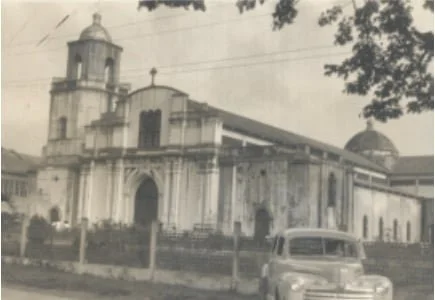
A rare photograph of Kalibo Cathedral during the latter part of the Spanish era, preserved in the National Library of the Philippines and digitized by the Philippine eLibrary. The image shows the original stone structure completed in 1826, before the devastating fire of 1885.
The completed church reflected the Baroque-influenced style common to Philippine colonial churches: thick coral-stone walls, arched windows, and a prominent bell tower. The convent stood adjacent, housing the Augustinian friars who administered not only the spiritual life of the parish but also much of its civil affairs. For the next six decades, this church would witness the baptisms, marriages, and burials of the growing Kalibo community.
The Great Fire of 1885
On May 24, 1885, disaster struck. A massive fire swept through downtown Kalibo, reducing much of the town to ashes. The convent was destroyed completely; the church itself sustained significant damage. It was one of the worst calamities to befall the community since the Moro raids had forced their relocation eighty years earlier.
"On May 24, 1885, a massive fire razed the town including the convent which was reconstructed the following year, 1886."
The community rallied quickly. Within a year, the convent was reconstructed. The church underwent repairs and restoration, and by 1886, regular services had resumed. The determination to rebuild would become a defining characteristic of this parish—a pattern that would repeat itself in the century to come.
War and Reconstruction (1941–1950)
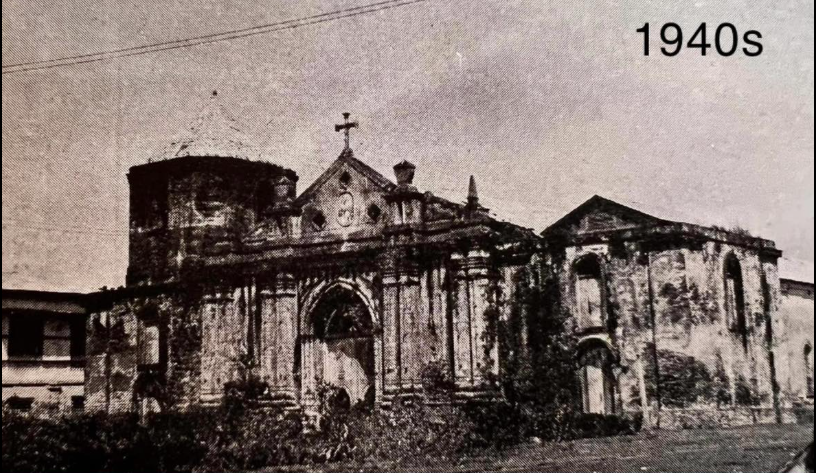
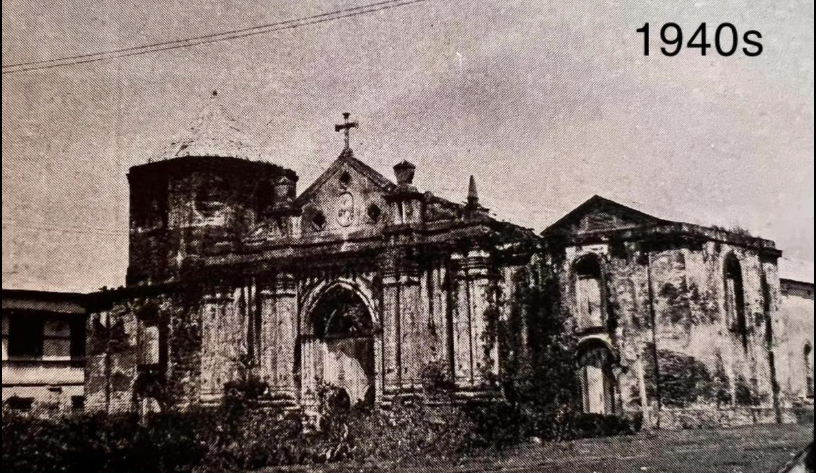
Kalibo Cathedral in the 1940s, showing the effects of World War II. The distinctive rotunda and damaged walls reveal the toll of the Japanese occupation and subsequent liberation. This photograph, originally shared by Phillip Lacson Medina, documents the church as it appeared when Archbishop Gabriel M. Reyes undertook its post-war reconstruction in 1947.
World War II brought devastation to the Philippines on a scale not seen since the Spanish conquest. While Kalibo did not suffer the total destruction that befell Manila's Intramuros, the church and town bore the scars of Japanese occupation and the battles for liberation. By war's end, the cathedral required significant reconstruction.
In 1947, Archbishop Gabriel M. Reyes oversaw a major reconstruction and remodeling of the church. This post-war restoration preserved the essential character of the colonial structure while repairing the damage inflicted during the conflict. The Archbishop's work ensured that the cathedral would continue to serve as the spiritual center of Kalibo for the next generation—the generation that would include Dr. Romulo G. Morales and Hally R. Tamayo, young professionals who would leave Aklan for Manila in the 1950s.
The Diocese Established
On July 15, 1976, Pope Paul VI established the Diocese of Kalibo, separating Aklan province from the Archdiocese of Jaro. The parish church of St. John the Baptist was elevated to cathedral status—a recognition of its historical significance as the oldest church in the province and its central role in the spiritual life of Aklan.
Cathedral History Timeline
Earthquake and Restoration (1990–1997)
On June 14, 1990, a devastating 7.1 magnitude earthquake struck Luzon, causing widespread destruction across the northern Philippines. Though centered hundreds of kilometers away, the tremor caused significant structural damage to Kalibo Cathedral. Large cracks appeared in the brick walls, threatening the integrity of the building that had served the community for over 160 years.
The necessary restoration presented an opportunity for transformation. Under Bishop Gabriel V. Reyes, the cathedral underwent a comprehensive restoration and expansion from 1993 to 1997. The project was entrusted to Leandro V. Locsin, one of the Philippines' most celebrated architects and a future National Artist. Locsin's design preserved the historic character of the church while creating a modern, earthquake-resistant structure.
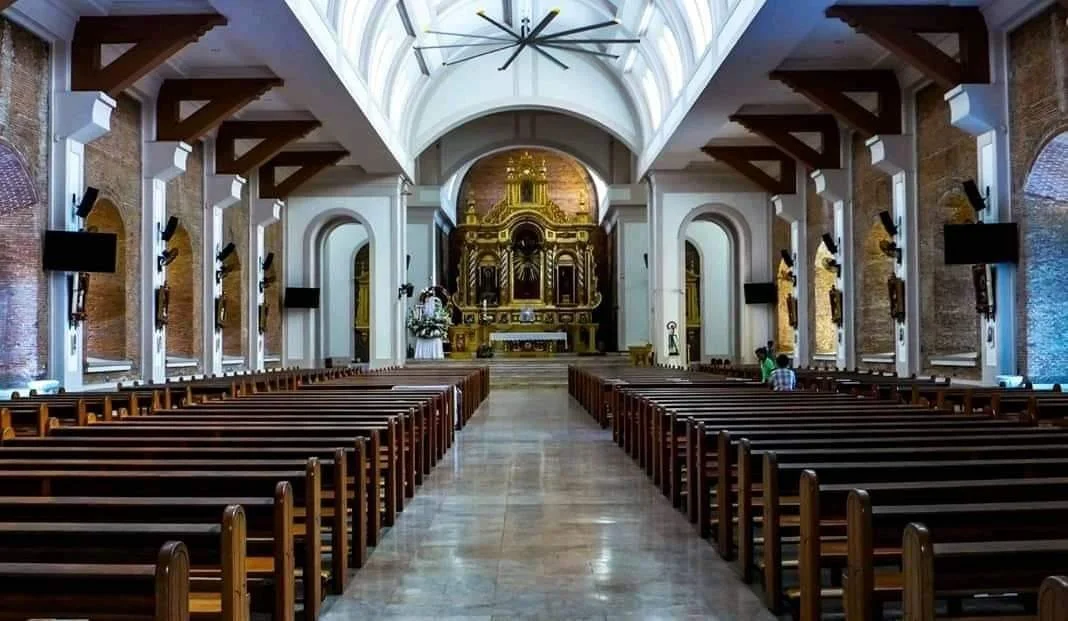
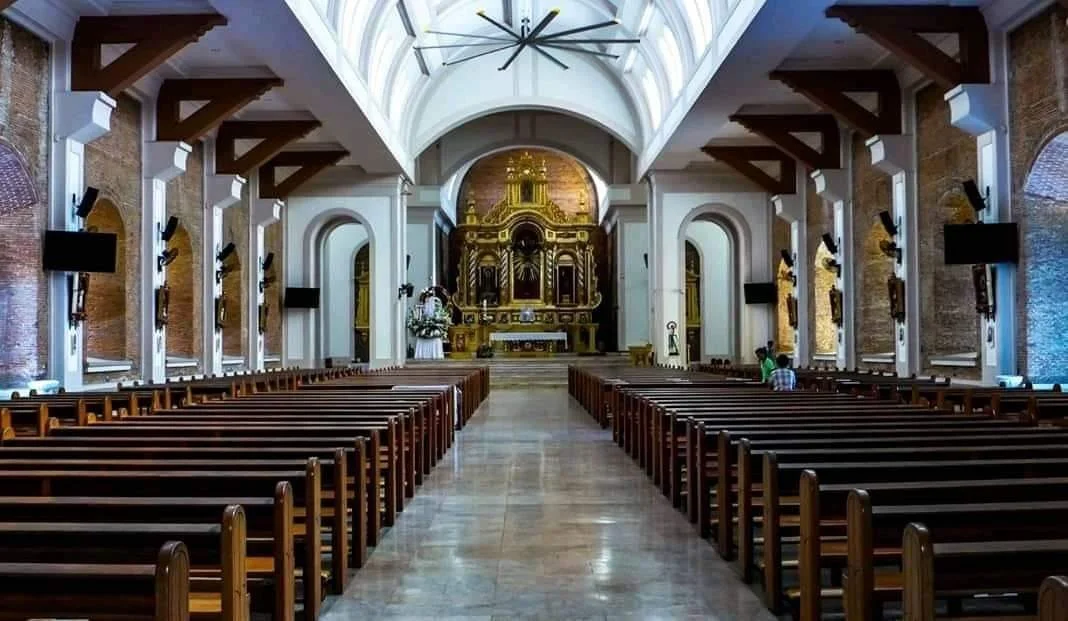
The interior of Kalibo Cathedral as restored by National Artist Leandro V. Locsin. The soaring nave, gilded retablo, and dramatic wooden ceiling beams create a space that honors the church's colonial heritage while meeting modern structural and liturgical requirements. The exposed brick walls and clean lines reflect Locsin's signature style of blending traditional and contemporary elements.
The result is a cathedral that seamlessly blends Baroque and modern elements. The cream-colored façade with its distinctive bell tower recalls the Spanish colonial period, while the interior—with its exposed brick walls, dramatic wooden ceiling beams, and gilded retablo—reflects Locsin's signature ability to honor tradition while embracing contemporary design. The cathedral that stands today is both a memorial to four centuries of faith and a functional space designed to serve the community for centuries to come.
The Patrons of Kalibo Cathedral
The titular patron of the cathedral since 1680, when the Augustinians elevated Kalibo to parish status. His feast day is celebrated on June 24. In Christian theology, John the Baptist is the "forerunner" who prepared the way for Christ—a fitting patron for a frontier parish that prepared generations of Aklanons for lives of faith. The cathedral serves as the seat of the Diocese of Kalibo, established in 1976.
While St. John the Baptist is the official patron, the cathedral is equally famous as the center of devotion to the Santo Niño (Holy Child Jesus). The church holds the title of Santuario Diocesano del Santo Niño. Every third Sunday of January, the world-famous Ati-Atihan Festival brings hundreds of thousands of devotees to Kalibo to honor the Santo Niño in what is called "the Mother of All Philippine Festivals."
The Ati-Atihan Festival
No discussion of Kalibo Cathedral is complete without understanding its role as the spiritual heart of the Ati-Atihan Festival—one of the oldest and most famous festivals in the Philippines, often called "the Mother of All Philippine Festivals." Held every third Sunday of January, the celebration honors the Santo Niño in a unique fusion of Catholic devotion and indigenous Visayan tradition.
Viva Santo Niño!
The Ati-Atihan's origins trace to 1212, when Malay datus from Borneo arrived in Panay and were welcomed by the indigenous Ati people. The celebration commemorates this peaceful encounter, with participants darkening their faces with soot in tribute to the dark-skinned Ati. When the Spanish introduced devotion to the Santo Niño, the festival became a synthesis of pre-colonial tradition and Catholic faith.
For families like the Morales and Tamayo of Numancia, the Ati-Atihan was an annual pilgrimage to the cathedral in Kalibo—a time when the entire province came alive with drumming, dancing, and the cry of "Viva! Viva! Viva Santo Niño!"
During the festival, the cathedral becomes the center of intense spiritual activity. Masses are held throughout the day, processions wind through the streets, and the image of the Santo Niño is venerated by devotees who have traveled from across the Philippines and around the world. The festival reaches its climax with the grand procession on Sunday afternoon, when the Santo Niño is carried through the streets of Kalibo accompanied by thousands of costumed dancers.
The Cathedral Today
In 2021, Kalibo Cathedral was designated as one of the Jubilee Churches for the celebration of 500 Years of Christianity in the Philippines—a recognition of its status as the oldest church in Aklan and one of the most historically significant in the Visayas. The designation continues for the Holy Year 2025, drawing pilgrims from across the archipelago.
For the Morales and Tamayo families, the cathedral represents the spiritual foundation upon which their story was built. Before Dr. Romulo G. Morales established his medical practice in Manila, before Hally R. Tamayo became his wife, before their son was baptized at Our Lady of Lourdes on Christmas Day 1959—their families had worshipped at this ancient parish for generations. The cathedral of St. John the Baptist in Kalibo is where their faith began, in a church that has been destroyed and rebuilt, tested and restored, but never abandoned.
Today, the cathedral stands as the seat of the Diocese of Kalibo, serving approximately 600,000 Catholics in Aklan province. Its story—of survival, resilience, and renewal—mirrors the journey of the Filipino people, including the Morales and Tamayo families who carried their faith from Numancia to Manila to America.
A Bridge to the Past
The original site of Kalibo's first church at Barrio Laguinbanwa is now part of the municipality of Numancia—the hometown of both the Morales and Tamayo families. This geographic connection means the ancestors of Dr. Romulo G. Morales and Hally R. Tamayo may have worshipped at the very first church building, before the 1804 relocation. The cathedral in Kalibo and the families of Numancia share a history stretching back over four centuries.
Document Gallery
Parish Records: The Morales Family
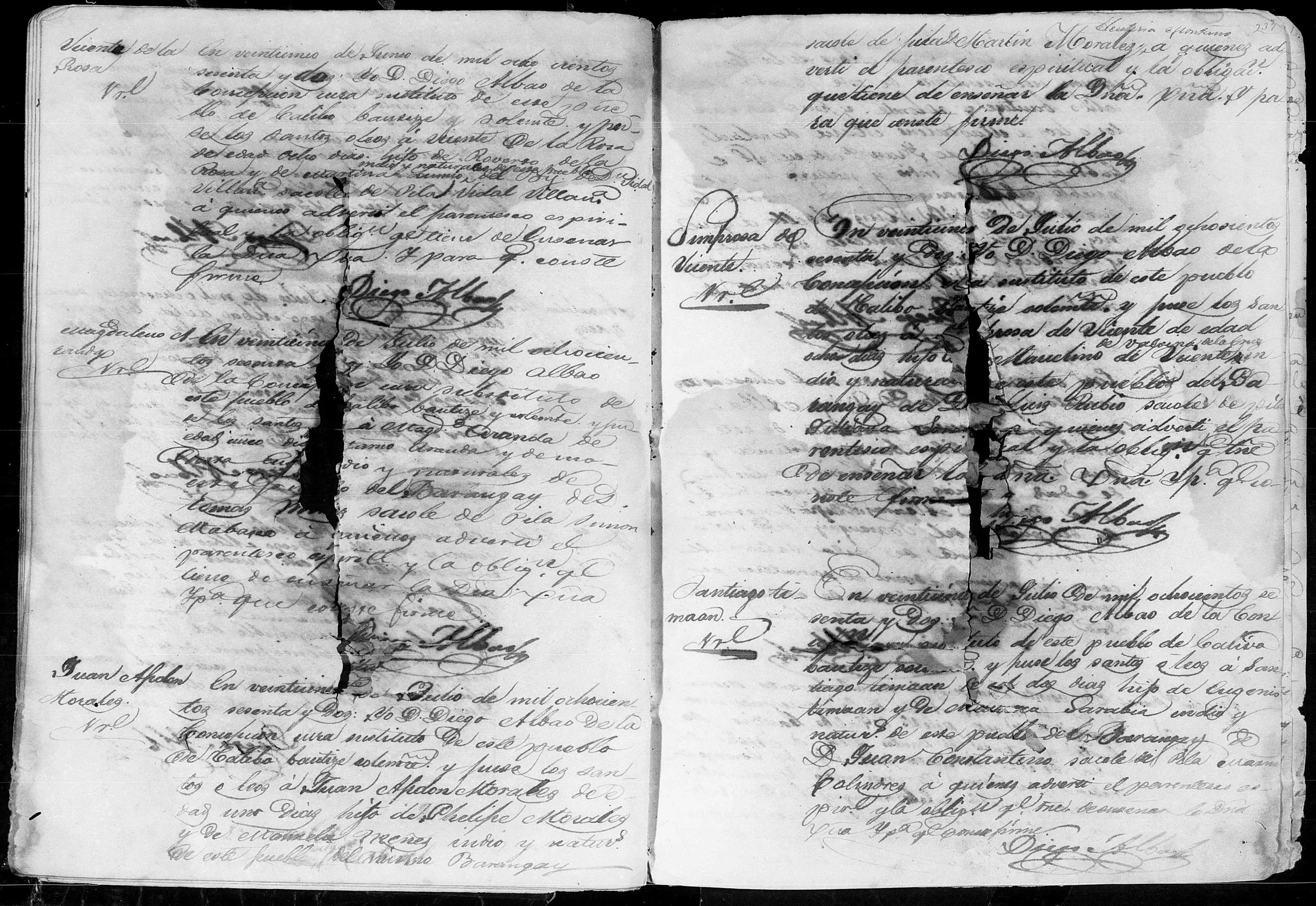
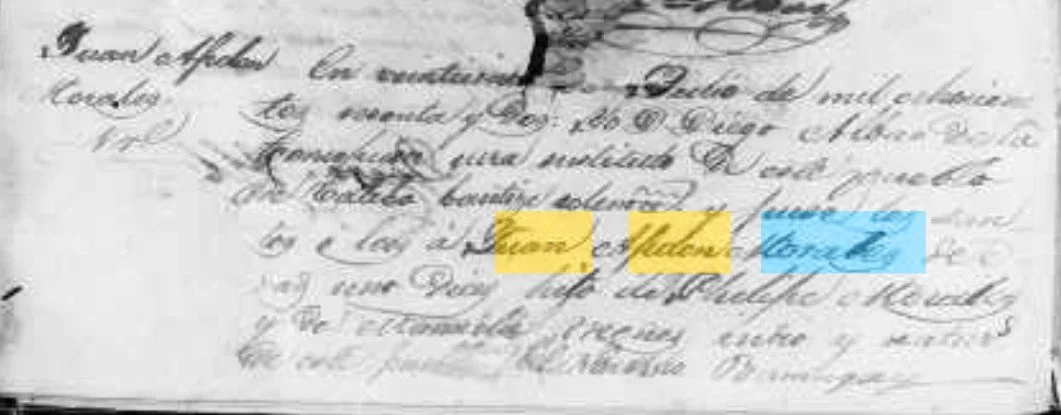
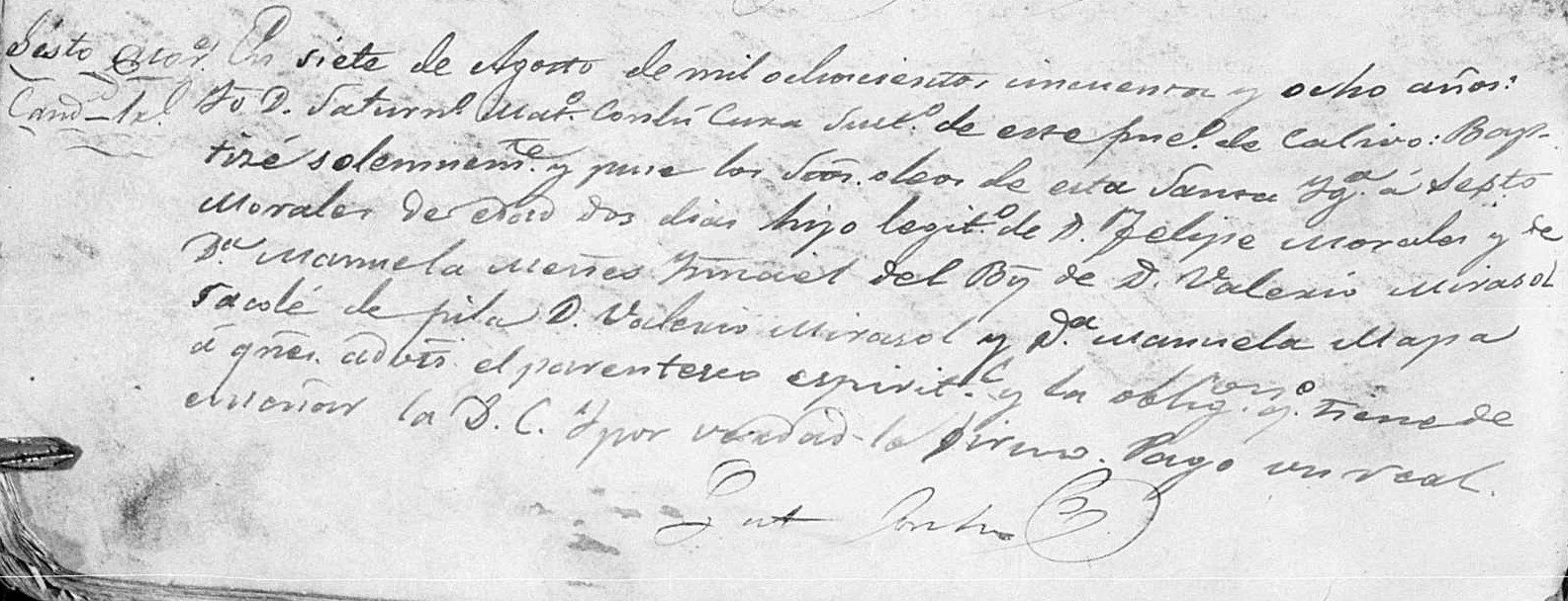
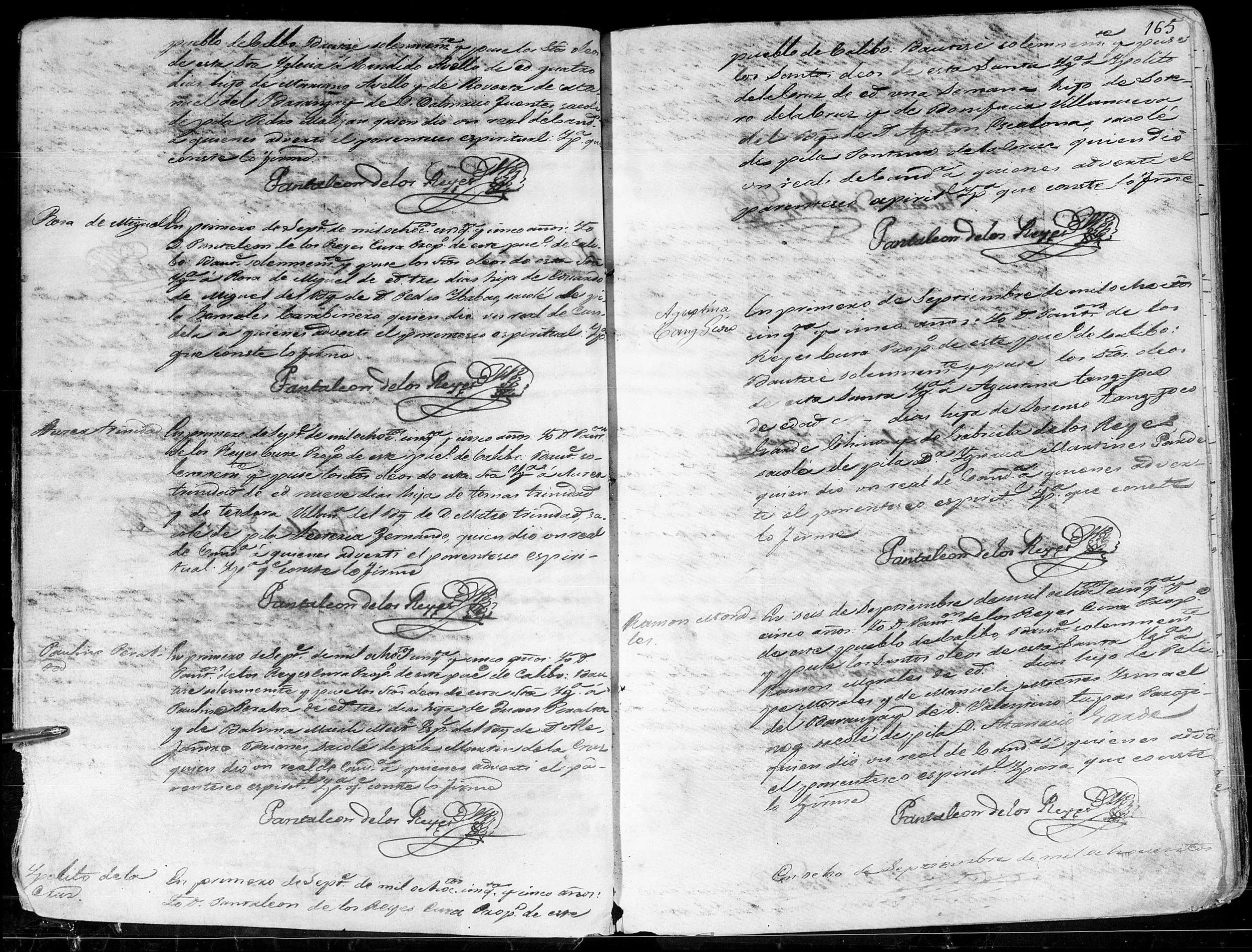
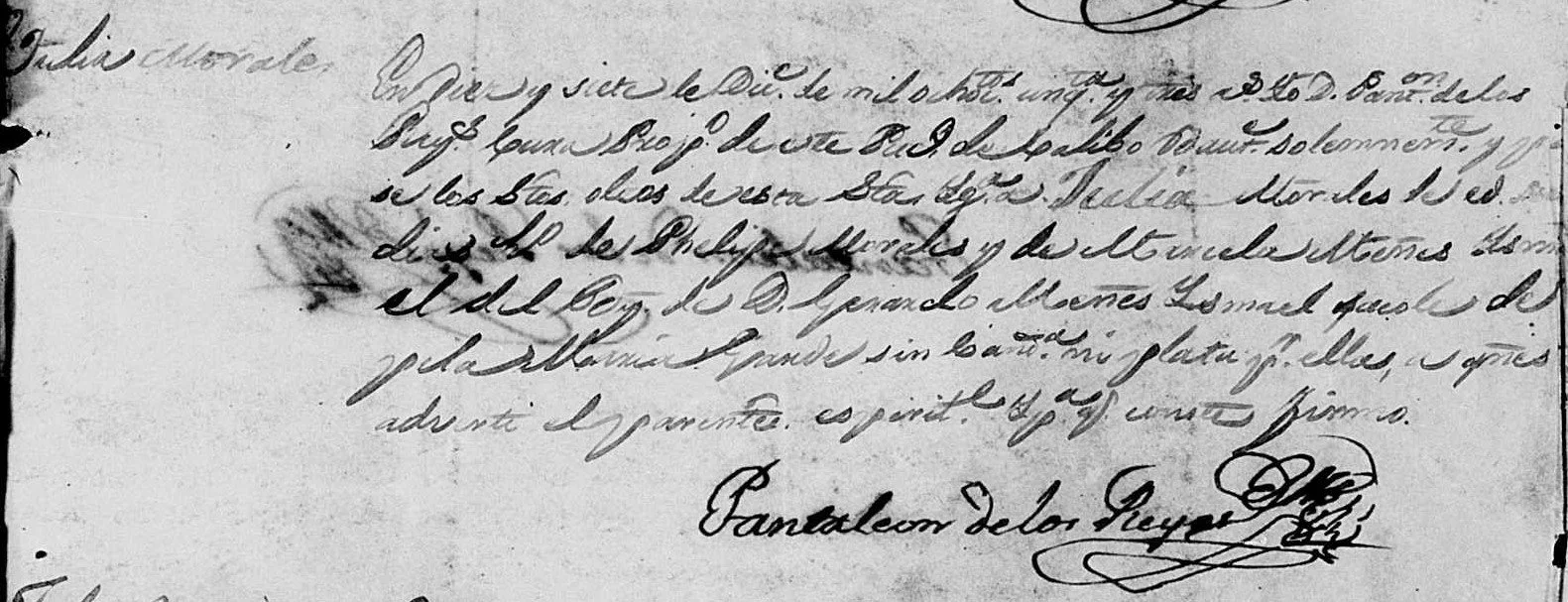
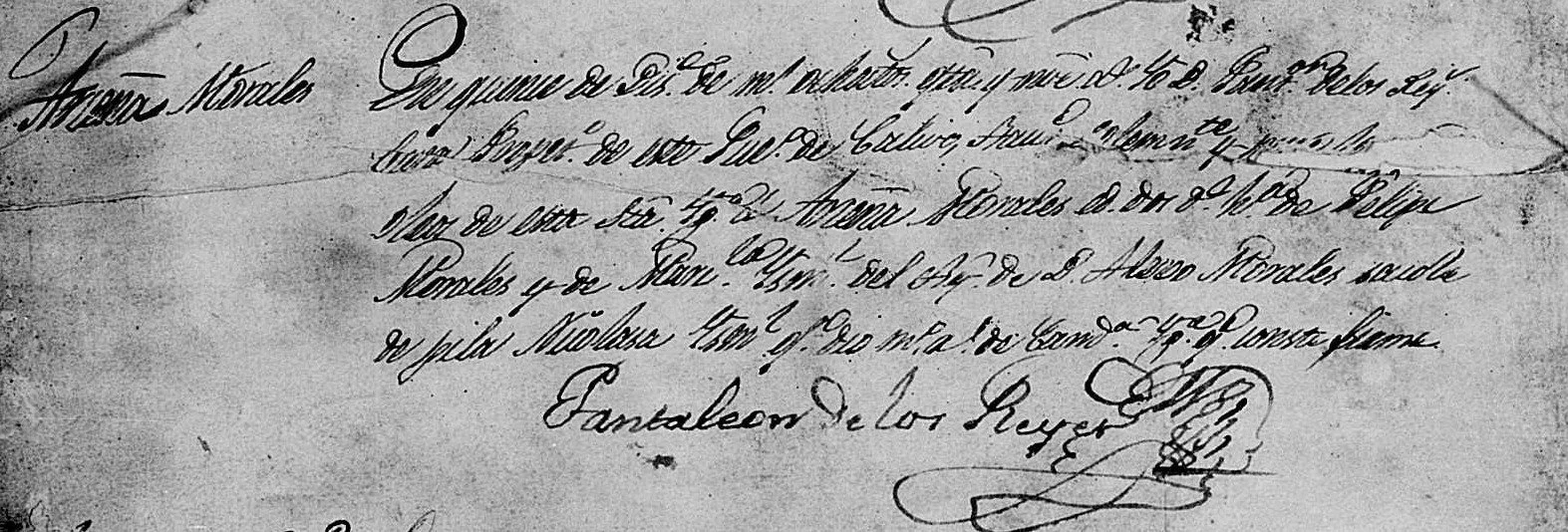
These baptismal records document the children of Felipe Morales (1833–1889) and Manuela Menes (1842–1889), indigenous residents of Kalibo classified as "indio nativo" in Spanish colonial records. Father Pantaleón de los Reyes officiated the baptisms of at least nine children over a fifteen-year period (1848–1863), demonstrating the family's stable integration into the parish community. Juan Apdon Morales (1862–1936) would later become a seminary student, farmer, and family patriarch—an ancestor of the Morales family whose story continues in the From Aklan to America documentary biography series.
Questions about your own research? Begin a research inquiry.
