
Nicolas Sylvestre dit Champagne
Nicolas Sylvestre dit Champagne
Quick Facts
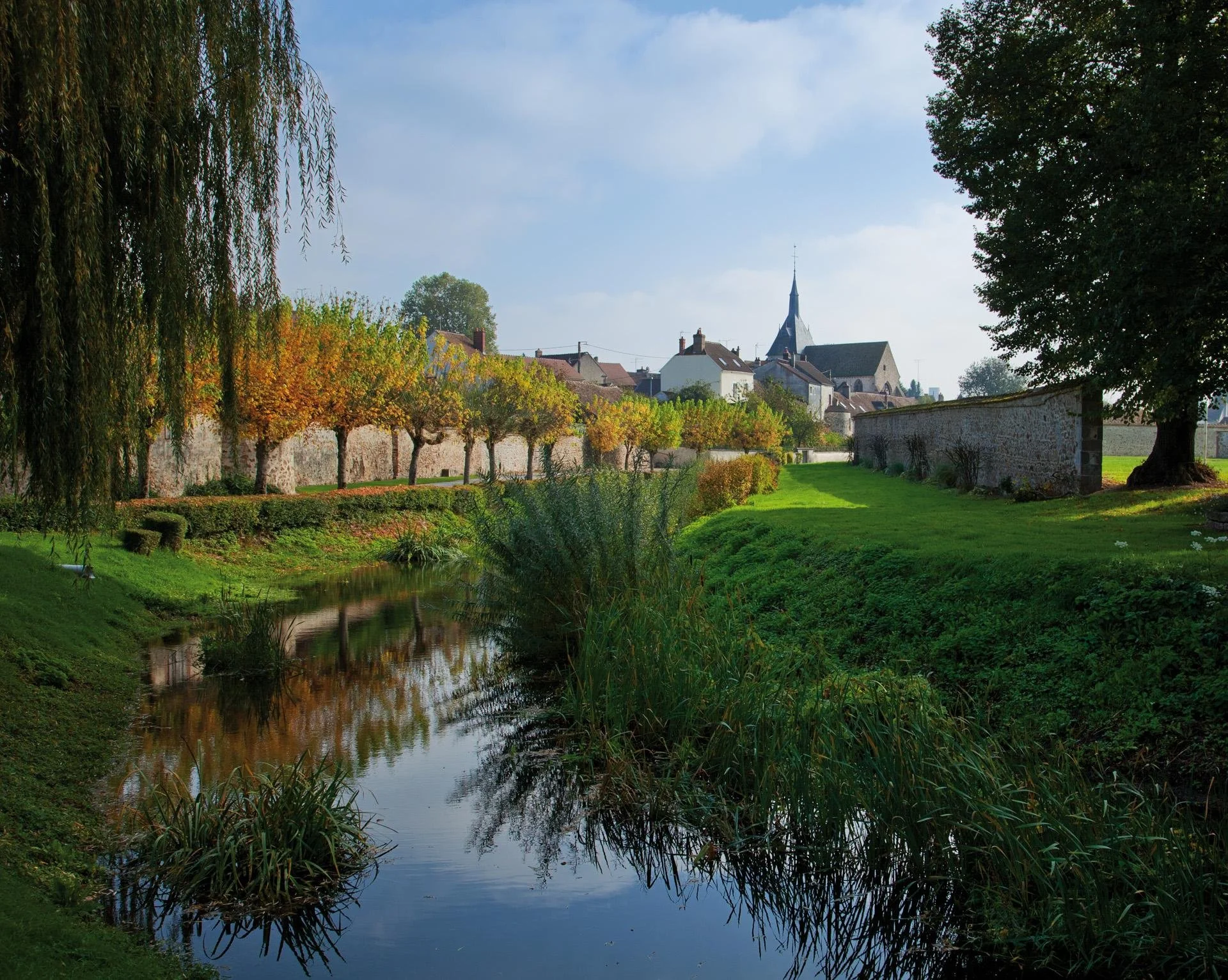
Pont-sur-Seine — a village on the Seine, eight kilometres from Nogent, on the road between Paris and Troyes. His parents were buried in its parish of St-Martin six weeks apart in 1652.
The parish register of Pont-sur-Seine records the baptisms of five sons born to Nicolas Sevestre and Tanche Colson between 1635 and 1647. André and Claude, twins, in April 1635. Martin in July 1636. Laurent in December 1638. Didier in March 1647. It does not record the baptism of Nicolas, who was born somewhere in the middle of that span and who would leave the others behind.
What the register does record is the end of the household. Tanche Colson was buried on 15 October 1652. Her husband followed on 26 November, forty-two days later. Whatever carried them off took both. Nicolas was then about ten years old.
Nothing is known of the next fifteen years. The boy reappears in Canada, a grown man of about twenty-five, standing in the parish church of Notre-Dame-de-Québec on 20 August 1667 to be married. The act that records it calls him soldat, and gives his parents' names, and says he came from Pons sur Saine en Champagne. That is the whole of what the record says about how he got there.
One Word: Soldat
He was a soldier at Québec in the summer of 1667. That much is on the page, in the priest's own hand. What is not on the page is a regiment or a company, and both have proved harder to establish than they look.
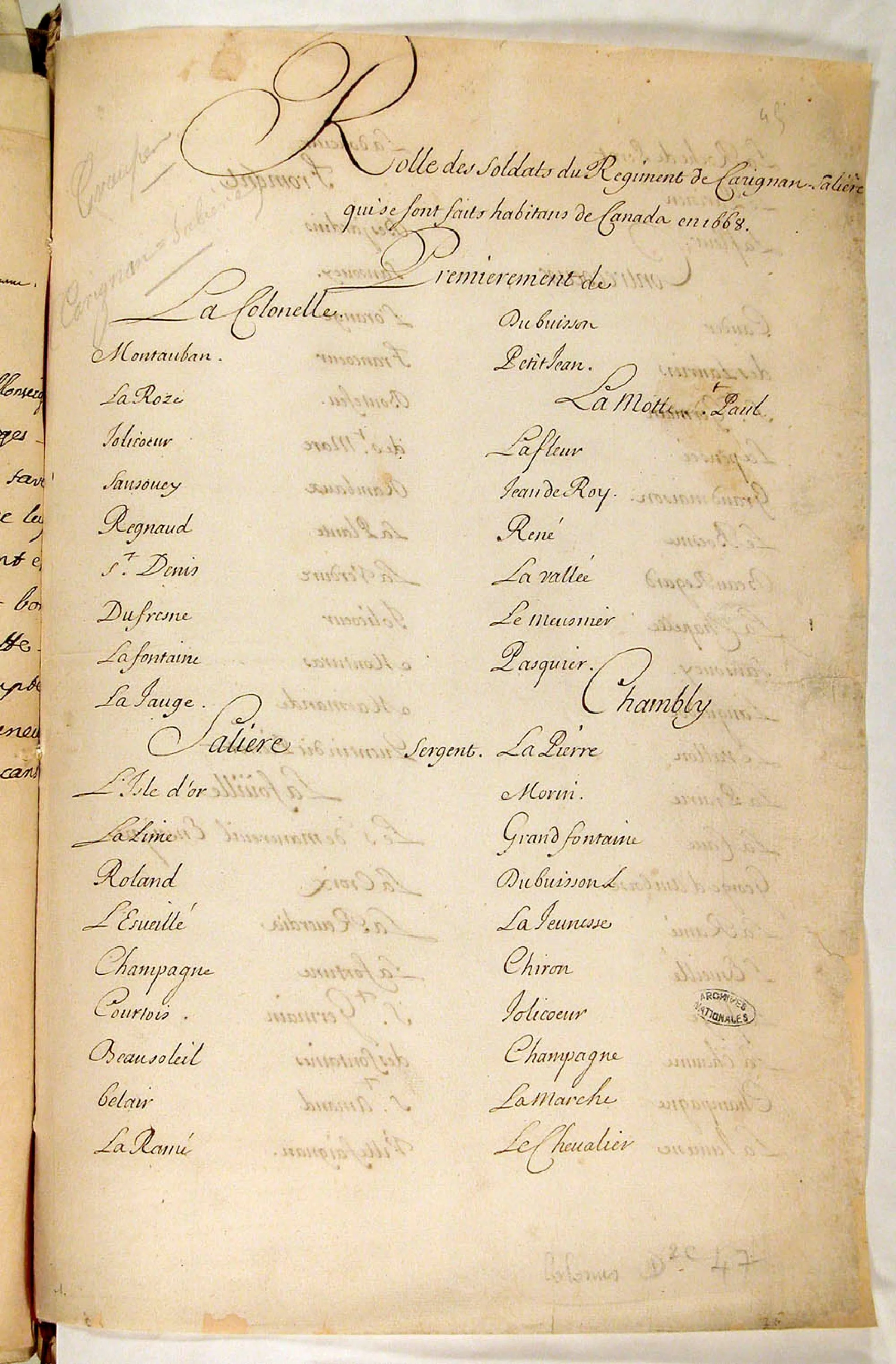
Soldiers of the period were known in the ranks by a nom de guerre, a working name that distinguished one Jean from another. Many took the name of the province they came from, and a man out of the Aube was an obvious candidate to be called Champagne. He was not the only one. A roll drawn up in 1668, listing the four hundred and three soldiers of the Carignan-Salières Regiment who had settled in Canada, carries a Champagne in ten different companies. On the same roll the word Grandfontaine appears twice over: once as the name of a company, and once as the nickname of a soldier serving in another.
The Grandfontaine column of that roll reads, in order: Grandville, La Vigne, La Marche, Locatte, L'Angevin, St Laurens, La Croix, La Volonté, Beaulieu, La Fortune, Champagne, Rencontre, Le Parisien, La Solay, La Cornille, Jolicoeur, Bosleduc, La Touche, Le Picart. Nineteen nicknames and not one surname among them.
Three specialists have tried to put a name to that Champagne, and all three have given a different answer. Jack Verney identifies him as Aubin Lambert. Marcel Fournier identifies him as Nicolas Sylvestre. Peter Gagné rejects Lambert outright, showing that he came from the Perche rather than Champagne and had reached Canada in 1662, and names the Grandfontaine Champagne instead as Nicolas Baron dit Lupien.
Baron makes the problem plain. He was baptised at Villenauxe on 17 June 1645 — diocese of Troyes, province of Champagne, arrondissement of Nogent-sur-Seine, Aube. That is the same arrondissement of the same department as Pont-sur-Seine, about twenty kilometres away. Two soldiers out of one small corner of Champagne, either of whom the ranks would have called by the name of the province.
What this biography does not claim
Earlier versions of this page stated that Nicolas Sylvestre served in the Grandfontaine company of the Carignan-Salières Regiment, sailed aboard L'Aigle d'Or, landed at Québec on 18 August 1665, helped build Fort Sainte-Thérèse and marched in the Mohawk campaign of 1666. Those statements have been withdrawn.
The company attribution came from compiled works rather than from any record naming him. Gagné's dictionary of the regiment, the most recent specialist treatment, does not carry Nicolas Sylvestre at all — neither among the soldiers nor in the list of men wrongly claimed as members, where Aubin Lambert does appear with reasons given. The ship, the arrival date and the campaigns were facts about a company, attached to a man who has not been shown to have served in it.
He was a soldier at Québec in August 1667. Given the date and the place, the Carignan-Salières Regiment is much the likeliest unit, and this page treats that as a reasonable inference. It is an inference, and it is offered as one.
What survives instead is smaller and firmer. On 20 March 1667, five months before his marriage, he took a concession of land from Jean Bourdon in the seigneurie of Dombourg on the north shore of the St Lawrence. By the time of that marriage he had somewhere to bring a wife.
The Unsigned Act
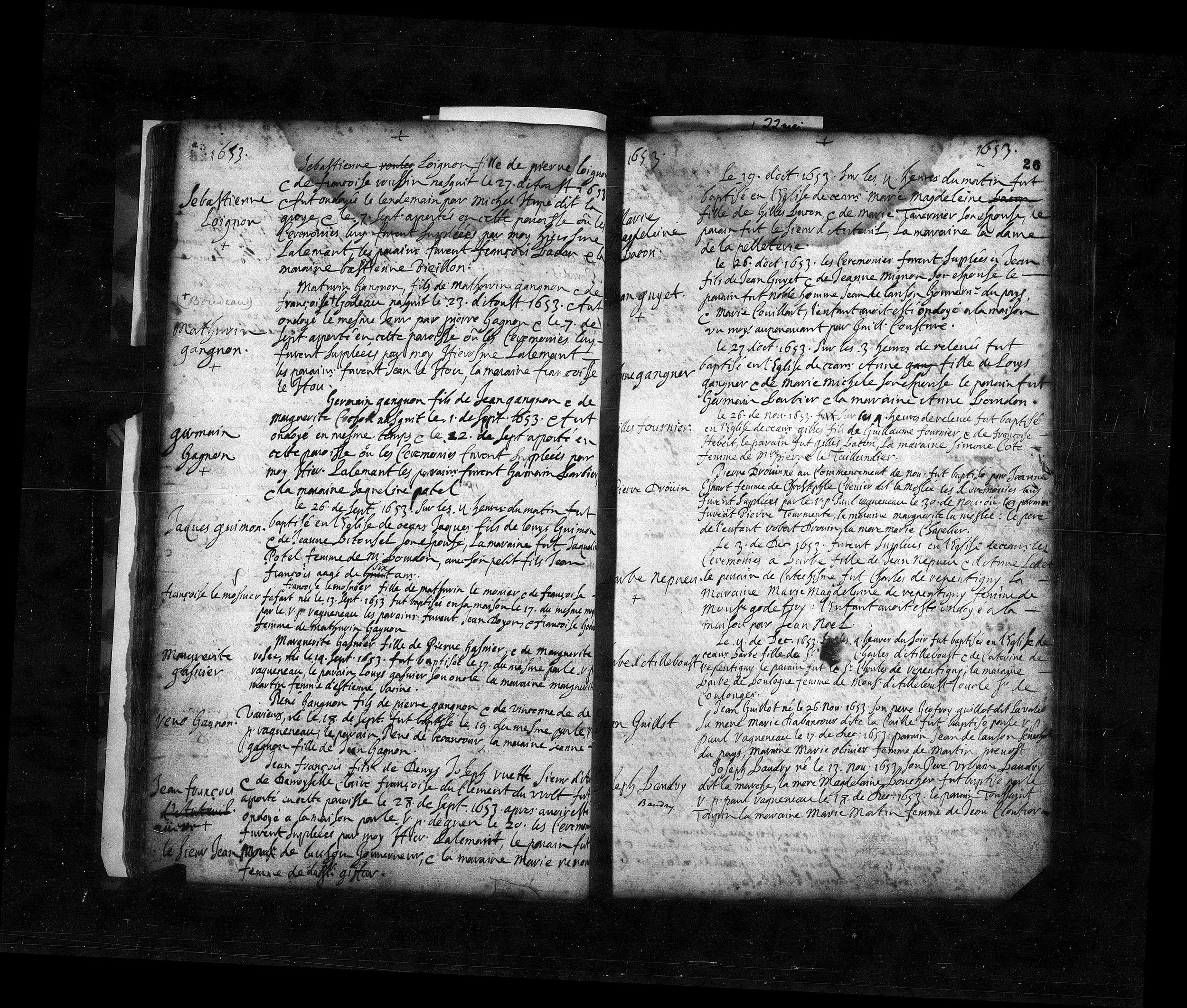
The marriage entry sits in the register of Notre-Dame-de-Québec among four others of that summer, and it does not look like them.
The acts on either side of it are written in the first person by the curé: Je Henry de Bernieres, curé de cette paroisse, y ay interrogé, and each ends with his signature. The Sylvestre act is written in the third person. Where the officiant's name should stand there is an abbreviation and then a blank. At the foot of the entry there is no signature at all. Somebody drew up the act for a priest whose name was never filled in.
What it does record is straightforward. The bishop had dispensed the publication of the banns pour bonnes et justes raisons. Nicolas Sylvestre, soldier, son of Nicolas Sylvestre and Tanche Colson, of Pons sur Saine in Champagne, of the one part. Barbe Nepveu, daughter of Jean Nepveu and Anne Ledet, of this parish, of the other. Their mutual consent taken, joined in marriage, given the nuptial blessing, in the presence of the known witnesses Jean Bourdon, Simon le Febvre Angés and Ignace le Gardeur du Ponceaux.
Bourdon, the first witness, was the man who had granted him his land in March.
A note on the dispensation
The dispensation of banns has sometimes been read as a quiet kindness on the bishop's part, softening the way for a bride whose legitimacy had been taken from her. The act gives no such reason. It gives a formula, and the same formula appears elsewhere in the same register for other couples — including at the remarriage of Barbe's own mother ten years earlier. Nothing supports reading anything particular into it.
Barbe Nepveu, and the Marriage That Was Undone
She was thirteen years and eight months old, baptised at Notre-Dame-de-Québec on 3 December 1653 — and baptised at home, by Jean Noël, with the ceremonies supplied afterwards, which is what was done for a child not expected to live. Her godparents were Charles de Repentigny and Madeleine de Repentigny, wife of Monsieur Godefroy.
Her father, Jean Nepveu, was a mason from Saint-Georges-de-Montaigu in the diocese of Luçon, who had enlisted for Canada at La Rochelle in June 1645 and married Anne Ledet at Québec in January 1653. Barbe was their first child; a second, Suzanne, followed at Sillery in 1655.
Then the marriage ended, and not by death. Peter Gagné, correcting René Jetté on the point, sets out that Jean Nepveu had left a wife behind him in France, that the discovery undid the marriage, and that he was expelled from the colony and sent back. Anne Ledet remarried on 2 September 1657. Her daughters were left legally fatherless, and the annulment carried its own consequence: both girls were retroactively illegitimate. The PRDH database still records Barbe with that notation.
Her mother's second husband was Gilles Pinel, a cooper, baptised at Sainte-Marguerite de La Rochelle in 1635, son of a carpenter who had taken a Jesuit land grant at Sillery and died of an Iroquois musket wound in 1655. Pinel could not sign his name either.
He is worth naming, because he keeps appearing. When Nicolas and Barbe's first child was baptised at Sillery in 1669, Gilles Pinel stood godfather. In 1673 the godmother was his daughter. In 1678, when a granddaughter was baptised, the godmother was Anne Ledet herself, described as the wife of Gilles Pinel, resident at Dombourg. Barbe's mother and stepfather had followed her up the river.
Anne Ledet
Barbe's mother has her own documentary biography in this series, covering her arrival, the bigamy that undid her first marriage, and the forty years she spent with Gilles Pinel.
Dombourg, Which Became Neuville
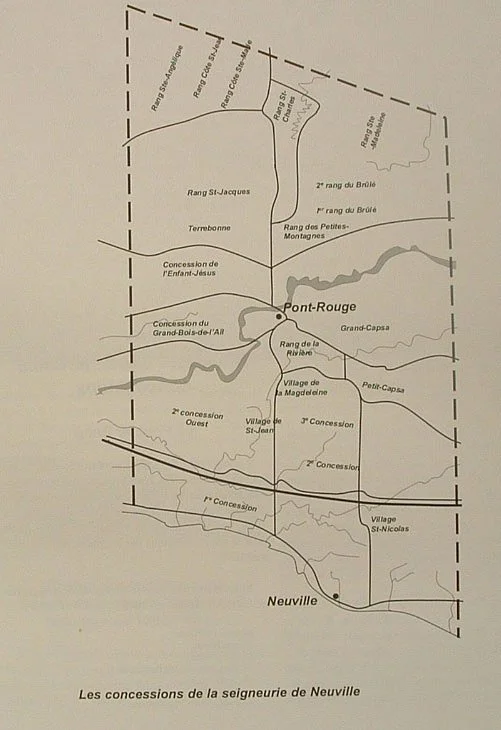
The concessions of the seigneurie de Neuville, granted to Jean Bourdon as Dombourg. The parish took the name St-François-de-Sales de la Pointe-aux-Trembles.
The seigneurie ran along the north shore west of Québec. In the records it is Dombourg through the 1670s: the baptism of Pierre in 1675 gives all three Sylvestres as resident there, and two of the children baptised at Notre-Dame-de-Québec were in fact baptised at Dombourg, the act merely registered in town. By November 1686 a notary is calling him habitant de Neuville.
The census of 1681 finds the household at twenty arpents of land in value, one musket and four horned cattle. Nicolas is entered at thirty-nine, Barbe at twenty-nine, with five children living: Nicolas twelve, Marie nine, Louis seven, Pierre five, Anne two. A sixth, Élisabeth, had been born and buried earlier that same year.
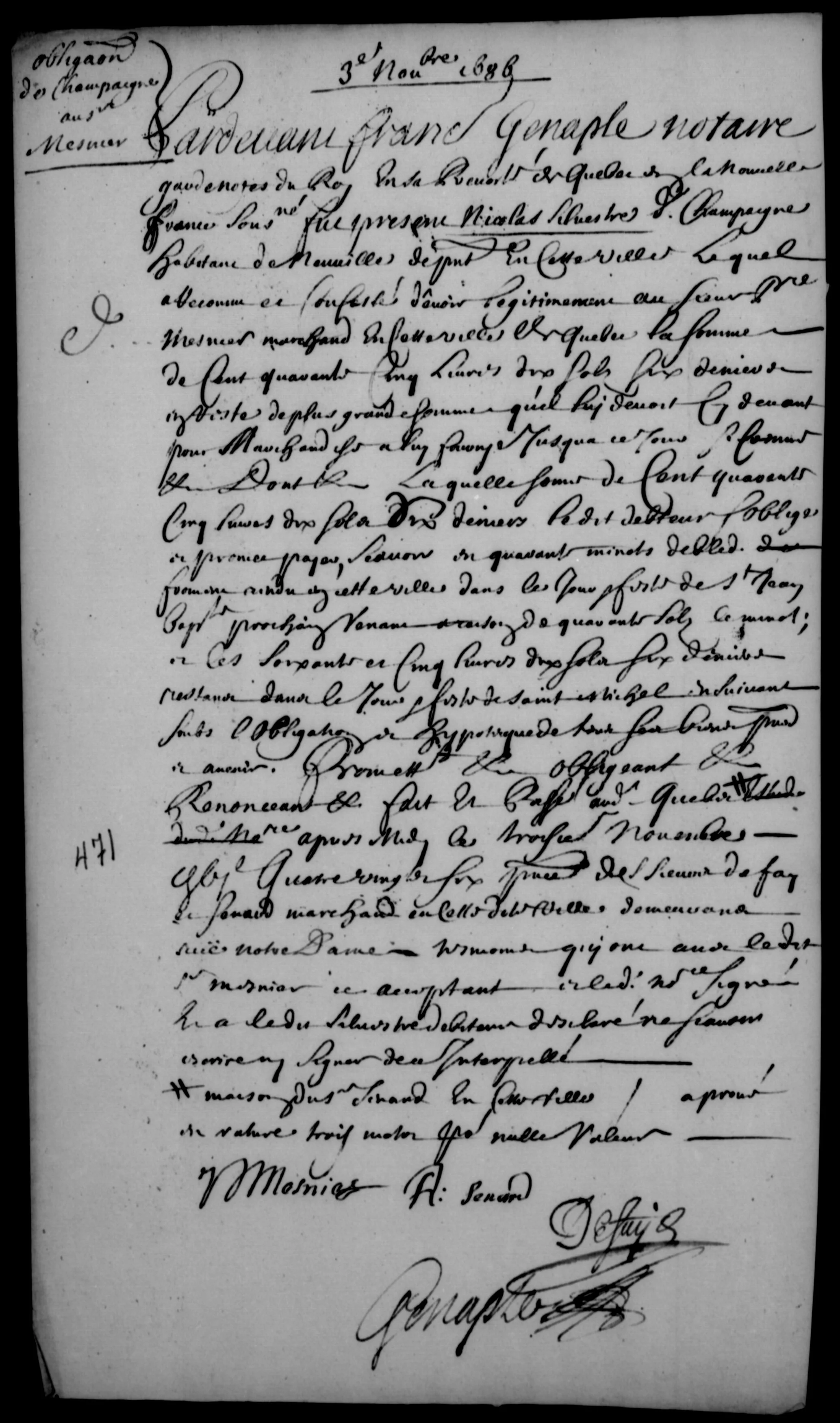
He also went into debt. In November 1686, in Québec, he acknowledged owing the merchant Pierre Mesnier a hundred and forty-five livres ten sols and sixpence for goods supplied, to be paid in forty minots of wheat delivered at Québec by St-Jean-Baptiste, the balance by Michaelmas. Mesnier had stood godfather to his son Pierre eleven years earlier. In November 1703 he owed a hundred and four livres to another Québec merchant, Pierre Peire, this time payable on demand.
Each of those acts ends the same way. The debtor declared that he could neither write nor sign, and was so questioned.
The Other Seigneurie
He did not farm only at Neuville. From 20 March 1687 he held a concession from Paul-Auguste Juchereau in the seigneurie de Maure, taken by private writing. Seven years later he bought a second holding there.
On 17 April 1694, before the notary Genaple, Jacques le Marié — miller and lessee of the mill of Maure — sold him a habitation of four arpents' frontage by forty deep, on the St Lawrence, adjoining Robert Petit dit Milhomme on one side. The price was a hundred livres, sixty already paid and forty counted out on the notary's table. Nicolas had been working the land for about two years already under a verbal bargain. Neither seller nor buyer could sign.
Seven months later he gave it away. The marriage contract of his eldest son, passed before Guillaume Roger on 19 November 1694, settles on the young couple une habitation par ledit Silvestre père acquise en la seigneurie de Maure — four arpents in front by forty deep, adjoining Robert Petit — along with a musket, a blanket, feeder pigs, a cow, an axe and a sickle. The bride was dowered and given a préciput of two hundred livres. Neither of them could sign either.
A surveyor's plan of the seigneurie de Maure, drawn between 1692 and 1725, shows two Sylvestre lots side by side in the first range, between Jean Toupin and a man called Milhomme.
1699
The Hôtel-Dieu de Québec kept a register of the sick in the house. At the head of each month the nuns wrote out the names of those already in the beds, and against each name, as the month went on, the day they left or the day they died.
The list for the first of April 1699 runs down the page: Lépine, Antoine, Mademoiselle Dumesnu, Madame Gagnon, la sœur Barbier, Françoise le Mivre, Jacques Rosé. Then, in the margin, mort, and on the line: nicolas silvestre mort le 26. Twenty-six days of care that month. He had been in the house since March at the latest.
Nicolas Sylvestre the younger was twenty-nine, married four years, with a small daughter called Louise Angélique. He died on 26 April.
His mother was seven months pregnant. On 8 July 1699 a son was born at Neuville and baptised the same day, and they called him Nicolas.
In October the register opens again. On the twenty-second, admitted: louis silvestre âgé de 26 ans de la pointe autramble. Against the entry, five days of care, and in the margin, mort. He died on 26 October. He had been married eleven months.
Two grown sons, six months apart, in the same house at Québec, both on a twenty-sixth. Between them, a child baptised with his dead brother's name.
The consequences ran on for a decade. On 29 January 1700, in the Prévôté de Québec, three defaults were entered one after another in the same sitting: against François Labadie, habitant of Neuville; against Isabel Labadie, widow of the late Louis Silvestre; and against Jeanne Labadie, widow of the late Nicolas Silvestre, condemned to pay Guillaume Jourdain twelve livres thirteen sols for goods delivered to her late husband. Both widows remarried at Sainte-Foy within fifteen months of each other.
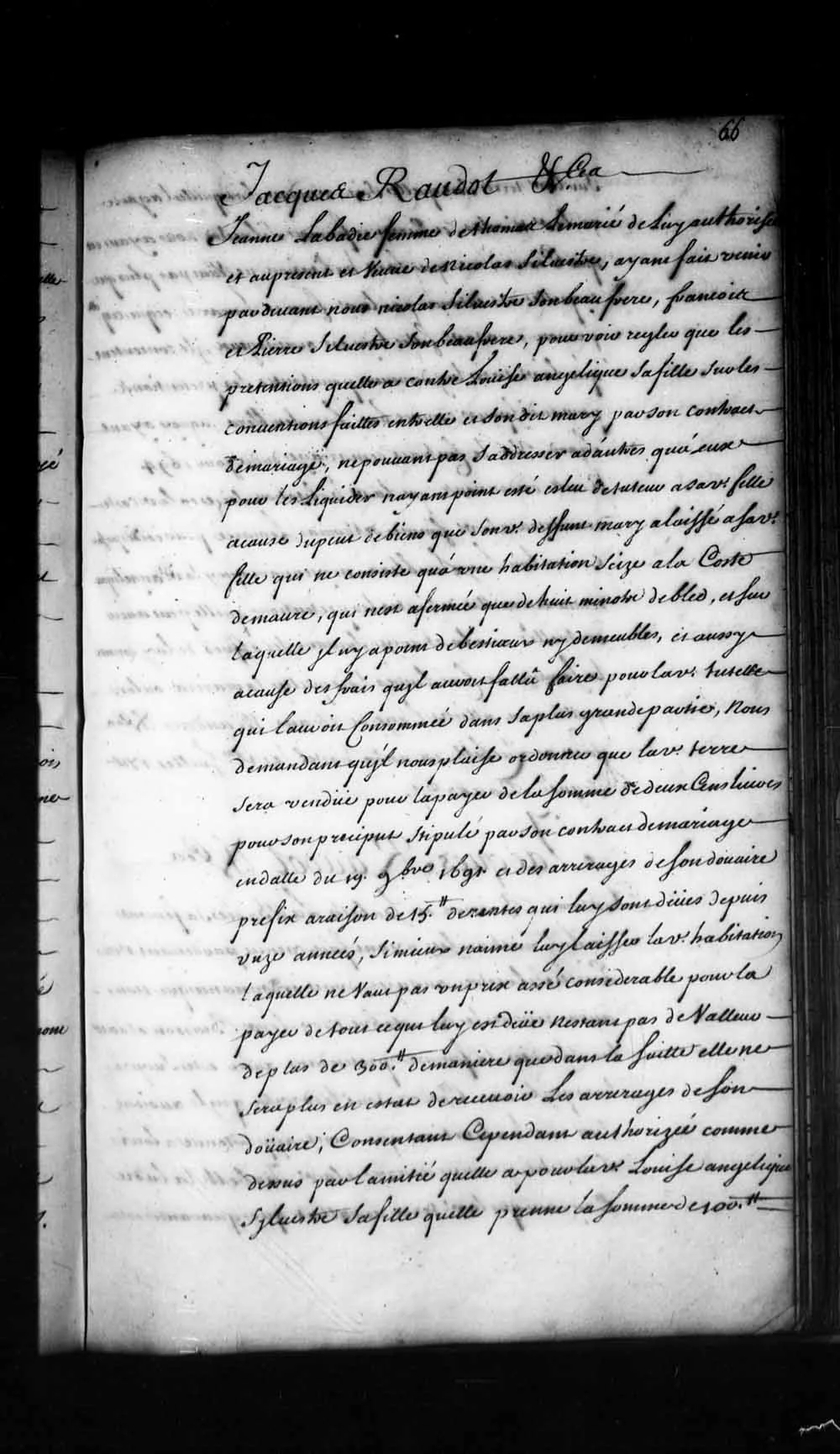
On 1 July 1710 Jeanne Labadie, by then the wife of Thomas Lemarié, brought her father-in-law and her brothers-in-law François and Pierre before the intendant Raudot. The estate her first husband had left their daughter was one habitation at the côte de Maure, leased out for eight minots of wheat, without livestock or furniture, worth no more than three hundred livres. She claimed the two hundred livres of her préciput and eleven years' arrears of a dower of fifteen livres a year. It was settled: she kept the land, and undertook to give Louise Angélique a hundred livres when the girl married or turned twenty-five.
The habitation she kept was the four arpents at Maure that Nicolas had bought from Jacques le Marié sixteen years before and given to his son at his wedding.
Three Brothers, Three Sisters
François Labadie came from Saint-Léger in the Charente-Maritime and married Jeanne Hébert at L'Ange-Gardien in April 1671. They had eleven children. Three of the eldest daughters married three of the Sylvestre sons, in order of age, in three Novembers.
Jeanne, baptised in 1674, married Nicolas the eldest on 23 November 1694. Marie Élisabeth Isabelle, born in 1678, married Louis on 24 November 1698. Marie Anne, born in 1682, married Pierre on 8 November 1700. Six years, three weddings at Neuville, two families joined three times over.
Then in 1699 two of the three sisters were widowed within six months, and in January 1700 both were sued in the same sitting of the same court, alongside their father.
The Sixteen Children
1. Nicolas, the eldest (1669–1699) — born 7 July 1669, baptised at Sillery on the tenth, godfather Gilles Pinel. Married Jeanne Labadie at Neuville, 23 November 1694, contract four days earlier before Guillaume Roger. Died 26 April 1699 at the Hôtel-Dieu de Québec. One known daughter, Louise Angélique.
2. Marie Barbe (1671–1759) — born 22 April 1671, baptised at Notre-Dame-de-Québec on the twenty-fifth. Married Jean Bernardin Lesage dit Lepiedmontois at Neuville, 8 January 1686, at fourteen. Buried at L'Assomption, 6 April 1759. Our line.
3. Louis (1673–1699) — born 23 March 1673; the act was registered at Notre-Dame-de-Québec but the baptism was performed at Dombourg. Married Marie Élisabeth Isabelle Labadie at Neuville, 24 November 1698, contract of 17 November before Guillaume Roger. Admitted to the Hôtel-Dieu de Québec on 22 October 1699, aged twenty-six, of Pointe-aux-Trembles; died there on the twenty-sixth.
4. Pierre (1675–1744) — baptised 2 June 1675, resident at Dombourg; godfather Pierre Mesnier, the Québec merchant. Married Marie Anne Labadie at Neuville, 8 November 1700. Buried at Neuville, 25 December 1744. His portion from his father was an ox.
5. Marie Anne (1678–after 1718) — born 23 October 1678, baptised at Dombourg and registered at Québec; her godmother was her grandmother Anne Ledet. Married Pierre Dupré dit Piché at Neuville, 4 November 1697, and was his widow by 1714; married François Biron at Cap-Santé, 28 February 1718.
6. Élisabeth (1681) — born and baptised 23 March 1681, the first of the children baptised at Neuville. Buried there on 16 April, aged twenty-four days.
7. Marie Françoise (1682–after 1720) — born 21 February 1682. Married Laurent Matte at Neuville, 12 August 1702, contract of 3 August; a widow living in the city of Québec by 1714. Married Simon Pleau at Cap-Santé, 11 November 1720.
8. François (1684–1740) — born 30 August 1684. Worked for his father until about 1710 and was paid off in land. Married Marie Anne Noël dit Champagne at Québec, 6 April 1717, and Angélique Houde at Sainte-Croix de Lotbinière in 1733. Buried there, 23 September 1740.
9. Marie Jeanne (1686–1772) — born 2 May 1686. Married four times. Her first husband, Jean François de la Fontaine, was a surgeon at Neuville and a widower with two children of his first marriage; her marriage conventions were drawn not by a notary but by Basset, the curé of Neuville, on 28 August 1709, and recorded a dot of three hundred livres. Widowed by 1714. Died 31 July 1772, aged eighty-six.
10. Jean (1688–1732) — born 15 June 1688. Took the lease of the family land in 1712 and the outright gift of it in 1714. Married Marie Anne Benoît dit Abel at Deschambault, 11 November 1715. Died 23 April 1732 and was buried at Neuville two days later.
11. Marie Madeleine (1690–?) — born 3 September 1690, baptised at Neuville on the fifth. No marriage and no burial has been found for her. She is the one child of sixteen whose life leaves no further trace.
12. Marie Anne (1692–1732) — born 11 August 1692. Married André Content, a cooper of Québec, at Neuville on 18 October 1712. Died and was buried at Champlain, 20 March 1732.
13. Marie Thérèse (1694–1695) — born 18 June 1694, buried at Neuville 30 January 1695, aged seven months.
14. An unnamed child (1695) — born and buried at Neuville on 16 November 1695. No baptism is recorded, which suggests the child did not live long enough to receive one.
15. Marie Élisabeth Isabelle (1697–1762) — born 11 June 1697. Still living at home, aged seventeen, in 1714. Married Pierre Doucet at Neuville, 3 February 1716. Died 11 September 1762, buried at Berthierville.
16. Nicolas (1699–1750) — born and baptised 8 July 1699, seventy-three days after the death of the brother whose name he was given; his godfather was another brother, Pierre. Still at home, aged sixteen, in 1714. Married Marie Élisabeth Isabelle Laporte at Saint-Sulpice, 16 February 1721. Buried at L'Île-Dupas, 13 April 1750.
Marie Barbe Sylvestre
The eldest daughter was born on 22 April 1671 and baptised three days later at Notre-Dame-de-Québec, in the church where her parents had married four years before. The act calls her father habitant de Dombourg.
On 8 January 1686, at fourteen years and eight months, she married Jean Bernardin Lesage dit Lepiedmontois at Neuville. Four months later, when her sister Marie Jeanne was baptised, the register entered Lesage as the child's uncle.
Whatever her parents had promised for her dowry, it was written into a marriage contract that Lesage had lost by 1714. In June of that year he came before a notary at Québec and settled for a hundred and thirty livres in place of it. He and Marie Barbe were living in the city by then.
She outlived nearly all of them, and was buried at L'Assomption on 6 April 1759, sixteen days short of eighty-eight.
The House That Was Falling Down
On 20 June 1712 Nicolas and Barbe let their land to their son Jean, who was living with them, on a nine-year lease at half the fruits and profits, running from the first of May. The act describes what stood on it.
An old house falling into ruin, part of it built of upright logs, part roofed with planks and part with straw. A stable. A barn, timber-framed, closed with stakes, straw-roofed. Repairs needed to all of it. The stock let with the land came to two oxen of three and five years, two cows, three yearling bulls, a colt, a yearling sheep, four wintering pigs, five suckling piglets, twelve hens and a cock.
Two years later they gave it to him outright. Before that, on 22 June 1714, an inventory was taken in the presence of four of their neighbours — Nicolas Langlois, Léonard Foucher dit St-Maurice, Ignace Léonard dit Boisjoly and Nicolas Coquin dit La Tournelle — and the curé Basset. Every one of the four had stood at a Sylvestre baptism in earlier years.
They valued the whole of it at two thousand five hundred and fifty-one livres fifteen sols. Of that, the land alone was two thousand four hundred. The barn came to sixty livres, the horse to sixty, a cow to thirty-six. The house was appraised at twenty-five.
The rest of the list is the inside of the house: a cooking pot at ten livres, a pan, a gridiron, a cauldron, some old pewter, scrap iron, an earthen jug, a soap kettle, a strainer and a lamp, three terrines, a fork, tubs, a loom and a wheel, two milking stools, a chest.
Forty Livres of Masses
On 5 August 1714, at ten in the morning, in the study of the notary Louis Chambalon at Québec, Nicolas Silvestre — aged seventy — and Barbe Nepveu his wife — aged sixty-one — gave away everything they had.
The act begins by explaining why: the great age they had reached no longer allowed them to work the land themselves, and if it were leased out its revenues would not be enough to feed, lodge, launder and maintain them, in health and in sickness, for the rest of their days.
It then goes through the children. Seven had already been provided for: the eldest Nicolas by his marriage contract; André Comptant and Marianne by a receipt of the eighth of June; Lesage for Marie Barbe; Marie Françoise, widow of Matte; Marie Jeanne, widow of Lafontaine; Anne, widow of Piché; and Pierre, who had had an ox and given no receipt for it. Four remained. François had been living on his own account four or five years. Jean, twenty-six, Élisabeth, seventeen, and Nicolas, sixteen, were still at home.
Everything went to Jean: two arpents on the St Lawrence by forty deep, between Nicolas Langlois to the south-west and Monsieur Dauteuil to the north-east, with the buildings, the furniture and the stock. Against it he took on the seigneurial dues, seven livres fifteen sols owed to the fabrique of Neuville, eleven livres owed to a man named Bordeleau, and the balance of each brother's and sister's legal portion.
And three things more. To feed, lodge, launder and maintain his father and mother, in health and in sickness, for the rest of their days. To keep his brother Nicolas and his sister Élisabeth for as long as they chose to stay, they working for his profit as their strength and health allowed. And, after his parents were dead, to bury them, and to have masses said for the repose of their souls to the value of forty livres for each of them.
The donors and the donee declared that they could neither write nor sign, and were so questioned. The act was registered at the Prévôté on 28 August.
1729
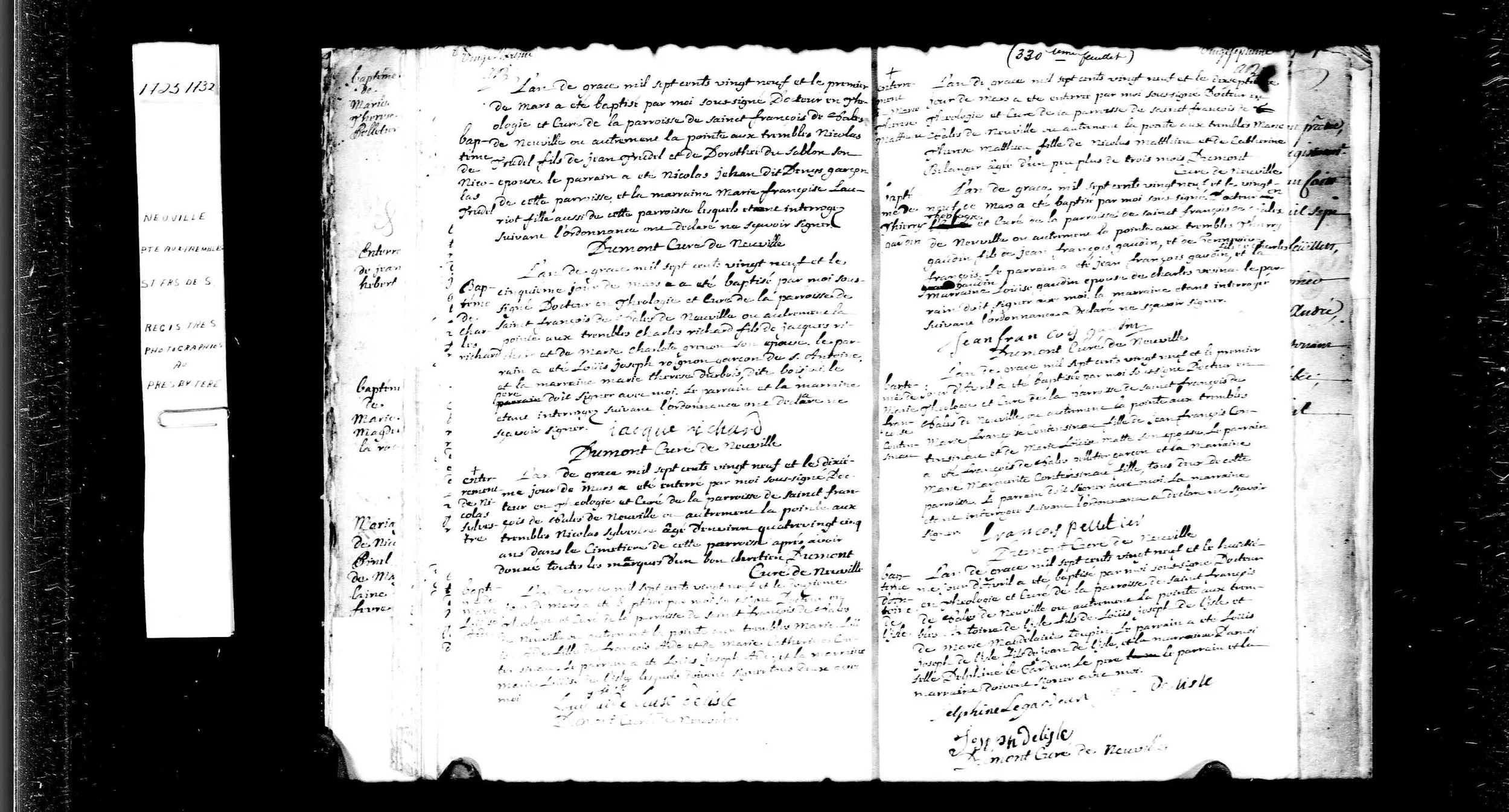
Nicolas Sylvestre was buried in the cemetery of Neuville on 10 March 1729. The record gives his age as about eighty-five and names no witnesses. The curé who officiated was Dumont.
Barbe Nepveu was buried on 18 April, thirty-nine days later, by the same priest, in the same ground. The record gives no age for her.
They had been married sixty-one years and seven months. In all that time, across five notarial acts spanning twenty-eight years, neither of them ever signed a page.
Key Dates
Connection to The Soulière Line
Record Transcriptions
Database entries are set out below as tables rather than reproduced as images. Field names are given as the database gives them. Ages, marital status and presence values in these records are database fields, not transcriptions from the register, and are treated accordingly.
Pioneer and individual records
| Status | Immigrant |
| Father | Nicolas Sylvestre |
| Mother | Tanche Colson |
| Birth | Vers 1642 — v. pont-sur-seine, ev. troyes, champagne (ar. nogent-sur-seine, aube) |
| Burial | 10 March 1729 — Neuville (St-François-de-Sales) |
| First marriage | 20 August 1667 — Québec (Notre-Dame-de-Québec) |
| Spouse | Marie Barbe Neveu, daughter of Jean Neveu and Anne Ledet |
| Status | Born out of wedlock |
| Father | Jean Neveu |
| Mother | Anne Ledet |
| Baptism | 3 December 1653 — Québec (Notre-Dame-de-Québec) |
| Burial | 18 April 1729 — Neuville (St-François-de-Sales) |
| First marriage | 20 August 1667 — Québec (Notre-Dame-de-Québec) |
Marriage, 20 August 1667
| Rank | Name | Role and detail | Fields |
|---|---|---|---|
| 01 | Nicolas Sylvestre | Spouse of 02. Occupation: soldat. Origin: Pons-sur-Saine | c · p · m |
| 02 | Barbe Nepveu | Spouse of 01. Residence: Québec (Notre-Dame-de-Québec) | c · p · f |
| 03 | Nicolas Sylvestre | Father of 01, spouse of 04 | m · — · m |
| 04 | Tanche Colson | Mother of 01, spouse of 03 | m · — · f |
| 05 | Jean Nepveu | Father of 02. Residence: Québec | — · — · m |
| 06 | Anne Ledet | Mother of 02. Residence: Québec | — · — · f |
| 07 | Jean Bourdon | Witness | — · p · m |
| 08 | Simon Lefebvre Anges | Witness | — · p · m |
| 09 | Ignace Legardeur Duponceaux | Witness | — · p · m |
The couple and their married children
| Sex | Date | Place | Child and spouse |
|---|---|---|---|
| m | 23 Nov 1694 | Neuville | Nicolas — Marie Jeanne Labadie |
| f | 8 Jan 1686 | Neuville | Marie Barbe — Jean Bernardin Lesage Lepiedmontois |
| m | 24 Nov 1698 | Neuville | Louis — Marie Elisabeth Isabelle Labadie |
| m | 8 Nov 1700 | Neuville | Pierre — Marie Anne Labadie |
| f | 4 Nov 1697 | Neuville | Marie Anne — Pierre Dupre Lamusette Piche Pichet |
| f | 12 Aug 1702 | Neuville | Marie Francoise — Laurent Matte |
| m | 6 Apr 1717 | Québec (Notre-Dame) | Francois — Marie Anne Noel Champagne |
| f | 29 Oct 1709 | Neuville | Marie Jeanne — Jean Francois Fontaine Lafontaine |
| m | 11 Nov 1715 | Deschambault (St-Joseph) | Jean — Marie Anne Benoit Abel |
| f | 18 Oct 1712 | Neuville | Marie Anne — Andre Content |
| f | 3 Feb 1716 | Neuville | Marie Elisabeth Isabelle — Pierre Doucet |
| m | 16 Feb 1721 | St-Sulpice (L'Assomption) | Nicolas — Marie Elisabeth Isabelle Laporte |
The children in the registers
| Child | Born | Baptised | Died or buried | |
|---|---|---|---|---|
| 1 | Nicolas, the eldest | 7 Jul 1669 | 10 Jul 1669, Sillery | 26 Apr 1699, Québec (Hôtel-Dieu) |
| 2 | Marie Barbe | 22 Apr 1671 | 25 Apr 1671, Québec | 6 Apr 1759, L'Assomption |
| 3 | Louis | 23 Mar 1673 | 26 Mar 1673, registered Québec, performed at Dombourg | 26 Oct 1699, Québec (Hôtel-Dieu) |
| 4 | Pierre | — | 2 Jun 1675, registered Québec, residence Dombourg | 25 Dec 1744, Neuville |
| 5 | Marie Anne | 23 Oct 1678 | 31 Oct 1678, registered Québec, performed at Dombourg | — |
| 6 | Élisabeth | 23 Mar 1681 | 23 Mar 1681, Neuville | 16 Apr 1681, Neuville |
| 7 | Marie Françoise | 21 Feb 1682 | 22 Feb 1682, Neuville | — |
| 8 | François | 30 Aug 1684 | 31 Aug 1684, Neuville | 23 Sep 1740, Ste-Croix de Lotbinière |
| 9 | Marie Jeanne | 2 May 1686 | 5 May 1686, Neuville | 31 Jul 1772, Ste-Marie-de-Beauce |
| 10 | Jean | 15 Jun 1688 | 17 Jun 1688, Neuville | 23 Apr 1732, Neuville |
| 11 | Marie Madeleine | 3 Sep 1690 | 5 Sep 1690, Neuville | no record found |
| 12 | Marie Anne | 11 Aug 1692 | 13 Aug 1692, Neuville | 20 Mar 1732, Champlain |
| 13 | Marie Thérèse | 18 Jun 1694 | 19 Jun 1694, Neuville | 30 Jan 1695, Neuville |
| 14 | unnamed | 16 Nov 1695 | none recorded | 16 Nov 1695, Neuville |
| 15 | Marie Élisabeth Isabelle | 11 Jun 1697 | 12 Jun 1697, Neuville | 11 Sep 1762, Berthierville |
| 16 | Nicolas | 8 Jul 1699 | 8 Jul 1699, Neuville | 13 Apr 1750, L'Île-Dupas |
Burials, 1729
| Rank | Name | Detail | Age · fields |
|---|---|---|---|
| 01 | Nicolas Sylvestre | — | 085 · deceased |
| 02 | Xxxxx Dumont | Curé, resident at Neuville | — · present |
| Rank | Name | Detail | Age · fields |
|---|---|---|---|
| 01 | Barbe Neveu | — | — · deceased |
| 02 | Nicolas Sylvestre | Spouse of 01 | — · named only |
| 03 | Xxxxx Dumont | Curé, resident at Neuville | — · present |
Documents
Places and maps

Origins in France

The soldier question

Parish registers


The Hôtel-Dieu register, 1699


Notarial and judicial acts




Census

Sources
Parish registers
- Marriage of Nicolas Sylvestre and Barbe Nepveu, Notre-Dame-de-Québec, 20 August 1667. Archives nationales du Québec, Notre-Dame-de-Québec, baptêmes, mariages, sépultures 1621–1679, image 194 of 512. A later copy of the same act is in the Drouin collection, Copies mariages seulement 1621–1667, p. 362, no. 403.
- Baptism of Barbe Nepveu, Notre-Dame-de-Québec, 3 December 1653.
- Baptisms and burials of the sixteen children, Sillery, Notre-Dame-de-Québec and Neuville (St-François-de-Sales), 1669–1699.
- Burials of Nicolas Sylvestre, 10 March 1729, and Barbe Nepveu, 18 April 1729, Neuville (St-François-de-Sales), BMS 1679–1752, image 353 of 587.
- Baptisms of André, Claude, Martin, Laurent and Didier Sevestre, and burials of Nicolas Sevestre and Tanche Colson, Pont-sur-Seine (St-Martin), Aube, 1635–1652. Fichier Origine dossier no. 290106.
Hospital registers
- Hôtel-Dieu du Précieux-Sang de Québec, register of patients 1698–1709, entries for April and October 1699. FamilySearch image group 004541985.
Notarial acts
- Romain Becquet — concession from Jean Bourdon, 20 March 1667. Recorded in Roy and Roy's inventory, vol. II p. 274, and there marked absent; the act itself has not been produced.
- François Genaple — obligation to Pierre Mesnier, 3 November 1686 (BAnQ CN301,S114, f. 471); sale by Jacques le Marié, 17 April 1694 (f. 1876).
- Guillaume Roger — marriage contract of Nicolas Silvestre the younger and Jeanne Labadie, 19 November 1694 (BAnQ CN301,S242).
- Louis Chambalon — obligation to Pierre Peire, 6 November 1703; sale to François Silvestre, 1 July 1710; lease to Jean Silvestre, 20 June 1712; quittances of 8 and 9 June 1714; inventory of 22 June 1714; donation of 5 August 1714 (BAnQ CN301,S58). The donation was registered at the Prévôté on 28 August 1714 (BAnQ CR301,P834).
Judicial records
- Prévôté de Québec, three defaults of 29 January 1700 (BAnQ TL1,S11,SS1,D24,P110).
- Ordonnance of the intendant Jacques Raudot, 1 July 1710 (BAnQ E1,S1,D4,P683).
Other original records
- Rolle des soldats du Regiment de Carignan-Salieres qui se sont faits habitans de Canada en 1668. Archives nationales d'outre-mer, Fonds des Colonies, série D2C, vol. 47, ff. 45–49; Library and Archives Canada MG1-D2C, microfilm C-9149 and F-582.
- Census of 1681, seigneurie de Dombourg. Library and Archives Canada.
- Survey plan of the seigneurie de Maure, 1692–1725 (BAnQ CA301,S56,P532).
Databases and compiled works
- Programme de recherche en démographie historique (PRDH-IGD), Université de Montréal. Individual, couple, marriage, baptism and burial records as transcribed above.
- Beauregard, Denis. Genealogy of the French in North America, family sheets 1197 (Sylvestre–Neveu) and 1526 (Labadie–Hébert). Source of the descendant estimate.
- Fichier Origine, migrant record for Sylvestre / Sevestre / Champagne, Nicolas.
- Fournier, Marcel. Répertoire des officiers et soldats du régiment de Carignan-Salières et de Tracy. Places Nicolas Sylvestre in the Grandfontaine company.
- Verney, Jack. The Good Regiment. Gives the Grandfontaine company roster, in which the Champagne is identified as Aubin Lambert and Nicolas Sylvestre does not appear.
- Gagné, Peter J. From Soldiers to Settlers (2025). Identifies the Grandfontaine Champagne as Nicolas Baron dit Lupien, excludes Aubin Lambert from the regiment, and does not carry Nicolas Sylvestre in either list.
- Gagné, Peter J. Before the King's Daughters: The Filles à Marier, 1634–1662. On the bigamy of Jean Neveu, correcting Jetté.
- Jetté, René. Dictionnaire généalogique des familles du Québec. Presses de l'Université de Montréal, 1983, p. 1059.
- Roy, Pierre-Georges and Antoine Roy. Inventaire des greffes des notaires du régime français.
Questions about your own research? Begin a research inquiry.
