
From Aklan to America: Four Families, One Province
Four Families, One Province
In the 1830s, on the island of Panay in the Western Visayas, four children were born who would become the founding ancestors of interconnected family lines—lines that would eventually converge, a century later, in a child named Romulo Tamayo Morales. These four children—Captain Lucas Gonzales, Felipe Morales, Ismaela Tolentino Martelino, and Francisco Arevalo Roldan—never knew each other. They lived in neighboring towns, worshipped in the same colonial churches, farmed the same fertile plains, and experienced the same dramatic transformation as the Philippines moved from Spanish colony to revolutionary republic. Their descendants would intermarry, creating the dense network of family connections that characterized provincial Philippine society.
This is the story of where your family came from—not a single lineage, but a community. In colonial Aklan, family meant more than bloodlines. It meant the godparents who stood at your baptism, the witnesses who signed your marriage contract, the neighbors who farmed adjacent rice paddies, and the extended kin who gathered for fiestas honoring the Santo Niño. The Gonzales, Morales, Martelino-Roldan, and Isturis families were woven together by geography, faith, economics, and eventually by marriage. Understanding this web of connection is essential to understanding who you are.
The World They Knew
The Aklan that your ancestors knew was a land of rice paddies, coconut groves, and coastal fishing villages, ruled from distant Manila and even more distant Madrid. Since 1571, when Spanish conquistador Miguel López de Legazpi granted the first encomienda in Aklan to Antonio Flores, the region had served as a vital food source for the colonial enterprise—"the granary of the archipelago," chroniclers called it.
The towns where your ancestors lived—Kalibo, Numancia, Ibajay—were organized around Spanish colonial patterns: a central plaza dominated by a stone church, the convento where friars lived, the municipal building, and the homes of the principalía, the local elite who served as intermediaries between Spanish authorities and the indigenous population. Beyond the town center stretched the rice fields, worked by families who paid tribute to both church and crown.
The Encomienda System in Aklan
By 1591, the Spanish colonial system had organized Aklan into encomiendas—land grants that gave Spaniards the right to collect tribute from indigenous inhabitants. Antonio Flores's encomienda in Kalibo alone collected 1,300 tributes from 3,200 inhabitants. Each tribute was extracted from a household of three to four members, paid in gold, beeswax, cotton cloth, abaca, rice, and chickens. The Augustinian friar Martín de Rada lamented in 1574 that the system was "nothing more than a means of injustice, oppression, and extortion." When families couldn't pay, encomenderos locked village leaders in stocks.
But Spanish rule brought more than exploitation. It brought the Catholic faith that would become central to Filipino identity, the church records that make genealogical research possible today, and a legal system that documented land ownership across generations. The Augustinians established parishes throughout Aklan—Kalibo's Church of San Juan Bautista dates to 1581, one of the oldest in the Visayas. Every baptism, marriage, and burial was recorded in parish registers, creating the documentary trail that allows us to trace your family back nearly two centuries.
"Panay yielded more rice and other provisions than any other province except Manila... the granary of all the islands of the archipelago."
The Founding Families of Numancia
In the decade between 1832 and 1842, four children were born in Aklan who would become the patriarchs and matriarchs of your ancestral lines. Each family occupied a different niche in colonial society—landowners and farmers, seminarians and judges—but all were classified in church records as indio nativo, indigenous Filipinos navigating the colonial system with whatever resources they could muster. A generation later, a fifth line—the Tamayos—would marry into this community and complete the family from which the Morales-Tamayo story descends.
The Gonzales Line
Born in Capiz Province around 1835, Lucas Gonzales would earn the title "Captain"—whether through military service, municipal leadership, or local influence—and build a land empire that sustained his descendants for generations. He married Luisa Torres and raised five children in Numancia, acquiring rice paddies and fishponds across multiple barrios.
The Morales Line
Felipe Morales was born in Kalibo in 1833 and married Manuela Menes around 1848. Over fifteen years, they raised nine children, including a son named Juan Apdon who would pursue seminary education—a rare opportunity for an indigenous Filipino—before choosing marriage and family over the priesthood.
The Martelino-Roldan Line
Ismaela Tolentino Martelino was born in June 1835 in Kalibo, daughter of Paulino Abello Martelino and Isabel Pillo Tolentino. She married Francisco Arevalo Roldan, born 1833 to Valerio Roldan and Eusebia Arevalo. Their union connected two established Kalibo families, producing children who would settle in neighboring Numancia.
The Isturis Line
The Isturis family held judicial authority in Numancia. Juez Roman Isturis—"juez" meaning judge—married Querina Malinag Malina and raised nine children including Margarita, who would marry into the Roldan family. The Isturis name appears repeatedly in property records, suggesting land ownership alongside civic responsibility.
The Tamayo Line
If the Gonzales, Morales, Martelino-Roldan, and Isturis families were the community's founders, the Tamayos were the line that joined it. The patriarch Felipe Tamayo—documented in a 1936 residence certificate noting his exemption from personal cédulas "by reason of his physical defects"—and his wife Natividad Icamina raised their family on inherited coconut land in Tigayon, Kalibo.
Their son Jose Tamayo, born in 1910, married Maria Corazon Roldan on June 27, 1931—and with that marriage the Tamayo line joined the founding community directly, uniting with the Roldan descendants who had settled Numancia a generation before. It is from Jose and Corazon that the Tamayo half of the Morales-Tamayo story descends, carried forward by their daughter Dr. Hally R. Tamayo.
Five Lines · One Community
These four families lived within miles of each other, worshipped at the same churches, and witnessed the same historical transformations. By the 1890s, their descendants were intermarrying—Roldan to Isturis, Gonzales to Quimpo, Morales to Quimpo—creating the dense network of kinship that would eventually produce the Tamayo and Morales lines.
The Land Builder: Captain Lucas Gonzales
The morning mist rose from the Panay River as Lucas Gonzales walked the boundaries of what would become his family's legacy. It was 1860, and the young man who would one day be called "Captain" was already learning that in the Philippines, land meant everything—security, status, and survival.
Born around 1835 into a world where Spain had ruled the archipelago for nearly three centuries, Lucas came of age during a time of subtle but profound change. The rigid colonial system that had defined Philippine life was beginning to crack, and men with vision could see opportunities emerging in those fractures. While other men might chase quick profits or Spanish favor, Lucas invested in something more permanent: land.
The Gonzales Family
By 1870, Lucas had married Luisa Torres, a partnership that would prove as strategic as it was affectionate. Together, they began the careful work of building not just wealth, but a dynasty. Over the next thirty-three years, they would have five children: Castor (1863), who inherited substantial adjacent properties; Crispina (1865), who married Romualdo Gonzales; Nemesia (1868), who lived until 1967 and maintained 13,047 square meters of riceland; Cenón (c. 1874), your direct ancestor, who diversified into fishpond operations; and Lucas Jr. (1896), who would break new ground by entering government service.
Capiz Province
A 1928 mortgage contract establishes that Romualdo Gonzales was 68 years old at that time, and that the land being used as collateral—30 gantas of riceland in Barrio Laguinabanua—was inherited by his wife Crispina from her father, the deceased Captain Lucas Gonzales. This document confirms Lucas had died by 1928 and provides the first documentary proof of the family's land inheritance pattern.
Your Gonzales Lineage
Captain Lucas Gonzales is your 4th great-grandfather through the paternal line. His son Cenón married Emilia Quimpo, and their daughter Patrocinio Gonzales married Mamerto Morales. Their son, Dr. Romulo G. Morales, is your grandfather.
4x Great: Cenón Gonzales (c. 1874–after 1935) ⚭ Emilia Quimpo (b. 1880)
3x Great: Patrocinio Gonzales Morales (1905–1985) ⚭ Mamerto Morales (1900–1942)
Grandparent: Dr. Romulo G. Morales (1931–2017)
Subject: Romulo T. Morales (b. 1959)
The Seminary Student: Juan Apdon Morales
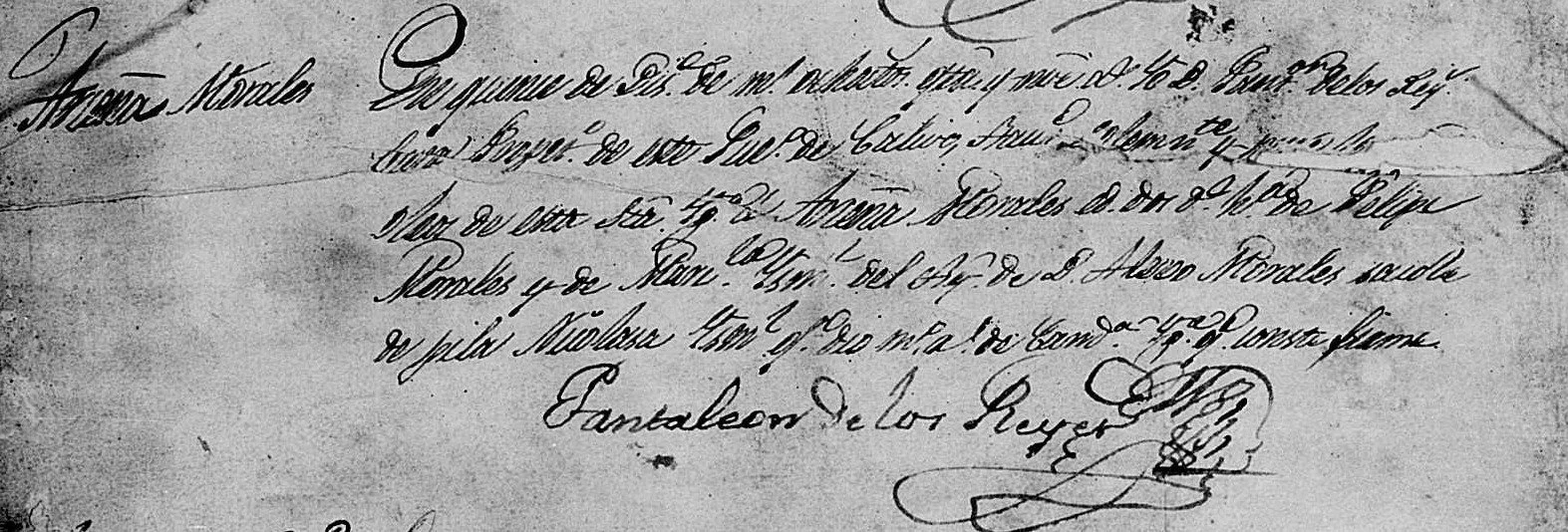
On October 27, 1862, in the town then known as Calivo in the province of Capiz, a boy named Juan was born to Felipe Morales and Manuela Menes. Two days later, Father Pantaleón de los Reyes—the same priest who had baptized all of Juan's older brothers and sisters—carried the infant to the baptismal font at the parish church of San Juan Bautista.
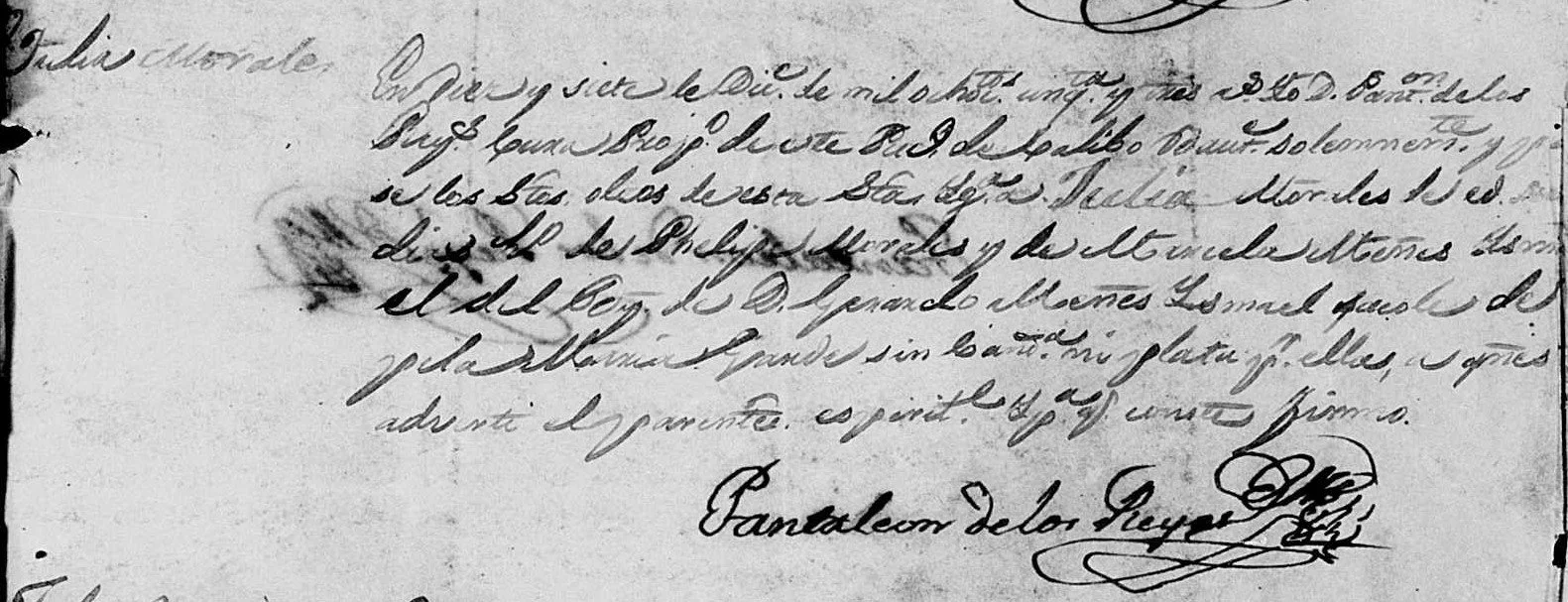
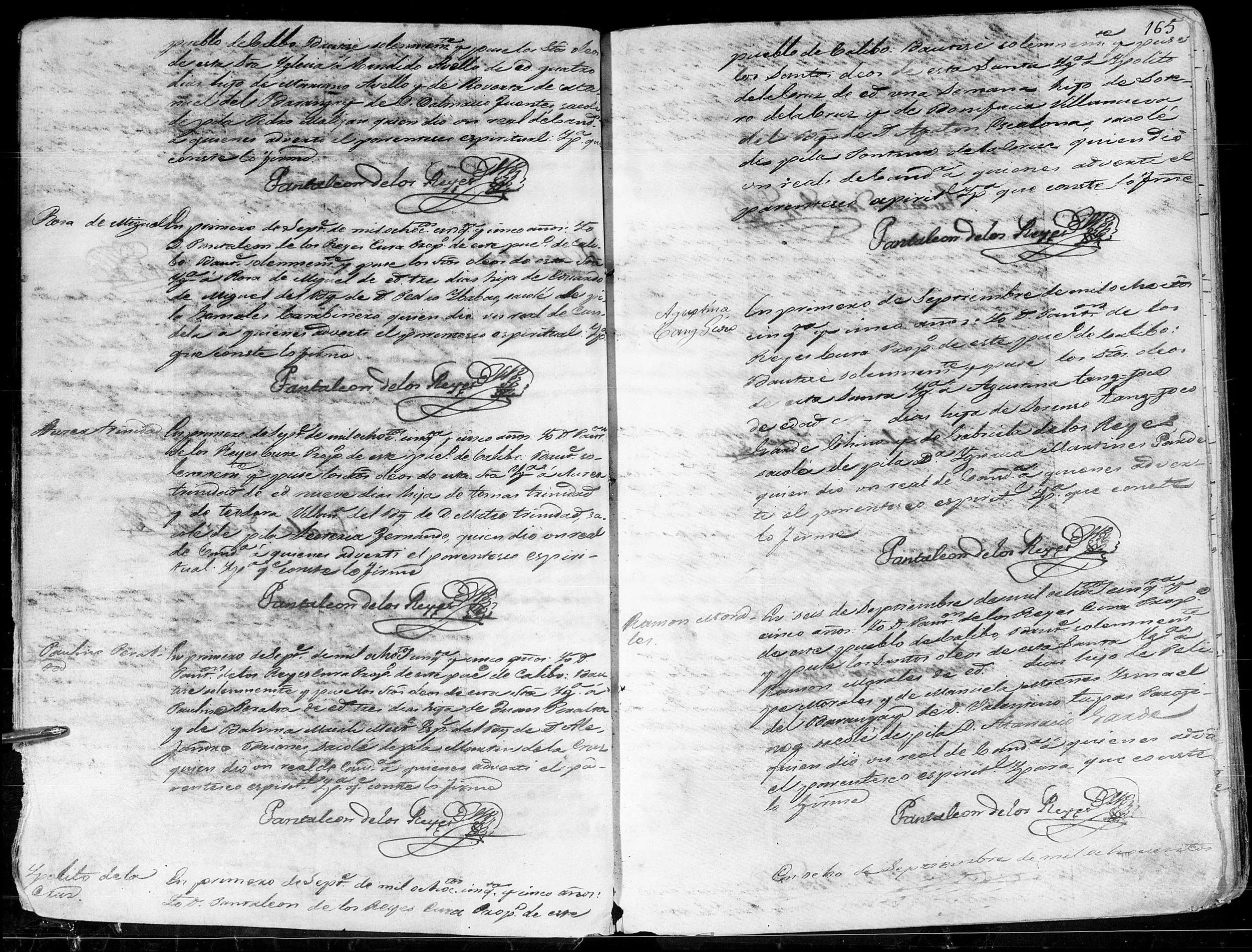
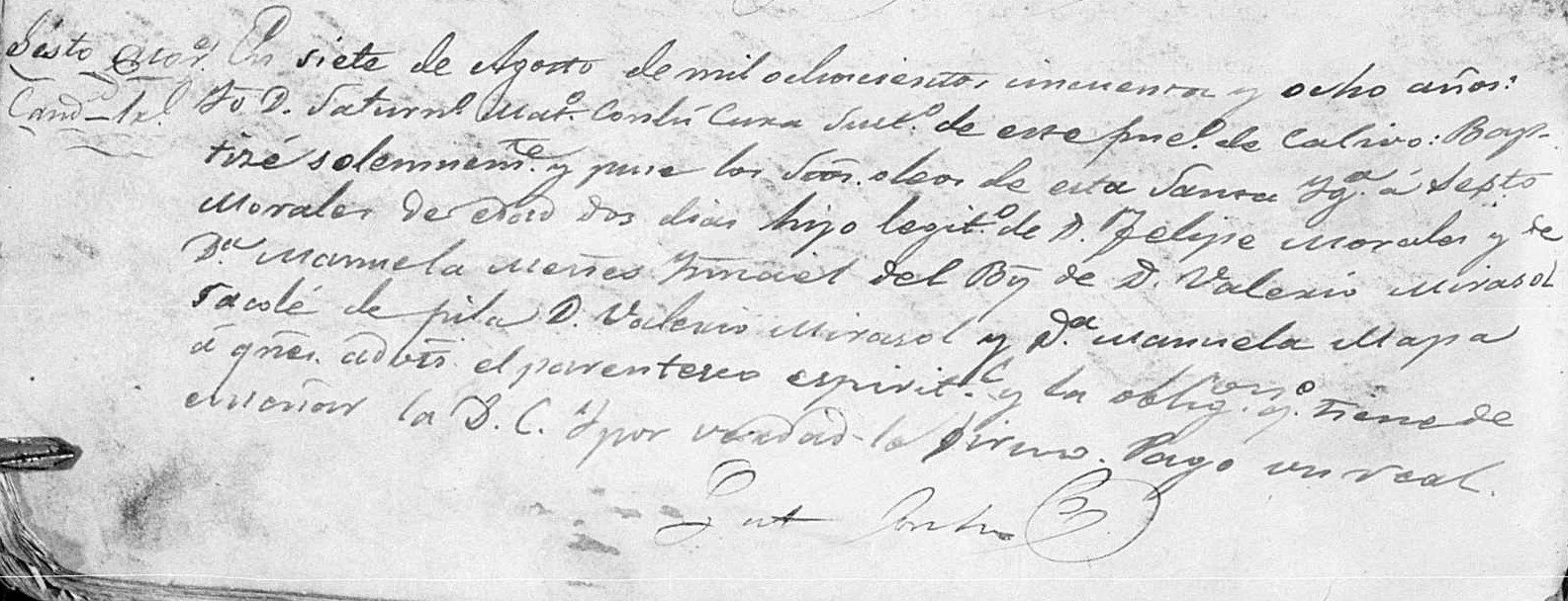
Felipe and Manuela were indigenous Filipinos, classified in church records as indio nativos. They had already raised eight children—Arcena, Florencia, Julia, Ramón, Bernardino, Sexto, Anastacia, and would later welcome Anastacio. For fifteen years, Father Pantaleón de los Reyes had been the constant presence at their family milestones, creating a bond between priest and family that transcended mere church administration.
The Morales Family of Kalibo
As Juan grew up in Kalibo, something set him apart—his intelligence, his spiritual inclination, or perhaps his family's recognition that education could open doors closed to previous generations. Juan entered seminary training, a path almost unimaginable for someone of his indigenous background. Seminary education required Latin literacy, theological knowledge, and the respect of Catholic Church authorities. For an indio nativo in the 1880s, this represented a tremendous achievement.
Research Discovery
According to the family memoir written by Federico Uyaco Morales (Juan's grandson), Juan "was studying for the priesthood but cut short his religious studies when he married." His first wife, Cirila Concepcion, died in childbirth around 1889, leaving him with an infant son, Magin. Juan later married Petrona Quimpo, daughter of Potenciano Quimpo and Mena Ferer, connecting the Morales family to the Quimpo network that would later intersect with the Gonzales line.
Juan and Petrona's son Mamerto Morales, born around 1900, would become a notary public—continuing his father's respect for education and legal knowledge. Mamerto married Patrocinio Gonzales, daughter of Cenón Gonzales and Emilia Quimpo, uniting the Morales and Gonzales family lines. Their union placed Dr. Romulo G. Morales at the convergence of two prominent Aklanon families.
Your Morales Lineage
Juan Apdon Morales is your great-great-grandfather through the paternal line. His decision to leave seminary for marriage created the family line that would eventually include physicians, lawyers, and educators.
3x Great: Juan Apdon Morales (1862–1936) ⚭ Petrona Quimpo
2x Great: Mamerto Morales (1900–1942) ⚭ Patrocinio Gonzales (1905–1985)
Grandparent: Dr. Romulo G. Morales (1931–2017)
Subject: Romulo T. Morales (b. 1959)
The Tamayo Maternal Line: Martelino, Roldan, and Isturis
While the Gonzales and Morales families were establishing themselves in Kalibo and Numancia, another set of families—the Martelinos, Roldans, and Isturis—were creating the maternal lineage that would produce Dr. Hally R. Tamayo, your grandmother.
In June 1835, in Kalibo, a girl named Ismaela was born to Paulino Abello Martelino and Isabel Pillo Tolentino. These are your 5th great-grandparents—the earliest documented ancestors in the Tamayo maternal line. Ismaela would marry Francisco Arevalo Roldan, born in 1833 to Valerio Roldan and Eusebia Arevalo, connecting two established Kalibo families.
Kalibo, Aklan
The baptism of Maximo Martelino Roldan at Saint John the Baptist Church in Kalibo provides documentary proof of the Martelino-Roldan union. Maximo, born in June 1858 to Francisco Arevalo Roldan and Ismaela Tolentino Martelino, would later marry Saturnina Servañes on November 29, 1893, at Saint Peter the Apostle Church in Ibajay. Their son Fortunato F. Roldan would become a landowner in Numancia.
The Martelino-Roldan Connection
The next generation brought geographic expansion. Maximo Martelino Roldan, baptized at Kalibo's San Juan Bautista church in 1858, married Saturnina Servañes in Ibajay in 1893—a different town, a different church, suggesting the family's increasing mobility. Their son Fortunato F. Roldan would establish the family in Numancia, where he acquired land in Barrio Imelaran and Barrio Nalawan.
Research Discovery
A June 1927 Pacto de Retro sale document provides the first proof that Fortunato Roldan was married to Margarita Isturis, daughter of Juez Roman Isturis. This document, discovered through FamilySearch Full Text Search, shows Fortunato purchasing three parcels of land in Barrio Imelaran for ₱50—establishing him as a property owner in Numancia two years before the earliest previously known records.
The Isturis family brought judicial authority to the family network. Juez Roman Isturis—"juez" meaning judge—held municipal judicial power in Numancia. He married Querina Malinag Malina and raised nine children, including Margarita (born c. 1890), who married Fortunato Roldan, and Florentina, who appears as a witness in later property documents.
Your Tamayo Maternal Lineage
This line connects you to your grandmother, Dr. Hally R. Tamayo, through her mother Maria Corazon Roldan, who married Jose Tamayo in 1931.
4x Great: Ismaela T. Martelino (b. 1835) ⚭ Francisco A. Roldan (b. 1833)
3x Great: Maximo M. Roldan (b. 1858) ⚭ Saturnina Servañes (m. 1893)
2x Great: Fortunato F. Roldan ⚭ Margarita M. Isturis (b. 1890)
Great-Grand: Maria Corazon Roldan (1913–2005) ⚭ Jose Tamayo (1910–1970)
Grandparent: Dr. Hally R. Tamayo (1932–2017)
Subject: Romulo T. Morales (b. 1959)
Revolution and Transformation: 1896-1898
In January 1897, while your ancestors farmed their rice paddies and managed their properties, two men arrived in Aklan who would change everything. Candido Iban of Malinao and Francisco del Castillo, both members of the Katipunan revolutionary society, had been sent by Andres Bonifacio to organize resistance against Spanish rule.
Within three months, they had recruited a thousand members from the barrios of Kawayan, Kuntang, and Tambak in New Washington (then called Lagatic) and Batan. The revolutionary fervor spread to the rest of the province. Your ancestors—Captain Lucas Gonzales in his sixties, Juan Apdon Morales in his thirties, Maximo Martelino Roldan approaching forty—lived through these dangerous months when choosing the wrong side could mean death.
The 19 Martyrs of Aklan
On March 17, 1897, Francisco del Castillo was killed in battle. Two days later, Spanish authorities promised amnesty to any revolutionaries who surrendered. Fifty Katipuneros laid down their arms and were immediately imprisoned. Twenty were selected for execution; one was released through his wife's intercession. At midnight on March 23, 1897, the remaining nineteen—including Candido Iban—were shot by firing squad in Kalibo, their bodies paraded around the plaza that morning as a warning. Today, they are honored as the "19 Martyrs of Aklan," and the date is a provincial holiday.
The executions did not end the revolution. Surviving Katipuneros took refuge in Vivo, a mountain village of Tangalan. On April 15, 1897, they ambushed Spanish troops who had been lured into a festive reception, killing all but one. A week later, Spanish retaliation left many villagers dead—but the revolutionary spirit only intensified.
By late December 1898, the Spanish had evacuated Kalibo. The Philippine Revolution had succeeded—at least temporarily. But American troops arrived within months, landing in Iloilo on February 11, 1899, beginning a new colonial era that would shape the next generation of your ancestors.
"The revolutionary fervor of the Aklanon intensified, and the Spaniards finally evacuated Kalibo in late December 1898."
What Your Ancestors Left You
Your ancestors didn't just leave you property deeds and baptismal records. They left you a proven methodology for survival and success during the most challenging periods imaginable.
Captain Lucas Gonzales taught his children to diversify their assets, adapt to new political systems, and think in generations rather than immediate gains. His family survived the Philippine Revolution, the American colonial transition, and World War II with their landholdings intact—not through luck, but through strategic planning.
Juan Apdon Morales demonstrated that education opens doors. His seminary training—extraordinary for an indigenous Filipino of his era—established a family pattern that would produce notaries, doctors, lawyers, and educators in subsequent generations.
The Martelino-Roldan-Isturis connection shows the value of strategic marriage and community networks. Fortunato Roldan's marriage to Margarita Isturis united a landowner with a judge's daughter, combining economic resources with civic authority.
The Interconnected Community
These four families were not isolated lineages. They worshipped at the same churches, farmed adjacent rice paddies, witnessed each other's legal documents, and eventually intermarried. The Gonzales family connected to the Quimpo family through Cenón's marriage to Emilia Quimpo. The Morales family connected to the Quimpos through Juan's marriage to Petrona Quimpo. The Quimpo name appears repeatedly—as lenders, witnesses, and marriage partners—suggesting they served as a hub in the provincial social network. Understanding your family means understanding this web.
Primary Sources
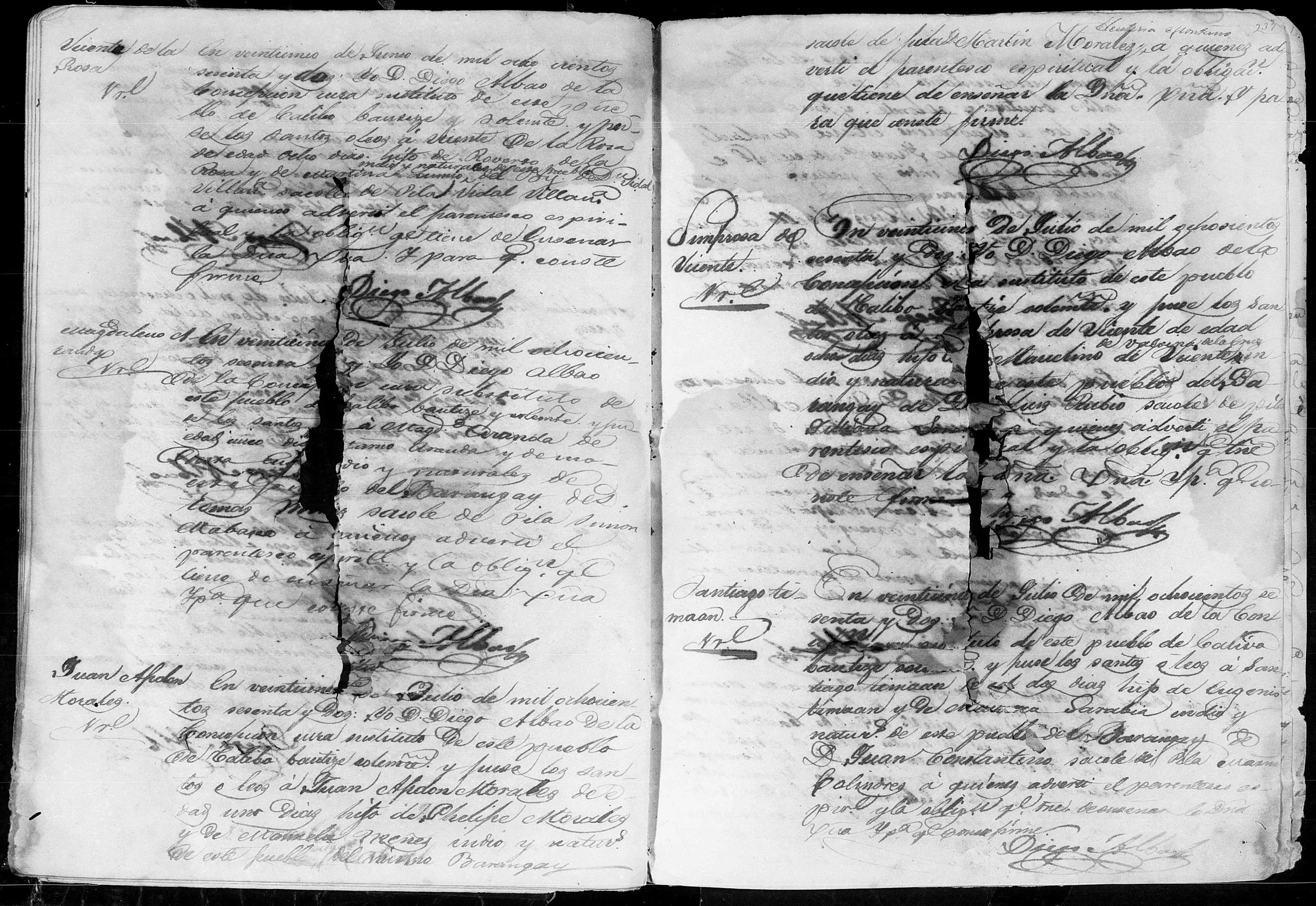
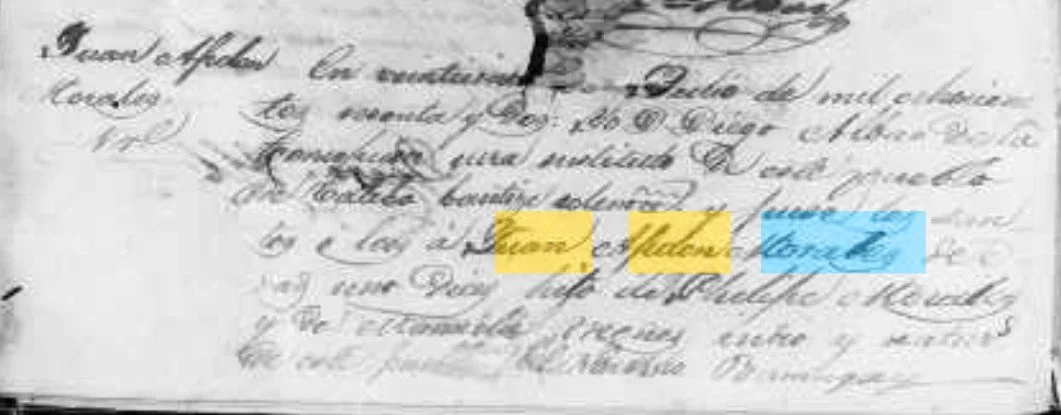
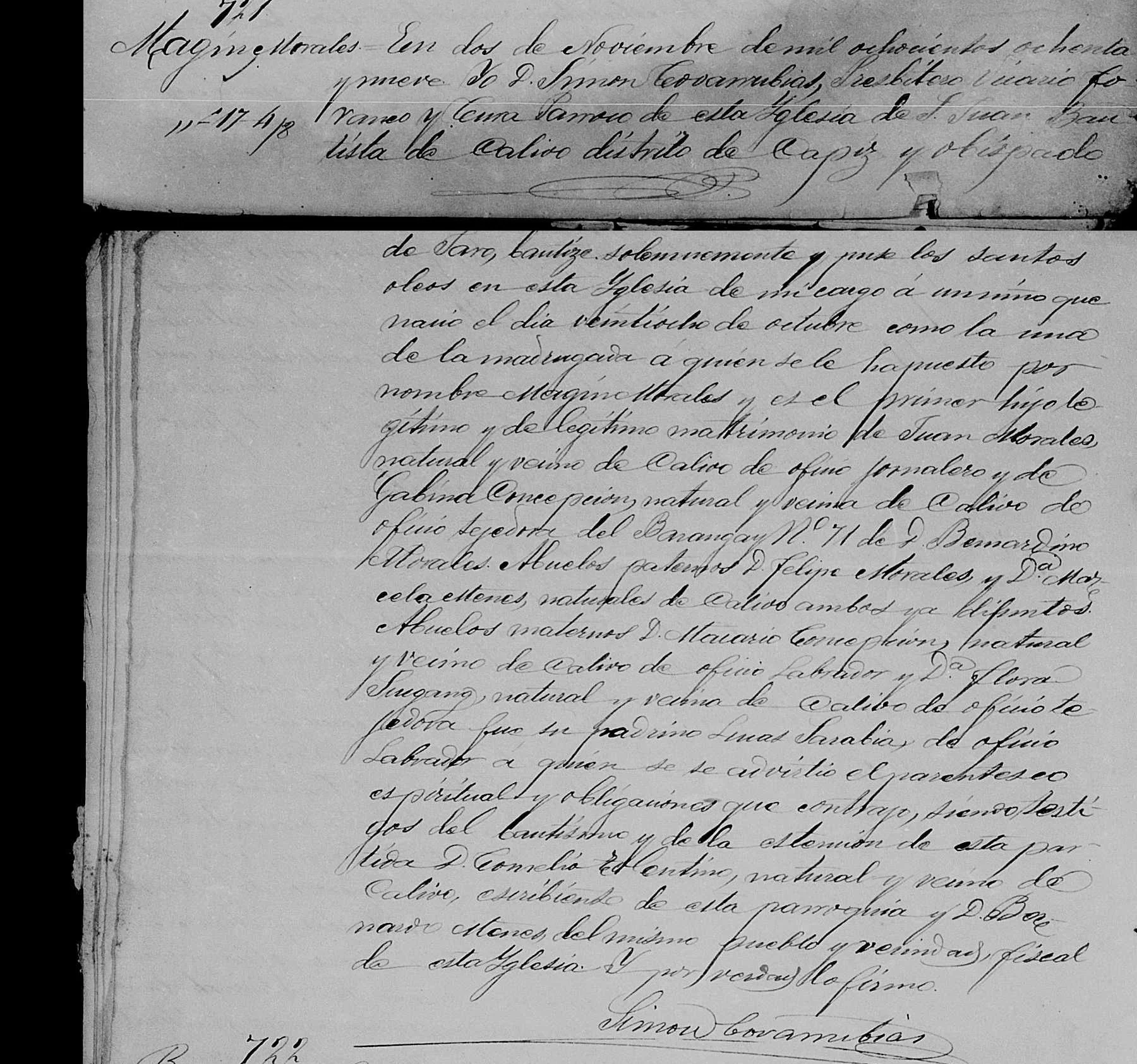


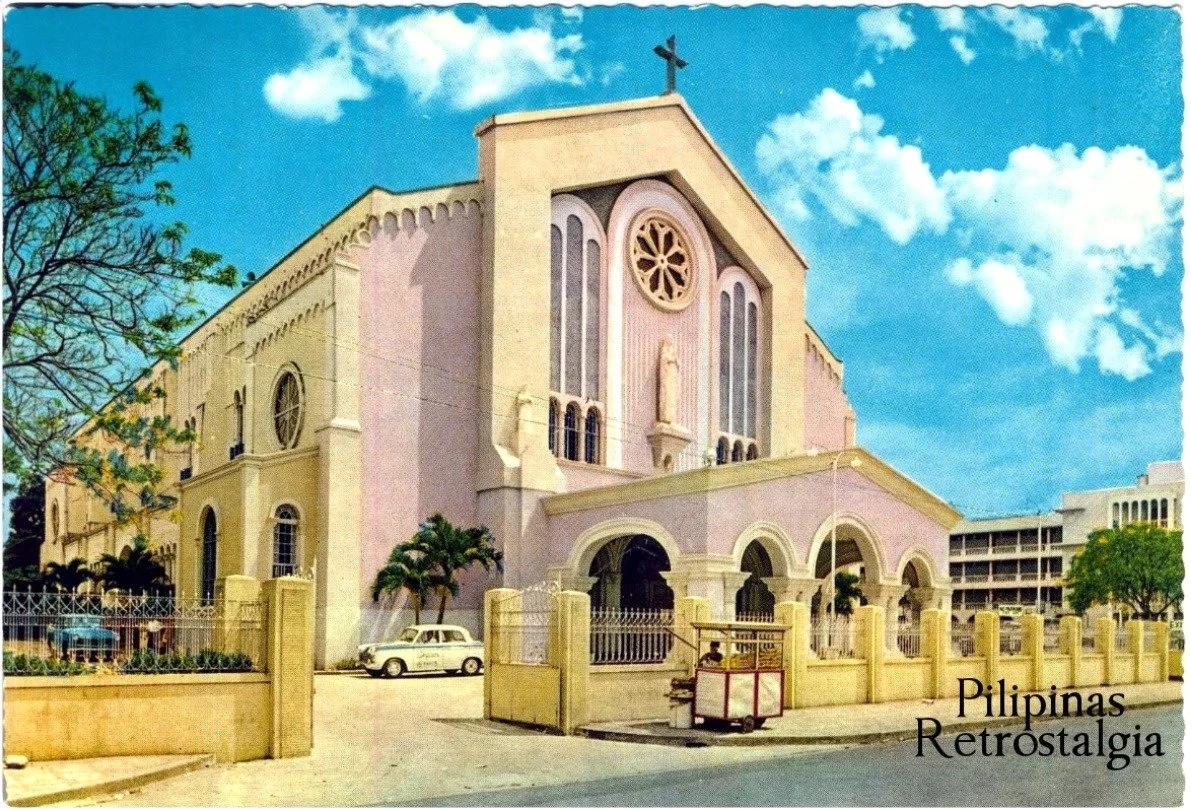
St. John the Baptist Cathedral, Kalibo
Parish church since 1581, where your ancestors were baptized
Historic PhotoAre You Connected to the Morales-Tamayo Line?
If you descend from the Morales or Tamayo families of Numancia and Kalibo, Aklan, or from the intermarried Numancia families — Gonzales, Quimpo, Roldan, Isturis, Martelino, Icamina, Ferrer — whether your branch remained in the Philippines or emigrated to the United States, I’d like to compare notes. Documented trees, DNA matches, family papers, and even half-remembered stories have all moved this research forward.
Get in Touch About This FamilyCousin connections are informal and reciprocal — no fee, no obligation, just shared work on shared ancestry.
Questions about your own research? Begin a research inquiry.
