
Gillette Banne: A Fille à Marier in New France
Gillette Banne
One of the Brave 262
Before the King's Daughters. Before royal dowries and organized recruitment. Before the colony had a plan to populate itself with marriageable women. There were the Filles à marier—the marriageable girls who crossed the Atlantic on their own terms, leaving everything they knew for a wilderness they could scarcely imagine.
Gillette Banne was one of approximately 262 such women. She arrived around 1649, fourteen years before the official Filles du Roi program would begin. She received no dowry from the Crown. She enjoyed no royal protection. What she carried across the ocean was courage—and the resilience to survive widowhood at twenty-five, raise seven children, and ultimately face execution at forty-six for killing the man who beat her daughter bloody.
Shipped across the Atlantic at twenty-three. Married at twenty-three. Widowed at twenty-five with an infant daughter. A property owner at twenty-five. Executed at forty-six. Gillette Banne's life spans only four and a half decades, but within it lies the full complexity of women's experience in the earliest years of colonial New France.
A Note on Descendant Numbers: According to the Genealogy of French in North America database, Gillette Banne through her parents Marin Banne and Isabeau Boire has between 1,750,000 and 2,170,000 descendants in Québec today, traced through 15 generations and 8,348 documented marriages. Her daughter Marie Chauvin, through whom our line descends, has between 1,190,000 and 1,610,000 descendants across 14 generations.
| Name | Marie Gillette Banne |
| Birth | Around 1636, Argences, diocese of Bayeux, Normandy (database estimate, based on the 1666 census) |
| Parents | Marin Banne and Isabeau Boire — PRDH Family #782 |
| First marriage | Marin Chauvin — PRDH Individual #15679; Couple #652 |
| Second marriage | Jacques Bertault — marriage contract #94132, 27 July 1653 |
| Death | June 9, 1672, Québec (Notre-Dame-de-Québec) |
| Database annotation | Records that she and her husband were executed for the killing of their son-in-law, Julien Latouche, who had abused their daughter (paraphrased) |
| Forename note | The database heads this record "Marie Gillette Banne." The primary headings of the 1672 trial file write Gillette Banne. The additional forename is not adopted here. |
Data transcribed from PRDH-IGD (Programme de recherche en démographie historique, Université de Montréal), Individual #7116. Record card image not reproduced — Storyline Genealogy Publication Standard PS-04. See the Research Note below for the evidence supporting a c. 1626 birth year.
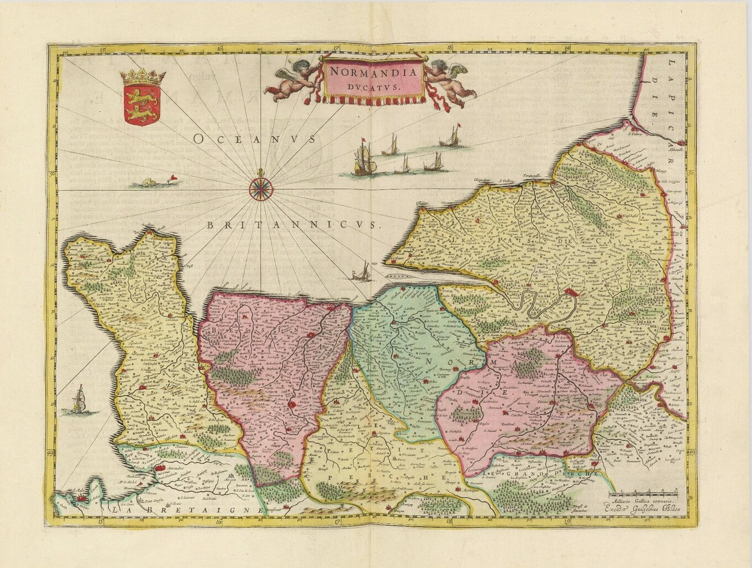
Argences: A Norman Village
Gillette was born around 1626 in Argences, a parish in the Diocese of Bayeux within the province of Normandy, France. The primary religious site was the Church of Saint-Patrice, which served as the focal point for local baptisms and records. At this time, Argences was part of the Généralité de Caen, the administrative division created to streamline tax collection and royal governance in Lower Normandy.
The Diocese of Bayeux was one of the oldest and most influential in France, home to significant ecclesiastical centers like the Abbey of Saint-Étienne in nearby Caen. Gillette's childhood would have been shaped by the Thirty Years' War—Normandy faced heavy taxation to fund the conflict, leading to local tensions and the eventual "Nu-Pieds" (Barefoot) peasant revolt in 1639, when she would have been approximately thirteen years old.
Research Note: Gillette Banne's Birth Year
Gillette's birth year has been a subject of conflicting evidence across genealogical databases. The PRDH, Genealogy Quebec, and Peter Gagne's The Filles à Marier (2002) give "c. 1636" based on the 1666 census, which recorded her age as 30. However, two other primary contemporaneous sources contradict this:
• 1664 Confirmation Record (Trois-Rivières, May 22, 1664): Gillette is listed as age 38, implying birth c. 1626.
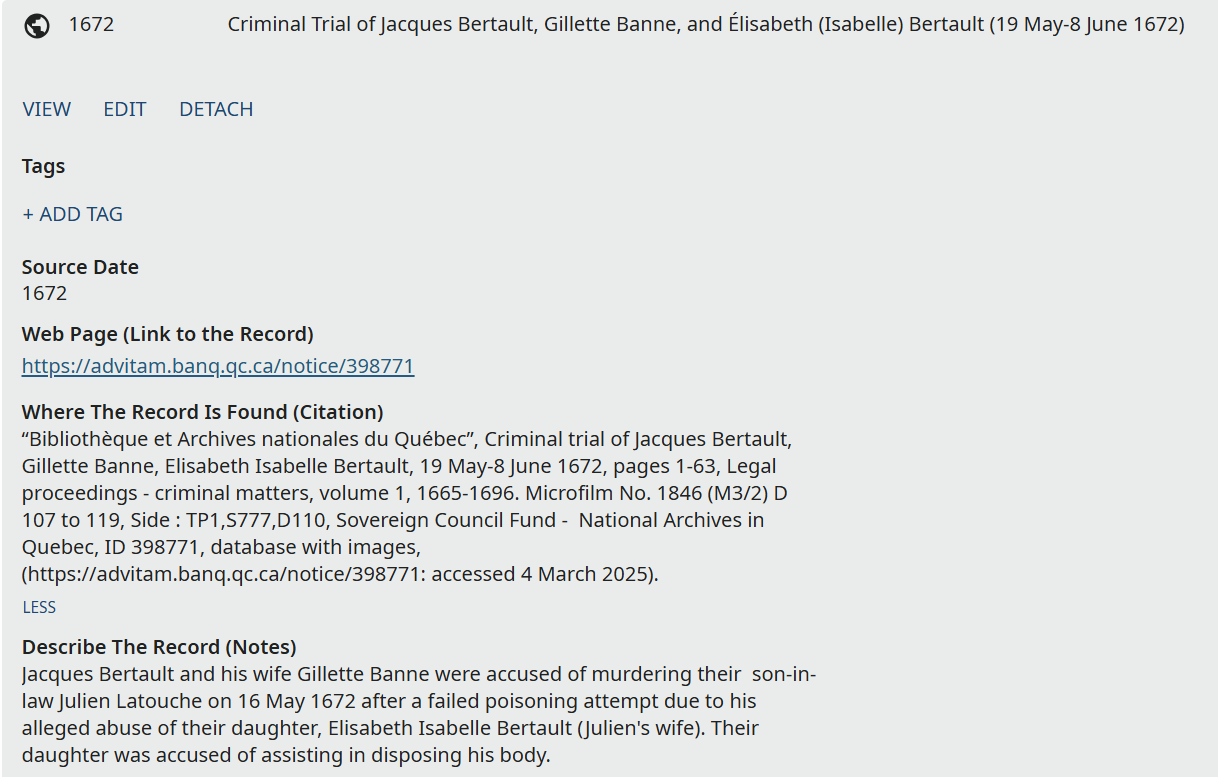
• 1672 Criminal Trial (BAnQ ID 398771, verso of fol. 100 — the leaf carries the marginal cross-reference "continuation page 93"): In her first interrogation on June 2, 1672, Gillette states under oath that she is "aagée de quarante cinq ans Environ" (approximately 45 years old), native of Argences, three leagues from Caen — implying birth c. 1627.
The 1666 census age of 30 is internally inconsistent—she cannot have been 38 in 1664 and 30 two years later. Census ages in this period were frequently estimated by enumerators and are considered less reliable than ages stated by individuals themselves in confirmation registers or under oath in legal proceedings.
Denis Beauregard's Genealogy of the French in North America correctly uses "born about 1626 (conf. 1664)" as the basis for her birth year. This documentary biography follows that evidence.
With thanks to Michel Bédard for bringing this discrepancy to our attention (July 2026).
The Banne Family
Gillette's father, Marin Banne, and mother, Isabeau Boire (also spelled Bour), were married before 1636 in Argences. Researchers note that there are Bannet families in Champ-Du-Boult, approximately 90 km from Argences, suggesting possible extended family connections in the region.
Around 1649, at approximately twenty-three years old, Gillette left France as a devancière (precursor) or fille à marier to settle in New France. The voyage itself was a trial—ships of this era took two to three months to cross the Atlantic, with passengers packed into cramped quarters, surviving on hardtack and salt provisions, vulnerable to storms, disease, and the desperate boredom of endless water.
First Marriage: Marin Chauvin
Upon arrival in 1649, Gillette was quickly married to Marin Chauvin dit Lafortune, a man from the parish of Saint-Mard-de-Réno in Perche, France. According to PRDH records, Marin was baptized March 16, 1625, though Canadian documents do not name his parents—researchers suggest they were Nicolas Chauvin and Catherine Piedgars. An enlistment contract from March 8, 1648, drawn up by notary Choiseau in Tourouvre, reveals that Marin had committed to serve Noël Juchereau in New France for three years at a salary of 40 livres per year—a wage suggesting he was an unskilled laborer.
Marin was twenty-four at their marriage; Gillette was approximately twenty-three—closer in age than the traditional sources suggested.
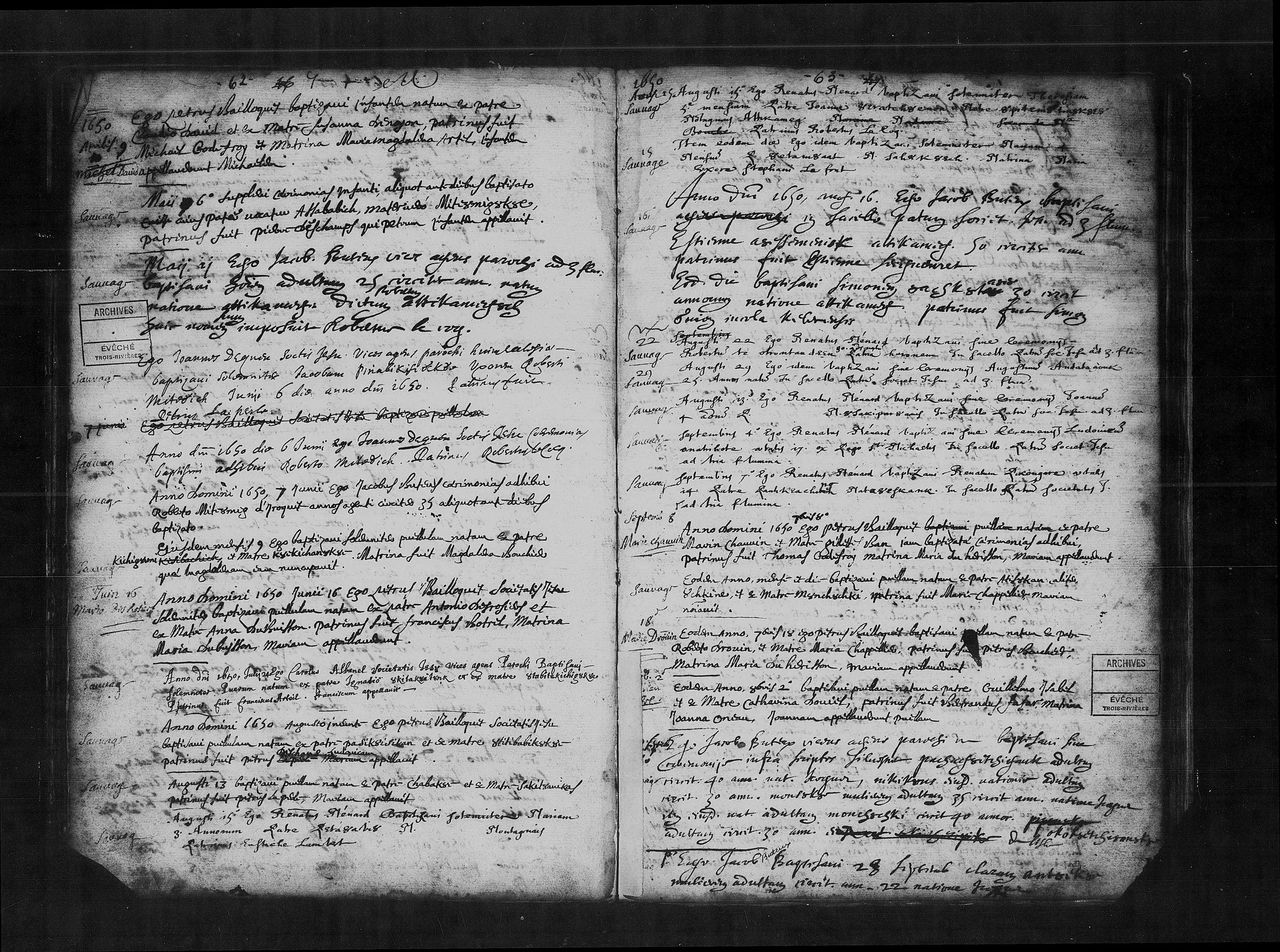
Their daughter Marie was baptized on September 8, 1650, at Immaculée-Conception in Trois-Rivières. Gillette was approximately twenty-four years old—a mother in a settlement constantly threatened by Iroquois raids.
The happiness of new parenthood was short-lived. Marin Chauvin died on or shortly before June 7, 1651, when the colonial administrator Monsieur d'Ailleboust granted Gillette one-third of an arpent in the town site of Trois-Rivières, "between Sébastien Dodier on the southwest and the palisade on the northeast, on the condition that she build a house and have it re-enclosed with a good fence."
At approximately twenty-five, Gillette was a widow, a single mother, and now a property owner—a remarkable status for any woman of this era.
Second Marriage: Jacques Bertault
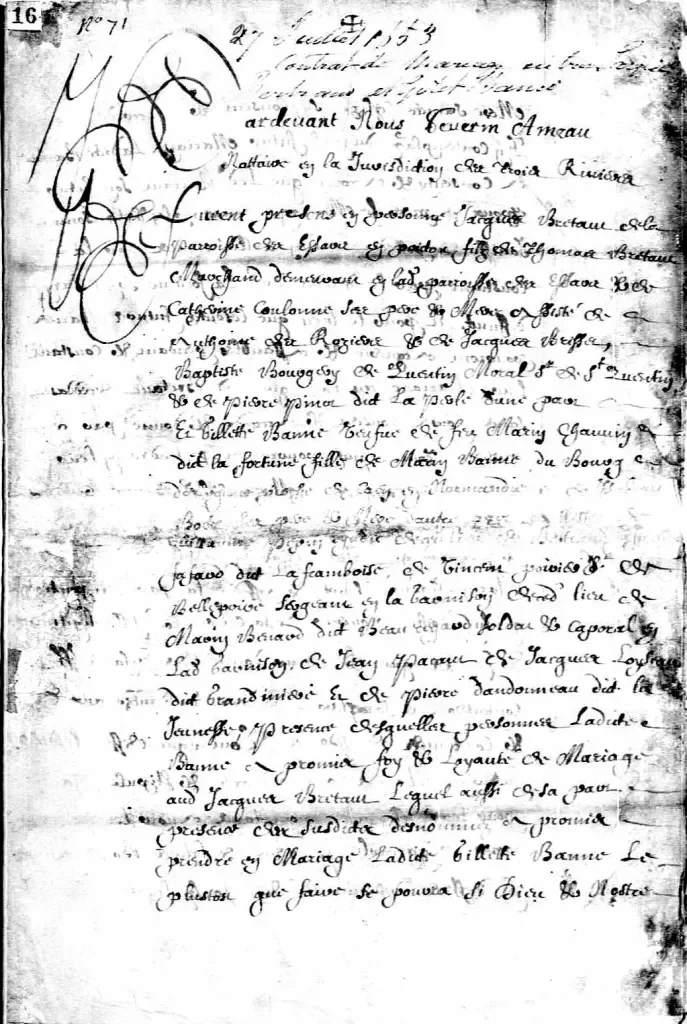
Gillette remained unmarried for approximately two years—a relatively long period for a widow in a colony desperate for families. On July 27, 1653, she married Jacques Bertault, son of Thomas Bertault (a merchant) and Catherine Coulonne, from Les Essars in the diocese of Luçon, Poitou. A marriage contract was drawn up by notary Séverin Ameau.
Jacques was about four years older than Gillette. Both ages are known from their own sworn statements in 1672: he gave his as fifty or thereabouts, she gave hers as forty-five. His trade comes from the same source. Gillette, naming her husband in her interrogation, describes him as Masson de son mestier—a mason by his trade—and BAnQ's catalogue description of the trial file independently records him as laboureur, maçon: ploughman and mason.
Neither Jacques nor Gillette could sign the contract—a common situation in this era and class. The document lists Gillette's first husband Marin Chauvin as deceased, and names both sets of parents.
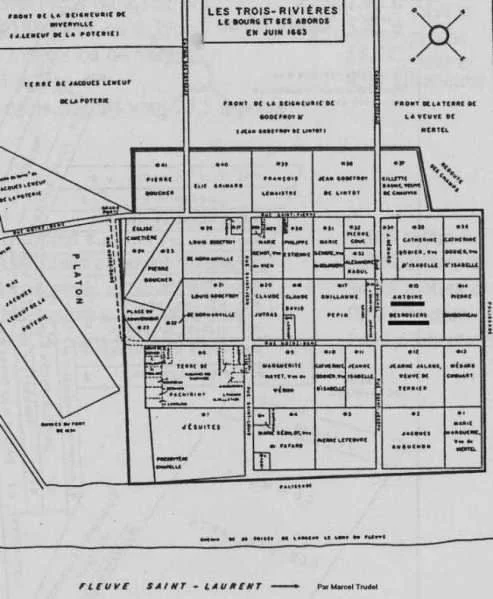
A 1663 map of Trois-Rivières—titled "Les Trois-Rivières: Le Bourg et Ses Abords en Juin 1663"—shows the property owned by "Gillette Banne, veuve de Chauvin" at the top right of the settlement, near the palisade. Even after remarriage, her earlier land grant remained identified with her first husband's name, as was customary.
The Children of Two Marriages
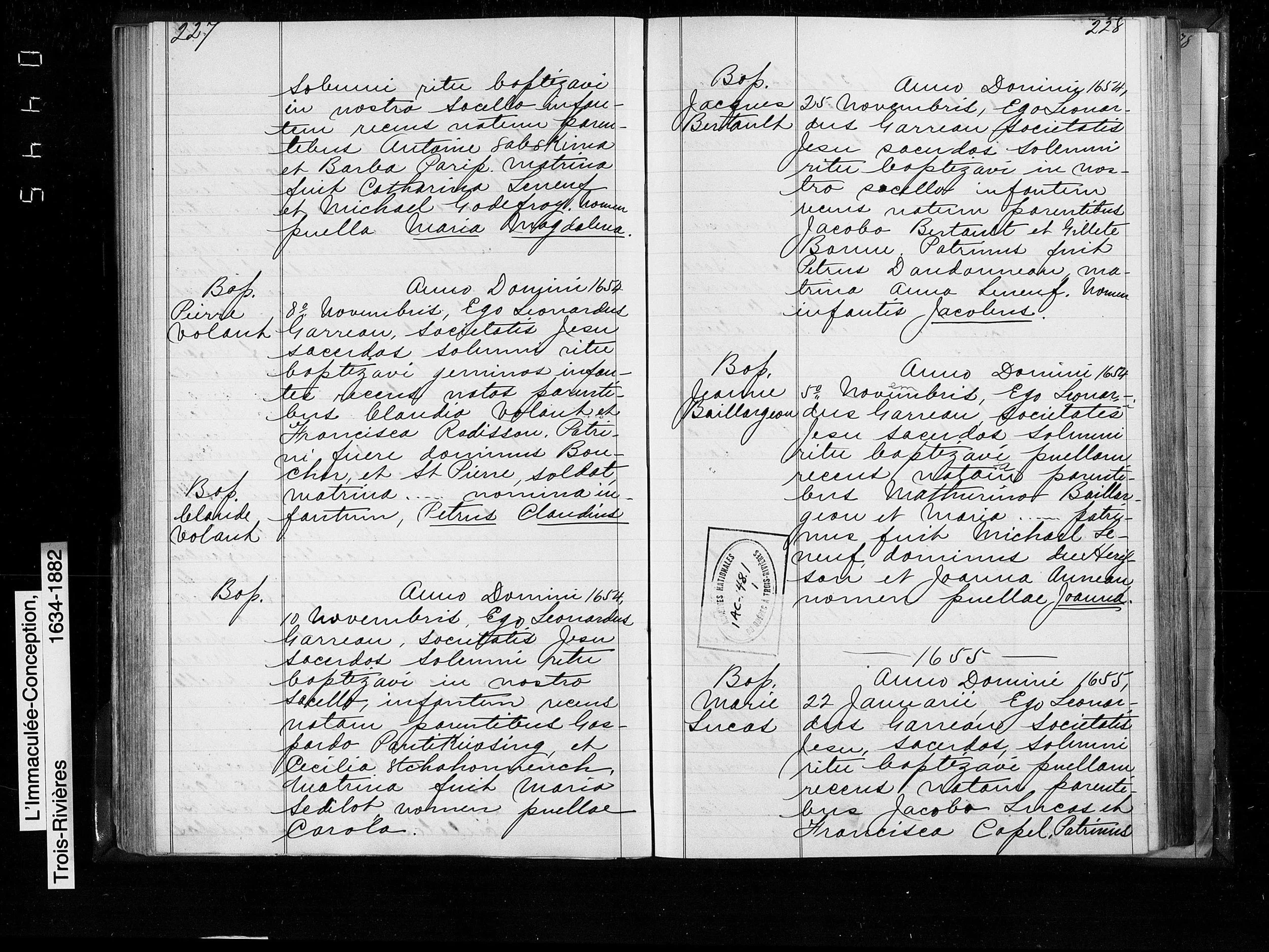
Including Marie Chauvin from her first marriage, Gillette raised seven children. Between 1654 and 1662, she gave birth to six more with Jacques Bertault:
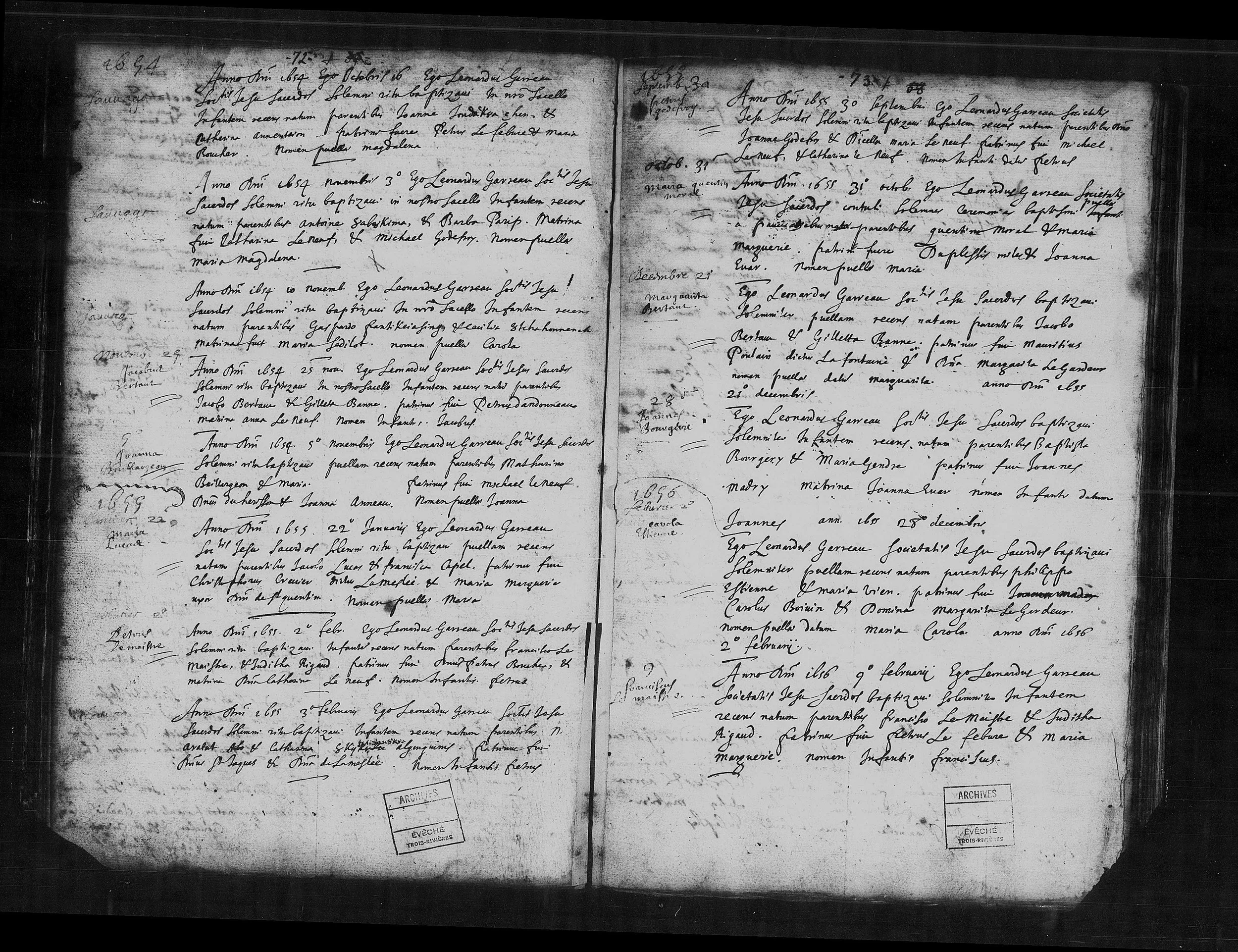
| Child | Baptism Date | Marriage | Notes |
|---|---|---|---|
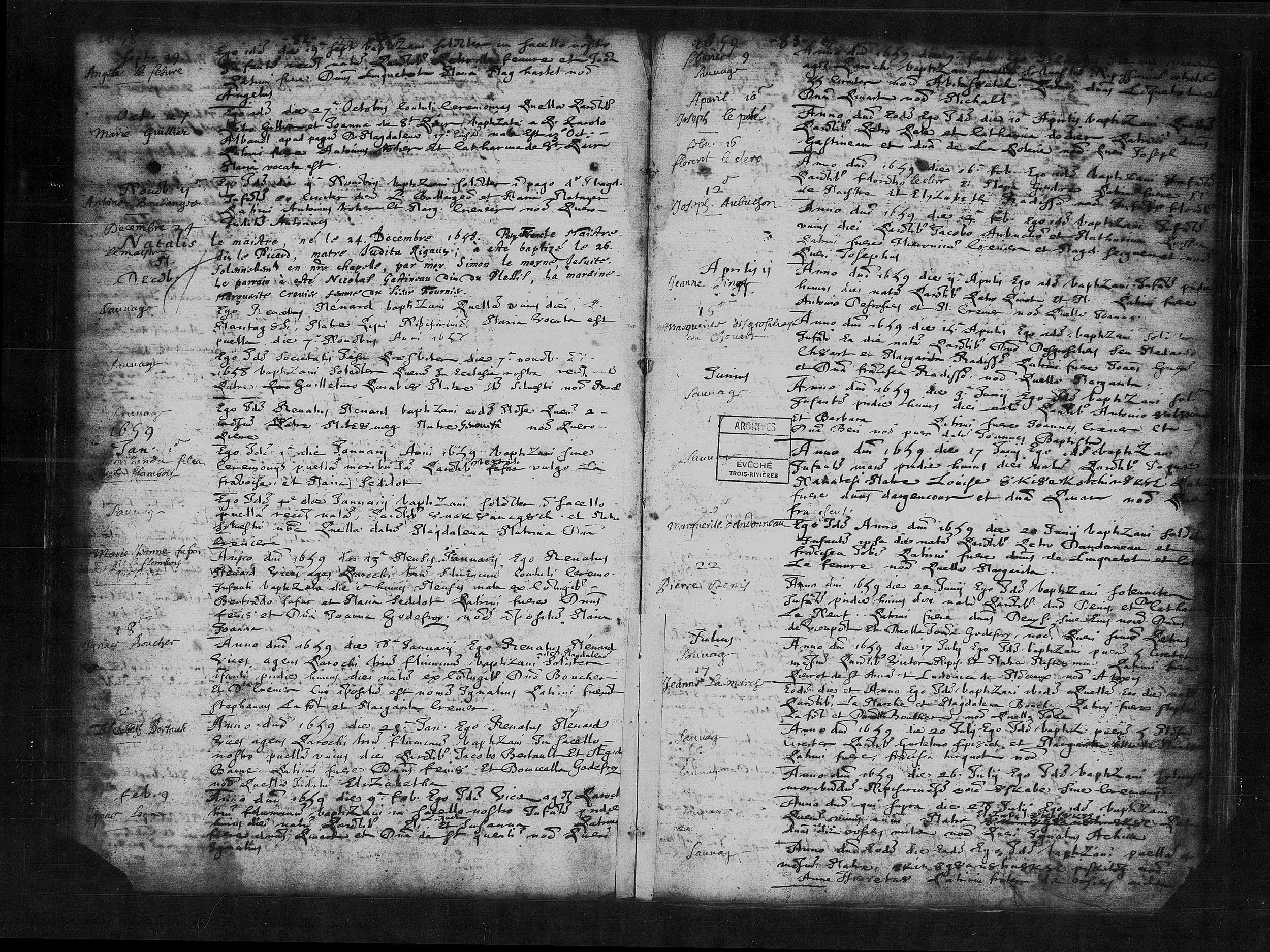
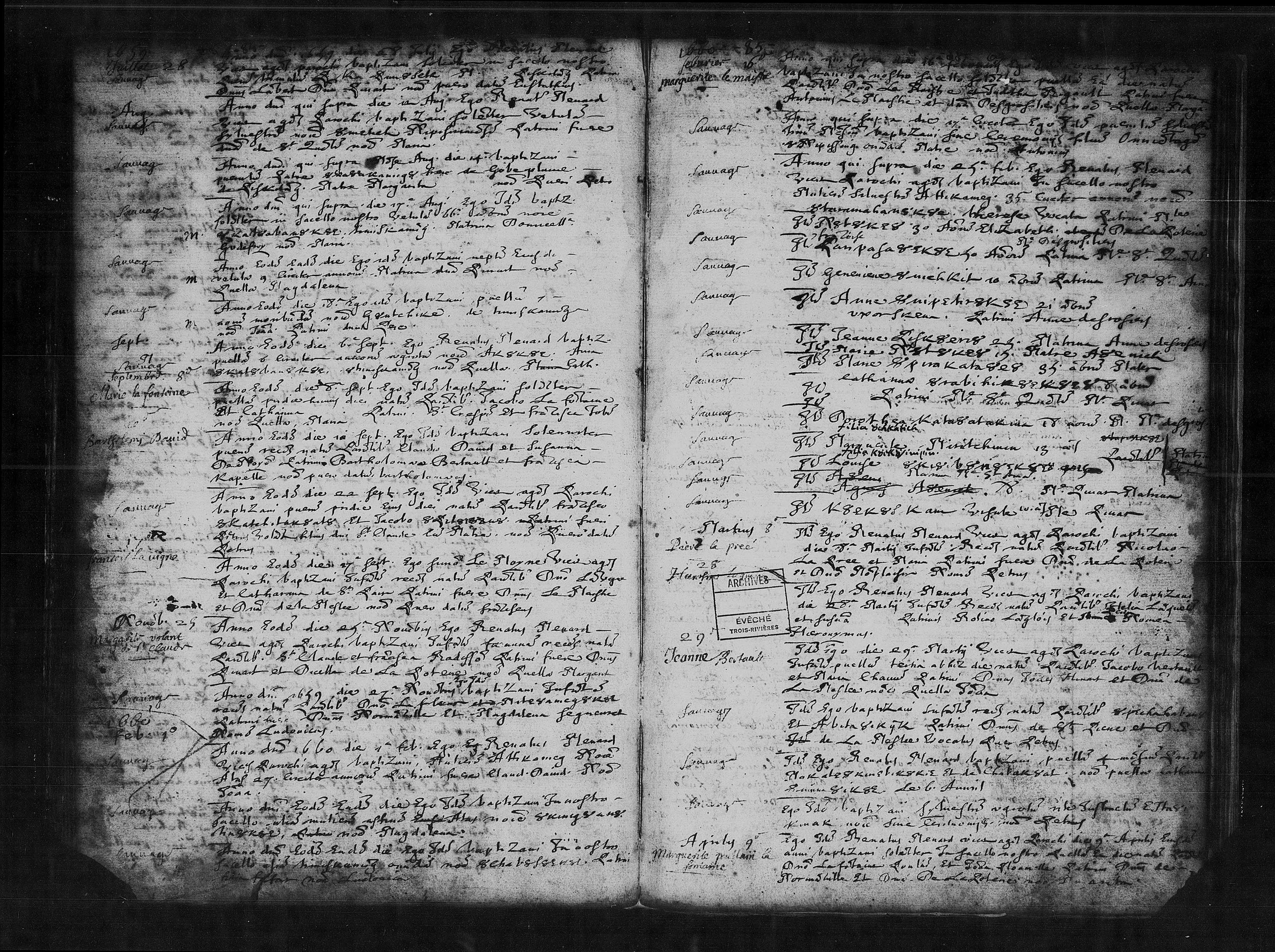
| Marie Chauvin | 8 Sept 1650 | Age 14 (1664) | Our direct ancestral line; married Rollin Langlois, then Jean-Baptiste Denoyon |
| Jacques Bertault | 25 Nov 1654 | — | Died before the 1666 census |
| Marguerite Bertault | 21 Dec 1655 | Age 13 (1668) | Married Denis Véronneau |
| Suzanne Bertault | 18 Dec 1657 | Age 14 (1671) | Married Jean Hiesse |
| Élisabeth-Thérèse Bertault | 23 Jan 1659 | Age ~12 (1671) derived | Married Julien Latouche; witnessed parents' execution. Her sworn age at trial, June 1672, was thirteen |
| Jeanne Bertault | 29 Mar 1660 | Age 20+ (1680) | Married after parents' execution |
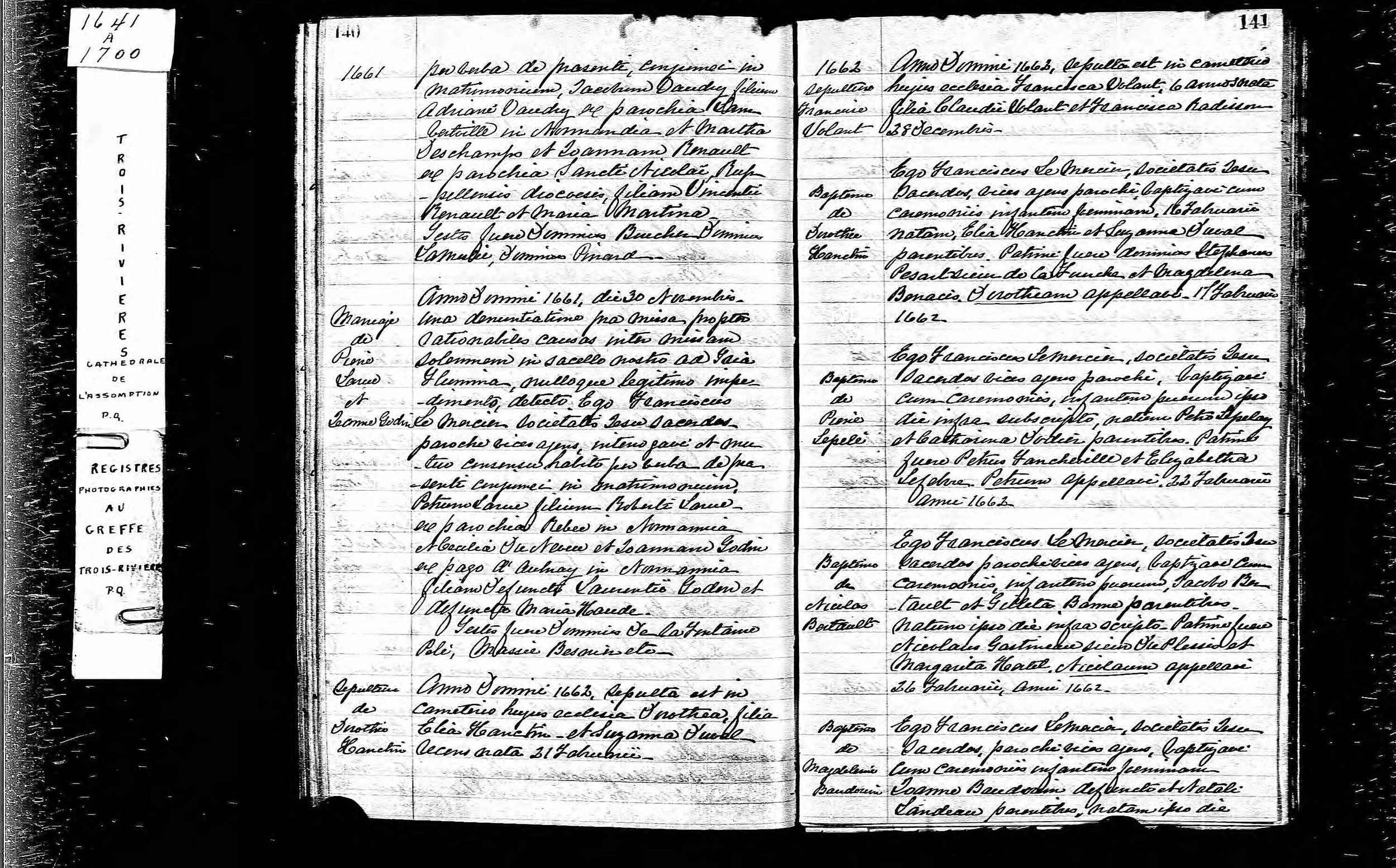
| Nicolas Bertault | 26 Feb 1662 | — | Key witness in murder trial at age 10 |
The pattern of marriage ages is striking: under Jacques Bertault's authority, Marie married at 14, Marguerite at 13, Suzanne at 14, and Élisabeth at about 12. Only Jeanne, the youngest daughter who would marry after her parents' execution, waited until she was at least twenty. Was this because of the family's now-notorious reputation? Or because, with her father no longer alive to arrange marriages, she had the freedom to wait?
A note on Élisabeth's age. Two figures circulate, and they are not the same kind of evidence. Her age at trial—thirteen—is her own sworn statement, recorded on 1 June 1672 by a clerk who first wrote douze, struck it, and wrote treize. Her age at marriage—about twelve—is derived: the August 1671 marriage date measured against her inferred birth year. This page cites the first as testimony and the second as arithmetic, and never puts the derived figure in her mouth.
The Marriage That Changed Everything
On August 12, 1671, Élisabeth Bertault—about twelve years old—married Julien de la Touche, called Latouche. The marriage record at Immaculée-Conception in Trois-Rivières names him as "Julien de la Touche natif de la Rochelle" and her as "Elizabeth Thérèse Bertault de la paroisse des 3 Rivières."
The family knew remarkably little about him. Asked under oath the following June where his son-in-law came from, Jacques Bertault could not say: he thought the man was flamant ou anglois—Flemish or English. Élisabeth had believed the same. Her father put his age at about thirty when he died, and described him as very small of stature and ruined by drink.
Latouche had arrived in New France in 1665 with the Grandfontaine company of the Carignan-Salières regiment. When the regiment was disbanded in 1668, he chose to stay as a colonist rather than return to France.
A Mother's Opposition
Élisabeth explained the match herself, under interrogation ten months later. Her father made her take Latouche sans son gré—without her consent—and the reason was land: a good piece of ground connected with Madame de la Fontaine, held on a five-year term, which Jacques believed could be turned to profit. Gillette was not there. The wife of the sieur Aubert had gone into labour and had sent for her; and while Gillette was away at the birth, her husband concluded the marriage. When she came home she refused to consent. Her father, Élisabeth said, answered that he was the master, and the marriage went forward.
The marriage quickly became a nightmare. Latouche would not work. Élisabeth described him idling at the edge of the cleared ground, making whistles, while she cleaned the earth for Indian corn; when she told him to come and work, he answered that she could work if she liked. Her parents fed him—bread, meat, and a minot of wheat only a week before the end. And he beat her. On the evening it ended he had beaten her, in her mother's words, toute en sang—all in blood.
Her parents tried to help. When Jacques reproached his son-in-law for it, Latouche threatened to kill him. By May 1672 the family was still trapped, and the nearest authority was across a river that Jacques told the court was so swift "qu'il faut estre quatre ou cinq pour venir à bout de traverser"—that it takes four or five men to get across.
May 1672: The Fatal Days
The record dates these days itself, and it does so seven separate times—in the information of 19 May, in the depositions of the neighbours, and in the sworn words of all four members of the family. Each gives the day of the week together with its number, and in 1672 every one of those pairings is correct: the fifteenth of May fell on a Sunday, the sixteenth on a Monday, the seventeenth on a Tuesday, the eighteenth on a Wednesday.
The neighbours across the water heard it. Jean Baultier, a habitant of about thirty, was on the near bank with his brother-in-law Louis Petit, a boy of fourteen. Both deposed two days later. Baultier heard a voice from the Bertault barn crying "je suis mort, ha tu me tues, tu seras pendu"—I am dead, you are killing me, you will be hanged—and said it went on for an hour and a half. Petit heard "ha moy, hélas, au meurtre." Baultier called across the water to Jacques: "malheureux, tu tue ton gendre, tu seras pendu." Jacques, asked about it under oath, answered simply: "quouy, cela est vray Monsieur."
Gillette heard the calling too, and said she could not make out the words—she was busy trying to pull the men apart. Coming in from outside and seeing Latouche throttling her husband, she found a hoe standing near a barrel and struck him on the head. The first blow drew no blood. The second brought him down, "dont il demeura sur la place." Latouche had bitten her; she showed the officer her fingers. She called her daughter—"ma fille entre, voyla ton mary qui veult tuer ton père"—and Jacques struck as well, though how many times he could not say: he thought there were not ten.
About half an hour later the three went back into the barn, found him dead, and dragged the body to the river. Élisabeth stayed at the top of the bank. Asked why she did not help, her mother said she had not the heart for it.
Two implements, two roles. The neighbours found a fléau—a flail—bloodied in the barn, and showed it to the officer, along with human teeth. The accused, in their own interrogations, describe the killing done with a houe, a hoe, "qui estoit proche d'une barrique." Both objects are real and neither substitutes for the other: the flail is the crime-scene find, the hoe the weapon named in testimony.
Investigation and Trial
May 19: The Information
On May 19 the information—the formal opening of a criminal proceeding—was drawn at Trois-Rivières. It survives in the first person, in the hand of the greffier: "Je Séverin Ameau greffier aux trois rivieres soubzsigné, certiffie m'avoir esté rapporté…" The officer before whom the case was taken was Louis de Godefroy, sieur de Normanville, procureur fiscal at Trois-Rivières. The same day, Jean Baultier and Louis Petit gave their depositions; Jean Hérou dit Bourgainville, aged eighteen, followed.
May 20: The Son
Nicolas Bertault, "aagé de dix ans ou environ", was interrogated on May 20. He described the crossing, his mother and sister returning to the house by night, their flight into the woods the next morning, and his father's arrest that Wednesday evening. He said he had heard his mother say she would kill Latouche, and his sister say she wished her husband dead. He also said that when his mother came into the house that night he saw she was terrified, and told her, "you have killed my brother-in-law"—and that she answered no, only that his father had beaten them both.
Jacques was interrogated the same day and denied everything. He had not heard Latouche cry out, had not struck him, did not know what had become of him. He had taken his fusil the following day only to shoot at passenger pigeons. And the blood in the barn was sturgeon blood—Latouche had taken three sturgeon on a line and dragged them through by the mouth. The witnesses were then recalled one by one and confronted with him; each maintained his deposition. So did his own son.
May 21: The Women, and the Admission
Gillette and Élisabeth were found and arrested. On May 21 both were brought before Godefroy de Normanville. Gillette gave the account above—the beating, the quarrel, the hoe, the bitten fingers, the body in the river—and, asked directly whether she had told her husband to kill him, answered no. Élisabeth gave her own, and said that she had watched through a gap in the boards as her husband took the blow; that she had not loved him; and that when he beat her she used to tell him she wished he were dead.
Jacques was then confronted with both. His denial collapsed. Asked why his account did not agree with his wife's, he answered that he had not meant to say anything until she had appeared, and that this was why he had denied what the witnesses deposed. Confronted with his daughter's account he acknowledged it true in every particular but one: the blow, he said, had fallen in the barn and not in the clearing.
Interrogation of Gillette Banne at Trois-Rivières, 21 May 1672. BAnQ, Fonds Conseil souverain, TP1,S777,D110 (ID 398771), verso of fol. 117. The Trois-Rivières record closes at fol. 119 with Ameau's certification: "Coppie collationné à l'original par moy Séverin Ameau greffier aux trois rivieres soubzsigné."
June 1–3: Québec
On the last day of May the Intendant ordered the file sent down to Québec; the procureur fiscal required that all three be examined afresh; and on June 1 Louis-Théandre Chartier, sieur de Lotbinière, lieutenant general civil and criminal, granted it. The Conseil Souverain—the colony's highest court—would hear the case only on appeal.
Élisabeth was examined on the morning of June 1, her father that afternoon, her mother on the morning of June 2. Second and third interrogations followed on June 2 and 3. It was in these that the poisoning entered the record: Jacques described his wife fetching the herb and putting it in the soup, and said that what he had done himself he had done only to obey her. Gillette, questioned in turn, admitted preparing it. On June 3 mother and daughter were confronted face to face over the herb-gathering, and Gillette said to her, simply, "dis, ma fille."
Asked why they had done it, Gillette said there had never been any peace or rest in the house since the marriage, and that Latouche was a man who would do nothing.
What the conviction rested on. Under the criminal procedure of the period, a capital conviction was meant to stand on two unimpeachable eyewitnesses. This case had none to the killing. The neighbours across the water were earwitnesses; the only near-eyewitness was a boy of ten. The conviction rested on the accuseds' own confessions, joined to circumstantial "proximate indications"—the bloodied barn, the flail, the teeth. Any retelling that implies eyewitness proof misstates the record.
Verdict and Execution
June 7: The Prosecution's Demand
The procureur fiscal filed his conclusions, reciting the whole proceeding and demanding death for the parents and a fine of three hundred livres. On Élisabeth he was explicit: she was "grandement convaincue de complicité", and the court should not stop at what he called her "prétendu age de douze à treize ans"—for which, he added, it would be well to see her baptismal extract. The crime, he wrote, was un parricide prémédité.
June 8: The Verdict
On the morning of June 8 both parents were brought up from the prisons one last time and questioned in the chamber. Jacques was asked how long it had taken them to kill their son-in-law. Perhaps an hour and a half, he said; then, correcting himself, that he did not think it was even an hour.
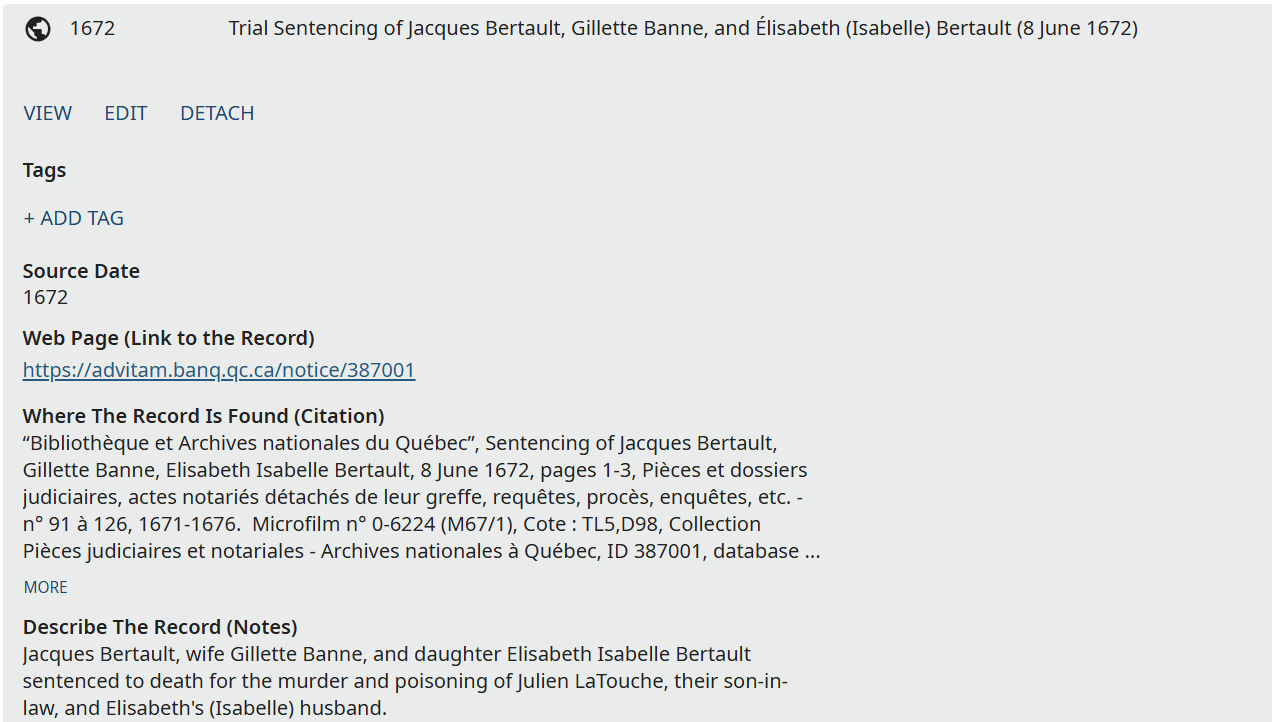
The bench gave its opinions in writing, each judge in turn—the Lieutenant General, then Juchereau de la Ferté, Ruette d'Auteuil, de Bermen, Duquet, and Jean-Baptiste Morin de Rochebelle, who signed at the foot. The sentence, given by Chartier and engrossed by the greffier Rageot, declared all three "deuement atteincts et convaincus" of poisoning and assassination.
Jacques Bertault and Gillette Banne were to be taken from the prisons by the executioner and led to the door of the parish church—rope at the neck, lighted torch in hand, he bare-headed and in his shirt, she in a chemise and bare to the waist—to kneel and beg pardon of God, the King, and justice. Jacques was then to be stretched on a Saint Andrew's cross on a scaffold in the great square of the upper town, his limbs broken with an iron bar, and his body displayed on a wheel at Cap-aux-Diamants. Gillette was to be hanged and strangled on a gallows raised in the same square.
Élisabeth was convicted with them, but not condemned to death. She was to attend, the rope about her neck.
All three were fined one hundred livres to the seigneurs of the country, with the costs; the remainder of their goods confiscated.
The sentence was pronounced to them in the royal prisons. Jacques and Gillette declared themselves appellants. Of their daughter, the greffier's acte records four words: "laquelle n'appelloit point." She did not appeal—she had nothing to appeal from. It was the prosecution that appealed her sentence, as too light: an appel a minima.
June 9: The Sovereign Council
The Council sat on Thursday, June 9, presided over by Daniel de Rémy, seigneur de Courcelle, with Messieurs de Tilly, Damours, Le Ferté, de Peyras and Dupont attending, together with the substitute of the procureur général and the sieur Le Roussel. Jacques and Gillette appeared as appellants; Élisabeth as intimée—respondent to the appeal brought against her.
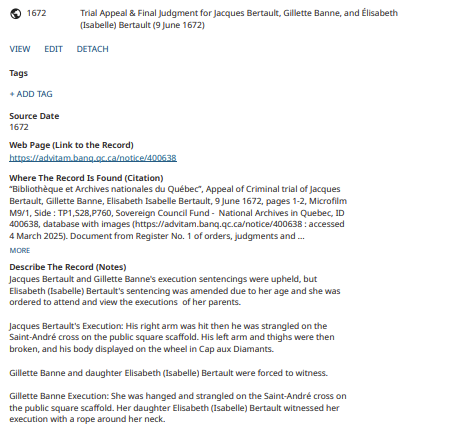
The Council "a mis et met au néant" both appeals—the parents' and the prosecution's—and confirmed the conviction. It modified the sentence in three respects. Jacques would now be strangled first and broken afterwards, two blows to each limb, which spared him the worse death. The fine was reduced from a hundred livres to sixty, the three of them jointly liable: half to the Récollet Fathers "pour prier Dieu pour le repos de l'âme dudit Julien la Touche", the rest to the costs, the surplus of their goods confiscated to the King, with provision made out of it for Nicolas and Jeanne, the minor children.
And on the prosecution's appeal against Élisabeth, the Council held—"ayant esgard à l'aage de ladite Isabelle Bertault, par grace et sans conséquence"—having regard to her age, by grace and without consequence. It refused to send her to the scaffold. But it did not release her. She was condemned to make the amende honorable herself, in the same manner, and then to attend their execution—"la corde au col, sans autre estre qu'elle est." Rope at the neck, otherwise as she was. The penitential garment was her parents'.
So the thirteen-year-old walked to the church door with them, rope at her neck and torch in hand, knelt beside them to beg pardon, and was made to watch. It was carried out that same afternoon—"exécuté lesdits jour a quatre heures de relevée." A note in the margin of the register records that a will was joined to the file.
Our Connection: Through the Daughter Who Survived
Gillette Banne's direct line to our family does not run through the tragic Élisabeth, but through her first daughter, Marie Chauvin, born in 1650 to Gillette and her first husband Marin Chauvin.
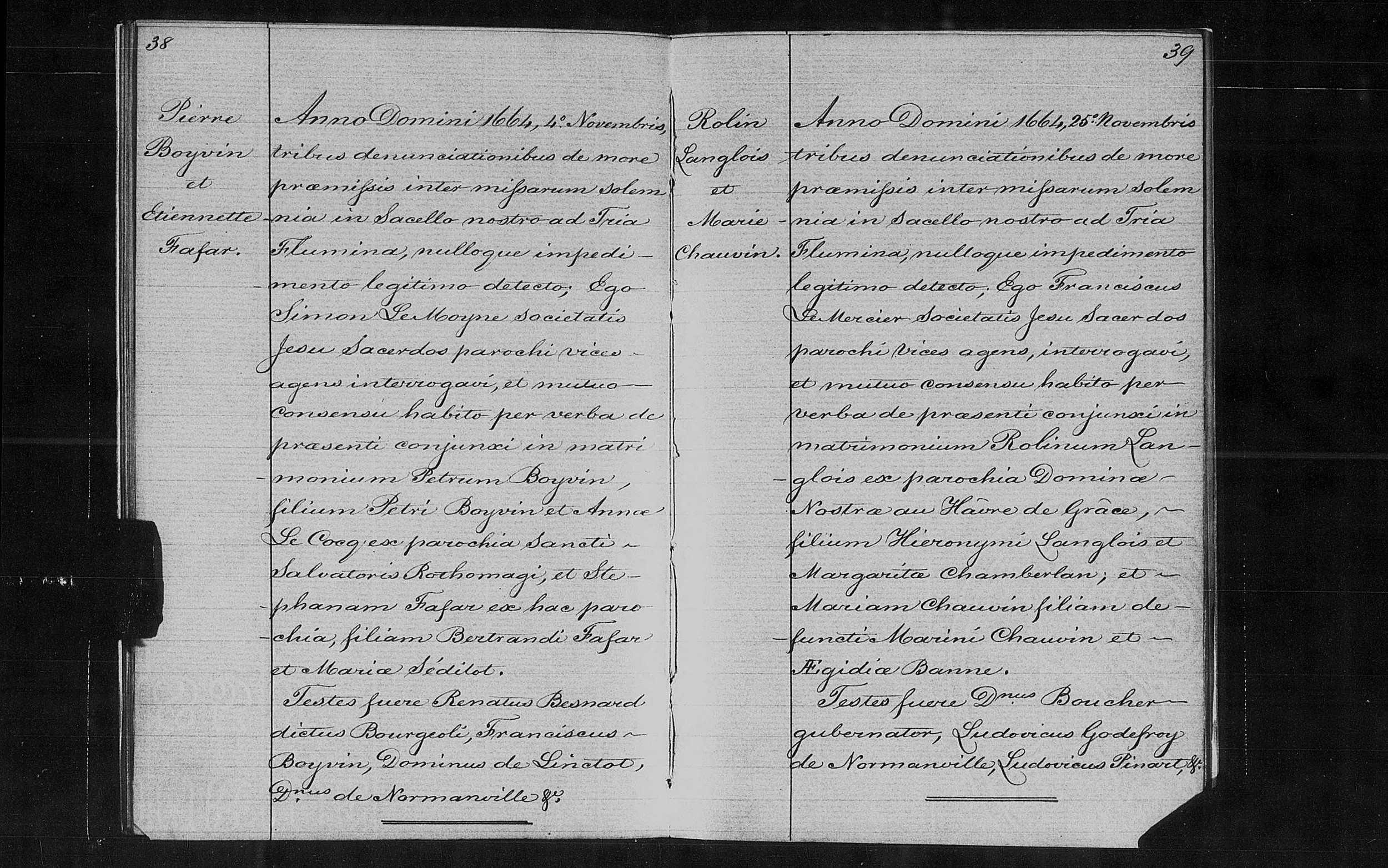
Marie married Rollin Langlois on November 25, 1664, at age fourteen. The marriage record at Trois-Rivières lists her as daughter of "Marini Chausin & Aegidia Banne," with Gillette (#6 on the witness list) noted as "v" for veuve (widow status from her first marriage).
After Langlois's death, Marie married our direct ancestor Jean-Baptiste Denoyon on July 30, 1665, at Trois-Rivières. At the time of her mother's execution in 1672, Marie was living in Boucherville with her husband and children. Whether she witnessed the execution, or even traveled to Québec City, we do not know.
What we do know is that the line continued through her. Marie lived until 1723, dying at Boucherville (Sainte-Famille) at approximately 73 years old—a long life by any standard, and particularly remarkable given the violence that had touched her family.
Direct Lineage: Gillette Banne to The Guilbault Line
Aftermath: The Survivors
Élisabeth Bertault, having made the amende honorable at her parents' side and then watched them die, was released at thirteen. Barely a year later, on November 6, 1673, she remarried—this time to Noël Laurence, a 26-year-old former soldier of the Carignan-Salières regiment (La Fouille Company) who was himself a widower without children. They would have at least six children together, the first not born until November 1, 1676, when Élisabeth was seventeen.
One researcher notes with quiet hope: "I like to think that maybe Noël Laurence had compassion for her and what she had been through."
Nicolas Bertault, the ten-year-old whose testimony helped convict his parents, received the remaining family property along with Jeanne. What became of him, and how he carried the weight of his role in their conviction, the records do not say.
Interpretation: A Complex Legacy
How do we understand Gillette Banne across three and a half centuries? The bare facts are these: she attempted to poison, and then participated in beating to death, her daughter's husband. She was convicted of murder and executed. By any legal standard of her time or ours, she was guilty.
And yet.
"Just imagine Gillette's life, shipped across the ocean in her early twenties for the miserable crossing to New France, married soon after arrival, a mother at twenty-four, widowed at twenty-five. Imagine her giving birth to these daughters and seeing her husband selling them off to be married as soon as he could, even to a man she saw for the human detritus he was. Imagine her rage when this deal is concluded behind her back, and the new son-in-law turns out every bit as awful as she had suspected, when she sees this feckless bully brutalise her young daughter. I too would have made special soup for this pig."
— Adapted from analysis of the caseThis does not excuse murder. It contextualizes it. Gillette Banne lived in a world where women and children had almost no legal protection from male violence, where a father could marry off a twelve-year-old over her mother's objections, where a husband could beat his wife with near-impunity. When the law offered no refuge, she made her own justice.
She paid with her life. So did Jacques. But Élisabeth survived—traumatized, certainly, but alive to remarry and bear children of her own. And Marie Chauvin, safely in Boucherville, carried the line forward through the centuries to us.
A Final Resting Place
Although Gillette Banne was executed for murder, her remains were later placed in the ossuary of the Cathedral Basilica of Notre-Dame de Québec. In New France, condemned individuals who expressed repentance and were reconciled to the Church were granted Christian burial. The transfer of her remains reflects later cemetery reorganization rather than social honor, and indicates that she died reconciled to the Church.

Today, she rests among the founders of Québec—not as a celebrated figure, but as one of the many whose bones were gathered during centuries of cemetery consolidation. Whatever her crimes, the Church granted her this final mercy.
Document Gallery





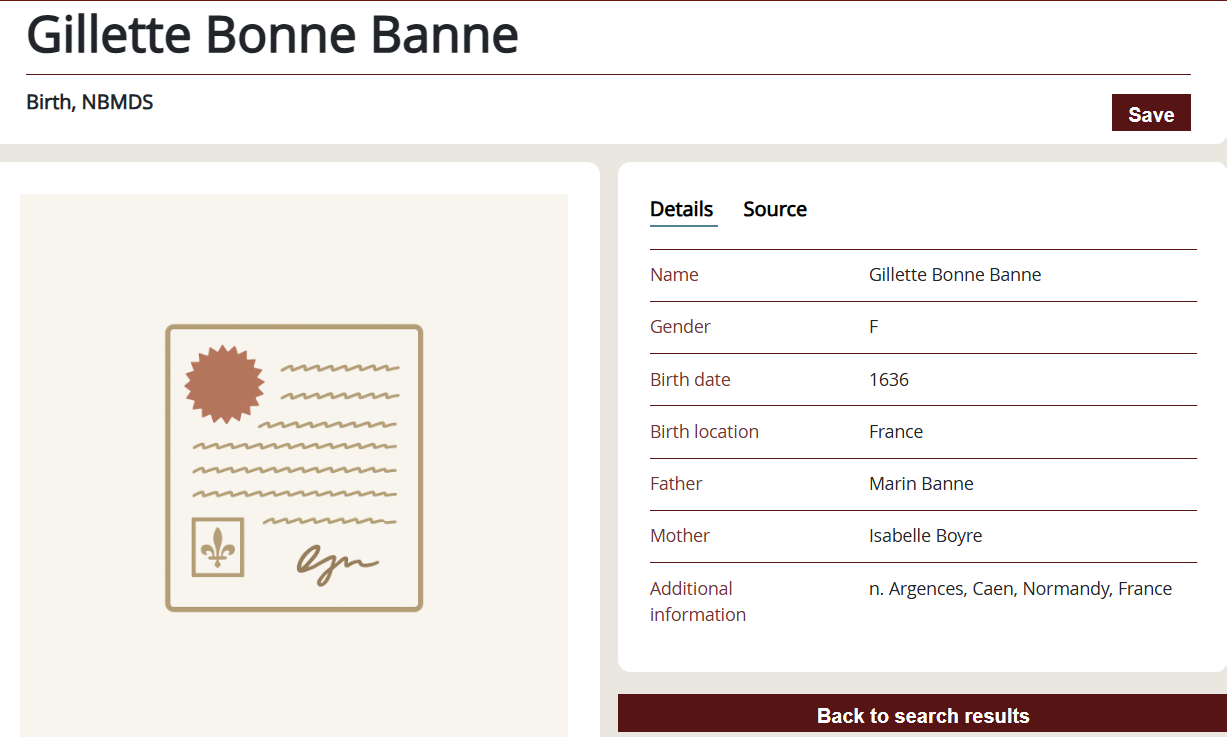
PRDH-IGD Records: Transcribed Data
Storyline Genealogy does not reproduce PRDH-IGD record card images. The data elements below are transcribed from the database records consulted for this biography, so that every compiled assertion can be traced and tested against the underlying primary documents.
| Reference | Record | Data as recorded |
|---|---|---|
| Individual #7116 | Marie Gillette Banne | Born around 1636, Argences, diocese of Bayeux, Normandy. Died 9 June 1672, Québec (Notre-Dame-de-Québec). |
| Individual #15679 | Marin Chauvin dit Lafortune | Baptized 16 March 1625, Saint-Mard-de-Réno, Perche. Parents not named in Canadian records. |
| Family #652 | Marin Chauvin & Gillette Banne | One child recorded: Marie, baptized 8 September 1650, Trois-Rivières (Immaculée-Conception). |
| Family #782 | Marin Banne & Isabeau Boire | Gillette's parents, of Argences, Normandy. Isabeau's surname also rendered Bour and Boyre across sources. |
| Marriage contract #94132 | Jacques Bertault & Gillette Banne | 27 July 1653, notary Séverin Ameau, Trois-Rivières. Neither party signed. |
| Marriage #89064 | Marie Chauvin & Rollin Langlois | 25 November 1664, Trois-Rivières. Gillette appears at no. 6 on the witness list, marked "v" for veuve. |
Transcribed from PRDH-IGD, Programme de recherche en démographie historique, Université de Montréal. Record card images not reproduced (Publication Standard PS-04). For the full analysis of the conflicting birth-year evidence, see the case study: Resolving Conflicting Age Evidence.
Sources
A Note on the Quotations
The French passages quoted throughout this biography are read from digital images of the original trial file — faded, bled-through court hand of 1672, photographed from microfilm. The originals in Québec have not been examined.
Two kinds of passage sit differently under that limit. The dates, names, ages, and the fixed opening formulas of each interrogation are short, repeat across many leaves, and can be checked against one another; several are also confirmed by documents drawn up for unrelated purposes, such as the court's own bill of costs. Where these carry weight here, they can be relied on.
The longer passages of speech — what Gillette said entering the barn, what she called to her daughter, the exchanges under questioning — are another matter. They are the substance of the story, and they are quoted because nothing else in the record carries a woman's voice this directly. But most survive on a single leaf in a single reading, and a scholar working from the originals may improve on them. They are given here as read, and no conclusion in this biography depends on any one of them.
Primary Sources — Vital Records
"Canada, Québec, registres paroissiaux catholiques, 1621-1979," FamilySearch, Trois-Rivières, Immaculée Conception, Baptêmes, mariages, sépultures 1634-1749. Baptism of Marie Chauvin, September 8, 1650.
Confirmation Register, Trois-Rivières, May 22, 1664. Entry #10: "Gillette Banne . 38" — age 38 at confirmation, indicating birth c. 1626.
"Trois-Rivières (Québec: district judiciaire). Notariat, Notarial Records," Feb 2, 1651–Nov 11, 1694. Marriage contract of Jacques Bertaut and Gillette Banne, notary Séverin Ameau, July 27, 1653.
Baptism records for Jacques (1654), Marguerite (1655), Élisabeth (1659), Jeanne (1660), and Nicolas (1662) Bertault, Trois-Rivières, Immaculée-Conception.
Primary Sources — Legal Records
Bibliothèque et Archives nationales du Québec, Fonds Conseil souverain. Procès de Jacques Bertault, Gillette Banne et Isabelle Bertault, 1672. 63 images of 35 leaves. Microfilm No. 1846 (M3/2), Cote: TP1,S777,D110. ID 398771. Within series TP1,S777, "Dossiers," 1665–1759 (ID 398095): the folio stamps are those of the bound Council file volume from which the dossiers were separated, which is why the sequence runs 86–119 and 129, and why fols. 120–128 and 130 carry unrelated cases. https://advitam.banq.qc.ca/notice/398771
Bibliothèque et Archives nationales du Québec. Prévôté sentence, 8 June 1672 — a separate instrument in a separate fonds, foliated 98 in its own right and not part of the trial liasse; the third leaf carries the greffier's acte of appeal. Microfilm n° 0-6224 (M67/1), Cote: TL5,D98. ID 387001. https://advitam.banq.qc.ca/notice/387001
Bibliothèque et Archives nationales du Québec, Fonds Conseil souverain. Appeal and final judgment, 9 June 1672 (Appel mis au néant). Microfilm M9/1, Cote: TP1,S28,P760. ID 400638. https://advitam.banq.qc.ca/notice/400638
Database Sources
Programme de recherche en démographie historique (PRDH-IGD), Université de Montréal. Individual #7116 (Marie Gillette Banne), #15679 (Marin Chauvin), Family #652, #782, Marriage Contract #94132, Marriage #89064.
Genealogy of French in North America (Denis Beauregard). Marin Banne & Isabeau Boire [#4281]: 1,750,000–2,170,000 descendants. Chauvin dit Lafortune & Gillette Banne [#4868]: 1,190,000–1,610,000 descendants.
Published Sources
Gagne, Peter J. The Filles à Marier, 1634–1662: Before the King's Daughters. Rhode Island: Quintin Publications, 2002.
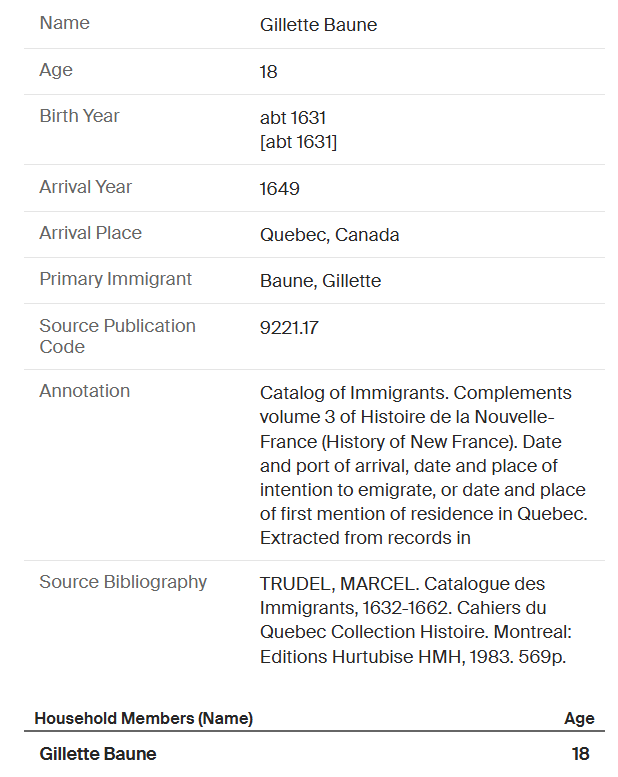
Trudel, Marcel. Catalogue des Immigrants, 1632–1662. Cahiers du Québec Collection Histoire. Montreal: Editions Hurtubise HMH, 1983. Entry for Gillette Baune, arrival 1649. (Note: Trudel's age estimate of 18 was based on 1666 census data now considered erroneous; see Research Note.)
Dickinson, John A. "New France: Law, Courts, and the Coutume de Paris, 1608–1760." 1995. Cited for procedural framework only, not for the facts of this case.
Bérubé, Robert. "Nouvelle-France 1672: Gillette Banne a Murderous Mother-in-Law." Robert Bérubé Genealogy and Other Stories.
Tanguay, Cyprien. Dictionnaire généalogique des familles canadiennes. Volume 1. Montreal, 1871.
Every Family Has a Story Worth Telling
Whether you're just beginning your research or ready to transform years of work into a narrative your family will treasure, I'd love to hear your story.
BEGIN YOUR RESEARCH INQUIRY