
Two Families, One Story : Captain Kenny
Captain Kenny
Thomas Patrick Kenny was born on October 8, 1871, in Covehead, Prince Edward Island—the same red-soiled farming community where his parents James and Margaret Connors Kenny had built their life. He was barely a year old when his father died, leaving his mother to make the decision that would shape his destiny: to bring her four children to Chicago and start again.
He would live eighty-seven years, serve forty-four of them with the Chicago Fire Department, descend into a burning mine to help rescue twenty-one men trapped underground for eight days, marry twice—both times to sisters from the same family—raise seven children, survive cancer, and retire to Florida where his grandchildren would remember him as "Pa," the gentle giant who could fix any broken toy.
This is the story of how an immigrant's son became an American hero.
The Journey from Home
Around 1877, Margaret Connors Kenny made her choice. She brought Tom, his sister Catherine (Kit), and his brothers Lawrence and Hugh down the St. Lawrence River on the long journey to Chicago, where relatives named Murphy had already established themselves in America's fastest-growing city.
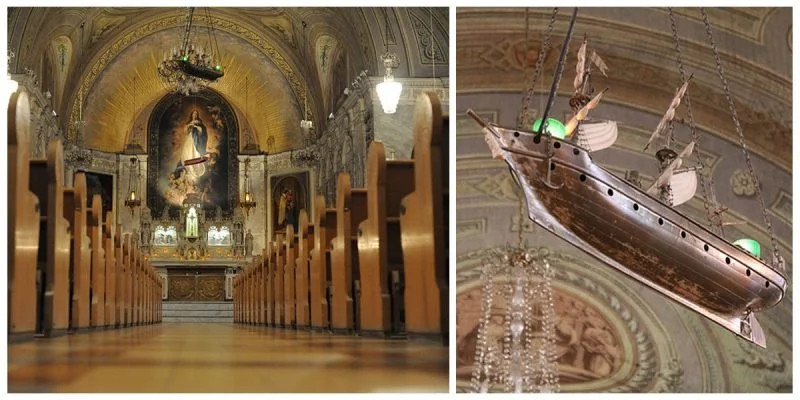
Tom carried a small boy's memories of that transformative voyage. Years later, he would tell stories of stopping at a church in Montreal—Notre Dame de Bon Secours, known as the "Sailors' Church"—and seeing ship models hanging from the ceiling like prayers for safe passage.
These weren't just decorations; they were offerings from sailors and immigrants who had survived the dangerous Atlantic crossing, giving thanks for deliverance and asking protection for those still to come. The ship models Thomas remembered represented thousands of stories like his own: families leaving everything familiar, trusting their lives to wooden vessels and uncertain seas, carrying nothing but hope for a better life in America.
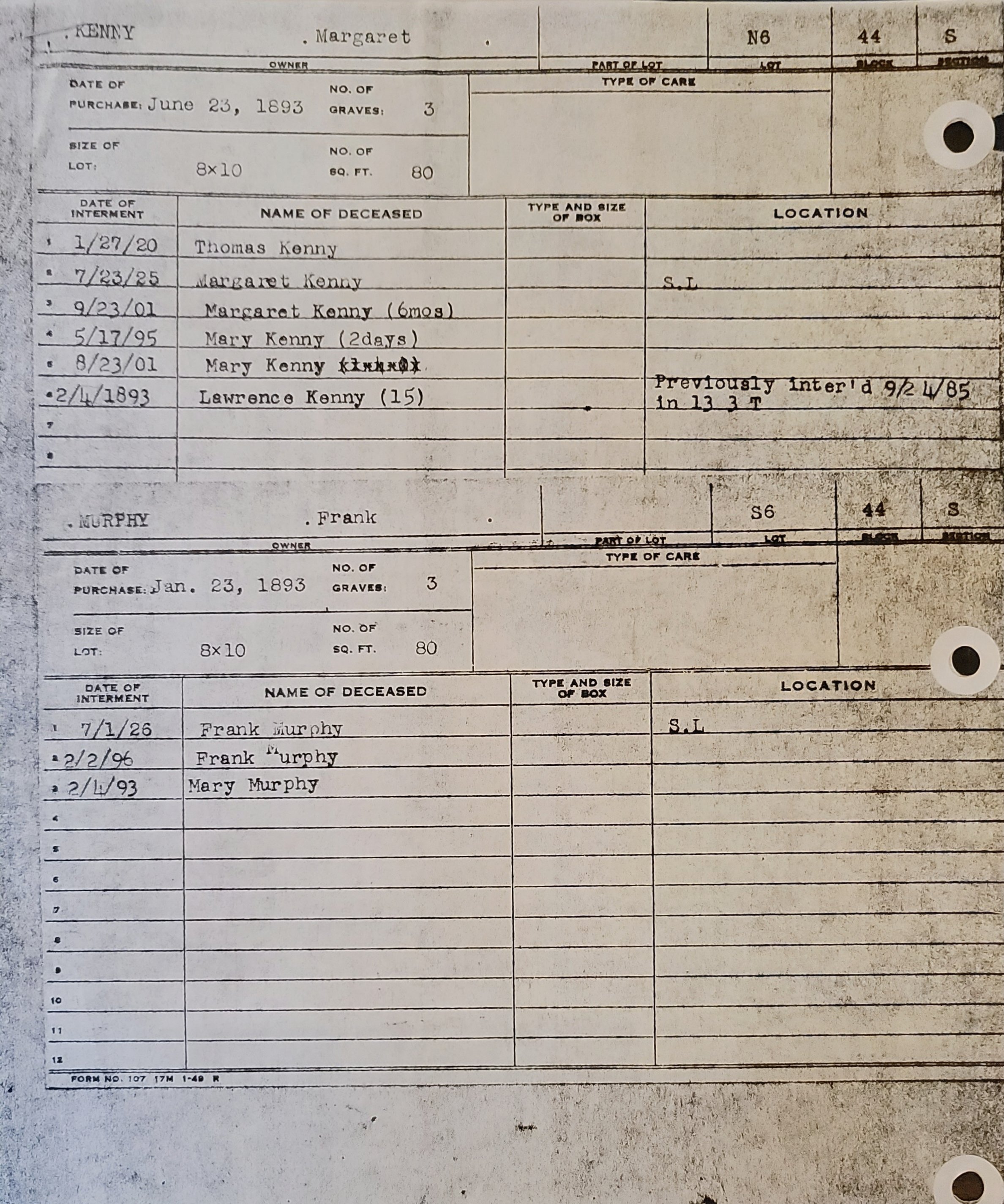
The family narrative never said which Murphys were waiting in Chicago, and for a century it did not need to. The binder answers it. Mary Connors—Margaret's own sister, seventh child of Hugh Connors and Mary Henepy of Friston Road—had crossed first, and married Francis Murphy at Old St. Stephen's Church on 10 April 1871, the year before James Kenny died. The Murphy household was at 141 West Ohio Street. So the boy who stepped off the train in 1877 was arriving at his aunt's house, and the cousin he grew up beside, Frank Murphy Jr., was four years younger than he was. Fifty-five years later, when Frank died in 1926, it was Thomas who arranged the funeral.
In Chicago, Thomas attended school until he made his First Communion—perhaps at ten or eleven years of age—then left his childhood behind to work as a delivery boy for Mandel Brothers Department Store. This wasn't unusual; immigrant families needed every dollar, and children grew up quickly in the bustling industrial city.
Joining the Department
At nineteen, Thomas made a decision that would define his life: he joined the Chicago Fire Department, claiming to be twenty-one to meet the age requirement. This wasn't just a job—it was a calling that would span forty-four years and place him at the center of some of America's most dramatic moments.
When Tom joined the department, Chicago was still rebuilding from the Great Fire of 1871. The city limits extended only to Fullerton Avenue on the north, Western Avenue on the west, and 22nd Street to the south—a compact area compared to the sprawling metropolis Chicago would become. Within this territory, Tom would learn his trade fighting fires that tested both courage and technical skill.
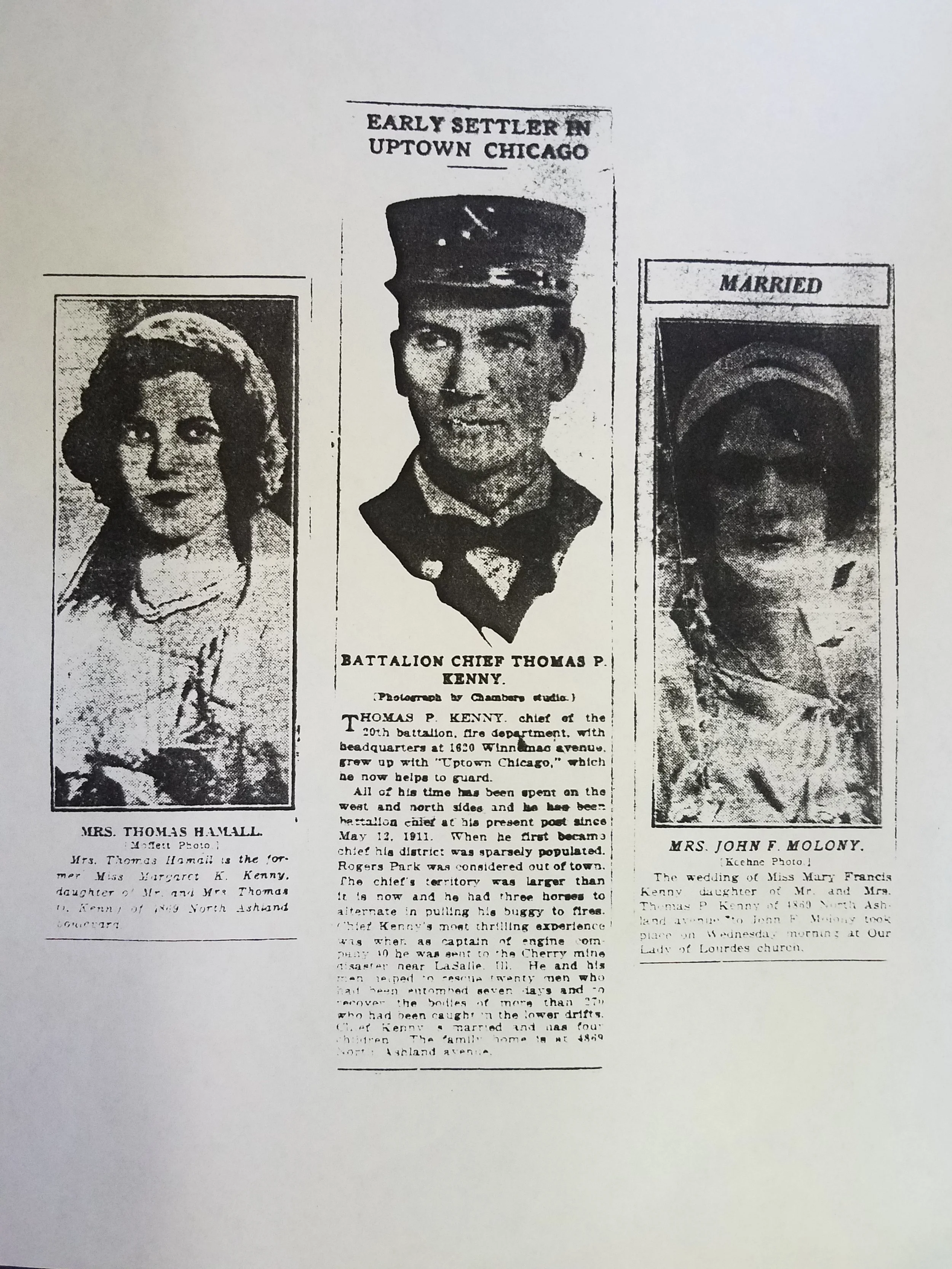
Two entries, not one. A fire department general order printed in the Chicago Tribune on 2 April 1911 promotes him and sends him to the Nineteenth Battalion at Hook & Ladder 34. The undated, mastheadless profile clipping that has long been the family's source places him at the Twentieth, Truck 22, by 12 May. One is a dated newspaper of record; the other is a scrap. A promotion in April and a reassignment in May — read together as a single event, they collapsed into a date and a battalion that never happened at the same time.
One thread still hangs loose. The family says he joined at nineteen by claiming to be twenty-one, which puts his appointment about 1890 or 1891; his own obituary says forty-four years of service ending with retirement in 1936, which puts it in 1892. Both cannot be right, and the department's own personnel record would settle it.
This dual training—rescue operations at Hook & Ladder 28 and fire suppression at Engine Company 40—would prove crucial when Chicago's fire department faced its greatest challenge: not a building fire, but an underground inferno that would test everything Thomas Kenny had learned about saving lives.
The Call to Cherry
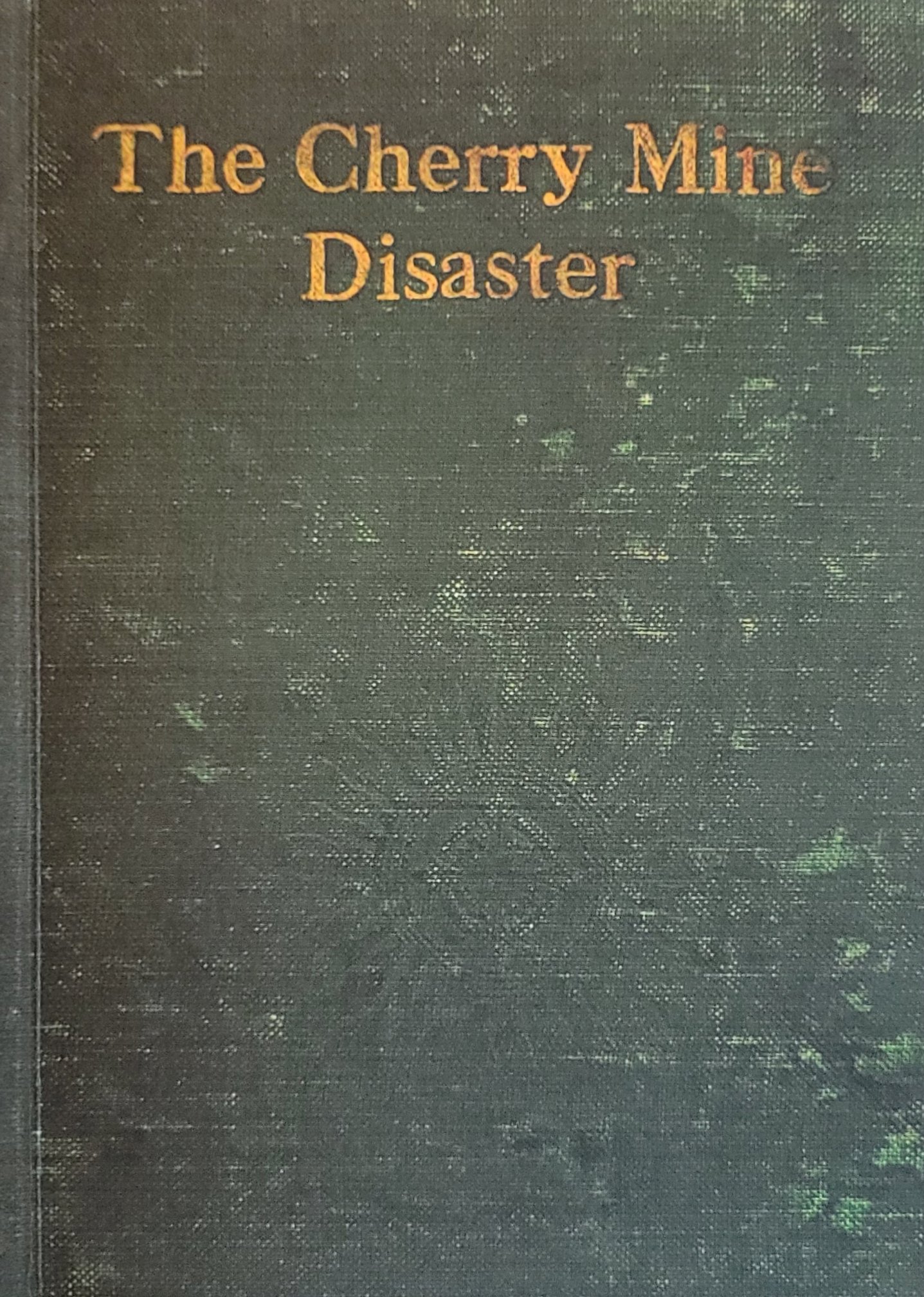
On November 13, 1909, a simple accident at the St. Paul Coal Company mine in Cherry, Illinois, triggered one of America's deadliest industrial disasters. A cart of hay, being lowered to feed the mine's mules, caught fire near an air shaft. Fed by the mine's ventilation system, flames spread rapidly through timber supports 315 feet underground.
Of the 484 men working in the mine that day, many never had a chance. In acts of extraordinary heroism, twelve men repeatedly descended into the inferno to rescue trapped comrades, saving dozens of lives before perishing in their final rescue attempt.
Cherry Mine Disaster — November 1909
On November 16th, Fire Marshal James Horan received word of the disaster. Within ten minutes, Captain Thomas Kenny had assembled his crew from Engine Company 40 and was racing toward Cherry on what would become one of the most dangerous missions of his career.
"At 2:30, ten minutes later, just as if we had been called to fight a fire in the loop district of the city, we were at the depot and had boarded the train. We took with us one engine and a truck. The men carried with them all their implements and their hard fire fighting clothes."
The special train covered eighty-three miles in sixty-two minutes—more than a mile a minute. What Kenny found was a technical nightmare requiring specialized knowledge most firefighters had never needed. The mine wasn't just burning—it was a complex system of shafts, galleries, and ventilation that could become a death trap for rescuers unfamiliar with underground conditions.
"The heat was unbearable. It burned their faces and even pierced through their rough mine clothing and scorched the skin underneath."
Kenny's fire suppression work created conditions that would soon enable the impossible. On Saturday, November 20th—exactly a week after the disaster—rescue teams made an astounding discovery: 21 miners had survived eight days entombed underground, barricaded in a remote section of the mine.
The Miracle Made Possible
Their rescue was only possible because Kenny's fire suppression work had contained the flames enough to allow rescue teams to penetrate the mine safely. Without the Chicago Fire Department's technical expertise, these men would never have been reached alive. Kenny's pride in his men was evident: "My boys are brave boys and when told to go anywhere they went without one word."
The figures in this episode — twenty-one men, eight days — follow the published case study of the rescue. The contemporary Chicago profile of Kenny, written while he was still serving, says twenty men and seven days. The discrepancy has never been resolved, and both numbers are given here rather than quietly choosing one.
Captain Kenny and Engine Company 40 worked from November 15 to November 21, when they were finally relieved. The memories of bereaved families remained with him, especially painful during each holiday season.
Two Marriages, One Family
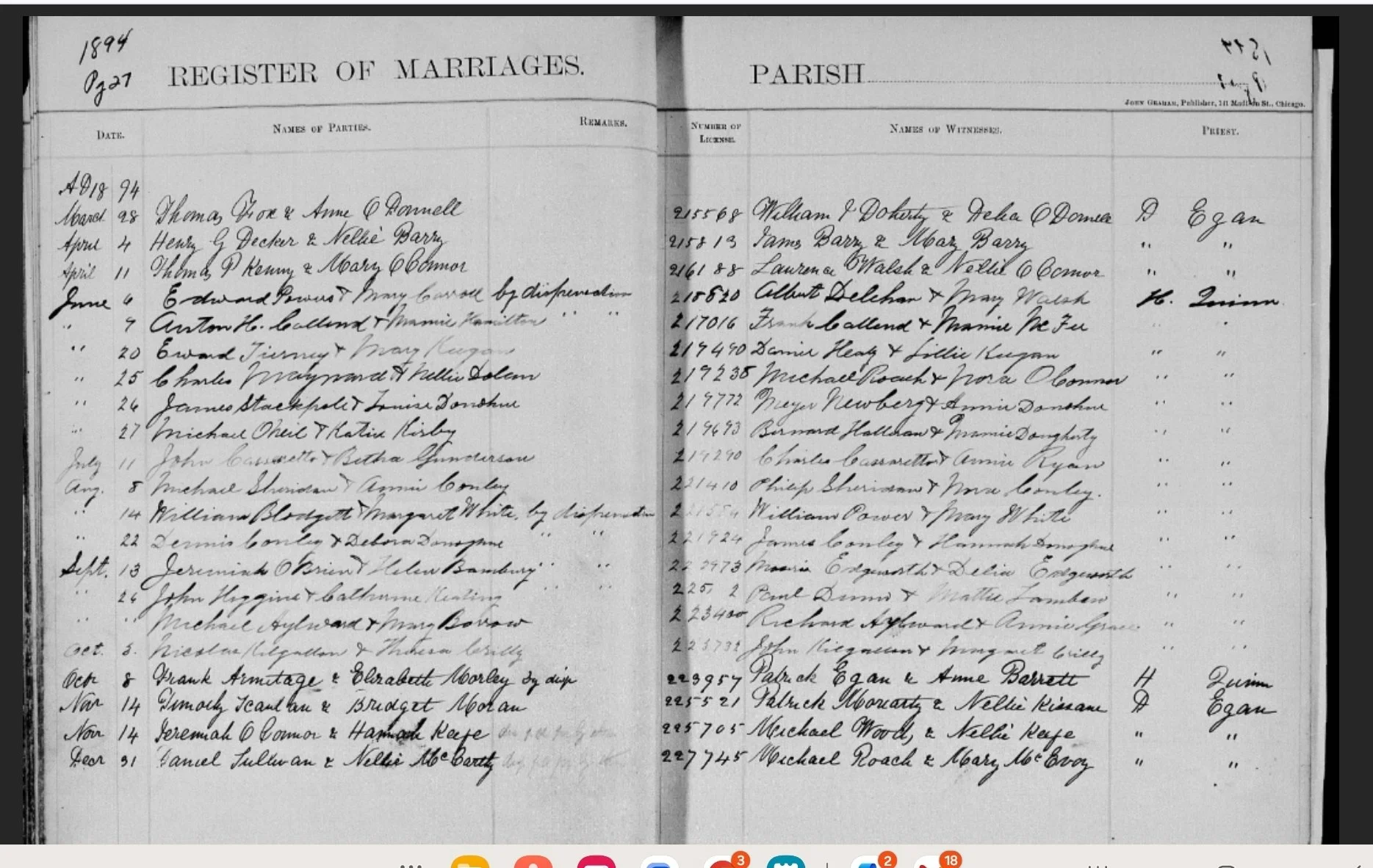
On April 11, 1894, Thomas Patrick Kenny married Mary "Maime" O'Connor at a Chicago parish church. Maime was the daughter of James O'Connor and Eleanor Casey, part of the tight-knit Irish Catholic community that anchored Chicago's immigrant neighborhoods.
First Marriage: Mary "Maime" O'Connor
Maime bore five children in seven years. She was buried on 23 August 1901. The family has always said she died of complications following the birth of her last child — but the parish register places that birth on 26 March 1901, five months before her mother's funeral, and the baby Margaret outlived her by weeks, dying in September. Whatever took Maime, the record no longer supports the story as it has been told.
Children with Maime O'Connor
Thomas was left a widower at twenty-nine, with four children still living — Eleanor, James, Thomas Jr., and the five-month-old Margaret, who would not see the autumn out. What happened next followed a practice common in Catholic immigrant communities: the sororate marriage.
When a wife died leaving young children, it was common for the widower to marry his deceased wife's sister. This kept the children within the same extended family, ensured continuity of care, and maintained established family bonds. For Thomas Kenny, this meant marrying Ellen Xavier O'Connor—Maime's sister—on June 14, 1902, less than a year after Maime's death.
Second Marriage: Ellen Xavier O'Connor "Nell"
Ellen became mother to her sister's surviving children and bore two more daughters who would carry the Kenny name forward.
Children with Ellen O'Connor
Through the Years
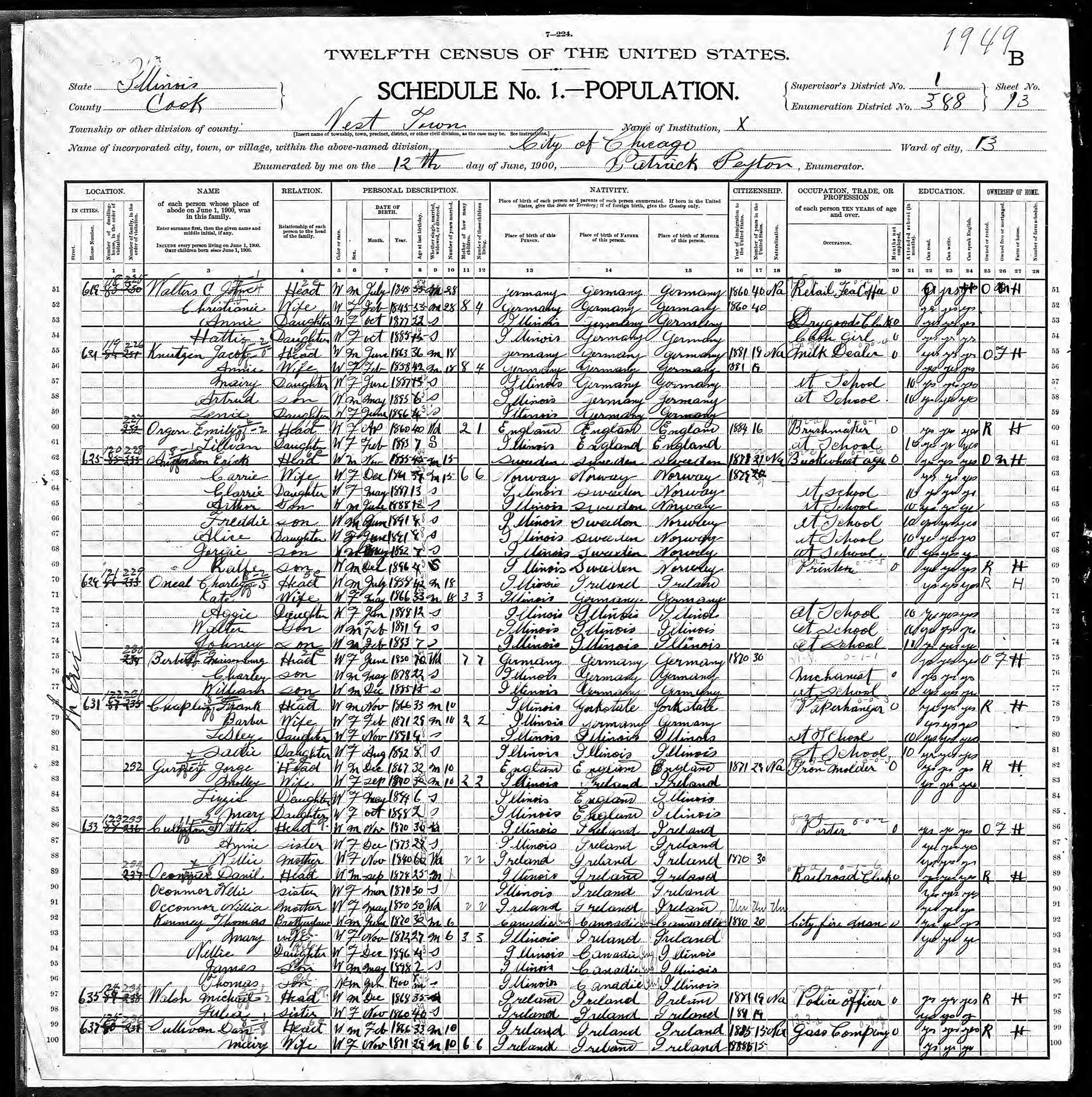
The census records trace Thomas Kenny's trajectory across six decades:
Cook County, Illinois
Thomas (28) and Mary "Maime" (28) with children and extended family. He's listed as a fireman. The O'Connor family—Maime's parents and siblings including Ellen—live nearby.
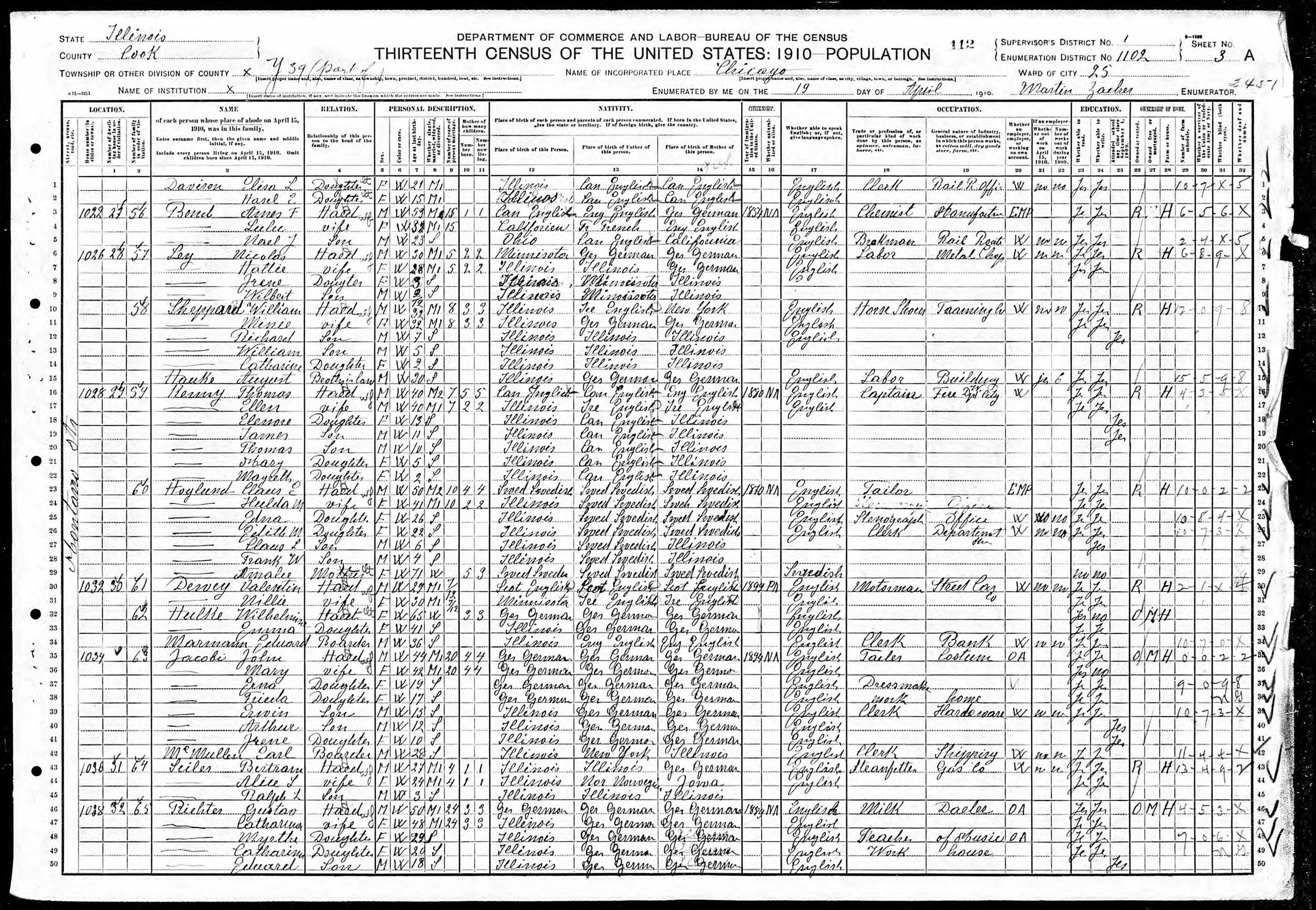
Cook County, Illinois
Thomas (38), now married to Ellen (37), with children Eleanor (14), James (12), Thomas Jr. (10), Mary (5), and Margaret (3). His occupation: Captain, Fire Department. This census was taken just months after the Cherry Mine disaster.
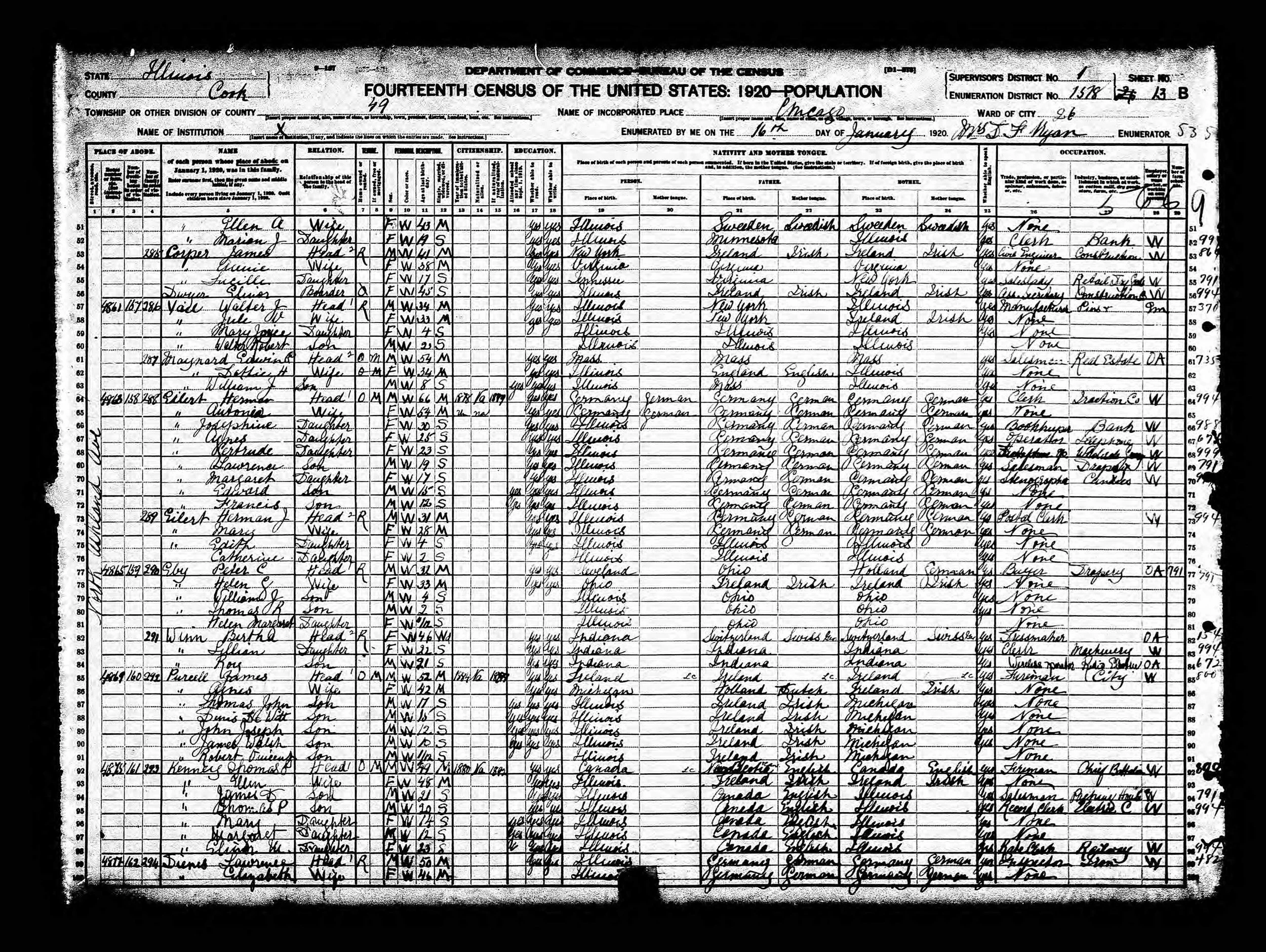
Cook County, Illinois
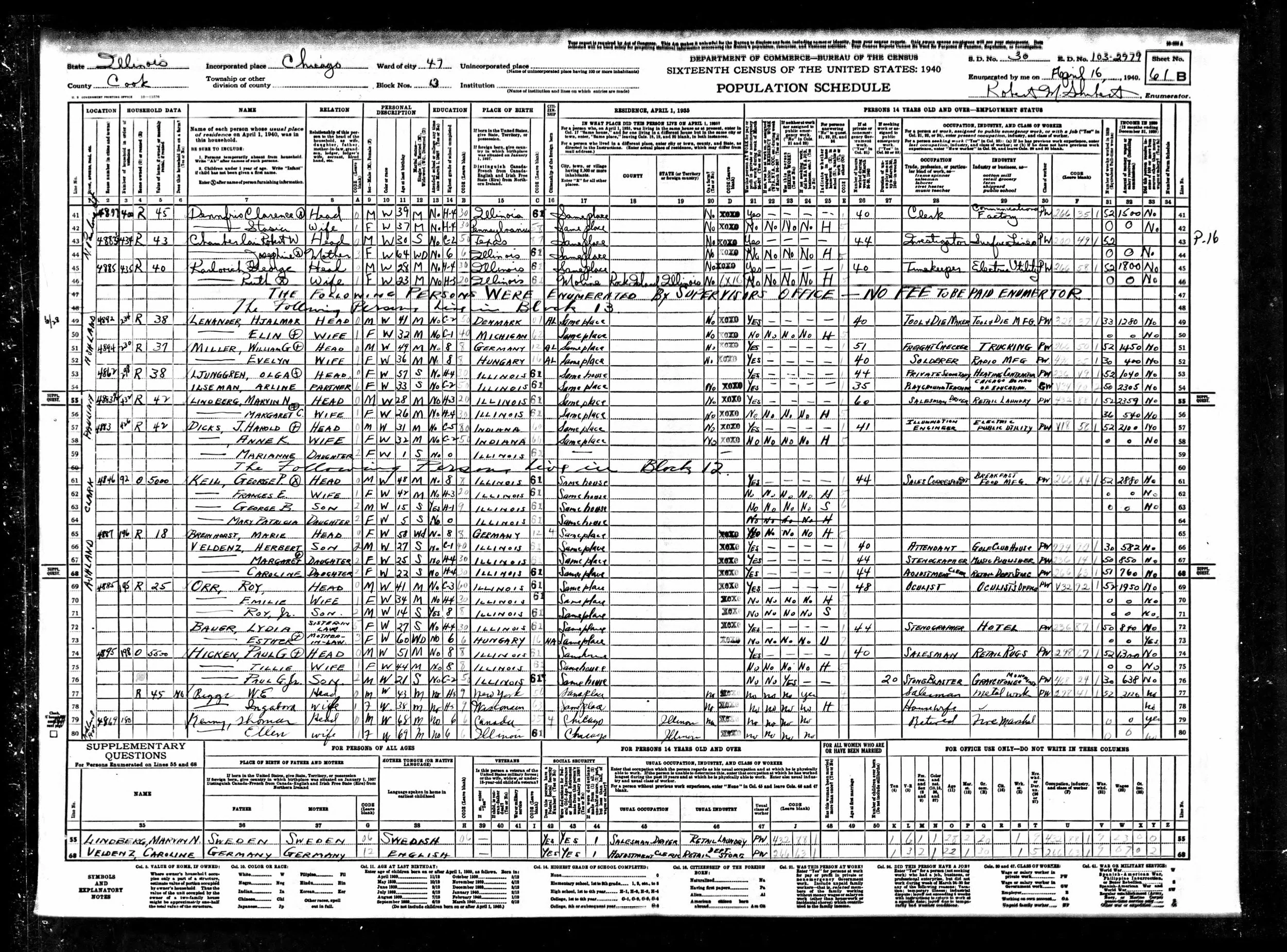
The family at 4883 N. Ashland Avenue. Thomas (48) is a Battalion Chief. Ellen (48), with James (21), Thomas Jr. (21), Mary (14), Margaret (12), and Eleanor's daughter Clara (3) in the household. Notably, Thomas Jr. would die this year in the influenza epidemic.
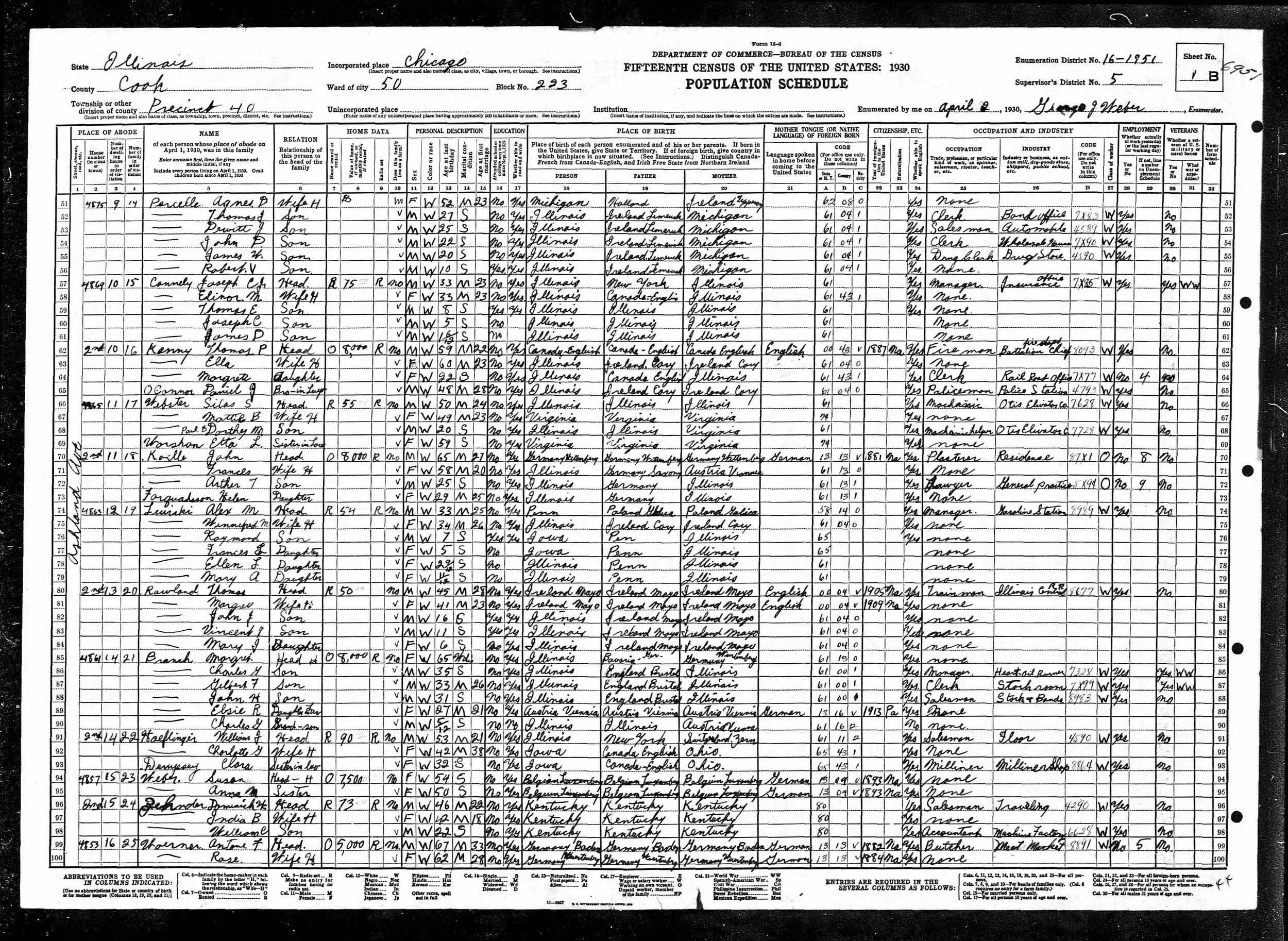
Cook County, Illinois
Thomas (57) as Battalion Chief. Living with Ellen (63), daughter Margaret (22), and Ellen's brother Daniel J. O'Connor (45), a railroad clerk. The household also includes Thomas's mother-in-law — the same O'Connor family he had married into twice, still under his roof nearly thirty years after Maime's death.
Cook County, Illinois
Thomas (68) is now retired, having left the department in 1936 after 44 years of service. Living with Ellen (71), recently widowed.
Florida
The final census captures the complete arc of Thomas Kenny's American journey. At 78 (recorded as 76), he lives with Ellen (80), daughter Margaret (42) "Hannah Margaret," and grandson Thomas Kenny Hamall (17). This four-generation household represents the full realization of Margaret Connors Kenny's brave decision decades earlier.
Surviving Cancer, Serving with Distinction
In his mid-forties, Tom faced a personal battle that revealed his character. Thrown from his chief's car—always called "the buggy"—while responding to a false alarm, he was badly bruised. Later, cancer was discovered in the area of his injuries.
Dr. Slaughter, a renowned surgeon at Alexian Brothers Hospital, operated and treated Tom with early radiation therapy. Not only did he survive, but he returned to vigorous health, continuing his fire department duties and playing softball well into his fifties. His recovery was so complete that he lived to see his eighty-seventh birthday on 8 October 1958, and died eight days later. There is a coincidence in that date worth pausing on: he was born on Prince Edward Island on 8 October 1871 — the very night the Great Chicago Fire broke out, and the Peshtigo fire with it. The city he would spend forty-four years defending from fire began burning on the day he was born.
The Grandfather Years
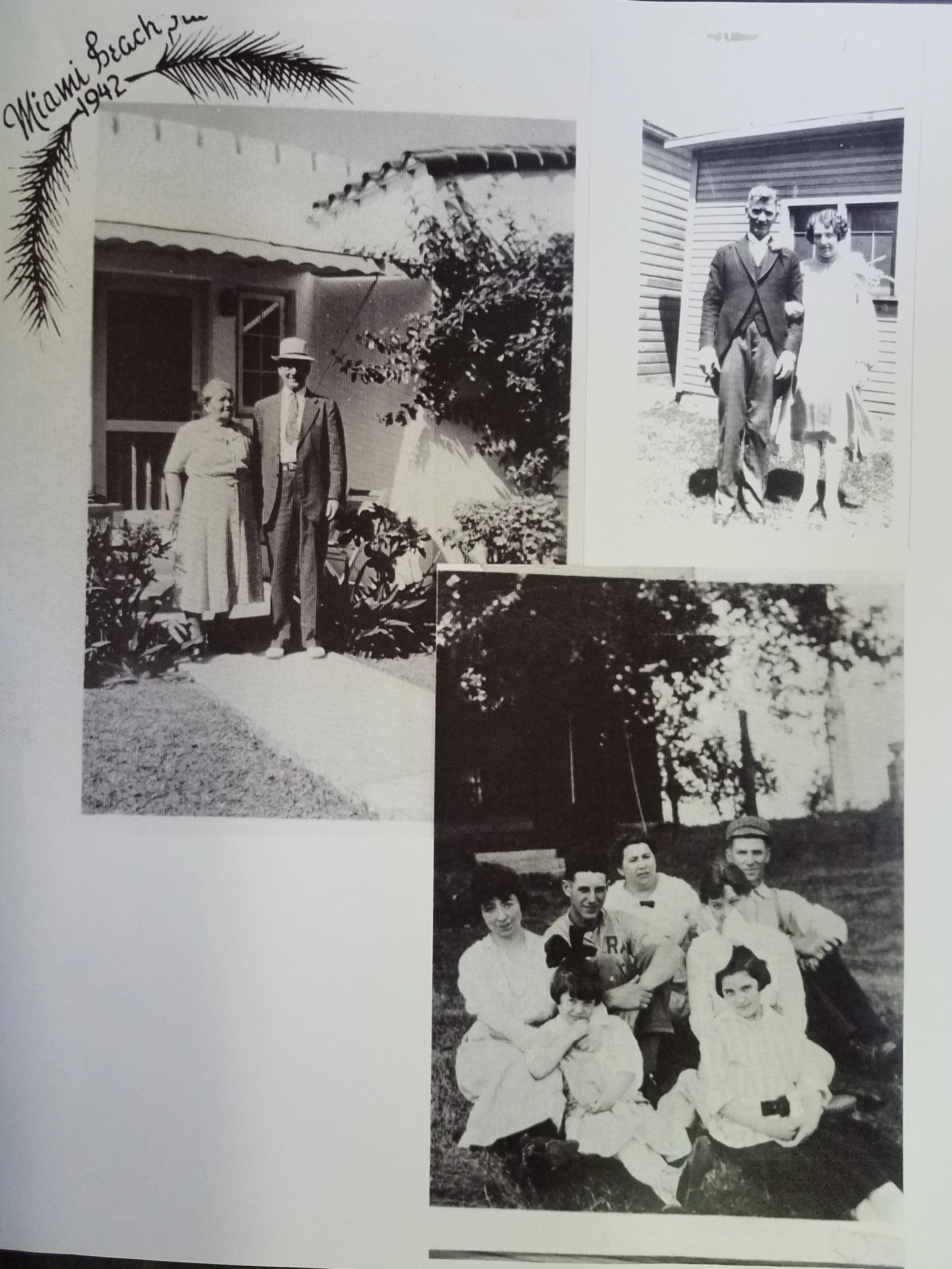
After retiring from the Chicago Fire Department in 1936, Tom and Ellen moved to Miami and North Miami, Florida. Here, a different side of the man who had faced down industrial disasters emerged.
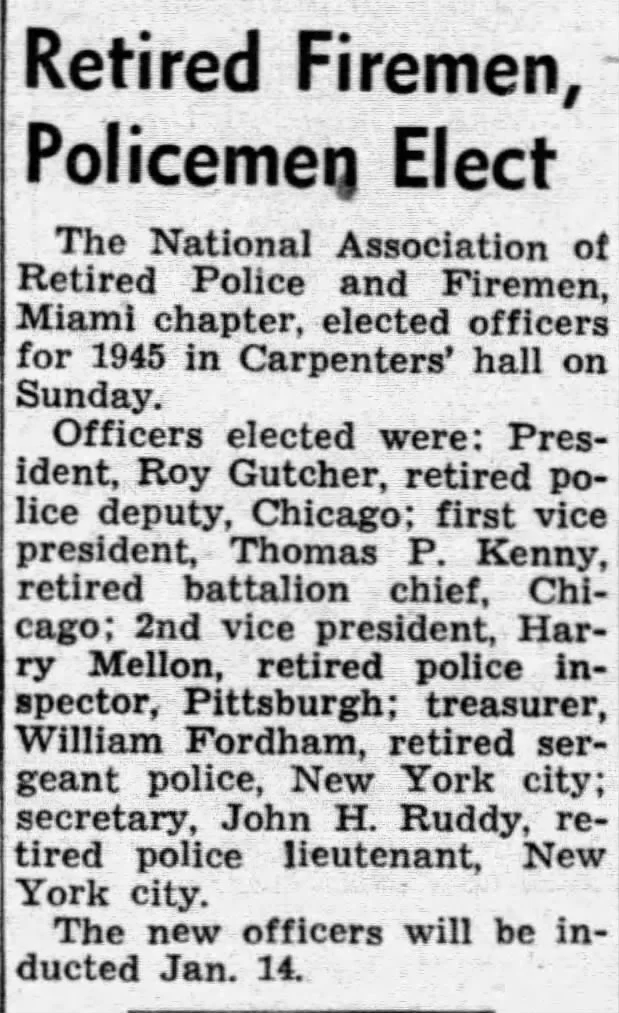
He was active in the Retired Firemen's Association—serving as First Vice President of the Miami chapter in 1945—an enthusiastic golfer and fisherman, and most importantly, a beloved grandfather.
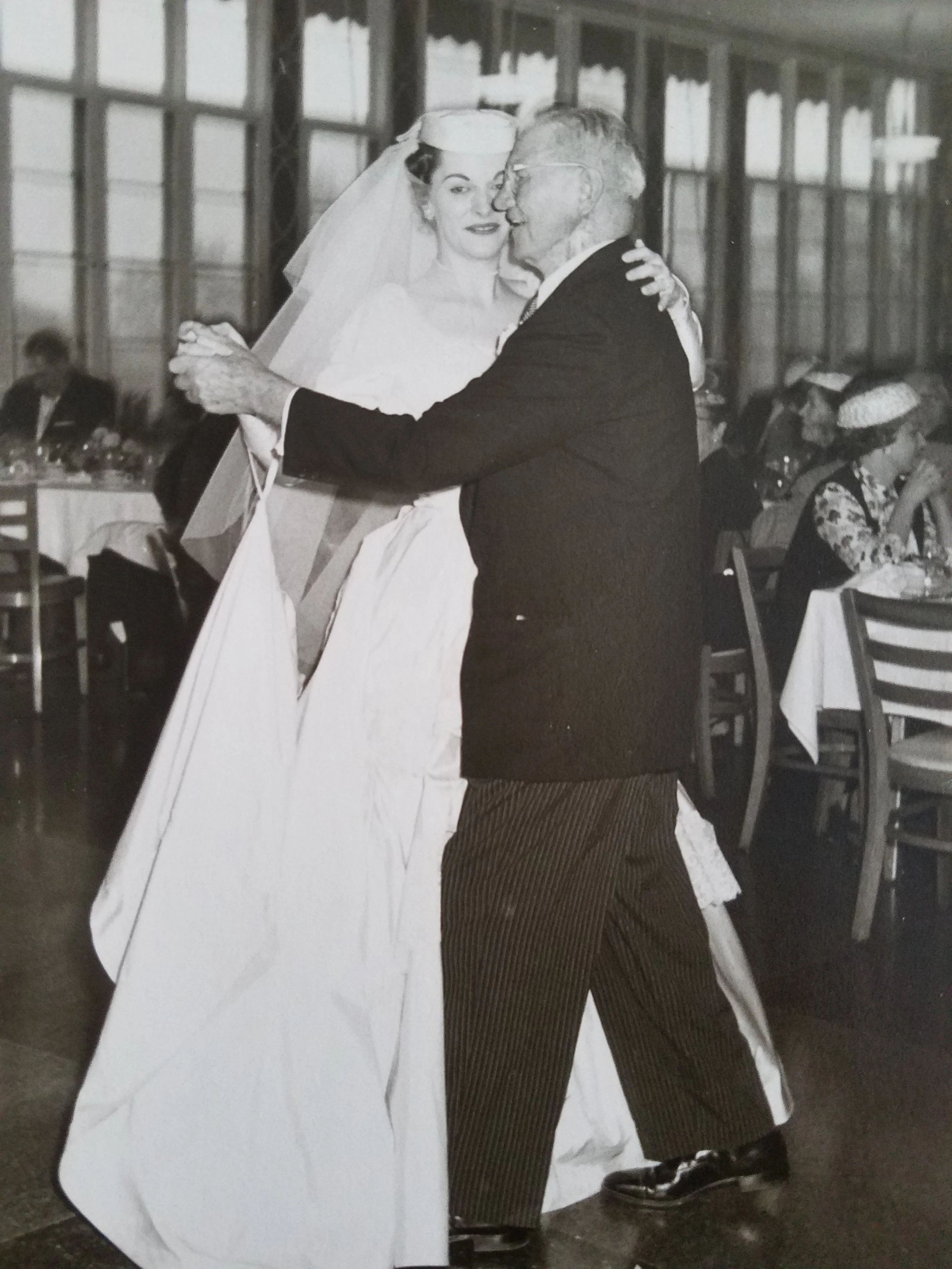
"Pa" could fix any broken toy, build a swing set, make a pair of stilts, stitch a cover on a baseball, or take you for an ice cream or a pony ride. The same hands that had fought fires in the depths of an Illinois mine now crafted childhood magic, building memories as carefully as he had once built fire suppression strategies.
A Hero's Legacy
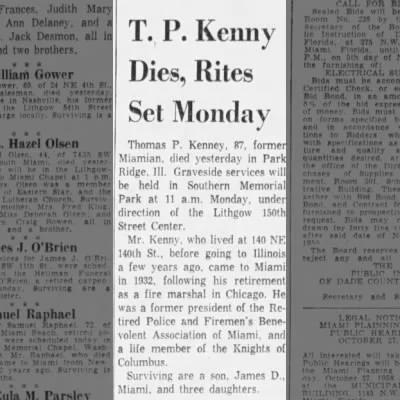
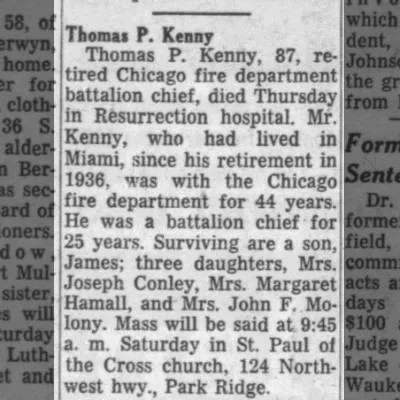
Thomas Patrick Kenny died at Resurrection Hospital, Chicago, on October 16, 1958, and was buried beside his wife Ellen in Southern Memorial Park, Miami, Florida. He was 87 years old.
From the Obituary
"Thomas P. Kenny, 87, retired Chicago fire department battalion chief, died Thursday in Resurrection hospital. Mr. Kenny, who had lived in Miami, since his retirement in 1936, was with the Chicago fire department for 44 years. He was a battalion chief for 25 years. Surviving are a son, James; three daughters, Mrs. Joseph Conley, Mrs. Margaret Hamall, and Mrs. John F. Molony."
His life spanned America's transformation from a nation of immigrants to a modern industrial power. He witnessed the rebuilding of Chicago, the birth of professional firefighting, the horrors of industrial disasters, and the gradual emergence of workplace safety regulations that his service at Cherry had helped inspire.
The ship models in that Quebec church represented prayers for safe passage. Thomas Patrick Kenny's life became the answer to those prayers—not just for his own family, but for every person whose life he touched, every fire he fought, and every moment he chose courage over fear.
In the depths of a burning mine, Captain Thomas Kenny proved that heroes aren't born in single moments—they're forged through years of service, tested in crisis, and defined by their willingness to descend into hell itself to bring others back to the light.
Primary Sources





Learn how collaborative genealogy research and contemporary sources validated a century-old family legend about America's most famous mine rescue. Read the full methodology: When Family Stories Meet Historical Documentation
The complete story of Captain Kenny's role in the 1909 Cherry Mine disaster, with contemporary newspaper coverage, Kenny's own testimony, and the rescue of the men found alive after eight days underground. Read the full article
Are You Connected to the Kenny-Connors Line?
If you descend from the Kenny or Connors families of County Wexford, the O’Connor family of Castleisland, County Kerry, or the Casey or Corcoran families — or their branches in Newfoundland, Prince Edward Island, or Chicago — I’d like to compare notes. Documented trees, DNA matches, family papers, and even half-remembered stories have all moved this research forward.
Get in Touch About This FamilyCousin connections are informal and reciprocal — no fee, no obligation, just shared work on shared ancestry.
Questions about your own research? Begin a research inquiry.
