
How to Prove Carignan-Salières Service — and How to Know When You Haven't
How to Prove Carignan-Salières Service — and How to Know When You Haven't
Every French-Canadian Researcher Meets This Wall
This post sets out the framework I use for these identifications. It is a genuinely useful framework, and the first four steps of it are unchanged from the version published here in February 2026.
The fifth step is not. It has been rebuilt, because the fifth step is where I went wrong — and I went wrong in a way that is common enough, and quiet enough, that I think it is worth more to another researcher than the framework itself.
What the 1668 Muster Roll Is, and What It Is Not
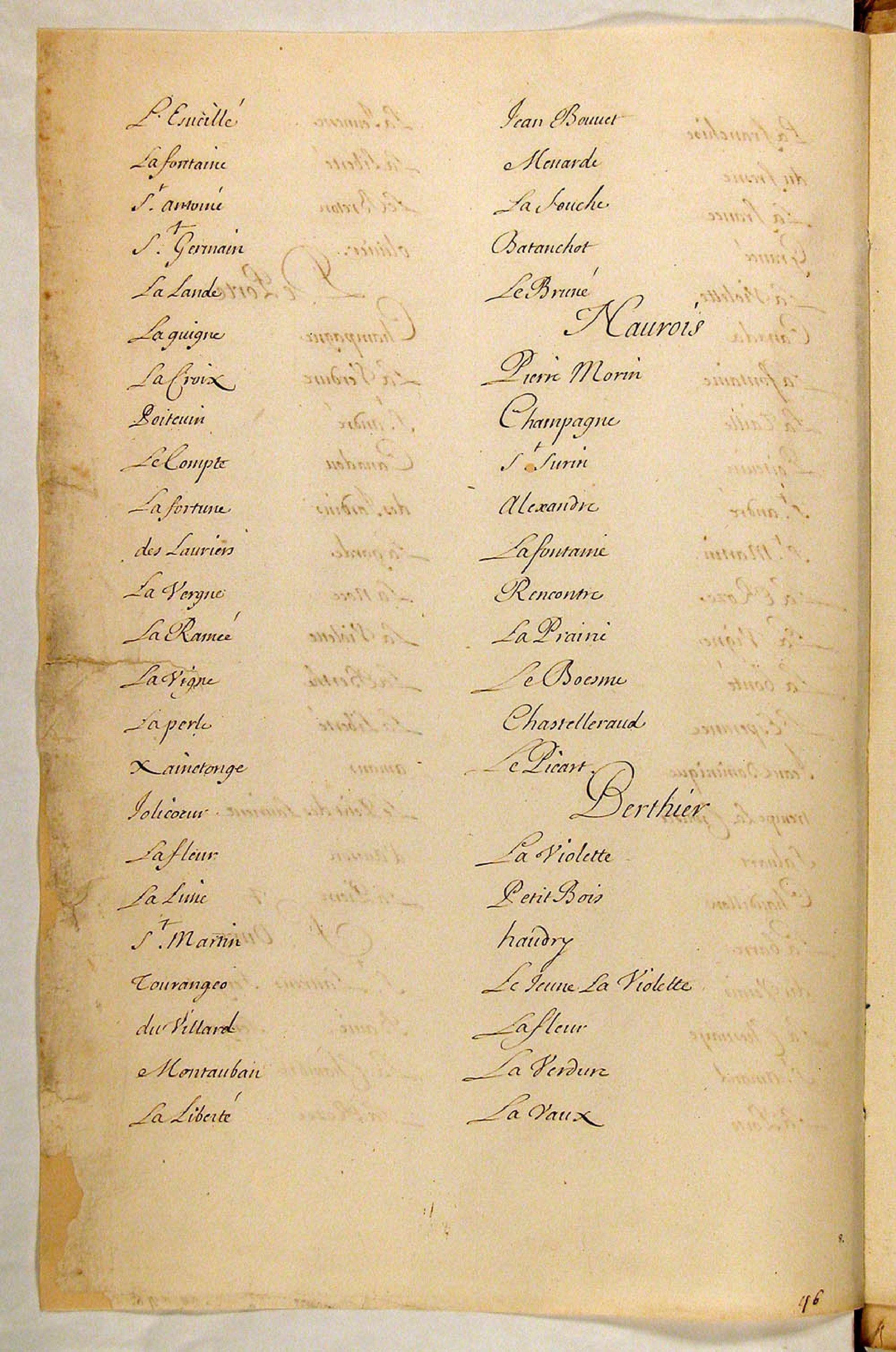
No complete muster roll survives from the regiment's arrival in 1665. But one critical document does survive from the demobilisation: the Rolle des Soldats du Regiment de Carignan Salière qui se sont faits habitans de Canada en 1668 — the list of soldiers who chose to become inhabitants of the colony. Nine handwritten pages, roughly four hundred men, arranged by company. It is held at Library and Archives Canada (Colonies D²ᶜ 47) and it is free to consult online.
Find your ancestor's name on it and you have something real. But be precise about what.
The roll was written by a clerk with no consistent method. On the page I know best, ten men are listed under one company heading. Five appear by nom de guerre — Sᵗ Surin, Rencontre, La Prairie, Chastelleraud, Le Picart. Two appear by surname alone. One appears by his given name and nothing else. And one appears with both a given name and a surname.
That last man is the one everybody argues about, because he is the only one you could plausibly match to a person. And even for him, the roll supplies no age, no origin, no parentage, no wife, no parish — nothing that distinguishes one bearer of a common name from another.
The rule this produces
A name on a roll is a starting point, not an identification. The roll tells you that a man of that name was in that company. Connecting him to the individual documented in your parish registers, censuses and notarial acts is a separate piece of work — and it is the whole piece of work.
Four Tests That Narrow the Field
These four steps do not prove service. They establish whether your ancestor is a candidate — and, just as usefully, they rule people out. Apply them before you go anywhere near a database.
Test the timeline
The regiment arrived in 1665; recruits were typically fifteen to twenty. Demobilisation ran through 1667–68, and men who stayed generally married two to five years later. The Filles du Roi programme ran 1663 to 1673.
So: a birth between about 1645 and 1650, an absence from the 1667 census as a head of household, and a marriage between 1669 and 1675 — ideally to a Fille du Roi — is the classic profile.
What this test can and cannot do
It can eliminate. A man born in 1655 was not on that ship. A man who married in 1662 was already settled.
It cannot confirm. Several thousand men of that generation share this profile exactly, including many who never held a musket. Rate this line consistent, never strong.
Trace the geographic origin
The regiment recruited heavily in western France — Poitou, Aunis, Saintonge, parts of Normandy and the Île-de-France. An origin in one of those regions strengthens a candidacy; an origin in Brittany or the far south wants stronger corroboration elsewhere.
Gather every statement of origin you can find, and note that they will not agree on spelling. One of my subjects appears as Brilloet, Briloy and Brillouet across three documents, and his diocese as Luçon, Luson and Lusson.
A distinction I did not draw carefully enough
Four documents naming the same parish across thirty years are four independent records. They are not necessarily four independent informants. If all four trace back to the man himself telling a scribe where he came from, you have consistent testimony — which is genuinely strong — but not external verification.
The Fichier Origine (fichierorigine.com) is the test. It admits an immigrant only once a document has been found in France. If your ancestor has no entry there, no French register has confirmed his origin, and you should say so.
Read the marriage contract — especially the witnesses
Some soldiers are identified outright: the notary wrote soldat de la compagnie de [captain] and your work is done. When that phrase is absent, the signatures are still worth reading closely. Cross-reference every witness against known officers and against other men of the suspected company. Witnesses drawn from one company are meaningful corroboration.
Two cautions
A distinguished witness proves standing, not the source of it. I argued for a year that a Sovereign Council member witnessing my subject's contract implied military connections. It implies he was known to men of consequence, which has several possible explanations in a colony of a few thousand people.
And check whether the same notary recorded a company for other men in the same years. If he did, and he did not for yours, that silence is worth something.
Check the census pattern — and read the place-names hard
Absence from 1667 and presence in 1681 is the expected shape. Where a man settled in 1681 can also be suggestive, since some companies clustered along the Richelieu near the forts named for their captains.
The trap that cost me a whole evidence line
Colonial place-names repeat. There is a Petite-Rivière on the Côte-de-Beaupré and a Petite Rivière beside Québec, and for a year I read a bare habitant de la petite Rivière in a set of banns as the first when it meant the second.
What corrected it was reading the neighbours. The 1681 census does not list households alphabetically — it lists them as the enumerator walked, so the household above and below yours were the people your ancestor actually lived beside. When I read them, every godparent from my subject's children's baptisms turned up within a few doors. They had never lived where I placed them.
Read the households around your ancestor's, every time. It is the cheapest corroboration in colonial research and I ignored it for a year.
Four sources agreeing is only impressive if the four are actually four.
Trace Every Citation to Its Root Before You Count It
The old version of this post ended with a fifth step: cross-reference against the authority databases — PRDH, the SFRSC, Verney — and if they agree, the identification rests on the strongest possible foundation.
I followed my own advice. All three agreed. I published that my subject's service was confirmed by four independent sources, and I was wrong, and it took a newly published specialist compilation to show me why.
What "four independent confirmations" turned out to be
| What I counted | What it actually was |
|---|---|
| The 1668 muster roll | The primary document. One source. |
| The PRDH List of Migrants | A transcription of that same roll — same names, same order, same two oddities in the same two positions. An index to the source, not a witness to it. And no individual was linked to the entry at all. |
| Verney's company reconstruction | Names a man of that name and gives no origin, no dit name, no disambiguating note. It cannot corroborate an identification it does not make. |
| The SFRSC confirmed list | An organisational listing that does not publish its basis. It may well rest on the same reasoning I used. |
One document, counted four ways. And my header statistics counted the roll twice on top of that — once inside the four, once again as a separate primary record.
The same fault, on the other side of the argument
What makes this worth a blog post rather than a private correction is that I then found the identical structure in the compilation that had corrected me. Its source line for the rival identification lists eight authorities. Read closely:
- Two of the eight are the same document — a French original and the Canadian microfilm copy of it, cited under both call numbers.
- Two more share an authorship: a 1983 dictionary produced in collaboration with the database that also appears on the list, so the dictionary entry and the database record are unlikely to be independent of each other.
- One is flagged by the compiler himself as the wrong man.
- One gives no origin at all, and so cannot support the origin being claimed.
This is not carelessness on anyone's part. It is what compiled apparatus does. A citation list accumulates entries faster than it collapses them, and it goes on reading as corroboration long after the sources beneath it have converged on a single root.
The working rules
An index to a source is not a second witness to it. If a database's roster reproduces a document's order and quirks, it read that document. It did not confirm it.
A name in a compilation is not an identification unless the compiler says which individual he means. Check whether the entry is linked, keyed, or numbered to a specific person.
Two call numbers can be one document. Archival series get copied, microfilmed and re-catalogued. Trace them.
Shared authorship is shared evidence. Two publications produced by the same people are one opinion in two bindings.
And a silence is not a verdict. When I found that the database had linked no individual to the roll entry, I first read that as the database declining to identify anyone — a judgment in my favour. It was not. Witnesses in other records of the same period are likewise unlinked, so the absence may be nothing more than a cataloguing convention. Reading intent into a silence is the same error as reading corroboration into a citation list.
A Convergence Audit for Your Own Case
Before you write that your ancestor's service is proven, run every source you plan to cite through these seven questions. It takes an afternoon, and it is the afternoon I wish I had spent.
Seven questions for every source you cite
- What is this, physically? An original document, a microfilm of one, a transcription, an index, a compiled family summary, or somebody's website? Write it down for each.
- Where did its information come from? Follow the footnote. If there is no footnote, say so in your own citation — "no source given" is information.
- Do any two of my sources share a document, an author, or a database? If so, they are one source, and my count is wrong.
- Does this source actually make the claim I am attributing to it? Read the entry itself, not an index that cites it. This is the one that caught me.
- Does it identify a specific individual, or only a name? A compilation that names "Pierre Morin" without keying him to a person has not disambiguated anything.
- What would this source look like if my ancestor were the wrong man? If the answer is "exactly the same," it is not evidence of identity.
- Is there a rival candidate with the same name in the same time and place? Search the compilations for the surname alone before you settle. I had assumed two men. There were four.
If three or more genuinely independent lines converge, and nothing contradicts them, you have met the preponderance standard. If they collapse to one, you have a hypothesis — which is a perfectly respectable thing to publish, provided you call it one.
"Unproven" Is a Finding
There is enormous pressure in family history to close a question. A resolved ancestor can be written up, pinned, added to a lineage society application. An unresolved one feels like failure.
It is not. The three honest verdicts are proven, disproven, and unproven, and the third is the one that keeps the other two meaningful. My own subject now sits there. The specialist literature disagrees with itself about him, no document settles it, and two acts that might — a land cession and a judicial deposition, both cited by one researcher without a source — have not been located.
What survives the correction is a documented life: a man from a marshland parish in Poitou whose baptism has never been found, who could not write his name, who married a Fille du Roi who could not write hers, who raised five children to adulthood on a côte outside Québec among neighbours who stood at their font, and who died in a hospital ward in December 1706 still described, thirty-four years after leaving it, as belonging to the parish of Saint-Étienne in the diocese of Luçon.
That is a smaller claim than the one I published for a year. It has the advantage of being supportable — and, I think, of being the more interesting story.
The worked example behind this post — four men of one surname in a single regiment, two specialists reading the same muster roll line in opposite directions, and every claim this practice has withdrawn — is set out in full in the case study.
Case Study: Four Men Named Morin → Full Methodology → The Documentary Biography →A note on this post. An earlier version, published in February 2026, presented the same framework with a fifth step recommending cross-reference against authority databases, and used Pierre Morin as a worked example of a successful identification — concluding that the circumstantial case had been "confirmed, not corrected" by the muster roll. That identification has since been withdrawn. The framework's first four steps stand; the fifth has been rebuilt around what went wrong. The earlier text is superseded rather than deleted, and the full audit trail is on the case study and research file.
Research and writing by Mary Hamall Morales, Storyline Genealogy. Revised 14 August 2026. Corrections and additional documents are welcomed.
Want to Know When New Stories Are Published?
Subscribe to receive updates on new family history research—no spam, just meaningful stories when there's something worth sharing.
SUBSCRIBE TO OUR NEWSLETTEREvery Family Has a Story Worth Telling
Whether you're just beginning your research or ready to transform years of work into a narrative your family will treasure, I'd love to help.
LET'S TALK ABOUT YOUR FAMILY