
From Aklan to America: A Doctor’s Path
A Doctor's Path
Episode 2 ended in loss: Mamerto Morales dead on a mountainside in 1942, and the civil and church records of Numancia destroyed two years later. Out of that wreckage, his eldest son set out to do something his town had rarely seen—to leave the rice fields for Manila and earn a medical degree. He would not walk that road alone. A doctor's daughter from the same town, Hally Tamayo, was making the same journey. Their paths would run in parallel through the universities of the capital before converging, at last, before a Manila altar.

The Far Eastern University as it looked in Romulo's student years—the Art Deco landmark on Manila's university belt where his medical road began in 1949 and, a decade later, ended with his M.D.
From Numancia to Manila
Both of them were children of Numancia. Romulo Gonzales Morales had been born there on October 31, 1931, the son of the notary Mamerto Morales and Patrocinio Gonzales; Hally Roldan Tamayo was born in the same town on May 10, 1932, the daughter of Jose Tamayo and Maria Corazon Roldan, whose 1931 wedding opened Episode 2. When they left for Manila at the turn of the 1950s, their home province still bore its old name: the documents of these years are addressed not to Aklan but to Numancia, Capiz, for Aklan would not be carved out as a separate province until 1956.
Manila in 1949 was a city rebuilding from the rubble of the war that had killed Romulo's father. Into it came two provincial students chasing the hardest, most expensive degree the country offered. What survives of their pursuit is a thick file of transcripts, diplomas, and board ratings—an unusually complete paper trail for a Filipino family of that era.
Romulo's Long Road to the M.D.
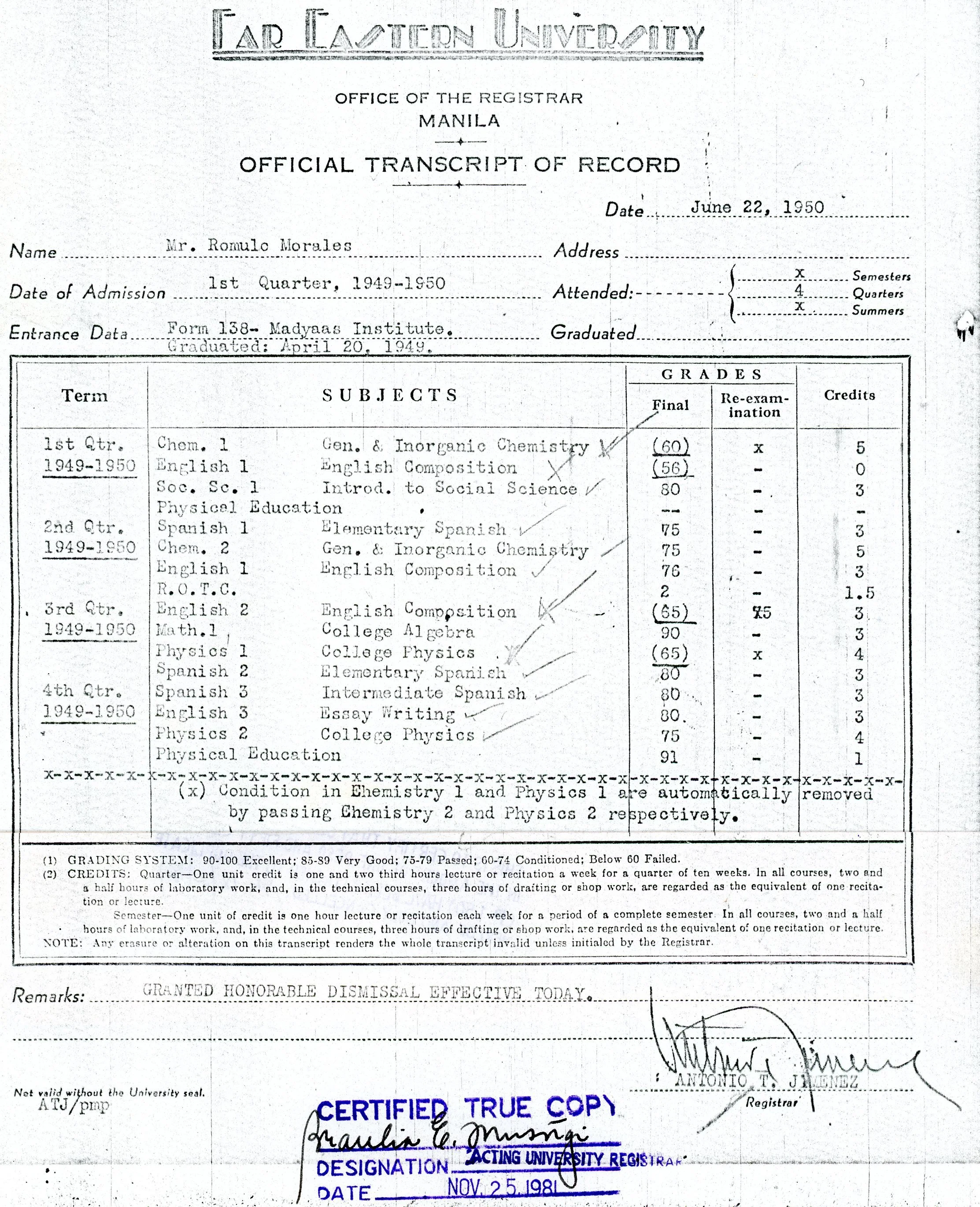
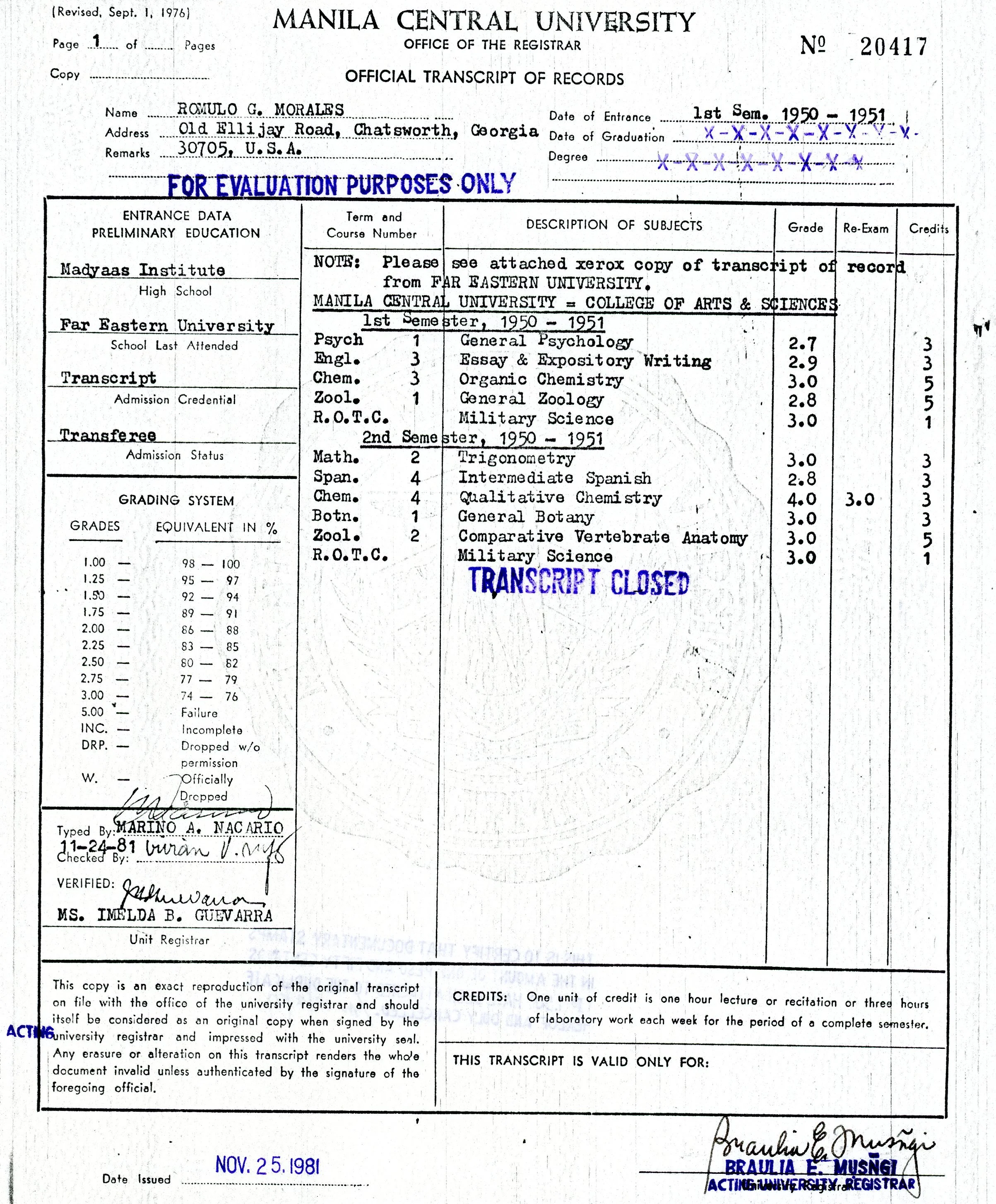
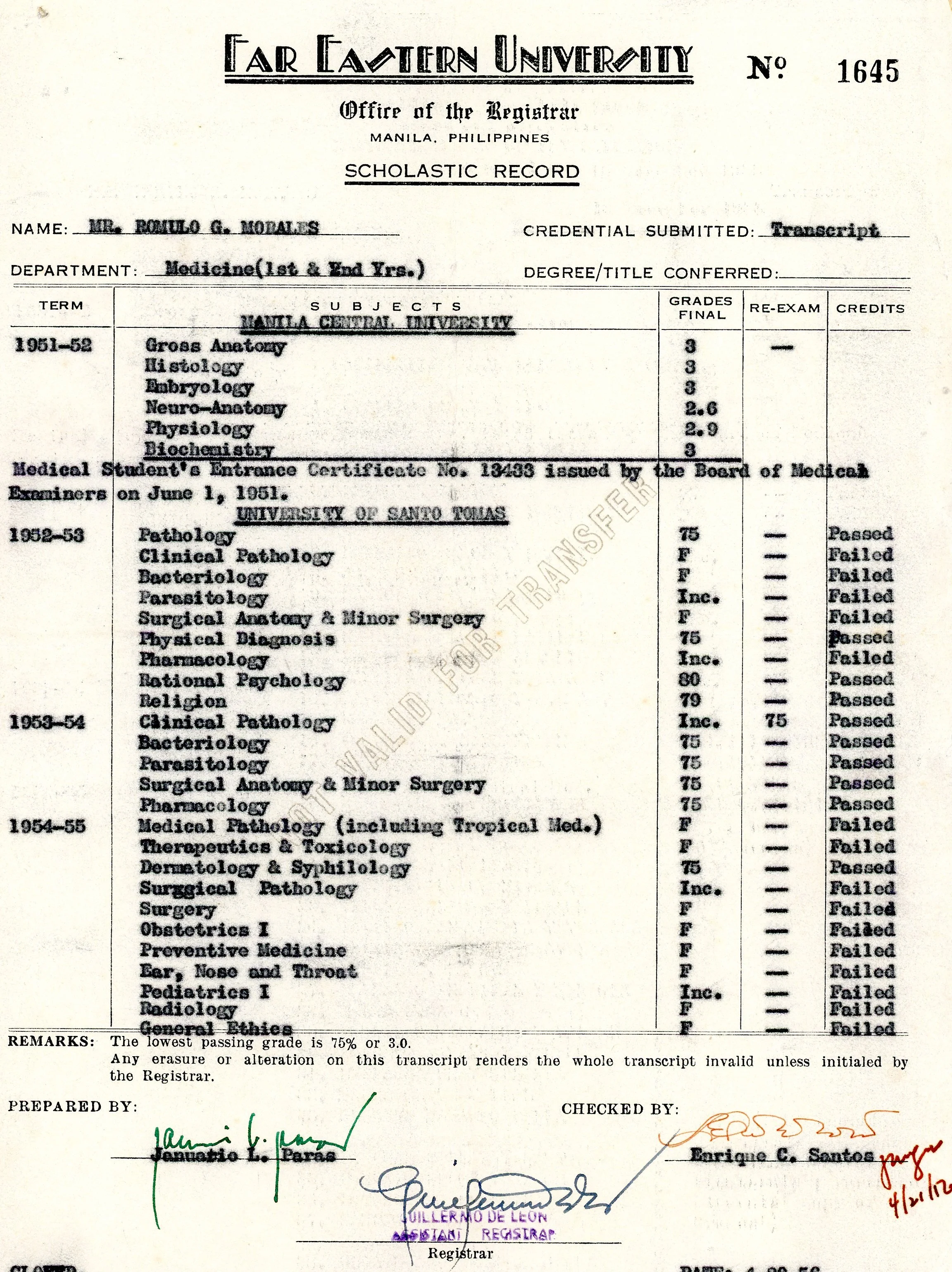
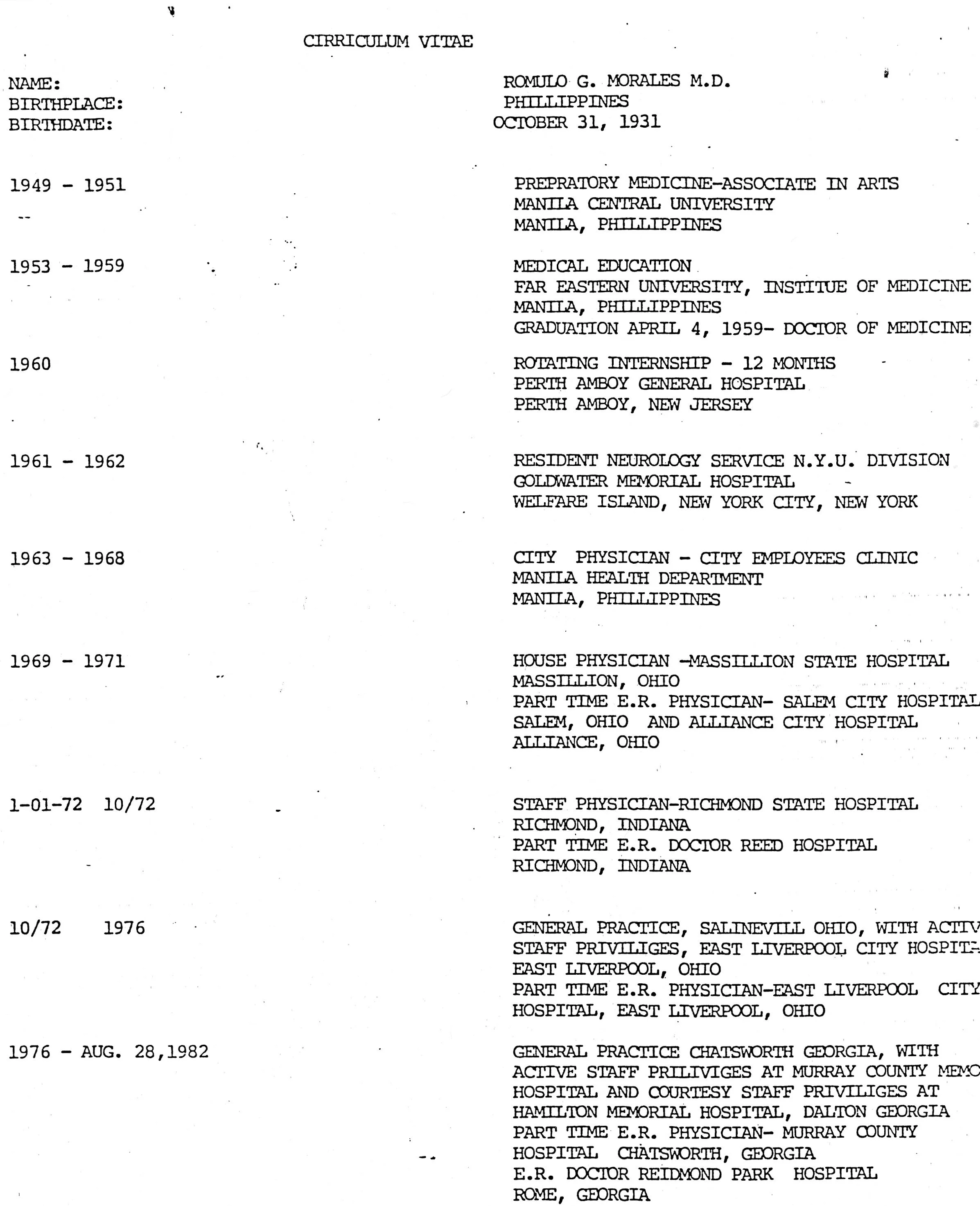
Romulo had graduated from Madyaas Institute on April 20, 1949. That autumn he entered the Far Eastern University for pre-medicine, then completed his Associate in Arts across the city at Manila Central University in 1950–1951. With a Medical Student's Entrance Certificate issued on June 1, 1951, he began the long climb of medical school itself.
It was not a short climb. His medical studies carried him from Manila Central University to the Far Eastern University Institute of Medicine, across most of a decade of determined work. What they ultimately record, on April 4, 1959, is a Doctor of Medicine.
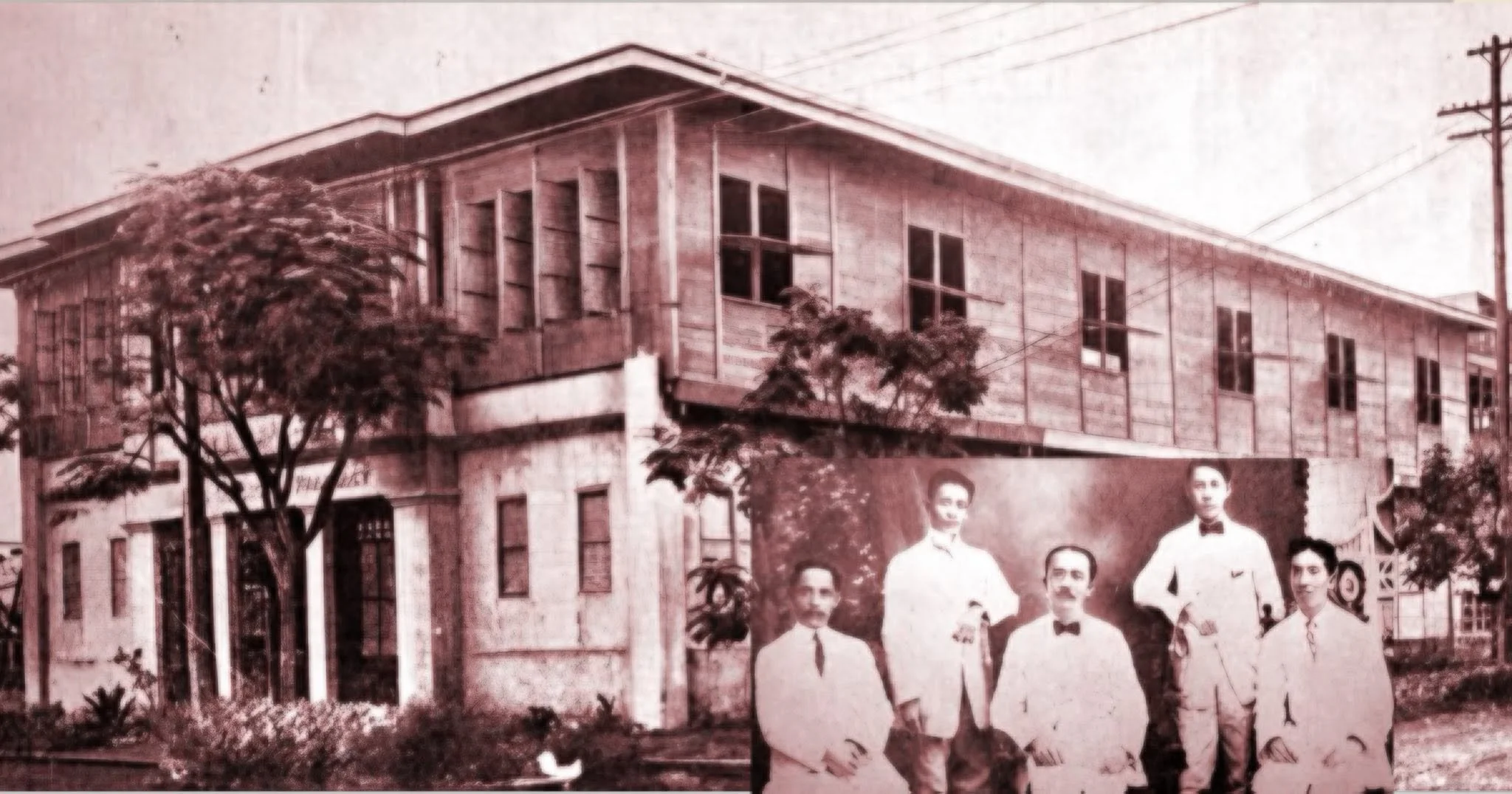
Manila Central University, where Romulo completed his Associate in Arts and began the study of medicine before his path carried him onward to Santo Tomas and back to Far Eastern.
Few Filipino families of this generation can document a young person's education in such detail. For Romulo, a nearly continuous paper trail survives—pre-medical transcripts, a medical scholastic record spanning three universities, his own curriculum vitae, and the 1959 board result—and the same is true for Hally. Taken together, these primary sources trace a long, determined road to the M.D. far more fully than the burned registers of their hometown ever could.
The Threshold Crossed
With a passing result before the Board of Medical Examiners on September 25, 1959, the notary's son from a town whose records had burned became Romulo G. Morales, M.D.—the first physician in this branch of the family, and the man who would carry the Morales name to America.
Hally Tamayo's Parallel Path
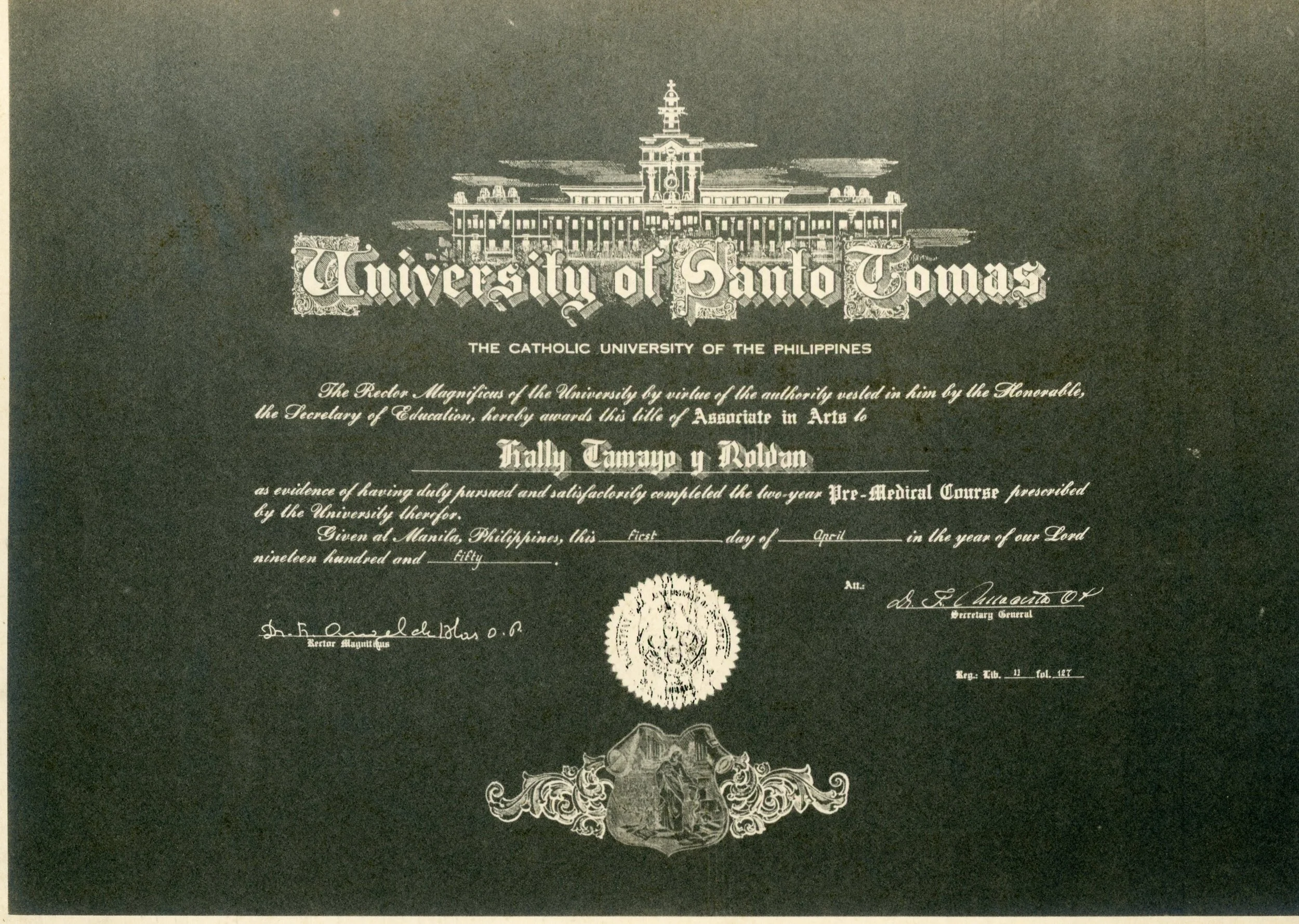
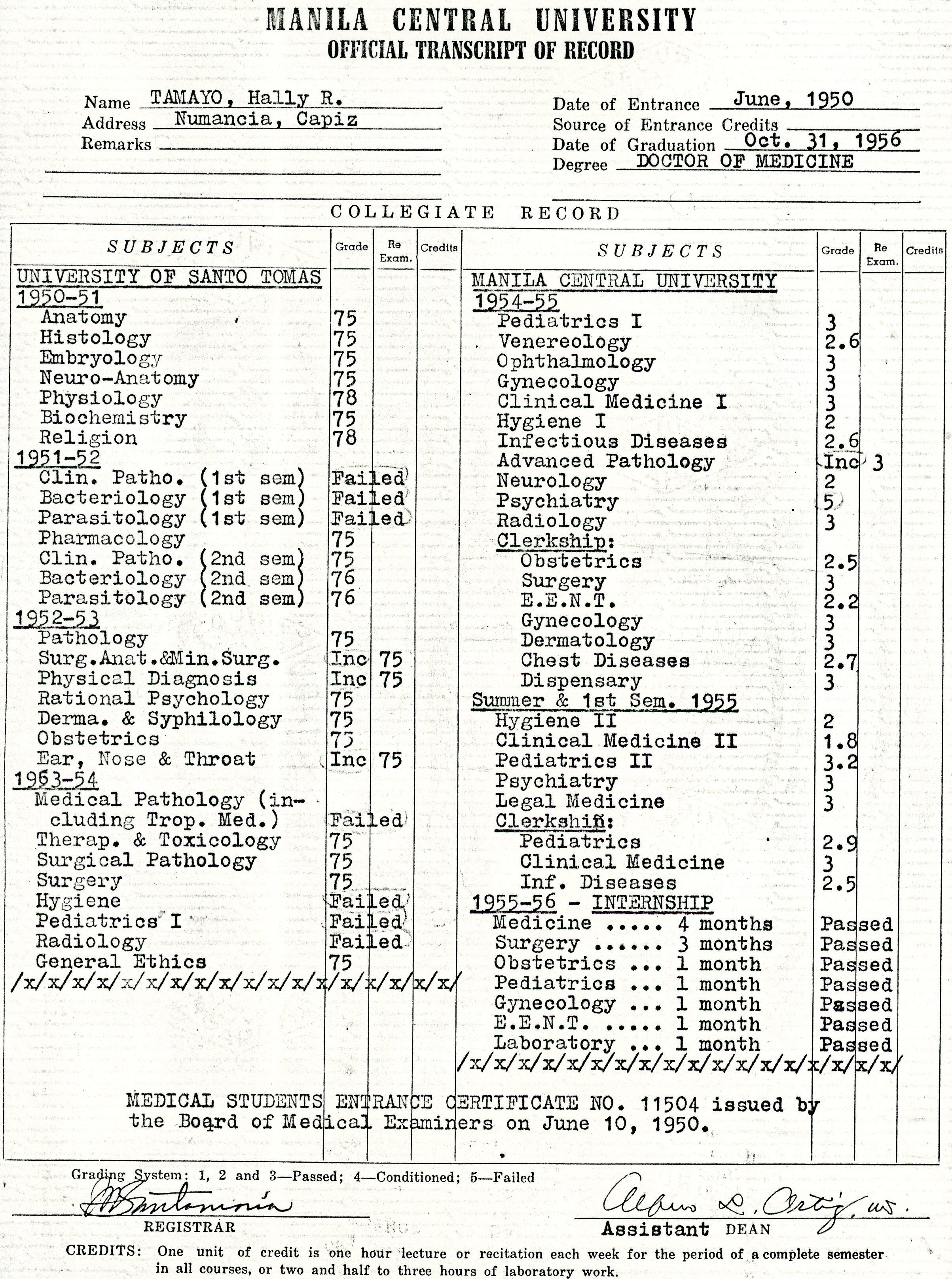
Hally Tamayo was on the same road, a few steps ahead. She earned her two-year pre-medical Associate in Arts from the University of Santo Tomas—“Hally Tamayo y Roldan”—on April 1, 1950, holding a Medical Student's Entrance Certificate issued that June. Her own medical studies, like Romulo's, traced a long course through the University of Santo Tomas and Manila Central University before she reached the end.
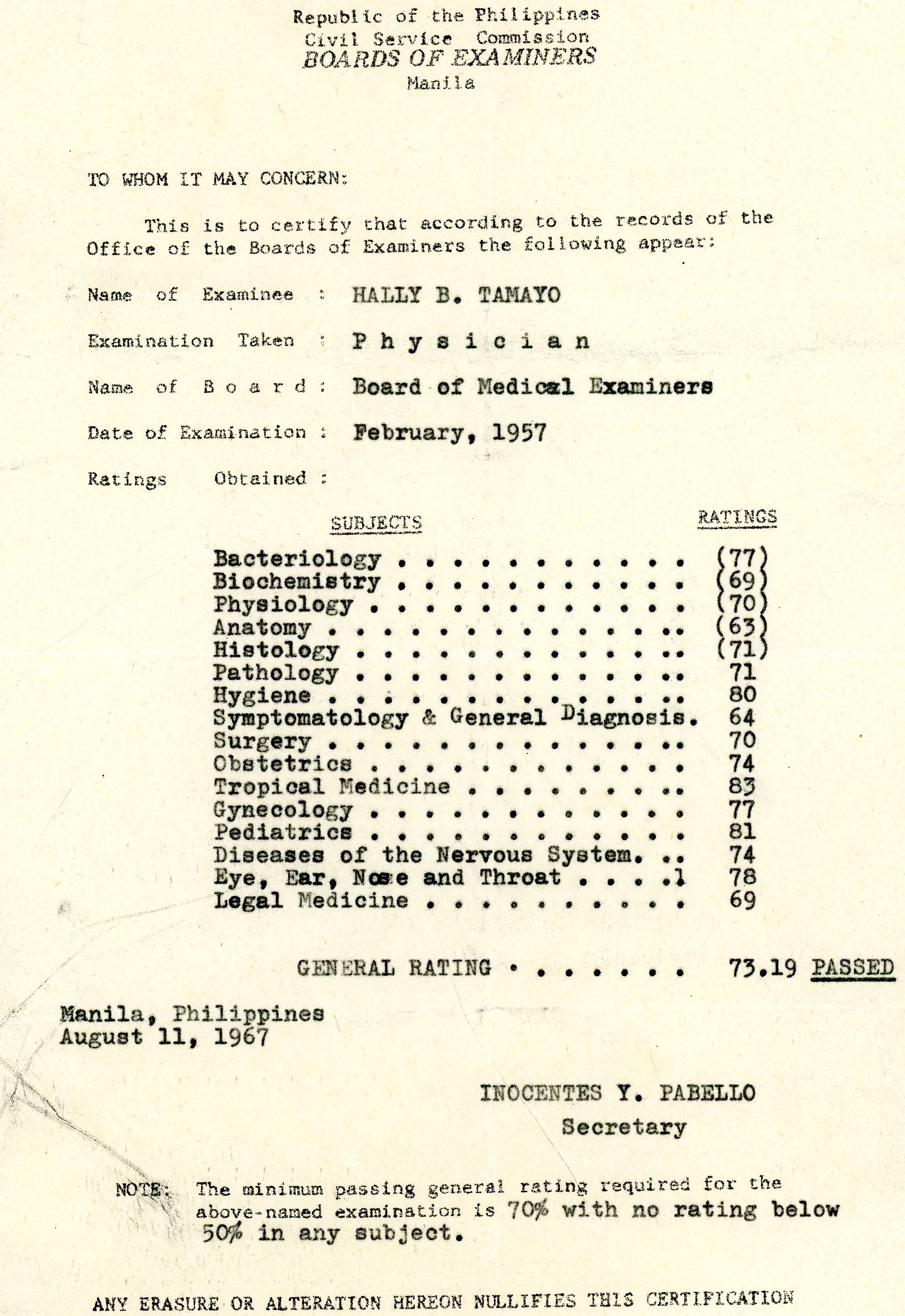
She got there first. Manila Central University conferred upon Hally R. Tamayo the degree of Doctor of Medicine on October 31, 1956—by a small coincidence, Romulo's twenty-fifth birthday. In February 1957 she sat the Board of Medical Examiners and passed. By the time the two married, she had been a licensed physician for a year, while Romulo was still finishing his degree.

The Main Building of the University of Santo Tomas—the venerable Catholic university where Hally earned her pre-medical degree, and through which both she and Romulo passed on the long road to the M.D.
Two Aklanons in Manila
How they met, the records do not say. What the documents establish is the setting that made the meeting almost inevitable: two young people from the same small Aklan town, both pursuing medicine in the same handful of Manila universities in the same handful of years. The story the family carries—that they found each other as fellow Aklanons making their way in the capital—fits that documented frame, though the courtship itself belongs to family memory rather than the archive.
What the archive does hold, unmistakably, is what came next.
A Wedding at Espiritu Santo

The Espiritu Santo Church on Rizal Avenue in Santa Cruz, Manila—a Divine Word (SVD) parish whose church was completed in 1932—where Romulo and Hally were married on January 22, 1958. Today it is the Archdiocesan Shrine of Espiritu Santo.
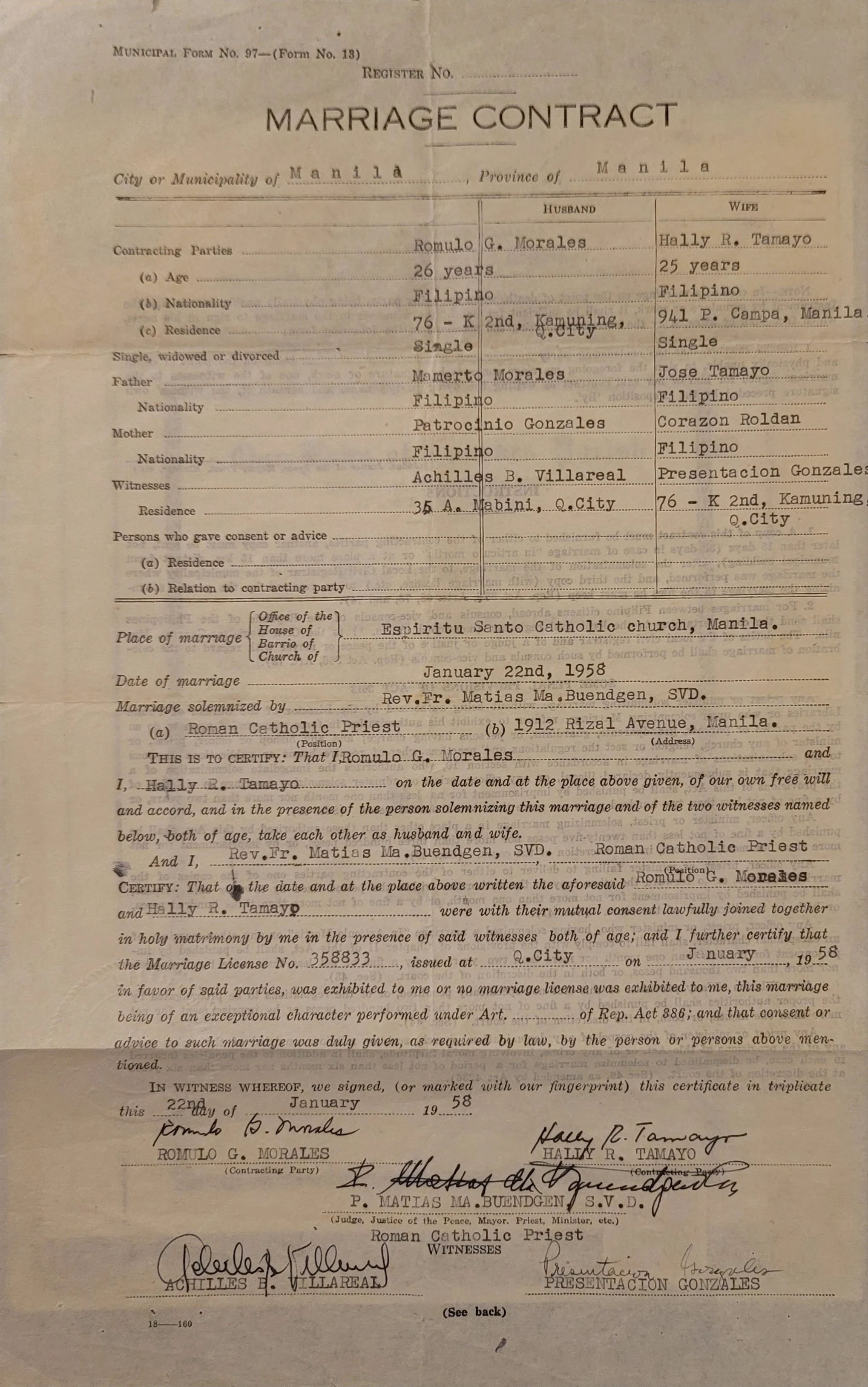
On January 22, 1958, Romulo Gonzales Morales and Hally Roldan Tamayo were married in a Roman Catholic ceremony at the Espiritu Santo Church on Rizal Avenue in Manila—he twenty-six, she twenty-five—the rite solemnized by Rev. Fr. Matias Ma. Buendgen of the Divine Word missionaries. Their marriage license had been issued across the city in Quezon City, where the couple was by then living; the two witnesses were Achilles B. Villareal and Presentacion Gonzales—the latter giving the same Kamuning address as the groom, and very likely a kinswoman from his mother's Gonzales family.
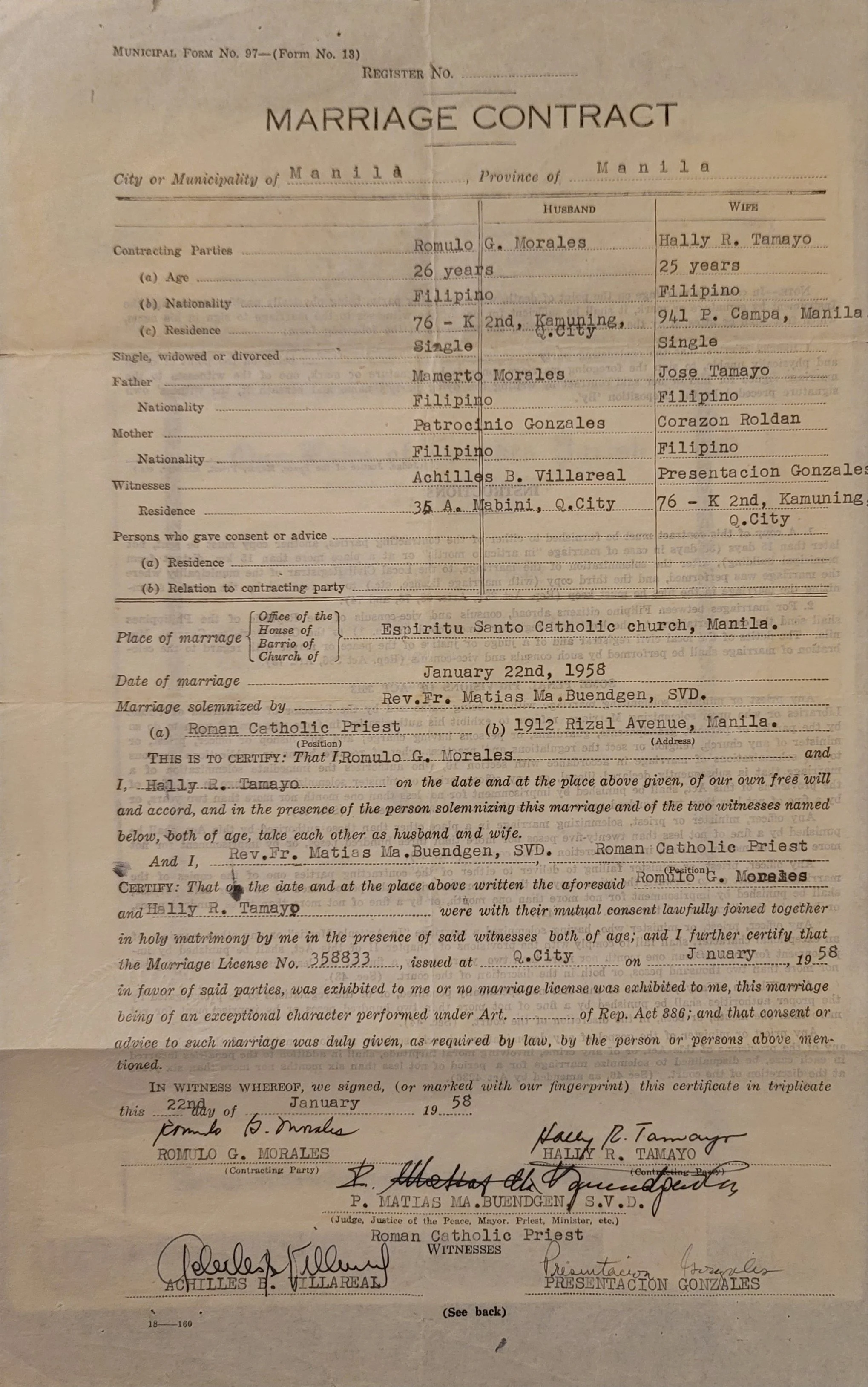
The marriage contract itself, naming the place of marriage as the Espiritu Santo Catholic Church, Manila, and the date as January 22, 1958. A single page draws both family lines together—the late Mamerto Morales and Patrocinio Gonzales for the groom, Jose Tamayo and Maria Corazon Roldan for the bride.
The contract draws the two threads of this whole series into one document. For the groom it names his parents, the late Mamerto Morales and Patrocinio Gonzales of Numancia; for the bride, Jose Tamayo and Maria Corazon Roldan of the same town. Two families that had grown up a few streets apart in provincial Aklan were now formally joined in the capital.
The church on Rizal Avenue was still young when the Moraleses married in it. Espiritu Santo Parish had been established in 1926 under the German Divine Word missionaries (SVD), its church completed and solemnly blessed in May 1932 on the grounds of a former cemetery. It came through the Second World War and the battle for the liberation of Manila unscathed—a rare survivor in a city that lost so much. Fittingly, the priest who married Romulo and Hally, Rev. Fr. Matias Ma. Buendgen, was himself an SVD father of that parish. Today the church stands as the Archdiocesan Shrine of Espiritu Santo.
The Lines Converge
Everything Episodes 1 and 2 traced separately—the Morales notaries and the Tamayo-Roldan household of Numancia—meets here. From this marriage descends every later chapter of From Aklan to America.
The Beginning of a New Family
The new household took root in the capital, where both careers had been built. And before the year of Romulo's own graduation and board was out, the family had already begun to grow: in November 1959 the couple welcomed their first son. That Christmas, in an extraordinary ceremony, the infant would receive both baptism and confirmation in a single day—the story that opens the next episode.
Primary Sources


Are You Connected to the Morales-Tamayo Line?
If you descend from the Morales or Tamayo families of Numancia and Kalibo, Aklan, or from the intermarried Numancia families — Gonzales, Quimpo, Roldan, Isturis, Martelino, Icamina, Ferrer — whether your branch remained in the Philippines or emigrated to the United States, I’d like to compare notes. Documented trees, DNA matches, family papers, and even half-remembered stories have all moved this research forward.
Get in Touch About This FamilyCousin connections are informal and reciprocal — no fee, no obligation, just shared work on shared ancestry.
Every Family Has a Story Worth Telling
Whether you're just beginning your research or ready to transform years of work into a narrative your family will treasure, I'd love to help.
BEGIN YOUR RESEARCH INQUIRY