
Archdiocesan Shrine of Espiritu Santo
Rizal Avenue corner Tayuman Street, Santa Cruz, Manila
Archdiocesan Shrine of Espiritu Santo
A Divine Word church that rose over a former cemetery, was blessed in 1932, and stood unscathed through the destruction of Manila—the church where two young doctors from Aklan, Romulo G. Morales and Hally R. Tamayo, were married on January 22, 1958.
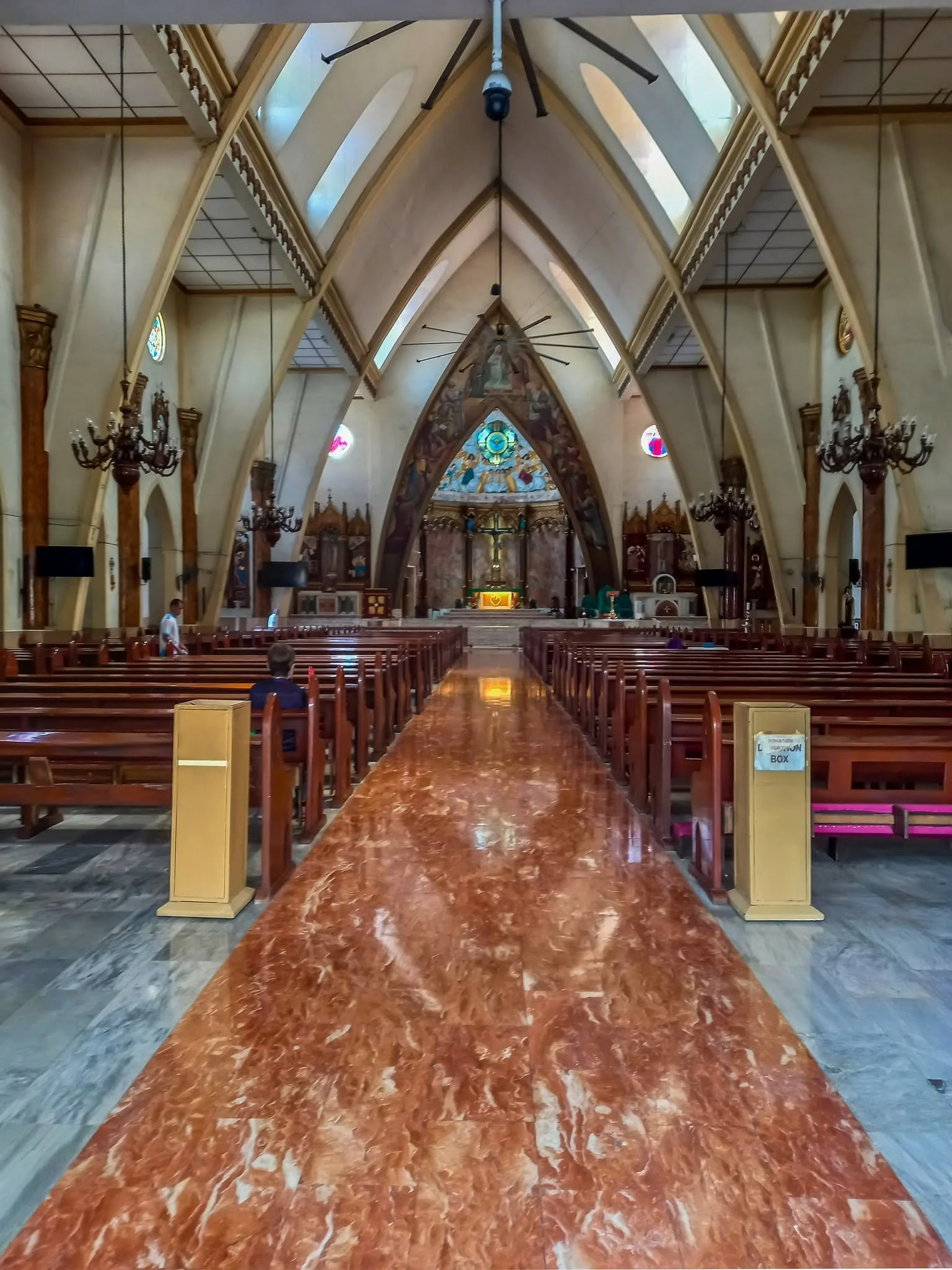
The Espiritu Santo Church on Rizal Avenue in Santa Cruz, Manila—a Divine Word (SVD) parish whose church was completed in 1932—where Romulo and Hally were married on January 22, 1958. Today it is the Archdiocesan Shrine of Espiritu Santo.
On January 22, 1958, two young physicians from the small Aklan town of Numancia stood before a Divine Word priest in a Gothic-arched church on Rizal Avenue in Santa Cruz, Manila. Dr. Romulo G. Morales and Dr. Hally R. Tamayo had each spent the better part of a decade earning their medical degrees in the universities of the capital. That morning, in the Espiritu Santo Parish church, the Morales and Tamayo lines were joined.
The church they chose was not an ancient one. It had been blessed only twenty-six years earlier, in 1932, and it had survived a war that flattened much of Manila around it. By 1958, it was a beloved fixture of the Santa Cruz district—and it would go on to be raised to the dignity of an Archdiocesan Shrine more than half a century later. This is the story of that church, and of the wedding it witnessed.
The Morales-Tamayo Family at Espiritu Santo
& Dr. Hally R. Tamayo
Roman Catholic ceremony at Espiritu Santo Church
Solemnized by Rev. Fr. Matias Ma. Buendgen, SVD
Witnesses: Achilles B. Villareal & Presentacion Gonzales
Both bride and groom were natives of Numancia, Aklan
A Church Built Over a Cemetery (1913–1932)
The ground on which the church stands has a quiet history of its own. In 1913, a public cemetery on the site was closed due to health concerns. More than a decade later, on December 19, 1926, the Espiritu Santo Parish was formally established and placed under the administration of the Society of the Divine Word—the SVD, or Divine Word Fathers—a missionary congregation founded in the Netherlands. Its first parish priest was William Finnemann.
Construction of the church was financed in a manner common to the era. In December 1931, under the second parish priest, Jose Duserhund, a crypt of 444 niches was built beneath the altar and sold to local residents, the proceeds funding the building above. The work was completed quickly: the church was fully built and solemnly blessed on May 14, 1932, on the occasion of the parish fiesta.

The facade of the Espiritu Santo church, with its Gothic gable, pinnacled bell tower, and central rose window crowned by the emblem of the Holy Spirit. The design reflects the church's dedication to the Espiritu Santo—the Holy Spirit.
Photo: Hannachiever07, own work, CC BY-SA 3.0, via Wikimedia Commons.
Unscathed by War (1941–1945)
From February 3 to March 3, 1945, American and Japanese forces fought a month-long urban battle for Manila. The fighting and shelling killed an estimated 100,000 civilians and destroyed much of the city, including nearly the whole of the historic Walled City of Intramuros. Among the few churches that came through the destruction intact was the Espiritu Santo Parish in Santa Cruz.
The church remained standing and unscathed through both the Japanese occupation and the battle for the liberation of Manila—a survival that would later give it a special resonance in a city that had lost so many of its sacred places. In the years after the war, the parish steadily adorned its interior. In 1951, Mr. and Mrs. Jose G. Lopez donated an image of the Blessed Trinity sculpted by the noted santero Maximo Vicente. A tabernacle arrived from the United States in 1952, and in November 1955 the edifice of the Blessed Virgin Mary at the corner of Rizal Avenue and Tayuman Street was blessed by Archbishop Rufino J. Santos.
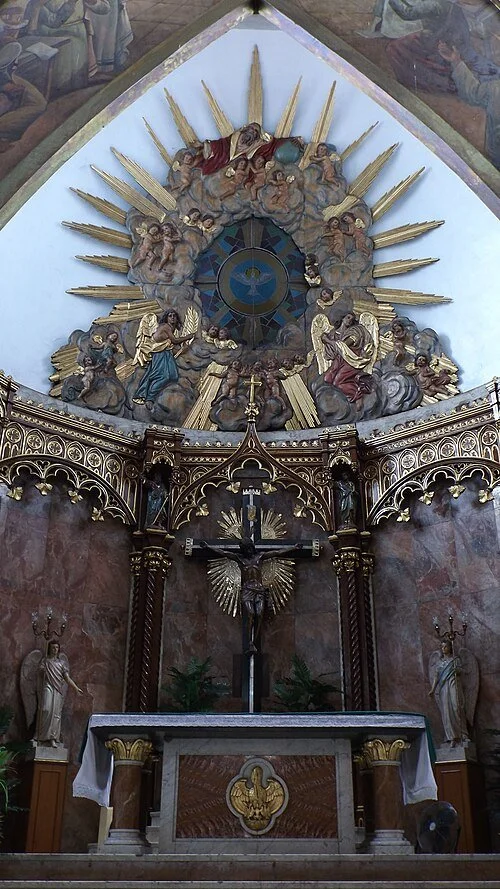
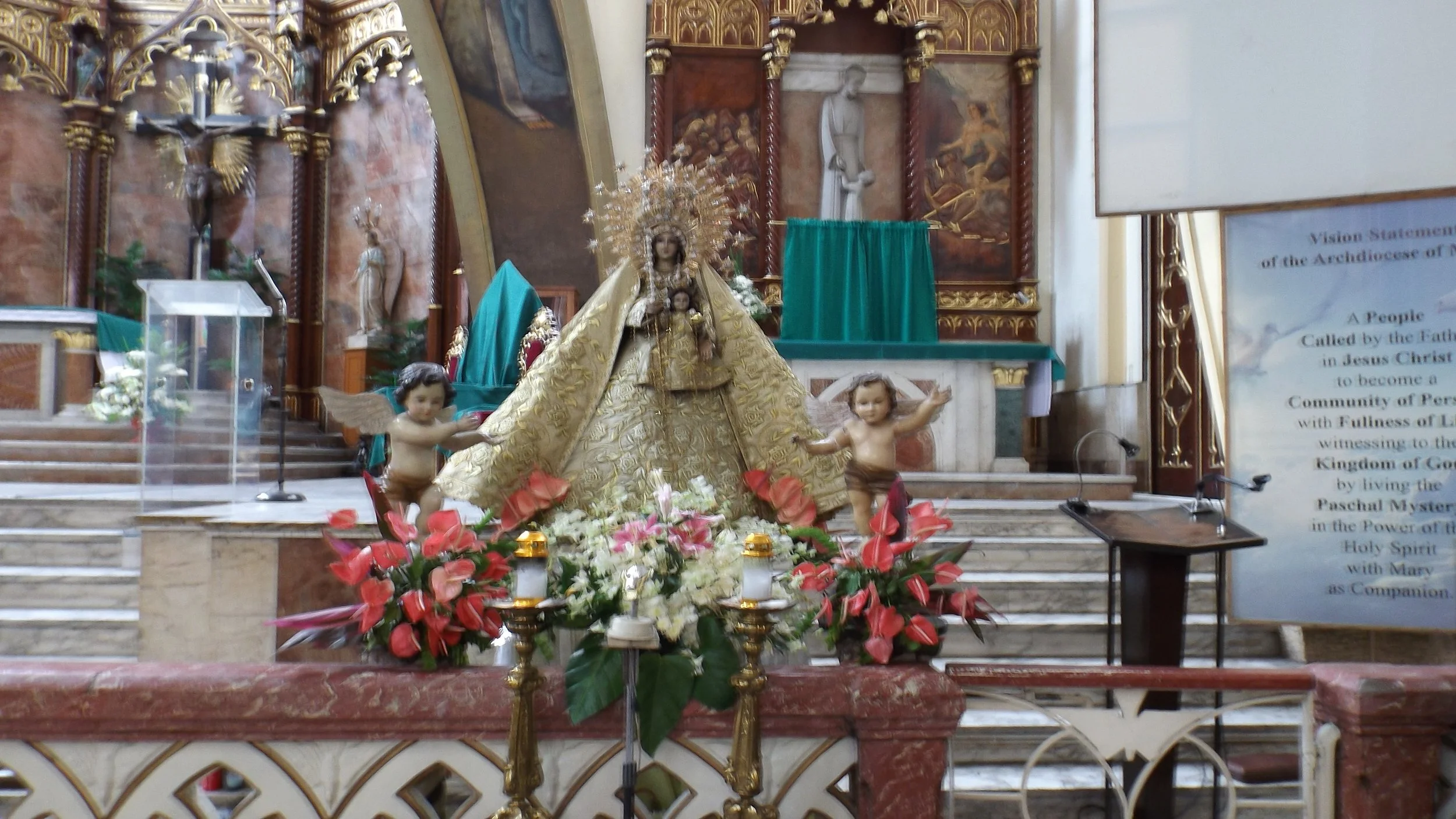
On July 11, 1958—just under six months after the Morales-Tamayo wedding—the marble main altar was consecrated by Cardinal Rufino J. Santos. Within the altar were sealed the relics of Saint Matias the Apostle, Saint Irmina, and Saint Maria Goretti. The "Descent of the Holy Spirit" in the sanctuary was painted by Mr. Jose Santos, and the church's Gothic ceiling was donated by relatives of Matias. In other words, when Romulo and Hally married there in January 1958, the church was on the very cusp of receiving the grand marble altar that would define its sanctuary for generations to come.
A Wedding at Espiritu Santo, 1958
By the start of 1958, Romulo and Hally had both finished the long road through medicine. Romulo had earned his M.D. and passed the Philippine medical board in 1959—but the courtship and marriage came first. Hally, who had earned her own medical degree in 1956 and passed her board in early 1957, was already a licensed physician. On January 22, 1958, they were married in a Roman Catholic ceremony at the Espiritu Santo Church, solemnized by Rev. Fr. Matias Ma. Buendgen, SVD.
Romulo G. Morales & Hally R. Tamayo
Married according to the Rites of the Roman Catholic Church at Espiritu Santo Church, 1912 Rizal Avenue, Santa Cruz, Manila, solemnized by Rev. Fr. Matias Ma. Buendgen, SVD. Marriage license No. 358833, issued at Quezon City.
A Detail Worth Noting
The marriage contract records one witness, Presentacion Gonzales, giving the same Kamuning, Quezon City address as the groom. Given that Romulo's mother was a Gonzales—Patrocinio Quimpo Gonzales of Numancia—this strongly suggests Presentacion was a Gonzales relative on his mother's side, standing with him at the altar. The relationship is suggested by the shared address and surname but is not stated outright in the record.
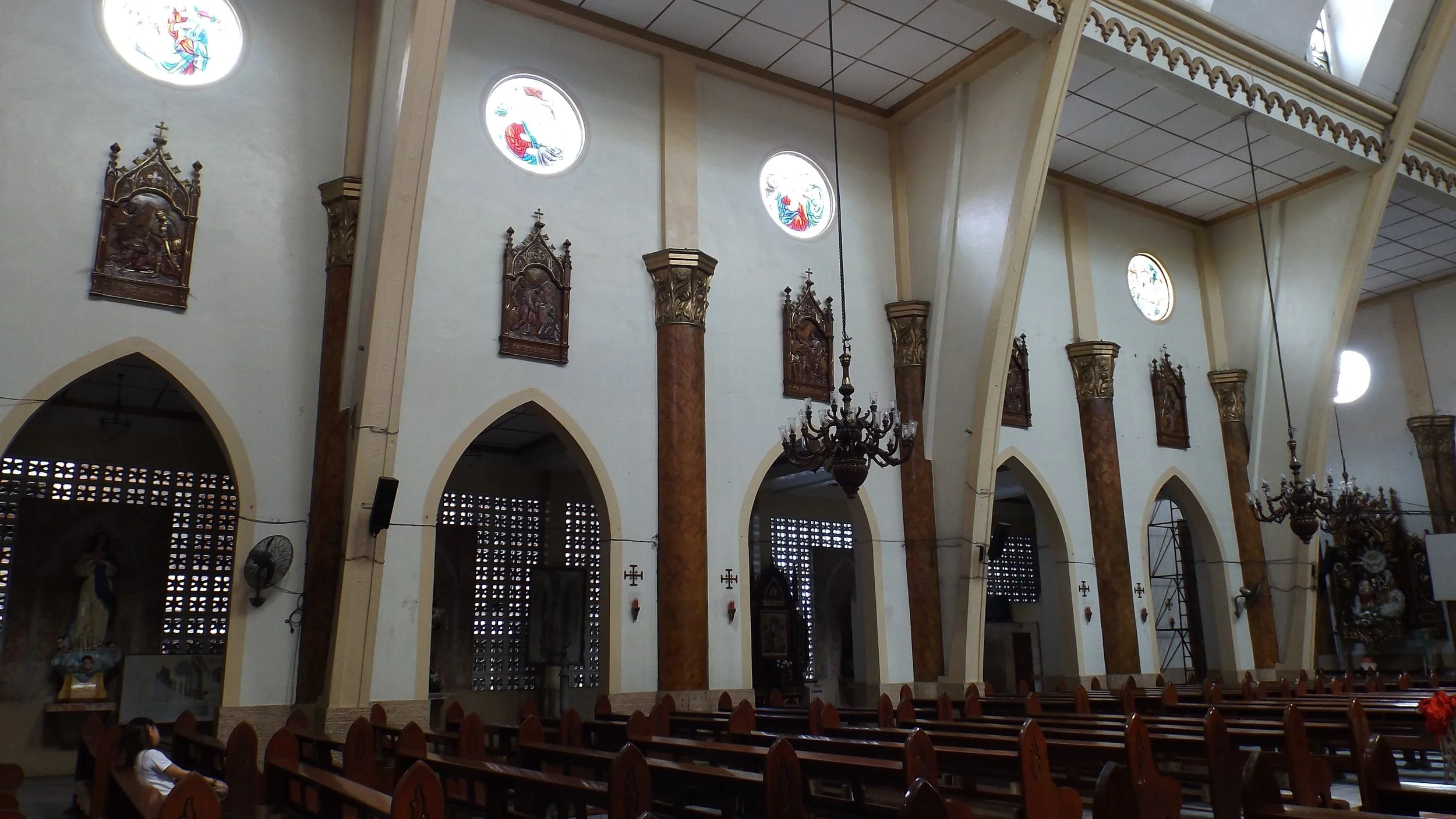
The side nave, with its pointed Gothic arches, carved Stations of the Cross, and circular stained-glass windows. This is the kind of space the wedding party would have moved through in January 1958.
Photo: Hannachiever07, own work, CC BY-SA 3.0, via Wikimedia Commons.
Church History Timeline
The Shrine Today
For more than four decades after the war, the parish continued to grow and beautify. Under Fr. Norberto Habos in the 1990s, the magnificent retablo of the Holy Spirit, a chapel of saints, and stained-glass windows depicting the fifteen mysteries of the Rosary were installed. Under Msgr. Albert G. Salonga, the parish's aging pipe organ was fully rehabilitated by the same builders who care for the famed Las Piñas Bamboo Organ.
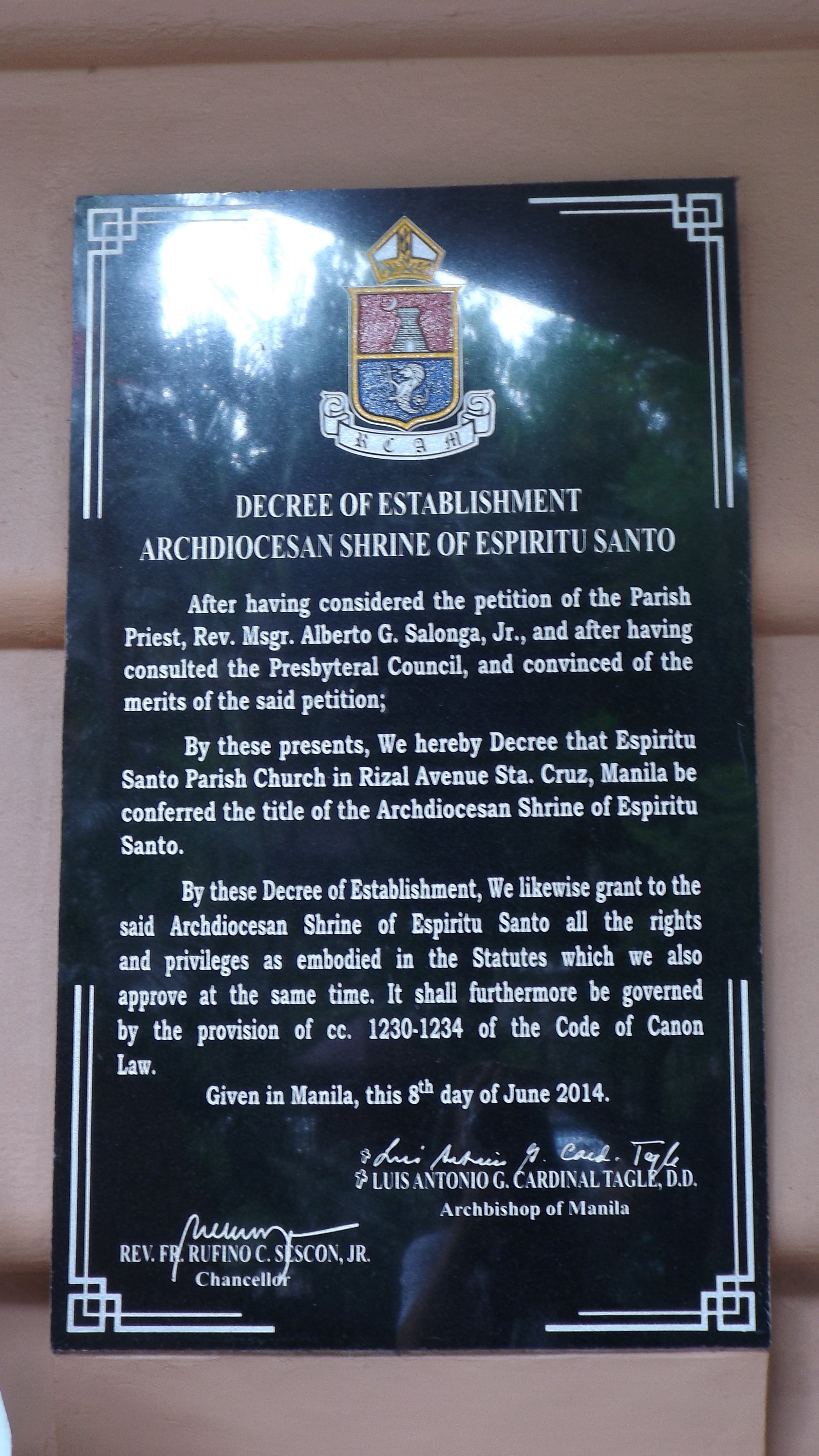
On June 8, 2014—the Solemnity of Pentecost, and the parish's 88th fiesta—Cardinal Luis Antonio G. Tagle, then Archbishop of Manila, conferred upon the church the title of Archdiocesan Shrine of Espiritu Santo. Twelve crosses were dedicated on the church posts, and the newly consecrated altar was opened to the faithful. The petition for the honor had been brought by the parish priest, Rev. Msgr. Alberto G. Salonga, Jr., and the decree was signed by Cardinal Tagle with Rev. Fr. Rufino C. Sescon, Jr. as chancellor.
"We hereby Decree that Espiritu Santo Parish Church in Rizal Avenue, Sta. Cruz, Manila be conferred the title of the Archdiocesan Shrine of Espiritu Santo."
For the Morales-Tamayo family, the church on Rizal Avenue marks a threshold moment: the union of two Aklanon physicians who had each made the long journey to Manila, and the beginning of the family that would, a little over a decade later, cross the Pacific to America. The church that survived a war and was raised to a shrine still stands at the corner of Rizal Avenue and Tayuman Street—a sacred place where the family's American chapter, in a sense, began.
Image Gallery
Want to Know When New Stories Are Published?
Subscribe to receive updates on new family history research—no spam, just meaningful stories when there's something worth sharing.
SUBSCRIBE TO OUR NEWSLETTEREvery Family Has a Story Worth Telling
Whether you're just beginning your research or ready to transform years of work into a narrative your family will treasure, I'd love to help.
BEGIN YOUR RESEARCH INQUIRY