
Test the Living, Reconstruct the Rest
My father died on April 29, 2010. I have his photograph on the wall, his old letters in a box, and a story he carried his whole life that turned out not to be true. What I do not have, in the way I would most like to have it, is his DNA. What I have instead is a reconstruction — built from his children, validated against five of them, and uploaded to GEDmatch as a research kit labeled with a string of characters that means, to anyone who happens upon it, very little. To me it means I got most of him back.
This essay is about how that happened, what I tried before it worked, and why I think every genealogist should treat the DNA of the living older generation in their family the same way we treat any other irreplaceable record: as something to be gathered now, while it can be gathered, because it cannot be gathered later.

Thomas Kenny Hamall (1932–2010) — my father, the man this essay is finally about.
How I Came to DNA Testing
I did not become a genealogist first and then a DNA tester. I became a DNA tester because my husband was diagnosed with dementia.
It was 2018. The diagnosis was the kind that reorders your sense of what is urgent. We wanted to understand whatever could be understood — risk factors, family patterns, the medical realities we might be facing in his line and in ours. 23andMe at that time was offering the most comprehensive health-information panel of any of the consumer testing companies. We tested him first. Then I tested. Then our children tested.
What I expected from those tests was medical information. What I got, alongside the medical information, was a list of unknown DNA relatives, an ethnicity estimate that didn't match the family stories I had grown up with, and a quiet, stubborn pull toward family history I had not anticipated. The pull won. Within months I had moved from "let's understand the health risks" to "wait — who are these people on my match list?" Many genealogists know the moment I'm describing. You don't decide to become one. You just look up one day and realize you have.
The path from that first 23andMe kit to where I am now — running a genealogy research practice, pursuing BCG certification, working a chromosome 2 triangulation across three DNA platforms — runs through a series of decisions I made about whose DNA I tested next, in what order, and how soon. The most important decisions were the ones I made about the older generation in my family while they were still here to make decisions about it themselves. The most painful one was about the older generation that wasn't.
The Gift of My Mother's DNA
The first thing I did, once 23andMe had pulled me in past the medical reports, was test my mother. Then I tested my brother, more or less ambushed at a wedding in Maryland with a tube to spit into. My mother and brother were both alive, both willing, both healthy enough to test without complication. The whole logistical operation took a few weeks and cost less than a nice dinner out.
The analytical benefit of having my mother's DNA was immediate and transformative. My maternal lines doubled in genetic resolution — she carried twice the genetic material on her O'Brien and Robertson ancestors as I did, and she connected to maternal cousins I would not have reached through my own kit. Her ethnicity report read more clearly than mine. Her match list pulled in older-generation relatives mine could not. Every analytical question I asked about her side of the family answered more cleanly because she was the one being asked.
What I want to say plainly about that experience: testing my mother was the single highest-leverage decision I made in the first two years of my genealogy work. It cost less than a hundred dollars. It took fifteen minutes of her time. It produced a DNA record of her that has now outlived her by years and continues to do work for our family. She passed in February 2022. Her DNA is still on 23andMe, still on Ancestry, still on MyHeritage, still on GEDmatch. She is still answering questions she answered before, and questions I had not yet learned to ask.
Test your living parents and grandparents. Do it before there is a reason to. Do it because there will be, eventually, a reason to.
The Father I Could Not Test
My father died in 2010, eight years before I tested anyone. Consumer DNA testing was technically available before he died — 23andMe launched in 2007, AncestryDNA in 2012 — but it was not on my radar, not on his radar, and not on any conversational horizon in our family while he was alive. Nobody in my circle had tested. Nobody was talking about it. The whole field was still largely the province of academic researchers and adoption searchers. It had not yet become the cultural moment it is now.
I have spent a lot of time in the years since asking myself whether I could have known to ask. The honest answer is no. The honest answer is also that a lot of us in 2026 are sitting on the same situation in reverse: we know now what we did not know then, our parents and grandparents are still alive now, and we have not yet asked.


And what I lost with my father was specific. He had carried, his whole life, a story about being French. The Hamall name sounded French to him; his grandfather had married a French Canadian woman; the family had a faintly French aura that nobody had ever bothered to examine. When my own 23andMe ethnicity estimate came back at 87% Irish — the result that finally caused me to look hard at the Hamall paternal line — I thought immediately of him. He would have been delighted. He would also have been startled. The records, when I finally found them, told an unambiguous story: Hamall was Irish, the immigrants came from County Monaghan, and the French Canadian grandmother was an exception in an otherwise solidly Catholic Irish line.
Having his DNA would have settled this in fifteen minutes. Without it, I spent years working through documentary records, hitting brick walls at our great-great-grandfather Owen Hamall in pre-Famine County Monaghan, and accumulating the documentary case that eventually became the Donaghmoyne Network research. The work is good work. I'm proud of it. But it took years longer and required orders of magnitude more effort than the same questions would have required if I could have asked his DNA directly.
Forensic Testing, Exhumation, and the Estes Article
For a few years I seriously considered alternatives. I made inquiries about forensic DNA labs that would extract genetic material from personal items — a comb, a hat band, a saved tooth. I priced exhumation. I read about the legal hurdles, the cemetery permissions, the technical realities. None of it was casual research. I was fully prepared, at one point, to spend several thousand dollars and put our family through whatever it would take, if it had even a moderate chance of working.
What stopped me, in the end, was Roberta Estes' April 2013 essay "Digging Up Dad, Exhumation and Forensic Testing Alternatives," published on her DNAeXplained blog. Estes is a respected genetic genealogist who had walked the road I was considering. She had wanted, badly, to test her own father — also long deceased — and she had pursued forensic alternatives with the resources and contacts of a working professional in the field.
Her essay is worth reading in full. She describes paying $2,000 per attempt to recover DNA from envelope flaps and stamps her father had handled. The first envelope yielded no DNA at all. The second yielded female DNA, contaminant from the postal handling chain. The second envelope yielded nothing. The lab she was working with — Trace Genetics, since defunct — had been clear with her from the start that there was less than a 50% chance of recovering any usable DNA per attempt.
Yes, I seriously considered exhuming my father. Ok, now that you've stopped gasping, let me tell you about the story, and what I did instead, and how successful it was, and wasn't.
— Roberta Estes, "Digging Up Dad," April 30, 2013What Estes' essay made unavoidable was a sober acknowledgment of the realities of forensic genetic genealogy as it stood then and as it largely stands now. The labs that handle private forensic samples are few. Costs run into the thousands per attempt. DNA from items that have circulated through other hands carries contamination risk. When DNA does amplify, it is often mitochondrial only — useful for tracing female lines but not for the autosomal-cousin matching that drives most modern genealogy work. Exhumation adds legal complications, family complications, cemetery complications, and emotional complications, on top of all the same technical risks.
Reading her account, what I recognized was someone who had been where I was and who had concluded — after spending real money and pursuing real options — that the realistic path forward for most of us is not forensic recovery. It is building from what is still available. From the living relatives whose DNA is still gatherable. From children, siblings, cousins. From the people who can still spit in a tube.
I filed Borland Genetics' name away after I first heard about it at a RootsTech conference. I was not sure I would ever use it. I was not sure I would have what was needed to use it. But I knew the option existed, and I let it sit in the back of my mind while I kept working the documentary side of the Hamall research.
November 2023
My sister Annette died on November 4, 2023. The autosomal kit I had asked her to take, the last thing she did for the family that involved her DNA, arrived just after.
Annette had been ill long enough that her tested ability to provide saliva for a 23andMe test was no longer reliable. We ordered her an FTDNA kit instead, which uses a cheek-swab protocol — gentler, easier on a body that was failing. She loved hearing about the genealogy work. Every time I told her about a new discovery she would ask me to keep going, keep finding things. When I asked her if she would test, she said yes immediately. The results came back through the family while we were still planning her funeral.
And that is when I went back to Borland Genetics.
I had — by then — four children's DNA kits for our father plus my mother's kit on multiple platforms. Three children at 23andMe (myself, my sister Claire, and my brother Ken), plus Annette's new FTDNA kit. The structural conditions for a Borland Genetics Missing Parent reconstruction were finally met. I had multiple children of the deceased parent. I had the surviving parent's kit. I had the technical setup I needed.
The Borland Genetics website was unfamiliar. The tool documentation was dense — accurate, complete, but written for the small population of users who already understood what reconstructed DNA kits are and what they're for. I read carefully, set up a project, and began running the Missing Parent tool one child at a time. Each run produced what Borland calls a "mono kit" — a partial reconstruction containing one allele at each tested position, representing approximately 50% of my father's paternal genome as inherited by that particular child. Then the Humpty Dumpty tool merged the four mono kits into a single composite reconstruction.
I watched the coverage climb. After Annette's clade was added the reconstruction reached 96% coverage across the available SNPs. I had — partially, imperfectly, but real — got him back.
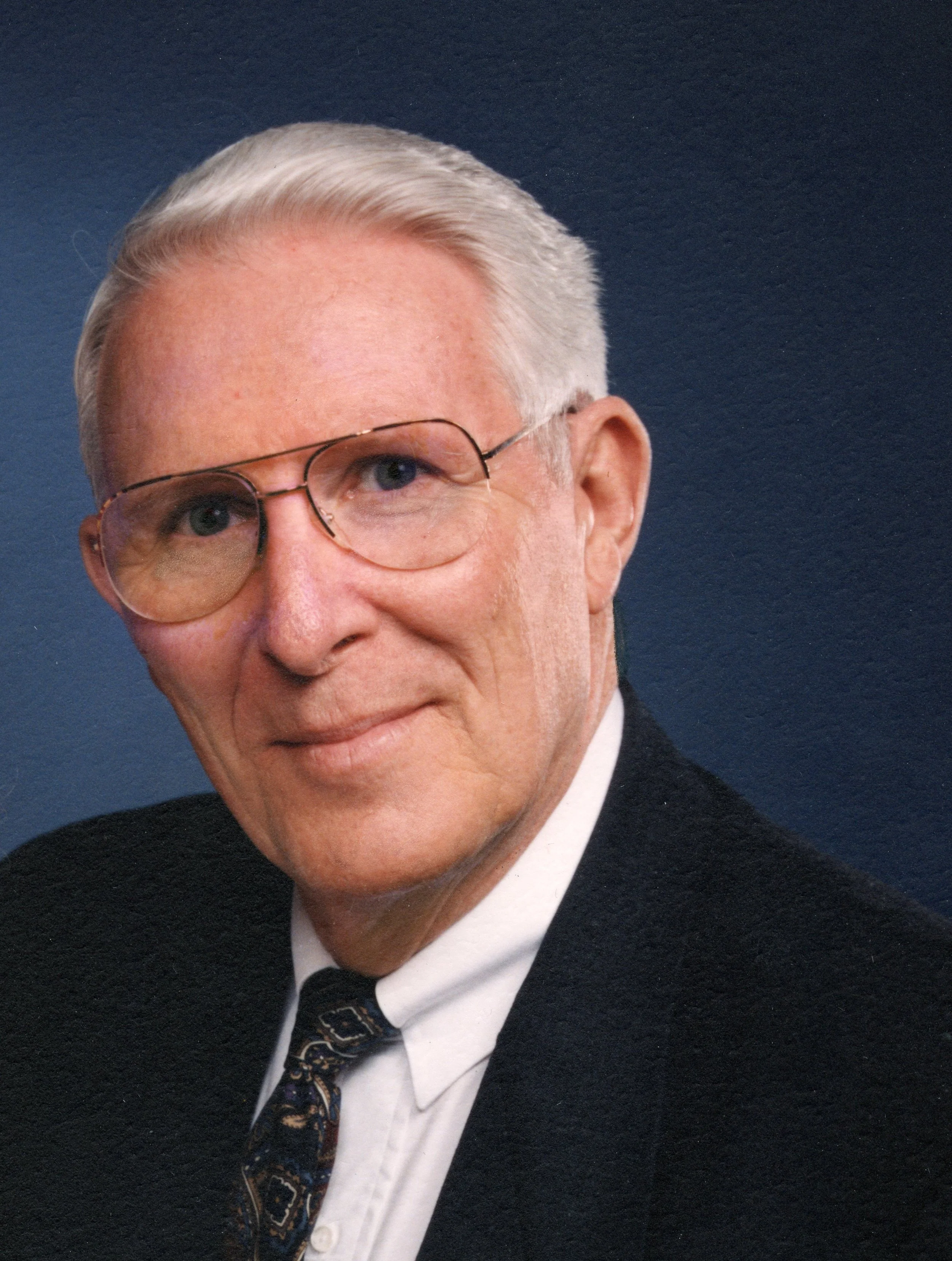
The reconstructed kit represents not just genetic material but the man who was here, and the children who carry him forward.
The next step was uploading to GEDmatch. The first attempt didn't work — Borland reconstructions need to be flagged correctly as research kits, formatted properly, and labeled with their source. After a few tries the upload was accepted. The kit was processed and assigned an identifier. It is now a permanent part of the GEDmatch database, marked clearly as a Borland Genetics reconstruction so anyone matching against it understands what it is.
What the reconstructed kit makes possible is the analytical work I have written about elsewhere on this site — the chromosome 2 triangulation, the direct paternal-line confirmation of 13+ Donaghmoyne Network matches, the ability to ask of any unknown match: are you connected to my father, or to my mother? A research kit cannot run one-to-many searches on GEDmatch — research kits are restricted to one-to-one comparisons. But for confirming or ruling out paternal inheritance for any candidate match, one-to-one is enough.
The validation work — comparing the reconstructed kit against each of his five children to confirm it returns parent-child match characteristics — is documented in detail on the Chromosome 2 Triangulation Analysis page. All five comparisons returned a one-generation MRCA estimate. The reconstruction works.
Honest Caveats — Who Can Do This
Reconstruction worked for me because the structural conditions were met. Multiple children of the deceased parent had tested or were willing to test. The surviving parent had tested before her death and her kit was preserved on multiple platforms. My siblings agreed to participate.
Reconstruction will not be possible for every reader who wishes it were. The Missing Parent workflow specifically requires:
- At least one (ideally two or more) children of the deceased parent who have tested
- The surviving co-parent's DNA kit available for use as a phasing reference
- Cooperation among the family members involved
If the surviving parent has died untested, or if the children are unwilling, or if you are an only child whose other parent is also gone, the path is harder and may be closed. The right time to test the older generation is before any of these conditions become barriers. The right time is now.
DNA Is a Record
Genealogists are people who preserve records. We chase down baptismal registers, copy gravestone inscriptions, photograph headstones, transcribe wills, request death certificates, file land deeds, archive family letters, and digitize photographs. We do this because we know that records have a window of accessibility that does not last forever. Parish books burn. Courthouses flood. Microfilm degrades. Memories die with the people holding them.
DNA, in the relevant sense, is no different. The DNA of a living person is a record of that person's biological inheritance — a record that becomes inaccessible at the moment of death and stays inaccessible thereafter, except through whatever fragments survive in their living children. You can recover much of what was lost through reconstruction, as I did with my father. You cannot recover all of it. The segments not inherited by any of his testing children are gone — not in the abstract, in actual fact. There is no future genealogist who will ever read those particular pieces of him.
I think the genealogical community has not fully internalized this yet. We treat DNA testing as an optional add-on, a hobby decision, something to consider when one is interested in ancestry research. The framing I want to argue for is different: DNA is part of the record. The DNA of every living member of our families' older generations is documentary material that is, right now, available to be preserved — and that will, with certainty, become unavailable. The only question is when.
What this means practically is that the calculus of "should I test my elderly parent?" should not be "do I want to do genealogy research right now?" It should be "is this a record I want my family to have permanently?" If the answer is yes — and for most of us, on reflection, the answer is yes — then the time to act is the same time we'd act to copy any other record at risk of being lost. Now. While it can still be done.
Practical Recommendations for Genealogists
Speaking from the experience of having done this — and having failed to do it in time, in the case of my father — here is what I would tell any genealogist whose older relatives are still living:
Test Now, Not Later
Test the oldest living generation in your family first, before testing yourself or your children. Their DNA carries information that yours cannot reconstruct alone. The structural advantage of having an older generation's actual kit is large and largely irreplaceable.
Test on Multiple Platforms If Possible
If finances allow, test the older generation on more than one platform — 23andMe and Ancestry are the two largest match databases. If only one test is affordable, AncestryDNA has the largest match pool, but 23andMe provides health information and chromosome browser access that Ancestry does not. Whatever single platform is chosen, the raw DNA file can be downloaded and uploaded to GEDmatch, MyHeritage, and FTDNA at no additional cost — extending one tested kit's reach to four or five databases.
Add Y-DNA and mtDNA Testing for Living Relatives Where Surnames or Maternal Lines Matter
For deep paternal-line resolution, Big Y-700 testing through FamilyTreeDNA captures information that autosomal testing cannot reach. For maternal-line questions, full-sequence mitochondrial testing (mtFull) does the same on the female side. Both are more expensive than autosomal testing, but both produce records that are permanent and that resolve questions autosomal DNA cannot reach. Test the oldest living male in the surname line for Y-DNA. Test the oldest living member of the maternal line for mtDNA. Do it once, store the results, and that record exists for every future generation.
Preserve the Raw Data
Download every tested relative's raw DNA file from whichever platform they tested on. Save it locally and back it up. Testing companies have changed ownership, gone out of business, or changed policies in ways that affected previously-tested kits. Possessing the raw data file means the test result is yours regardless of what happens to the company that processed it. This is the same principle as keeping a paper copy of a document you've also stored online.
Document the Testing Decisions
Record who was tested, at which company, on what date, and what the test included (autosomal-only, autosomal-plus-Y, autosomal-plus-mtDNA, full-sequence mitochondrial, Big Y, etc.). This metadata becomes part of the family research record and matters substantially when descendants try to understand or build on what was already gathered.
And If the Older Generation Is Already Gone
The reconstruction path is still open if the structural conditions are met (children + surviving co-parent kit). Borland Genetics, GEDmatch, and DNA Painter are the relevant tools. The methodology is documented and the tools are accessible to non-specialists, though not without learning curves. A reconstructed kit is not the same as the actual person's tested kit — the coverage will be partial, the analysis will have constraints, and the validation work to confirm accuracy is real work — but it is meaningfully better than nothing, and for many family research questions it is enough.
If reconstruction is not possible — if there are not enough living children of the deceased parent, or no surviving co-parent kit, or family complications — the documentary path remains. Records exist. Patience and method will get you most of the way. You may not get the DNA back; you can still get the family history.
What I Am Still Doing
The reconstruction of my father is not finished. The current research kit was built from four sibling kits — three at 23andMe, plus Annette's FTDNA kit — and validated against my fifth sibling Eileen's Ancestry kit, which provides independent platform validation but is not part of the reconstruction. Coverage stands at approximately 85–90% of his paternal genome.
I am now in the process of adding Eileen's data as a separate clade to extend the reconstruction's coverage. The original reconstruction used in the Donaghmoyne Network case study will not be changed — that kit has been validated, the analysis has been published, and the methodology is documented. The new combined-clade reconstruction will exist alongside it as a separate research kit, available for use when specific paternal coverage gaps are identified that the original reconstruction does not capture. Both kits will live on GEDmatch. Both will continue to do work.
I do not expect the reconstruction to ever be 100% complete. There will always be segments of him that none of his six children inherited, segments that exist only in untested children or in the absent siblings he might have had under different circumstances, segments that are not recoverable. That is not a failure of the methodology. It is a reminder that biological inheritance is itself partial — that no child carries everything, that no reconstruction can recover what no living person inherited.
What the reconstruction does do, what my mother's preserved kit does, what Annette's FTDNA test does, what every kit my family has gathered does, is keep them present in the work I continue. They answer questions when I ask. They show up in the cluster analyses. They cheer me on, in the only way the dead can cheer the living, by being available to be consulted. They are still part of how the research moves forward.
Test the Living. Reconstruct the Rest.
DNA is a record. The DNA of every living older relative in your family is documentary material that is available to be preserved right now, and that will not be available later.
Test your parents and grandparents while you can. Do the Big Y and the mtFull on the surname lines that matter. Download and back up the raw data. Treat it the way we treat parish records, gravestone photographs, and saved letters — as something that exists in your hands today and that won't be recoverable tomorrow.
And when the chance has passed for someone — as it had for me — find out what reconstruction can still recover. Most of us, given the right family circumstances, can get a substantial part of a deceased parent back. Some of us cannot, and that is also part of the honest answer. But the time to act is always now, on whatever generation is still here to act on.
DNA is forever, when we treat it as a record worth keeping.
For my father, Thomas Kenny Hamall
July 21, 1932 — April 29, 2010
In loving memory, sixteen years on.