
St. Pius V Church
19th Street & Ashland Avenue, Chicago
St. Pius V Church
Where Owen and Catherine Hamall baptized their youngest child Eugene in June 1892—in the basement of a church still under construction—just ten months before his death.
Churches of the Hamall Family
The Hamall family's movement through four Chicago parishes over thirteen years traces their residential mobility and community connections across the Near West Side and into Pilsen.
Thomas Henry (1880)
Mary (1885) • Katie (1890)
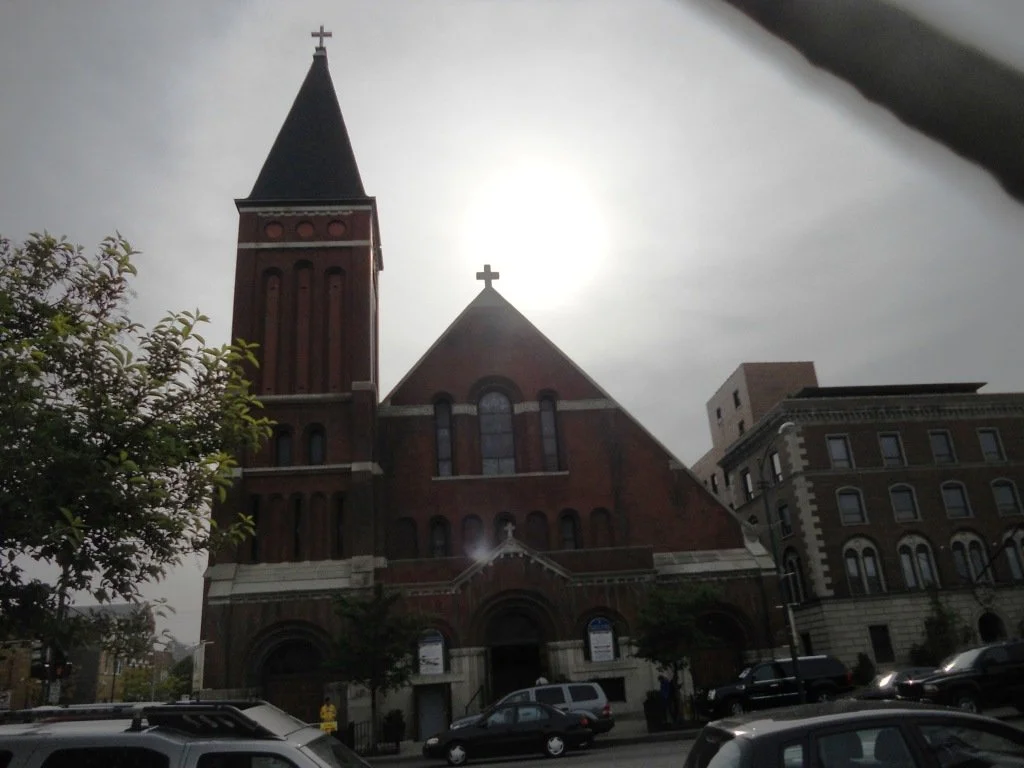
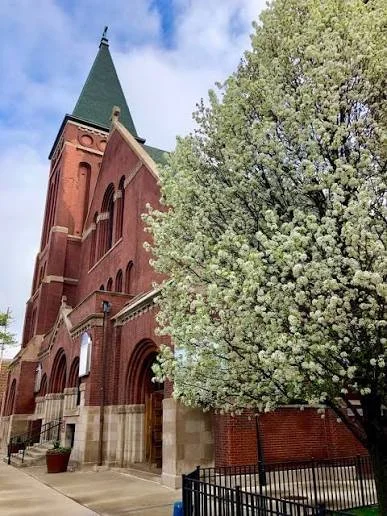
St. Pius V Church at 19th Street and Ashland Avenue in Chicago's Pilsen neighborhood. The red brick Romanesque Revival structure, designed by James J. Egan, was completed in 1893—one year after Eugene Hamall's baptism in the basement hall.
On June 9, 1892, Owen and Catherine Hamall brought their newborn son Eugene to be baptized at St. Pius V Church in Chicago's Pilsen neighborhood. The upper church was still under construction—worshippers had been gathering in the basement hall since 1885—but the Jesuits' mission parish for Irish immigrants was thriving. Eugene's baptism, performed by Rev. Thomas Finn with sponsors John and Margaret Hurley, would be the last sacrament Owen and Kate celebrated for a new child.
Eugene was born approximately May 28, 1892, Owen and Kate's youngest child and sixth to be baptized in a Chicago Catholic church. He joined siblings Thomas Henry (age 12), Mary (age 7), and Katie (age 2)—the only three of their children still living. Within ten months, Eugene too would be gone, dying on March 31, 1893, at just ten months old.
In Memory
Owen and Kate's youngest child lived only ten months. The cemetery card lists him as "Owen Hamall 10m&s" (10 months and some days). Eugene never appears in any census record—born and died between the 1890 and 1900 enumerations. He is among the "lost children" of Owen Hamall, remembered only through his baptismal record and a burial notation.
A Church Under Construction
When the Hamalls brought Eugene for baptism in June 1892, St. Pius V was a parish in transition. The congregation had outgrown its original frame mission church at 18th Place and Paulina Street, and construction of a grand new church at 19th and Ashland had been underway since 1884. But progress was slow—Irish immigrant families were generous, but not wealthy.
Since 1885, the basement hall of the unfinished building had served as the parish church, accommodating up to 1,500 worshippers while work continued overhead. Eugene Hamall was baptized in this basement hall, surrounded by the sounds of construction above and the prayers of fellow parishioners around him.
1874: Jesuit priests from Holy Family found a mission for Irish immigrants at 18th Place and Paulina.
1884: Construction begins on new church at 19th and Ashland, designed by James J. Egan.
1885: Basement hall opens for worship while construction continues.
1892: Eugene Hamall baptized in basement hall (June 9).
1893: Upper church completed in time for Chicago's World's Columbian Exposition. Archbishop Satolli, Apostolic Delegate to the United States, officiates at dedication.
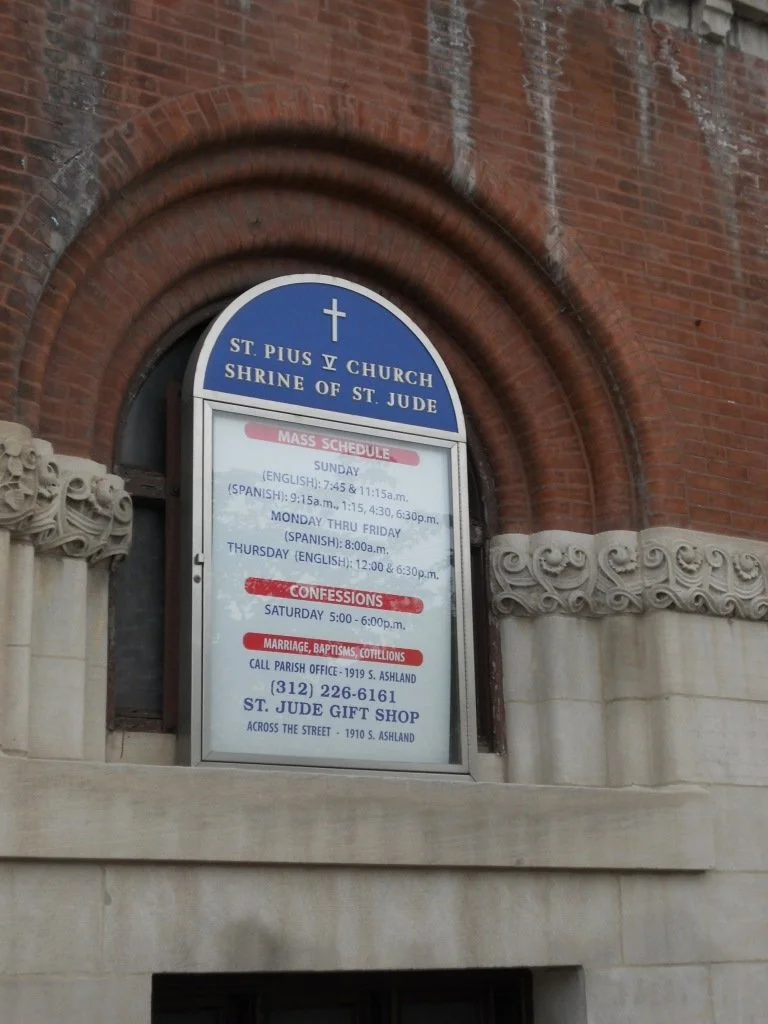
The dramatic facade of St. Pius V Church features smooth masonry—unusual for the era—with geometric details reminiscent of architect Louis Sullivan's modern designs. The church is distinguished by its deeply recessed arched windows and Norman-style interior carvings.
Holy Family's Westernmost Mission
St. Pius V's roots connect directly to the Church of the Holy Family, where Owen and Kate had baptized three other children. In 1874, Jesuit priests from Holy Family founded the mission parish for Irish immigrants settling in Pilsen—Chicago's most westerly parish at the time. The connection between the two churches suggests a continuity in the Hamalls' spiritual community even as they moved through different neighborhoods.
"Irish immigrants had begun pouring into Chicago and Pilsen even before Ireland's infamous potato famine in the mid-19th century. They found work digging the first canal connecting Lake Michigan and the Mississippi River... The newcomers also joined the ranks of laborers at McCormick Works."
The neighborhood surrounding St. Pius V in 1892 was a densely populated, vibrant working-class immigrant community. While the Irish had established the parish, Pilsen was becoming increasingly diverse—Bohemian (Czech), Polish, Slovak, Croatian, and Lithuanian families all called the neighborhood home. The area's economy was driven by heavy industry: garment factories, lumber mills, railyards, and the massive McCormick Works, the country's largest farm implement factory.
Born in Cork, Ireland, Egan studied at the Government School of Design at Queens College before immigrating to New York. He became one of Chicago's most prominent early architects, especially renowned for his ecclesiastical work. His churches include St. Vincent DePaul in Chicago, St. Ambrose Cathedral in Des Moines, and St. Mary's of the Assumption Cathedral in San Francisco. Notably, Egan also designed St. Charles Borromeo Church—where the Hamalls had baptized Elizabeth in 1887—making him the architect of two churches in the Hamall family's story.
The Hamall Family at St. Pius V
By 1892, Owen Hamall was 45 years old and had been in Chicago for over three decades. He and Kate had been married for thirteen years and had already buried at least two children—William (died young after 1883) and Elizabeth "Lizzie" (died young after 1887). The birth of Eugene must have brought both joy and anxiety to parents who had experienced such loss.
The family's choice of St. Pius V—rather than Holy Family or St. Charles Borromeo—suggests another residential move, this time south into the Pilsen neighborhood. Owen's occupation as a molder would have given him options for employment at various foundries and factories throughout the industrial West Side.
Hamall Baptism at St. Pius V
Born: c. May 28, 1892
Parents: Eugene [Owen] Hamil & Katie Griffith
Sponsors: John & Margaret Hurley
Officiant: Rev. Thomas Finn
Eugene Hamall
"June 9th Baptized Eugene Hamil son of Eugene Hamil & Katie Griffith born May 28-92. Spons. Jno & Margaret Hurley. Rev. Thos. Finn"
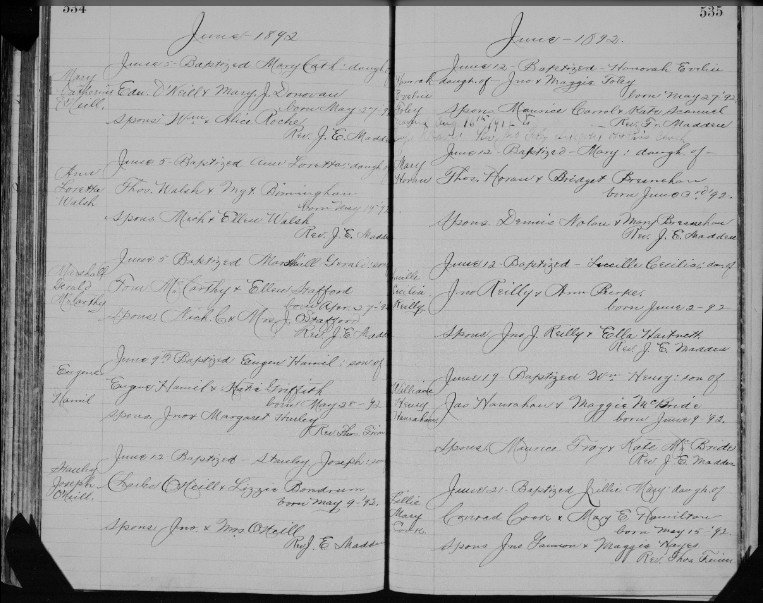
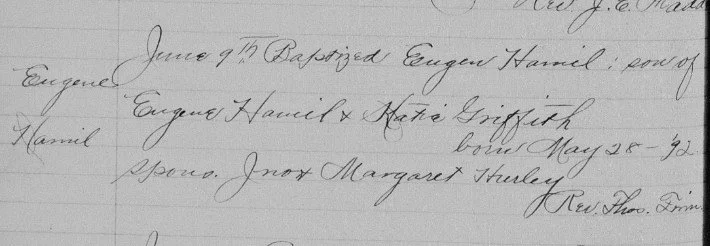
The sponsors chosen for Eugene—John and Margaret Hurley—were likely members of the Pilsen Irish community. Their surname suggests they were part of the same immigrant network that had sustained the Hamall family through their years in Chicago. The choice of sponsors from this new parish indicates the family was building connections in their new neighborhood.
Genealogical Note
Eugene Hamall's baptismal record is one of only two documents that confirm his brief existence. Born between census years and dead before the age of one, he left almost no trace in the historical record. The cemetery card listing "Owen Hamall 10m&s" (ten months and some days) provides the only evidence of his burial. Eugene is the last of Owen's "lost children"—four who died young: William, Lizzie, Katie, and Eugene.
The Church Today
Unlike St. Charles Borromeo, which fell to urban renewal in 1968, St. Pius V Church still stands at 19th and Ashland, serving Chicago's Pilsen neighborhood for over 150 years. The parish has transformed with its community—originally Irish, then Polish after World War I, and predominantly Hispanic since the 1960s. In 1963, St. Pius V became the first parish in Pilsen to offer Mass in Spanish.
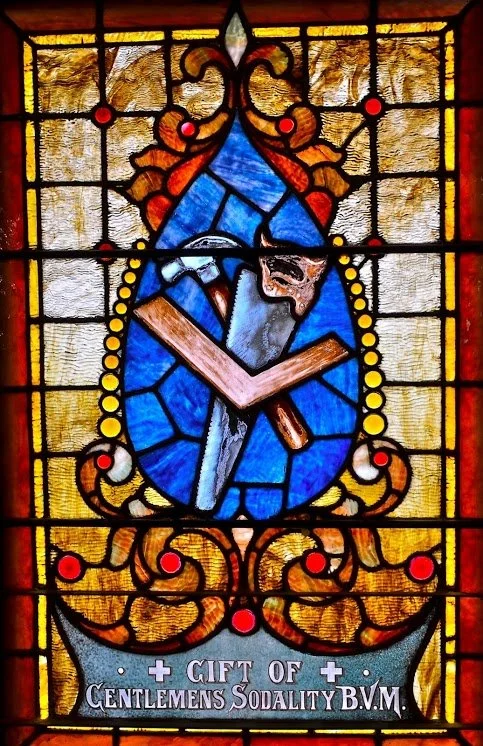
Stained glass window depicting carpenter's tools—a hammer, saw, and square—donated by the Gentlemen's Sodality of the Blessed Virgin Mary. Owen Hamall, a molder who worked with his hands, would have recognized these symbols of skilled labor.
The parish has become renowned for its social ministry. After the stock market crash of 1929, the Dominicans (who took over the parish in 1925) founded the National Shrine of St. Jude Thaddeus—patron of hopeless cases—which drew thousands from across the Midwest. Today, St. Pius V operates food pantries, immigration legal services, and community development programs through partnerships including The Resurrection Project, which the parish co-founded in 1989.
St. Pius V is the only Catholic church in the United States whose main stained glass window depicts Christopher Columbus. The window was installed to commemorate the church's completion in 1893—the same year Chicago hosted the World's Columbian Exposition celebrating the 400th anniversary of Columbus's voyage. This unique piece of Americana connects the church to a specific moment in American history.
For genealogists researching Chicago's Irish immigrant families, St. Pius V's records—preserved in the Archdiocese of Chicago Archives—document generations of baptisms, marriages, and funerals from 1874 to the present. Eugene Hamall's entry on pages 534–535 of the June 1892 register is one small thread in this vast tapestry, but it represents a life, however brief, and a family's continued hope in the face of loss.
Document Gallery
Every Family Has a Story Worth Telling
Whether you're just beginning your research or ready to transform years of work into a narrative your family will treasure, I'd love to hear your story.
BEGIN YOUR RESEARCH INQUIRY