
St. Charles Borromeo Church
Roosevelt Road & Hoyne Avenue, Chicago
St. Charles Borromeo Church
Where Owen and Catherine Hamall baptized their daughter Elizabeth "Lizzie" in 1887—a lost parish that served Chicago's Near West Side Irish community for eight decades.
Churches of the Hamall Family
The Hamall family's movement through four Chicago parishes over thirteen years traces their residential mobility and community connections across the Near West Side and into Pilsen.
Thomas Henry (1880)
Mary (1885) • Katie (1890)
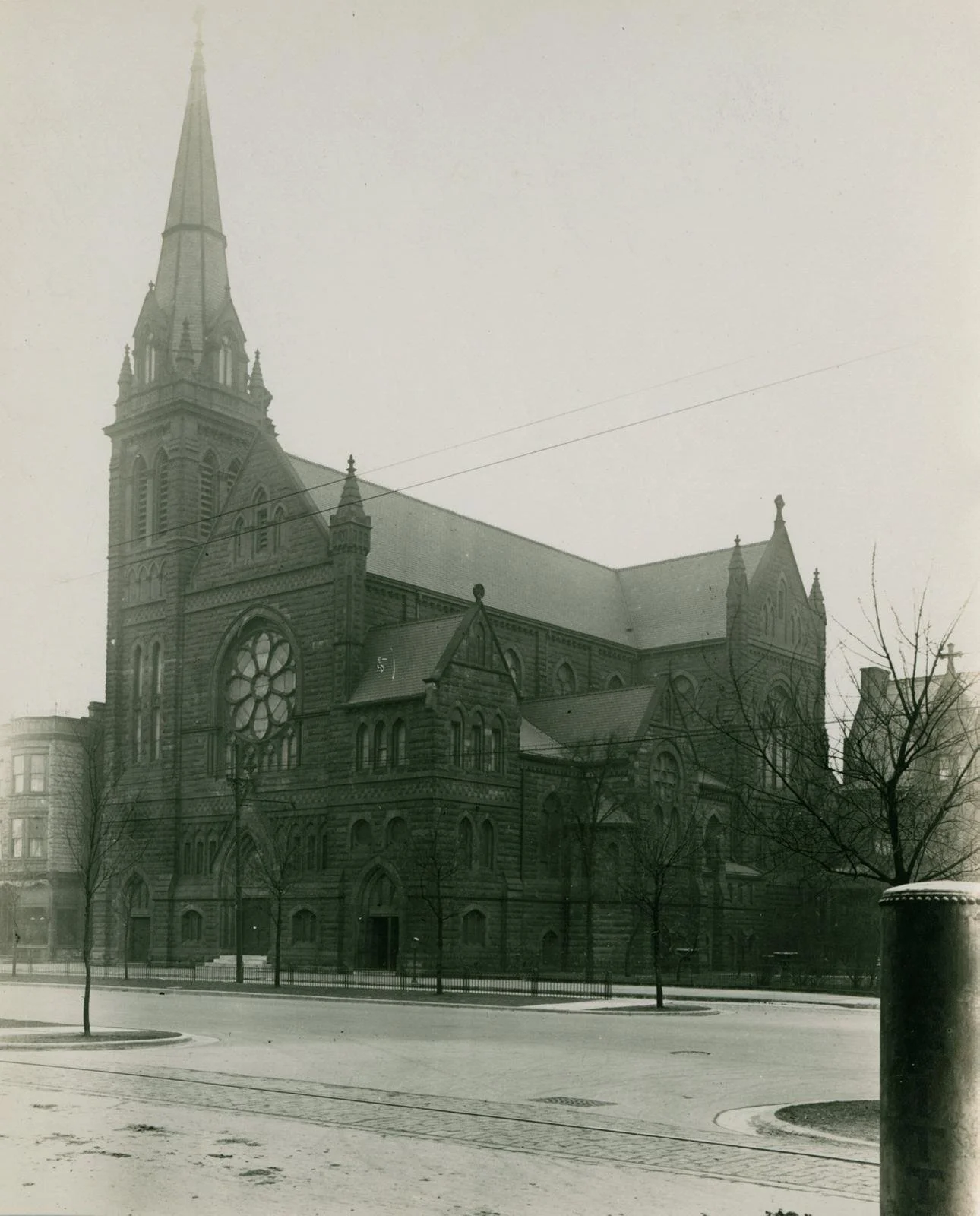
St. Charles Borromeo Church at Twelfth Street Boulevard (Roosevelt Road) and Hoyne Avenue, photographed in 1913 by Percy H. Sloan. The church was demolished in 1968 during urban renewal.
On March 22, 1887, Owen and Catherine Hamall brought their infant daughter Elizabeth to be baptized—not at Holy Family Church where they had christened William and Mary, but at St. Charles Borromeo, a newer parish two years old and located further west on Roosevelt Road. The choice likely reflected another move in the family's ongoing search for affordable housing in Chicago's Near West Side.
St. Charles Borromeo would serve the neighborhood for just over eighty years before falling to the wrecking ball in 1968, a casualty of urban renewal and demographic change. Today, a high-rise parking structure stands where the church once anchored the corner of Roosevelt Road and Hoyne Avenue. But the parish records survive, preserving the memory of Elizabeth "Lizzie" Hamall and thousands of other children baptized within its walls.
A Lost Parish
St. Charles Borromeo Church was demolished in 1968 during urban renewal that also displaced much of Chicago's Near West Side neighborhood. The parish records, however, survive in the Archdiocese of Chicago Archives—the only remaining testament to this community's eight decades of faith.
A Young Parish on the Near West Side
St. Charles Borromeo Parish was established in August 1885 by Archbishop Feehan, just two years before Lizzie Hamall's baptism. Father P.D. Gill was appointed as the first pastor, and the original building—designed by architect J. Egan—served dual purposes: a church on the lower floor and a school with living quarters on the second.
The parish was formed by carving territory from existing parishes to serve the growing Catholic population on the Near West Side. Like Holy Family to the east, St. Charles Borromeo primarily served an Irish-American community, though the neighborhood would later become part of Chicago's "Little Italy."
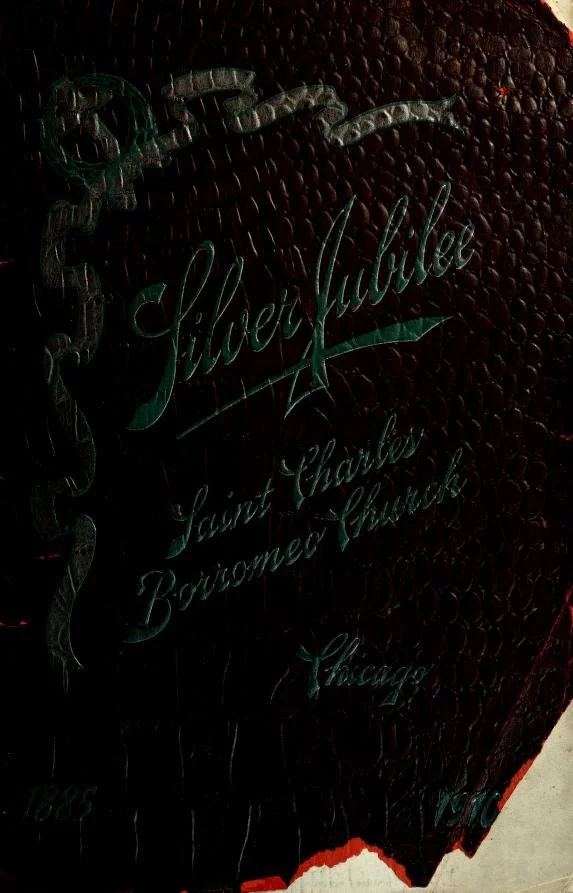
Founded in 1885, St. Charles Borromeo celebrated its Silver Jubilee in 1910 and its Diamond Jubilee (75 years) in 1960—just eight years before its demolition. The 1913 church building, designed by architect Percy H. Sloan, replaced the original 1885 structure. The parish published a commemorative book for its 25th anniversary that included complete lists of school graduates.
The Hamall Family at St. Charles Borromeo
By 1887, Owen and Catherine Hamall had been married for eight years and had at least three children: Thomas Henry (born 1880), William (born 1883), and Mary (born 1885). The first two had been baptized at Holy Name Cathedral, while William and Mary were christened at Church of the Holy Family. Now, for their daughter Elizabeth, they chose yet another parish.
In 1880s Chicago, varying baptism locations for siblings typically reflect family relocations, parish proximity, or personal ties. Catholics were encouraged to attend their local territorial parish, but families frequently moved within the city for better housing or work opportunities. The Hamalls' choice of St. Charles Borromeo in 1887 suggests they had moved west, closer to Hoyne Avenue—a pattern confirmed by the 1889 city directory showing Owen living at "rear 134 W. 13th Street."
Hamall Baptism at St. Charles Borromeo
Parents: Eugene [Owen] Hammell & Catharine Griffith
Sponsors: Francis Gallagher & Catherine McGovern
Elizabeth Hamall
Born March 20, 1887. Parents: Eugene Hammell and Catharine Griffith. Sponsors: Francis Gallagher and Catherine McGovern. Baptized by Father Kearney at St. Charles Borromeo Church.

St. Charles Borromeo baptism register, page 16, showing Elizabeth Hammell's entry on March 22, 1887. The register shows baptisms performed by Father Kearney during this period.
The sponsors chosen for Lizzie's baptism—Francis Gallagher and Catherine McGovern—suggest connections within the Irish immigrant community, though their specific relationship to the Hamall family remains to be determined. Notably, the Gallagher surname appears again as a sponsor for Catherine "Katie" Hamall's baptism three years later at Holy Family Church (Anna Gallagher).
Genealogical Note
Elizabeth "Lizzie" Hamall did not survive to adulthood. She is among the "lost children" of Owen Hamall—four children (William, Lizzie, Katie, and Eugene) who died young and were likely buried in unmarked graves. The exact date and circumstances of her death remain unknown, but her baptismal record at St. Charles Borromeo confirms her existence and provides evidence of the family's residential patterns in 1887.
The Neighborhood in 1887
The Hamall family's choice of St. Charles Borromeo suggests they were living in the western portion of the Near West Side by 1887. While we don't have a specific address for Owen that year, the 1889 city directory places him at "rear 134 W. 13th Street"—working-class housing in a rear building, typical for immigrant families of modest means.
"Hamall Owen, molder, h. rear 134 W. 13th"
This entry marks a significant transition—the notation changes from "bds." (boards) to "h." (house), indicating Owen now maintained his own household rather than boarding. The "rear" designation indicates more affordable working-class housing located behind the street-facing structure. By 1889, Owen was 42 years old with a wife and growing family.
The location at 13th Street would have been roughly equidistant between Holy Family Church (at 12th and May) and St. Charles Borromeo (at 12th and Hoyne). The family's movement between parishes over the decade—Holy Name Cathedral in 1879-1880, Holy Family in 1883-1885 and again in 1890, and St. Charles Borromeo in 1887—traces their residential mobility through Chicago's immigrant neighborhoods.
What Remains
St. Charles Borromeo Church was demolished in 1968, a victim of the urban renewal that transformed Chicago's Near West Side. The construction of the University of Illinois at Chicago campus displaced much of the old neighborhood, including the Italian community that had settled there after the Irish. A high-rise parking structure now occupies the site at Roosevelt Road and Hoyne Avenue.
The parish records, however, survive in the Archdiocese of Chicago Archives, accessible through FamilySearch and other genealogical databases. These records preserve not just names and dates, but evidence of the community networks—sponsors, witnesses, family connections—that bound immigrant families together in 19th-century Chicago.
For the Hamall family, Elizabeth's baptismal record at St. Charles Borromeo provides a crucial data point in understanding the family's residential patterns during the 1880s. Though Lizzie herself did not survive to adulthood, her record helps us trace her parents' movements and connections, adding another piece to the puzzle of Owen Hamall's life in Chicago.
Every Family Has a Story Worth Telling
Whether you're just beginning your research or ready to transform years of work into a narrative your family will treasure, I'd love to hear your story.
BEGIN YOUR RESEARCH INQUIRY