
Notre-Dame de Granby
Shefford County, Quebec • Parish opened 1844
Notre-Dame de Granby
For seven years, the identity of "Hammil, Thornton" in Owen Hamall's 1880 Chicago household remained a mystery. Who was this young man living with Owen's family? The answer came not from Chicago, but from a small town in Quebec's Eastern Townships—where William Thornton's 1881 marriage record named his mother as "défunte Mary McMahon." The same Mary McMahon who was Owen Hamall's mother.
Notre-Dame de Granby, a parish church serving the Catholic community of Shefford County since 1844, preserved the document that would unlock one of the most significant discoveries in the Owen Hamall research: proof that William Thornton was Owen's half-brother, born to their shared mother Mary McMahon after she remarried following Henry Hamall's death in 1854.
The Critical Document
The marriage took place just one year after the 1880 census that first revealed "Hammil, Thornton" living with Owen's family in Chicago. William had returned to Quebec—perhaps to marry a woman he had known before moving to the United States, or perhaps to reconnect with family roots in a region where his father Patrick Thornton still had connections.


What This Document Proves
The Evidence Revealed
The Half-Brother Connection
Shared Mother, Different Fathers
First Marriage
Second Marriage (1855)
After Henry Hamall's death in 1854, Mary McMahon remarried Patrick Thornton in 1855 at Notre-Dame Basilica in Montreal. William was born approximately one year later, making him Owen's half-brother—about nine years younger.
The 1880 census now made perfect sense. "Hammil, Thornton" wasn't a confusing double-surname—it was Owen's half-brother William Thornton, listed in Owen's household under what the census taker understood as Owen's surname "Hammil." William, then about 24 years old, was living with his older half-brother's family in Chicago.
Notre-Dame de Granby
Granby sits in Shefford County in Quebec's Eastern Townships, a region first settled by American, British, and Scottish immigrants in the late 1790s. The Irish arrived in the 1840s, and by 1844, the Catholic community had grown large enough to establish Notre-Dame parish.
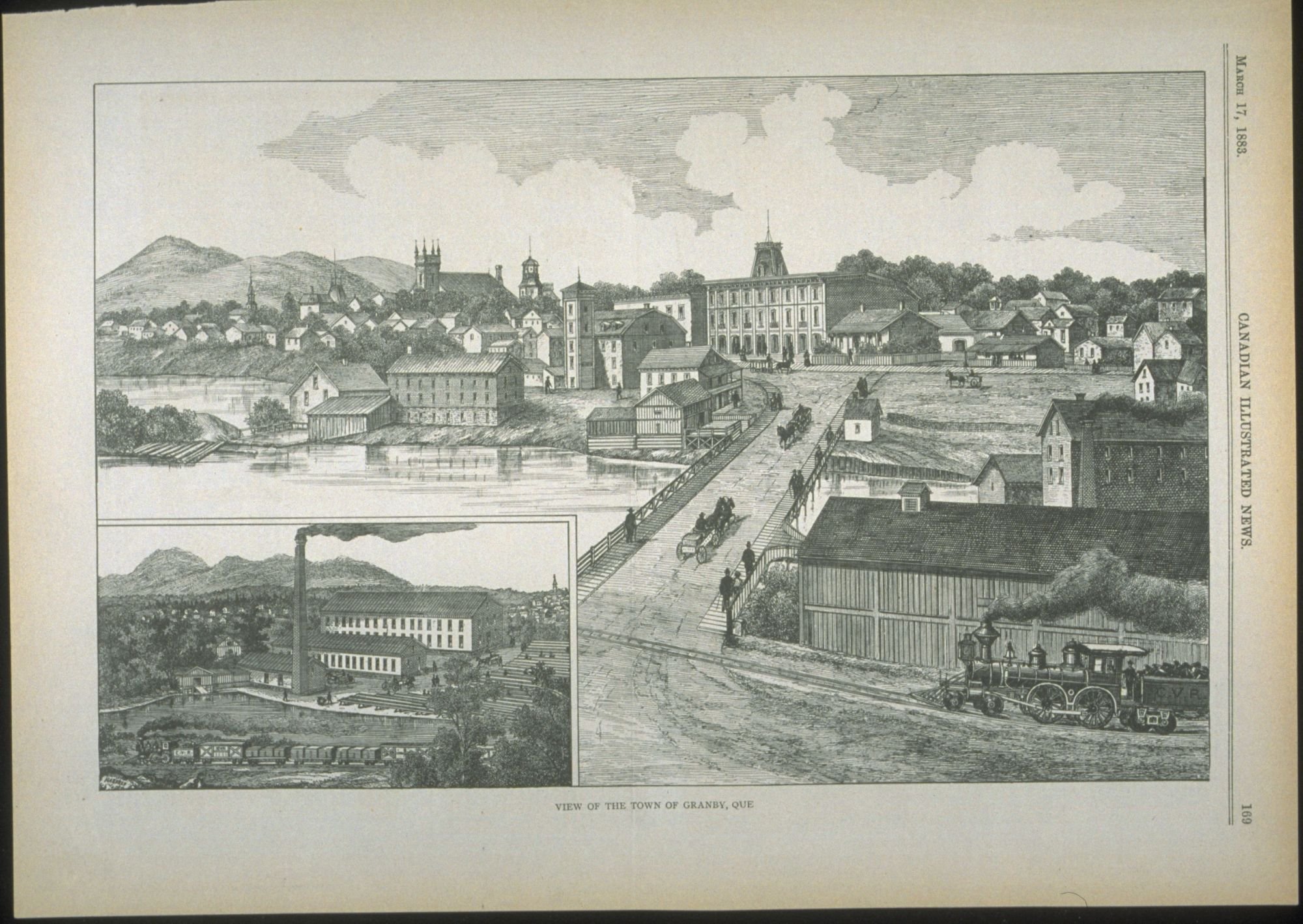
As early as 1831, Catholic missionaries criss-crossed Shefford County, baptizing, marrying, and blessing the departed. The first permanent Irish Catholic mission in the Townships was established at Roxton Falls in 1848 by Father Bernard O'Reilly.
- Parish Established: Notre-Dame de Granby was organized in 1837 and canonically established December 3, 1859
- First Church: A chapel was authorized in 1840, with a permanent church completed by 1842
- Irish Presence: Irish families were present in the Granby region from about 1863 onward
- Later Development: St. Patrick's parish was organized in 1951 specifically for the Irish community
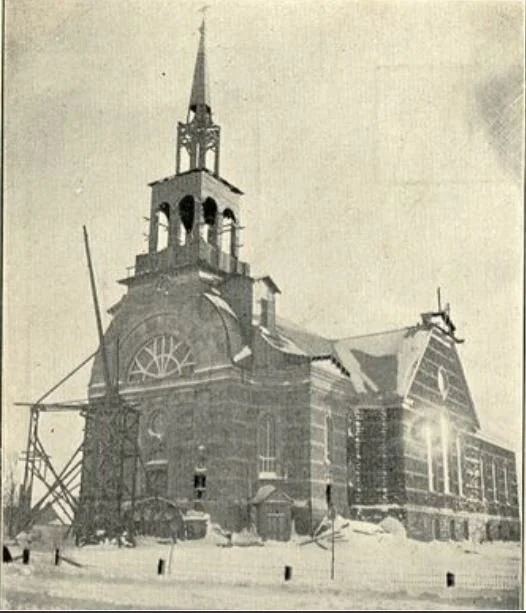
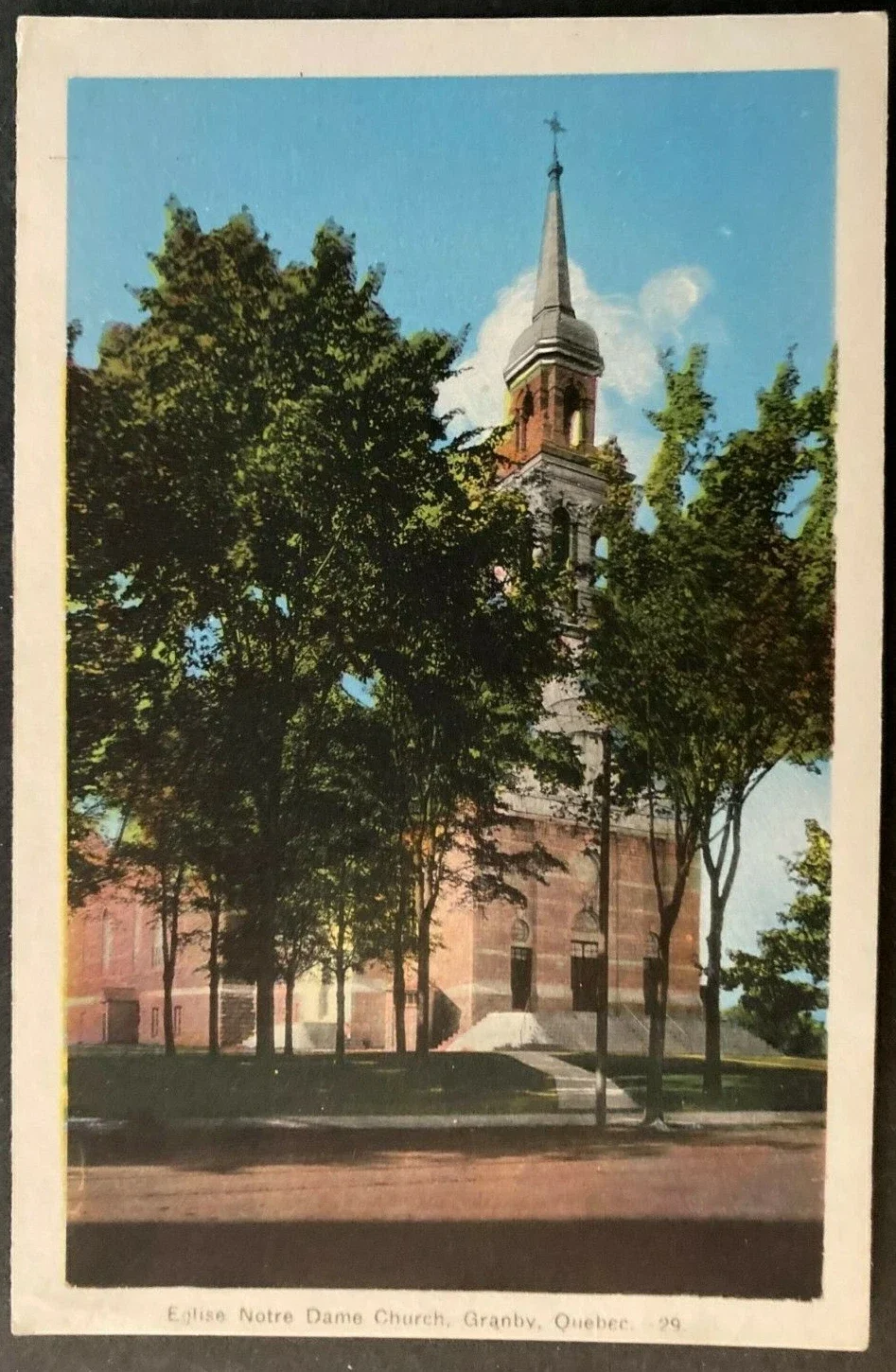
The church where William Thornton married in 1881 was the original structure built around 1842—a modest building that served the growing Catholic community for over fifty years before being replaced by the larger church constructed between 1898 and 1906. That second church, in turn, gave way to a modern structure that now serves as the Centre Notre-Dame, an event venue.

Why Granby?
Why did William Thornton travel from Chicago to Granby, Quebec to marry in 1881? The marriage location—rather than Chicago where he had been living with Owen's family just a year earlier—suggests William maintained Quebec connections even after moving to the United States.
The bride, Mary Jane Lynch, was daughter of "Michael Lynch, Cultivateur" (farmer) and "défunte Margaret Flannery" (the deceased Margaret Flannery) of Granby. Several possibilities explain the marriage location:
- Prior Acquaintance: William may have known Mary Jane before moving to Chicago, perhaps through family connections in the Eastern Townships
- Thornton Family Ties: Patrick Thornton may have had relatives or business connections in the Granby area
- Return to Quebec: William may have been planning to settle in Quebec rather than remain in Chicago
Whatever drew William to Granby for his wedding, the marriage would be short-lived in its happiness. Within five years, William and Mary Jane would bury all three of their children in Chicago.
Parallel Tragedies
The 1881 marriage in Granby marked the beginning of a new chapter for William Thornton—one that would mirror his half-brother Owen's experience in devastating ways. Both sons of Mary McMahon would suffer the loss of multiple children in Chicago.
Seven Lost Children
The parallel tragedies of the two half-brothers—Owen losing four children between 1892 and 1893, William losing three children by 1886—created devastating losses for both branches of Mary McMahon's family. The woman who had survived the Famine, emigration, widowhood, and remarriage did not live to see this sorrow; she had died in Montreal in 1874, seven years before William's marriage and nearly two decades before Owen's losses.
Timeline
"Twelve words in French. One hundred seventy years of mystery solved. The parish records of a small Quebec town held the key to understanding why a young man named Thornton lived in Owen Hamall's Chicago household—he was family."
Notre-Dame de Granby, a parish church that has served its community since 1844, preserved one of the most significant documents in the Owen Hamall research. The marriage record of William Thornton and Mary Jane Lynch—with its crucial parental notation—proved beyond doubt that William was Owen's half-brother through their shared mother, Mary McMahon.
The document answered questions that had puzzled researchers examining the 1880 census: Why was someone named "Thornton" living with the Hamall family? What was the connection between these two surnames? The answer was simple and profound—they were brothers, sons of the same remarkable woman who had survived the Famine, built a life in Montreal, and left descendants in both Quebec and Chicago.
Today, the parish registers of Notre-Dame de Granby are preserved at the Bibliothèque et Archives nationales du Québec (BAnQ), accessible to researchers seeking their own family connections in Quebec's Eastern Townships. The church building itself, though no longer an active parish, stands as Centre Notre-Dame—a venue that hosts community events rather than Sunday masses, but whose records continue to tell the stories of the families who built this region.
Sources
Primary Sources
- Marriage record, William Thornton and Mary Jane Lynch, 20 August 1881, Notre-Dame de Granby, Shefford County, Quebec; Bibliothèque et Archives nationales du Québec (BAnQ); digital images, Ancestry.com
- 1880 U.S. Census, Chicago, Cook County, Illinois, showing "Hammil, Thornton" in Owen Hamall household
Parish Records
- Notre-Dame de Granby, Shefford County, Quebec (parish opened 1844)
- BAnQ parish registers (1844–1940)
- Quebec Family History Society transcriptions (1844–1940)
Images
- "View of the Town of Granby, Que." — Canadian Illustrated News, March 17, 1883
- Construction photograph, Notre-Dame de Granby second church (c. 1898–1906)
- Vintage postcard, "Eglise Notre Dame Church, Granby, Quebec"
- Contemporary photograph, Centre Notre-Dame (former parish church)
Secondary Sources
- QFHS, "Irish Quebec" parish listings for Shefford County
- Les églises de mon quartier, Notre-Dame de Granby history
- Centre Notre-Dame reconversion documentation (2019)
Every Family Has a Story Worth Telling
Whether you're just beginning your research or ready to transform years of work into a narrative your family will treasure, I'd love to hear your story.
BEGIN YOUR RESEARCH INQUIRY