
Pierre Marsan dit Lapierre: Carignan-Salières Regiment
Pierre Marsan dit Lapierre
The Soldier from Normandy
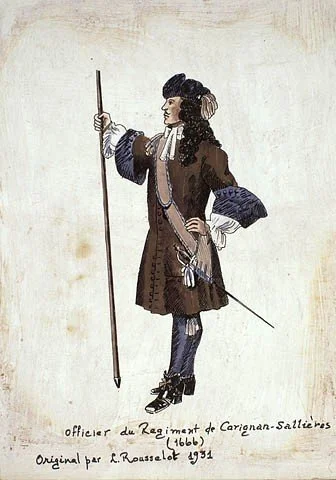
Long before he became a husband, father, and ancestor rooted in Canadian soil, Pierre Marsan dit Lapierre was a soldier shaped by discipline and uncertainty. When he embarked from La Rochelle in April 1665 aboard the Vieux Siméon, he joined hundreds of men bound for a distant colony few in France could imagine—a land defined by vast forests, harsh winters, and decades of conflict along the frontier. As a member of the Carignan-Salières Regiment in the Company of Captain Jacques de Chambly, Pierre arrived not as a settler seeking fortune, but as part of a royal strategy: the deployment of professional troops to stabilize New France and secure it against the Iroquois nations whose raids had long threatened its survival.
Pierre's rank as sergeant set him apart within the regiment. Unlike the younger soldiers filling the ranks, he was already a mature man, likely hardened by previous military experience. Sergeants carried the daily weight of command. They drilled the men, enforced discipline, organized watches, and ensured that orders were carried out efficiently. In the rigid hierarchy of seventeenth-century armies, such responsibility reflected trust earned through competence and reliability.
Upon arrival, the regiment's mission unfolded along the Richelieu River, the strategic artery leading south toward Mohawk territory. There, amid dense wilderness, soldiers transformed raw landscape into defensive infrastructure. Pierre would have overseen work parties as trees were felled and palisades raised, helping construct the forts that became the backbone of French defense. These early months demanded endurance more than heroics: mosquitoes and mud in summer, biting cold in winter, and the constant vigilance required of frontier garrisons.
Born about 1626 in the parish of Saint-Nicolas in the city of Rouen, Normandy, Pierre was the son of the late Jean Marsan and the late Jacqueline de Vincent. Some sources refer to him as Pierre-François Marsan; however, the name "François" does not appear on any original record for him and appears to derive from later genealogical compilations. The marriage record at Notre-Dame de Québec identifies him simply as "Pierre Mercan."
Arrival in New France — Québec, June 1665
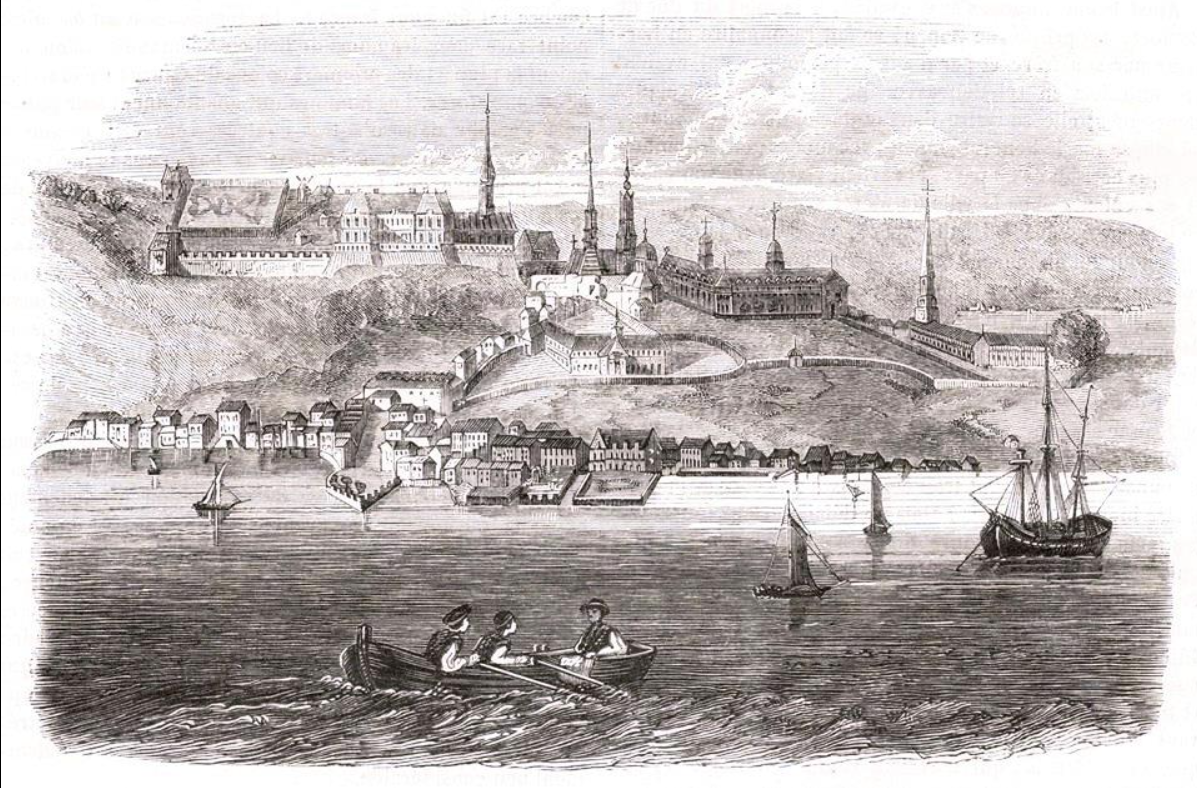
After weeks upon the restless Atlantic, the shoreline of New France emerged slowly from the morning mist. The Vieux Siméon, heavy with soldiers of the Carignan-Salières Regiment, moved cautiously along the broad waters of the St. Lawrence River as Québec came into view—a settlement smaller than many had imagined, yet alive with urgency and purpose. Wooden houses clustered beneath steep cliffs, and above them rose the fortified heights of the colony's administrative heart, a fragile foothold of France set against an immense wilderness.
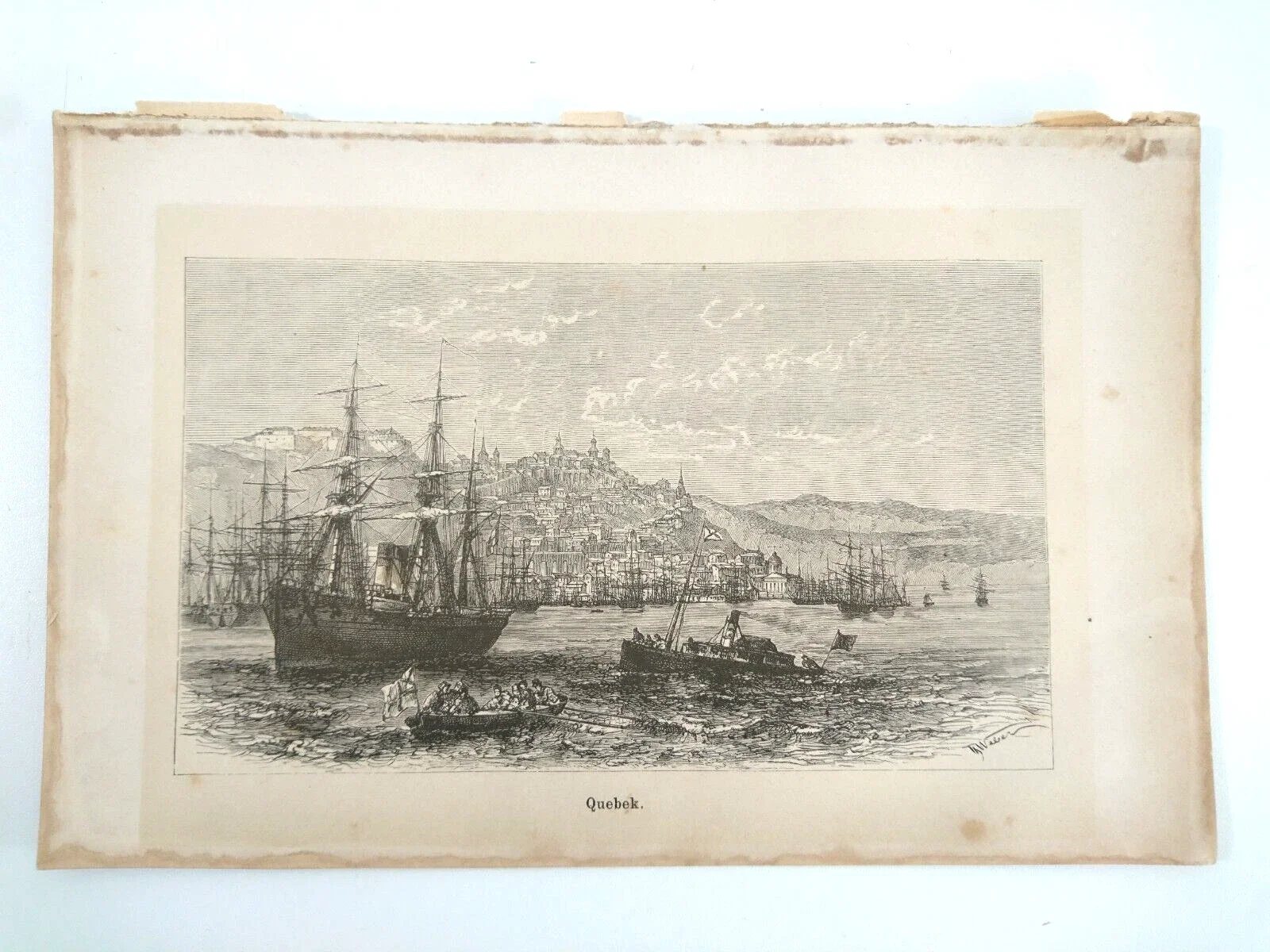
For Sergeant Pierre Marsan dit Lapierre, the arrival marked both an ending and a beginning. The cramped decks and foul air of the voyage were left behind as soldiers prepared to disembark, their uniforms weathered by salt and wind. The men had endured storms, confinement, and the uncertainty of crossing an ocean toward an unfamiliar war. Now they faced a land whose scale dwarfed anything known in Normandy—dense forests stretching beyond sight, rivers wider than cities, and a climate whose extremes would test endurance.
Crowds gathered along the shoreline to witness the arrival. Colonists watched with hope and curiosity, aware that these soldiers represented royal protection against the raids that had long threatened their survival. Orders were shouted, equipment unloaded, and ranks re-formed on land that would soon reshape the course of their lives. Among the assembled troops stood Pierre, older and more seasoned than many around him, stepping ashore as both veteran and instrument of the king's will.
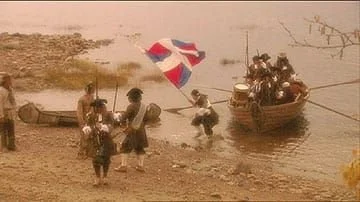
On 24 August 1665, Pierre was confirmed at Québec, his age recorded as thirty years—consistent with a birth date around 1635, though the 1681 census would later record him as age fifty-five, suggesting a birth closer to 1626. All soldiers aboard the Vieux Siméon were reported in good health upon arrival.
In that moment, few could have predicted how profoundly this arrival would alter their futures. The regiment had come to wage war and secure peace, yet for many—including Pierre—the journey would ultimately lead to something unexpected: settlement, marriage, and the laying of roots in a new world.
The Richelieu River Campaign: 1665–1667
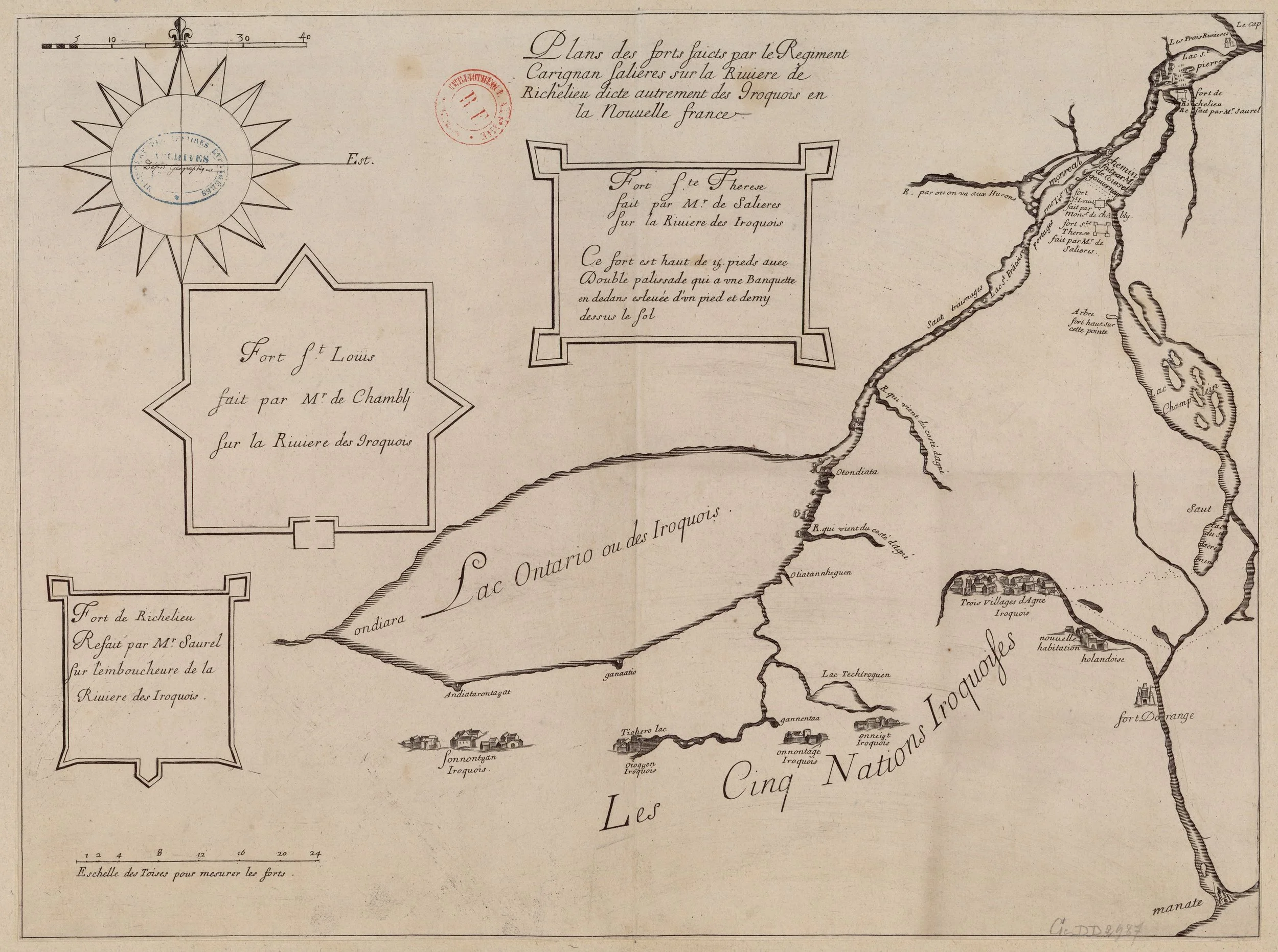
The regiment's first and most urgent task was not combat but construction. Companies were assigned to build a chain of forts along the Richelieu River—the strategic corridor leading south from the St. Lawrence toward Mohawk territory. These fortifications would block the invasion route that had funneled Iroquois raiding parties into the heart of New France for decades.
Fort Saint-Louis and the Company of Chambly
Since Pierre served in Captain Jacques de Chambly's company, he was directly connected to one of the most strategically important positions along the Richelieu corridor. Fort Saint-Louis—later known as Fort Chambly—stood at a critical juncture of the river, guarding against incursions from the south. The fort that Chambly's men constructed was a wooden palisade, fifteen feet high with a double stockade and an interior banquette raised a foot and a half above the ground.
The campaigns of 1666 brought the regiment into enemy territory. Marching through unfamiliar forests alongside colonial militia and Indigenous allies, the soldiers advanced into Mohawk lands, destroying villages and provisions in a campaign designed to break resistance and force negotiations. Victory came not through grand battles but through persistence and calculated pressure, culminating in a peace that reshaped the future of the colony. For men like Pierre, this marked the transition from war to opportunity.

A Day at Fort Chambly — Autumn 1665
Morning came early along the Richelieu River. Before the sun lifted fully above the tree line, the sounds of movement stirred within the rough wooden fortifications: boots on packed earth, murmured orders, the clatter of muskets lifted from racks. Sergeant Pierre Marsan dit Lapierre rose with the others, shaped by years of military routine that allowed little hesitation between waking and duty.
The fort was new, its palisades still smelling of freshly cut timber. Only months earlier the site had been wilderness; now it stood as a symbol of royal determination, a defensive outpost carved from forest by the labor of soldiers like Pierre. As a sergeant, he moved between officers and men, ensuring that the watch had been properly relieved and that each soldier understood his tasks for the day. Discipline was essential on the frontier, where isolation magnified every weakness.
After inspection came work. Some men reinforced the walls, driving stakes deeper into the earth; others cleared fields of fire beyond the fort, cutting brush to prevent surprise attack. The labor was relentless, but it served a larger purpose—to transform vulnerability into security. Along the river, canoes slipped quietly through the water, carrying messages or supplies, reminders that the fort existed within a network of defense stretching toward the St. Lawrence settlements.
Meals were simple and often repetitive: salted meat, hard bread, perhaps peas or porridge when supplies allowed. Conversation drifted between homes left behind in France and speculation about the strange new land. Pierre, older than many of his companions, likely served as both disciplinarian and steady presence, guiding younger soldiers through the hardships of service far from home.
Evening brought heightened vigilance. As shadows lengthened, guards took their posts along the palisade, watching the darkening forest beyond the firelight. The threat of Iroquois attack was never entirely absent, and silence could feel as heavy as danger itself. Yet within the fort there was also a sense of purpose: they were building something meant to last, extending the reach of France into a vast and uncertain world.
For Pierre Marsan dit Lapierre, such days blended physical endurance with responsibility. The routines of drill, construction, and watchfulness forged bonds among the men and laid the foundation for a future none could fully foresee—one in which soldiers would become settlers, forts would grow into communities, and lives shaped by war would give rise to new families in New France.
From Soldier to Habitant
With the threat diminished, the French Crown encouraged soldiers to remain, offering land and the promise of a new life. Many returned to France; Pierre stayed. The decision reveals both practicality and vision. Veterans who settled were valued members of colonial society—accustomed to hardship, familiar with local conditions, and capable of defending their communities if conflict returned.
For many members of the Carignan-Salières Regiment, the end of military service marked more than a change in occupation; it represented a profound transformation in identity. Men who had arrived as royal soldiers trained for war found themselves invited to become settlers, exchanging structured military life for the uncertainties of frontier agriculture. Historians increasingly recognize that these veterans carried the habits of military discipline into their civilian roles, shaping the character of early rural communities in New France.
Life in the regiment had imposed routine, hierarchy, and collective responsibility. Soldiers were accustomed to early rising, coordinated labor, and mutual dependence for survival—traits that translated naturally into the demanding rhythms of colonial farming. When veterans like Pierre Marsan dit Lapierre accepted land and established families, they helped create settlements defined by order and resilience. Their familiarity with hardship and defense made them valuable leaders within emerging parishes, where the boundary between military vigilance and civilian life often remained blurred.
This transition also reflects a broader strategy of the French Crown. By encouraging experienced soldiers to settle, authorities effectively transformed a temporary military presence into a permanent social foundation. The disciplined habits formed in barracks and campaigns contributed to the stability of frontier society, while marriages—often to the Filles du Roi—anchored these men within the community. For Pierre, the move from sergeant to settler was not a departure from his past but a continuation of service in another form, building a family and contributing to the enduring fabric of New France.
Marriage to Françoise Baiselat: 1670
His marriage in 1670 to Françoise Baiselat, a Fille du Roi, illustrates how military service translated into social standing. The King's Daughters were matched with men deemed capable of establishing stable households, and former soldiers—especially non-commissioned officers—were often seen as reliable candidates. Pierre's rank would have signaled responsibility, leadership, and the ability to provide security in an uncertain environment, qualities prized in the fragile early years of settlement.

The marriage was celebrated on 22 September 1670 at Notre-Dame de Québec by Henri de Bernières, in the presence of Charles Palentin dit Lapointe, Léonard Treny dit Laverdure, and Étienne Denevers dit Brantigny. Françoise was identified as the widow of the late Laurent Cambin dit Larivière, a sergeant of the Dugué Company—another Carignan veteran. The Bishop of Pétrée had granted a dispensation from two of the three required banns.
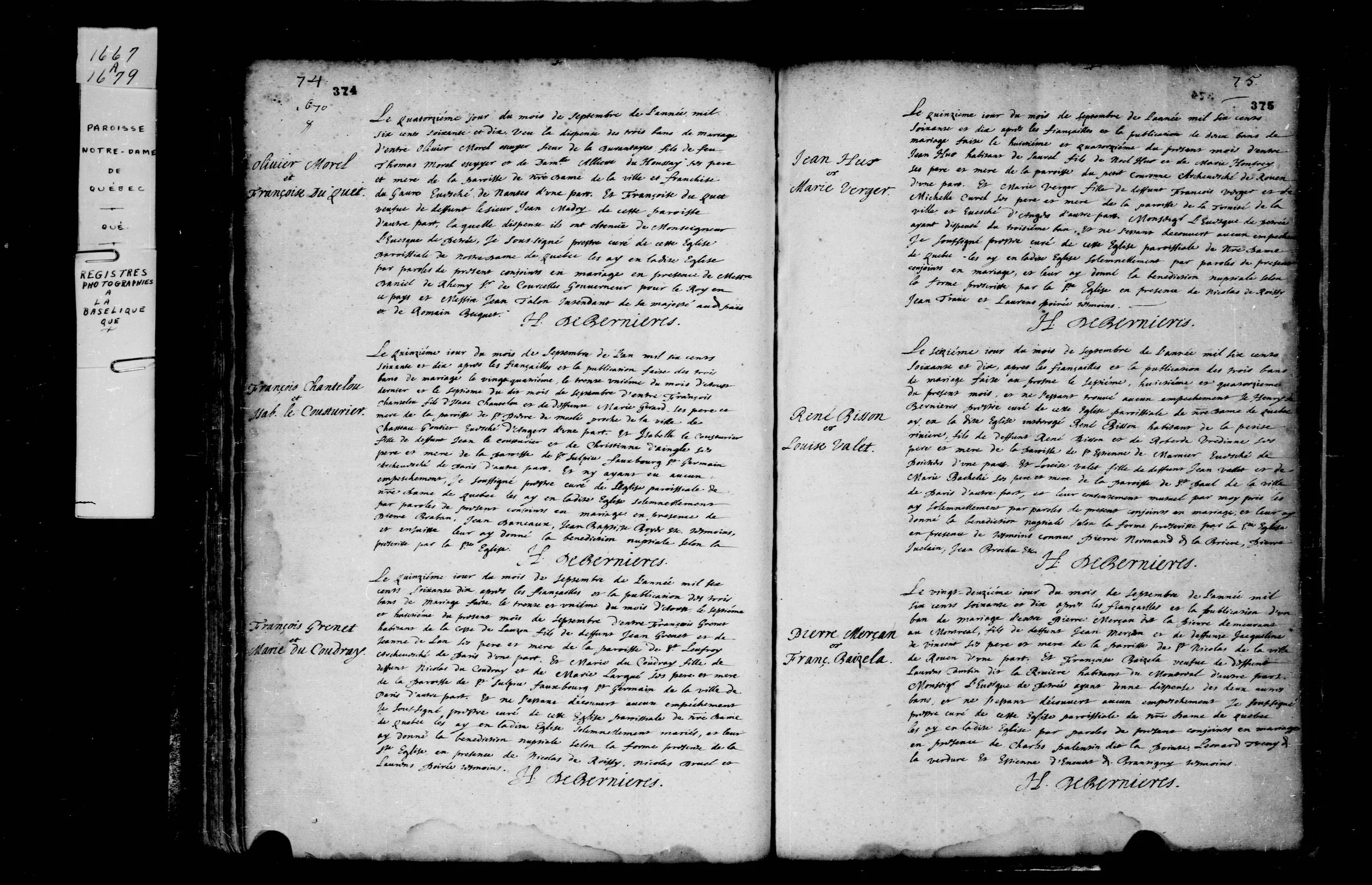
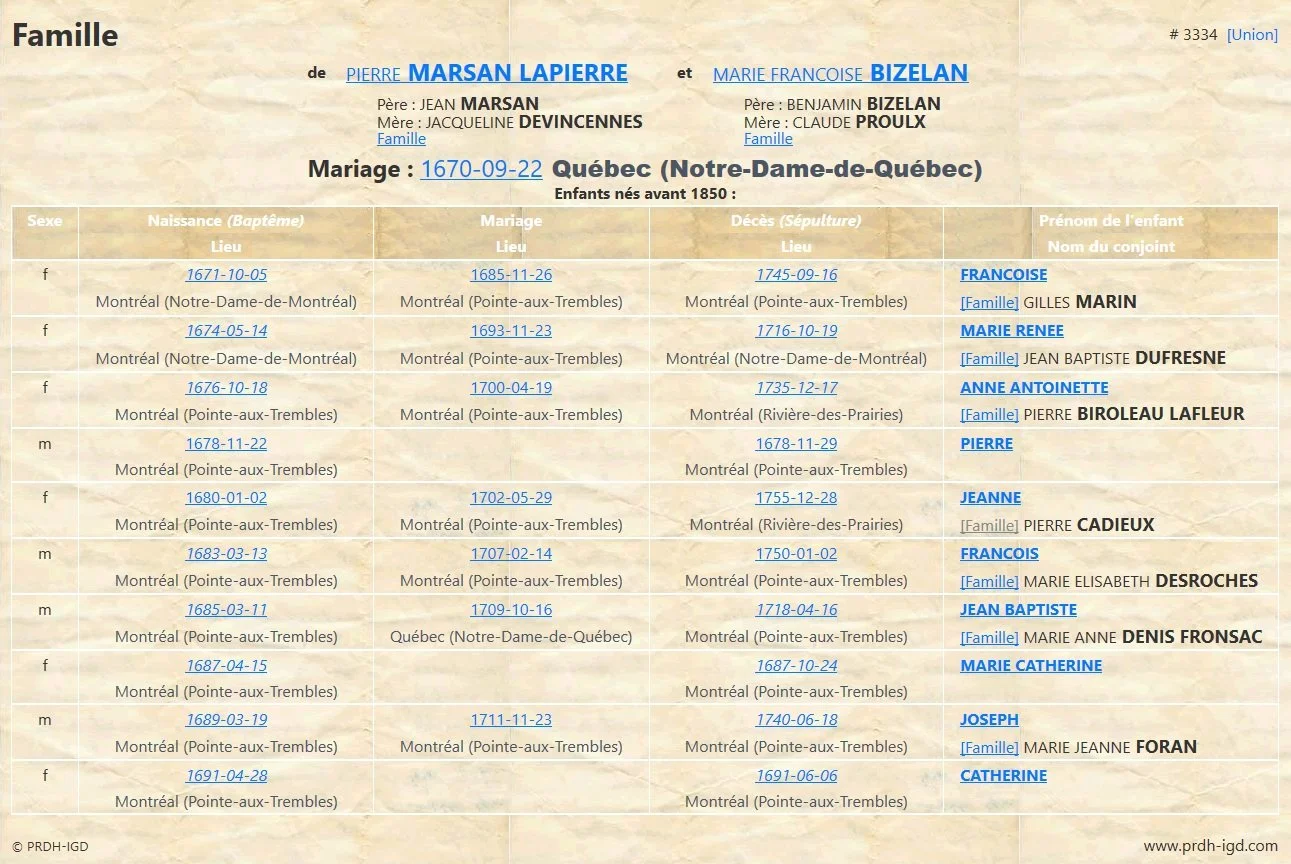
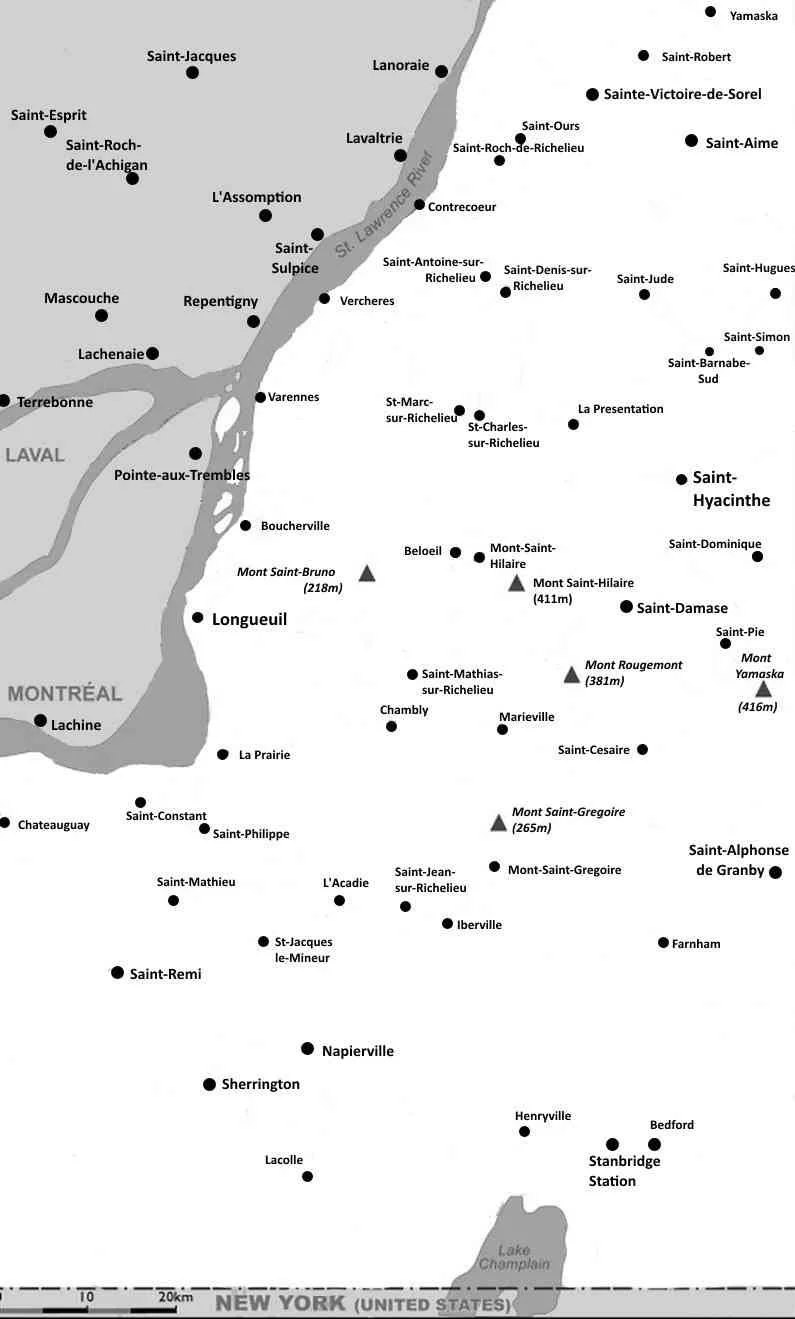
Through this union, the life of a royal soldier became the foundation of a family lineage. The couple established their household at Pointe-aux-Trembles on Montreal Island, where they would raise ten children together over the next twenty-one years. The discipline forged in military service gave way to the rhythms of colonial life, yet the legacy of the Carignan-Salières Regiment remained embedded in his story.
Historian's Note: Military Rank and Marriage Prospects
Service in the Carignan-Salières Regiment did more than defend the colony—it shaped the social structure of early New France. Within the regiment, rank mattered. Non-commissioned officers such as sergeants occupied a respected position between officers and enlisted soldiers, responsible for discipline, organization, and the daily functioning of military life. Their leadership experience and proven reliability often translated into enhanced status once they entered civilian society.
After the peace of 1667, the French Crown encouraged soldiers to remain in Canada, offering incentives such as land grants, supplies, and financial assistance. Colonial authorities sought men who would help stabilize and populate the settlement, and former soldiers were viewed as ideal candidates. Among them, sergeants held particular advantages: they were typically older, more experienced, and perceived as capable household heads able to maintain order and security in a frontier environment.
These qualities influenced marriage prospects, especially in the context of the Filles du Roi program. The King's Daughters were encouraged to marry men who demonstrated stability, responsibility, and the ability to support a family. Veterans of the Carignan-Salières Regiment frequently met these expectations, and those who had served as non-commissioned officers were especially desirable matches. Their military service suggested discipline, reliability, and loyalty to the Crown—traits valued both socially and administratively in the young colony.
Understanding Pierre Marsan dit Lapierre's rank as sergeant helps explain not only his role during the military campaigns of the 1660s but also his successful transition into colonial society and his marriage to Françoise Baiselat. His story reflects a broader historical pattern in which military service laid the groundwork for settlement, family formation, and the creation of enduring French-Canadian lineages.
Historical Context and Narrative Reconstruction
The narrative descriptions of Pierre Marsan dit Lapierre's military experience are based on documented historical knowledge of the Carignan-Salières Regiment and the activities of its companies in New France between 1665 and 1668. While detailed personal records rarely survive for individual soldiers below the rank of officer, historians have reconstructed daily life through military correspondence, colonial records, regimental histories, and contemporary accounts describing the regiment's arrival, fort construction along the Richelieu River, garrison routines, and campaigns into Iroquois territory.
Scenes such as the voyage across the Atlantic, the construction of Fort Chambly, and the rhythms of daily duty reflect established practices known for soldiers of the regiment and especially for non-commissioned officers like sergeants, whose responsibilities included maintaining discipline, organizing labor, and overseeing watch rotations. These descriptions therefore represent historically informed interpretations rather than direct eyewitness accounts of Pierre himself.
Including contextual narrative allows us to understand the environment in which Pierre lived and the experiences that shaped his transition from royal soldier to colonial settler. Such reconstructions aim to bridge the gap between archival facts and lived reality, placing documented genealogical details within the broader historical framework of seventeenth-century New France.
The Soldier-Settler's Legacy
Pierre Marsan dit Lapierre stood among the generation of soldier-settlers whose service transformed New France from a vulnerable outpost into a growing society, their swords ultimately exchanged for plows, their campaigns remembered through the descendants who carried their names forward.
Pierre died between 6 June 1691 and early January 1693. No burial record has been located. The date is bracketed by two documents: the burial record of his youngest daughter Catherine on 6 June 1691, in which Pierre is not listed as deceased, and the date of Françoise's third marriage on 4 January 1693. A concession act of 4 March 1693 names "Françoise Bizelan, veuve de Pierre Marsan dit Lapierre," confirming his death definitively.
With Françoise, Pierre had ten children. Eight survived to adulthood and married into families across the Montreal region. The 1681 census captures the family at a moment of modest rural prosperity: Pierre, age fifty-five; Françoise, age thirty-five; four children enumerated; three head of cattle; and six arpents under cultivation. Through them, the bloodline of a Norman soldier and a Parisian Fille du Roi became one of the foundational families of French Canada.
For a complete account of Françoise Baiselat's life, the family's children, the 1681 census, and the circumstances of Françoise's death in childbirth in 1694, see Françoise Baiselat: A Fille du Roi in New France.
Document Gallery






Sources and Further Reading
Pierre Marsan dit Lapierre's story has been reconstructed from parish registers, military records, notarial acts, and the 1681 colonial census, supplemented by published histories of the Carignan-Salières Regiment and biographical dictionaries of the Filles du roi. Key sources include:
- Thomas J. Laforest, Our French-Canadian Ancestors, vol. 9 (1989), chapter 16, pp. 171–179 — Biographical sketch of Pierre Marsan dit Lapierre.
- PRDH (Programme de recherche en démographie historique) — Individual and family records for Pierre Marsan dit Lapierre (#1596) and Marie Françoise Bizelan (#11941).
- Yves Landry, Orphelines en France, pionnières au Canada: Les Filles du roi au XVIIe siècle (revised edition 2013) — Demographic and genealogical data including Pierre's estimated birth date.
- Cyprien Tanguay, Dictionnaire Généalogique des Familles Canadiennes (1887, 7 volumes) — Vol. 1, pages 42, 57, 100, 279.
- Migrations: Compagnie Chambly — Regimental embarkation records confirming Pierre's passage aboard the Vieux Siméon de Dunkerdam, departure La Rochelle 19 April 1665, arrival Québec 19 June 1665.
- Jesuit Relations — "Relation de ce qui s'est passé en Nouvelle-France des années 1665," Père François le Mercier. Confirmation of troop health upon arrival.
- Jean Talon correspondence and Jesuit Registers — Administrative records of confirmation, 24 August 1665.
- Notre-Dame de Québec Parish Registers — Marriage record, 22 September 1670. Officiant: Henri de Bernières.
- Pointe-aux-Trembles (St-Enfant-Jésus) Parish Registers — Baptisms, marriages, and burials 1674–1694.
- BAnQ Notarial Acts Index — Concession record (Notaire Antoine Adhémar, 4 March 1693, Vol. V, p. 175); Compromise between heirs (Notaire Bénigne Basset, 27 September 1694, Vol. I, p. 306); Tutelle, 27 June 1701.
- Census of New France, 1681 — Benjamin Sulte transcription via Wikisource. Ville de Montréal enumeration.
- Viateur Boulet / Bosher — Embarkation details for the Compagnie de Chambly.
- Peter J. Gagné, King's Daughters and Founding Mothers: The Filles du Roi, 1663–1673 — Biographical entry for Françoise Baiselat.
- Bibliothèque nationale de France — "Plans des forts faicts par le Regiment Carignan Salières sur la Riviere de Richelieu dicte autrement des Iroquois en la Nouvelle France." Contemporary map of the Richelieu River fortifications.
Research Note: This profile documents Pierre Marsan dit Lapierre as part of the Souliere Line's Carignan-Salières Regiment collection. Pierre is the 9th great-grandfather of the researcher. For his wife's story and the family's complete children's record, see the companion profile: Françoise Baiselat: A Fille du Roi in New France.
Are You Connected to the Souliere Line?
If you descend from the Souliere, Suliere, or Soulier (dit Tranchemontagne) family of L’Assomption and St-André-d’Argenteuil, from the nineteen children of Janvier Souliere Sr., or from the allied Gravel, Poulin, Migneron, Lacasse, or Lesage lines — whether your branch stayed in Quebec or came to Chicago — I’d like to compare notes. Documented trees, DNA matches, family papers, and even half-remembered stories have all moved this research forward.
Get in Touch About This FamilyCousin connections are informal and reciprocal — no fee, no obligation, just shared work on shared ancestry.
Every Family Has a Story Worth Telling
Whether you're just beginning your research or ready to transform years of work into a narrative your family will treasure, I'd love to hear your story.
BEGIN YOUR RESEARCH INQUIRY