
One Egg, Two Lives
A DNA Discovery Seven Decades in the Making
Miles Murtha O'Brien Jr. & Michael Joseph O'Brien · Born 1946

Miles and Michael, a few months old — already side by side.
For nearly eighty years, the O'Brien twins were understood to be fraternal — two brothers who happened to arrive on the same day. They were born in separate amniotic sacs, with separate placentas, and the doctors said that meant fraternal. Case closed.
Then DNA told a different story.
Recent genetic analysis revealed what the family photographs had been suggesting all along: Miles and Michael O'Brien are identical twins — monozygotic, born from a single fertilized egg that split within the first few days of life. Two separate sacs, two separate placentas, one shared genome. The science was always there. The technology to prove it just took a few decades to catch up.
The Science of the Split
How identical twins can look "fraternal" from the very beginning
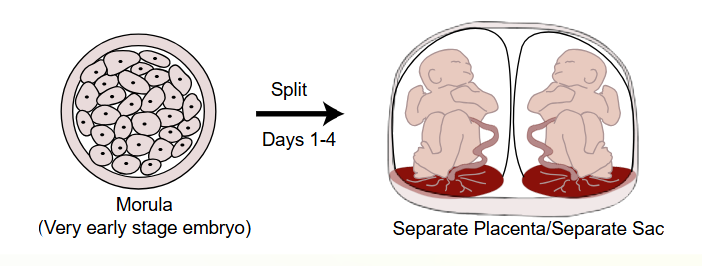
When the embryo splits very early — within days 1 to 4 — each twin develops its own placenta and amniotic sac, a configuration called dichorionic-diamniotic (di-di). This is the type of identical twinning that occurred with Miles and Michael.
Image adapted from Kevin Dufendach, CC BY 3.0, via Wikimedia Commons.
25–30%
of identical twins develop separate placentas and are mistakenly classified as fraternal

Why Did Everyone Think They Were Fraternal?
When twins are born with two separate placentas and two separate sacs — as Miles and Michael were — doctors have historically assumed they must be fraternal. In fact, approximately 81% of physicians have believed that separate placentas always indicate fraternal twins. But the science tells a different story: if a fertilized egg splits within the first one to three days after conception, each embryo implants separately and develops its own placenta and sac. The result is identical twins who look, from a clinical standpoint, exactly like fraternal twins.
How It Happens
In the first one to three days after fertilization, the embryo exists as a cluster of cells called a morula. If this cluster splits before it implants in the uterine wall, each half develops independently — with its own placenta and its own amniotic sac. The medical term is dichorionic-diamniotic, or "di-di." It accounts for roughly one-quarter of all identical twin pregnancies.
How to Know for Sure
Because ultrasound findings at birth can be misleading, the only definitive way to determine whether same-sex twins born with separate sacs and placentas are identical or fraternal is through a DNA zygosity test. Miles and Michael haven't had a formal zygosity test, but their DNA profiles appear to be identical — the same result a formal test would confirm.
It is true that all fraternal twins have separate sacs. But it is not true that all twins with separate sacs are fraternal. Miles and Michael are living proof.
Always Together
A photographic timeline from Caldwell, New Jersey, through college
Infants · 1946–1947

Lillian Marie O'Brien — barely eighteen years old — with the twins on a bench outside the Caldwell house. She was the eldest, the one who helped her mother with the babies. By the time Miles and Michael arrived, Lillian was already a second mother to the younger children. Here she is with a twin on each arm, looking like she's done this a hundred times.
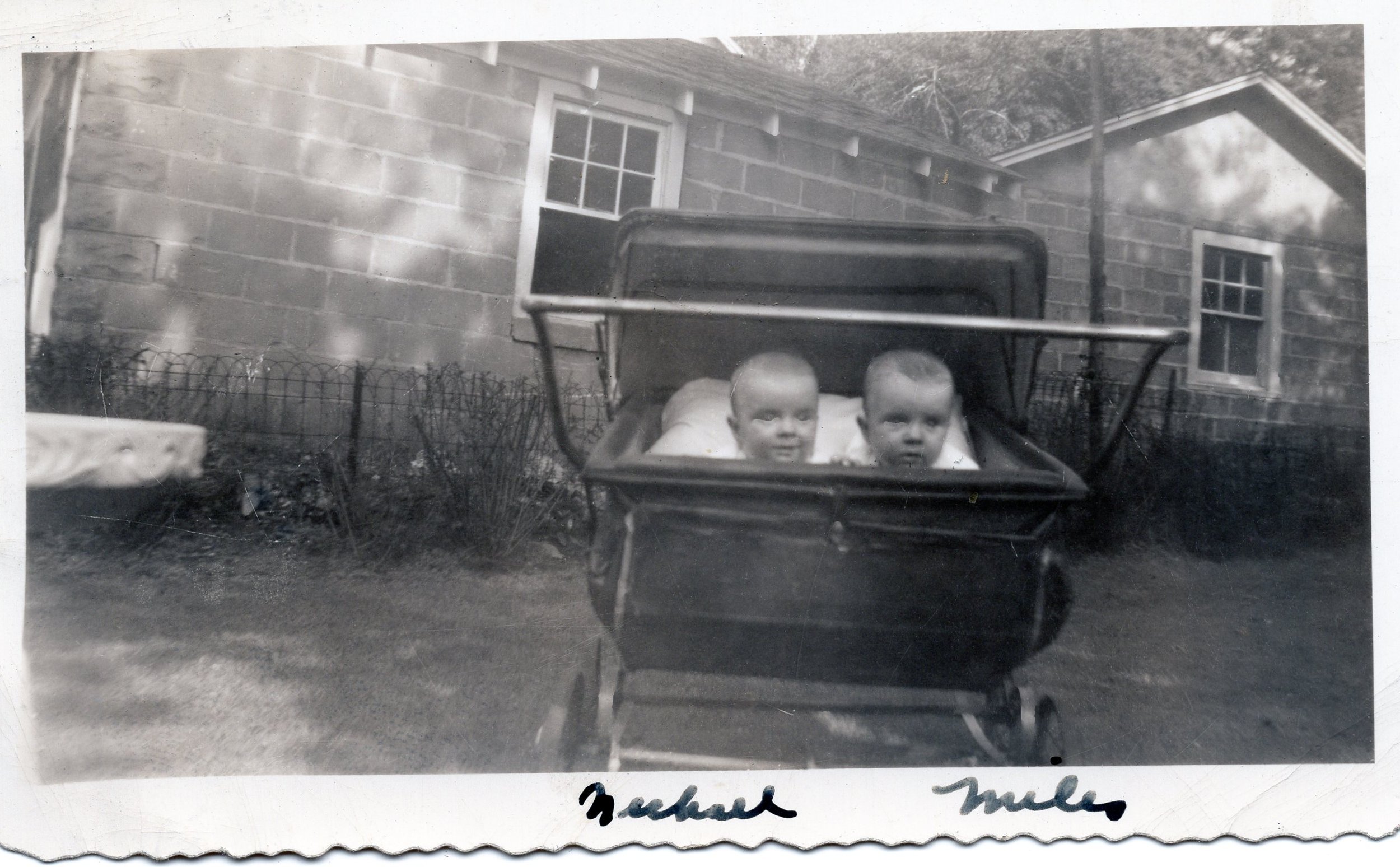
Michael and Miles in the carriage — labeled in their mother's handwriting. Even she needed a system.

Mother Lillian Josephine Robertson O'Brien with the boys — her last babies, born when she was 40.
Toddlers · 1947–1949
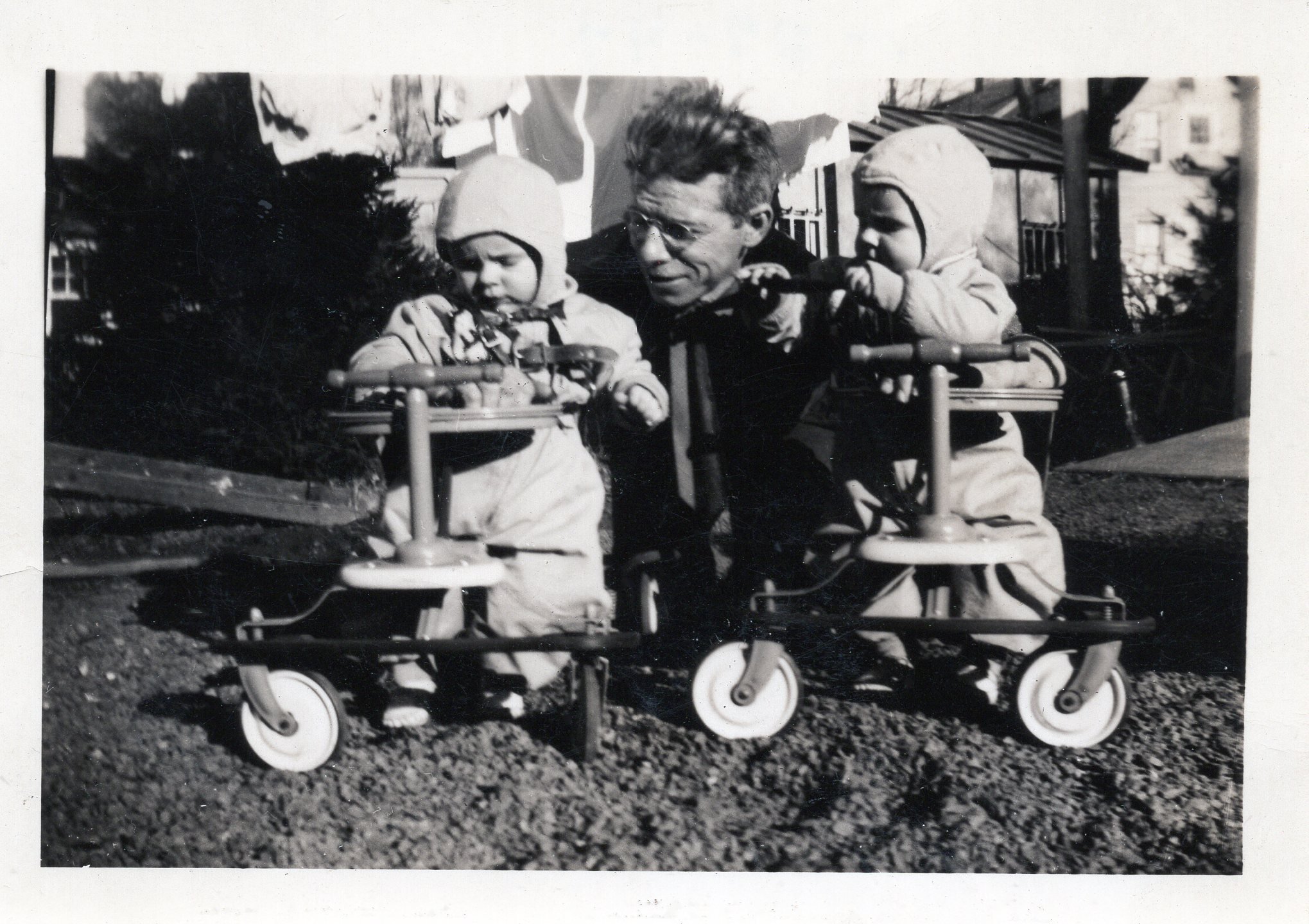
Father Miles between the matching walkers
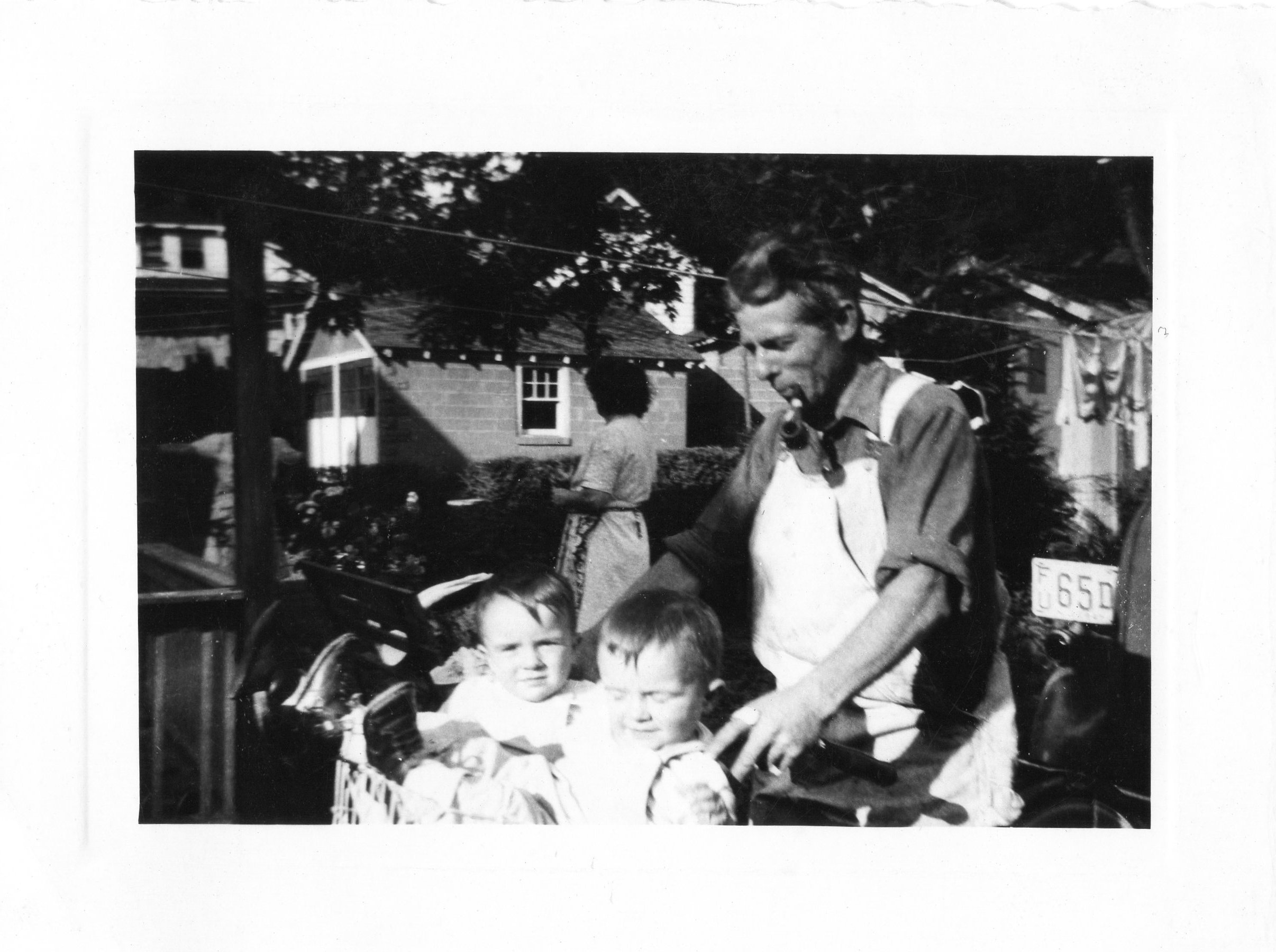
Dad with the boys outside — pipe and all

The twins on a truck's running board, Caldwell

Double trouble required double precautions

Playing catch in front of the garage

One up, one down — the story of twinhood
Boyhood · 1949–1954
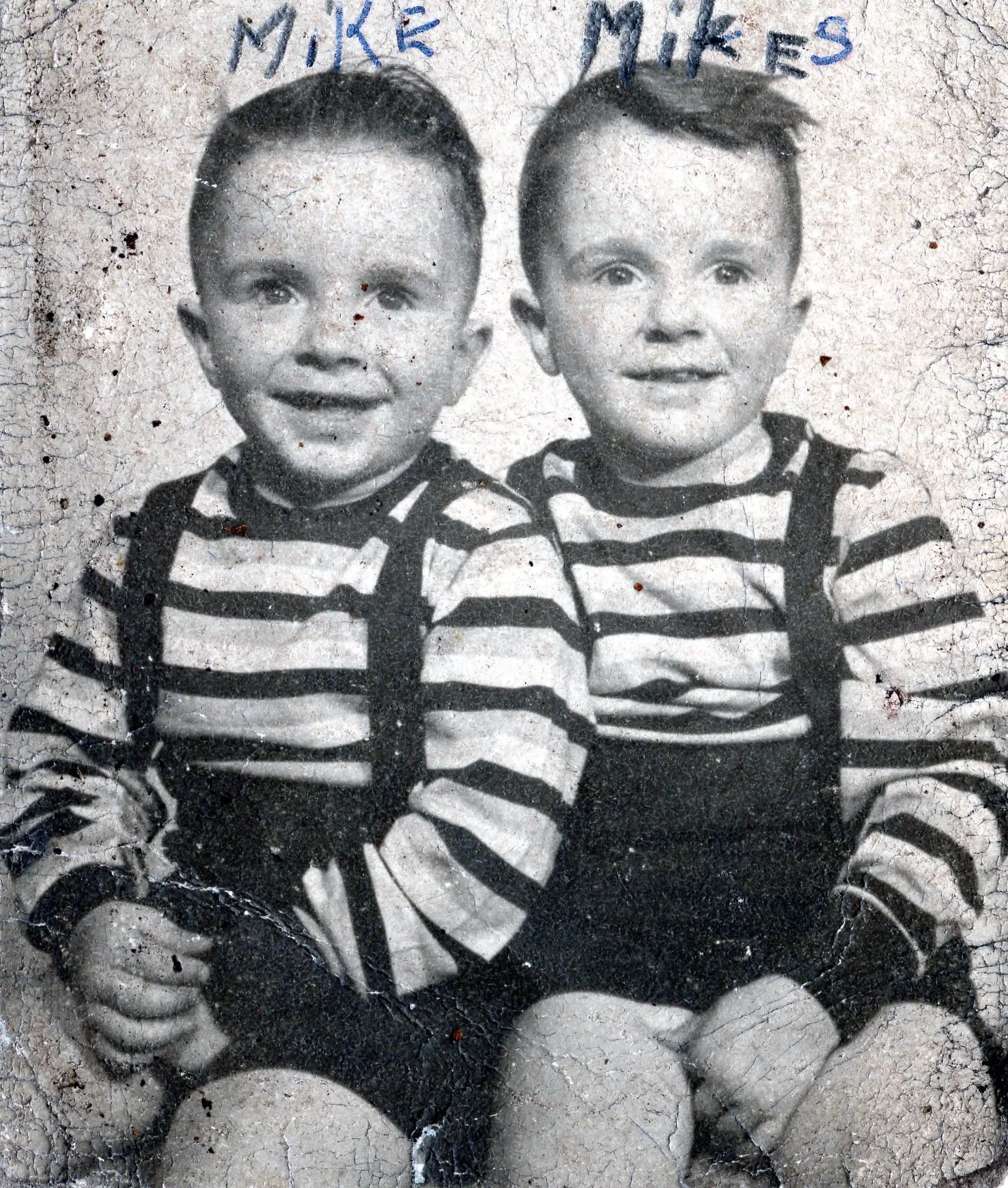
"Mike" and "Miles" — labeled in pen at three or four. Matching striped shirts, matching grins, identical genes.
Battle-scarred but unbowed — matching injuries in the living room chair
Side by Side · Spot the Difference
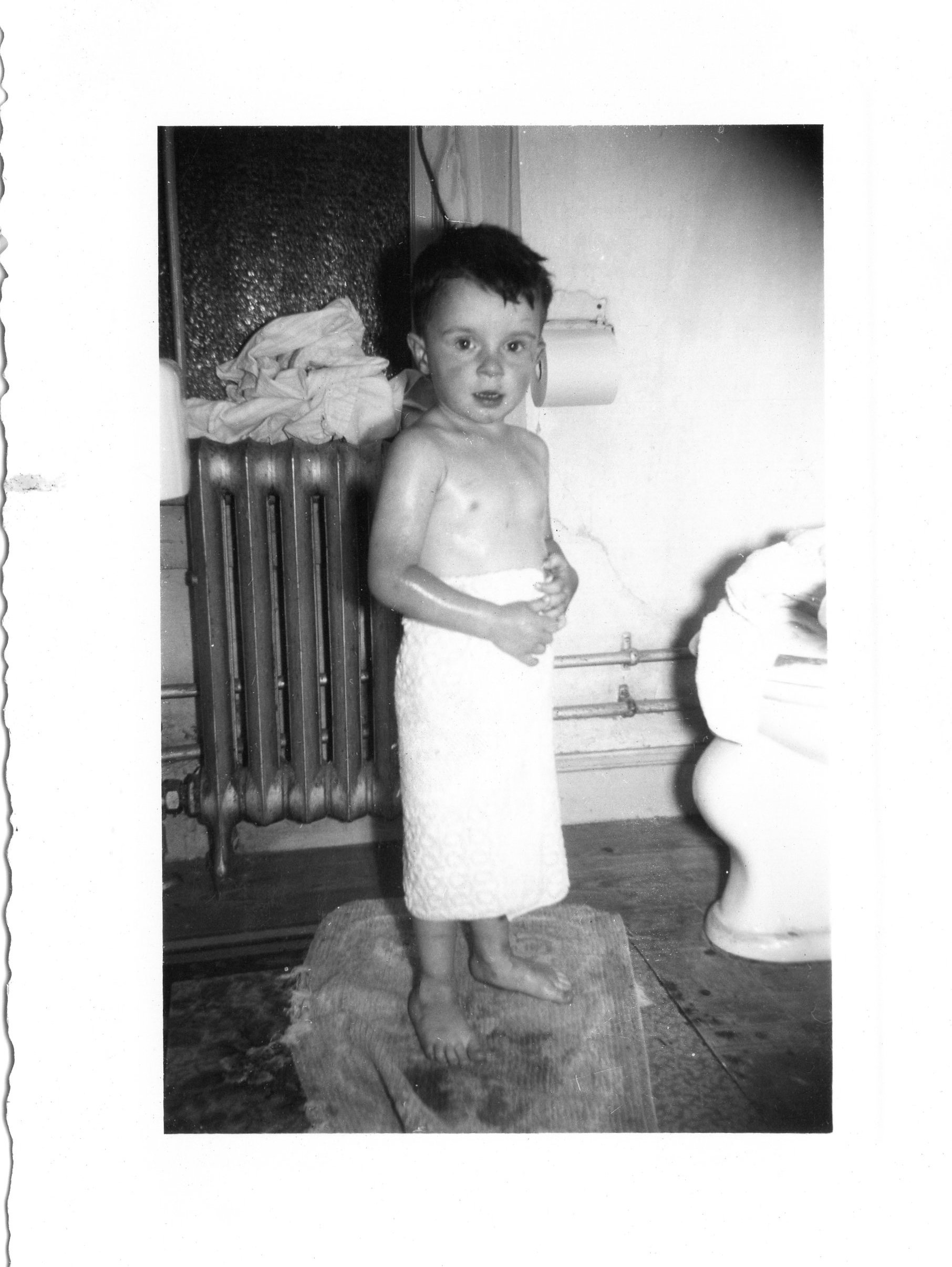
Mike
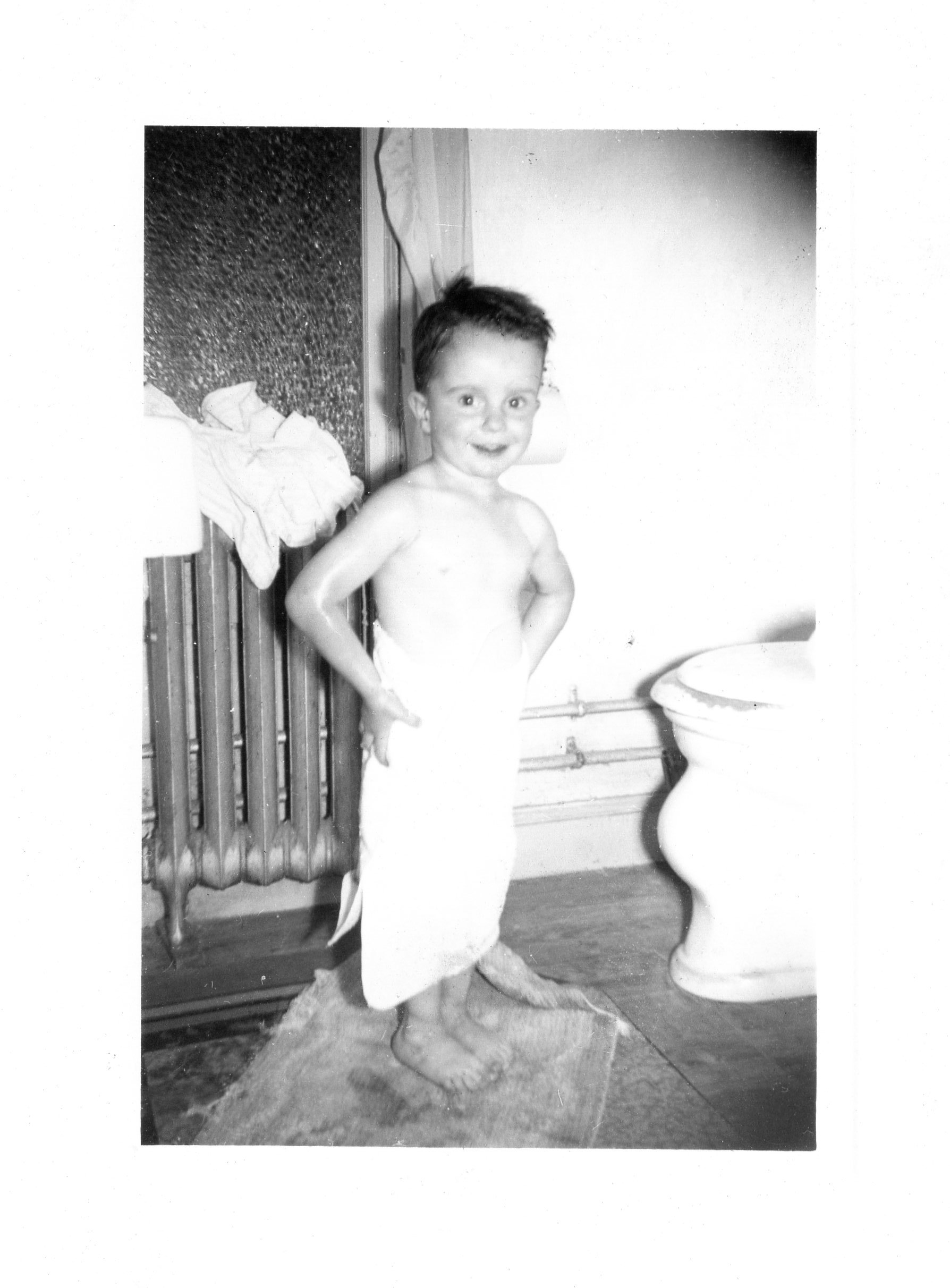
Miles
Same bathroom, same towel, same pose, same face. The photographs always knew.
School Portraits · Circa 1953
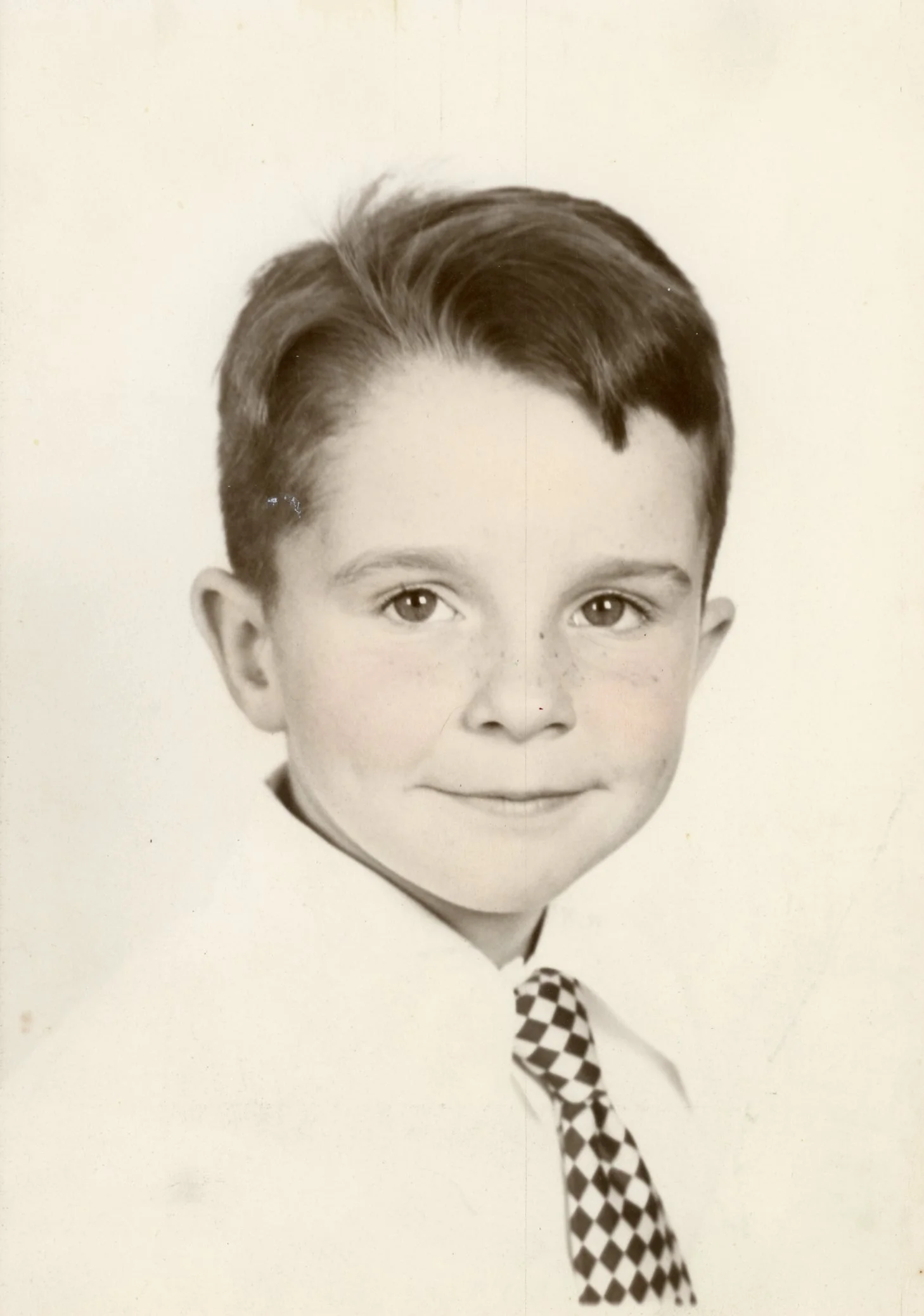
Miles
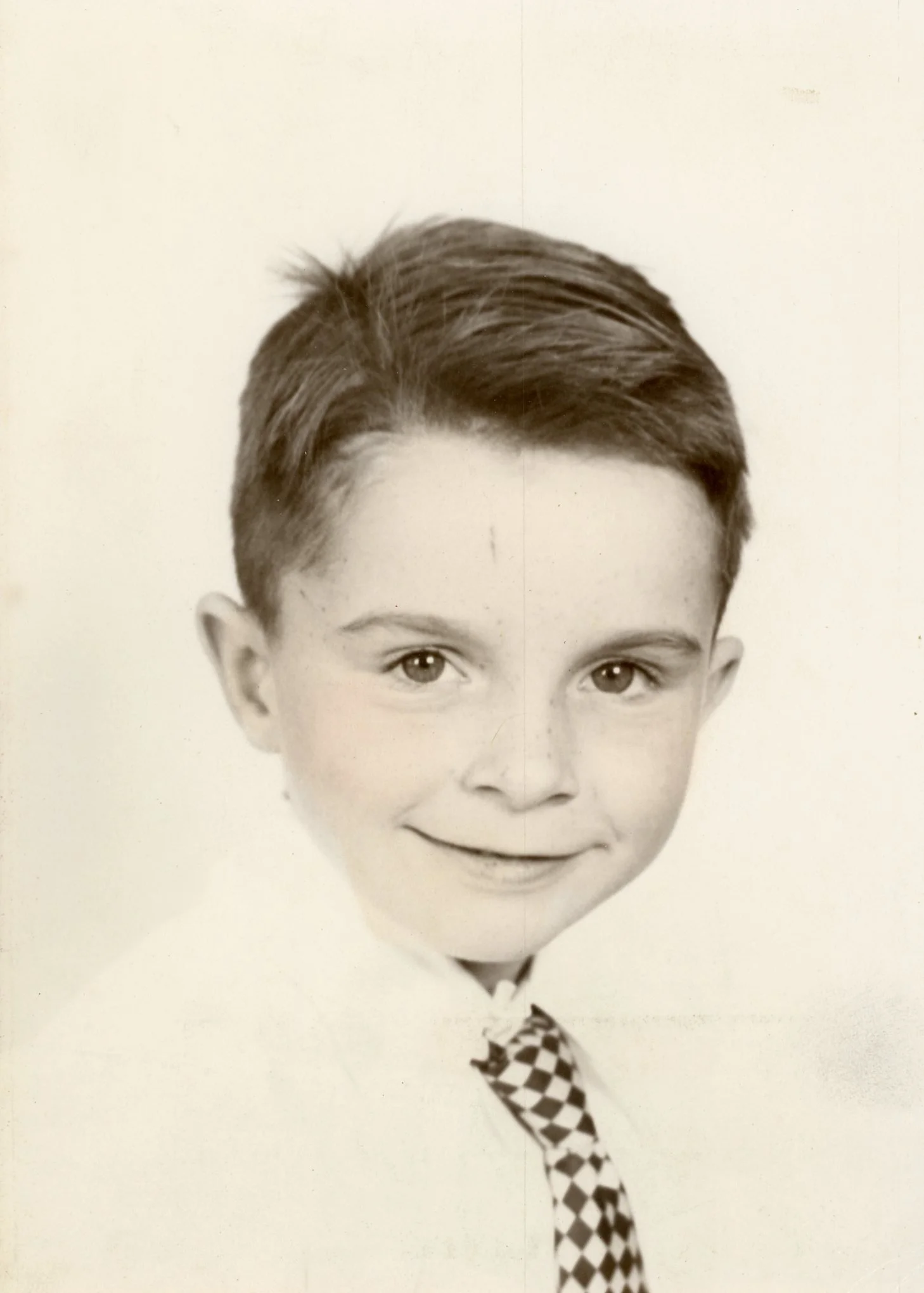
Michael
Same checkered tie, same white shirt, same photographer — and two smiles that dared anyone to tell them apart. Seven years old, and the DNA question no one thought to ask.
School Years · 1954–1960
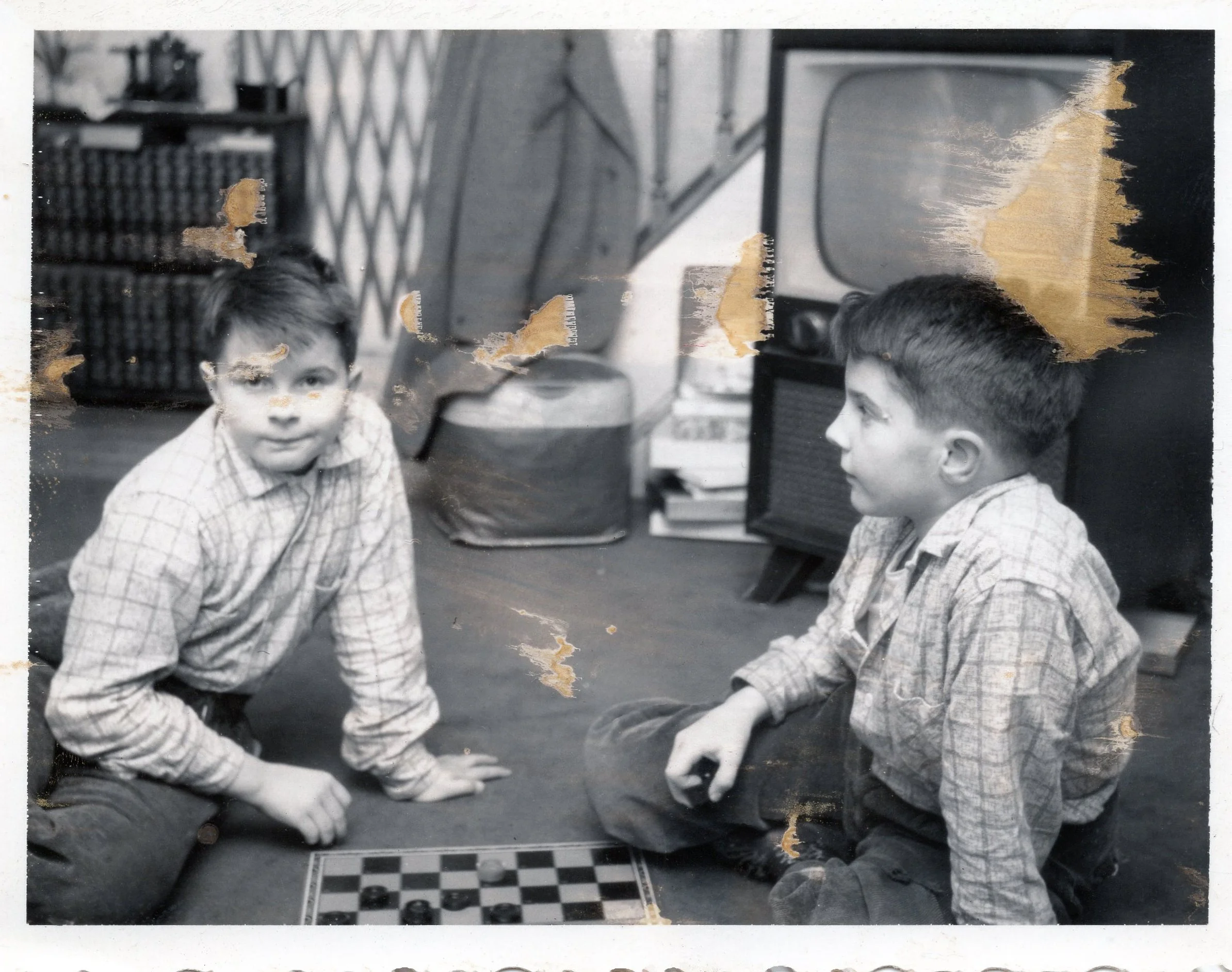
Matching plaid shirts, a checkerboard, and an early television set — Caldwell, circa 1954

Cowboys at the River Canyon Railroad Station — the matching outfits never stopped
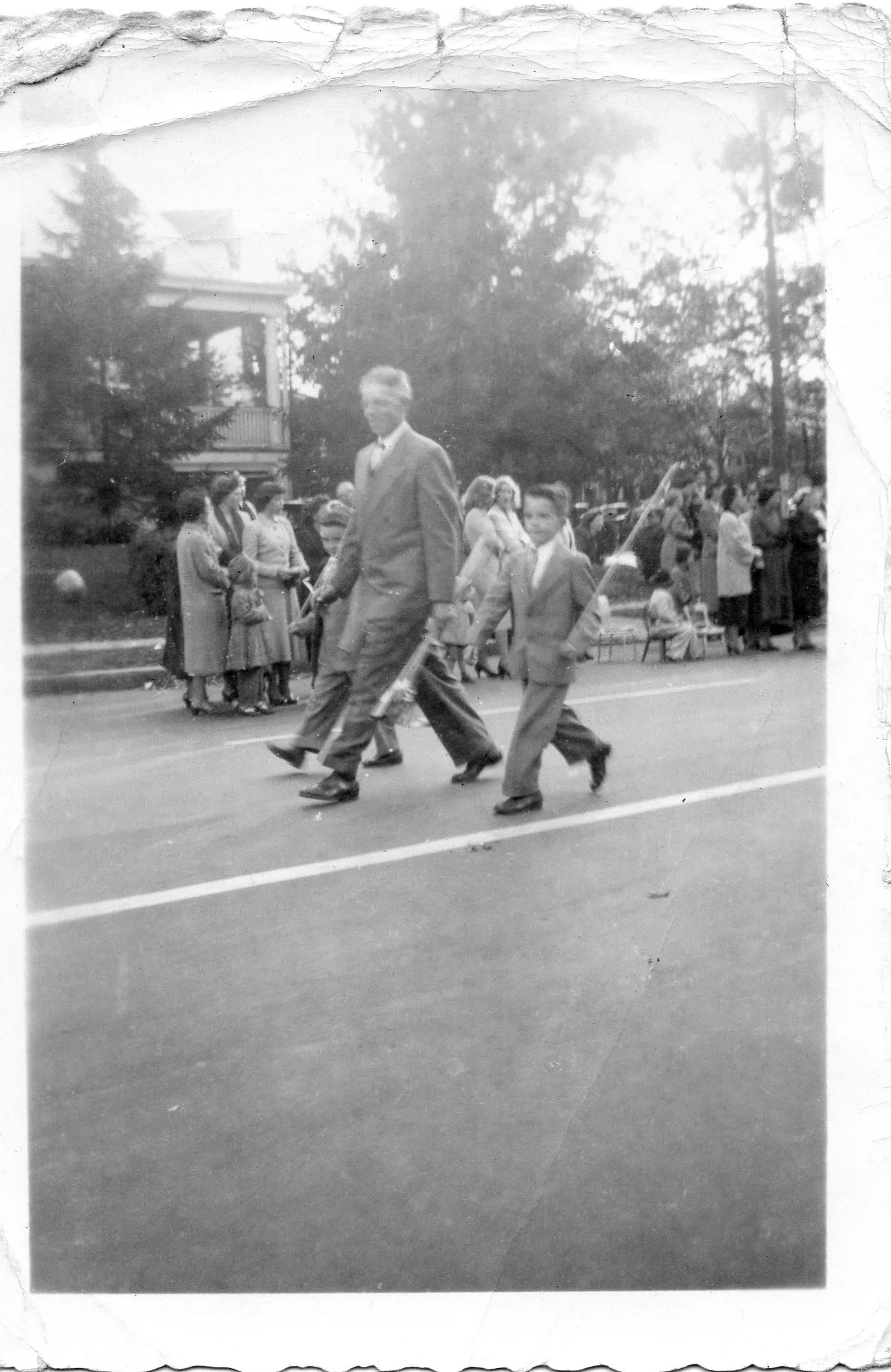
Marching with Dad in a Caldwell parade — matching suits, matching stride
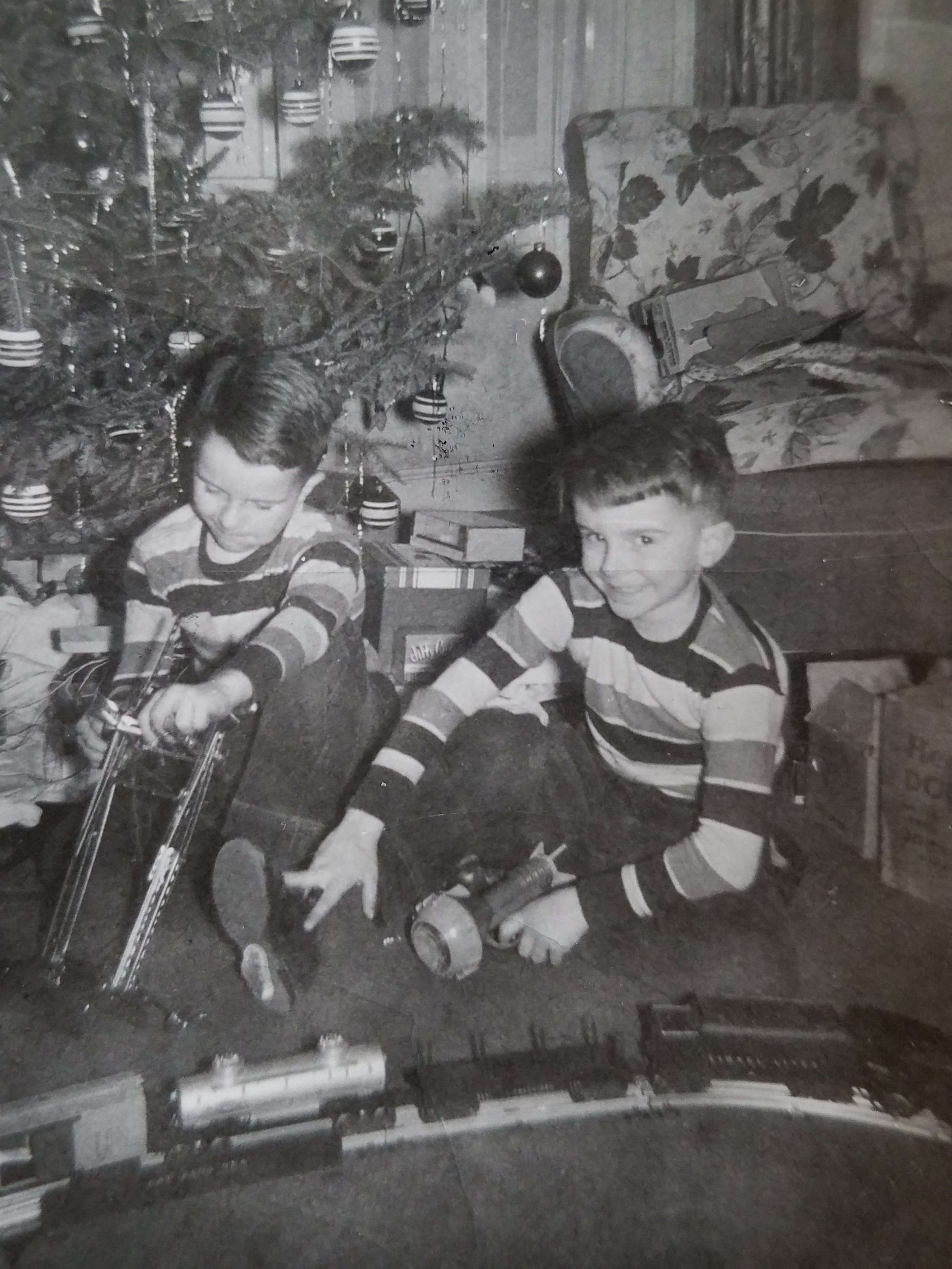
Christmas morning — train set, matching striped shirts, the same tree their sisters had posed by years before
Two Paths, One Origin
College graduation — where the parallel tracks finally diverged
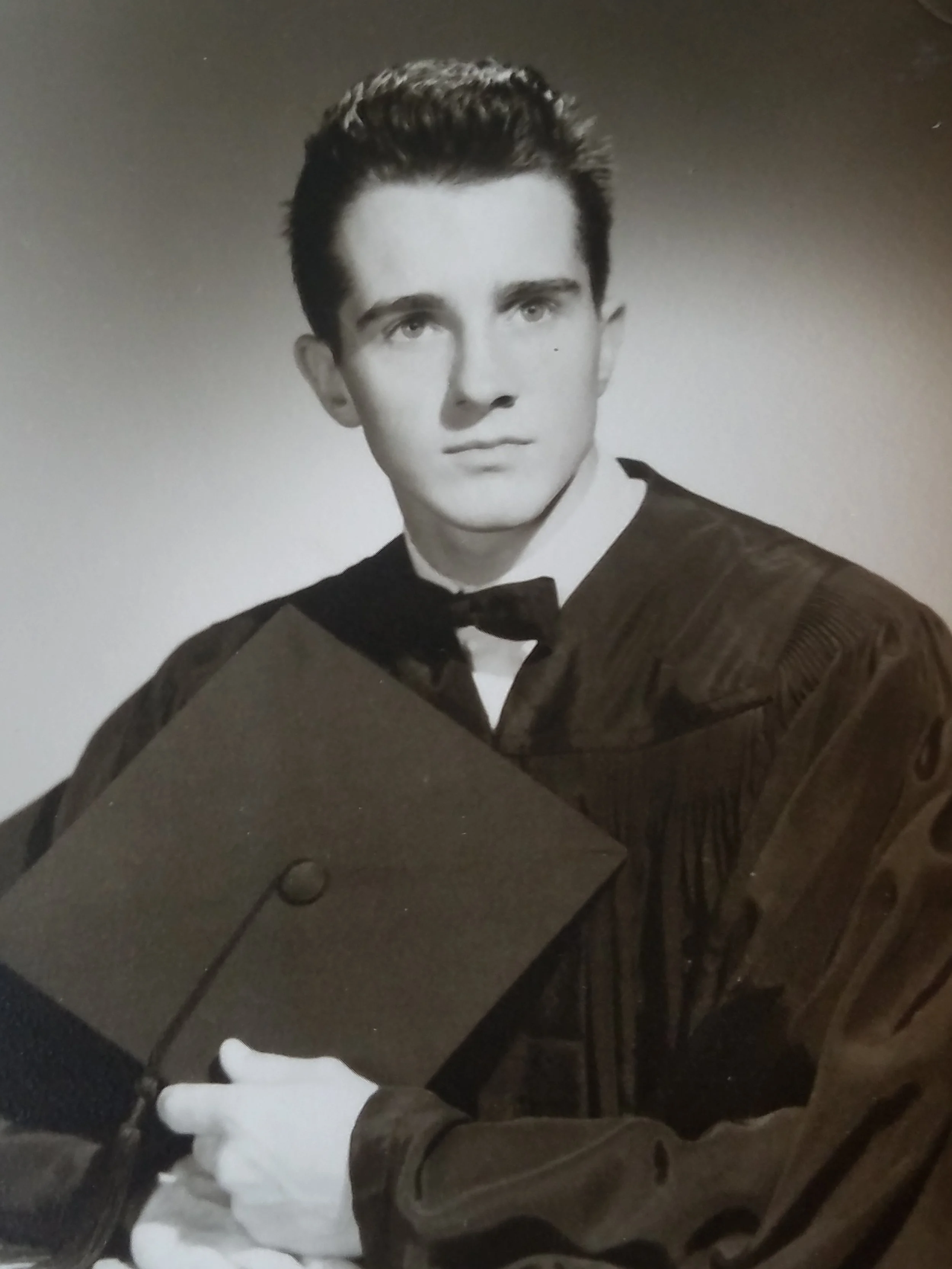
Miles Murtha Jr.
Colonel, USAF (Ret.)
Warner Robins, Georgia
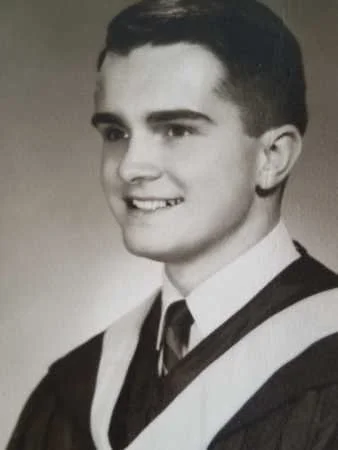
Michael Joseph
Lt. Colonel, USAF (Ret.)
Warner Robins, Georgia
From the same Caldwell, New Jersey household to the same Air Force, the same state of Georgia, the same city of Warner Robins — even their parallel careers track the science. Identical twins raised together often make strikingly similar life choices, drawn by shared temperament and aptitude that no amount of separate placentas can alter. They spent the first eighteen years as a matched pair, then separated for college, marriage, and military service — only to land, once again, side by side.

The Reunion
April 11, 2026 · Suwanee, Georgia
The O'Brien family gathered to celebrate the twins' 80th birthdays. Cousins traveled from New Jersey. Nieces and nephews and their families traveled from all over the country. Three generations stood for the photograph. A challenge coin was minted — one face the O'Brien crest, the other their grandfather at his workbench. Mike used the word legacy.
View the Reunion Page →📸 More Twin Photos
The full collection of Miles and Michael's childhood photographs — from that first carriage ride to their Air Force years — is available in the family photo archive.
View the Twin Photo Album →The Chase
A reflection on memory, motion, and the stories we carry forward —
inspired by a single photograph from a Caldwell backyard, circa 1947.
Hold On
A man, a pipe, and two babies in a doorway —
a reflection on joy, fatherhood, and why the happiest years go by so fast.
A Welcome Confusion
Three sets of twins, one college newspaper article, and the moment
one egg became two lives — a carpenter and a builder of miniatures.
The family always said they were fraternal. The doctors confirmed it. The birth records recorded it. But look at the photographs — really look — and the science is already there, written in every matching expression, every mirrored gesture, every identical face staring back from both sides of the frame. DNA didn't change who Miles and Michael are. It simply confirmed what the camera had been capturing for seventy-eight years: one egg, split early, became two remarkable lives.