
The Rebels of the Côte
Quick Facts
A Winter Without Salt
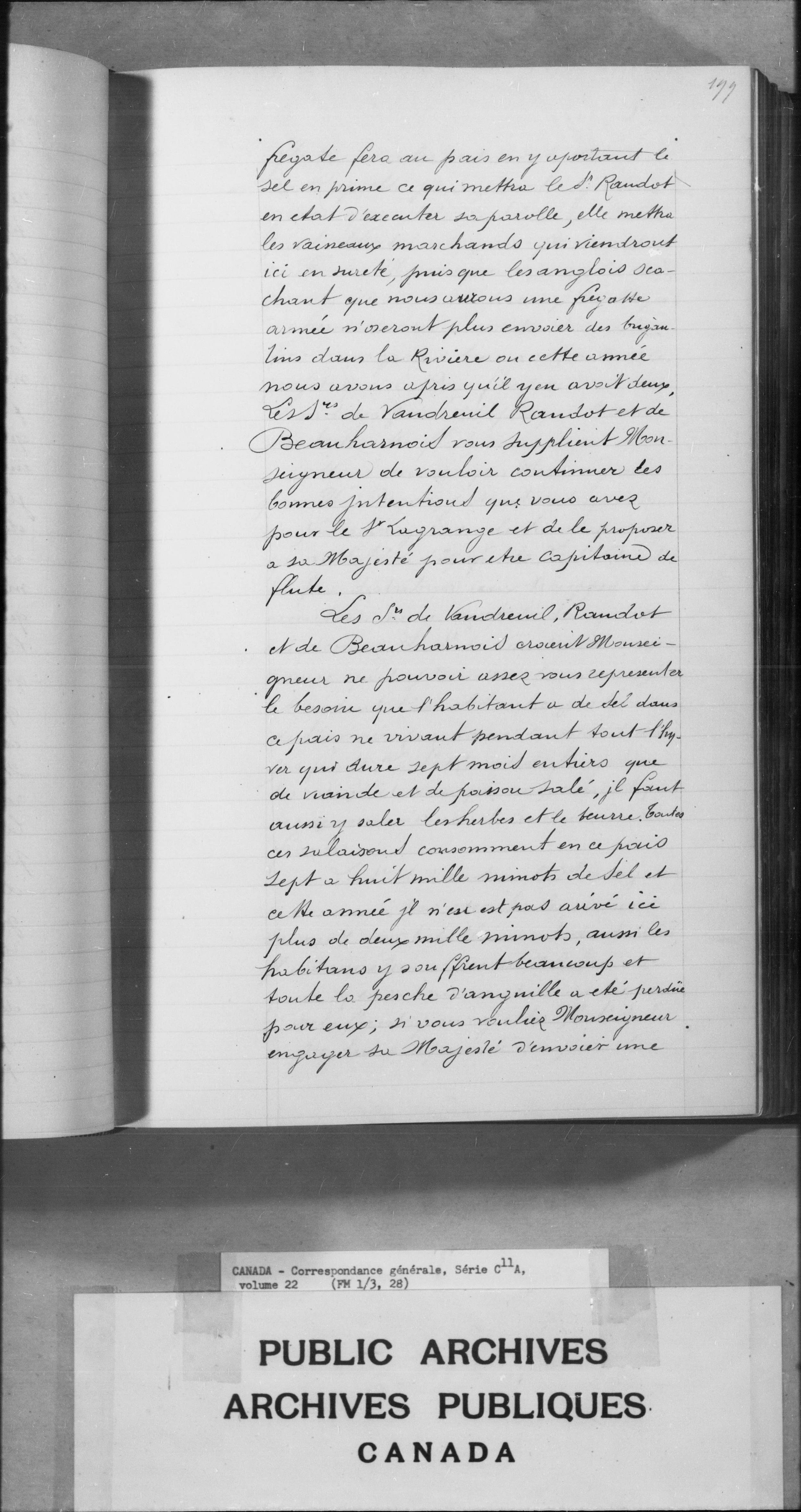
In the government of Montréal, habitants lived through a winter of seven months on salted meat and salted fish. They salted their butter and their garden herbs as well. Salt came from France, and when the ships brought too little, the price rose beyond what a farming family could pay.
On Tuesday, 18 November 1704, habitants from the côtes around Montréal gathered outside the town. Officials reported that they meant to oblige the merchants to sell them salt and goods « aux prix qu'ils voudroient faire eux mesmes »—at prices they would set themselves. The vicar general, François Vachon de Belmont, superior of the Sulpicians, went out to meet them and found them unarmed. At his first remonstrance they went home.
Afterwards the churchwardens, militia captains and leading men of the parishes, meeting parish by parish, set their side down in a petition to the governor of Montréal. They had come in numbers, they wrote, only « pour presenter une requete commune dans une misere generale et emouvoir a commiseration par le grand nombre des miserables »—to present a common petition in a general misery, and to move the authorities to pity by the number of the wretched.
The authorities moved quickly. Deschambault, the lieutenant general at Montréal, and the notary Pierre Raimbault spent three days searching the houses of the town for salt, then shared out what they found and fixed its price. The governor of Montréal, Claude de Ramezay, called the merchants to his house, where they set a tariff for their other goods. Belmont sent a mandement to every curé of the government, to be read at mass, urging the people never again to hold « assemblées tumultueuses » but to present their petitions humbly. He promised to ask for regulations fixing a fair price for goods and for the habitants' own produce.
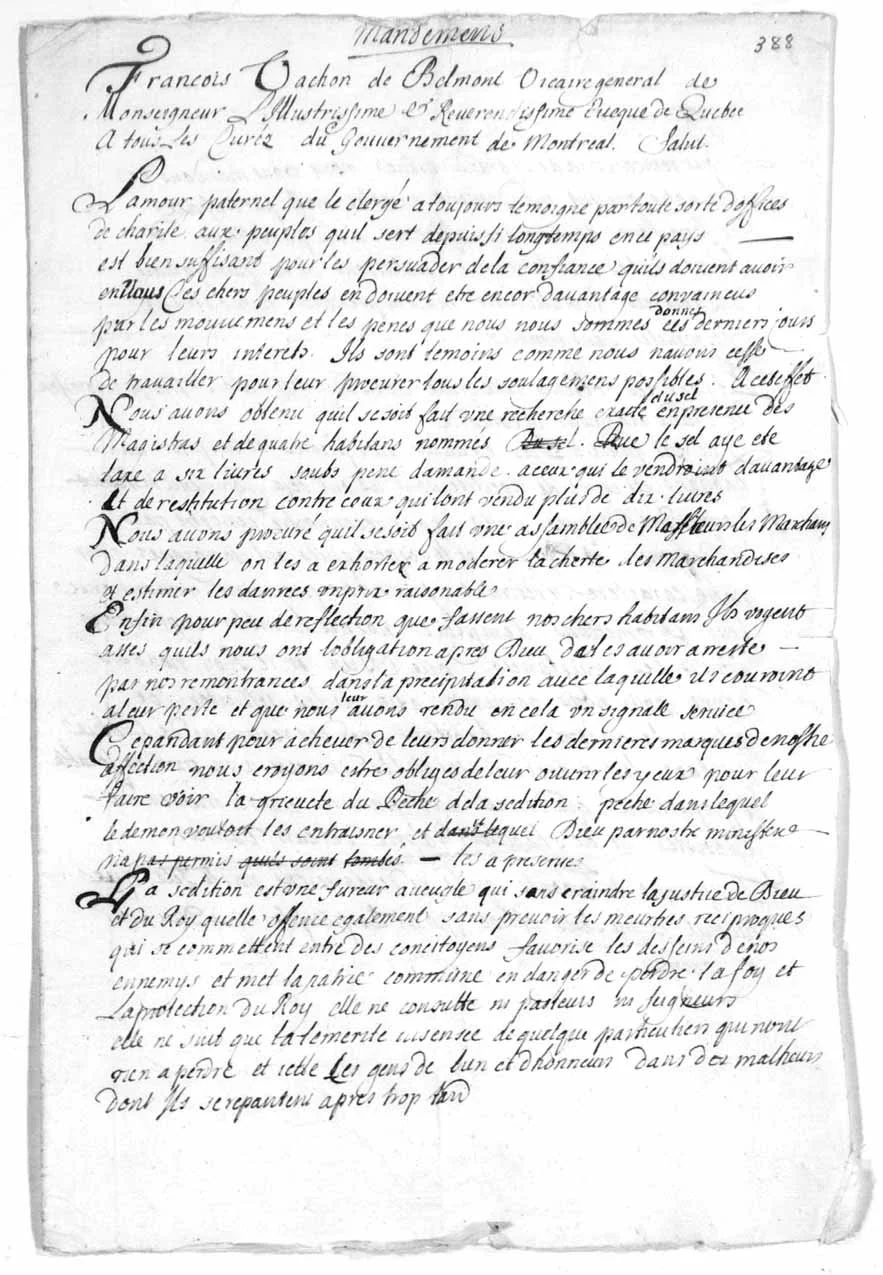
Governor General Philippe de Rigaud de Vaudreuil came up from Québec intending to punish the guilty. Ramezay and Belmont persuaded him that the habitants had meant only « de representer tous ensembles leur misere »—to lay their hardship before him together—and he let what had passed be forgotten. But on 12 December 1704 he forbade all inhabitants of the government of Montréal to assemble under any pretext whatever, on pain of being prosecuted as seditious. The ordinance was to be read at the door of every parish church after high mass.
Belmont did not think the matter closed. On 18 December he wrote that God had preserved the people from an irreparable fault, but that « les causes et les indispositions des peuples sont encore entieres »—the causes of the people's discontent were still all there. « Ces causes sont que les marchandises sont a trop haut prix et que les danrées des pauvres habitans sont a trop bas prix. » He proposed a fixed tariff of prices and a public granary, and had already given 180 ewes to the habitants.

That ordinance is the law François Séguin dit Ladéroute would be charged under a year later.
The Second Autumn, 1705
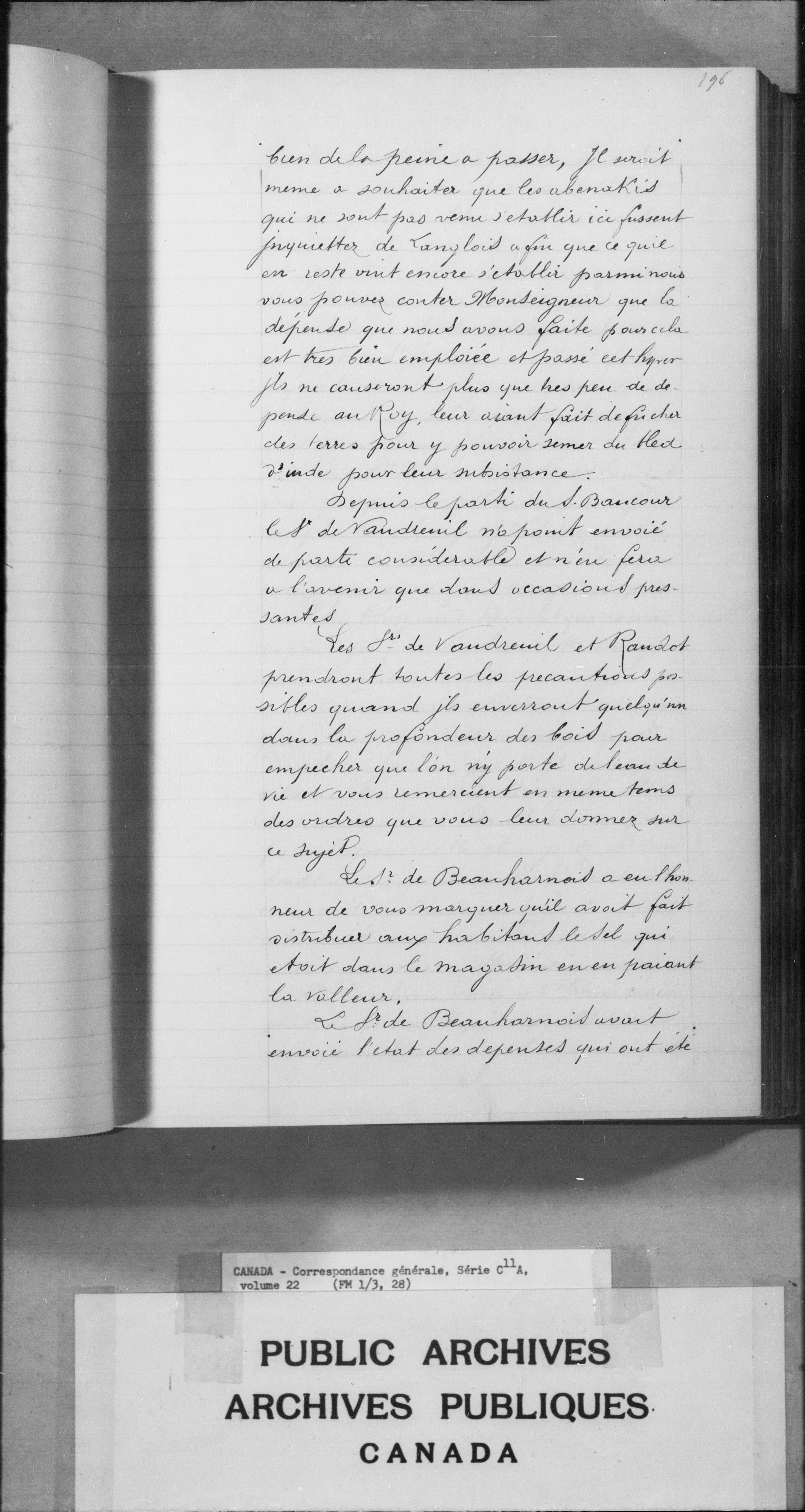
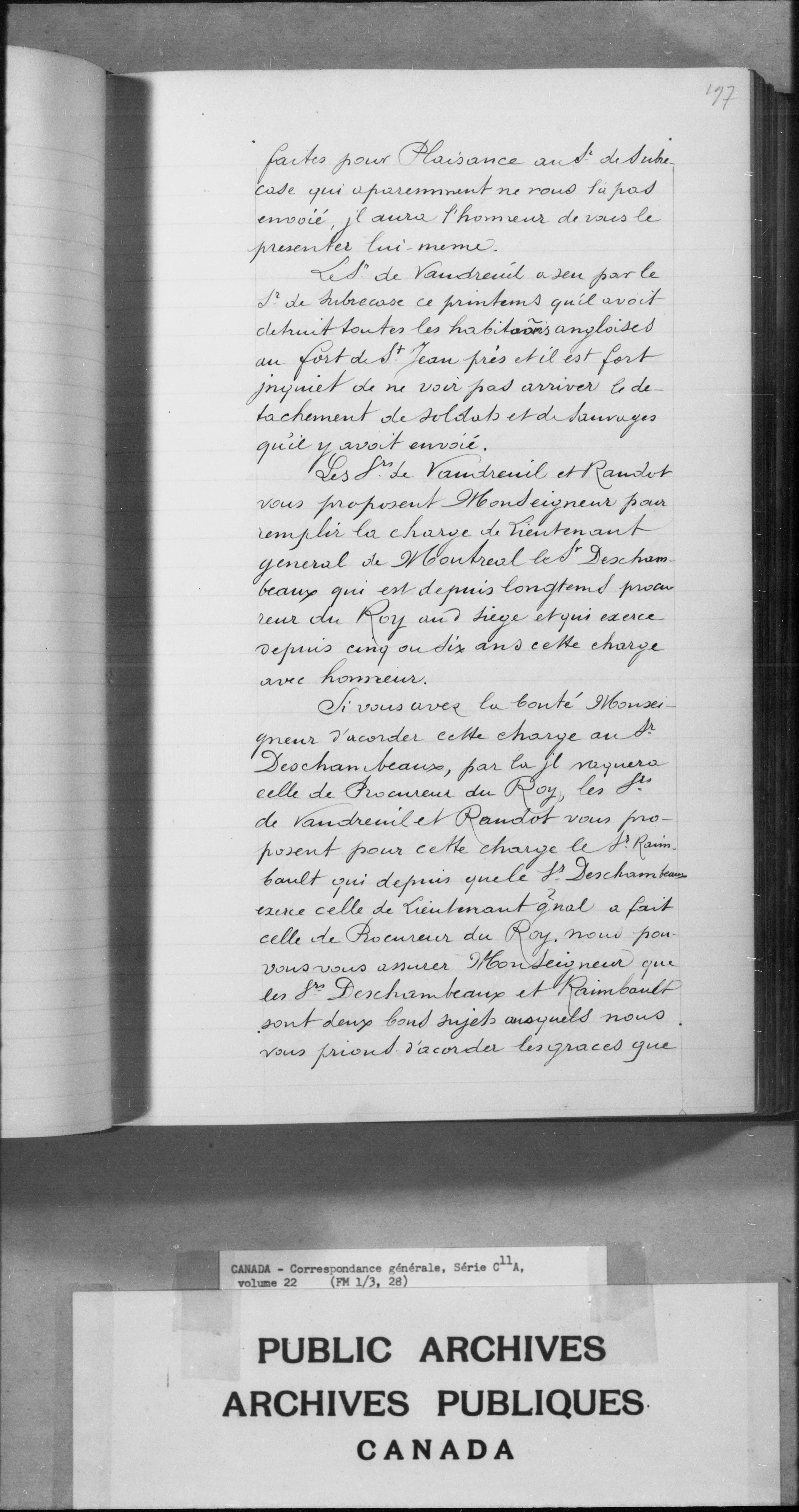
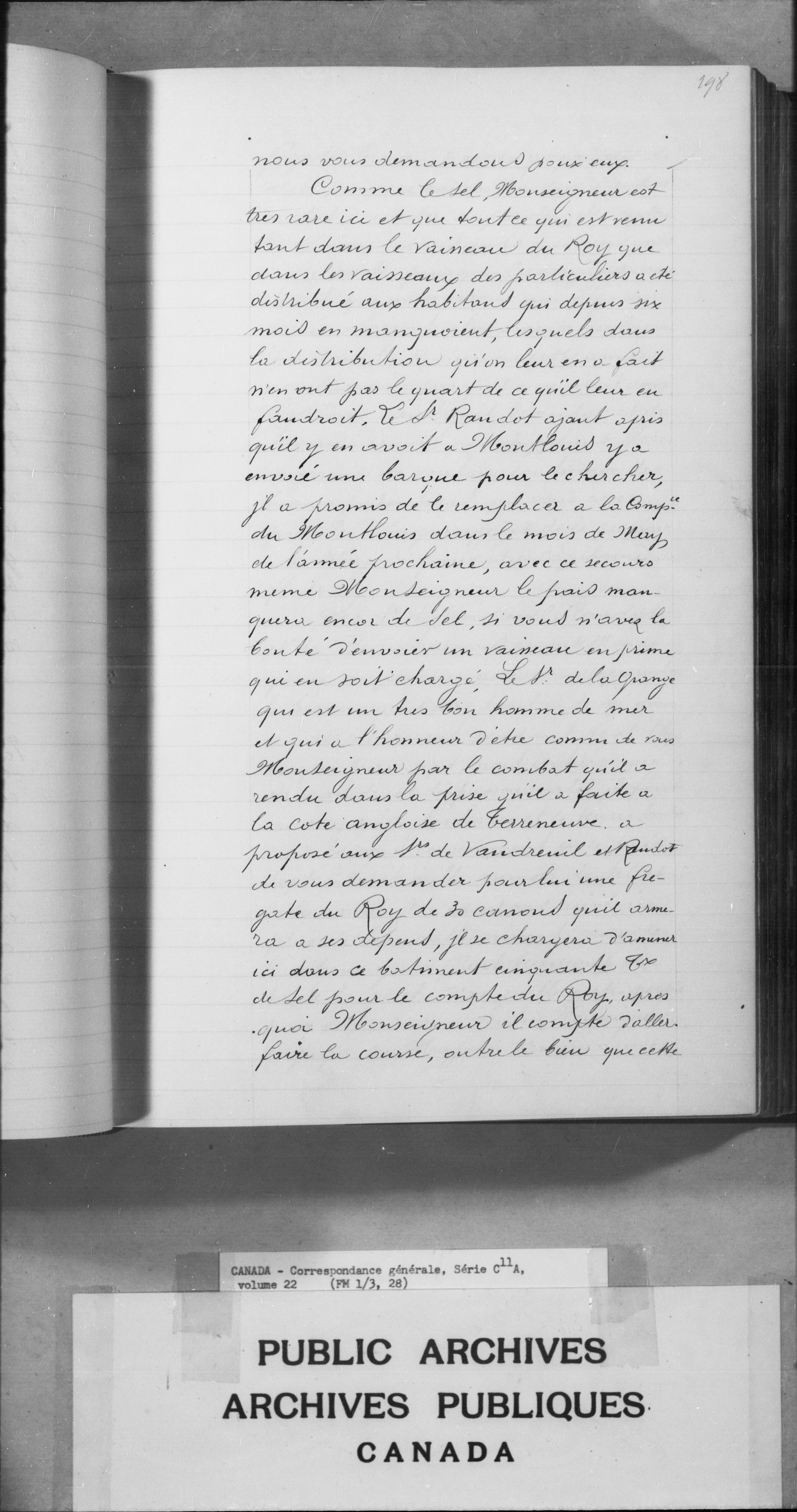
The grievance did not go away. On 19 October 1705 the governor general, the departing intendant François de Beauharnois and his successor Jacques Raudot wrote to the Minister of Marine that all the salt brought that year, by the King's ship and by the merchants, had been handed out to habitants who had been without it for six months, and that they had received less than a quarter of what they needed. The colony consumed seven to eight thousand minots of salt a year. That year no more than two thousand had come.
Nine days later, on 28 October, Vaudreuil and Raudot reported that habitants « des costes de la Chenaye et d'ailleurs »—from the La Chenaye side and elsewhere—had assembled again « pour presenter une requeste et demander un tarif qui regle le prix des marchandises »: to present a petition and ask for a tariff fixing the price of goods. Since such a movement, they wrote, tended only to a kind of revolt, Vaudreuil had ordered Ramezay to arrest the ringleaders and send them to Québec for trial. In the margin of the ministry's summary a clerk noted that the worst of them might be punished, but that there must be no tariff, since that would ruin commerce entirely.

From House to House
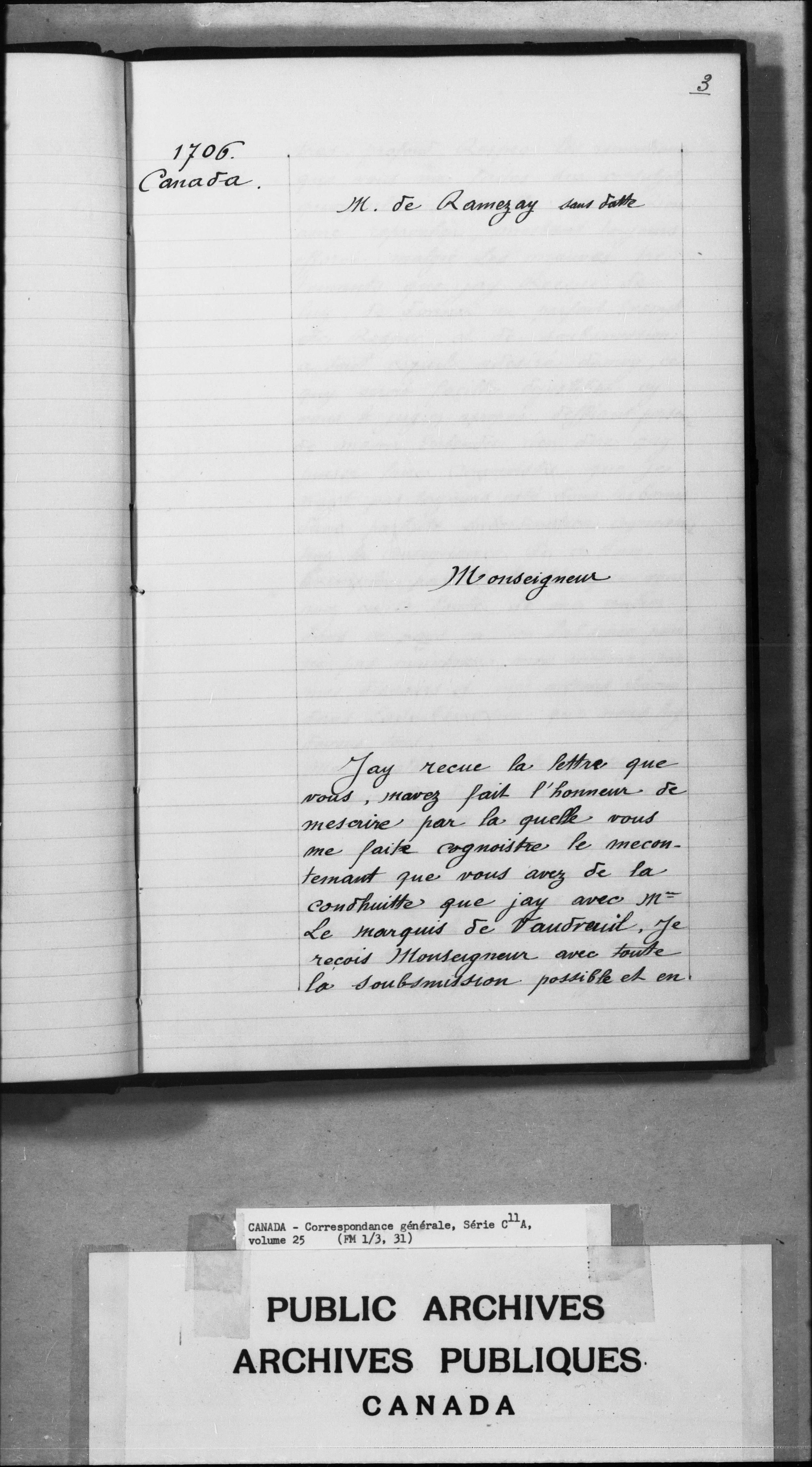
Ramezay's own account of what followed survives in a long letter he wrote to the Minister in 1706. Hurrying back to Montréal, he sent for the captains of the côtes. Jean Berlouin dit Nantel, militia captain of La Chenaye, told him that the habitants of that parish, of the Île Jésus and of the seigneurie of Dupré had assembled and taken up arms to form a sedition. When Nantel reminded them that the governor general had pardoned them once already, they threatened to burn him in his house if he would not join them.
Nantel named the two most guilty.
François Séguin dit Ladéroute was the eldest son of François Séguin dit Ladéroute and Jeanne Petit of Boucherville. He was twenty-seven. He had married Marie-Louise Filion in 1702 and moved from one tenancy to the next north of the island—the Île Jésus in 1703, La Chenaye by 1705. Now, by Nantel's report, he had gone from house to house through three seigneuries, and had crossed to Boucherville, the parish where he was born and where his mother and younger brothers still lived, on the pretext of fetching a canoe.

At Boucherville he had talked with several habitants in the house of the merchant Gilles Papin. Ramezay sent for Papin, who confirmed it and gave a written declaration. Ramezay sent the declaration to Vaudreuil, together with François, whom he had taken and conducted under guard.
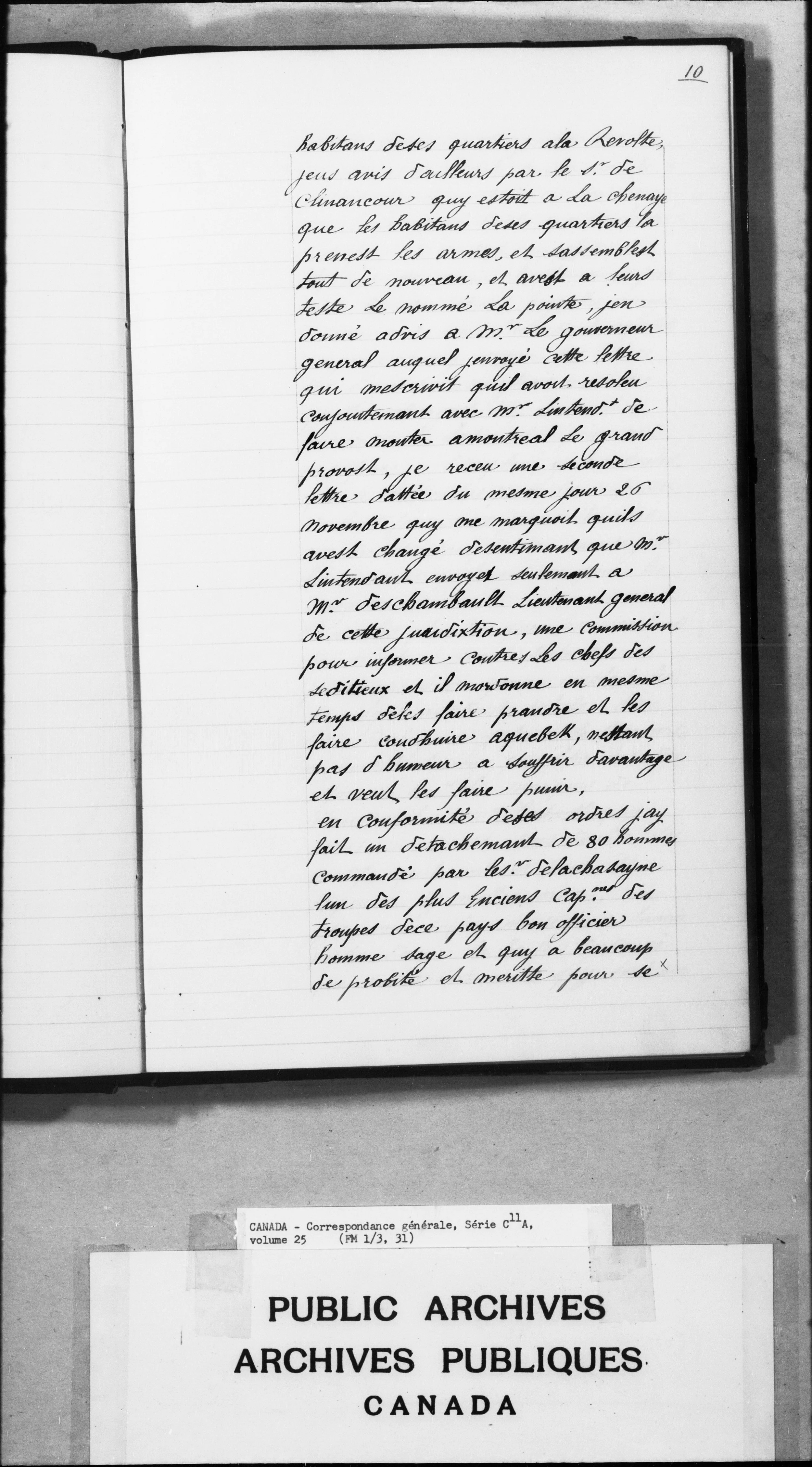
The next day the baron de Longueuil brought his own militia captain to report that habitants had run the côtes of the south shore all night under arms. Word came from La Chenaye that the men there were in arms again, with Jean-Baptiste Lapointe of the Mille-Îles at their head—the man Ramezay called « le premier autheur de la mutinerie de 1704 ». Ramezay sent a detachment of eighty men under Captain de La Chassagne to take Lapointe and Jacques Levert. Levert escaped into the woods. Lapointe was taken to Québec.
The Intendant's Commission
Raudot had arrived in the colony only that autumn. On 26 October 1705 he commissioned Deschambault—the same judge who had searched Montréal for salt the year before—as his subdélégué to try the rebels of the côte. On 31 October a second commission named François: « le nommé françois Laderoute habitant de Lachesnaye », who had been among those who held the most seditious speeches, boasting that many habitants would follow him and threatening that those of other parishes who would not join him would be plundered.

François was interrogated at the end of October. Deschambault heard witnesses in mid-November and sent their depositions to Québec. Raudot wrote back to Ramezay on 19 and 23 November that the evidence weighed too heavily on Lapointe and Ladéroute not to make an example of them. François was questioned again on 25 November, the same day as Lapointe.
On 26 November the intendant ordered both men imprisoned again, and ordered six more taken and brought to the prisons of Montréal for interrogation. Two of them were François's brothers.
Pierre, then about twenty-three, had married Barbe Filion, his brother's wife's sister, in February 1704 and was farming on the Île Jésus. Simon was about twenty-one. They were pursued as accomplices, not called as witnesses. Their younger brother Jean-Baptiste, who turned seventeen that November, was not named.
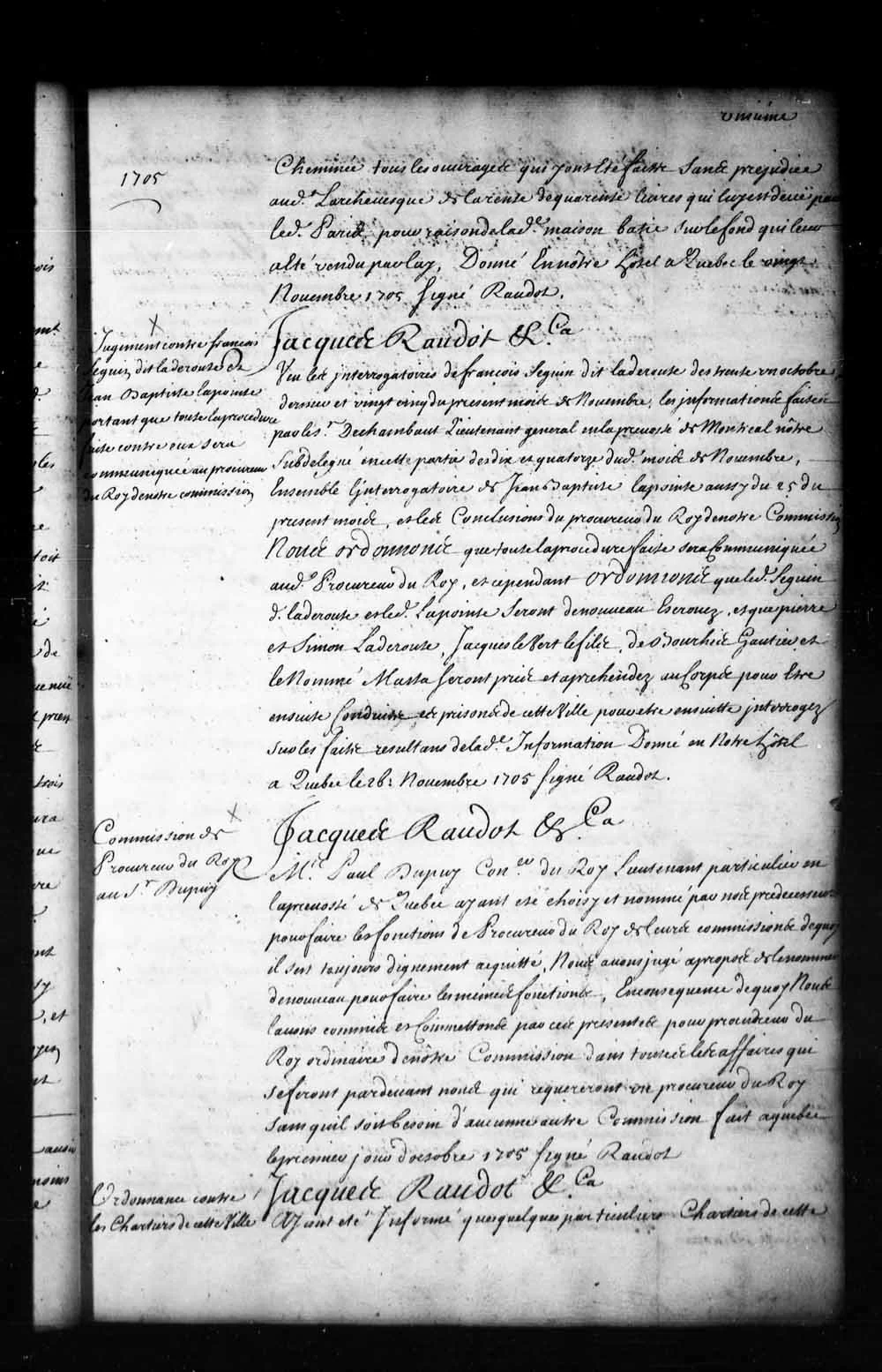
No later record yet found says whether Pierre and Simon were taken or questioned. Neither appears in the judgment.
Judgment at Québec
On 8 December Raudot ordered the witnesses brought to Québec for récolement and confrontation with the accused. On 4 January 1706 nine were summoned to appear that afternoon in the chamber of the Conseil supérieur: Gilles Papin, merchant, René Bau dit Lalouette, Joseph Véronneau and Jacques Meunier dit Lapierre, all of Boucherville; Jean Berlouin dit Nantel, militia captain of La Chenaye; Antoine Duquet dit Madry and Guillaume Forget dit Despatis of La Chenaye; and René Cholet dit Saint-Paul and Maliot Audin dit Saint-Amour of the Île Jésus. Four of the nine were from Boucherville.

Judgment came on 9 January 1706. Raudot sat with his son Antoine-Denis Raudot, councillors of the Conseil supérieur and officers of the Prévôté. François, now styled habitant of the Île Jésus, and Lapointe were questioned a last time « sur la sellette »—on the low stool of the accused. Both were found guilty of having intended to assemble to present a petition, contrary to the governor general's ordinance, and François also of having imprudently made seditious speeches capable of inciting those who heard them to revolt. Each was to be reprimanded and fined thirty livres, and forbidden to offend again on pain of being punished as seditious and a disturber of the public peace.
Then the intendant had them brought up from the prison into the chamber and spoke to them himself.

The judgment was to be read, published and posted at Montréal. By the standards of the day the penalty was light. François went home to the Île Jésus, where his wife was four months pregnant and their daughter eighteen months old. Their second child was baptized there in April 1706.
A Governor Unsatisfied
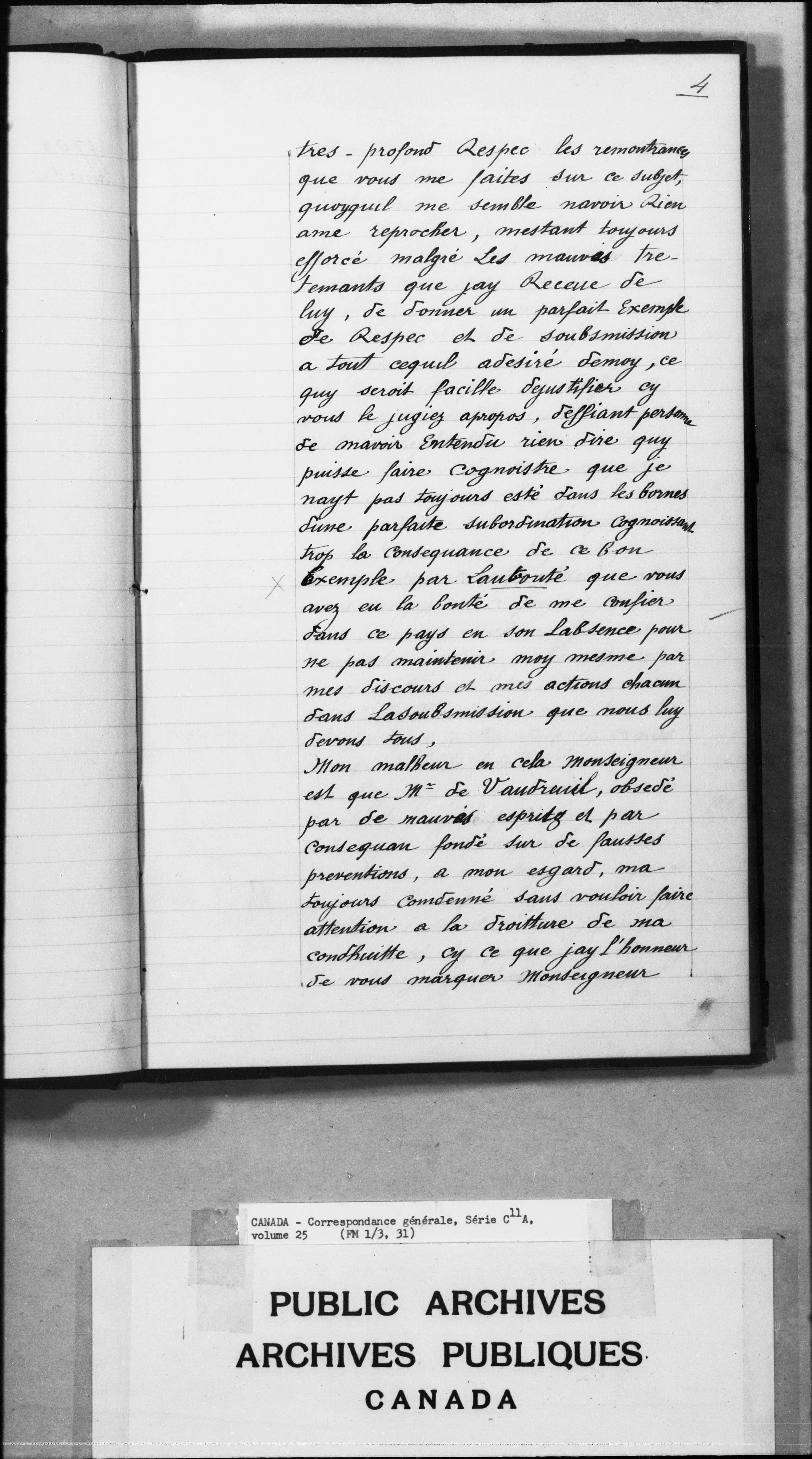
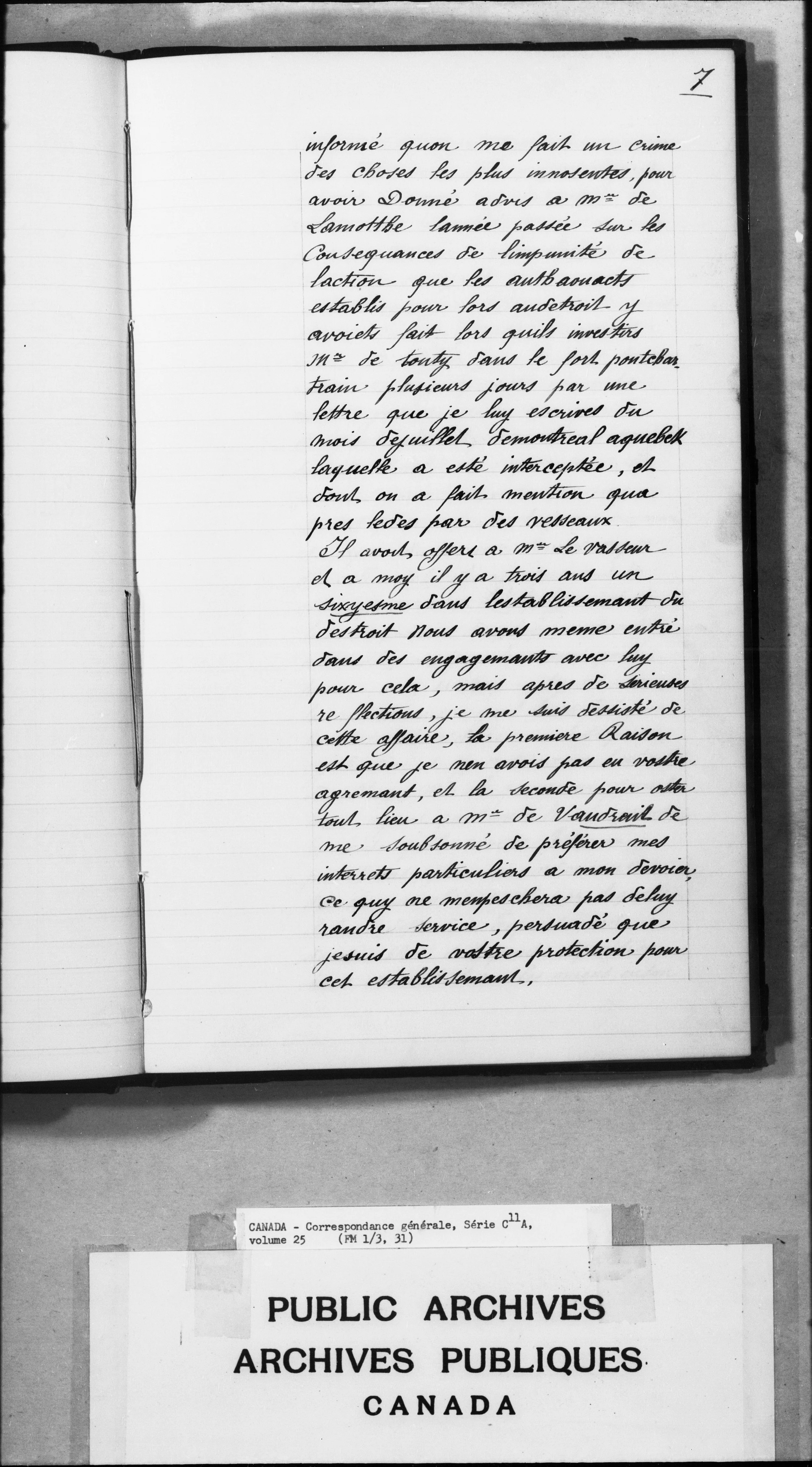
Ramezay had wanted an example. In his letter to the Minister he set out the whole affair and ended it on a bitter note: Raudot had written that the evidence was more than enough to make an example of the two men, « ils vous manderont sans doute monseigneur les raisons qu'ils ont eu pour les inocenter »—no doubt they will tell you their reasons for clearing them. The same letter complains at length of his treatment by Vaudreuil, and the Minister's clerks read it as part of that quarrel.
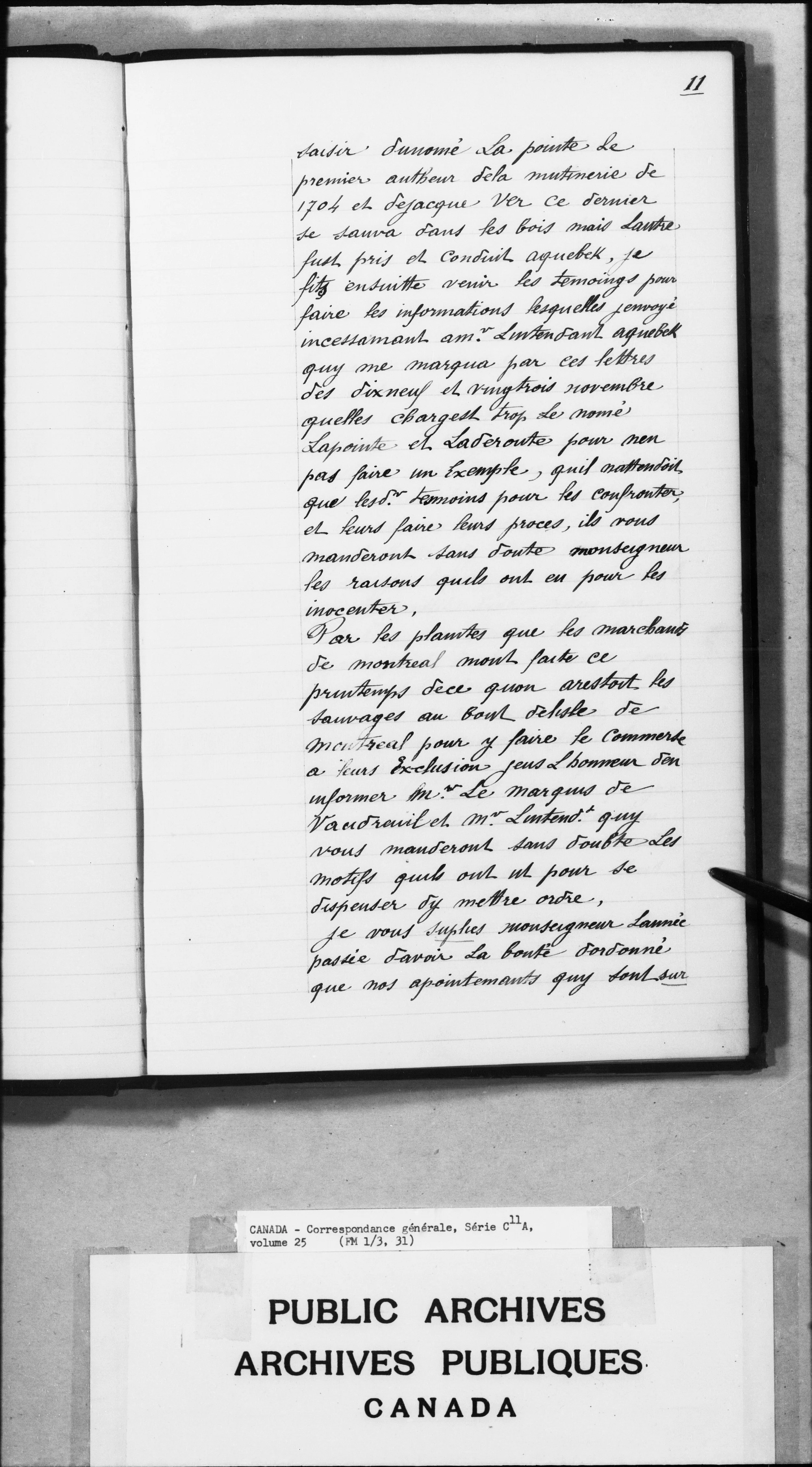
The two men had not, in fact, been cleared. They had been convicted, reprimanded and fined. Between a governor who wanted an example and an intendant who chose mercy, François Séguin dit Ladéroute kept his farm and his freedom.
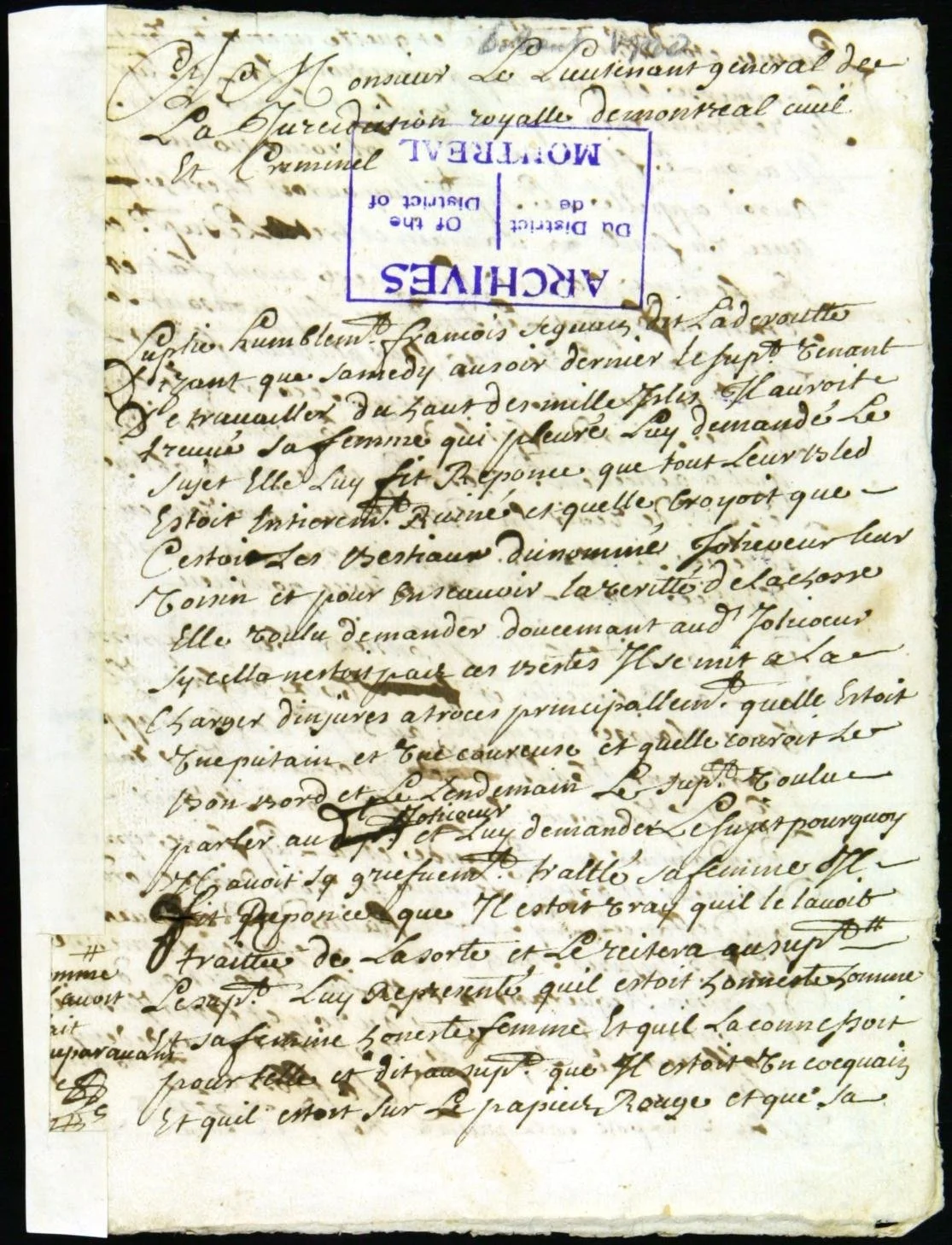
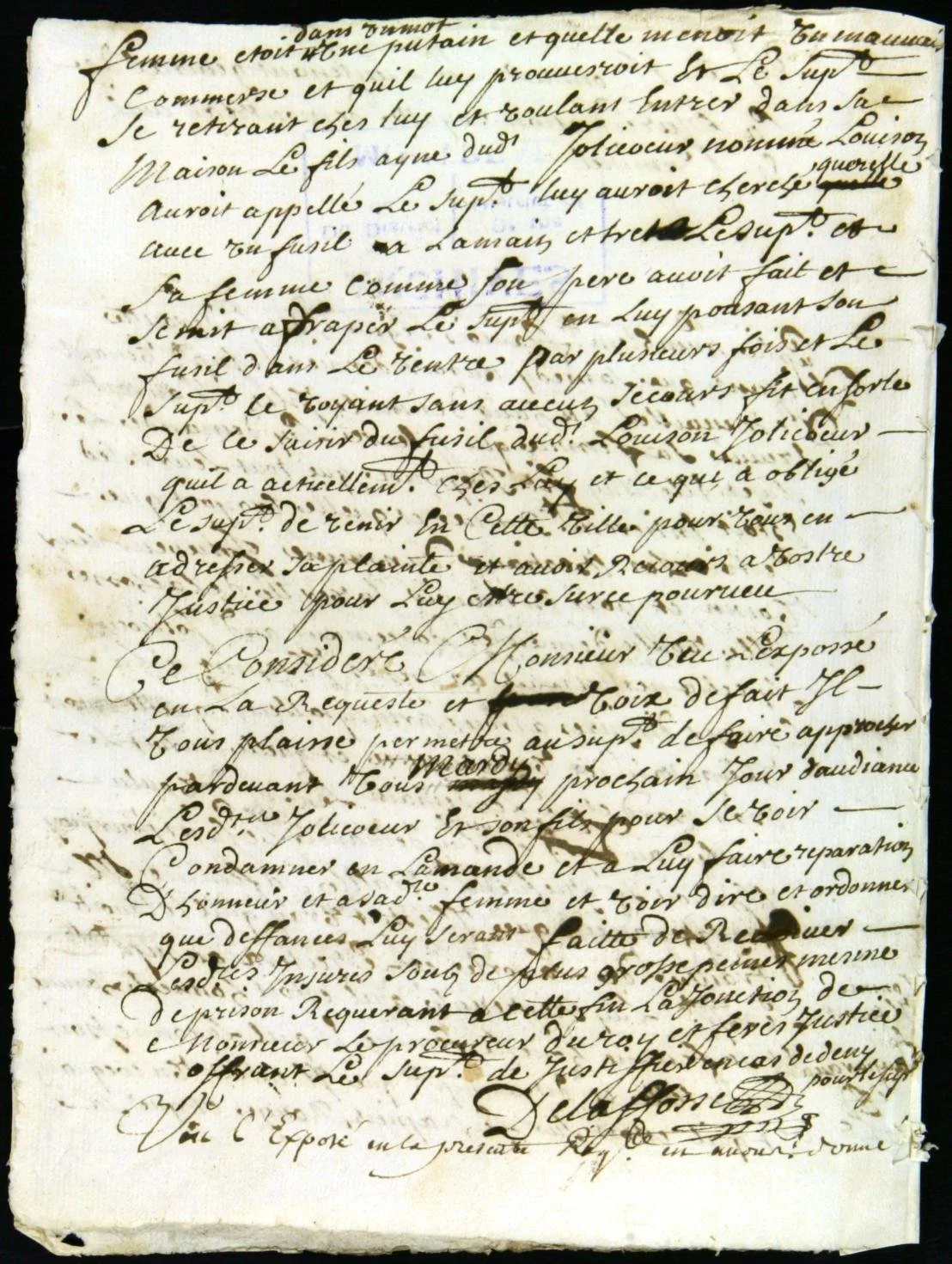
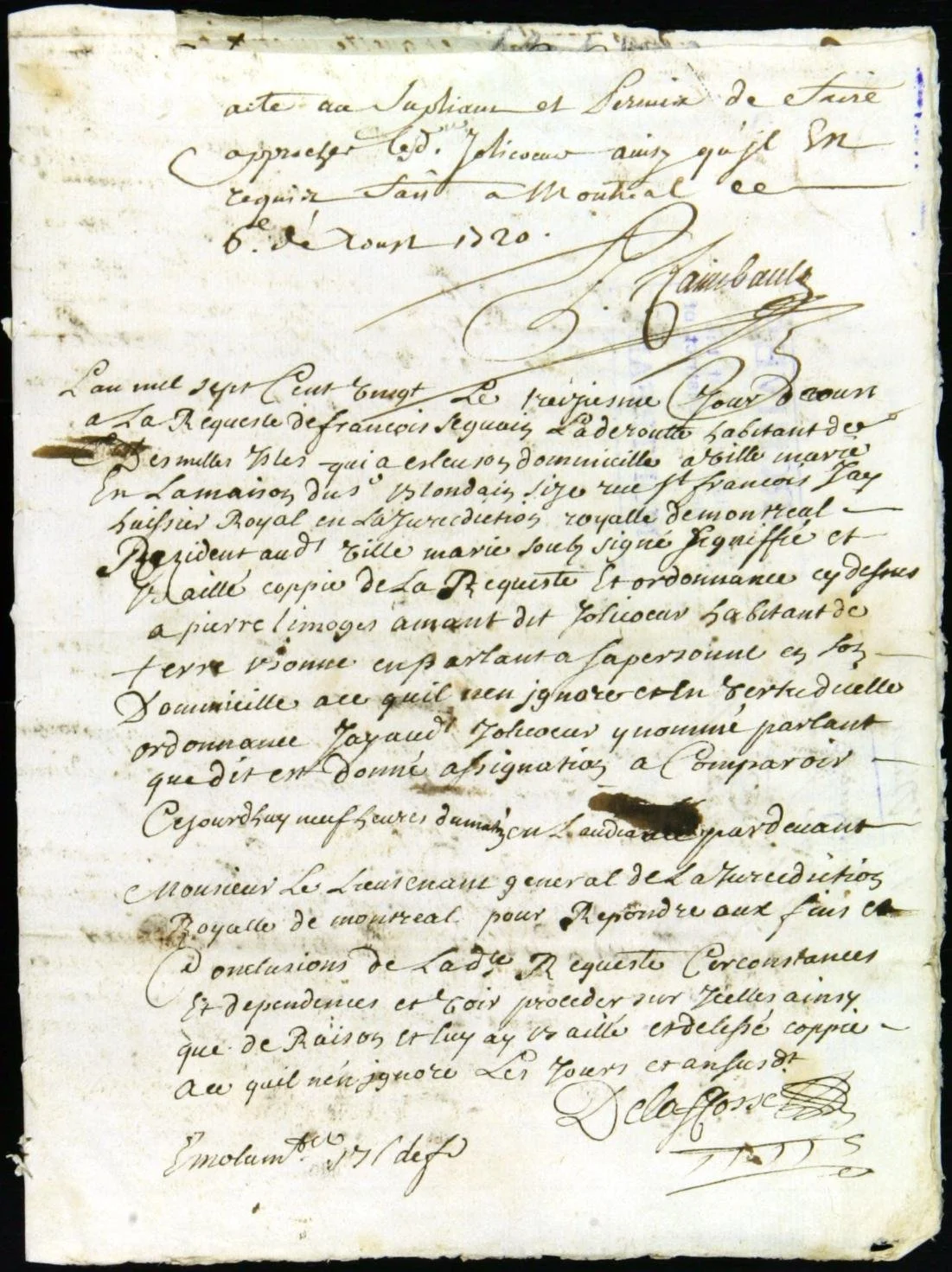
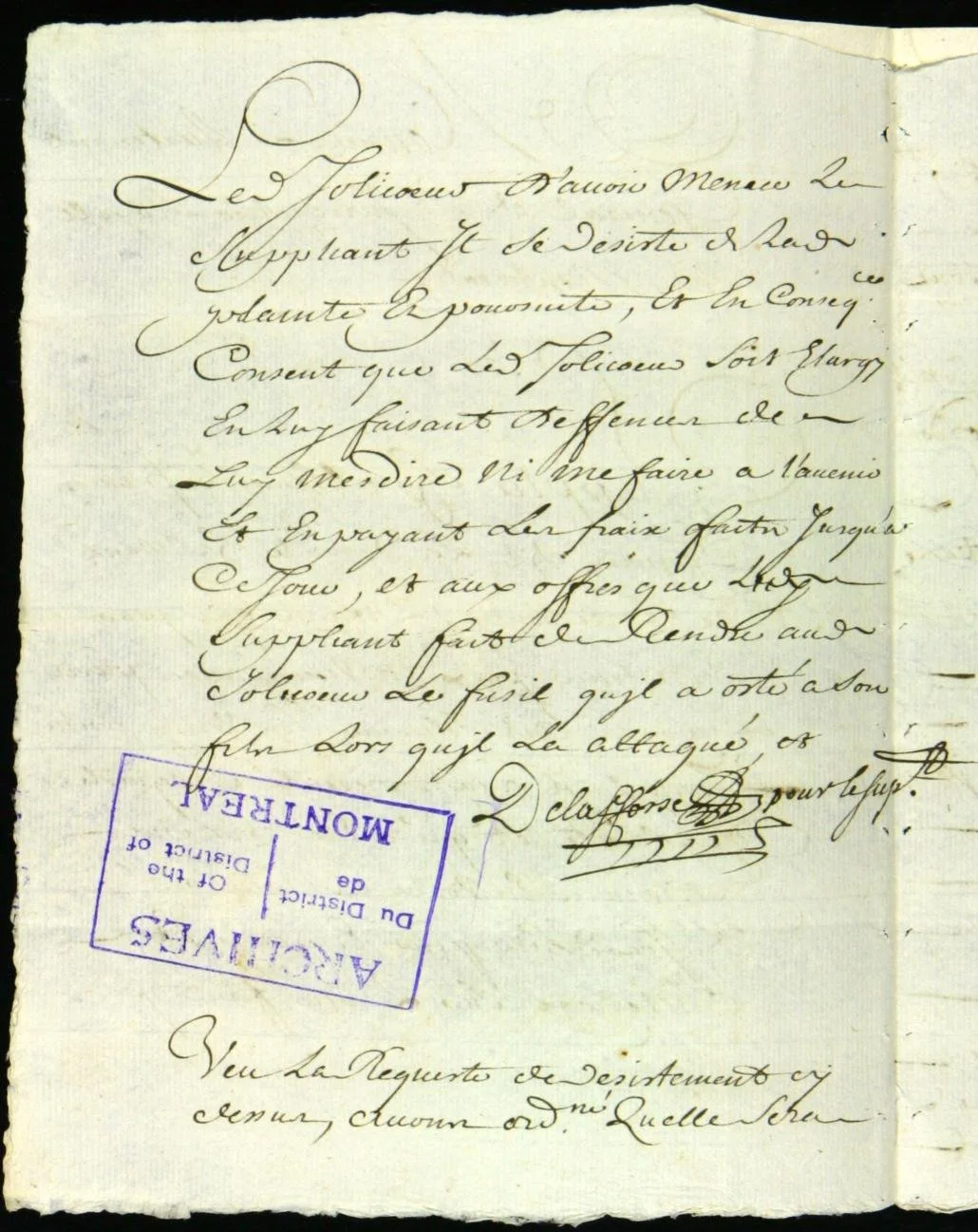
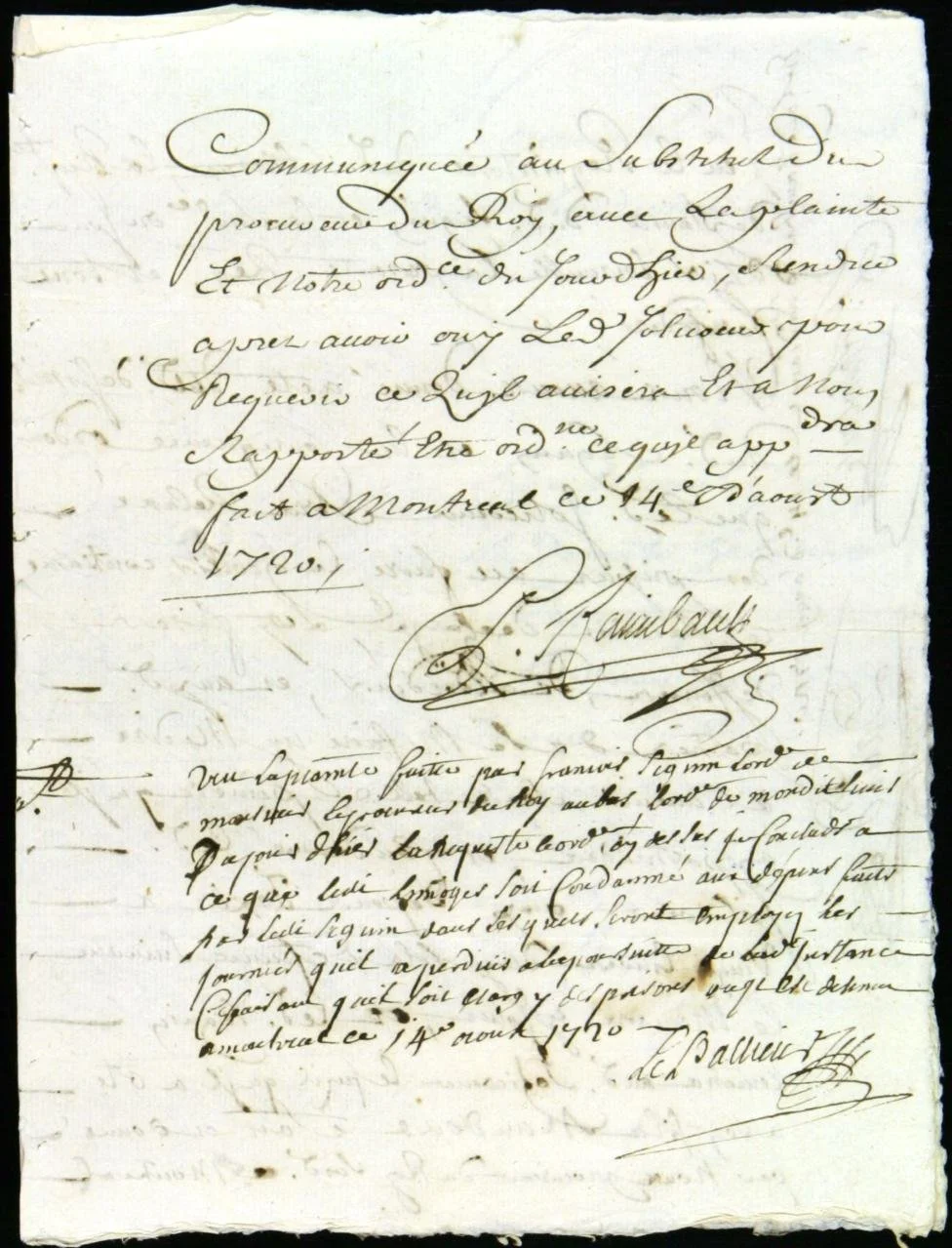
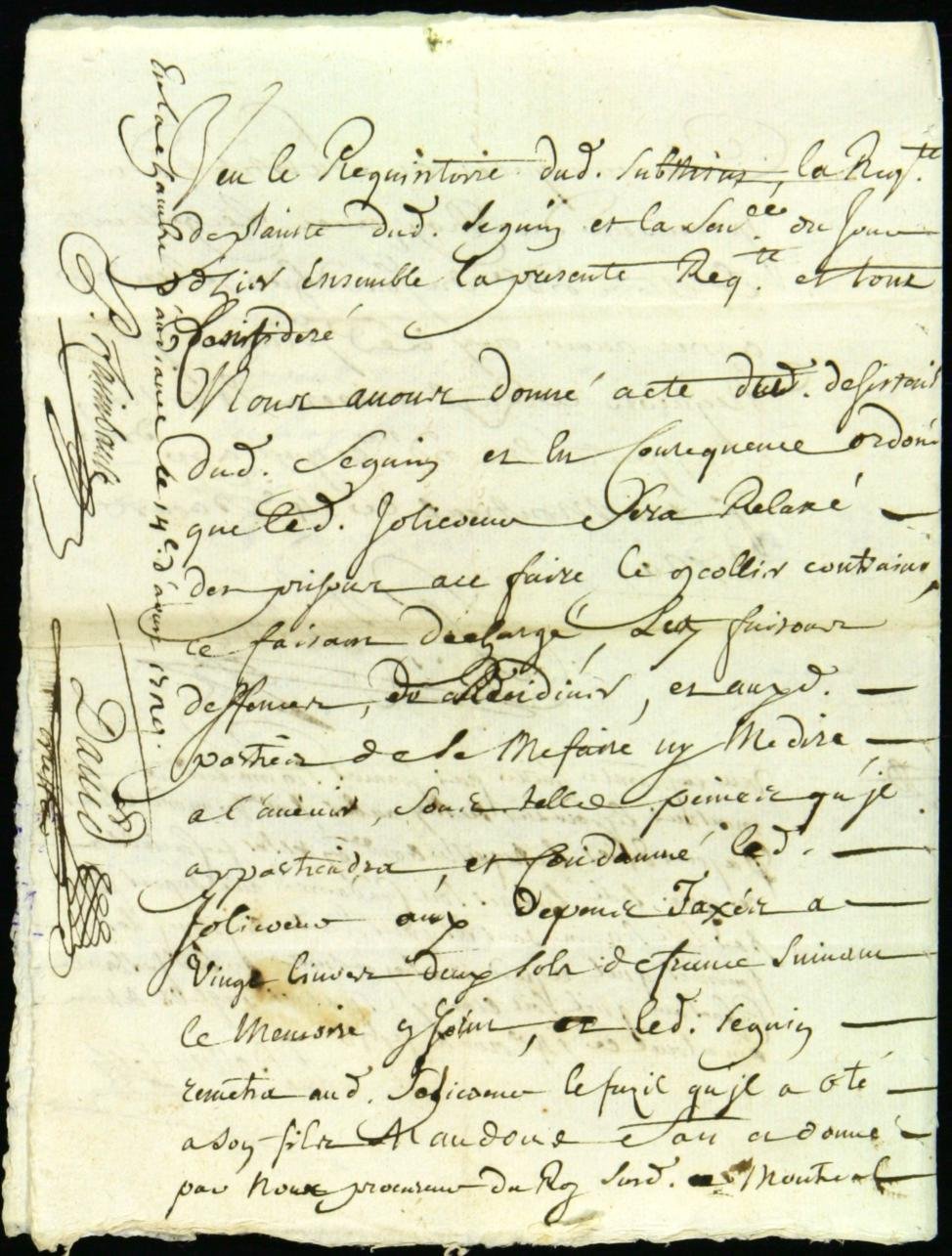
He was not done with the courts, and neither was Nantel. In August 1720 François, by then farming in the Mille-Îles near Terrebonne, came home from work on a Saturday evening to find his wife in tears. Their wheat was ruined, and she believed the cattle of their neighbour Pierre Limoges dit Jolicoeur had done it. When she asked him about it, she said, he called her « une putain et une coureuse ». The next day Jolicoeur repeated it to François's face, and his eldest son, Louison, met François at his own door with a gun and pushed it into his belly again and again until François wrenched it from him. François sued for reparation of honour, and Jolicoeur was put in prison. On 14 August François withdrew the complaint « pour entretenir paix et union » with his neighbour, on condition that Jolicoeur never again speak ill of him or do him harm and pay the costs. He gave back the gun.
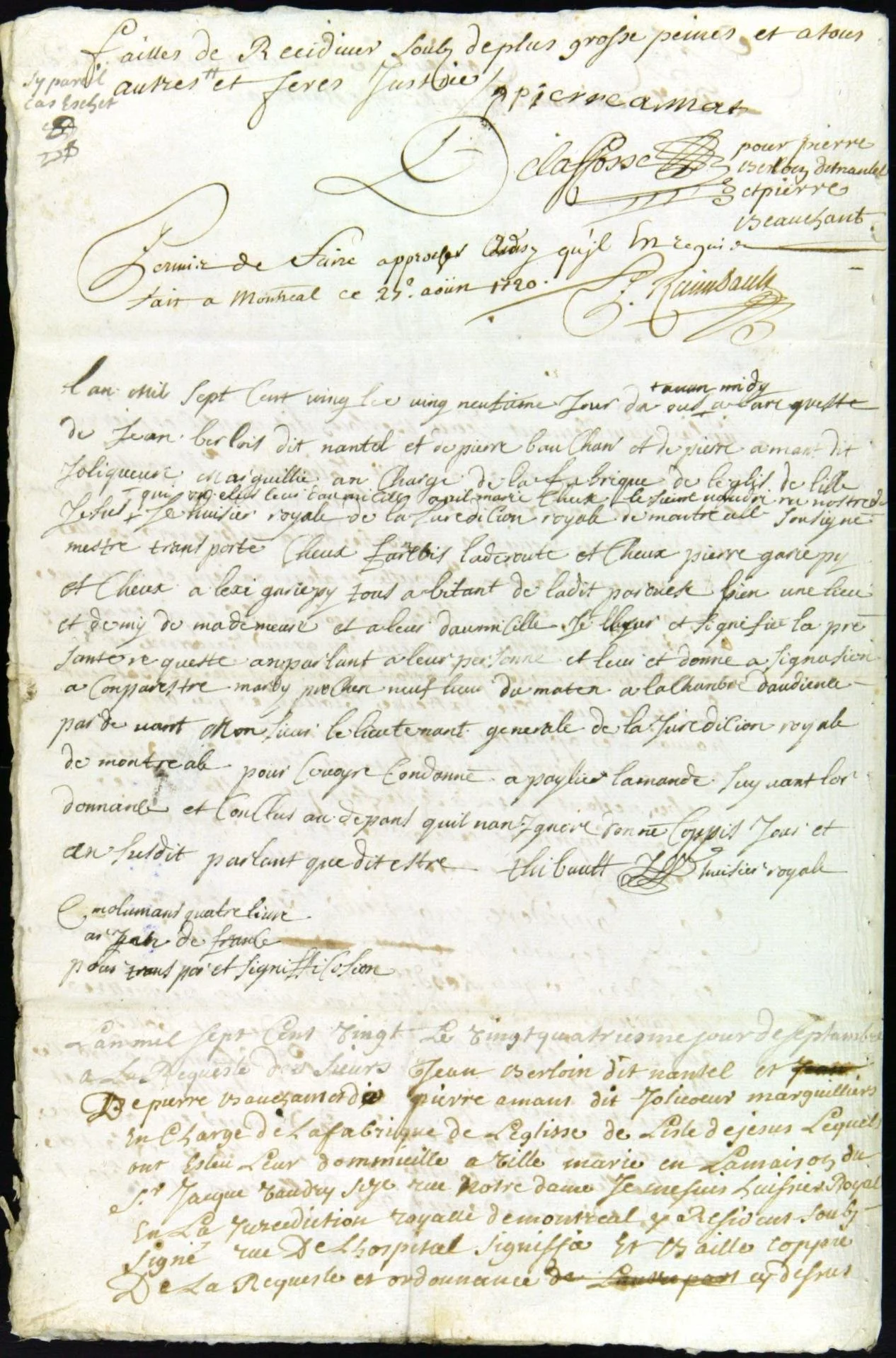
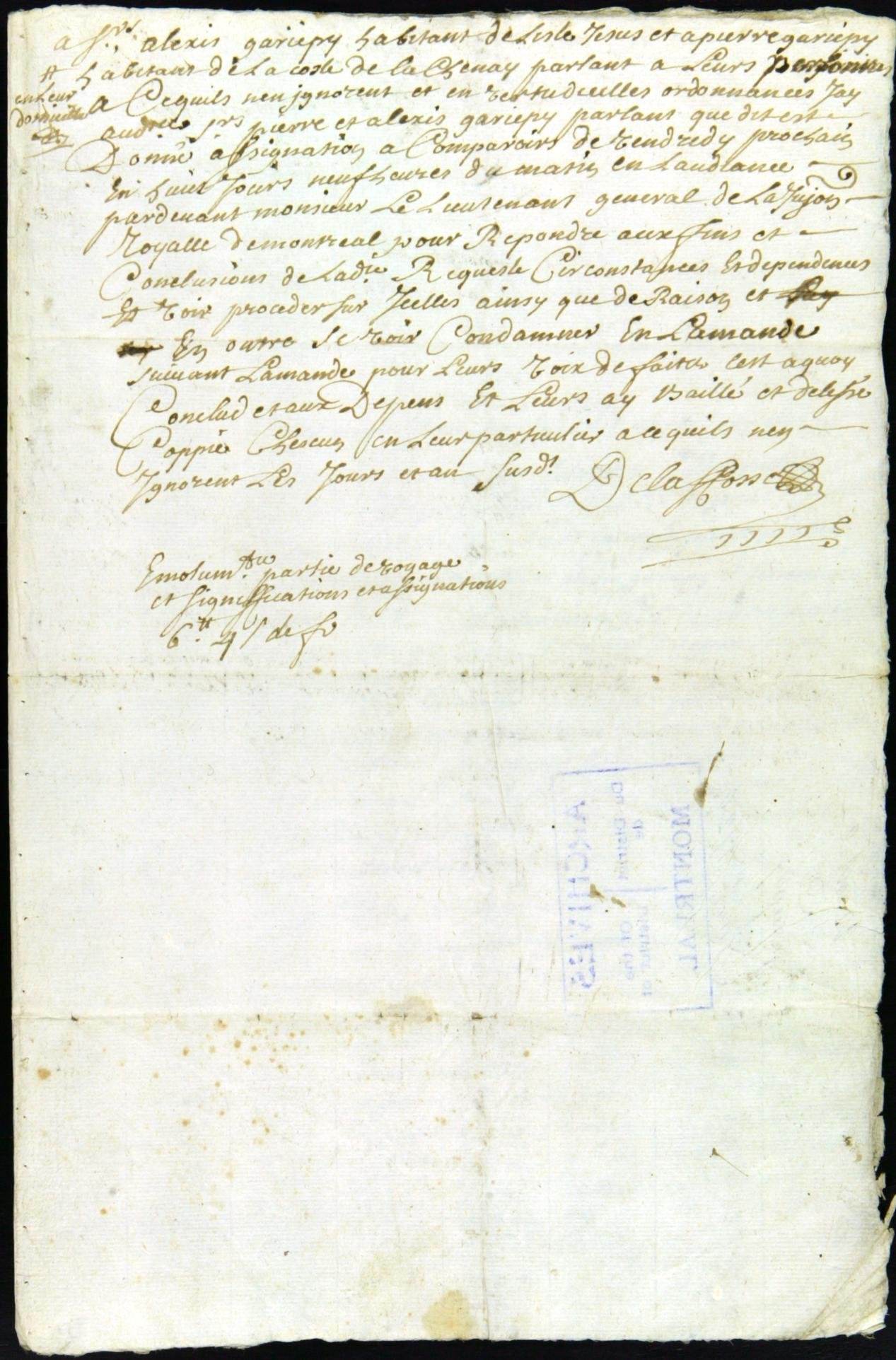
Two weeks later Jolicoeur was one of the three churchwardens of the Île Jésus who brought François to court. Another was Jean Berlouin dit Nantel, the militia captain who had named him as a ringleader fifteen years before. They complained that on the Sunday past, as the parish came out of mass, François, Alexis and Pierre Gariépy, a man named Taillon, and Charles and François Label had fallen to quarrelling and fought « avec une extreme violance », to the scandal of the whole congregation, « n'estant pas la seule fois que cella arrive »—and it was not the first time. The file ends with the summonses; no judgment survives in it.

When François was buried at Terrebonne in 1727, Alexis Gariépy stood at his grave.
Six ordinances of Intendant Raudot survive for this affair, in the register of his commissions and ordinances (BAnQ, E1,S1,D1, pieces P21, P22, P38, P47, P53 and P54). The working papers they recite—the interrogatoires, the informations and the écrou—have not been found. Because the case was tried by special commission of the intendant, they were never dossiers of the royal court at Montréal; its hearing register and bailiffs' papers for October to December 1705 were searched without result.
Ramezay's letter is undated and was written a year after the events. It gives the governor general's ordinance as of 14 November 1704, where the surviving copy is dated 12 December, and it has François sent under guard to Québec, while the ordinance of 31 October records him held in the prisons of Montréal. Dates in this account follow the ordinances where they differ.
The ordinances call the movement an intention to assemble to present a petition. What the petition asked is stated only in the letter of 28 October 1705: a tariff on the price of goods.
Key Dates
Primary Source Documents
The Assembly of 1704


The Salt Shortage of 1705
The Intendant's Ordinances, 1705–1706


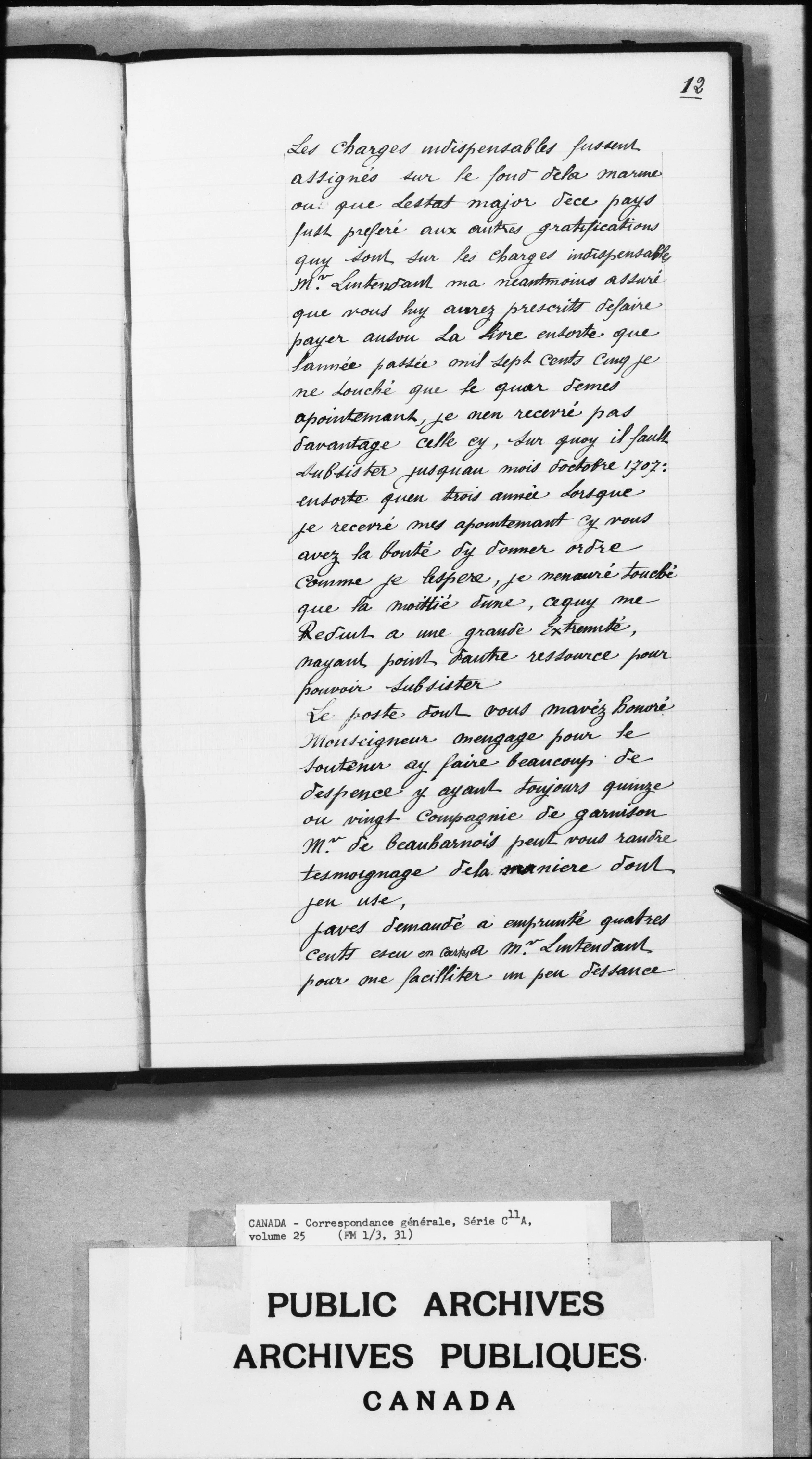
Ramezay's Account, 1706





Later Years, 1720



Sources & Citations
Primary Sources
- Ordinances of Intendant Jacques Raudot (1705–1706): BAnQ, Fonds Intendants, E1,S1,D1, pièces P21 (26 Oct 1705), P22 (31 Oct 1705), P38 (26 Nov 1705), P47 (8 Dec 1705), P53 (4 Jan 1706) and P54 (9 Jan 1706).
- The assembly of 1704: Library and Archives Canada, Fonds de la famille Beauharnois, MG18-G6, vol. 2: ordinance of Governor General Vaudreuil, 12 December 1704 (p. 383); mandement of the vicar general Belmont (pp. 388–389); petition of the habitants to the governor of Montréal (pp. 390–391); letter of Pierre Raimbault, Ville-Marie, 25 November 1704 (pp. 392–394); letter of Belmont, 18 December 1704 (pp. 418–421). Copies.
- Vaudreuil, Beauharnois and Raudot to the Minister, Québec, 19 October 1705: Archives nationales d'outre-mer, Colonies, C11A, vol. 22; Public Archives of Canada transcript, pp. 196–199, 219 (LAC reel C-2381).
- Vaudreuil and Raudot to the Minister, 28 October 1705: ANOM, C11A, vol. 22, fols. 203–205v; ministry summary in vol. 23, fol. 122–122v.
- Ramezay to the Minister, undated [1706]: ANOM, C11A, vol. 25; Public Archives of Canada transcript, pp. 3–15 (LAC reel C-2382, images 419–431); ministry summary of 4 November 1706 in vol. 24, fols. 149–153v.
- Later proceedings (1720): BAnQ, Fonds Juridiction royale de Montréal: TL4,S1,D2518, François Séguin dit Ladéroute against Pierre Limoges or Amand dit Jolicoeur, for insults, 6–14 August 1720; TL4,S1,D2534, the churchwardens of the Île Jésus against François Ladéroute, Pierre and Alexis Gariépy and others, for a disturbance at the church door, 27 August – 24 September 1720.
Secondary Sources
- Sévigny, André, and Louise Trudeau. Dictionnaire des soldats des troupes de la Marine en Nouvelle-France (1683–1715). Québec: Presses de l'Université Laval, 2026 (René Cholet dit Saint-Paul, witness).
- PRDH-IGD, Programme de recherche en démographie historique, Université de Montréal: families of François Séguin and Marie-Louise Filion, and Pierre Séguin and Barbe Filion.