
The Storyline
Real families. Real discoveries. Real stories.

The Property War
Four years of litigation, two courts and an appeal to the Supreme Court of Illinois — over a cottage measuring twenty-four feet by twenty-four. Read from the decision itself rather than from family memory, the case turns out to run the other way round: Thomas Hamall was the one who sued, his former wife was the one who appealed, and the court expressly declined to decide the point of law the family has long believed it settled.
Part of the Storyline Genealogy series: Uncovering the human stories behind legal history, one family at a time.

The Tintype in the Box: Photo Mystery
How I identified a nameless 1870s tintype using photo dating, fashion analysis, and family records—and discovered the tragic story of Margaret Mary McKenny.
When photographs outlive memory, detective work brings our ancestors back.
Part of the Storyline Genealogy Series- Uncovering the Stories Behind the Names and Images
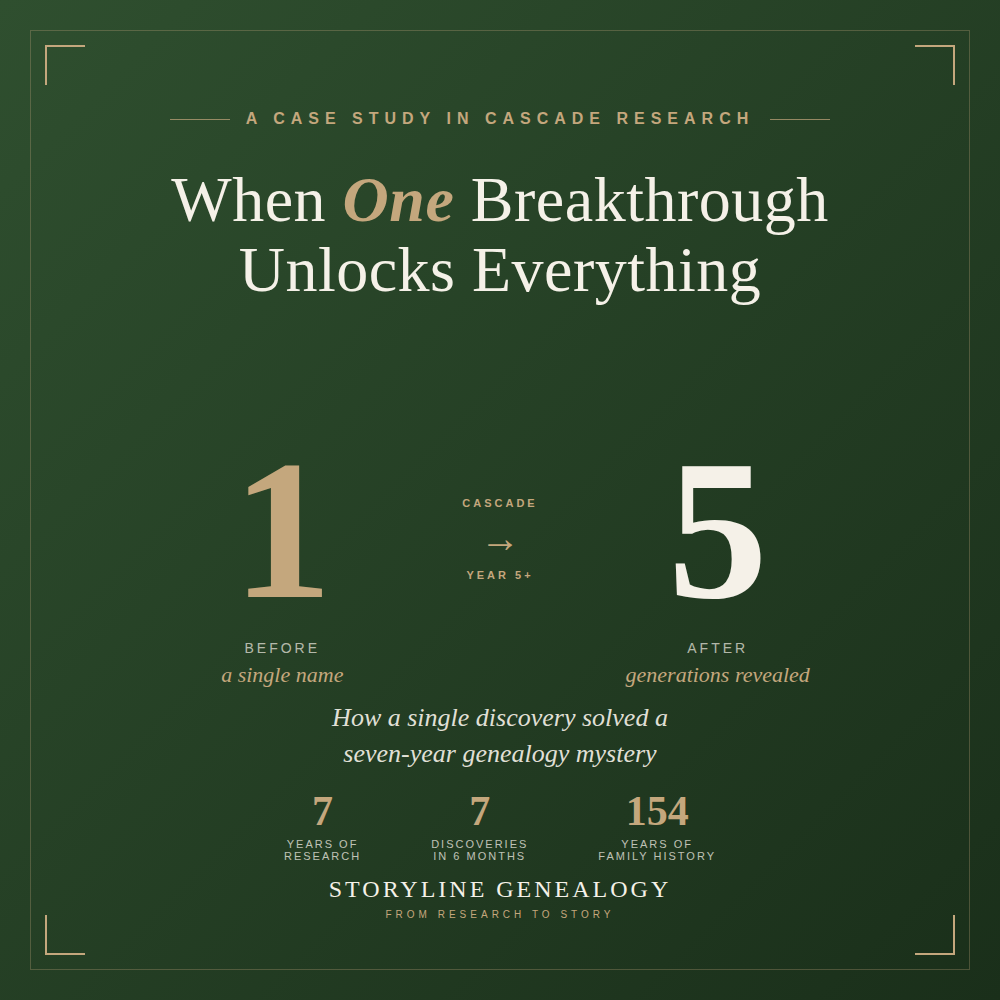
When One Breakthrough Unlocks Everything
The breakthrough came in Year 5. After seven years of searching for John Kenny among dozens of other John Kennys in Brooklyn, the answer appeared when we stopped asking "Which John Kenny?" and started asking "What made THIS John Kenny unique?" That single shift—from name-based searching to occupational tracking—unlocked seven major discoveries in six months and revealed five generations spanning 154 years.
Part of the Storyline Genealogy series: When traditional research methods fail, innovative approaches unlock the impossible cases that define professional genealogy.
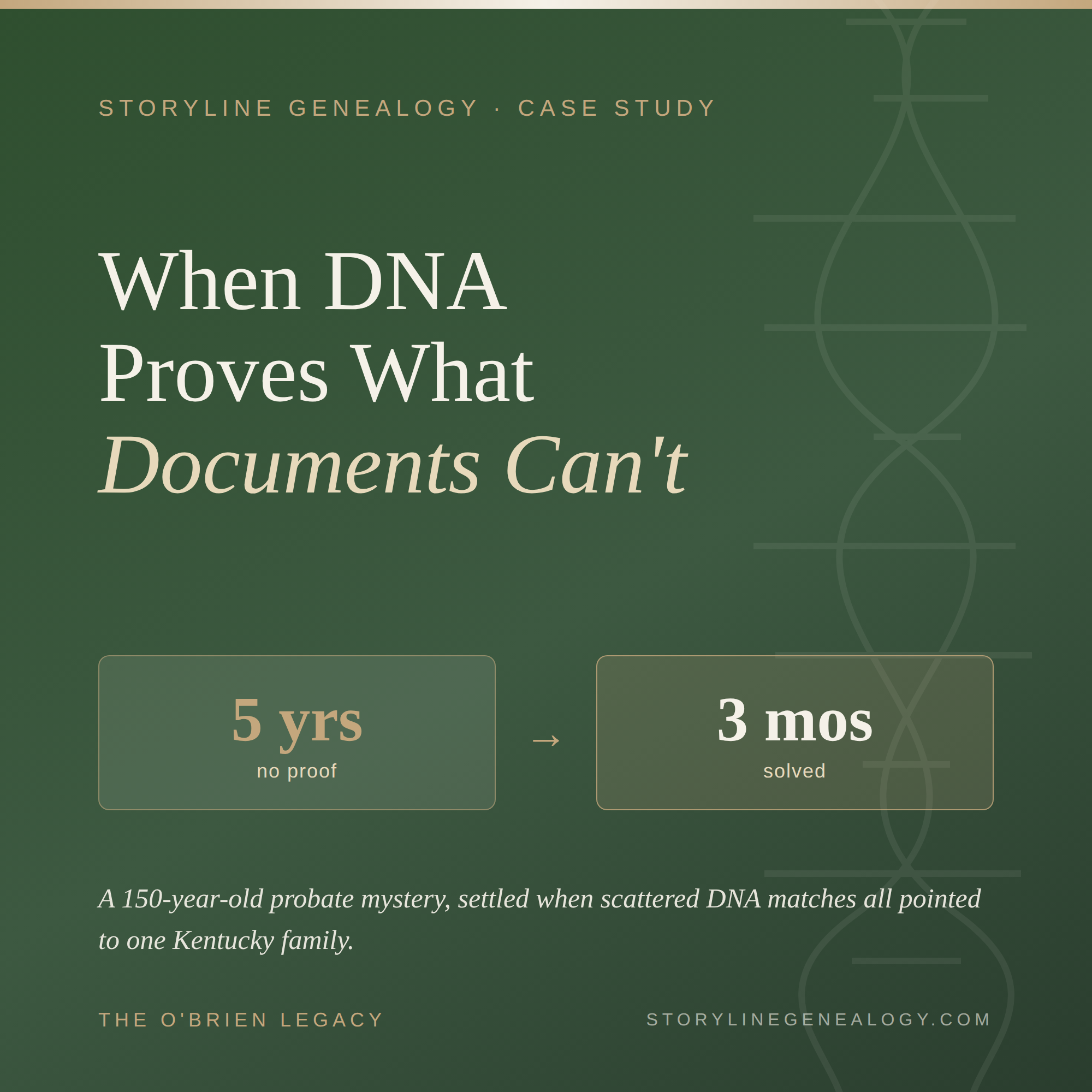
When DNA Proves What Documents Can’t
After five years of research found no proof, DNA testing solved a 150-year-old mystery in three months. The breakthrough came when seemingly unrelated matches all pointed to the same Kentucky family.
Part of the Storyline Genealogy series: How DNA testing solved a brother relationship that five years of traditional research couldn't confirm

The Missing Brother Mystery
Sometimes the most puzzling genealogical mysteries hide in plain sight. One census entry proved particularly haunting: 'Thornton Hammil' listed as Owen Hamall's brother in 1880 Chicago—but no such person seemed to exist anywhere else in the historical record. The breakthrough came where it often does in immigrant family research: in the margins of church records, where community relationships revealed themselves through acts of faith and mutual support.
Part of the Storyline Genealogy series: When mysterious census entries unlock complex family stories that span continents and generations
The Fire in Your Blood
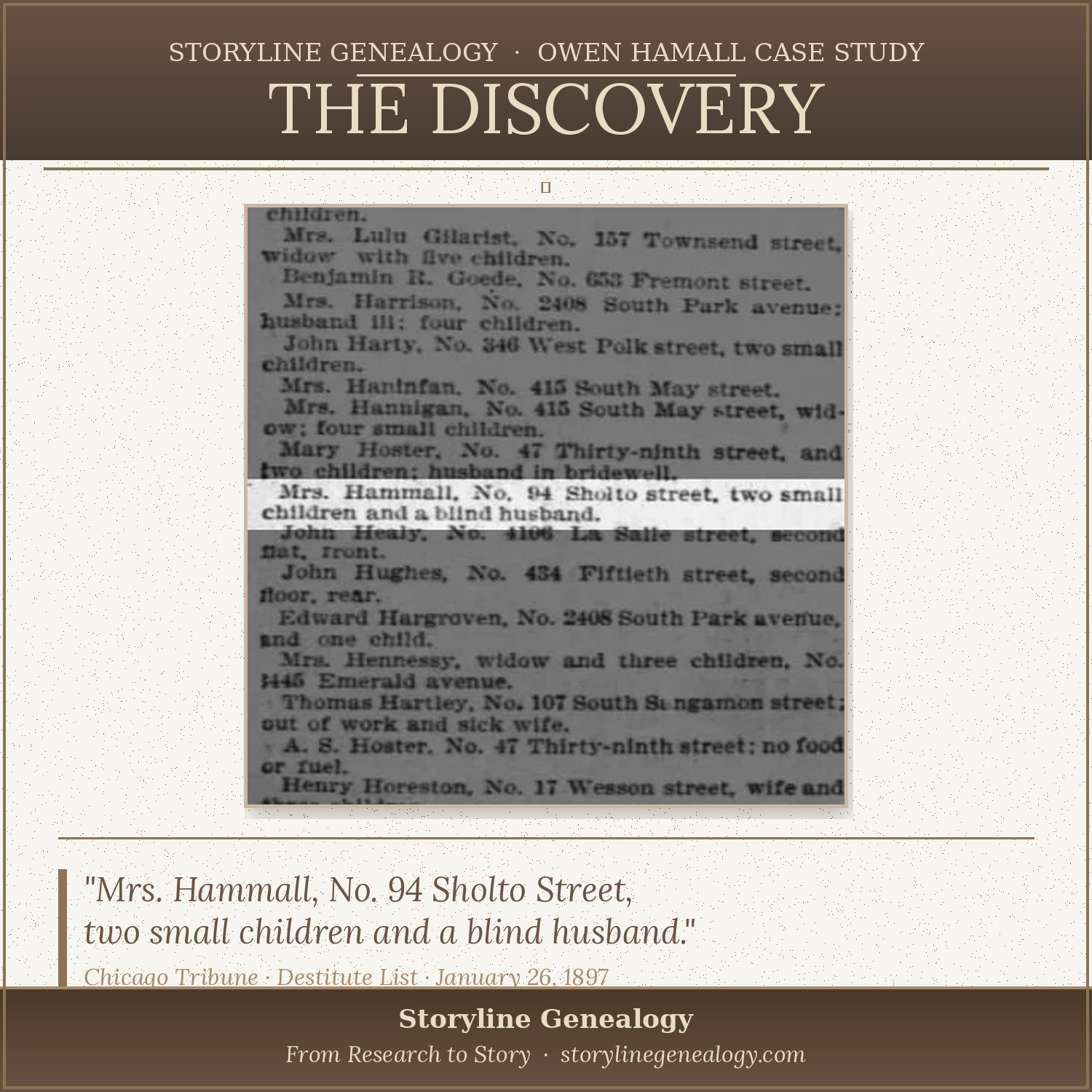
When Owen Hamall died of meningitis in 1898, he left behind more than just a grieving family—he left behind a story of resilience that would echo through generations. This story was discovered not through grand family legends, but through a single newspaper clipping that reduced his family's struggle to twenty-three stark words: "Mrs. Hammall, 94 Sholto Street, two small children and a blind husband."
This entry in the Chicago Tribune's "Destitute List" from January 26, 1897, could have been just another piece of historical data. Instead, it became the foundation for understanding what it truly meant to be a Hamall descendant—and why some family stories deserve to be told as letters of strength to future generations.
Part of the Storyline Genealogy series: When family tragedies become letters of strength to future generations.
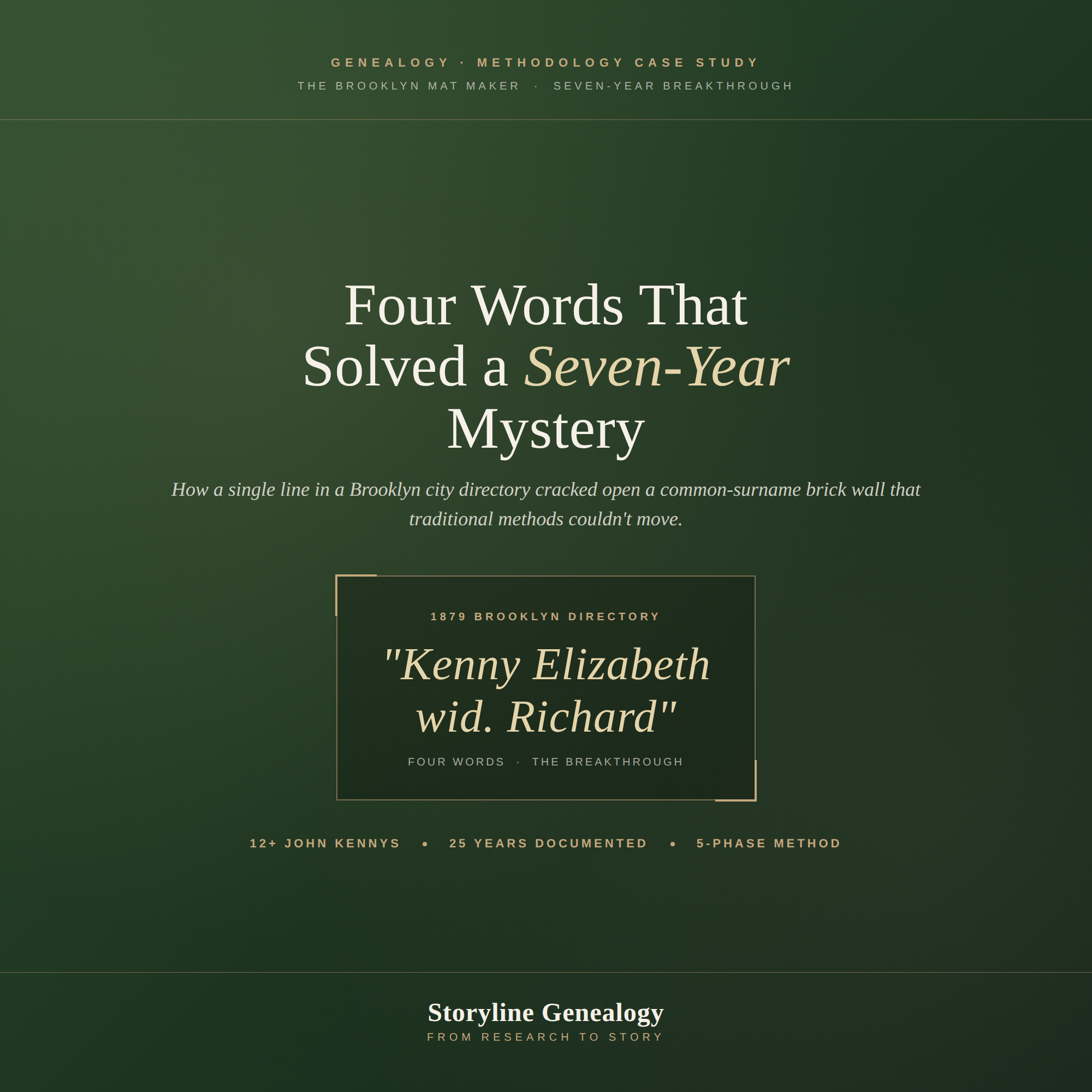
Four Words That Solved a Mystery
After seven years of failed research attempts with dozens of John Kennys in Brooklyn records, a single city directory entry changed everything. Discover how 'Kenny, Elizabeth, wid. Richard' unlocked an impossible genealogical puzzle and revealed an innovative research methodology.
Part of the Storyline Genealogy series: When traditional research methods fail, innovative approaches unlock the impossible cases that define professional genealogy.
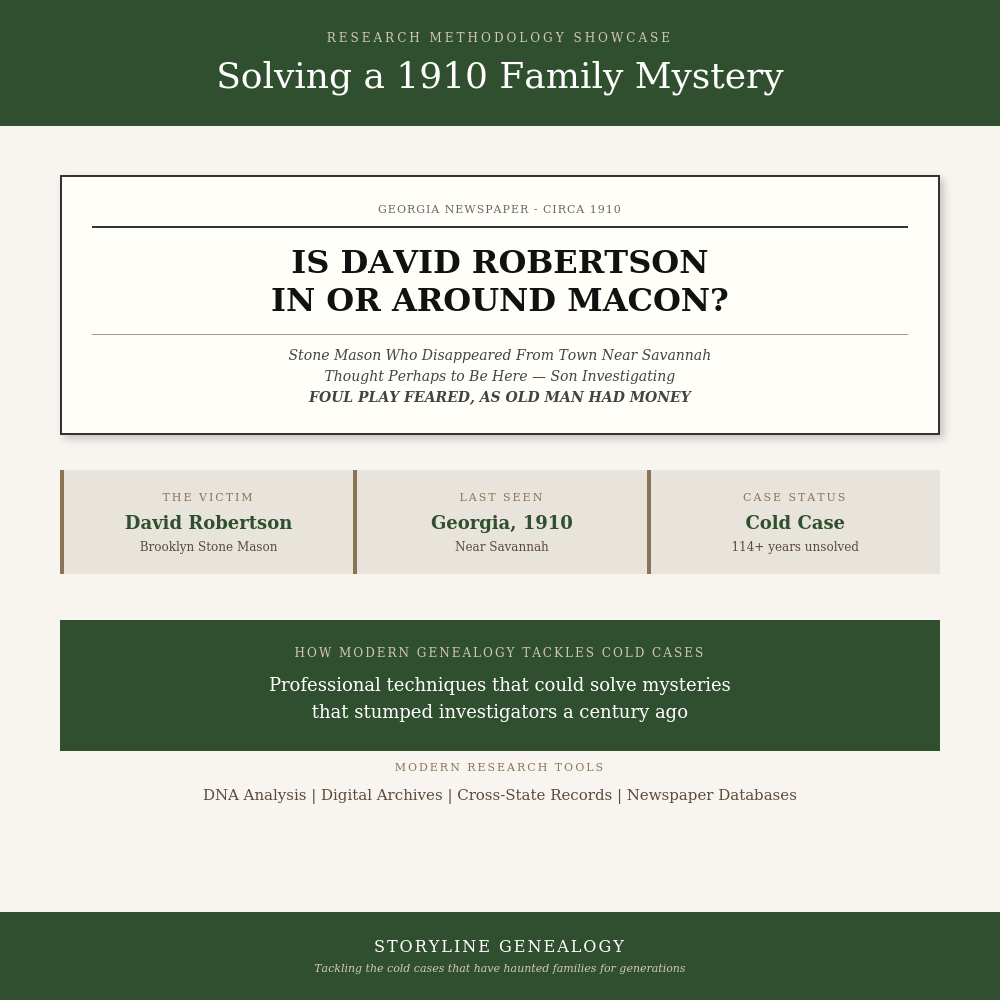
The Stone Cutter Who Vanished in Georgia
A Brooklyn stone mason vanished in Georgia in 1910, sparking a cross-state search by his devoted son. This cold case illustrates how modern DNA analysis, digital archives, and professional genealogy techniques could solve family mysteries that stumped investigators over a century ago.
Part of the Storyline Genealogy series: When professional research tackles the cold cases that have haunted families for generations.
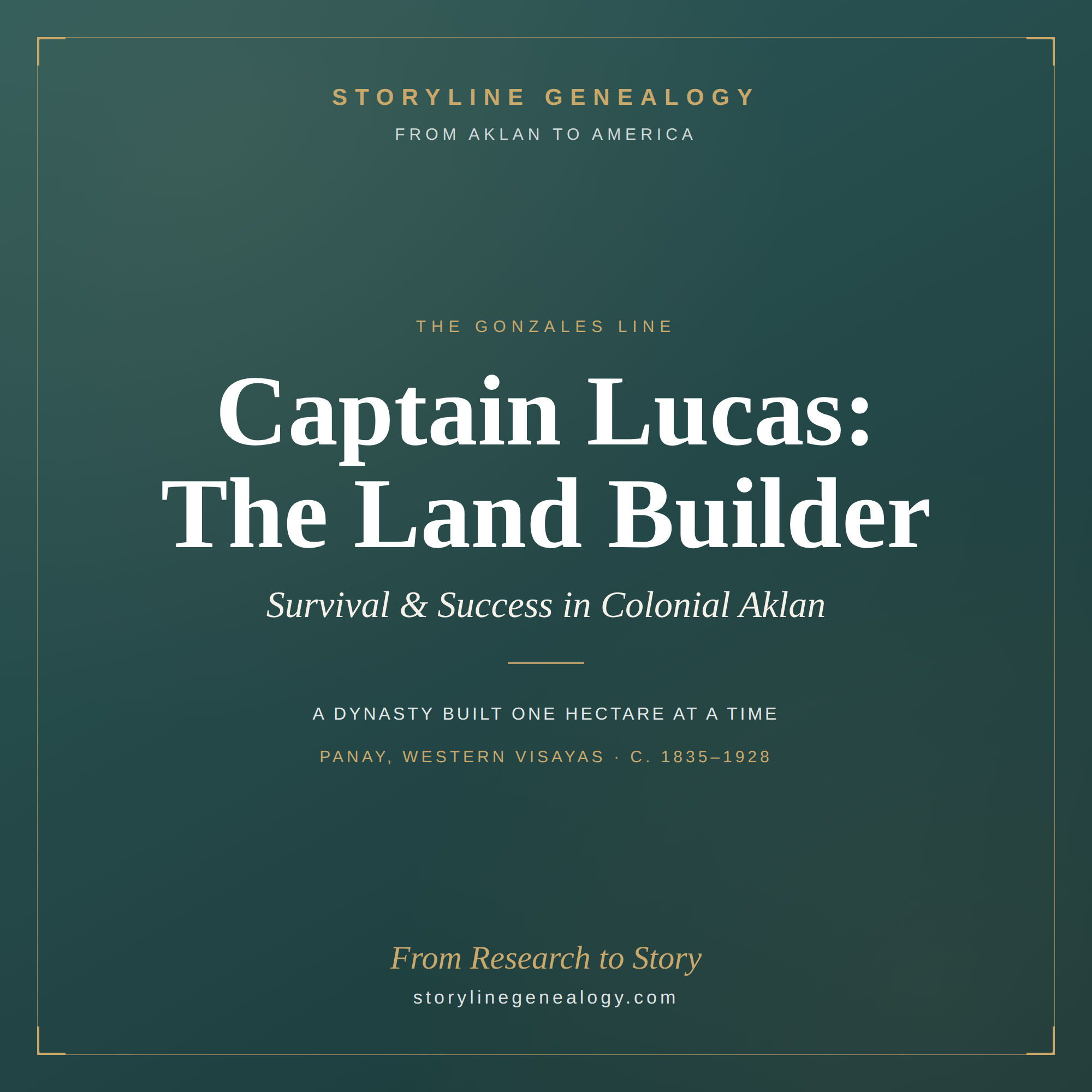
Captain Lucas: The Land Builder
Discover how Captain Lucas Gonzales built a lasting family legacy in colonial Philippines through strategic land acquisition, surviving Spanish rule, revolution, and American occupation from 1835-1928.
Part of the Storyline Genealogy series. When historical titles hint at broader stories, comprehensive research reveals how military leaders transformed their service into community building and economic development.