
DNA Analysis & Conclusions
DNA Analysis & Conclusions
Throughout this series, we have traced the lives of Owen Hammel and Ann King from their 1846 marriage in Donaghmoyne, County Monaghan, Ireland, through their emigration during the Great Famine, their settlement in Wisconsin, and Owen's early death in 1858. We followed their four children—James, Mary Elizabeth, Henry Patrick, and Mary Anna—as they scattered across the American Midwest, leaving marriage records that preserved their parents' names and descendants whose DNA would one day offer clues about their Irish origins.
Now we bring together the genetic evidence. DNA testing across two platforms—23andMe and Ancestry—has produced matches that connect the Wisconsin Hammel descendants not only to each other but to another family: the Henry Hamall and Mary McMahon line of Chicago. These matches, combined with documentary evidence of shared naming patterns and marriages in the same Irish parish, support a hypothesis worth serious consideration: Owen Hammel of Wisconsin and Henry Hamall of Chicago may have been brothers.
This concluding episode presents the DNA evidence matrix, explains what the match levels mean, and explores the Wisconsin Hammels' potential place within the broader Donaghmoyne Network—a web of families from a single Irish parish whose descendants, scattered across America, may share common ancestry.
Owen Hammel (Wisconsin) and Henry Hamall (Chicago) May Have Been Brothers
DNA matches between descendants of both families, combined with shared naming patterns and documented marriages in Donaghmoyne parish, suggest these two men may have been siblings who emigrated separately during the Great Famine era. The evidence is compelling but not yet conclusive—the search for definitive proof continues.
Part I: The Documentary Evidence
What We Knew Before DNA
Before examining the DNA evidence, it's important to understand what documentary research had already established about the potential relationship between these two families.
Documentary Evidence Supporting the Brother Hypothesis
Same Parish Origin
Both families have documented marriages in Donaghmoyne parish, County Monaghan: Owen Hammel married Ann King in 1846; Henry Hamall married Mary McMahon in 1841. The marriages occurred just five years apart in the same small Irish parish.
Shared Naming Patterns
Both families used the names "Owen" and "Henry" across generations. Owen Hammel of Wisconsin named a son Henry Patrick; the Chicago family's Owen Hamall (1847–1898) was Henry's son. Mary Anna Hammel Engel named a son Owen Leo. This cross-use of names was common among siblings honoring each other.
Similar Emigration Timeline
Both families emigrated during the Great Famine era (1845–1852) and settled in the American Midwest. The Wisconsin Hammels arrived via New York by 1850; the Chicago Hamalls arrived in Montreal by 1850 before moving to Chicago.
Surname Spelling Variations
Both families used interchangeable spellings: Hammel, Hammell, Hamill, Hamall, Hammil. This variation is consistent with siblings from the same family whose name was recorded phonetically by different clerks in different locations.
Part II: 23andMe DNA Evidence
Cross-Line Matches Between Chicago and Wisconsin
The 23andMe platform provides our clearest view of the relationship between the Chicago Hamall line and the Wisconsin Hammel descendants. This matrix shows shared DNA in centimorgans (cM) between tested individuals from four family lines.
| Tester (Ancestor) | M.H.M. Chicago |
R.V.E. Anna Engel |
L.L. Mary Bucklin |
L.F. Henry Patrick |
C.F. Gartlan* |
|---|---|---|---|---|---|
| M.H.M. Henry Hamall & Mary McMahon (Chicago) | — | 34 | 33 | 21 | 23 |
| R.V.E. Anna Hammel Engel (Wisconsin) | 34 | — | 74 | 26 | 16 |
| L.L. Mary E Hammel Bucklin (Wisconsin) | 33 | 74 | — | 52 | 16 |
| L.F. Henry Patrick Hammel (Wisconsin) | 21 | 26 | 52 | — | 0 |
| C.F. James Hamill & Ann Gartlan (Donaghmoyne)* | 23 | 16 | 16 | 0 | — |
M.H.M. (Chicago line) shares 21–34 cM with descendants of three different children of Owen Hammel & Ann King (Wisconsin): Anna Hammel Engel, Mary E Hammel Bucklin, and Henry Patrick Hammel.
This pattern—matching multiple descendants across different branches of the same family—is consistent with what we would expect if Owen Hammel (Wisconsin) and Henry Hamall (Chicago) were brothers. The match levels of 21–34 cM fall within the range for 3rd cousins once removed to 4th cousins, the expected relationship if the common ancestors were brothers.
However, matches in this range can sometimes occur by chance between individuals who share no recent common ancestor. The consistency across multiple testers strengthens the case, but does not constitute definitive proof.
Part III: Ancestry DNA Evidence
Expanded Testing Reveals Additional Data Points
The Ancestry platform includes additional testers, providing more data points for the Chicago-Wisconsin connection. This matrix also reveals connections to the McCann/Hamill line—another Donaghmoyne family whose descendants show matches to both the Chicago and Wisconsin families.
| Tester (Ancestor) | M.H.M. Chicago |
T.L. Anna Engel |
C.L. Henry Patrick |
M.G. Mary Bucklin |
S.R. Mary Bucklin |
T.L.2 Henry Patrick |
|---|---|---|---|---|---|---|
| M.H.M. Henry Hamall & Mary McMahon (Chicago) | — | 14 | 17 | 17 | 10 | 15 |
| T.L. Anna Hammel Engel (Wisconsin) | 14 | — | 35 | 55 | 33 | 23 |
| C.L. Henry Patrick Hammel (Wisconsin) | 17 | 35 | — | 0 | 46 | 0 |
| M.G. Mary E Hammel Bucklin (Wisconsin) | 17 | 55 | 0 | — | 206 | 0 |
| S.R. Mary E Hammel Bucklin (Wisconsin) | 10 | 33 | 46 | 206 | — | 0 |
| T.L.2 Henry Patrick Hammel (Wisconsin) | 15 | 23 | 0 | 0 | 0 | — |
On Ancestry, M.H.M. (Chicago) matches Wisconsin Hammel descendants at 10–17 cM—lower than 23andMe but still consistent across multiple testers from different branches. The presence of matches on both platforms, using different matching algorithms, adds weight to the hypothesis.
The high matches within the Wisconsin line (such as 206 cM between M.G. and S.R., both descended from Mary E Hammel Bucklin) confirm that testers correctly descend from the documented ancestors.
Note: The Ancestry matches (10-17 cM) are at lower levels than the 23andMe matches (21-34 cM). Different platforms use different algorithms and reference populations, which can produce varying results. The lower Ancestry numbers approach the threshold where coincidental matching becomes more likely.
Part IV: The Donaghmoyne Network
Exploring Connections Between Multiple Irish Families
The DNA evidence extends beyond the Hammel/Hamall connection. Descendants of other Donaghmoyne families—including the Gartlan line and the McCann/Hamill line—also show matches to both the Chicago and Wisconsin families. This pattern of interconnected matches suggests that multiple families from this single Irish parish may share common ancestry, though the exact relationships remain to be determined.
The Donaghmoyne Network — Exploring Potential Connections
🧬 Henry Hamall & Mary McMahon
Married 1841, Donaghmoyne
Chicago, Illinois
🧬 Owen Hammel & Ann King
Married 1846, Donaghmoyne
Rock County, Wisconsin
🧬 James Hamill & Ann Gartlan
Donaghmoyne parish family
DNA matches to both lines
🧬 Susan Hamill & Charles McCanna
Donaghmoyne parish family
DNA matches under investigation
Additional Donaghmoyne Families Show Matches
Descendants of Susan Hamill and Charles McCanna (another Donaghmoyne family) match M.H.M. (Chicago) at 8–15 cM on Ancestry:
M.S.: 13 cM to M.H.M.
K.B.: 11 cM to M.H.M.
H.C.: 8 cM to M.H.M.
J.R.: 15 cM to M.H.M.
These matches are at lower levels (8-15 cM) where coincidental matching is possible. The McCann/Hamill line is explored in a separate series, with analysis of what these match levels may—or may not—indicate about shared ancestry.
Part V: Interpreting the Evidence
What the DNA Match Levels Mean
DNA match levels are measured in centimorgans (cM), which reflect the amount of genetic material shared between two people. Higher cM values indicate closer relationships. The expected ranges vary based on the relationship:
Expected cM Ranges by Relationship
| 1st Cousins | 575–1330 cM |
| 2nd Cousins | 40–400 cM |
| 3rd Cousins | 15–180 cM |
| 4th Cousins | 5–80 cM |
| 3rd Cousins Once Removed | 10–130 cM |
If Owen Hammel (Wisconsin) and Henry Hamall (Chicago) were brothers, then their grandchildren would be first cousins, their great-grandchildren would be second cousins, and so on. The tested individuals in our matrices are typically 4th to 5th generation descendants, making them 3rd cousins once removed to 4th cousins if the brother hypothesis is correct.
The observed match levels of 10–34 cM between Chicago and Wisconsin descendants fall within the expected range for 3rd–4th cousin relationships. This is consistent with the brother hypothesis, though it does not prove it—matches in this range can also occur between individuals who are not related through the suspected line.
A Note on DNA Evidence: DNA matching is a powerful genealogical tool, but it has limitations. Matches below 30 cM can occur by chance between individuals who share no recent common ancestor—a phenomenon called "identical by chance" (IBC) or "identical by population" (IBP). The strength of DNA evidence increases when: (1) multiple testers from different branches show consistent matches, (2) matches appear on multiple platforms, and (3) documentary evidence supports the genetic findings. Our evidence meets some of these criteria, but definitive proof would require either higher match levels or confirmation through Irish records.
Evidence That Strengthens the Case
Part VI: Conclusions
The Weight of Evidence
Genealogical proof requires the convergence of multiple independent lines of evidence. In the case of Owen Hammel (Wisconsin) and Henry Hamall (Chicago), we have assembled a body of circumstantial evidence that supports—but does not yet prove—the brother hypothesis:
Summary of Evidence
DNA Evidence
Descendants of Henry Hamall (Chicago) share 10–34 cM with descendants of three different children of Owen Hammel (Wisconsin). This is consistent with—though not proof of—a common ancestor two generations back.
Same Parish Origin
Both families married in Donaghmoyne parish, County Monaghan, within five years of each other (1841 and 1846).
Naming Patterns
Both families used "Owen" and "Henry" as given names across generations, a common practice among siblings honoring each other and their parents.
Emigration Timeline
Both families emigrated during the Great Famine (1845–1852), arriving in North America by 1850 and settling in the Midwest.
Surname Variations
Both families used the same spelling variations (Hammel, Hammell, Hamill, Hamall), consistent with siblings whose Irish name was recorded phonetically.
Network Connections
Both families show DNA matches to other Donaghmoyne families (Gartlan, McCann/Hamill), suggesting shared origins in the same Irish community—though the exact relationships remain undetermined.
The Brother Hypothesis Merits Continued Investigation
The convergence of DNA evidence, documentary records, and circumstantial evidence supports the hypothesis that Owen Hammel of Wisconsin and Henry Hamall of Chicago may have been brothers—sons of an as-yet-unidentified Hammel/Hamill couple in Donaghmoyne parish. However, definitive proof remains elusive. The evidence is suggestive rather than conclusive, and the search for Irish baptismal records or other documentation continues.
To strengthen or definitively prove the brother hypothesis, researchers need:
• Irish baptismal records for Owen Hammel and Henry Hamall showing the same parents
• Passenger records showing emigration from the same location
• Additional DNA testers from both lines to strengthen the match data
• Chromosome segment analysis to determine if matches share the same DNA segments (triangulation)
• Documentation of other potential siblings who may have emigrated or remained in Ireland
The Donaghmoyne parish registers are incomplete for the early 19th century, making definitive proof challenging to obtain. However, continued DNA testing, collaboration among descendants, and emerging digitization of Irish records may yet reveal the evidence needed to confirm—or refute—this hypothesis.
Hypothetical Family Structure (If Brother Hypothesis Is Correct)
Key Evidence Documents
The Marriage Records — Same Parish, Five Years Apart


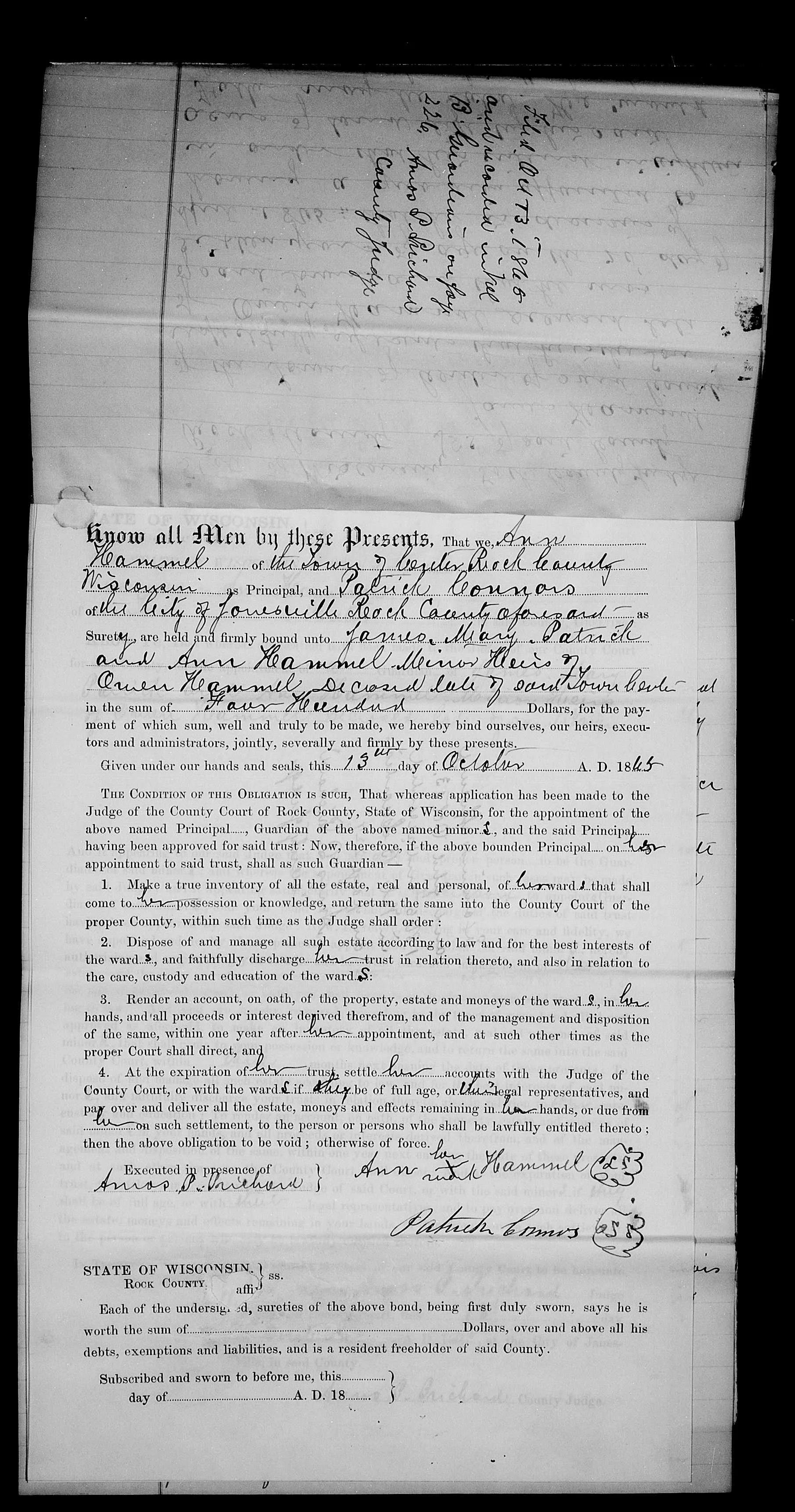
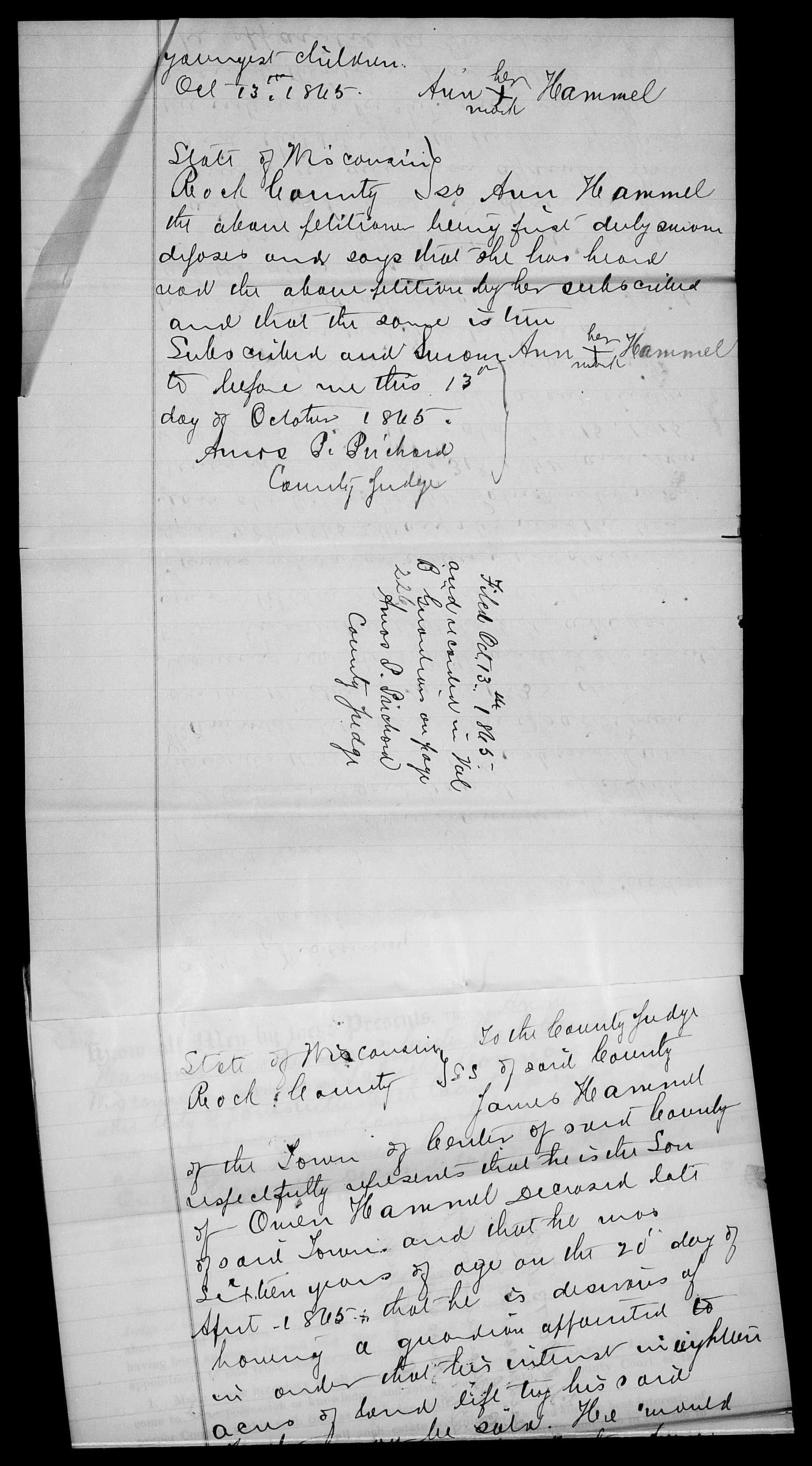
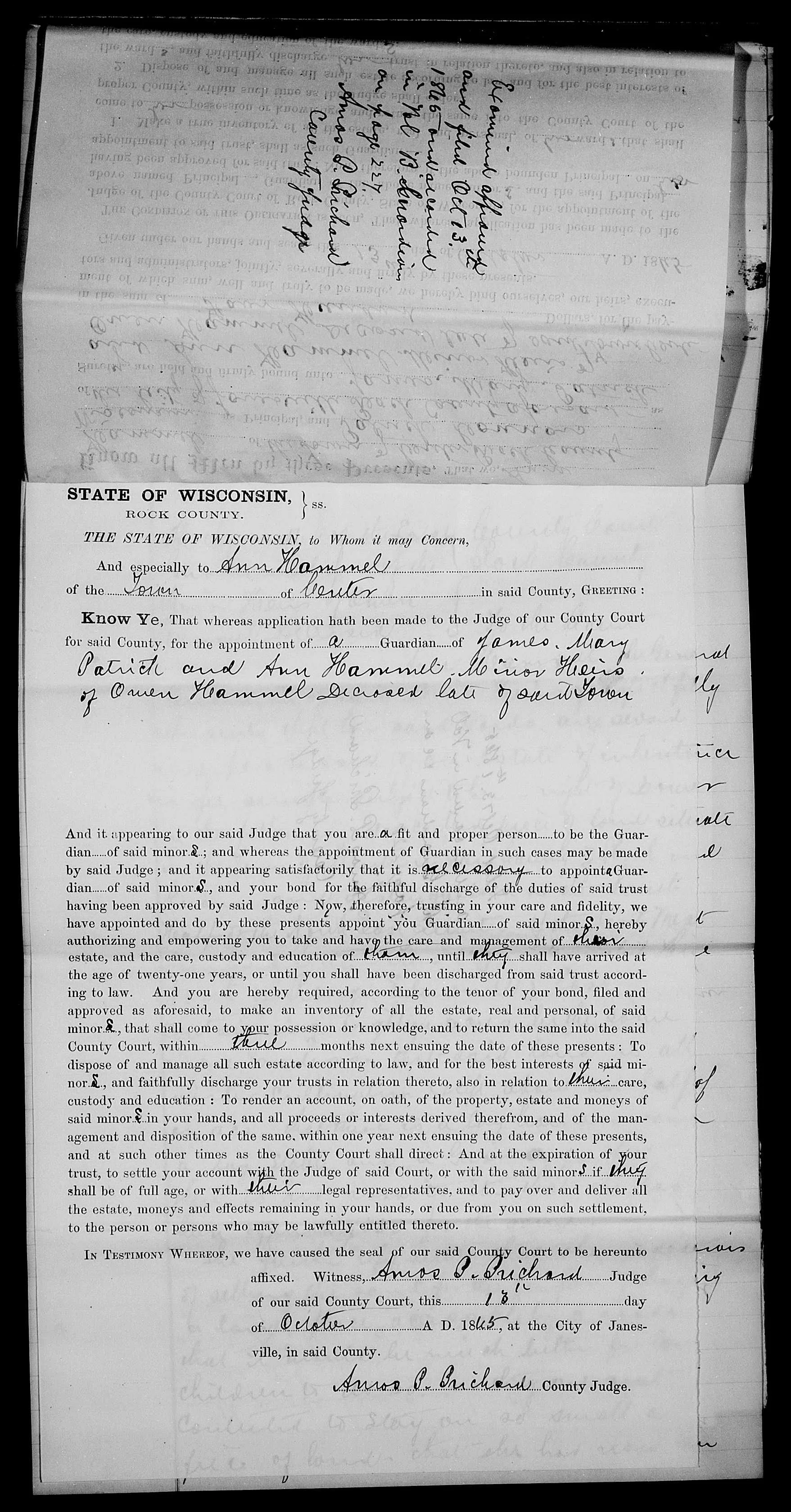
Wisconsin Guardianship Records — Documenting Owen's Family

Census Evidence — The Naming Patterns


What These Documents Show: The marriage records place both families in the same small Irish parish. The guardianship records document Owen's family in detail. The census records reveal naming patterns — Owen's children honoring both "Owen" and "Henry" — that suggest but do not prove a sibling relationship. The documentary evidence is circumstantial; the DNA evidence adds weight to the hypothesis.
Are You Connected to the Donaghmoyne Network?
If you descend from any Hamill, Hamall, Hammel, McCanna, Gartlan, or McMahon family with roots in County Monaghan — particularly Donaghmoyne parish — your DNA and family records could help establish how these four families connect. Whether your ancestors settled in Chicago, Wisconsin, Illinois, Missouri, Montana, or elsewhere, I’d welcome the collaboration.
Get in Touch About This ResearchResearch collaboration is informal, peer-to-peer, and reciprocal — no fee, no obligation, just shared work on shared ancestry.
Every Family Has a Story Worth Telling
Whether you're just beginning your research or ready to transform years of work into a narrative your family will treasure, I'd love to hear your story.
BEGIN YOUR RESEARCH INQUIRY