
From Aklan to America : A La Salle Boy
A La Salle Boy
In 1964, five-year-old Romulo Himler Morales walked through the gates of La Salle Green Hills for the first time. The school was barely five years old itself—a new institution on a six-hectare campus carved from the rolling hills of Mandaluyong, east of Manila. Founded by the De La Salle Brothers to accommodate overflow from their prestigious Taft Avenue campus, La Salle Green Hills would grow to become one of the most elite educational institutions in the Philippines. Young Romulo was there almost from the beginning.
La Salle Green Hills
To God, through Faith, Virtue, and Culture
Ortigas Avenue, Mandaluyong, Rizal (now Metro Manila)
The school Romulo entered was still finding its footing. When La Salle Green Hills opened in July 1959—the same year Romulo was born—it consisted of just two preparatory sections and one section each for grades one and two. A mere 178 students were taught by six teachers under Brother Alphonsus Bloemen, FSC, a veteran educator with thirty years of classroom experience.
In 1959, the area around Ortigas Avenue was still largely undeveloped—"deserted, streetless, uninhabited except by herds of carabaos," as a school publication later described it. The nearest neighbors were the army camps, Camp Murphy and Camp Crame. Within two years, cemented roads were being laid, and students began calling themselves "the Rangers of Green Hills." Today, the area is the heart of Metro Manila's business district.
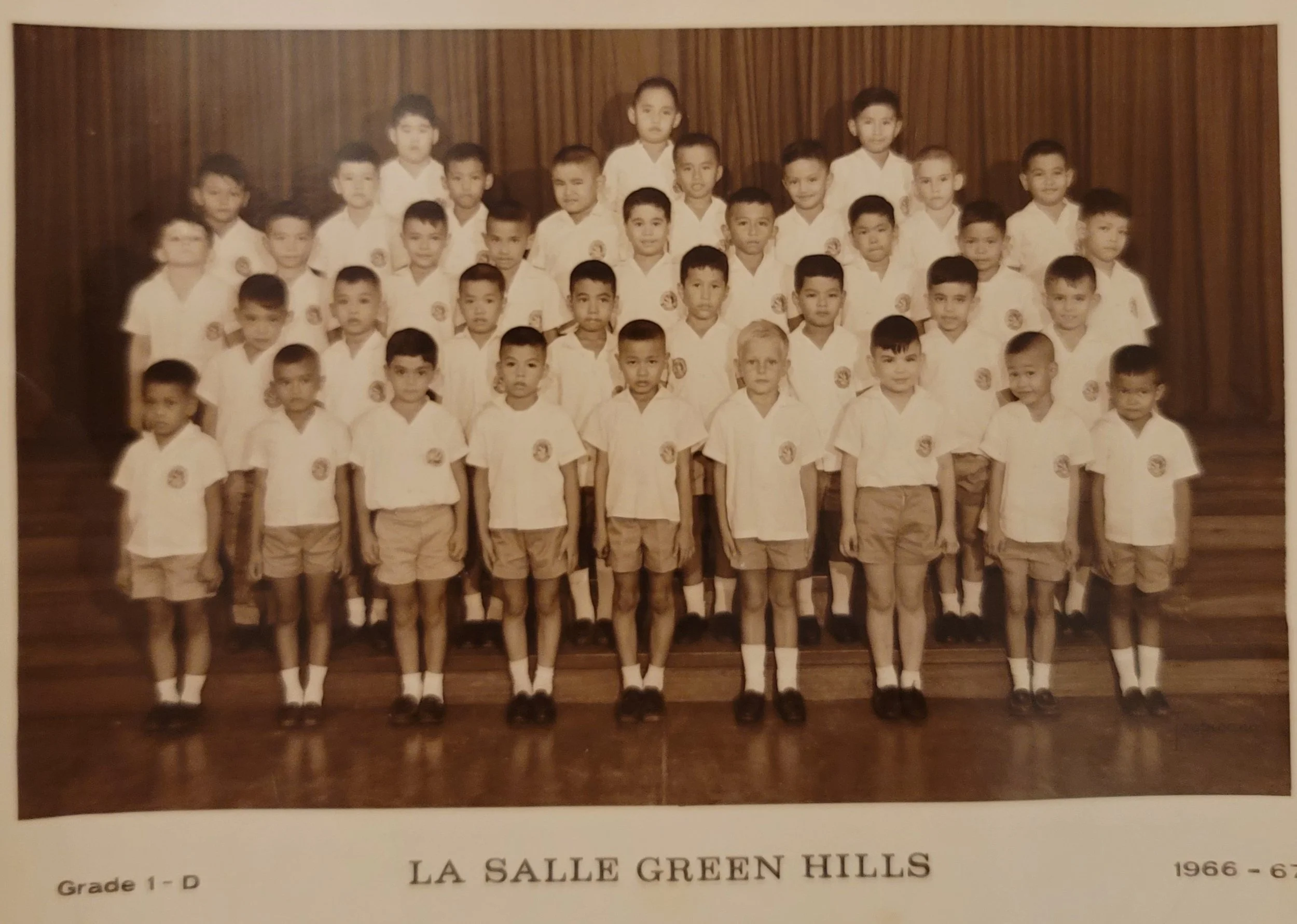
Grade 1-D, La Salle Green Hills, 1966–67. Approximately forty boys in the distinctive LSGH uniform—white polo shirts with the school crest and khaki shorts—stand in rows on the school stage. Romulo Himler Morales is among them. The De La Salle Brothers educated the sons of Manila's elite alongside children of the emerging professional class.
A School for Sons
La Salle Green Hills was, and remains, an all-boys institution in the Lasallian tradition—part of a global network of schools founded by Saint John Baptist de La Salle in 17th-century France. The De La Salle Brothers had been in the Philippines since 1911, and their schools had educated generations of the nation's leaders, professionals, and businessmen.
For Dr. Romulo G. Morales and his wife Hally, sending their son to La Salle Green Hills was both an aspiration and a statement. They were provincial Filipinos from Numancia, Aklan—a small town in the Western Visayas—who had built successful careers in Manila through education and hard work. Dr. Morales had studied medicine at Far Eastern University; Hally had studied medicine at Manila Central University and worked at a public health clinic. Their son would have every advantage they could provide.
A Famous Schoolmate
Among the students walking the halls of La Salle Green Hills in those years was Ferdinand "Bongbong" Marcos Jr., son of Senator Ferdinand Marcos (who became President in 1965). Born September 13, 1957—two years before Romulo—the younger Marcos attended LSGH for his elementary education before being sent to England in 1970. The two boys would have crossed paths in the school corridors, though they moved in different circles. "I would see him at school," Romulo later recalled, "but we didn't talk beyond saying hello. He was a couple of grades ahead of me." In 2022, Bongbong Marcos became the 17th President of the Philippines.
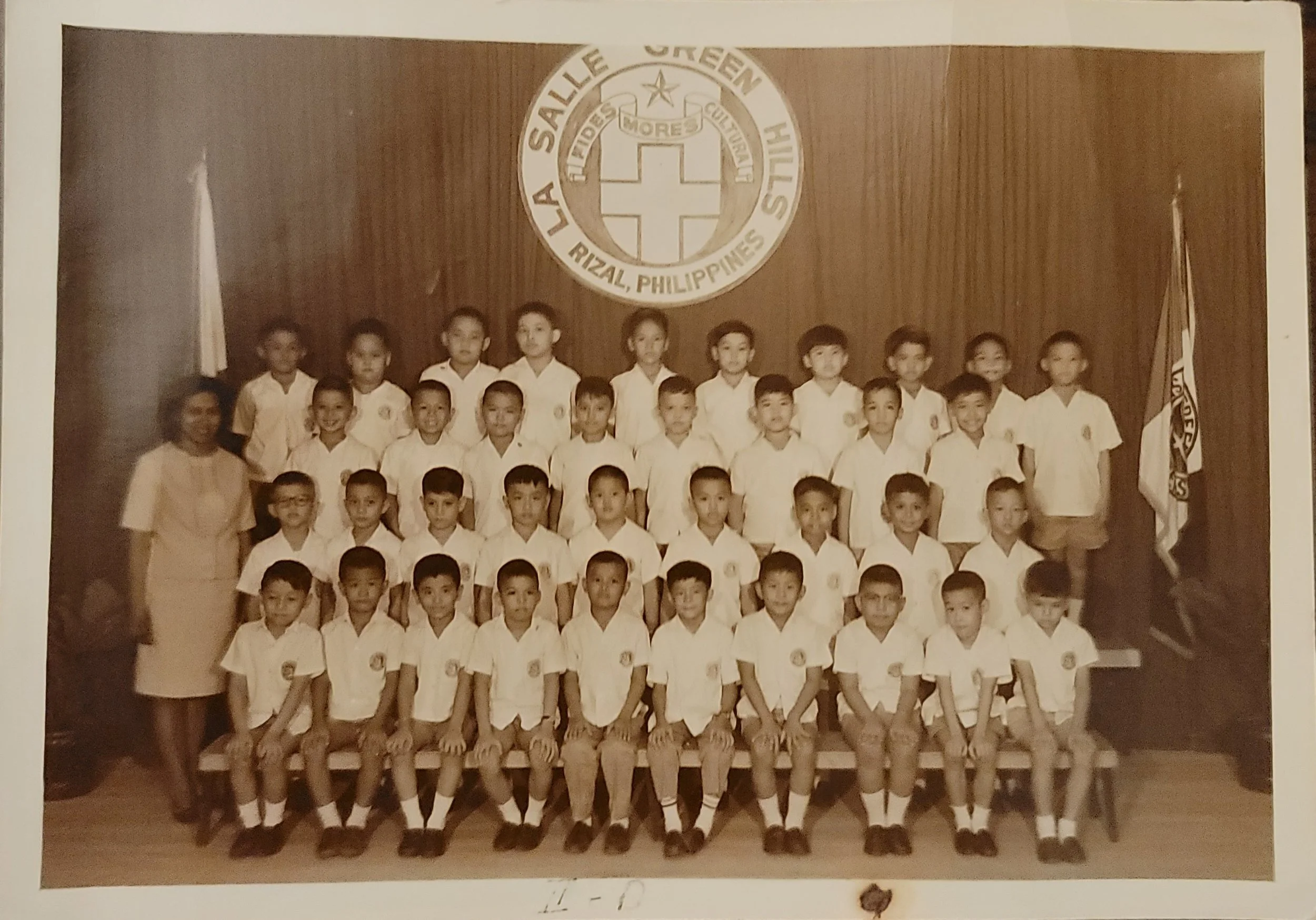
Grade II-D, La Salle Green Hills. The school seal is prominently displayed behind the class—the cross and star emblem with the motto "Fides Mores Cultura" (Faith, Character, Culture) encircled by "La Salle Green Hills, Rizal, Philippines." The female teacher at left reflects the mix of lay educators and De La Salle Brothers who staffed the school. Philippine and school flags frame the formal portrait.
First Holy Communion
At La Salle Green Hills, religious formation was central to education. The school prepared young Catholic boys for the sacraments, and First Holy Communion was a milestone celebrated with great ceremony. Romulo received this sacrament at the school, joining his classmates in white vestments before the school seal.
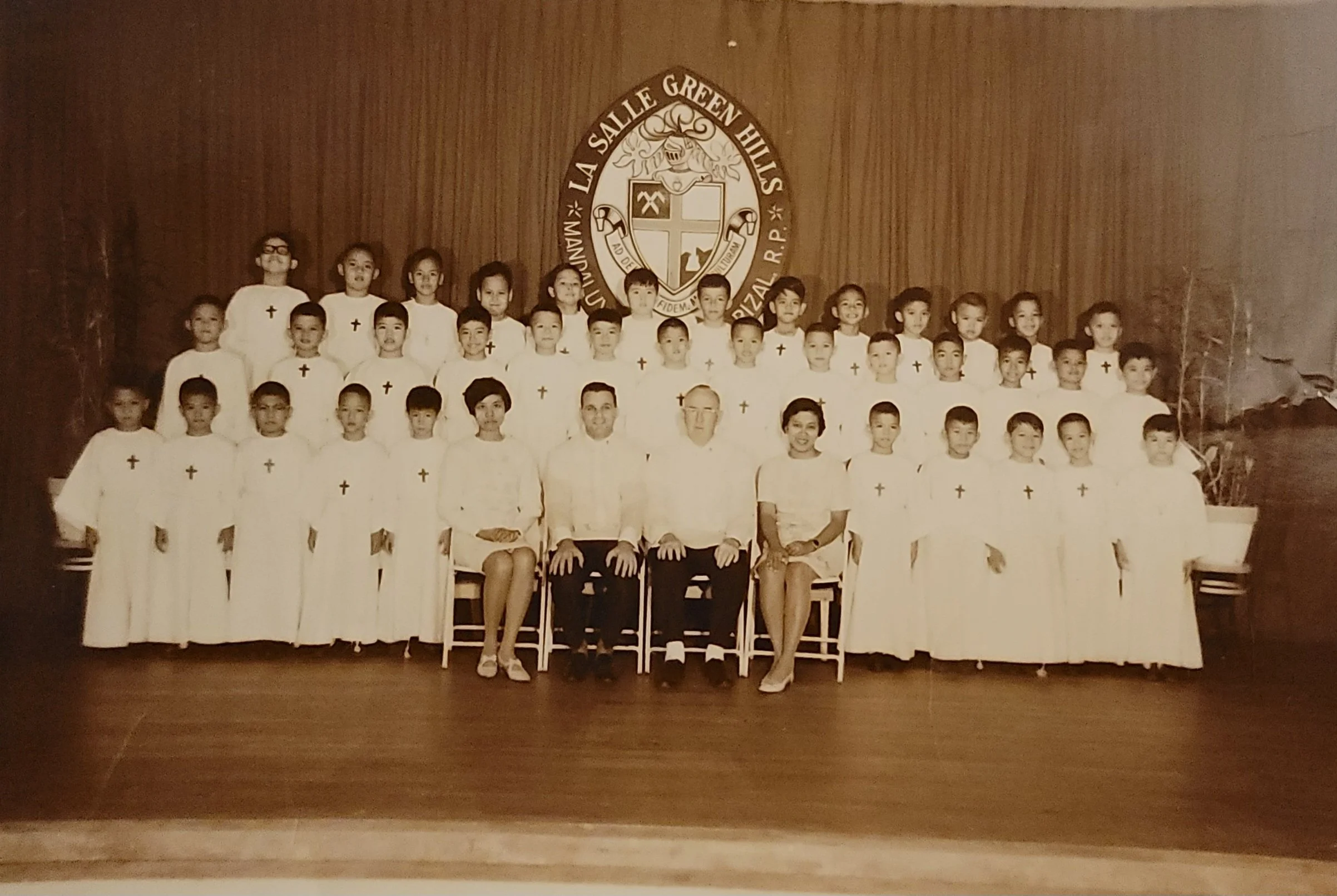
First Holy Communion, La Salle Green Hills. The boys wear traditional white communion vestments with small crosses, standing before the school's coat of arms. A De La Salle Brother (center, in white cassock) presides alongside lay teachers. The ceremony represented both a spiritual milestone and a social occasion for the families of LSGH students.
The De La Salle Brothers emphasized what they called "integral formation"—the education of the whole person through faith, academics, and character development. For a boy who had been baptized and confirmed on the same Christmas Day by a bishop who survived World War II, the religious dimension of La Salle education would have felt natural, a continuation of the faith that had marked his entrance into the world.
Dancing with the Girls' School
La Salle Green Hills was an all-boys institution, but social events brought the young Lasallians together with students from nearby girls' schools. At one such dance, young Romulo found himself paired with his cousin Margarita—a connection that speaks to the close-knit nature of Filipino extended families even in the bustling capital.
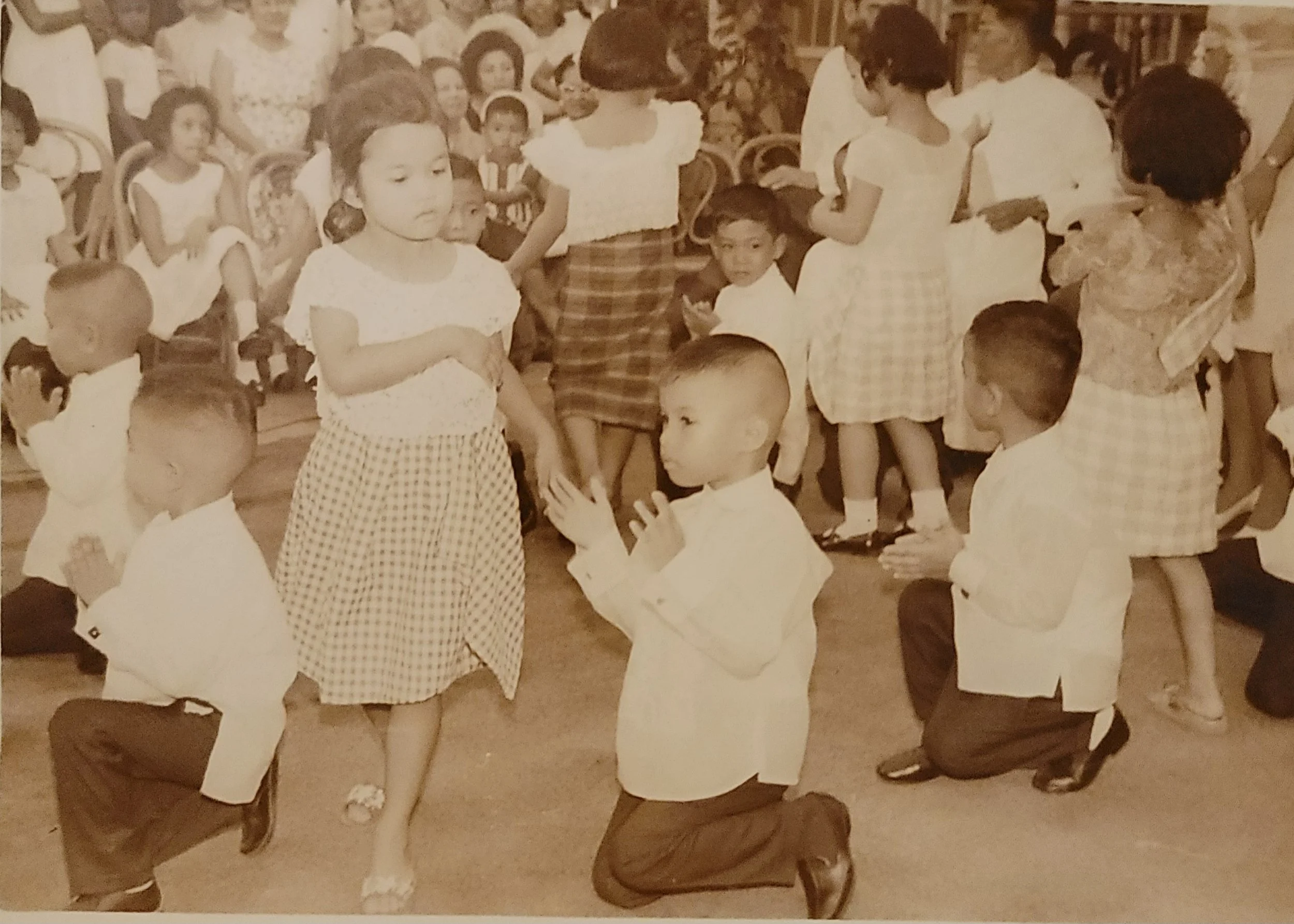
A school dance at La Salle Green Hills, circa 1967–68. Young Romulo (kneeling in foreground) partners with his cousin Margarita at a social event pairing La Salle boys with students from a nearby girls' school. The girls wear traditional terno-inspired dresses with butterfly sleeves, while the boys sport their Sunday best. Mothers and chaperones watch from chairs in the background.
These dances were carefully supervised affairs—mothers and chaperones visible in the background, the children learning the social graces expected of their class. For Romulo, the partner was family, a reminder that even in Manila, the Morales and Tamayo clans maintained their connections.
A Family in Manila
While Romulo attended school, his parents built their careers in Manila's medical community. Dr. Romulo G. Morales worked as a physician, eventually completing a medical residency at Perth Amboy General Hospital in New Jersey—a common path for Filipino doctors seeking advanced training and better opportunities in the 1960s. His mother Dr. Hally R. Morales worked at a public health clinic in Manila.
The Morales Household, Manila 1960s
With both parents working, the family employed a nanny named Ruby to care for young Romulo. This arrangement was common among Manila's professional class—extended family networks and household help allowing both parents to pursue careers. Romulo was their only surviving child; two daughters had been stillborn or died shortly after birth, one before Romulo and one after.
"He has no living siblings. Two other girls were stillborn or lived a very short time—one before him and one after him."
The Call to America
In 1969, when Romulo was nine years old and in fourth grade, his father received a job offer that would change everything. The Massillon State Hospital in Ohio—a large psychiatric institution—was hiring, and Dr. Morales saw an opportunity to build a new life in America.
The 1960s saw a significant wave of Filipino physicians emigrating to the United States, drawn by better pay, advanced facilities, and opportunities for specialization. American hospitals, particularly in underserved areas, actively recruited foreign medical graduates. Psychiatric institutions like Massillon State Hospital often relied heavily on immigrant physicians willing to work in demanding, less desirable positions that American-trained doctors avoided.
The Massillon State Hospital, opened in 1898 as the Eastern Ohio Mental Asylum, was one of Ohio's large psychiatric institutions. By 1969, it was beginning the transition toward deinstitutionalization that would reshape American mental health care. The hospital operated under the "Cottage Plan," with a complex of eighteen buildings spread across its grounds. For a young Filipino physician, it offered a foothold in America—difficult work, but a path forward.
Romulo's Philippine Childhood
Departure
In 1969, the Morales family left the Philippines. They flew into San Francisco, where they stayed briefly with family or friends, then traveled by bus across the American heartland to Ohio. Behind them, young Romulo left La Salle Green Hills, his nanny Ruby, his cousin Margarita, and the only home he had ever known. Ahead lay a new country, a new school system, and a new life.
He was nine years old—the same age his father had been when the Japanese invaded the Philippines, the same age countless immigrant children before and since have been when their families uprooted them in search of a better future. The La Salle boy from Manila would become an American.
The Journey
The Morales family's route to Ohio—flying into San Francisco, staying briefly with connections, then traveling by bus to their final destination—was a common pattern for Filipino immigrants of the era. Chain migration and community networks helped newcomers navigate the transition, providing temporary housing and guidance before families dispersed to wherever work awaited. For young Romulo, the cross-country bus journey was his introduction to the vast American landscape.
Want to Know When New Stories Are Published?
Subscribe to receive updates on new family history research—no spam, just meaningful stories when there's something worth sharing.
SUBSCRIBE TO OUR NEWSLETTEREvery Family Has a Story Worth Telling
Whether you're just beginning your research or ready to transform years of work into a narrative your family will treasure, I'd love to help.
LET'S TALK ABOUT YOUR FAMILY