
Elisabeth Emma Guilbault 1883 – 1970
Elisabeth Emma Guilbault
Birth: 13 August 1883 · Baptism: 17 August 1883, Saint-André-d'Argenteuil
Father: Évangéliste Guilbault, journalier (d. 5 December 1883) · Mother: Marie Louise Soulière (Episode 6)
First marriage: 31 January 1904, Chicago — Thomas Henry Hamall. Divorced 18 October 1907
Second marriage: 23 October 1907, Crown Point, Indiana — Alvin Henry Hepp. Living apart by 1914
Child: Thomas Eugene Hamall, b. 23 November 1904, d. 1967
Occupation: saleslady in dry goods (1900), saleswoman in a drug store (1920), saleslady in ladies' dresses (1930)
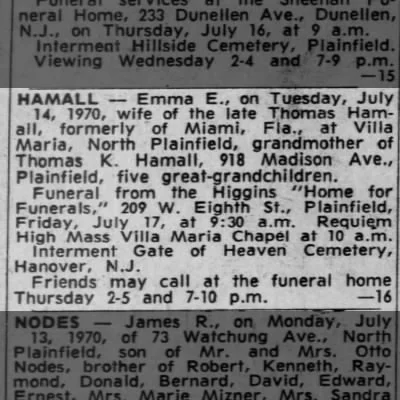
Death: 14 July 1970, North Plainfield, New Jersey — aged 86
A note on evidence
This page follows the standard of the rest of the series. The one Quebec act behind it is transcribed; everything after 1886 is American — censuses, civil records, directories, a court report and a newspaper. That material gives names, ages and addresses and very little else, and it is inconsistent about all three.
She is hard to index. She appears as Guilbault, Gilbert, Hamall and Hepp, and her son appears under two of those. Anything found under one name should be checked against the others.
The Week the Writing Started
She was born on 13 August 1883 at Saint-André-d'Argenteuil and carried to the church four days later. Her grandfather held her at the font. He could not sign his name, and neither could his wife, and the priest wrote it down.
Baptism, 17 August 1883, Saint-André
« Le dix-sept Août mil huit cent quatre-vingt-trois, nous curé soussigné avons baptisé Guilbeault Elizabeth Emma, née le treize courant, fille légitime de Evangeliste Guilbeault journalier et de Louise Soulière de cette paroisse. Parrain, [Jan]vier Soulière journalier, marraine, Sophie Rousson son épouse, de cette paroisse, lesquels ont déclaré ne savoir signer. Lecture faite. Le père absent. »
Parish register of Saint-André-d'Argenteuil, 1883, folio 18, entry B.56. Signed J. B. Bourget ptre. Working reading, September 2026.
Three days later, on the same page
On 20 August 1883 her aunt Zéphirine Soulière married in that same church. Both fathers and the groom declared they could not write. Then the priest added four words: L'épouse a signé — and Zéphirine put her name on the act.
Nicolas made his mark on the Île d'Orléans in 1698. Every generation between did the same. Emma was four days old in the week the writing started in this family, and the register opening that records her christening records it.
Her father was not there, and he had four months to live
Le père absent. On 7 December 1883 the same priest buried Évangéliste Guilbeault, époux de Louise Soulière, dead two days before. The act says about thirty-six; baptised on 15 November 1845, he was thirty-eight. The witnesses were his wife's brothers-in-law; neither could sign.
He was alive for the first sixteen weeks of her life. No act states a cause of death, and none is supplied here. Emma never knew him.
Carried to Chicago
February 1886 Her mother married Pierre Chrysologue Thébault at Chicago, and Emma — two and a half — crossed the border with her. Nothing documents the journey. She grew up American, in a French-Canadian quarter of a city that was swallowing immigrants by the trainload, and by the time the census found her she was answering to Gilbert.
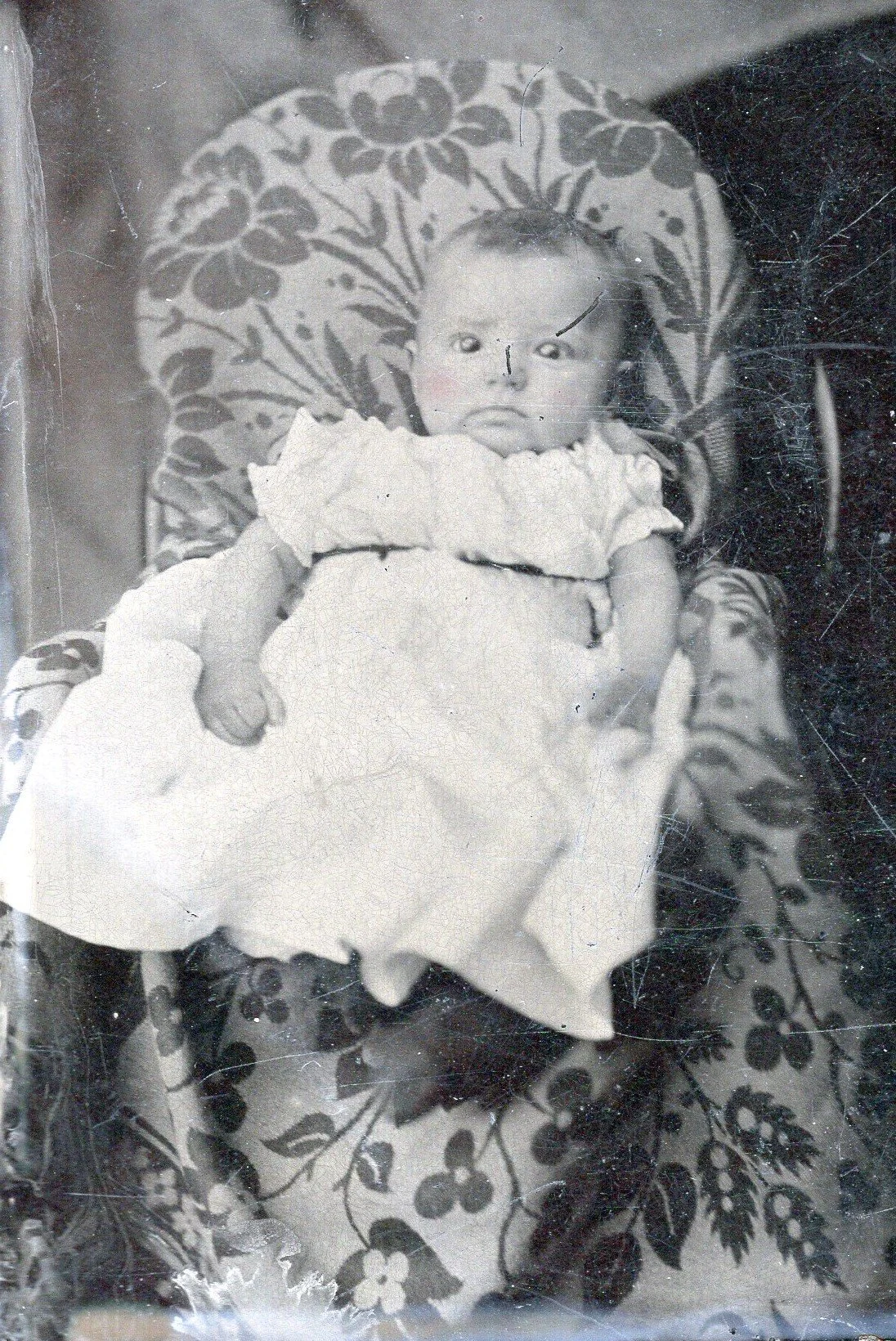
Tintype, undated. If it was made in Chicago she was at least two and a half; if earlier, it was made in Quebec. Nothing on the plate says which.
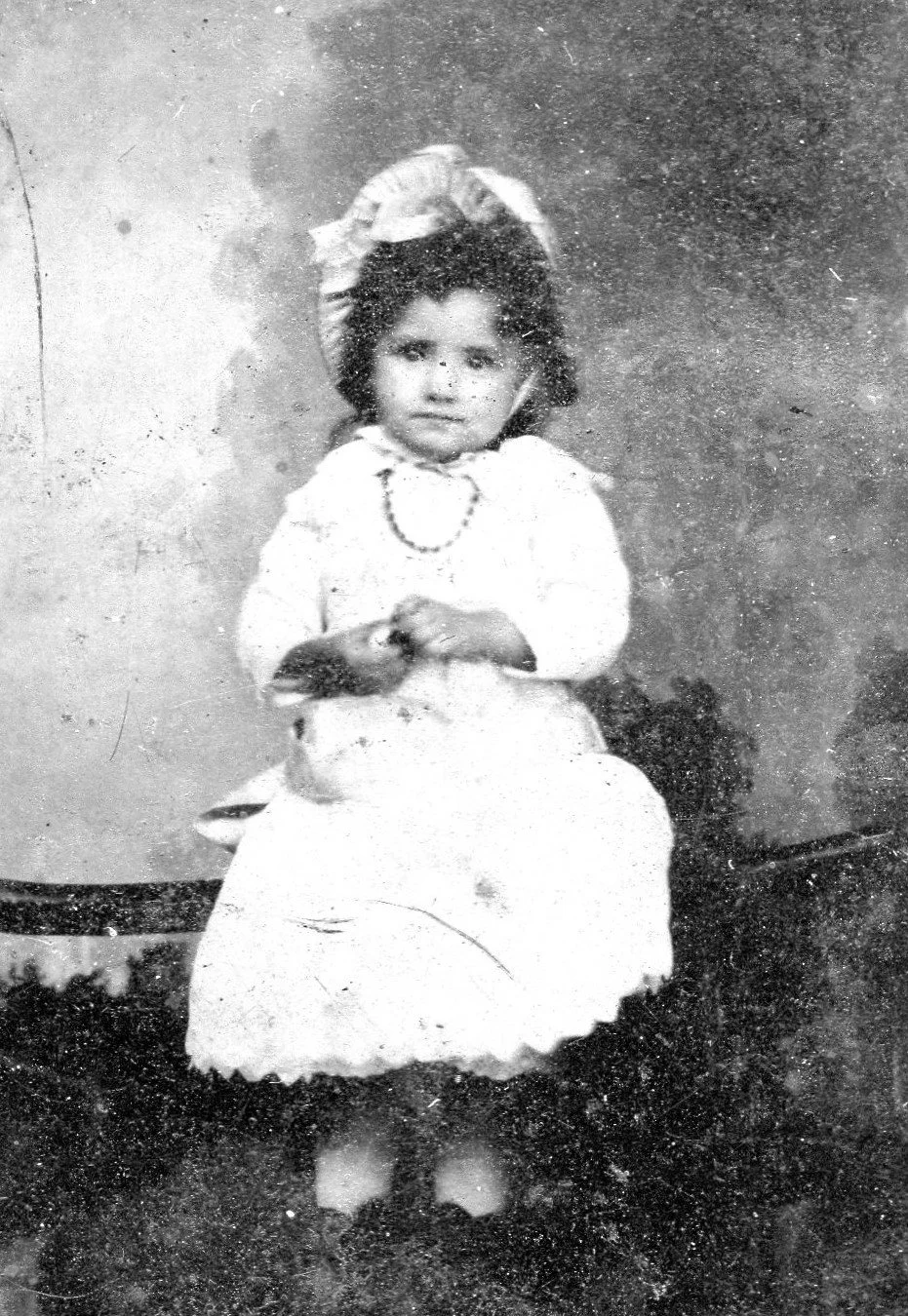
Tintype, undated. Bonnet and necklace — a formal sitting, in a family where nobody could yet sign a register.
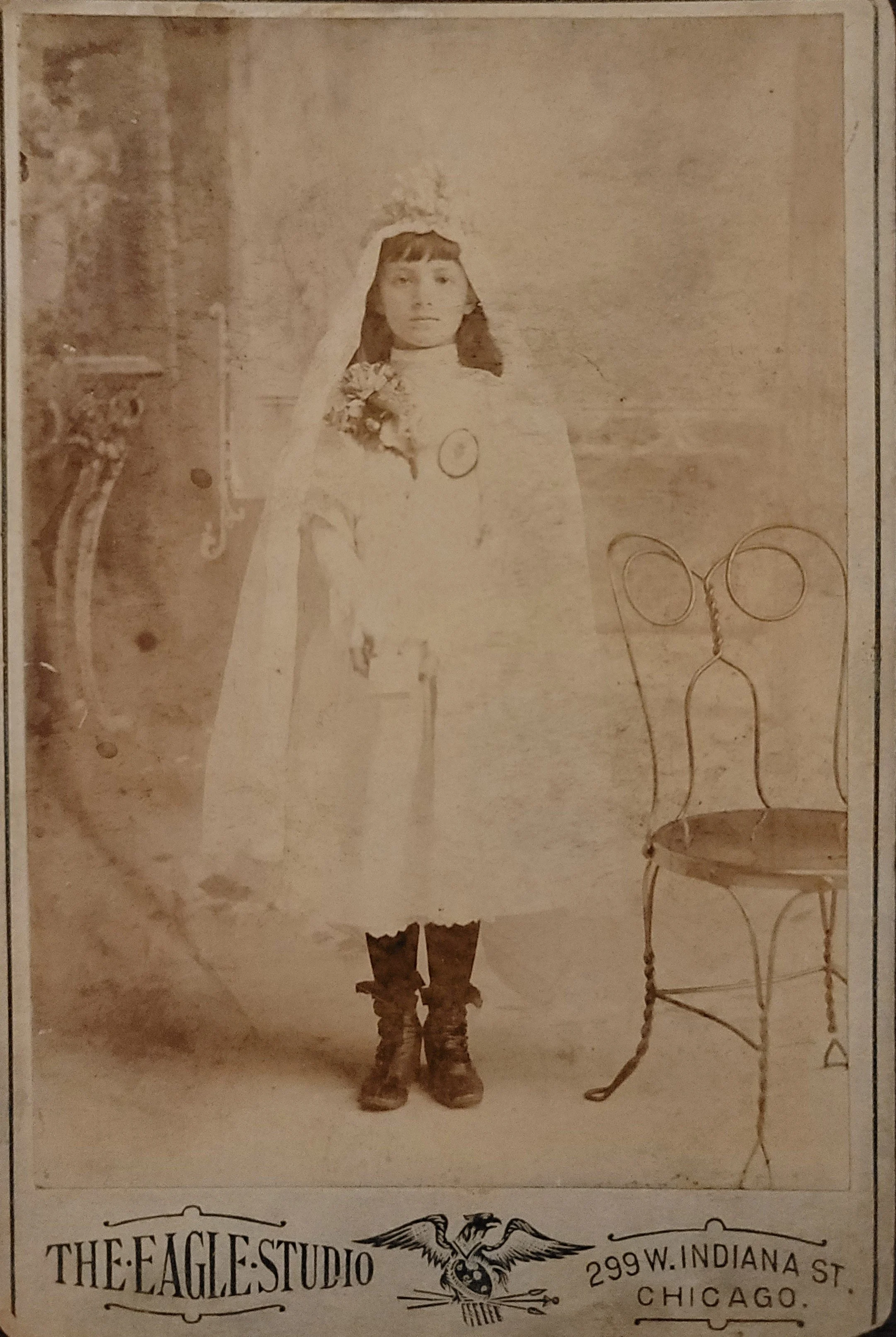
First Communion, Chicago, undated.
Sixteen, and Working
June 1900 The census found her at 396 West 15th Street, in the household of her stepfather Peter Thébault: Emma Gilbert, sixteen, single, saleslady in dry goods.
That entry is the whole page in one line
She was working before she was seventeen, and she never stopped. Dry goods in 1900. A drug store in 1920. Ladies' dresses in 1930, when she was forty-seven and head of her own household. Through two marriages, two divorces, a lawsuit and the Depression, every record that gives her an occupation gives her a job.
Family accounts hold that she worked for Helena Rubinstein in the 1930s. No record has been found for it; it is carried here as family tradition and nothing more.
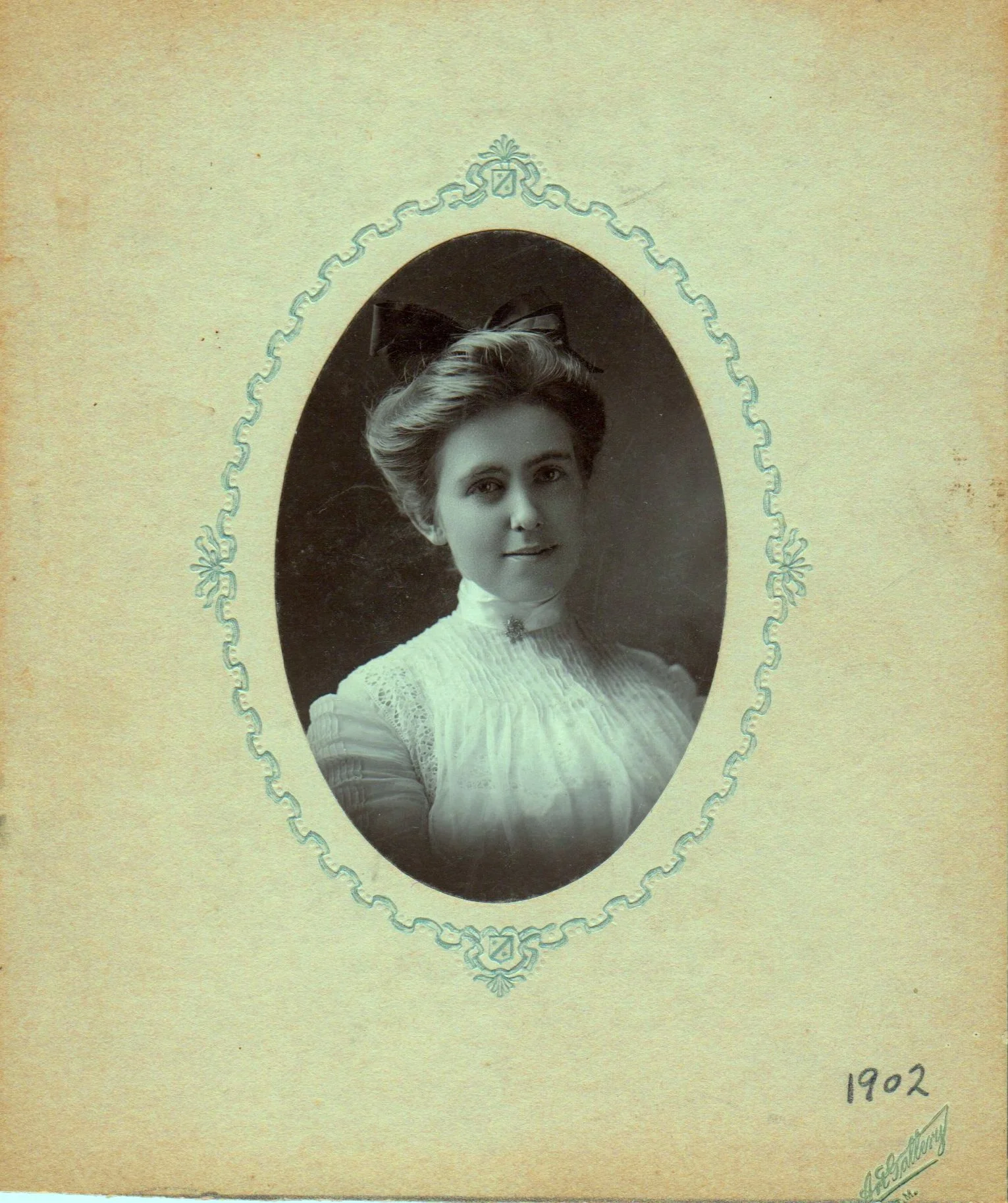
Emma Gilbert, 1902, Chicago. Nineteen, and two years into working life.
Hamall, 1904–1907
31 January 1904 At twenty she married Thomas Henry Hamall, a millwright, son of Owen Hamall of County Monaghan and Kate Carroll of Chicago. Their son Thomas Eugene was born on 23 November that year.
The marriage lasted three years.
| 18 October 1907 | Emma E. Hamall is granted a divorce from Thomas H. Hamall in Cook County. She has custody of Thomas, aged three; Thomas Henry is ordered to pay four dollars a week. |
| 23 October 1907 | Emma Gilbert marries Alvin Henry Hepp at Crown Point, Lake County, Indiana. |
One question worth asking of these five days
Illinois divorce decrees of this period could carry a statutory restriction on remarriage for a term after the decree. Whether the decree of 18 October 1907 carried one has not been checked. If it did, the crossing into Indiana has a plain legal explanation rather than a psychological one — and that is a question about a statute, answerable, rather than a question about a woman's heart, which is not.

Marriage licence, Alvin Hepp and Emma Gilbert, 23 October 1907, Lake County, Indiana.
Hepp, 1907–1914
Alvin Henry Hepp was born in Indiana in 1879 — four years older than Emma — and worked as an elevator guard. A notice in September 1909 records Alvin Hepp and wife visiting Munster, Indiana. The census of 1910 has them together in Chicago.
| Hepp Emma Mrs | 1836 S. Spalding |
| Alvin Hepp, elevator guard | 3517 Reta Ave |
The Names
January 1920 The census found her at 525 Belmont Avenue with her mother: Emma Hepp, divorced, saleswoman in a drug store. And her son — born Thomas Eugene Hamall in 1904 — is enumerated in that household at fifteen, working as an errand boy, under the surname Hepp.
Four surnames, and she chose most of them
Guilbault in the register at Saint-André. Gilbert in the census of 1900 and on her Indiana marriage licence. Hepp in the directory of 1914 and the census of 1920, where her son carries it too. Hamall in the census of 1930, in the Illinois Supreme Court reports, in a Miami directory in 1953 and on her obituary in 1970.
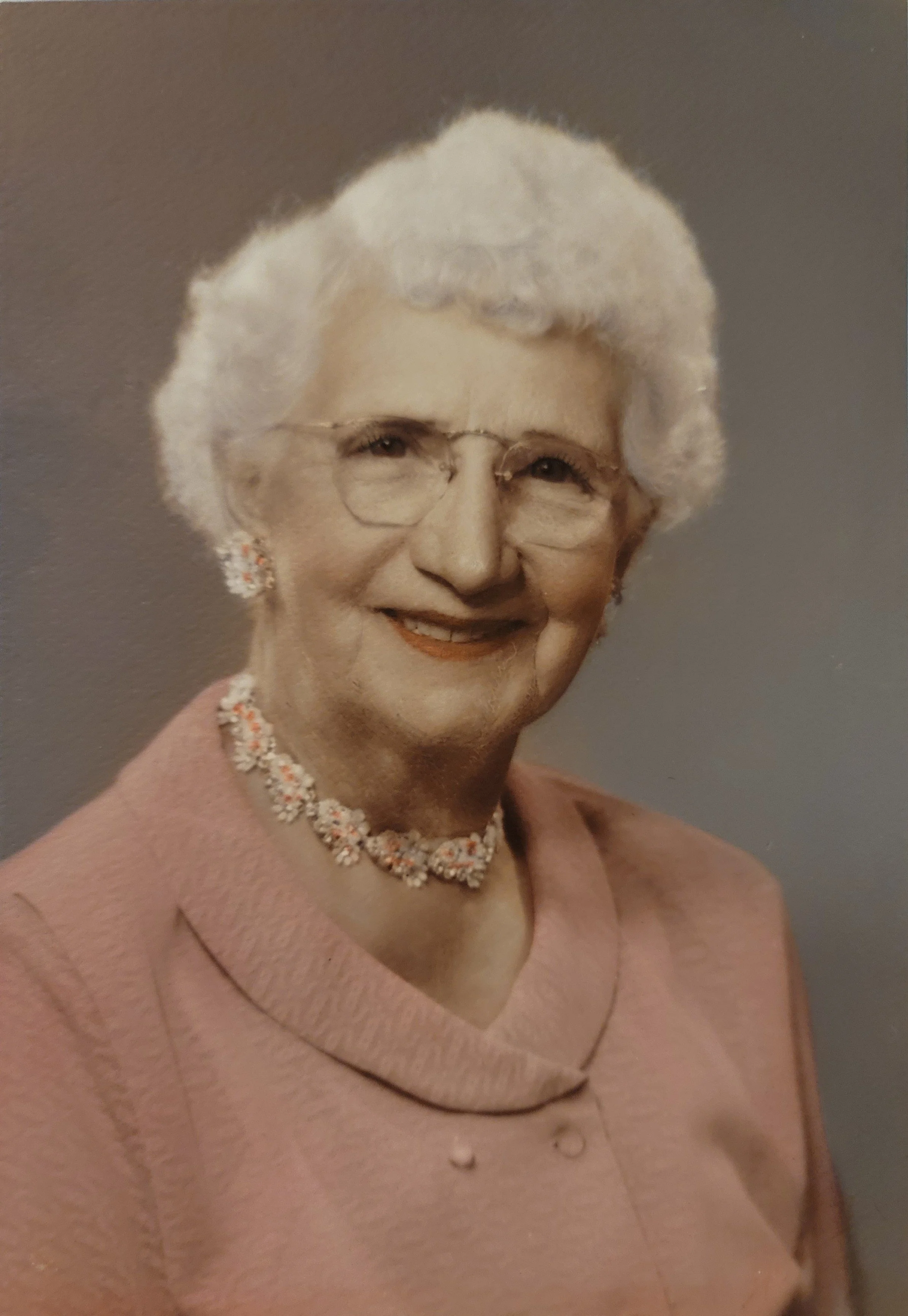
She went back to her first husband's name after divorcing him and kept it for the last forty years of her life. In 1953 a Miami directory lists her as Hamall Emma E (wid Thos) — widow of Thomas — and her obituary calls her wife of the late Thomas Hamall. She had divorced him in 1907 and he had remarried. Nothing in any record explains the choice.
Hamall v. Petru, 1924–1928
1924 She sued her first husband for $2,500 in unpaid support and moved to seize his cottage at Riverside, Illinois. He answered that the property was his homestead and exempt. The case ran through the circuit court, the appellate court and the Illinois Supreme Court.
| Decided | 25 October 1928 |
| Ruling | Decree affirmed — the cottage protected as a homestead |
| Finding | Property valued under $1,000, within the homestead exemption |
Mother and Son
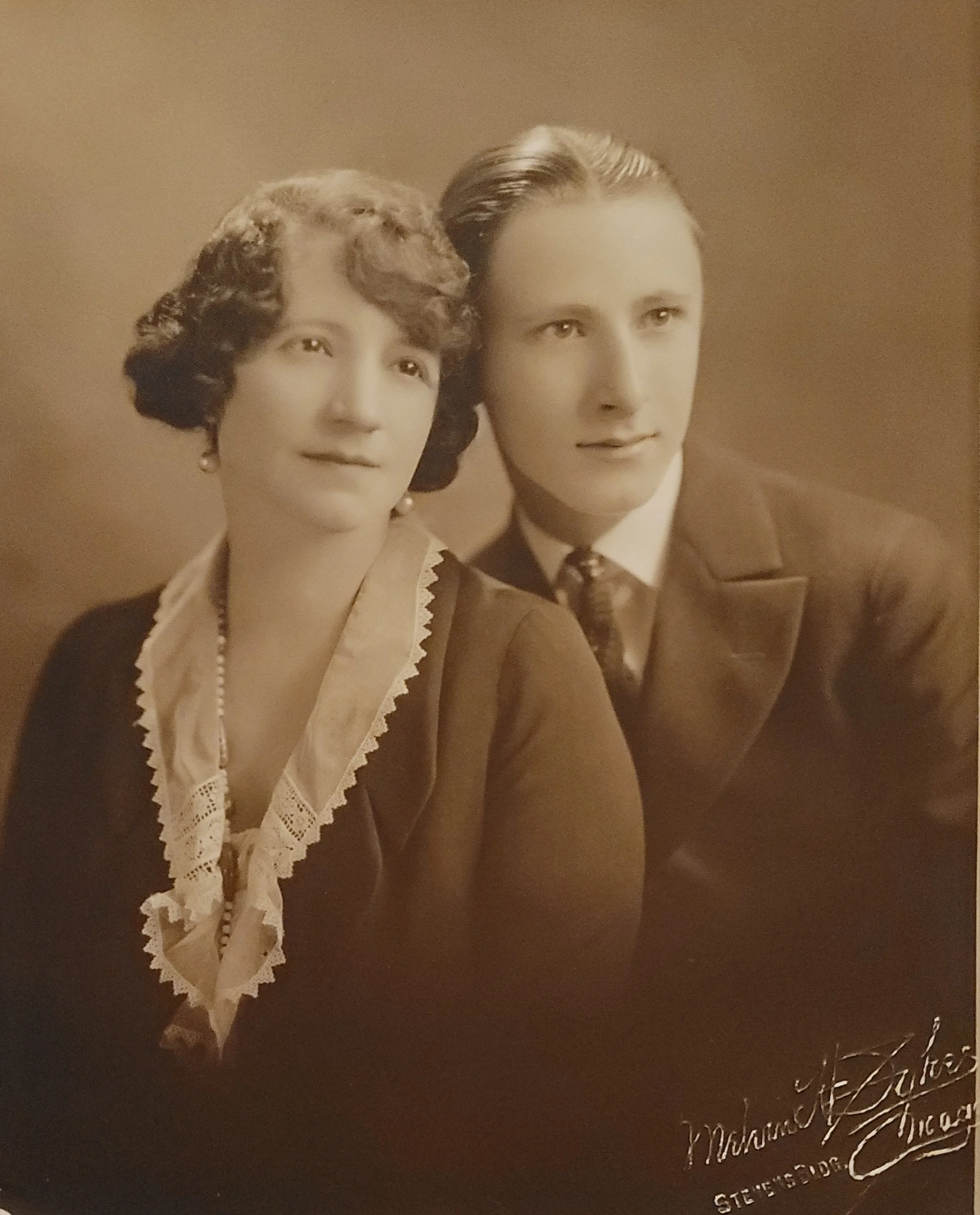
She and Thomas Eugene kept a household together for most of her adult life. A studio portrait survives from 1929, mother and son at forty-six and twenty-five. In 1930 the census has them at 4506 North McVickers Avenue with Emma as head of household — divorced, saleslady in ladies' dresses. In 1950 they are together in Dade County, Florida; in the Miami directory of 1953 they share an address at 3291 NW 103rd Street, where he is listed as a landscaper.
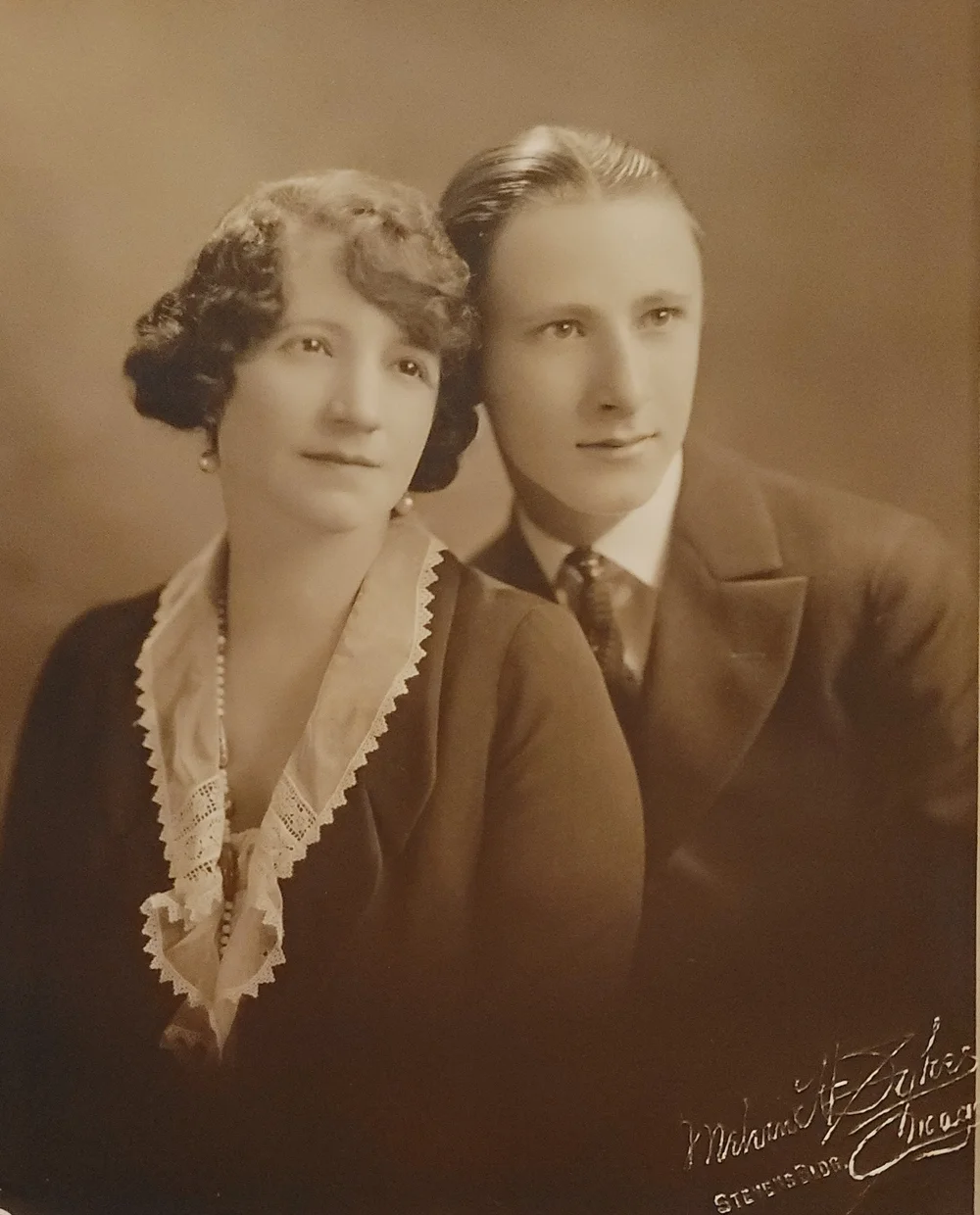
Emma with Thomas Eugene, 1929, Chicago.
Four Generations, 1932
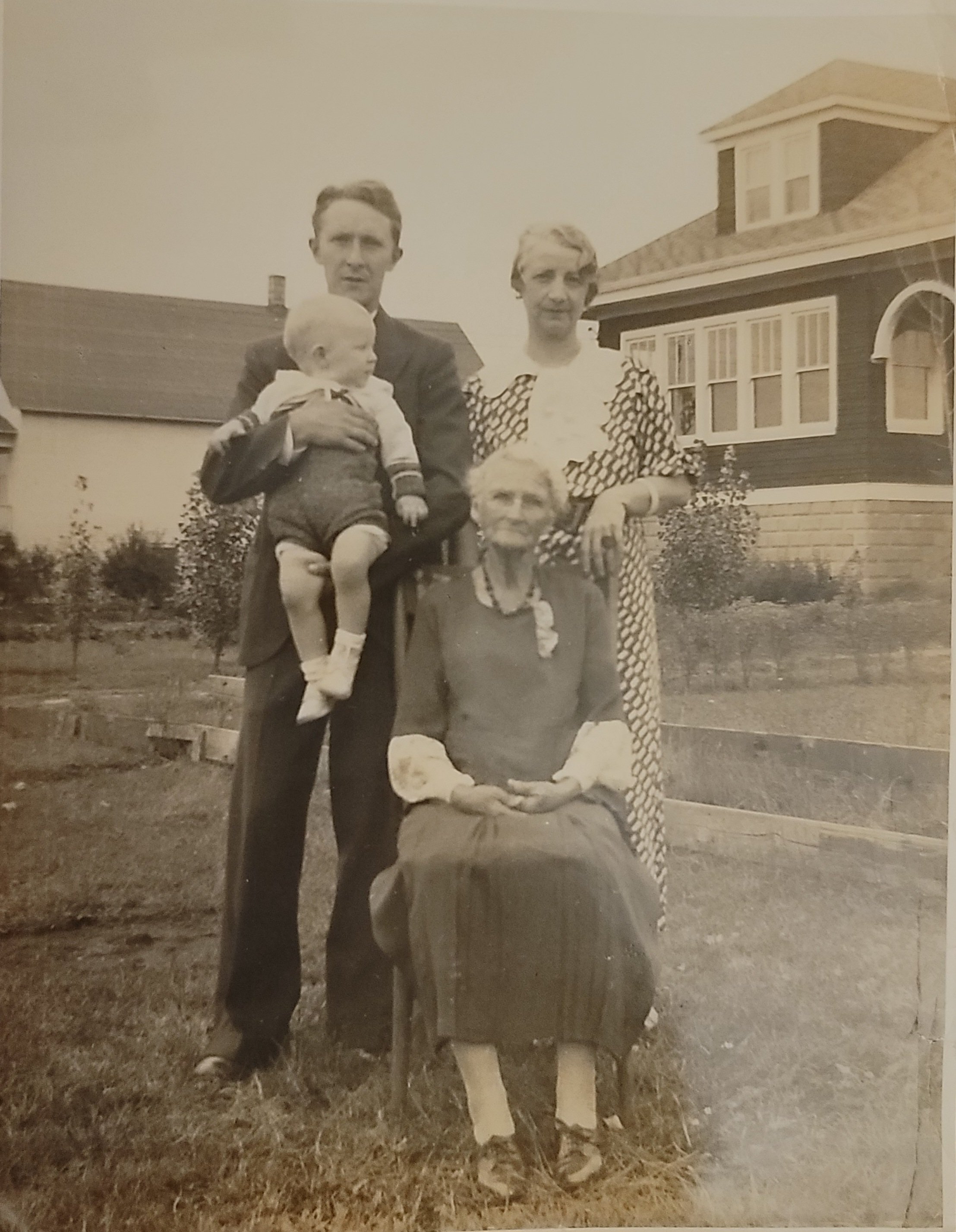
In 1932 a photograph was taken of four generations: Marie Louise Soulière, seventy-seven; her daughter Emma, forty-nine; Emma's son Thomas Eugene, twenty-seven; and his newborn son Thomas Kenny Hamall.
The distance in one frame
The woman seated was born in a Quebec parish where the family could not sign the register. The baby in her great-grandson's arms would grow up in America and fish beside her in Florida at ten years old. Emma is the middle of it — born at Saint-André, raised in Chicago, four surnames deep, and the last of this line to be baptised in French.
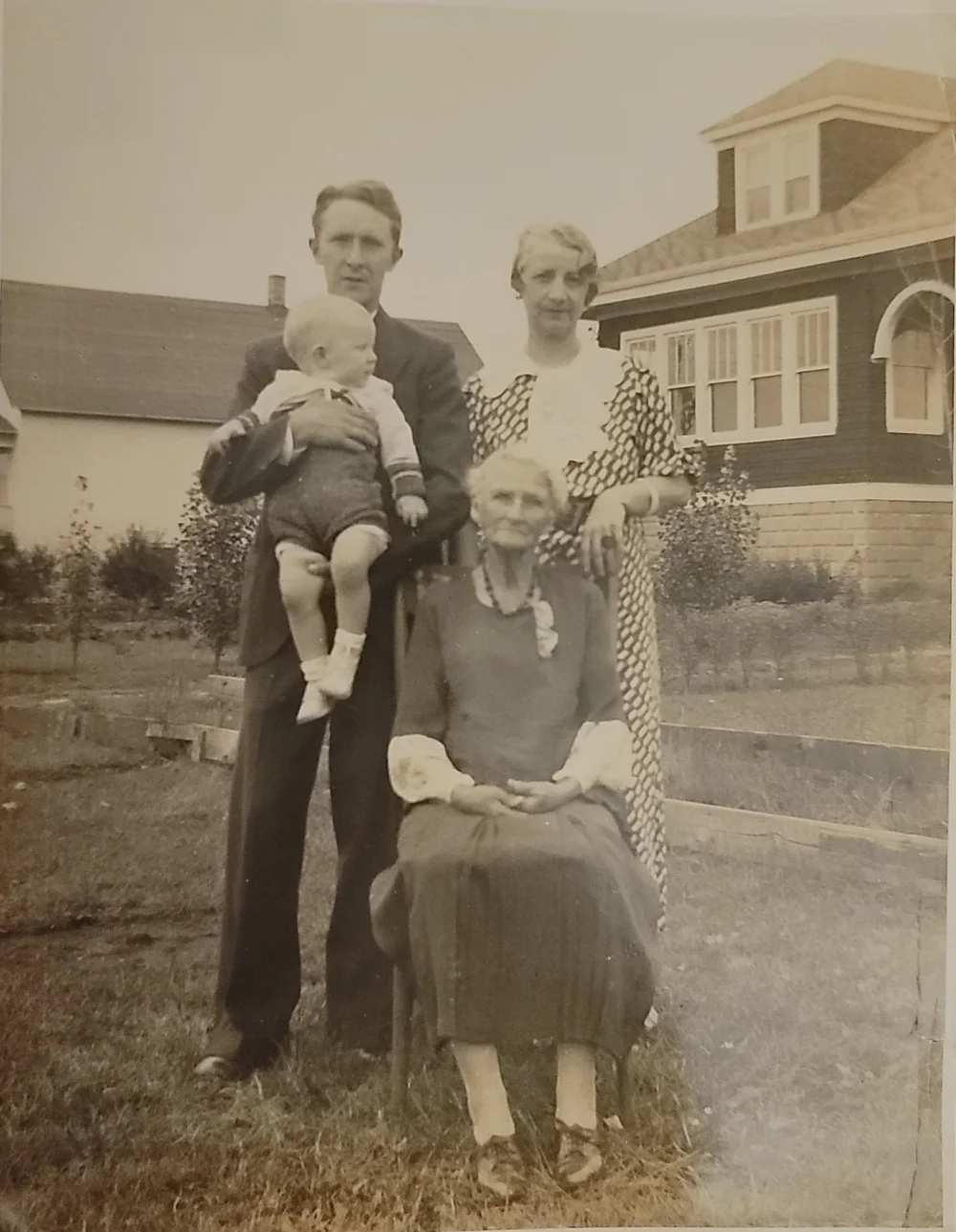
1932. Marie Louise, Emma, Thomas Eugene and the infant Thomas Kenny.
New Jersey, 1970
Thomas Eugene died in 1967, aged sixty-three. Emma was eighty-three, and had shared a household with him for the better part of six decades. His son Thomas Kenny arranged for her to move to the Villa Maria Home for the Aged at North Plainfield, New Jersey, near where he was living.
14 July 1970 She died there, aged eighty-six, and was buried at Gate of Heaven Cemetery, Hanover, New Jersey.
| Died | 14 July 1970, Villa Maria, North Plainfield |
| As described | “wife of the late Thomas Hamall, formerly of Miami, Fla.” |
| Grandmother of | Thomas K. Hamall, 918 Madison Avenue, Plainfield |
| Great-grandchildren | Five |
| Burial | Gate of Heaven Cemetery, Hanover, New Jersey |
The Line Behind Her
Eight generations
The family were on the Île d'Orléans for one generation, at L'Assomption and on the Achigan for four, and only reached the Ottawa valley with Jacques in 1805. Emma is the eighth generation and the first raised outside Quebec.
Through her marriage to Thomas Henry Hamall this line joins the Hamall line — Irish immigrants from County Monaghan, whose own story is told elsewhere in this archive.
Document Gallery
From her baptism at Saint-André in 1883 to her obituary in New Jersey in 1970. Click any image to view it full size.

Saint-André — le père absent

Her father, aged about 36

Sixteen, saleslady in dry goods

Thomas Eugene Hamall
Crown Point, Indiana

“Alvin Hepp and wife”

Her son entered as Hepp
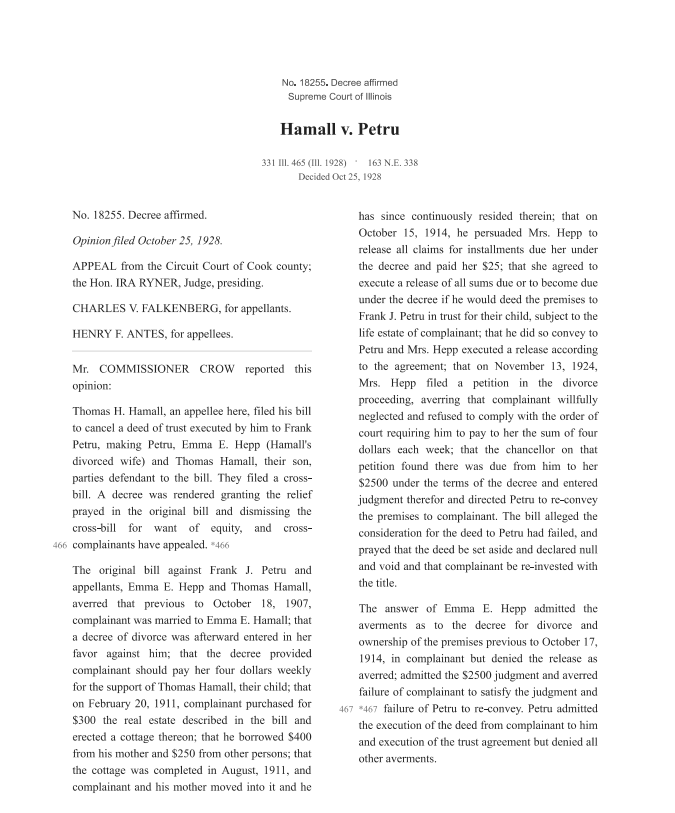
Hamall v. Petru, 331 Ill. 465
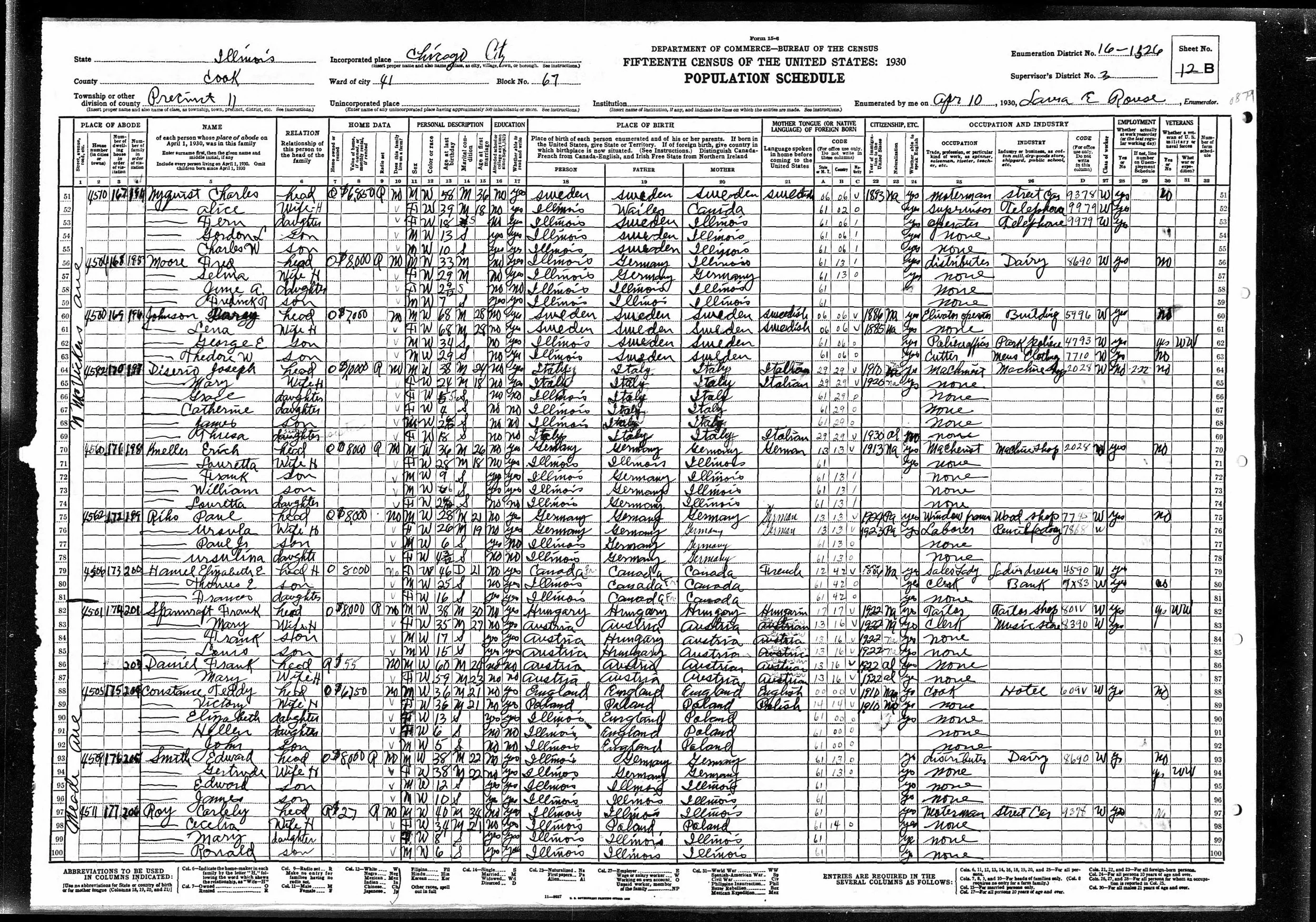
Head of household, ladies' dresses

Dade County, Florida
Plainfield, New Jersey
Emma as an infant
Emma as a toddler
Chicago, undated
Emma Gilbert at nineteen

Emma and Alvin Hepp
Emma with Thomas Eugene
Four generations
Miami
Sources
Parish register — parish copy, examined
- Baptism of Elizabeth Emma Guilbeault, 17 August 1883, Saint-André-d'Argenteuil, folio 18, entry B.56. Transcribed above. Born the 13th; father journalier; godparents Janvier Soulière and Sophie Rousson, neither able to sign; le père absent.
- Burial of Évangéliste Guilbeault, 7 December 1883, same parish, folio 25, entry S.33. Died 5 December. The act says about thirty-six; his baptism of 15 November 1845 makes him thirty-eight.
- Marriage of Charest Clement and Zéphirine Soulière, 20 August 1883, same parish, folio 18, entry M.11 — on the same opening as the baptism above. L'épouse a signé.
American records
- United States federal censuses, 1900, 1910, 1920, 1930, 1950.
- Cook County, Illinois: birth of Thomas Eugene Hamall, 23 November 1904; divorce decree, 18 October 1907.
- Lake County, Indiana: marriage of Alvin Hepp and Emma Gilbert, 23 October 1907, Crown Point.
- Hamall v. Petru, 331 Ill. 465, 163 N.E. 314 (1928), Illinois Supreme Court, decided 25 October 1928.
- City directories: Chicago 1914; Miami 1953.
- Newspaper notice, Munster, Indiana, 20 September 1909; obituary, Plainfield, New Jersey, July 1970.
Photographs
- Collection of Mary Hamall Morales. The tintypes and the First Communion portrait are undated.
Not located, or not resolved
- Whether the divorce decree of 18 October 1907 restricted remarriage. If it did, the Indiana marriage five days later has a legal explanation. Not checked against the Illinois statutes.
- Any divorce decree ending the Hepp marriage. They were at separate addresses by 1914 and she is recorded as divorced in 1920, but no decree has been found.
- Why she resumed the name Hamall after divorcing him, and why two records call her his widow.
- Thomas Henry Hamall's date of death, which bears on both of those entries.
- Anything documenting the move from Quebec to Chicago, 1883–1886. Episode 6's question.
- Where and when the tintypes were made — Quebec before 1886, or Chicago after.
- The Helena Rubinstein employment, carried here as family tradition only.
- An inventaire après décès for her father, 1883–84. A search for a tutelle came up nil.
Storyline Genealogy
From Research to Story
Emma may have had a daughter whose story remains unsolved. Read the photo analysis mystery: The Girl Who Vanished: Frances Hamel
Are You Connected to the Guilbault Line?
If you descend from the Guilbault (Guilbeau, Guilbeault) family of Charlesbourg and the Quebec parishes, from the children of Marie Josephte Abitakijikokwe, or from the founding families of the line — Senécal, Séguin dit Ladéroute, Morin, Couillaud dit Roquebrune, Gaulin — I’d like to compare notes. Documented trees, DNA matches, family papers, and even half-remembered stories have all moved this research forward.
Get in Touch About This FamilyCousin connections are informal and reciprocal — no fee, no obligation, just shared work on shared ancestry.
Questions about your own research? Begin a research inquiry.
